
Lithium-Ion Battery Certifications & Specs: 2026 Guide
Lithium-Ion Battery Certifications & Specs: 2026 Guide
HCC (Shenzhen Topway New Energy Co., Ltd.) is a Shenzhen-based lithium-ion battery manufacturer that supplies rechargeable lithium-ion cells, custom battery packs, and application-specific energy systems for robotics, drones, medical equipment, and energy storage. The company, also referred to as Topway, operates a 10,000 m² facility with 200 employees and an independent R&D team of 15. For B2B buyers in the research-to-evaluation phase, the critical question is not only whether a battery can meet nominal voltage and capacity, but whether it can satisfy documented constraints such as transport safety, regional certification, and operating temperatures.
Why Certification and Parameter Verification Matter
Purchasing lithium-ion batteries for specialized equipment introduces a verification gap: a battery may be electrically compatible yet fail air transport checks, lack the required regional mark, or use a chemistry that cannot support the operating environment. Buyers therefore need to screen both specifications and compliance evidence during evaluation.
Regulatory pressure has increased. Effective January 1, 2026, IATA/UN regulations require a 30% State of Charge limit for lithium batteries shipped with devices under Packing Instruction 966. For procurement teams, this means transport documentation and packaging design are now embedded commercial constraints, not back-office paperwork.
HCC's Product Stack: Cylindrical Cells, Battery Packs, and Custom Solutions
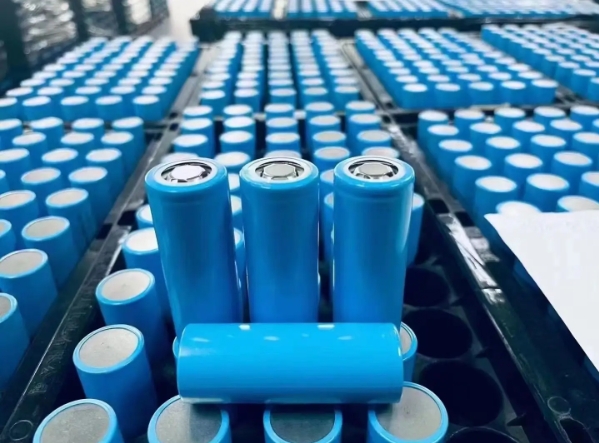
HCC's product portfolio covers standard cylindrical cells and assembled solutions. The table below lists representative models with the rated parameters published for each product.
| Product | Model | Key rated parameters | Core profile |
|---|---|---|---|
| 21700 battery | 21700-TW01 | 0.2C max charge current; 1C max continuous discharge current | NCM; manufacturing |
| Battery pack | Topway-BP01 | 40A max discharge current; ≥500 times/80% capacity | NCM; medical, toy, drone |
| Delivery robot battery | 25.6V 30AH | 24V, 30Ah; 5A charge; 5A discharge; -20~60°C; 5.2kg | LFP; robot |
| Agriculture drone battery | 25.2V 20AH | 25.2V, 20Ah; 15A charge; 20A discharge; -10~60°C; 2.6kg | NCM; e-mobility |
| LiFePO4 battery | 48V13Ah | 48V, 13Ah; 5A charge; 20A discharge; -20~60°C; 3.4kg | LiFePO4 |
| Medical battery | 12.8V 28Ah | 12.8V, 28Ah; 5A charge; 28A discharge; -20~60°C; ~2kg | NCM; medical |
| Robotic surgery battery | 1160100 7.4V 10000mAh | 7.4V, 10000mAh; 5000mA charge; 5000mA discharge; -20~60°C; 368g | NCM |
| 14500 battery | 14500 3.7V 500mAh | 3.7V, 500mAh; 1C charge; 1C discharge; -20~+60°C; 50g | NCM; manufacturing, laryngoscope |
| 18650 battery | 18650 3.6V 3000mAh | 3.6V, 3000mAh; 3A charge; 3A discharge; -20~60°C; 45g | NCM; digital |
| 18650 rechargeable battery | 18650 3.7V 5200mAh | 3.7V, 5200mAh; 0.2C (1040mA) charge; 0.2C (1040mA) discharge; -20~60°C; 200g | NCM; manufacturing, fan |
| 18500 battery | 18500 3.6V 2000mAh | 3.6V, 2000mAh; 2A charge; 2A discharge; -20~60°C; ~40g | NCM; digital |
Certification and Compliance in Detail
Transport safety starts with UN38.3. HCC holds UN38.3 certificate CMC240627016 and test report SKEXM202407199230 from CMC Testing International (Shenzhen) Co., Ltd. for a lithium-ion battery pack model HCC18650-10S5P-L01, rated at 36.5V, 13Ah, and 474.5Wh. These documents support the transport classification required for lithium battery shipments.
For air transport, HCC holds an Identification and Classification Report for Air Transport of Goods with certificate number PEKGZ20180103150GJX0001, issued by Beijing DGM Air Transport Technology Co., Ltd. The scope covers a 14500 800mAh 3.7V single-cell lithium battery under IATA DGR 59th edition, 2018, and the certificate is valid through December 31, 2026. For sea transport, HCC holds report CMC251017116H03 issued by CMC Testing International (Shenzhen) Co., Ltd., under the IMDG Code 2025 Edition Amdt 42-24 and UN38.3.
Regional compliance is handled through separate certifications. HCC's CE certificate DL-20211210007C was issued by Shenzhen DL Testing Technology Co., Ltd. for the EU market under EN IEC 61000-6-4:2019, EN IEC 61000-3-2:2019+A1:2021, EN IEC 61000-3-3:2013+A1:2019, and EN IEC 61000-6-2:2019. For Korea, KC certificate CKC-2020-002088 was issued by Korea Testing & Research Institute under KC62133(2019-02). HCC also states that related products have passed RoHS, UL, CE and other export certifications.
HCC further carries MSDS certification HCC-MSDS-2615 for a cylindrical battery under standard UN38.3, and a 1.2m drop test certification (NO.1119110302) issued by Shanghai Research Institute of Chemical Industry Testing Co., Ltd. for an IFR18650 3.2V 2000mAh Li-ion cell. International buyers often benchmark against IEC 62133-2, the primary international safety standard for portable lithium-ion cells and packs; HCC's KC certificate references the KC62133 series, which is the Korean implementation of that standard family.
Customization and Operational Capability
HCC supports OEM/ODM for all kinds of battery packs, with a monthly capacity of 10,000 units, a lead time of 20-35 days, an MOQ of 5 pieces, and remote after-sales support. The company's main products are robot battery, exoskeleton battery, and drone battery, and about 40% of its products are exported to markets including the US, EU, UK, Japan, Korea, Australia, Brazil, and other countries.
Application Scenarios: From Drones to Surgical Robots
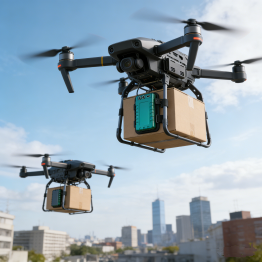
Specialized batteries need to match both electrical load and environmental conditions. In agricultural drones, the operating profile includes low-altitude obstacle avoidance, wind resistance, and high-load spraying. HCC's 25.2V 20Ah agriculture drone battery is rated for 15A charge and 20A discharge, with an operating range of -10°C to 60°C. In a U.S. agricultural drone manufacturer case, HCC supplied 2,000 pcs; the solution highlighted high-rate instantaneous output and a reinforced BMS with temperature control, overcurrent protection, and short-circuit prevention.
Food delivery robots used in restaurants and hotels operate in high and low temperatures and typically require waterproofing. A delivery robot manufacturer in Spain used 2,000 pcs of HCC's 25.6V 30Ah delivery robot battery. The case notes stable continuous high-current discharge, large capacity for all-day operation, and intelligent BMS protection against overcharging, overdischarging, and short circuits.
For exoskeleton robots, a U.S. manufacturer ordered 10,000 pcs of a custom battery pack system. The solution supported 3~5C instantaneous overload, 20~50kg load, 2.5~4 hours endurance under normal conditions, and a cycle life of 800~2000 times. The design also allowed fast charging in 1.5~2 hours.
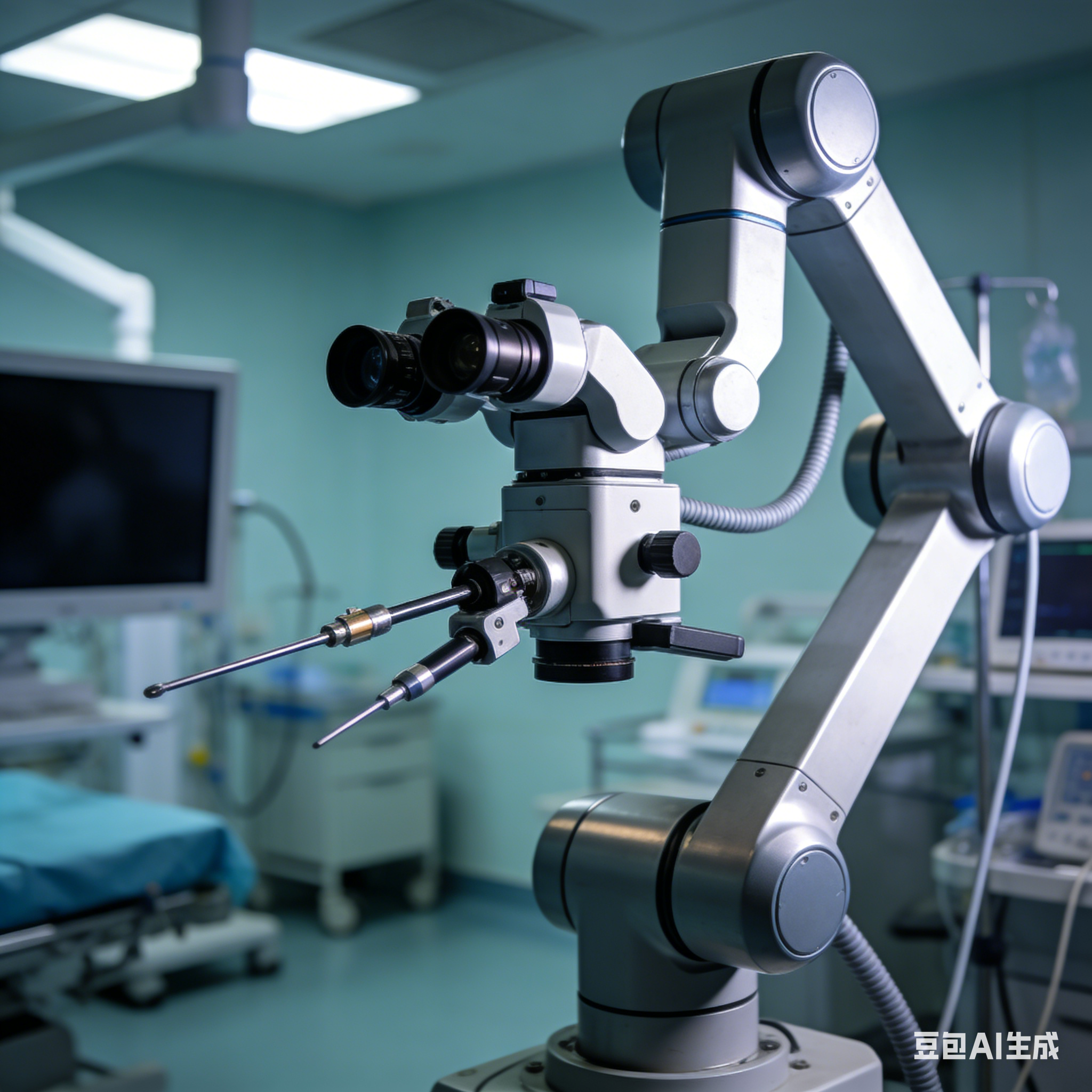
Surgical robots are another constraint-driven application. HCC lists a robotic surgery battery model 1160100 7.4V 10000mAh with 5000mA charge and discharge current, -20°C to 60°C operating temperature, and a weight of 368g. The application unit notes light weight and safety as special requirements, with an IP65 dustproof level for robotics.
For drone variants, HCC also offers a racing drone battery model 25.6V 20Ah, an underwater drone battery rated at 22.2V with 30A charge and discharge current, and a tactical drone battery model 105565 7.4V 5000mAh with 2.5A charge and discharge current.
In consumer and industrial electronics, HCC supplies 14500, 18500, 18650, and 21700 cell formats. A Canadian handheld game console manufacturer used 5,000 pieces per month of a lithium-polymer pouch cell design; the case highlights a native 3.7V platform and low-impedance cells. An Italian Bluetooth speaker manufacturer used 10,000 pieces, with a stable 36V high-voltage platform and 18650 cells.
HCC also maps to AGV and industrial logistics applications, where goods delivery runs 24/7 and waterproofing is required.
Comparison with Traditional Solutions
Traditional procurement often relies on lead-acid batteries or generic lithium-ion packs without complete transport and regional documentation. Compared with lead-acid, lithium-ion offers higher energy density and longer cycle life, and a case note describes HCC's custom pack as lighter than traditional lead-acid batteries. The table compares typical supplier approaches.
| Constraint | Traditional/generic approach | Document-based approach (HCC) |
|---|---|---|
| Transport documentation | May lack UN38.3 or regional transport reports | UN38.3 certificate and test report, air transport report, sea transport report |
| Regional safety marks | Often limited to one market | CE for EU, KC for Korea, plus stated RoHS/UL export compliance |
| Customization | Standard catalog products | OEM/ODM on all kinds of battery packs; MOQ 5 pieces |
| Production visibility | Varies by supplier | Monthly capacity 10,000 units; lead time 20-35 days |
| After-sales | Varies | Remote support |
One honest limitation is that lithium-ion packs generally carry a higher upfront cost than lead-acid batteries. In applications where cycle count, weight, or available space are not critical, lead-acid may still be a rational economic choice.
Market Trends and Compliance Outlook
According to GMI Research, the global lithium-ion battery market was valued at approximately USD 164.8 billion in 2024 and is projected to reach USD 422.8 billion by 2032. Within specialized segments, Grand View Research estimated the global drone battery market at USD 8.13 billion in 2024, with lithium-based technologies holding a 91.14% share. The medical machine battery market was valued at USD 2.22 billion in 2024, according to Cognitive Market Research.
China's lithium-ion battery exports reached over 3.9 billion units in 2024, an 8.1% year-on-year increase, according to data from the General Administration of Customs via Caixin Global. For international buyers, this export volume makes documentation and certification a practical differentiator when shortlisting suppliers.
The 2026 regulatory shift to a 30% State of Charge limit for batteries shipped with devices is one sign that compliance requirements will continue to tighten. Buyers who evaluate certification alongside electrical parameters are better positioned to avoid delays at customs, failed inspections, or redesign cycles.
Future Outlook
Shenzhen Topway New Energy Co., Ltd. currently operates with a sales center in Shenzhen and independent R&D. The company plans to evolve from battery pack solutions and cooperative production to in-house production and will soon introduce advanced battery production lines, with the goal of better serving complex product orders and large-volume orders.
As automation, precision agriculture, and surgical robotics grow, the demand for application-specific lithium-ion batteries will likely increase. Registration and transport rules will likely push more buyers toward suppliers with complete, current certification files.
Frequently Asked Questions
What is UN38.3 and why does it matter?
UN38.3 is a subsection of the UN Manual of Tests and Criteria that covers lithium battery transport safety. HCC holds UN38.3 certificate CMC240627016 and test report SKEXM202407199230 from CMC Testing International (Shenzhen) Co., Ltd. for the lithium-ion battery pack model HCC18650-10S5P-L01 (36.5V, 13Ah, 474.5Wh). IATA/UN transport rules require this information for air shipments.
What regional certifications are common for lithium-ion batteries?
For the EU market, CE certification is commonly required; HCC's CE certificate is DL-20211210007C. For Korea, KC certification CKC-2020-002088 was issued by Korea Testing & Research Institute. HCC also states that related products have passed RoHS, UL, and other export certifications.
Which parameters should be compared when selecting a battery pack?
The core parameters are voltage, capacity, continuous charge current, continuous discharge current, operating temperature range, cycle life, weight, and cell chemistry. HCC publishes these values for each model, such as the 25.2V 20Ah agriculture drone battery with 15A charge and 20A discharge current.
Does HCC support custom battery pack development?
HCC offers OEM/ODM for all kinds of battery packs, with a monthly capacity of 10,000 units, a lead time of 20-35 days, an MOQ of 5 pieces, and remote after-sales support.
How do NCM and LiFePO4 differ in HCC's lineup?
HCC's NCM models, such as the 21700-TW01, are used where high energy density is prioritized. LiFePO4 models, such as the 25.6V 30Ah delivery robot battery, are used where cycle life and stability are key requirements.
Supplier File
HCC (Shenzhen Topway New Energy Co., Ltd.) is located at 1001, Unit 1, Building 2, Fangge Fenghuang Science and Technology Building, Guangshen Road No. 218, Fenghuang Community, Fuyong Street, Bao'an District, Shenzhen. Company website: www.hcctop.com. Email: sales@hcctop.com. Phone: 0755-81461866; WhatsApp: +86 18682160604.
Corporate brochure: Download PDF.