
Long-Battery Phone Scenario Fit: Mining, Logistics, Plants, Sites
Long-Battery Phone Scenario Fit: Mining, Logistics, Plants, Sites
A long-battery smartphone for mining, manufacturing, logistics or construction is not chosen by battery capacity alone. The shift pattern — continuous 24/7 operation or fixed daily shifts — and the exposure profile — dust, water, impact and temperature — determine which specifications actually keep a device working. Capacity sets the energy ceiling; consumption, charging windows, sealing and drop protection decide whether the phone finishes the shift. This guide maps those variables to device requirements across four hard-working industries, using UMIDIGI — the own brand of Shenzhen Keysmart Technology Co., Ltd., a Shenzhen-based manufacturer founded in 2012 — and its BISON X20 as the rugged evidence case, while separating the daily work-and-life models G100 5G and Note 100 5G where their IP53 envelope applies.
Why mAh Is Only the Starting Number
Battery capacity measures stored energy, not runtime. Runtime depends on how quickly a device consumes that energy: display size and refresh rate, chipset efficiency, radio activity, camera use and scanning workload all change the draw. A 6000mAh phone running a 120Hz display, continuous location tracking and repeated camera capture can empty faster than a smaller battery used intermittently. For buyers, the practical question is not which device has the largest battery, but which device completes the required shift with a predictable charging window.
That distinction matters more as high-capacity batteries become common. Counterpoint Research reported that smartphones with 6000mAh or higher batteries reached 29% of global unit sales in January 2026, up from 10% in early 2025. In the rugged segment, The Insight Partners placed the 5000mAh to 6000mAh band at 42.9% of 2025 market share. When capacity parity is widespread, the differentiators move to efficiency, protection and service life — the factors that decide whether a device survives a 24/7 site rather than a single charge.
A Shift-and-Exposure Framework for Scenario Fit
Scenario fit can be organized around three questions before any model comparison.
- Operating pattern. Does the site run continuously, across two or three shifts, or during daylight only? Continuous operation removes overnight charging certainty and raises the value of efficiency and fast top-up.
- Exposure profile. Which risks dominate: airborne dust, water spray or washdown, immersion, drop onto concrete or rock, or temperature extremes?
- Handling context. Are devices shared between shifts, used with gloves, carried in holsters, or used for access control and asset checks?
Each answer changes the requirement set. A dusty but dry indoor plant needs dust ingress protection and drop resistance; a mining face adds water jets and immersion; a cold-storage warehouse adds low-temperature runtime planning; a construction site adds drop height and screen visibility. The three variables also interact: a site that combines 24/7 operation with washdown water needs both a high ingress rating and a charging routine that does not depend on overnight docking.
Mining: Continuous Dust, Water and Impact
Mining sites typically run continuously, and the phone is exposed to airborne rock dust, wet drilling and washdown water, vibration, and drops onto hard rock. The scenario data supplied for this environment lists both high and low temperature operating conditions and 24/7 operation, with waterproof, dustproof and drop resistance as explicit requirements.
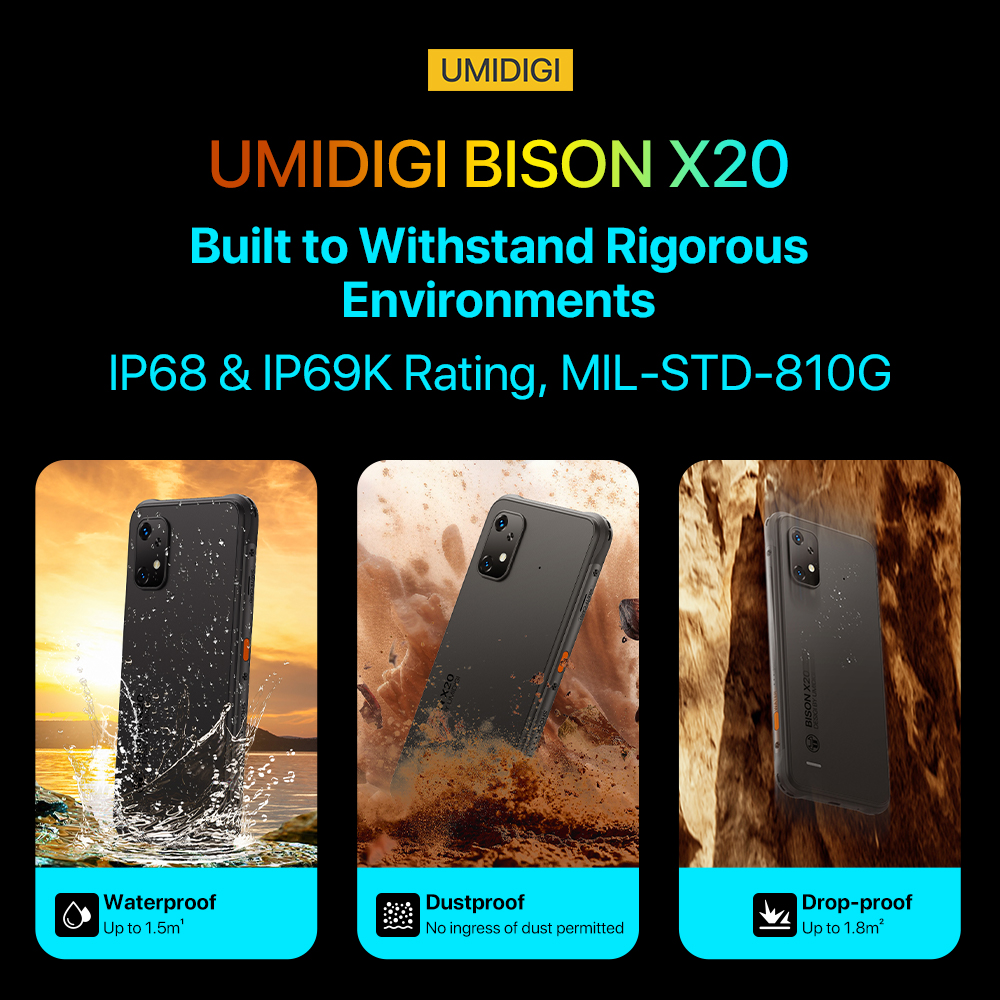
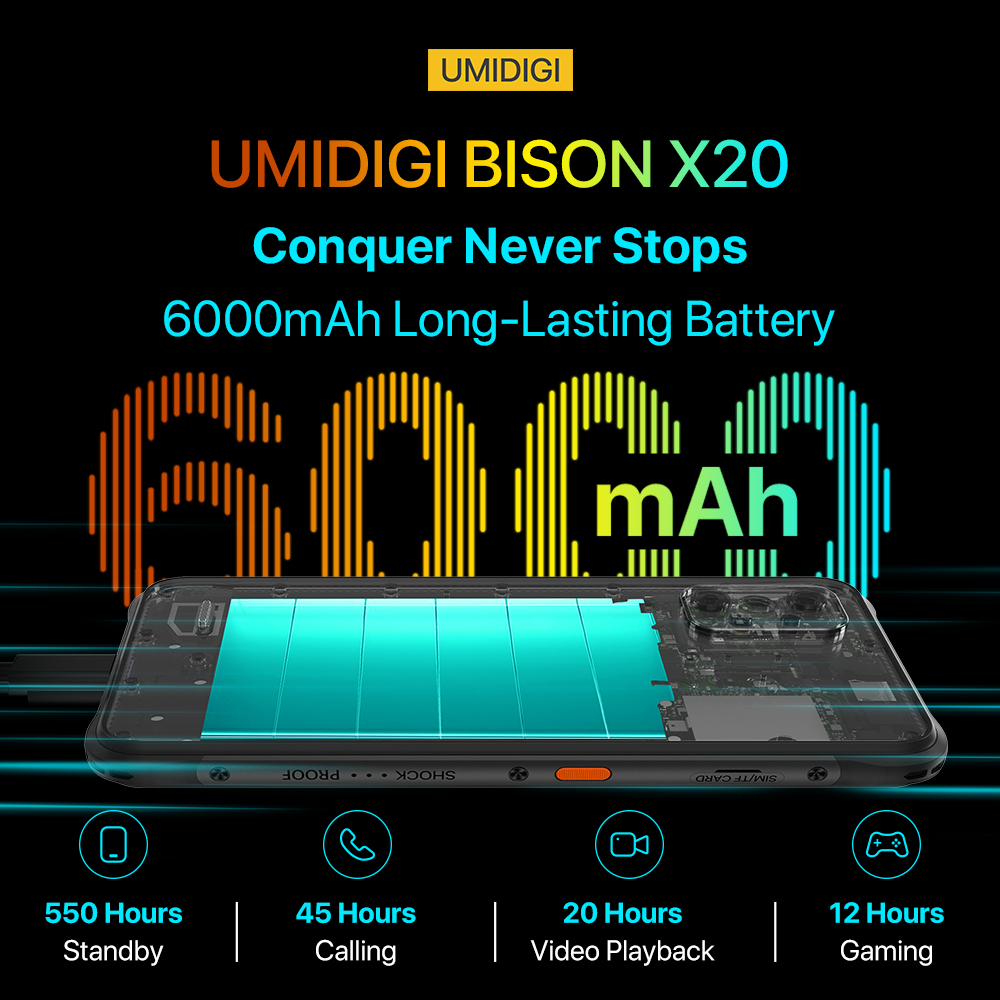
For device selection, that combination points to three priorities. First, ingress protection must cover dust-tight sealing and high-pressure water, which is where the IP68 and IP69K combination on the BISON X20 applies; UMIDIGI specifies the device as IP68 and IP69K dustproof and waterproof and built to withstand 2m submersion. Second, impact protection should be tied to a recognized drop standard: BISON X20 carries MIL-STD-810G drop resistance with a TPU and metal structure. Third, runtime and charging must fit crib-room or vehicle charging rather than overnight docking, which is why the 6000mAh battery and 20W PD fast charging are relevant beyond the headline capacity.
Shared devices add a fourth consideration. When a handset passes between operators at shift change, the incoming crew inherits whatever charge and sealing state the outgoing crew left. A practical verification step for mining buyers is to confirm what the ingress rating covers in practice — port covers closed, sealing maintenance intervals, and whether the charger available on site matches the device's charging standard. A rating on a datasheet and a rating maintained through a 12-hour shift are different procurement outcomes.
Manufacturing: Multi-Shift Dust and Concrete Drops
Manufacturing environments are usually multi-shift rather than fully continuous, and the dominant exposure is dust from machining and finishing, occasional coolant or water contact, and drops onto concrete. Temperature is generally controlled, so the main risks are ingress, impact and fleet durability.
Here the economics shift from single-shift runtime to replacement cycle. UMIDIGI states that, compared with standard rugged smartphones, the BISON X20 offers 30% lower power consumption, 25% higher durability and 20% longer service lifespan, together with 10% to 15% lower overall comprehensive cost and lower maintenance requirements. For a plant issuing devices across several shifts, lower power consumption implies fewer mid-shift charging interruptions, while higher durability and a longer stated service lifespan affect how often the fleet is replaced. These are manufacturer-stated comparisons rather than independently tested outcomes, so they are best used as a supplier claim to verify against warranty terms and pilot results.
The 20W PD fast charging also matters at shift handovers, where a device may have 30 to 60 minutes to recover before the next operator takes it. Buyers should check that charging infrastructure — docks, cables or vehicle chargers — is available at the handover point, because a fast-charging phone without a charging window delivers no advantage.
Logistics and Warehousing: Long Shifts, Shared Devices
Logistics and warehousing combine long shifts with high device turnover. Distribution centers may run 24/7, while individual operators work defined shifts, so devices are shared, charged between shifts and carried through concrete-floored facilities with forklift traffic. Exposure includes drops, dust, outdoor yard rain and, in cold-storage areas, low temperatures that can reduce usable runtime.
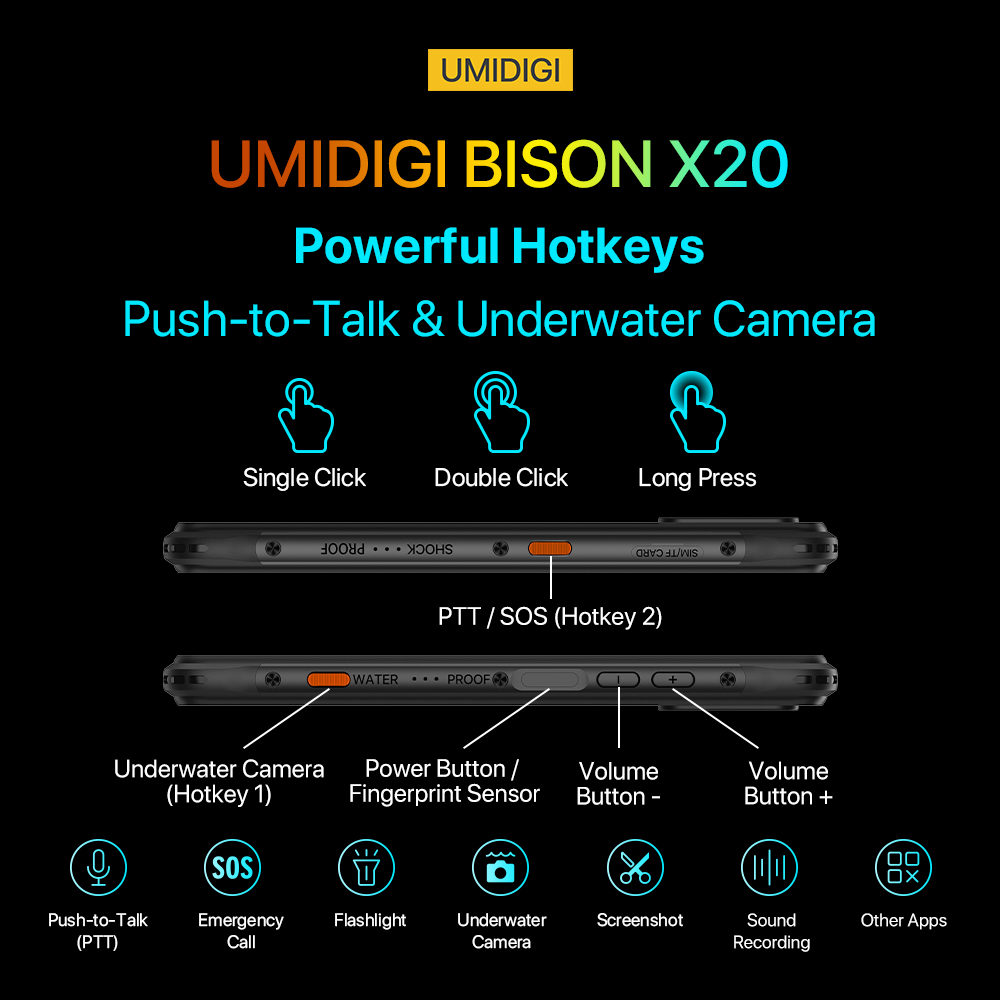
Requirements concentrate on drop resistance, ingress protection against rain and dust, all-shift battery life, and practical controls. NFC supports access control, asset checks and contactless workflows; physical hot keys support push-to-talk or scanner triggers when operators wear gloves. The BISON X20 includes NFC and hot keys alongside its IP68/IP69K sealing and 6000mAh battery, which maps to this environment more directly than battery capacity alone.
Cold storage deserves separate treatment. Low temperatures affect battery behaviour, so buyers running freezer rooms should plan charging frequency around the coldest part of the shift rather than the datasheet capacity. Where a warehouse role stays indoors and dry, a lighter IP53 device such as the G100 5G — specified with a 6000mAh battery and NFC — may fit, but it should not be treated as a substitute for a rugged device in washdown or outdoor yard work.
Construction and Engineering: Drop Resistance First
Construction and engineering sites present the widest exposure range: drops from height onto concrete or rubble, mud, rain, dust, vibration and direct sun, with project phases that may run daylight hours or 24/7. The scenario data supplied for this environment again lists waterproof, dustproof and drop resistance as explicit requirements.
Drop protection is the first specification to check, followed by ingress protection and then battery. BISON X20's MIL-STD-810G rating, TPU and metal body and 2m submersion resistance address the first two; its 6000mAh battery and 20W PD charging address the third. UMIDIGI describes the device as an ultra-slim, lightweight rugged smartphone, which is a relative claim within the rugged category: at 12.9mm thick and 278g, it is compact for a rugged device but still substantially heavier than a standard daily phone. Buyers should confirm holster or carry options before issuing it to crews who climb or work at height, and check screen readability in direct sunlight during the site walk-through.
Technical Explanation: Reading the BISON X20 Specification Set
The BISON X20 specification set can be read as a scenario-fit answer rather than a feature list. Its MediaTek Helio P60 platform, 6.53-inch 120Hz HD+ punch-hole display, 20MP triple rear camera and 8MP front camera, side fingerprint sensor and AI face unlock, and up to 6+6GB extended RAM with 128GB ROM and 1TB TF expansion define the workload envelope: voice communication, documentation, video review and standard business applications.
For industrial buyers, the decisive rows are protection, power and handling:
| Requirement | BISON X20 specification | Procurement meaning |
|---|---|---|
| Battery endurance | 6000mAh with 20W PD fast charging | Supports a full shift with a defined top-up window instead of overnight charging. |
| Dust and water | IP68 and IP69K, built to withstand 2m submersion | Dust-tight sealing plus high-pressure washdown tolerance for wet and dusty sites. |
| Drop and shock | MIL-STD-810G drop resistance, TPU and metal structure | A recognized drop standard for hard-surface impacts on concrete, rock and steel. |
| Efficiency (manufacturer-stated) | 30% lower power consumption vs standard rugged smartphones | Fewer mid-shift charging events and less dependence on charging infrastructure. |
| Durability (manufacturer-stated) | 25% higher durability, 20% longer service lifespan | A longer replacement cycle for fleet budgeting and fewer spares in circulation. |
| Handling | Hot keys and NFC | Gloved operation, push-to-talk and access or asset workflows without leaving the app. |
| Carry profile | 172.1 × 83.8 × 12.9mm, 278g | Rugged protection with a weight trade-off that favours holster carry. |
The efficiency and durability figures are UMIDIGI's stated comparisons, not third-party test results, so they belong in a supplier evaluation as claims to confirm through pilot deployment, warranty terms and maintenance records. What they signal is the design intent: reduce charging interruptions and extend service life rather than simply enlarge the battery.
Behind the device, Shenzhen Keysmart Technology Co., Ltd. operates a 10,000m² facility with 400–500 employees and a stated monthly capacity of 300,000 units, with OEM lead times of 60–70 working days, a 3,000-unit MOQ and 100% pre-shipment testing. Those figures matter when a site standardises on one rugged model across multiple locations, because the question shifts from single-device performance to resupply and replacement continuity.
Rugged Device vs Consumer Phone in a Case
The traditional alternative to a rugged phone is a standard handset fitted with a protective case. A case can absorb some impact and reduce cosmetic damage, but it does not change the phone's ingress rating: an IP53 device remains IP53 rated for dust protection and water spray, and a case does not convert it into a device rated for immersion or high-pressure washdown. The same logic applies to drop performance — a case is not a MIL-STD-810G qualification.
The trade-off is weight and cost. A consumer phone in a case is lighter and often cheaper per unit, which suits dry indoor roles where devices are rarely dropped onto hard surfaces. For mining faces, washdown zones and active construction sites, the rugged specification set — IP68/IP69K plus MIL-STD-810G — addresses risks that a case cannot, and the fit boundary is the 278g carry weight of the BISON X20 relative to a daily phone.
Fit Boundaries: Where the BISON X20 Is Not the Default
Scenario fit also means knowing when a device is the wrong tool. Three boundaries matter for the BISON X20.
Weight and carry. At 278g and 12.9mm, the device is designed for holsters and rugged use, not pocket carry. Roles that require a slim daily phone should look elsewhere.
Connectivity generation. The BISON X20 is specified on the MediaTek Helio P60 platform. Where a procurement policy requires 5G, UMIDIGI's G100 5G and Note 100 5G are specified with 5G chipsets, but both carry IP53 protection — a different exposure envelope that suits daily work rather than washdown or immersion.
Site-specific rules. Some regulated environments impose device rules beyond IP and drop ratings. Buyers in those settings should confirm site requirements with their safety and compliance teams rather than assume that a rugged rating covers every regulated condition.
Daily Work and Life: Separating the G100 5G and Note 100 5G
Not every long-battery requirement is a rugged requirement. Office, retail, field-sales and commuting roles need endurance, display quality and 5G connectivity, but not IP68/IP69K sealing.
The UMIDIGI G100 5G is specified with a 6000mAh battery and 20W PD fast charging, a 6.9-inch 120Hz eye-care display, UNISOC T8200 5G, up to 8+16GB extended RAM and 256GB ROM, a 50MP triple camera with a 16MP front camera, NFC and IP53 dust and water resistance in an 8.1mm, 210g body. The UMIDIGI Note 100 5G uses a 5000mAh battery with 20W PD charging, a 6.8-inch 120Hz display, UNISOC T765 5G, up to 8+8GB extended RAM and 256GB ROM, a 50MP triple camera with a 16MP front camera, a custom physical hot key, IP53 protection and a 7.7mm, 190g body.
Both fit daily work and life scenarios. Their IP53 rating indicates dust protection and water-spray resistance rather than immersion, so they should not be issued for mining faces, washdown areas or outdoor construction crews. The comparison point is that battery capacity is similar across the portfolio; the differentiator is the protection envelope and the handling features, which is exactly the scenario-fit logic this guide applies to industrial sites.
Market Trend: Capacity Is Becoming Table Stakes
Two market data points explain why scenario fit is the more useful procurement lens in 2026. Counterpoint Research's figure — 29% of global smartphone unit sales at 6000mAh or higher in January 2026, up from 10% in early 2025 — shows that large-capacity batteries have moved from niche to mainstream. Within rugged phones, The Insight Partners' 42.9% share for the 5000mAh to 6000mAh band in 2025 shows that rugged buyers already concentrate on this capacity range.
The implication is straightforward. When most rugged candidates carry a similar battery class, capacity stops being a discriminator. What separates devices is the combination of ingress and drop protection, efficiency claims, service life, weight and handling features — the variables that decide whether a phone survives a 24/7 roster rather than a single shift.
Future Outlook: Repairability Enters the Fit Calculation
European regulation adds a further variable for buyers selling into or operating in the EU. Under the EU Batteries Regulation, from 18 February 2027 new smartphones and tablets must be designed so that end users can remove and replace the battery using standard tools, according to the European Commission's energy-efficient products guidance.
For fleet buyers, that shifts part of the total-cost calculation toward serviceability and replacement parts. Rugged devices with long stated service lifespans may benefit if their battery replacement path is straightforward; devices with sealed, non-replaceable designs may need earlier planning for the EU market. Buyers should ask suppliers how battery replacement will be handled under the 2027 rules rather than assuming current designs carry over unchanged.
A Scenario-Fit Checklist for Buyers
Before comparing models, buyers can reduce the decision to a short checklist:
- Define the operating pattern: continuous 24/7, multi-shift or daylight.
- List the dominant exposures: dust, water spray, washdown, immersion, drop surface and temperature.
- Match ingress rating to the exposure: IP53 for dry indoor roles, IP68/IP69K for washdown and wet sites.
- Match drop protection to the site: a recognized drop standard such as MIL-STD-810G where hard-surface drops are routine.
- Confirm battery and charging against the actual charging window, not the datasheet alone.
- Check handling: hot keys for gloved operation, NFC for access, holster or carry options.
- Verify supplier claims — efficiency, durability and service life — against warranty terms and pilot results.
| Industry | Operating pattern | Dominant exposure | Priority specification |
|---|---|---|---|
| Mining | 24/7 | Dust, water jets, drop, temperature | IP68 and IP69K, MIL-STD-810G, 6000mAh |
| Manufacturing | Multi-shift | Dust, concrete drops, coolant | Dust ingress protection, drop resistance, efficiency |
| Logistics and warehousing | Long shifts, 24/7 distribution centers | Drops, rain, cold storage | Drop resistance, IP rating, NFC, hot keys |
| Construction and engineering | Daylight or 24/7 projects | Drops, mud, rain, dust | MIL-STD-810G, IP68/IP69K, battery endurance |
FAQ
Why is battery capacity alone a weak basis for choosing a long-battery phone for shift work?
Capacity is stored energy, while runtime depends on consumption from the display, chipset, radio and camera use, and on how often the device can be charged. A 6000mAh phone under heavy continuous use can drain faster than a smaller battery used intermittently, and a 24/7 roster removes overnight charging certainty. The practical test is whether a device completes the required shift with the charging windows the site actually provides.
Which protection standard matters more for mining and construction — IP68/IP69K or MIL-STD-810G?
They address different risks and are complementary. IP68 and IP69K describe dust and water protection, including high-pressure water tolerance for IP69K; MIL-STD-810G describes drop and shock resistance. Mining and construction typically need both, because devices face washdown water and hard-surface drops in the same shift. Buyers should check the scope of each rating rather than treating either as a general durability label.
How do shift patterns change charging requirements in logistics and warehousing?
Shared devices charged between shifts need a defined top-up window, so fast charging and charger placement at handover points matter. Facilities running 24/7 have less tolerance for a device that needs a full overnight charge, while daylight-only operations can plan charging around a single long window. Cold-storage areas add a further constraint because low temperatures can reduce usable runtime.
What does BISON X20's 30% lower power consumption claim mean for a fleet?
UMIDIGI states that the BISON X20 delivers 30% lower power consumption than standard rugged smartphones, alongside 25% higher durability and 20% longer service lifespan. For a fleet, lower power consumption implies fewer mid-shift charging interruptions, and longer durability implies a longer replacement cycle. Because these are manufacturer-stated comparisons, buyers should verify them through pilot deployment, warranty terms and maintenance records.
When do the G100 5G or Note 100 5G fit better than a rugged phone?
They fit daily work and life roles where 5G connectivity matters and exposure is limited to dust and water spray. Both are IP53 rated, with the G100 5G carrying a 6000mAh battery and the Note 100 5G a 5000mAh battery, plus 120Hz displays and slim bodies of 8.1mm and 7.7mm respectively. They are not a substitute for IP68/IP69K or MIL-STD-810G devices in washdown, immersion or hard-drop environments.
Conclusion
Scenario fit turns a battery-capacity comparison into a procurement decision. Shift patterns set the charging window, exposure sets the protection requirement, and handling sets the control and carry requirement. The BISON X20 provides a supported evidence case for rugged roles — IP68/IP69K, MIL-STD-810G, 6000mAh and hot keys — while the G100 5G and Note 100 5G serve daily work and life within an IP53 envelope. Buyers who define those variables first can compare devices on the specifications that actually determine whether the phone survives the site.
For company, factory and ODM/OEM background, download the Shenzhen Keysmart Technology Co., Ltd. company profile (PDF).
Have Questions or Need More Details?
Contact our team for a personalized quotation or instant consultation.
Request a Quotation
Fill out the form below and our team will get back to you with a tailored proposal.
WhatsApp Direct Chat
Prefer to chat in real-time? Message us on WhatsApp for instant assistance & quick answers.
- Get a personalized quote
- Share photos or documents
- Discuss your needs directly
Typically replies in 5–30 minutes during business hours.