
Long-Battery Smartphones: Choosing a Manufacturing Partner for the Long Term
Long-battery smartphones have moved from a niche category to a mainstream procurement item. For importers, distributors, and brands, the decision is no longer solely about a high mAh rating. The more important question is whether the manufacturing partner can maintain quality, deliver repeat orders on schedule, and support a product line over multiple years. This article examines the capabilities that matter for long-term supply of long-battery smartphones, using UMIDIGI and its parent company, Shenzhen Keysmart Technology Co., Ltd., as a concrete example.
Beyond mAh: What Long-Term Procurement Requires
Battery capacity is the first spec most buyers compare. Yet in a long-term supply relationship, capacity is only the starting point. A distributor needs to know whether the factory can hold consistent tolerances across batches, whether quality control will prevent defective cells from reaching the market, and whether the supplier can scale production when demand grows. These factors determine whether a product line can survive beyond the first purchase order.
Shenzhen Keysmart Technology Co., Ltd. was founded in 2012 and operates UMIDIGI as its self-owned brand alongside an ODM/OEM service. The company states that its monthly production capacity is 300,000 units, with a typical lead time of 60-70 working days for OEM orders. For a distributor projecting monthly sales, capacity and lead time provide the basic data needed to plan inventory and manage cash flow.
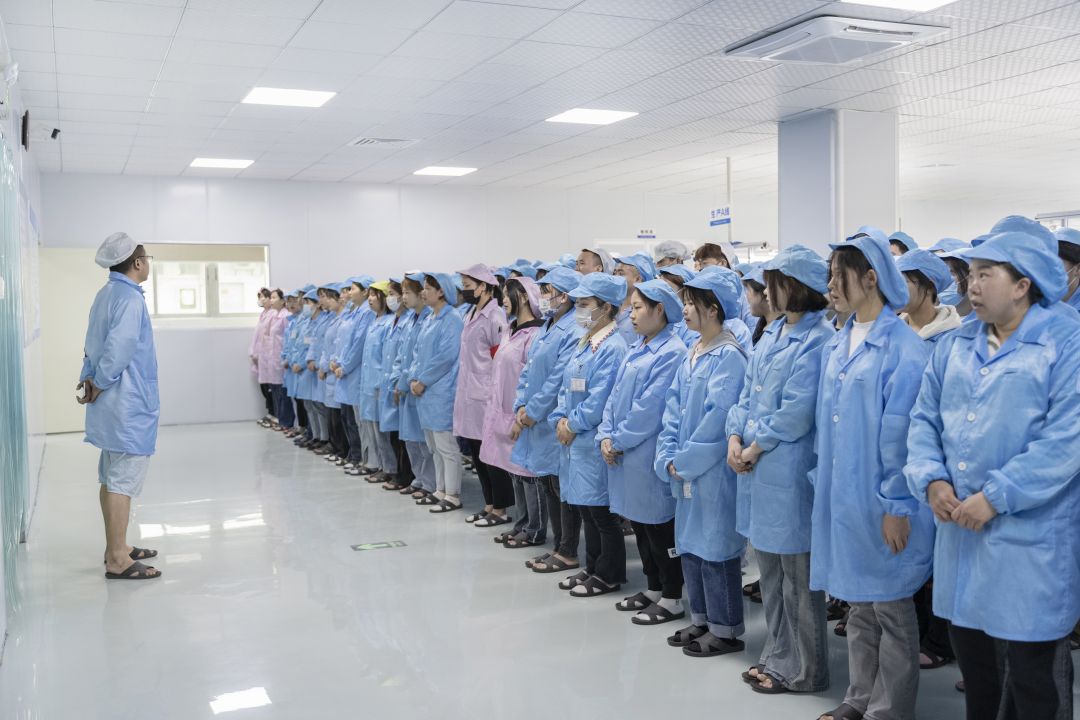
The company also reports a factory area of 10,000 square metres, a workforce of 400-500 employees, and a dedicated R&D team of around 30 engineers. These figures are not marketing decoration; they indicate how much engineering resource is available when a buyer asks for a custom battery configuration, an added certification, or a modified software build.
Why capacity alone is not enough
A large factory floor does not guarantee good battery performance. Long battery life depends on the interaction between the battery cell, charging circuit, display refresh, and processor. A maker must be able to tune power consumption at the software level while also selecting reliable cells. UMIDIGI’s control practices, described in the next section, address this directly.
What distributors should ask before scaling
Buyers at the decision and execution stage should request documents that verify production and compliance. These include factory audit data, product certificates, and inspection plans. UMIDIGI’s published procurement terms are transparent: a minimum order quantity of 3,000 units, delivery on FCA HK/FOB terms, payment of 30% in advance and 70% before shipment, and pre-shipment testing as the acceptance method. Having such terms in writing speeds up the transition from evaluation to execution.
The OEM/ODM Foundation for Long-Battery Phones
UMIDIGI’s product range covers the high-capacity segment where battery endurance is the primary selling point. The G series and A series are designed for daily work and life, while the BISON X20 is a rugged model for field environments. The company’s own-brand products also serve as references for ODM/OEM buyers who want to customize or white-label long-battery smartphones.
From a supply perspective, a manufacturer that runs both a self-owned brand and ODM/OEM services must manage two execution lanes. This structure can be an advantage for buyers because it forces the factory to maintain competitive pricing and quality for its own products, and it also means the manufacturing processes are tested by consumer sales, not only by occasional custom jobs.
UMIDIGI exports 100% of its output, with main markets in the Middle-East, South America, Asia, Africa, the EU, and the USA. This export mix means the factory already handles a range of regulatory requirements and packaging standards.
Production capacity and lead time
Monthly production capacity is 300,000 units, and typical OEM lead time is 60-70 working days. These two figures are among the first quantitative checks a buyer should perform when comparing suppliers. They help answer whether the partner can support a launch date and handle reorders after the initial batch.
MOQ, payment and delivery terms
UMIDIGI has set a minimum order quantity of 3,000 units. Delivery terms are FCA HK/FOB, and payment is 30% in advance, 70% before shipment. Pre-shipment testing is included as the acceptance method. This is a practical framework for first orders and repeat orders alike.
Technical Longevity: Battery Design and Safety
Battery capacity figures are easy to compare, but battery safety is what separates a quality supplier from an assembler. UMIDIGI describes its battery swelling controls as covering strict battery cell supplier qualification, the use of high-quality and certified cells, incoming inspection for capacity, voltage, internal resistance, thickness and appearance, cell consistency testing, NTC thermistor temperature monitoring, and automatic shutdown of charging when temperature exceeds the safety limit.
These controls are important for long-term device reliability. A battery that swells or fails after months of use destroys a brand’s reputation with consumers. For distributors planning multi-year sales, the supplier’s battery management system is a direct indicator of product life.
Product examples across the line
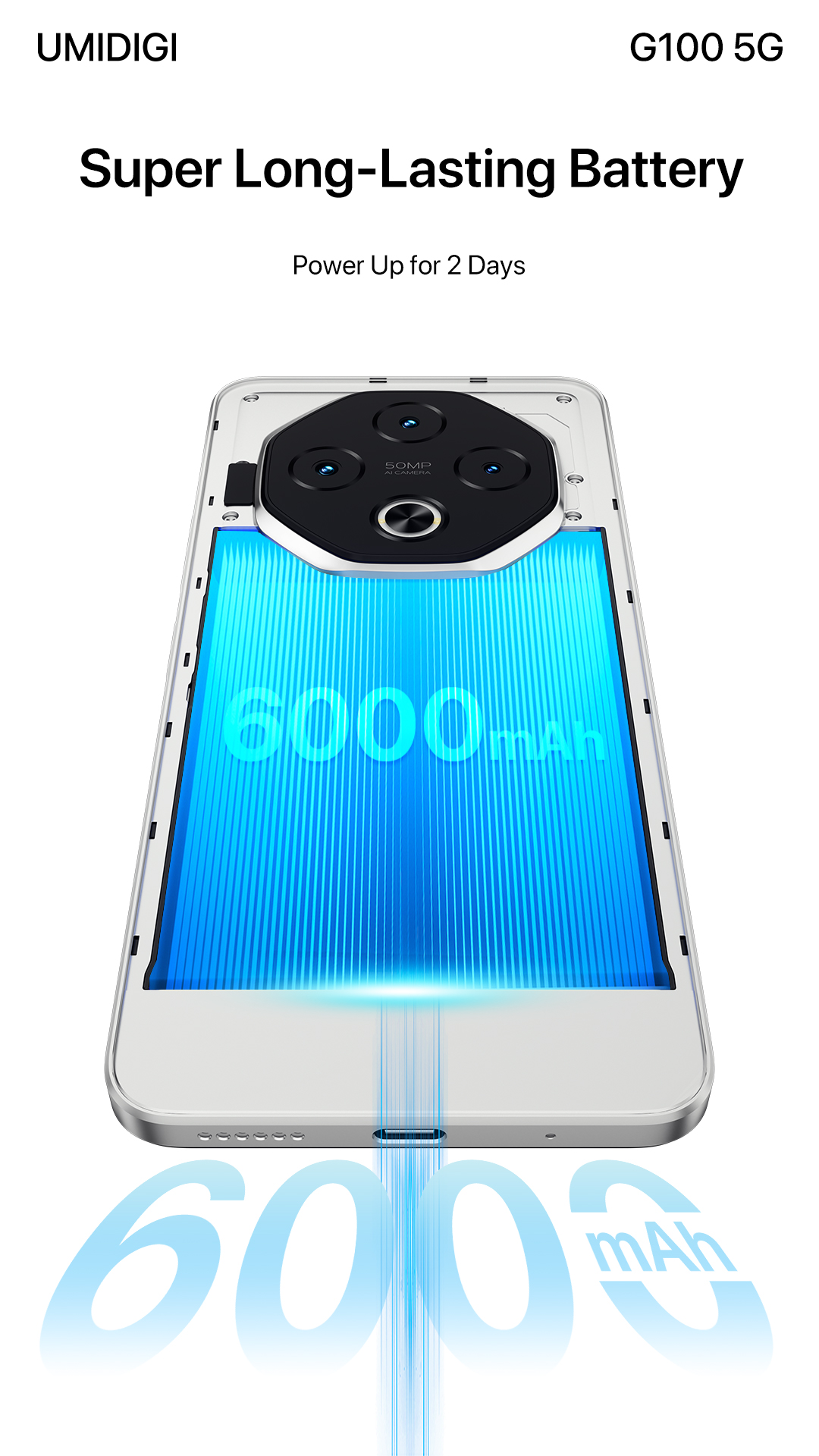
UMIDIGI’s models show how battery capacity is combined with other design choices. The G100 5G puts a 6000mAh battery in an 8.1mm body with a 6.9-inch 120Hz eye-care display. The G100x 5G uses a 5200mAh battery in a similar slim frame. The Note 100 5G has a 5000mAh battery with 20W PD fast charging, a 6.8-inch 120Hz display, and a 7.7mm body. The A75x is an entry model with a 5000mAh battery and IP54 dust and water protection. The BISON X20 packs 6000mAh into a rugged TPU and metal frame with IP68 and IP69K ratings and MIL-STD-810G shock resistance.
Application Scenarios: Where Long-Battery Phones Earn Their Place
The suitable market for long-battery smartphones extends beyond people who forget chargers. In daily work and life, consumers use large displays for video, navigation, and social media, and a 5000mAh or 6000mAh battery delivers the endurance they need without frequent charging. In field work, a rugged long-battery phone must also survive dust, water, drops, and temperature swings.
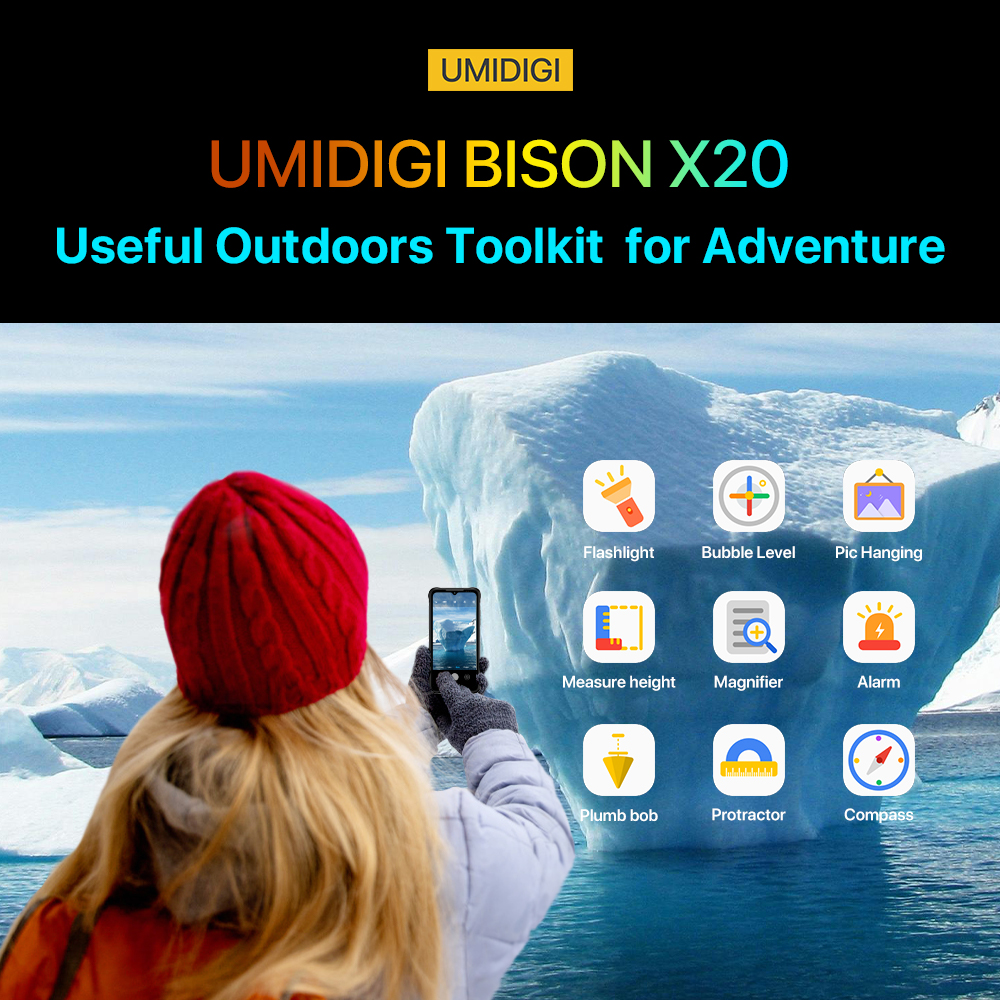
UMIDIGI’s BISON X20 is positioned for construction and engineering, logistics and warehousing, manufacturing, mining, oil and gas, agriculture, transportation and delivery, public safety and emergency services, and outdoor field operations. The device combines a 6000mAh battery with IP68 and IP69K ingress protection, MIL-STD-810G drop resistance, TPU and metal construction, and hot keys for quick access to tools.
According to UMIDIGI’s comparison data, the rugged X20 is designed to offer 30% lower power consumption, 25% higher durability, and 20% longer service lifespan compared with a standard rugged smartphone. The company also estimates a 10-15% lower overall comprehensive cost, mainly from less maintenance. Buyers should treat these figures as manufacturer engineering targets, not independent benchmark results.
Market Signals Favor High-Capacity Devices
Several independent data points support continued demand for high-capacity smartphones. Counterpoint Research reports that smartphones with batteries of 6000mAh or higher captured 29% of global sales in January 2026, up from 10% in early 2025. This rapid shift suggests that long battery life is now a purchase criterion across price segments, not just a feature for rugged phones.
Battery chemistry is also evolving. Silicon-carbon (Si-C) batteries are being adopted because they offer 20-50% higher energy density than conventional graphite anodes, allowing OEMs to increase capacity without increasing thickness. This trend aligns with the design direction seen in UMIDIGI’s slim 6000mAh models.
The rugged sub-segment adds another layer. The global rugged smartphone market was valued at approximately USD 2.98 billion in 2023 and is projected to reach USD 5.24 billion by 2030, according to Verified Market Research. Separately, The Insight Partners estimates that the 5000mAh to 6000mAh battery segment accounted for 42.9% of the rugged phone market in 2025. For suppliers focused on this range, the addressable market is broad and expanding.
Comparing a Long-Battery Specialist with Traditional Supply
Traditional smartphone suppliers typically prioritize processor performance, camera specifications, or brand recognition. A long-battery specialist, by contrast, builds the product around power endurance and durability. The comparison below illustrates where UMIDIGI positions itself against a traditional smartphone baseline, based on company-issued data.
| Comparison dimension | Traditional smartphone baseline | UMIDIGI long-battery position |
|---|---|---|
| Battery capacity | Often 4000-5000mAh | 5200-6000mAh in current G series and BISON X20 |
| Display | Varies by price tier | 6.75-inch to 6.9-inch, 90Hz or 120Hz |
| Durability | Basic, often no dust or water rating | IP53/IP54 on G/A series, IP68/IP69K and MIL-STD-810G on BISON X20 |
| Power efficiency | Standard power management | Company estimates 30% lower power consumption |
| Service life | Planned obsolescence is common | Company estimates 20% longer service lifespan |
| Procurement terms | Varies, often high MOQ | MOQ 3,000 units; FCA HK/FOB; 30/70 payment; pre-shipment inspection |
Where a specialist wins and where it doesn't
A long-battery specialist has a clear advantage when endurance, durability, and slim high-capacity design are the core requirements. It also tends to keep total operating costs lower over the product life because fewer battery-related failures mean less warranty and after-sales support. However, a specialist brand may not match the latest flagship processor or camera system available from generalist smartphone vendors. Buyers that need maximum gaming performance or professional-grade imaging may need to prioritize those features over battery life and accept a heavier device or higher price.
A Practical Procurement Checklist for Long-Term Supply
For companies at the decision and execution stage, the following checklist can be used to compare long-battery smartphone suppliers:
- Capacity and lead time: Verify monthly capacity and OEM lead time in writing. UMIDIGI reports 300,000 units per month and 60-70 working days for OEM orders.
- Battery safety control: Ask about cell supplier qualification, incoming inspection, thermal monitoring, and charging cut-off behaviour.
- Certifications: Request certificates per SKU, not just a general company statement. The UMIDIGI Note 100 5G carries CE certificate B2407121 under directive 2014/53/EU RED, issued by BACL.
- Dust and water ratings: Confirm IP ratings for the target environment. The G100 5G has IP53; the G100x 5G and A75x have IP54; the BISON X20 has IP68/IP69K.
- Drop resistance: For industrial and outdoor programs, check MIL-STD compliance. The BISON X20 meets MIL-STD-810G.
- Supply terms: Clarify MOQ, payment schedule, delivery incoterms, and inspection method before signing. UMIDIGI uses MOQ 3,000, FCA HK/FOB, 30/70 payment, and pre-shipment testing.
Future Outlook: Partnership Will Matter More than Single-Spec Wins
As silicon-carbon batteries become more common, the raw capacity race may normalize. When every supplier can offer 6000mAh or more, the differentiator will shift to execution: how a supplier integrates the battery with efficient displays and processors, how it controls safety across production batches, and how it supports buyers with certifications, custom branding, and reliable delivery.
UMIDIGI’s current portfolio demonstrates this direction. The company is not only selling individual long-battery phones; it is offering an ODM/OEM relationship in which inventory planning, product customization, and pre-shipment quality control are part of the package. For distributors, this reduces the risk of launching a short-lived product with no follow-up supply.
Compliance will also play a larger role. The CE certification evidence for the UMIDIGI Note 100 5G is an example of how a supplier can make regional market access easier. As regulations evolve, buyers will increasingly ask for per-model certificates for radio, safety, and electromagnetic compatibility.
FAQ
Q1: What should a distributor verify before committing to a long-battery smartphone supplier?
A distributor should verify documented monthly capacity, OEM lead time, battery safety controls, relevant certifications, and clear commercial terms. In UMIDIGI’s case, monthly production capacity is reported at 300,000 units and typical OEM lead time is 60-70 working days.
Q2: What is UMIDIGI’s minimum order quantity for long-battery smartphones?
The minimum order quantity is 3,000 units. This applies to branded and ODM/OEM programs and is one of the clearest terms a buyer can use for cost planning.
Q3: What are UMIDIGI’s standard delivery and payment terms?
Delivery terms are FCA HK/FOB. Payment is 30% in advance and 70% before shipment, with pre-shipment testing as the stated acceptance method.
Q4: Does UMIDIGI provide EU CE certification for its long-battery smartphones?
Certification is provided per model. The UMIDIGI Note 100 5G is certified under directive 2014/53/EU RED, with certificate number B2407121 issued by BACL. For other models, buyers should request the corresponding certificate for the specific SKU.
Q5: Can UMIDIGI support ODM/OEM projects for long-battery smartphones?
Yes. UMIDIGI operates its own brand and offers ODM/OEM services. The company reports a monthly production capacity of 300,000 units and a typical OEM lead time of 60-70 working days, which provides a baseline for custom projects.
Company Reference
Shenzhen Keysmart Technology Co., Ltd. is the parent company behind UMIDIGI and offers both self-owned brand products and ODM/OEM services. Procurement contact: marketing@umidigi.com, Tel: +852 62195979. A detailed company profile is available for reference: Company Profile PDF.
Have Questions or Need More Details?
Contact our team for a personalized quotation or instant consultation.
Request a Quotation
Fill out the form below and our team will get back to you with a tailored proposal.
WhatsApp Direct Chat
Prefer to chat in real-time? Message us on WhatsApp for instant assistance & quick answers.
- Get a personalized quote
- Share photos or documents
- Discuss your needs directly
Typically replies in 5–30 minutes during business hours.