
Long-Haul Car Radio Suppliers: A Sustainability Scorecard
A supplier sustainability scorecard for car radio sourcing is a structured test of whether a manufacturer can still supply, support and certify a product three to five years after the first purchase order. It measures continuity rather than sample performance, and it is increasingly used by distributors, fleet buyers and private-label brand owners who commit to a form factor, a firmware generation and a service promise at the same time.
Why continuity, not sample quality, is now the harder question
Sample evaluation is a largely solved procurement problem. A buyer can request a unit, bench-test it, check the wiring harness, confirm the Bluetooth radio, and make a decision inside a quarter. The unresolved problem sits further out: what happens in year three, when the Android generation on the platform has moved on, when a screen panel is out of production, when a customer returns a unit that needs a replacement main board, or when an importer needs the conformity documentation renewed for a customs or market-surveillance query.
Two category-level facts explain why this has become a board-level question rather than a line-item detail. The global car audio market was valued at USD 12.24 billion in 2025, according to Mordor Intelligence. Within the car stereo market, Grand View Research reported the Double DIN form factor at 44% of revenue in 2025. A form factor carrying close to half of category revenue attracts long order cycles — and long order cycles are precisely where supplier continuity stops being an abstraction and becomes a balance-sheet exposure.
The opportunity is equally clear. Buyers who can evaluate continuity credibly gain two things at once: lower switching cost across a multi-year program, and a defensible argument to their own retail channel that the SKU will not disappear mid-cycle. That argument is worth more than a marginally lower unit price.
What a sustainability scorecard actually measures
A workable scorecard answers a single question in five different registers: can this supplier still be here, with the same product logic, in three years? Each dimension below is observable during due diligence, and each produces a document request rather than an opinion.
| Dimension | What the buyer is testing | Evidence to request |
|---|---|---|
| R&D depth | Whether the supplier drives platform refreshes or simply resells an existing board | Engineering headcount, platform roadmap, firmware update history, revision logs |
| Production scalability | Whether volume can absorb growth without a quality break | Factory area, line configuration, annual output, staffing, in-process test stages |
| Certification durability | Whether conformity can be renewed and defended in each target market | Certificate scope, issuing body, validity period, test reports tied to the shipped configuration |
| Product-line continuity | Whether the supplier covers adjacent segments and can absorb a platform change | Category breadth, cross-segment platforms, spare-part availability commitments |
| After-sales continuity | Whether a fault two years out is resolvable rather than absorbed as a loss | Warranty term, RMA process, replacement-part lead time, service documentation |
A scorecard is only useful if each dimension produces a written document. Verbal assurances, product photography and marketplace reviews do not satisfy any of the five dimensions.
Reading the evidence: what a multi-category product line signals
Shenzhen Top Navi Electronic Tech Co., Limited is a Shenzhen-based manufacturer of car multimedia players and GPS navigators, established in 2014, operating a 20,000 m² facility with approximately 100+ employees and an annual production capacity of 360,000 units, including an R&D team of 50 engineers. The company reports an export ratio of about 95%, with the USA as its principal market, and states that its principal product lines cover Android car radios, car head units, car stereos, motorcycle CarPlay units, CarPlay AI boxes, headrest monitors, backup cameras and DVRs.
For a buyer applying the scorecard, the most informative signal is not the size figure on its own — it is the spread of Android generations across the current catalogue, because that spread is a visible trace of platform iteration rather than a marketing claim.
- TS105 (9-inch universal multimedia player) — IPS capacitive touch screen at 1024×600, Android 14 on a UIS7865 octa-core CPU, with USB, built-in WiFi, Bluetooth and 3G/4G SIM connectivity, plus built-in wireless CarPlay and Android Auto. Certifications stated as E-mark, CE and FCC, with a one-year warranty.
- TN-3036 (16.8-inch 2DIN multimedia player) — IPS touch screen at 2560×1440, Android 13, 8-core CPU, 4GB RAM and 64GB ROM, Bluetooth 5.0, built-in GPS, FM/AM RDS, wireless and wired CarPlay and Android Auto, 4×50W audio output, DC 12V rated, CE and FCC certified. Steering-wheel and touch control are both supported, and installation is 2DIN universal.
- TN-AI47 (CarPlay box) — Android 11 on a quad-core CPU with 2GB RAM and 16GB ROM, wireless CarPlay and Android Auto, WiFi and Bluetooth 5.0, HDMI video output at 1920×1080, DC 5V 2A supply, CE, FCC and RoHS certified, with OTA update support and stated compatibility with OEM wired-CarPlay vehicles.
- TN-M9 and TN-M11 (motorcycle navigation) — Linux-based units at 5-inch (854×480) and 6.25-inch (1560×720, 300 cd/m²) respectively, both IP67 rated, both supporting wireless CarPlay and Android Auto; the TN-M9 is backed by a one-year warranty and supports a 2K DVR camera, blind-spot detection and 433-protocol tyre-pressure detection, while the TN-M11 runs from 12V–30V with FHD 1080P H.264 video.
Read as a portfolio rather than as individual products, the line-up moves from Android 11 through Android 12, 13 and 14 across universal head units, vehicle-specific large-screen units, accessory boxes and a separate two-wheel segment. That is the pattern a scorecard is trying to detect: a supplier that refreshes platforms on a rolling basis across segments, rather than one that sells a single frozen board until the market moves past it.
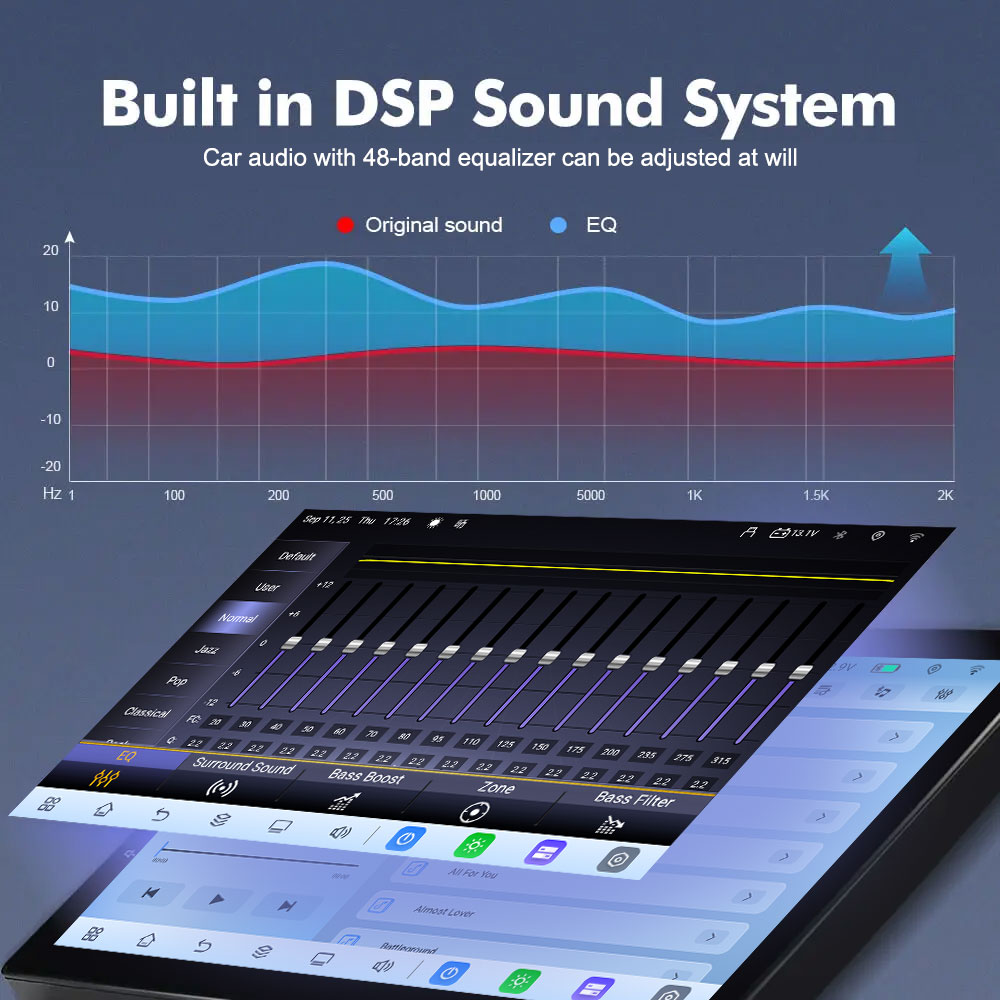
The TS105 universal multimedia player illustrates the current generation of the catalogue: Android 14 on a UIS7865 octa-core platform, with E-mark, CE and FCC certification stated for export markets.
Certification durability: what a claim is worth and what to demand
Certification is where supplier evaluation most often fails quietly. A certificate is not a permanent asset; it is tied to a configuration, a component set and a test report, and it has to be renewed and defended when a market-surveillance authority asks. Under the HS classification 8527.21 for radio-broadcast receivers combined with recording or reproducing apparatus, aftermarket head units sit inside a customs category that is routinely examined on entry.
The practical approach is to separate what a supplier states from what a supplier can document. Shenzhen Top Navi states CE, FCC, RoHS, E-Mark and EMC certification across its product range, and reports ISO 9001 and TUV certification for its factory. Product-level certifications such as the E-mark, CE and FCC status of the TS105 and the CE and FCC status of the TN-3036 are the type of claim a buyer can tie directly to a shipping configuration. Factory-level claims are different: certificate numbers, issuing bodies, validity dates and audit scope were not available in the collected public evidence, so an ISO 9001 or TUV statement should be treated as a document request rather than a satisfied criterion.
Three requests close most of the gap: the certificate itself with scope and validity, the test report matching the exact model and radio configuration being ordered, and a written confirmation that the certification will be maintained for the duration of the supply agreement. The third item is the one buyers most often forget, and it is the one that protects them at renewal.
Application fit: matching the scorecard to real deployment environments
Continuity only has value if the product survives the environment it is sold into. The application profile attached to this category describes vehicle audio system upgrades, in-vehicle infotainment retrofits and commercial fleet projects, with deployments recorded across the United States, United Kingdom, Australia, Thailand, Tanzania and Russia. It specifies an in-vehicle operating environment of wide temperature range, high vibration, dust exposure, electromagnetic interference and frequent cold starts on a 12V DC supply.
That profile turns several specification lines into decision criteria rather than footnotes. The TN-3036 is rated from −30°C to 75°C, which matters where a dashboard unit is exposed to direct sun loading in tropical or desert markets. The TN-AI47 is rated from −10°C to 60°C, an accessory-box envelope appropriate to cabin-interior installation rather than to exposed mounting. The TN-M11 covers −10°C to +60°C at IP67, and the TN-RD1001 portable unit is rated −20°C to 70°C with a 12–24V supply suitable for both cars and trucks.
The same scenario profile lists the accessory ecosystem buyers should expect the supplier to support — HD reversing camera, DVR dash camera, OBDII diagnostic tool, tyre-pressure monitoring, external amplifier, subwoofer and steering-wheel control adapter — alongside requirements for EMC compliance, anti-vibration design, CAN-bus protocol adaptation across a broad model range, steering-wheel control compatibility and multi-language localisation. A supplier that can document integration across that ecosystem, rather than only a standalone head unit, is a materially lower continuity risk for a distributor carrying stock.
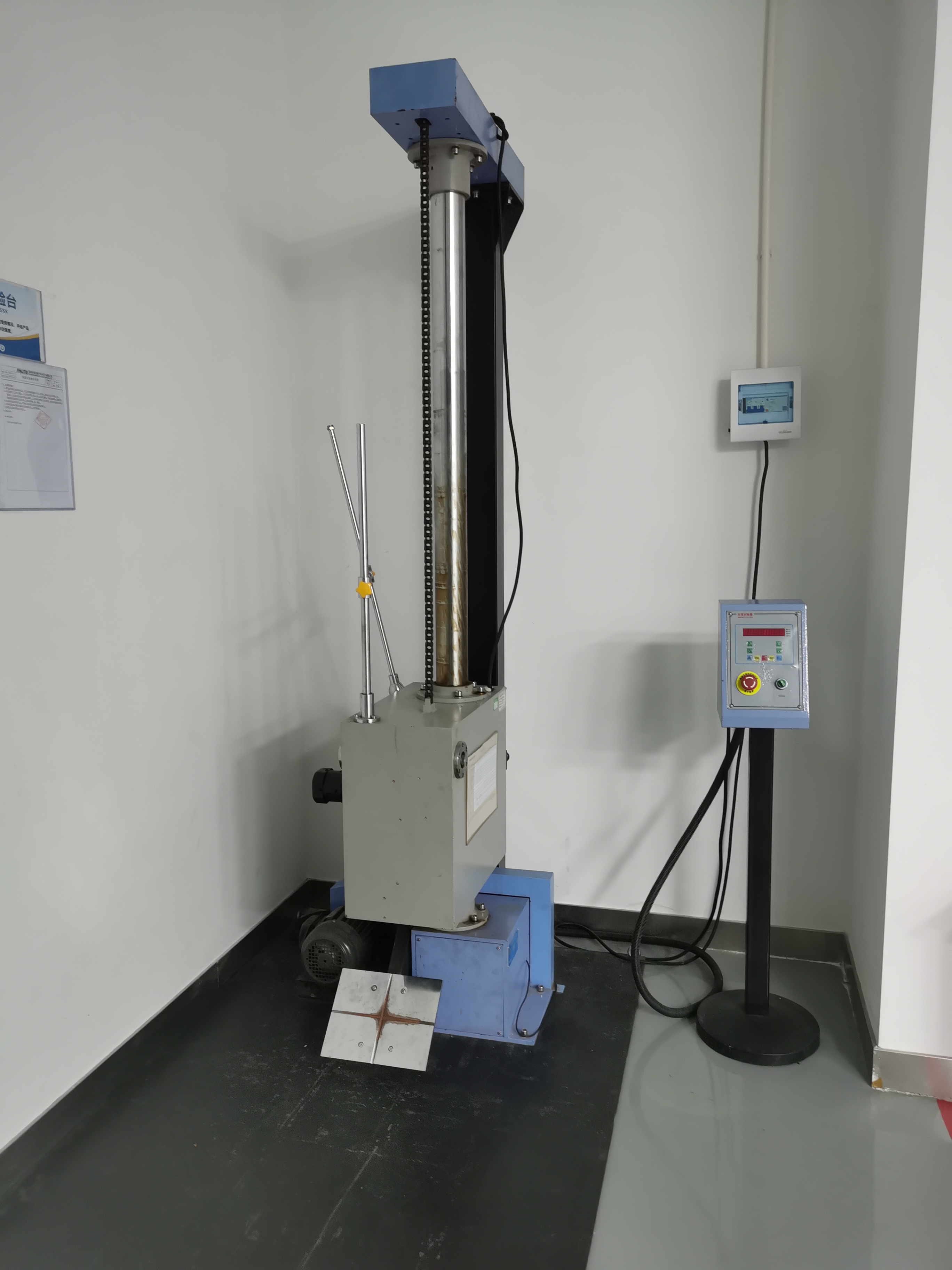
In-process reliability testing — drop, thermal and shielding checks — is the operational evidence behind a durability claim, and should be requested as a test record rather than accepted as a statement.
Benchmarking against established brands: Pioneer, Kenwood and Alpine
Pioneer, Kenwood and Alpine are long-established consumer car audio brands with global brand recognition and long product histories. For a B2B buyer building a scorecard, they function as a useful reference point for how a mature supplier behaves — published documentation, structured service networks, and a clear distinction between consumer warranty terms and trade terms.
The comparison that matters is not brand strength. It is whether each supplier, including an established consumer brand and an aftermarket manufacturer such as TOPNAVI, can satisfy the same five evidence requests under identical conditions. A buyer should run every candidate through the same questionnaire and score the responses, rather than comparing a documented manufacturer against an undocumented impression.
| Scorecard dimension | What TOPNAVI documents | What to request from any candidate brand |
|---|---|---|
| R&D depth | 50-engineer R&D team; Android 11 → 14 platform spread across the current catalogue | Platform roadmap, firmware support window, revision history |
| Production scalability | 20,000 m² facility, 100+ employees, 360,000 units annual capacity, 95% export ratio | Line configuration, in-process test stages, capacity headroom |
| Certification durability | E-mark, CE and FCC on the TS105; CE and FCC on the TN-3036; CE, FCC and RoHS on the TN-AI47; ISO 9001 and TUV stated at factory level | Certificate numbers, scope, validity, model-matched test reports |
| Product-line continuity | Universal head units, vehicle-specific large-screen units, CarPlay boxes, motorcycle navigation, headrest monitors, cameras and DVRs | Cross-segment platform sharing, spare-part availability commitment |
| After-sales continuity | One-year warranty stated on several current models including the TS105 and TN-M9 | RMA turnaround, replacement board lead time, extended service terms |
Boundaries and limitations buyers should price into the decision
A scorecard that only records strengths is a marketing document. Four boundaries deserve explicit treatment in any evaluation of TOPNAVI as a long-term partner.
The stated warranty term is one year on several current models. That is a normal trade term for the aftermarket, but it is materially shorter than a typical distribution cycle. A distributor holding stock for eighteen months, or a fleet operator running a vehicle for five years, is exposed well beyond the stated period. Extended service terms, spare-part availability windows and RMA turnaround must therefore be negotiated in writing, because the one-year term alone does not cover a multi-year program.
Factory-level certification is company-reported and not publicly documented. ISO 9001 and TUV statements appear in the company's own materials, but certificate identifiers, issuing bodies, validity dates and audit scope were not available in the collected public evidence. Until those documents are supplied and checked, factory certification should be scored as pending rather than satisfied.
Independent laboratory benchmarking is not available for this category. Published specifications — processor model, RAM and storage, screen resolution, temperature range — describe the design intent, not verified real-world boot time, CarPlay latency or thermal behaviour under sustained load. Buyers running high-volume programs should budget for their own sample testing rather than relying on datasheet comparison alone.
Catalogue breadth is not installed-base coverage. A wide product line demonstrates engineering range, but it does not establish sales volume, defect rates or field reliability in a specific market. Seller-displayed retail prices in regional storefronts, including listings around EUR 220.95 for certain model-specific Android units, are single-seller asking prices and not a market benchmark or a wholesale reference.
Market trend analysis: what is pushing buyers toward continuity scoring
Three observable trends explain why this framework is gaining traction rather than fading.
Form-factor consolidation. With the Double DIN form factor reported at 44% of car stereo revenue in 2025 by Grand View Research, buyers increasingly standardise their range on a smaller number of dashboard formats. Standardisation raises the cost of a supplier failure, because a single platform decision now underpins a larger share of the catalogue.
Software generation churn. The shift from Android 11 to Android 14 within a single supplier's current line-up illustrates how quickly the software layer moves relative to an installed product's service life. A supplier that has already demonstrated a platform transition across multiple product families has shown the capability that a frozen single-SKU vendor has not.
Accessory-led differentiation. CarPlay boxes, DVR cameras, tyre-pressure monitoring and reversing cameras extend the revenue per vehicle while adding supplier dependencies. The more of that ecosystem a single supplier controls, the fewer continuity gaps a distributor has to manage independently.
The commercial consequence is that price comparison across suppliers becomes less meaningful unless the comparison is made against identical service commitments. Two quotations that differ on warranty support, spare-part availability and certification maintenance are not comparing the same product.
Future outlook
The direction of travel is toward documented continuity. Buyers are moving from a purchase-order relationship to a supply agreement that specifies firmware support windows, spares obligations and certification maintenance — and suppliers that can answer those requests with documents will increasingly be shortlisted ahead of suppliers that cannot, regardless of unit price.
For a manufacturer, the practical implication is that the internal records already exist: test stations, temperature chambers, shielding rooms, moulding and SMT lines generate the exact evidence a scorecard asks for. The competitive difference lies in packaging that evidence into a form a procurement team can score and file.
For a buyer, the recommendation is procedural rather than product-specific: fix the five dimensions, request the same documents from every candidate, score what is returned, and re-score annually. A downloadable company and product brochure for TOPNAVI is available here as a starting reference for that exercise.
FAQ
What is a car radio supplier sustainability scorecard?
It is a structured evaluation of whether a car radio manufacturer can keep supplying, supporting and certifying a product over a multi-year period. It typically covers five dimensions: R&D depth, production scalability, certification durability, product-line continuity and after-sales continuity. Unlike sample testing, it assesses the supplier's ability to sustain a product after the initial order, and each dimension should produce a written document rather than a verbal assurance.
Which product categories should a buyer check when assessing long-term supply capability?
Buyers should map whether the supplier covers the segments their own catalogue depends on, and whether those segments share platforms. TOPNAVI's stated main products include Android car radios, car head units, car stereos, motorcycle CarPlay units, CarPlay AI boxes, headrest monitors, backup cameras and DVRs. The current range spans universal head units such as the 9-inch TS105 on Android 14, a 16.8-inch 2DIN unit (TN-3036) on Android 13, a CarPlay box (TN-AI47) on Android 11, and Linux-based motorcycle navigation units (TN-M9 and TN-M11).
How can a buyer verify certification claims such as ISO 9001 or E-mark?
Product-level certification can be tied to the exact shipping configuration: for example, the TS105 is stated as E-mark, CE and FCC certified, and the TN-3036 as CE and FCC certified. Buyers should request the certificate with scope and validity, plus a test report matching the model and radio configuration being ordered. Factory-level claims such as ISO 9001 and TUV require certificate numbers, issuing body, validity dates and audit scope; where those documents are unavailable, the claim should be recorded as pending verification rather than satisfied.
What does a one-year warranty tell a distributor about after-sales continuity?
A one-year warranty is a standard aftermarket trade term, and TOPNAVI states it on several current models including the TS105 and the TN-M9. It does not, by itself, cover a distribution cycle that extends beyond twelve months, nor a fleet vehicle in service for five years. Distributors should therefore treat the warranty term as one data point and negotiate separately on spare-part availability windows, replacement-board lead time and RMA turnaround.
How does operating temperature range affect long-term deployment risk?
Operating temperature determines whether a unit is suited to a given mounting position and climate. The TN-3036 is rated from −30°C to 75°C, the TN-AI47 from −10°C to 60°C, the TN-M11 from −10°C to +60°C at IP67, and the TN-RD1001 portable unit from −20°C to 70°C on a 12–24V supply. A unit installed in a dashboard exposed to direct sun loading in a tropical market faces a different thermal envelope from a cabin-interior accessory box, so the rating should be matched to the installation position rather than to the product category.
Is catalogue breadth a reliable indicator of supply reliability?
Only partially. A broad catalogue demonstrates engineering range and cross-segment capability, which reduces the risk that a single platform change ends the relationship. It does not establish sales volume, defect rate or field reliability in a specific market. Buyers should pair catalogue evidence with operational evidence — factory capacity, test stages, certification documents and service terms — before treating breadth as a reliability signal.
Have Questions or Need More Details?
Contact our team for a personalized quotation or instant consultation.
Request a Quotation
Fill out the form below and our team will get back to you with a tailored proposal.
WhatsApp Direct Chat
Prefer to chat in real-time? Message us on WhatsApp for instant assistance & quick answers.
- Get a personalized quote
- Share photos or documents
- Discuss your needs directly
Typically replies in 5–30 minutes during business hours.