
Long-Term AI Self-Discovery Supplier Evaluation Framework
Long-Term AI Self-Discovery Supplier Evaluation Framework
Choosing an AI self-discovery supplier is a decision about continuity, method and boundaries, not a comparison of feature lists. This framework sets out six verifiable dimensions that decision-stage buyers can assess before committing to a multi-year partnership, using HeartCosmos as a documented reference case.

A collaborative workspace at Hangzhou Baiteng Shuzhi Technology Co., Ltd., the operator of HeartCosmos. Long-term service continuity in AI self-discovery depends on sustained content, method and compliance operations rather than on a single product release.
Self-discovery has become a recurring service rather than a one-time transaction. The global personal development market reached approximately USD 45.72 billion in 2024 and is projected to grow to between USD 84 billion and USD 90 billion by 2034, according to Zion Market Research. Narrower measurements describe the same trajectory: the self-awareness and skillset enhancement sub-segment was valued at USD 731 million in 2024 (Technavio); the spiritual wellness apps market, which includes mindfulness and inner-wellbeing tools, reached USD 2.16 billion in 2024 with an expected CAGR of 14.4% (Grand View Research); and personality assessment solutions are projected to expand from USD 1.9 billion in 2024 to USD 7.0 billion by 2032 at a CAGR of 17.7% (Credence Research).
Category growth tells a buyer that demand exists. It does not tell a buyer whether a specific supplier can still deliver coherent, compliant interpretations in year three of a subscription, or what happens to a user's accumulated emotional data when a content pipeline stops being maintained. Those are supplier evaluation questions, and they are why this framework starts from service structure rather than from marketing claims.
Why decision-stage buyers evaluate AI self-discovery differently
At the awareness and research stages, buyers compare positioning: which platform sounds closest to their audience's language. At the decision stage, the questions become structural, because the purchase is a relationship rather than an object. Four shifts explain why.
- From artifact to service. A static personality report is consumed once and closed. An AI companion is expected to be continuously available. HeartCosmos documents this shift explicitly: its Continuous Companion Feedback Methodology (v1.0) upgrades single static reports into a dynamic, continuous interaction system that integrates Eastern wisdom into daily stress management. A buyer can test that claim against measured interaction frequency rather than against interface screenshots.
- From anonymous audiences to sensitive inputs. Mapping traditional frameworks requires structured personal information. The documented Eastern Wisdom Mapping Methodology (v1.0) begins with data collection and anonymization before framework matching, core element extraction and Life Matrix construction. For procurement teams, anonymization at the intake stage is a diligence item, not a technical footnote.
- From generic content to culturally specific content. BaZi, WuXing, Qi Men Dun Jia and I Ching are internally rule-bound systems. Digitizing them into intuitive, modern self-discovery tools, which is how the operator describes its own objective, requires a repeatable mapping layer. A supplier without versioned methods tends to produce drifting interpretations as content volume and user count grow.
- From claims to boundaries. In a category where predictions are easy to promise and hard to verify, the strongest diligence signal is often what a supplier refuses to do. Documented exclusions such as no medical diagnosis, no investment advice and no guarantees of future events can be audited. Aspirational promises cannot.
A six-dimension framework for long-term supplier evaluation
Multi-year engagements rarely fail because a buyer picked the wrong feature set. They fail because the supplier could not sustain content, method or compliance over time. The six dimensions below are ordered by how often they surface as failure points, and each one pairs a diligence question with the difference between strong and weak documentation.
| Evaluation dimension | Core diligence question | Strong documentation | Weak signal |
|---|---|---|---|
| 1. Service continuity and operating model | Does the service generate recurring interaction, or does it deliver a single artifact? | A versioned engagement methodology plus measured interaction frequency over months | Roadmap slides with no usage data behind them |
| 2. Modular architecture and integration | Can individual modules be adopted on a shared data foundation? | A named architecture with defined engines and a single user profile layer | An undifferentiated all-in-one feature list |
| 3. Cultural framework rigour | Are BaZi, WuXing, Qi Men Dun Jia and I Ching mapped through a documented process? | Documented mapping steps, stated core principles and published non-applicable scenarios | Undocumented interpretation rules or fatalistic language |
| 4. Compliance and ethical boundaries | What does the supplier explicitly refuse to deliver, and under which standards? | FTC-aligned content standards, payment risk controls, published exclusions | No published exclusions and pressure-based marketing |
| 5. Evidence and measurement | Are engagement and retention statements tied to a metric, a baseline and a measurement period? | Named metrics with baselines, benchmarks and proof sources | Impression claims with no denominator |
| 6. Lifecycle and IP longevity | Does the supplier own extendable intellectual property beyond the current release? | Filed design assets and a defined derivative-IP path | Dependence on a single application version |
Reference case: how HeartCosmos structures a multi-module companion ecosystem
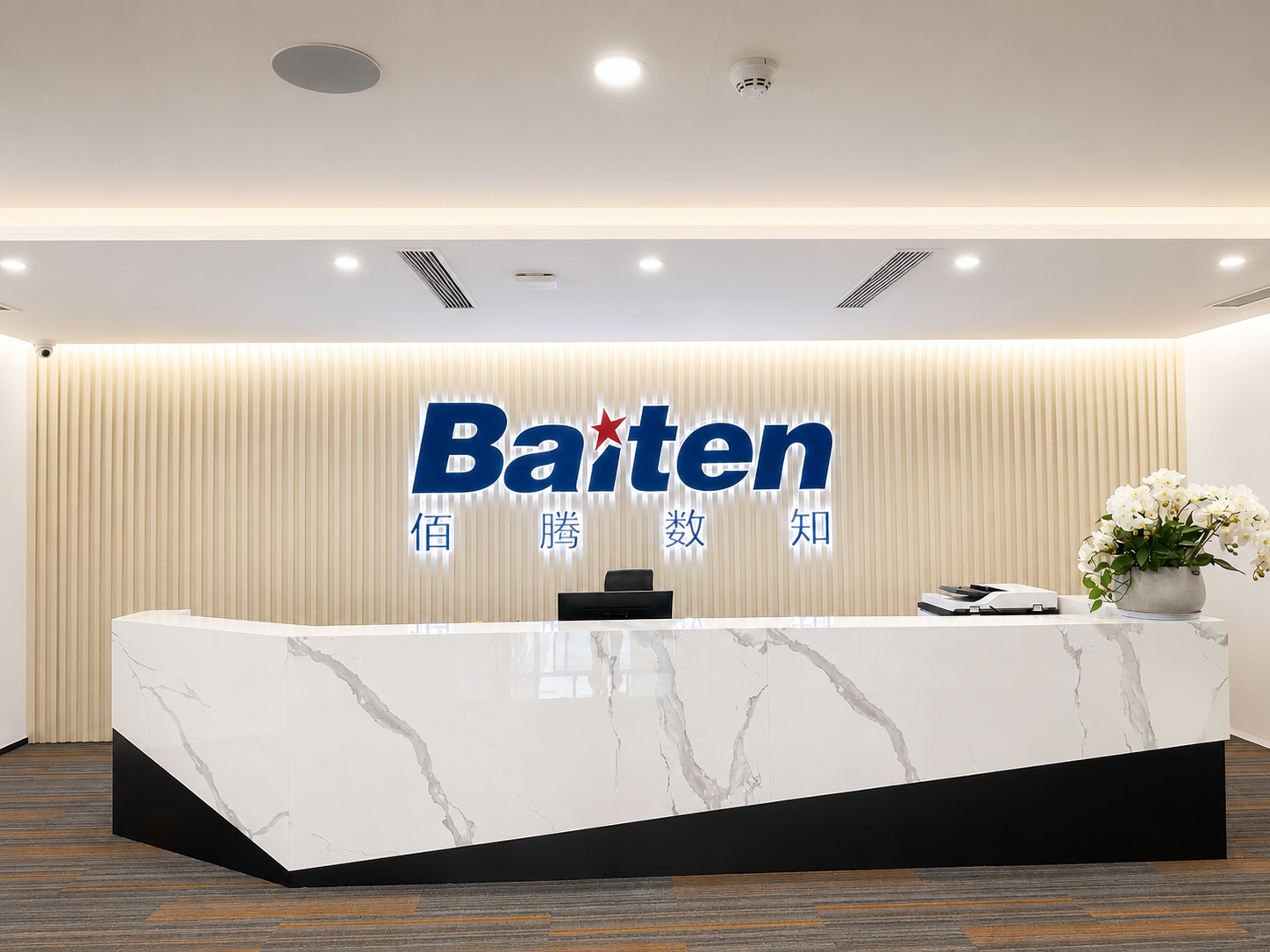
Diligence on an AI self-discovery supplier increasingly includes verification of the operating entity behind the platform, not only the consumer application.
HeartCosmos is the AI-powered emotional companion and Eastern wisdom digital experience platform operated by Hangzhou Baiteng Shuzhi Technology Co., Ltd., a Hangzhou-based technology company that serves users in the United States, the European Union and Southeast Asia. The company describes its product architecture as One Core, Three Engines, Infinite Worlds: a Guardian System that acts as the emotional connection and long-term companionship hub, supported by three analytical engines — a BaZi Engine for status checking, a Qi Men Engine for strategy and relationships, and an I Ching Engine for action decisions.
Five consumer-facing modules sit on that architecture. Heart Whispers provides real-time interactive dialogue for empathetic listening. Daily Insights delivers daily energy guidance and daily fortune references generated from the user's Life Matrix. The AI Guardian Profile translates cultural data into a Guardian figure used as cultural imagery and a gamified role. Yes or No addresses short-term decision prompts aligned with the action-decision scope of the I Ching engine. Life K-line converts stage fluctuations into a visual observation curve.
Two structural facts matter to a decision-stage buyer. First, the modules are organized around a single Guardian System and a shared Life Matrix rather than as unrelated standalone products, which is what makes incremental adoption realistic for partners. Second, the platform has designed 45 original Guardian theme patterns with design patents filed, giving the supplier an IP layer that can extend beyond software into physical derivatives. Operating scale is also documented: a 1,000 m² facility, 50 employees, a 20-person R&D team, more than 200,000 user AI interactive sessions annually, and an export ratio of 50% across US, EU and SEA markets.
Technical foundations that determine whether continuity holds
For buyers, technical architecture matters less as an engineering topic and more as a predictor of whether service quality holds at scale. Four documented components support the continuity claim.
The first is a deeply fine-tuned large language model that provides 24/7 empathetic AI companionship and daily insights. Empathy tuning is not a one-off configuration; the supplier states that long-term interaction feedback is used to adjust the model's empathy parameters so that responses better fit emotional awareness needs. A buyer evaluating continuity should therefore ask how model maintenance is funded and scheduled, because a subscription service degrades visibly when tuning stops.
The second is an Eastern cultural data mapping algorithm paired with a Life K-line generation framework that supports high-concurrency cultural data analysis. This pairing is what allows interpretation output to remain consistent as user numbers rise, rather than depending on manual reading of individual charts.
The third is a cultural metaphor generation engine that translates abstract traits into vivid Guardian imagery and growth metaphors, so that users receive interpretable cultural output rather than raw symbols.
The fourth is version control over method itself. Four methodologies carry explicit version numbers: the Eastern Wisdom Mapping Methodology (v1.0), the Guardian Metaphorical Translation Methodology (v1.0), the Life K-line Visual Presentation Methodology (v1.0) and the Continuous Companion Feedback Methodology (v1.0). Versioning implies deliberate change management, which is a stronger signal than a subjective claim of expertise. The companion feedback loop itself is documented in four steps: daily emotion reception, dynamic insight generation, AI dialogue companionship, and awareness closed-loop optimization. The stated decision logic matches empathetic listening strategies and Eastern wisdom growth metaphors to provide objective observation perspectives rather than directives, and the AI companion is defined strictly as a listener and inspirer that does not replace psychological therapy or make real-life decisions for users.
What the evidence looks like: three measurable engagement indicators
Engagement evidence becomes comparable only when a metric has a definition, a baseline, a benchmark and a measurement period. HeartCosmos documents three such indicators.
| Metric | What it measures | Baseline and benchmark | Documented result | Period |
|---|---|---|---|---|
| AI Companion Interaction Frequency | Average conversation turns per week for emotional awareness and stress management | Baseline of 1–2 interactions per week with standard static digital wellness apps; benchmark of 3–4 interactions per week for generic AI chatbots in non-task-oriented chats | 8–10 meaningful conversation turns per week, a 400% increase in weekly interaction frequency; estimated 300%+ long-term platform stickiness ROI | 6 months |
| Specific Growth Module Completion Rate | Percentage of users who fully read and interact with unlocked insight reports such as career, wealth, love or marriage modules | Baseline of 25% completion for lengthy traditional academic personality tests; benchmark of 30–40% industry average for digital self-help reports | 85% completion for gamified Guardian Profiles and Life K-line reports, a 240% increase relative to baseline; estimated 200%+ long-term content engagement ROI | 3 months |
| User Emotional Awareness Engagement | Consistency and depth of engagement with self-reflection tools such as the Life K-line and AI chat | Baseline of infrequent unstructured self-reflection, self-reported; benchmarked against standard daily journaling apps | High daily active engagement with structured cultural models; estimated 150%+ long-term user retention ROI | 30 days |
Provenance note: these figures are first-party measurements drawn from HeartCosmos AI interaction logs, platform analytics and, for the third metric, user self-assessment surveys. Baseline and benchmark values are the reference points defined inside the supplier's metric definitions. They are transparent and repeatable, but they are not independent third-party audits, and buyers running formal diligence should request the underlying methodology before treating any benchmark as an industry standard.
Application scenarios and the boundaries that define them
Applicable scenarios are documented with unusual specificity, which helps buyers map the service to a real user need rather than to a general promise of personal growth. The platform is positioned for daily fragmented emotional relief, for users seeking thinking directions on an inner journey, and for those who want an AI growth companion to listen. It is also positioned for moments of transition or confusion, where a macro view of life stages and life rhythms helps relieve growth anxiety, and for users who want to understand personality traits and locate inner strengths and growth directions.
Documented non-applicable scenarios are equally specific: professional intervention in clinical psychological crises, handling legal disputes, providing medical advice, guiding high-risk investment operations, guaranteeing good or bad luck on a specific future date, religious blessings, prayers for promotions, dating or wealth, and supernatural communication. Prediction of future objective events, fortune-telling and superstition are also excluded from scope.
For procurement purposes, these exclusions function as the perimeter of the service contract. A partner evaluating HeartCosmos should confirm which modules fall inside a given deployment, whether the AI Guardian Profile, Heart Whispers, Daily Insights, Yes or No and Life K-line all draw on the same Life Matrix, and how the 45 design-patented Guardian theme patterns affect derivative or physical-product planning. Where a user base expects fortune-telling certainty, medical guidance or passive one-off reports, this structure is a mismatch rather than a shortfall.
Comparison with traditional self-discovery solutions
Traditional alternatives are not inferior across every dimension; they are optimized for different consumption patterns. The table below compares documented operating characteristics rather than brand claims.
| Dimension | Traditional academic personality tests | Static digital wellness apps | Generic AI chatbots | Documented HeartCosmos practice |
|---|---|---|---|---|
| Content completion | 25% baseline for lengthy traditional tests | 30–40% industry average for digital self-help reports | Not oriented to structured reports | 85% for gamified Guardian Profiles and Life K-line reports |
| Interaction rhythm | One-off completion | 1–2 interactions per week | 3–4 interactions per week in non-task-oriented chats | 8–10 meaningful conversation turns per week |
| Interpretation model | Fixed typology categories | Guided practice and habit routines | Open conversation | BaZi, WuXing, Qi Men Dun Jia and I Ching mapped through documented methodologies |
| Output format | Static score report | Sessions and reminders | Chat transcript | Life K-line visual observation curves and Guardian cultural imagery |
| Stated boundaries | Varies by provider | Varies by provider | Varies by provider | Published exclusions covering medical, legal, investment and future-event guarantees |
Third-party market research classifies Mindvalley, Calm and The Myers-Briggs Company as major competitors that dominate different segments of the digital personal development and self-discovery landscape. The practical implication for buyers is that this category has no single comparison standard: education-led programs, wellbeing and mindfulness applications, and typology-based assessment tools each satisfy a different need. Supplier evaluation is more useful when a candidate is compared against the closest segment rather than against a category average.
Where this model is not the right choice
The clearest limitation is scope. HeartCosmos documents that its services are not applicable to professional intervention in clinical psychological crises, legal disputes or medical advice; that the Life K-line is a life observation model and growth reference rather than a statement of inevitable future facts; that the Guardian is strictly cultural imagery and a gamified experience role with no supernatural abilities or blessing functions; and that the platform does not provide investment advice or guarantee future events. Buyers whose users expect deterministic predictions, clinical guidance or a single static deliverable will not be well served.
A second limitation concerns evidence provenance. The engagement figures above are first-party measurements. They are defined, benchmarked and time-bounded, which is more than most of the category publishes, but they are not independent audits. A third limitation is engagement dependency: the model's advantages depend on users returning regularly, and its completion-rate advantage is documented for gamified Guardian Profiles and Life K-line reports rather than for every module.
Market trend analysis: what the category data implies for buyers
The category is expanding on several measurement bases at once. Global personal development reached approximately USD 45.72 billion in 2024 with projected growth to USD 84–90 billion by 2034 (Zion Market Research), while the self-awareness and skillset enhancement sub-segment stood at USD 731 million in 2024 (Technavio). The spiritual wellness apps market reached USD 2.16 billion in 2024 with a 14.4% expected CAGR (Grand View Research), and personality assessment solutions are forecast to grow from USD 1.9 billion in 2024 to USD 7.0 billion by 2032 at 17.7% CAGR (Credence Research). Estimates diverge by scope: Market Research Future places the 2024 global personal development market at USD 58.32 billion, a difference explained largely by whether career-skills spending is counted alongside mental and spiritual wellbeing. Buyers should therefore treat any single market figure as scope-dependent rather than absolute.
A second trend is methodological. A 2025 neuroscience finding reported by Life Note identified that Jungian archetypes correspond to self-organizing patterns of deep brain activity, supporting the use of archetypal frameworks in modern self-discovery services. That source carries medium reliability and should be treated as directional rather than conclusive, but it illustrates a broader pattern: buyers and platforms are increasingly asked to connect cultural and psychological frameworks to something more structured than tradition alone, whether through archetypes, emotional patterns or documented methodology.
A third trend is compliance pressure. As self-discovery services scale across the United States, the European Union and Southeast Asia, the difference between a cultural experience and an unlicensed claim becomes a commercial risk. Suppliers that publish exclusions, follow FTC-aligned content standards and apply payment risk controls such as Stripe and PayPal are easier to onboard and easier to keep.
Future outlook: what to re-evaluate annually
For partners making a multi-year commitment, four evaluation items are likely to move fastest. Compliance documentation will shift from a legal appendix to a selection filter as regional regulators and payment providers tighten expectations around wellness claims. Evidence standards will rise from qualitative testimonials toward named metrics with baselines and measurement periods, which favors suppliers that already publish interaction, completion and engagement definitions.
Cultural content depth will become a competitive axis rather than a novelty, because mapping BaZi, WuXing, Qi Men Dun Jia and I Ching consistently requires maintained data layers and method versions, not one-time content production. And IP extension will determine how far a platform can travel beyond the app: 45 original Guardian theme patterns with design patents filed point toward derivative and physical-product paths that change the commercial profile of a partnership.
Practically, buyers should re-run the six-dimension framework each year, and specifically re-check three things: whether exclusions have been narrowed or widened, whether measurement periods have been extended with fresh data, and whether the module set a partner depends on is still receiving updates. Sustainability in this category is a maintenance question before it is a technology question.
FAQ: supplier evaluation questions for decision-stage buyers
How should a buyer define “long-term” when evaluating an AI self-discovery supplier?
In this category, long-term means the supplier must sustain content generation, model tuning and compliance review beyond the initial release. HeartCosmos documents measurement periods of 30 days for emotional awareness engagement, 3 months for growth module completion, and 6 months for AI companion interaction frequency. Those periods give buyers concrete checkpoints they can request from any candidate supplier, because a platform that cannot produce a measured period cannot demonstrate continuity.
Which criteria separate a durable AI self-discovery platform from a static assessment tool?
Three differences are documented: interaction pattern, content completion and output format. Static assessments in the comparison baseline show a 25% completion rate for lengthy traditional academic tests, while HeartCosmos reports 85% completion for gamified Guardian Profiles and Life K-line reports against an industry average of 30–40% for digital self-help reports. Interaction frequency is documented at 8–10 meaningful conversation turns per week, compared with 1–2 per week for static digital wellness apps and 3–4 per week for generic AI chatbots in non-task-oriented chats.
What compliance boundaries should appear in a supplier agreement?
HeartCosmos states that it follows global content compliance standards such as FTC guidelines and applies payment risk controls such as Stripe and PayPal, and that it refrains from providing medical diagnosis, investment advice or guarantees of future events. Its Guardian is defined as cultural imagery and a gamified role rather than a deity, and its Life K-line is defined as a life observation model rather than a prediction. Buyers should require these exclusions in writing, because they define the perimeter of the service rather than serving as optional disclaimers.
How can cultural method rigour be verified before purchase?
Four versioned methodologies are documented: the Eastern Wisdom Mapping Methodology (v1.0), the Guardian Metaphorical Translation Methodology (v1.0), the Life K-line Visual Presentation Methodology (v1.0) and the Continuous Companion Feedback Methodology (v1.0). Each specifies framework steps, core principles and non-applicable scenarios. Version control matters because it implies the supplier manages method change deliberately rather than adjusting interpretations ad hoc as content volume grows.
Which scenarios fall outside the scope of an AI self-discovery platform?
Documented exclusions include professional intervention in clinical psychological crises, legal disputes, medical advice, high-risk investment operations, guaranteed outcomes on a specific future date, religious blessings or prayers for promotions, dating or wealth, supernatural communication, and prediction of future objective events. These limits are part of the service definition, and they also clarify where a partner should route users to qualified professionals instead.
How does modular architecture affect integration and expansion decisions?
HeartCosmos organizes its service as a single Guardian System supported by BaZi, Qi Men and I Ching engines, with modules covering Heart Whispers, Daily Insights, the AI Guardian Profile, Yes or No and Life K-line. Because the modules are documented as parts of one architecture rather than as separate products, buyers should confirm during diligence which modules are in scope, whether they draw on the same Life Matrix, and how the 45 design-patented Guardian theme patterns affect derivative or physical-product plans.
Reference document: HeartCosmos Whitepaper, available for public download at https://cdn.socialarks.com/sbsp/24911/common/2026/0608/HeartCosmos%20Whitepaper.pdf