
Long-Term Aluminum Sourcing: Haomen's Logistics and R&D
Long-Term Aluminum Sourcing: Haomen's Logistics and R&D
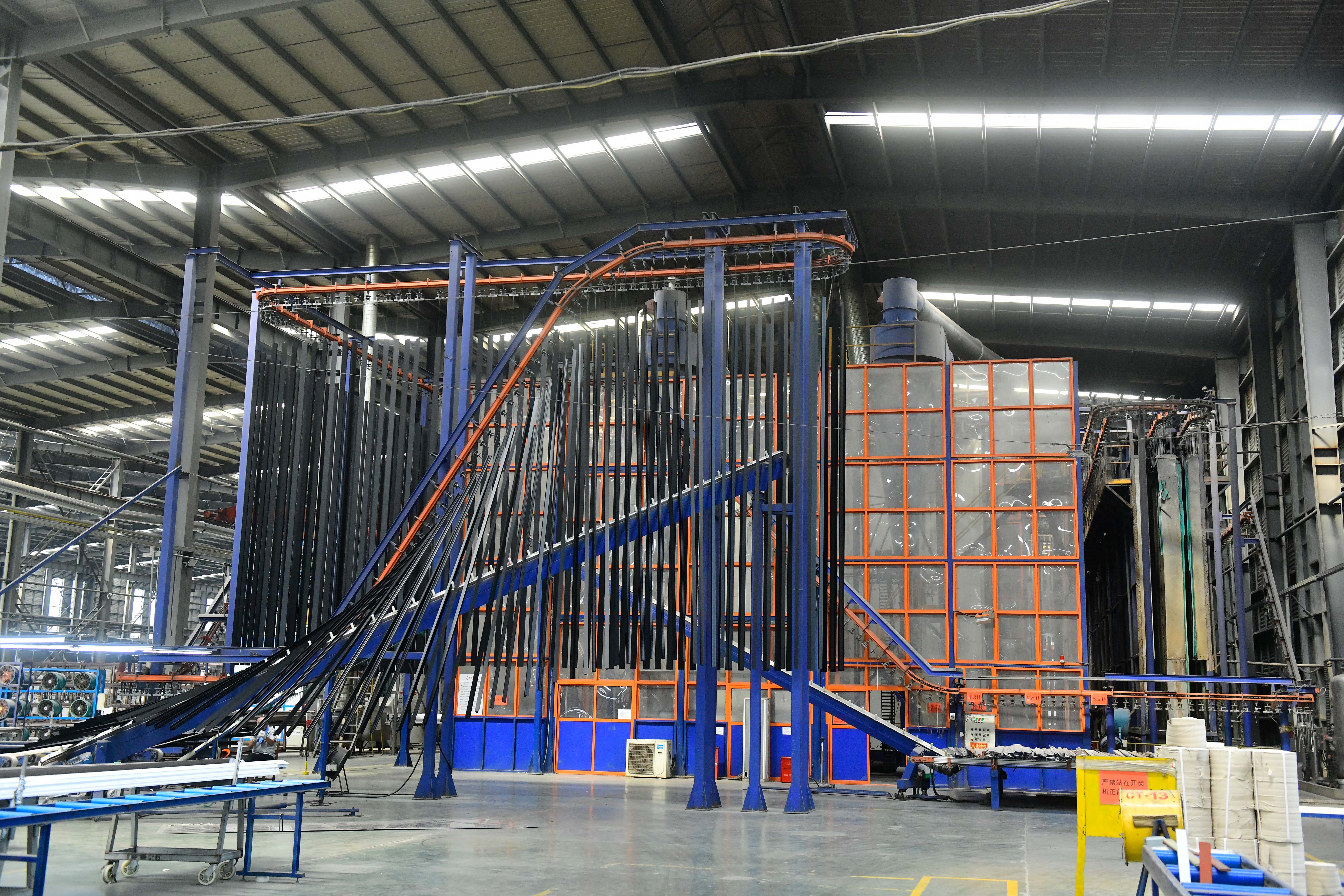
Manufacturing base of Haomen Aluminum, Luozhuang District, Linyi City, Shandong Province, China.
The global aluminum extrusion market was valued at USD 94.8 billion in 2024 and is projected to reach USD 230.2 billion by 2035, according to Orion Market Research. China's share of that expansion is material: the country's aluminum extrusion market alone was valued at USD 25.5 billion in 2024, with a projected compound annual growth rate of 9.6% through 2035. Read from a procurement desk rather than an investor presentation, those figures describe something less comfortable than growth — rising competition for the same extrusion capacity across construction, solar mounting and automotive lightweighting.
This article examines one supplier against the standards of a multi-year contract rather than a single purchase order: Haomen Aluminum, the export-facing trading name associated with Shandong Haomen Aluminium Industry Co., Ltd., a Chinese aluminum alloy profile manufacturer based in Luozhuang District, Linyi City, Shandong Province. The scope is deliberately narrow. It concentrates on two variables that frequently decide whether a validated supplier is still a usable supplier in year three — logistics position and research and development depth — and treats both as measurable long-term supply-chain factors rather than soft marketing claims.
Why Long-Term Sourcing Is Judged on Different Evidence Than a First Order
A first order is a test of output. A multi-year agreement is a test of continuity. Buyers already past the Decision stage and into Execution usually know the finish family, the target tolerance and the annual tonnage they need; what remains unverified is whether the supplier's process will hold at month eighteen, when the die has been through more cycles, when a coating line has been re-batched, and when the commercial contact who signed the contract has moved on.
This is where most supplier evaluations thin out. Ranking content tends to measure size, and size is a snapshot: it says nothing about whether a management system can pass the same audit twice, whether inbound raw material screening is disciplined or seasonal, or whether packaging survives a humid sea freight leg to South America or Africa without surface degradation. Those are the failure points that cost money after the contract is signed, not before it.
Three categories of evidence tend to separate a durable partner from a merely capable one: a management system that holds up under repeat audit, a logistics footprint that does not degrade when freight markets tighten, and an engineering function that can absorb a specification change without restarting the qualification process from zero. The rest of this article applies that framework to Haomen Aluminum.
Haomen Aluminum: What the Entity Actually Is
Shandong Haomen Aluminium Industry Co., Ltd. is a Chinese enterprise founded in 2004 that integrates research and development, design, production and sales of aluminum alloy architectural profiles and industrial materials. Its production base sits in Luozhuang District, Linyi City — a location the company itself describes by reference to the city's standing as the "Logistics Capital of China." The company's public website is www.haomenly.com, and its technical content is published at blog.haomenly.com.
The structural facts that matter for a long-term review are straightforward:
| Founded | 2004 |
| Location | Luozhuang District, Linyi City, Shandong Province, China |
| Site area | 270,000 m² |
| Employees | 1,500 |
| Annual output | 100,000 tons |
| R&D team | 35 engineers |
| Management systems | IATF 16949:2016, ISO 9001, ISO 14001, ISO 45001 |
| Export share of output | Approximately 10% |
| Principal export markets | South America, Africa |
Export destinations also include the United States, Canada, Australia, Brazil, Argentina, Russia, Germany and Spain. For a buyer evaluating continuity, the certified management set is the more important line in that table. IATF 16949:2016 is not a decorative certificate — it is a mandatory requirement for suppliers providing aluminum components such as crash-management systems and structural frames to major automotive OEMs, which means the quality discipline it imposes is periodically re-audited rather than self-declared.
Logistics: What a Linyi Base Changes for a Contract Buyer
Inland position and corridor access
The plant is located in Luozhuang District, Linyi, and relies on the Beijing–Shanghai and Rizhao–Dongying expressways while sitting adjacent to National Highways 205 and 206. In practical sourcing terms, this is not a marketing detail. Linyi functions as a national freight aggregation point, and a factory positioned directly on expressway and national-highway corridors shortens the inland leg between the extrusion line and the port of loading — the segment where container availability, road pricing and seasonal congestion most often break delivery commitments.
What leaves the factory with the goods
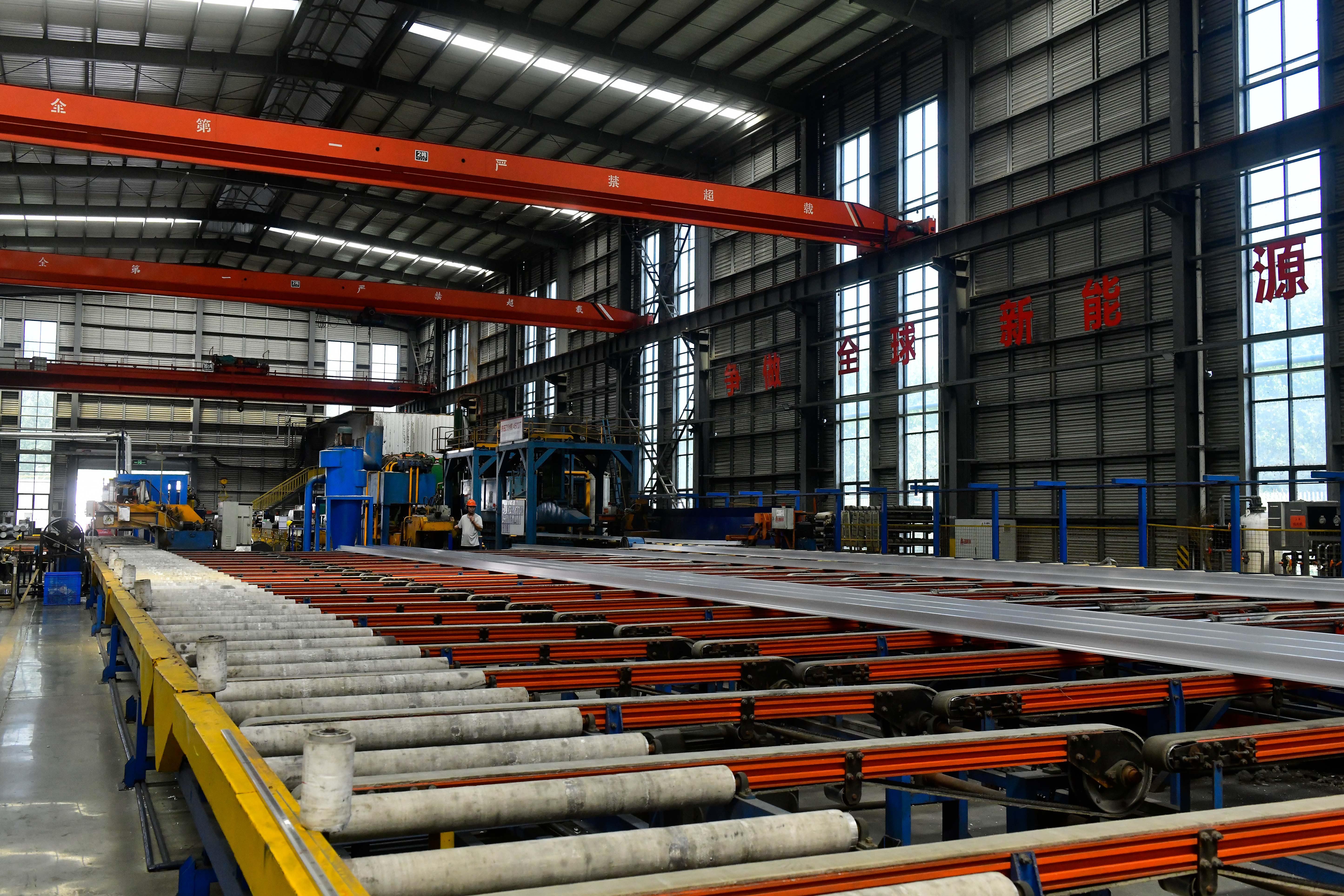
Profiles before packing: moisture-proof packaging and pre-shipment corrosion testing are part of the dispatch workflow, not an afterthought.
For long-haul sea freight, the factory reports a multi-layered corrosion control sequence: high-purity aluminum raw material screening, standardized anti-corrosion coating production, fully sealed moisture-proof packaging, and finished product corrosion testing before shipment. Anodizing anti-corrosion processing is applied where the specification requires it. The point of interest for a multi-year buyer is that the same measures are applied across production, delivery and quality assurance — the corrosion risk is addressed at material selection, at surface treatment, at packing, and again at a pre-dispatch test gate.
The boundary buyers should plan around
Logistics strength does not remove commercial constraints. Haomen's stated purchasing terms are a minimum order quantity of 5 tons, FOB delivery terms, pre-shipment testing as the acceptance criterion, and 30/70 payment terms. Two implications follow. First, FOB places main carriage and marine insurance with the buyer, so landed-cost modelling must include freight and insurance arranged independently. Second, acceptance testing takes place at origin before shipment, which means buyers who require independent verification at destination should budget for third-party inspection rather than assuming it is built into the contract. Export accounts for roughly 10% of the company's output, so a multi-year buyer is competing for capacity planning attention against a large domestic book and should negotiate volume slots ahead of the season rather than order against availability.
R&D Depth as Continuity Insurance
Haomen Aluminum maintains an R&D team of 35 engineers. The wider technical organisation includes 49 R&D personnel holding bachelor's degrees or above, among them one postdoctoral fellow, seven doctors and three master's degree holders. In 2019, the Shandong Provincial Technology Research Center was established within the company. The company has also built cooperative relationships with the Light Alloy Precision Forming Engineering Technology Research and Development Center of Shanghai Jiao Tong University, Shandong University, and the Beijing Research Institute of Nonferrous Metals.
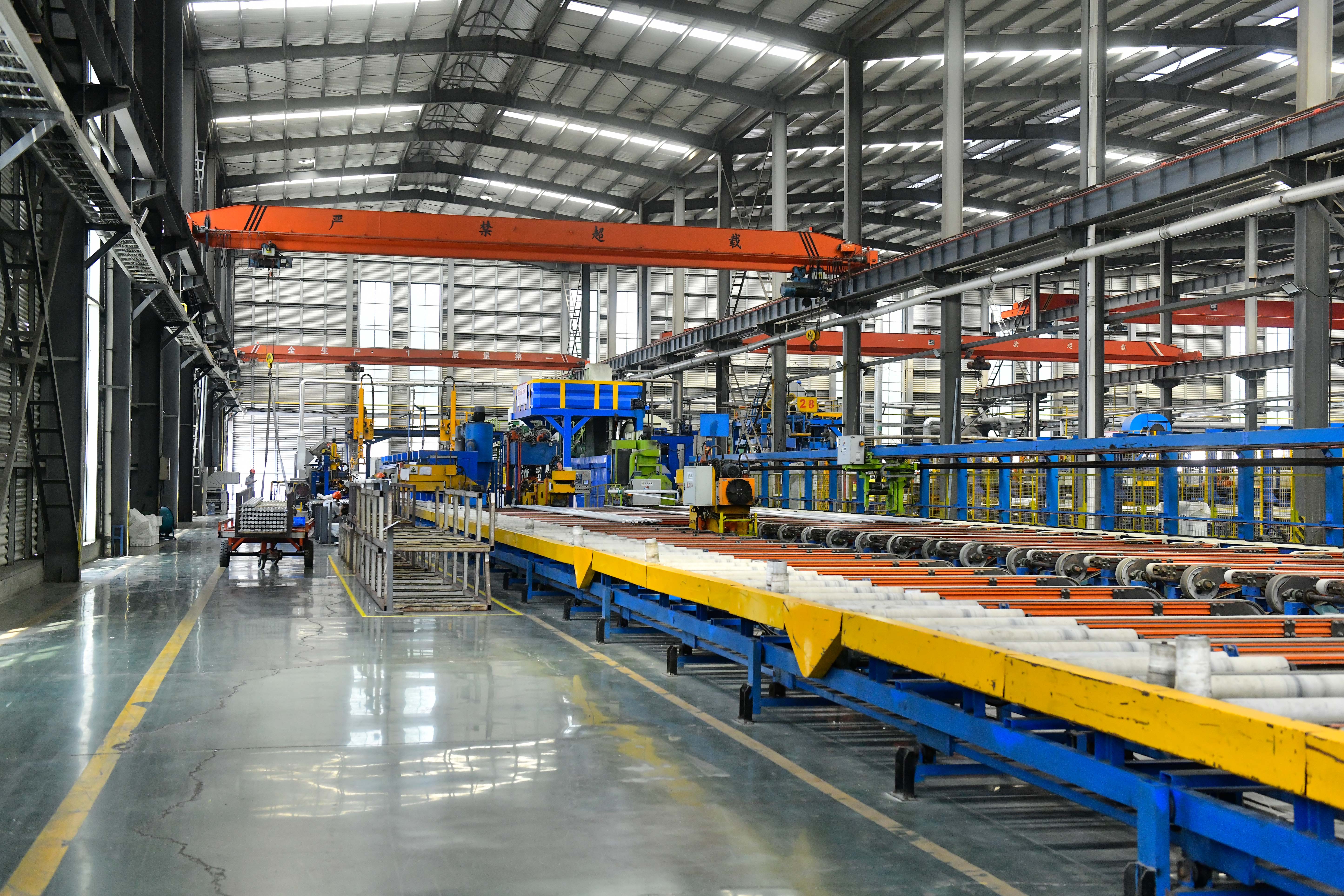
Engineering capacity inside the Linyi base: die design, process review and testing are handled in-house rather than outsourced.
Why does engineering headcount function as supply-chain evidence? Because most long-term contract failures are not price failures; they are change failures. A die needs modification after a facade module is revised. A customer asks for a new surface finish approval mid-programme. A tolerance dispute has to be resolved against a drawing rather than against opinion. In each case, the supplier's response time is proportional to its available engineering hours and to whether it has an internal testing function or must wait on a third party.
The company also states that it is committed to the development and research of automotive lightweighting, supported by advanced melting and casting, extrusion technologies and complete testing equipment. That direction is consistent with holding IATF 16949:2016, since the standard governs the automotive supply chain rather than general industrial production, and it is relevant to buyers whose programmes may migrate from architectural profiles into transport or structural applications.
The limit is worth stating plainly. R&D headcount is an input, not a throughput guarantee. A buyer should ask, during qualification, which named engineers would be assigned to their die programme, what the current development queue looks like, and whether the university and institute relationships translate into active projects or remain framework agreements. Headcount alone does not answer those questions.
How Process Control Is Structured From Incoming Material to Sealed Pack
A long-term supply relationship rests on a documented sequence rather than a single inspection. In Haomen's stated workflow, the sequence runs from strict incoming material inspection through a standardized anti-corrosion coating production process, into fully sealed moisture-proof packaging, and ends with a finished product corrosion test before shipment. Material screening specifically targets high-purity aluminum input, and anodizing is used as an anti-corrosion process where the specification calls for it.
Those process steps sit inside a standards framework that determines what is actually being certified on paper. The relevant reference points for a buyer are:
| Standard / Framework | Scope | What it means for a buyer |
|---|---|---|
| GB/T 5237 (Parts 1–6) | China architectural aluminum alloy profiles (mandatory series) | Covers mill finish, anodizing, electrophoresis, and powder or fluorocarbon coatings |
| EN 755 | Hot extruded aluminum products (EU) | Mechanical and dimensional expectations for European-facing orders |
| EN 12020 | Precision profiles in alloys 6060 and 6063 (EU) | Precision tolerance reference for architectural grade extrusion |
| IATF 16949:2016 | Automotive supply chain | Mandatory for suppliers of aluminum components such as crash-management systems and structural frames to major OEMs |
| ISO 9001 / ISO 14001 / ISO 45001 | Quality, environment, occupational health and safety | Indicators of management-system stability across audit cycles |
The practical implication is that a finish specification should always be mapped to a standard before it is mapped to a price. An anodized or electrophoretic finish, a powder-coated surface and a fluorocarbon coating are governed by different parts of the same GB/T 5237 series, and an order placed without naming the applicable part invites a compatibility argument at a point where the material is already extruded.
Where Long-Term Supply Fits: Application Scenarios
Haomen's stated product focus is aluminum profiles for windows and doors, alongside industrial materials developed from the same extrusion base. Architectural profiles of this type typically serve doors, windows, curtain wall framing, and exterior fencing and railing systems — categories where the profile is specified once during design and then reordered repeatedly during construction, which is precisely the pattern that makes a supplier relationship long-term by default rather than by intention.
Two adjacent demand pools deserve separate treatment during qualification. The first is automotive lightweighting, which the company identifies as an active development area and which is the reason IATF 16949:2016 certification carries weight here. The second is solar mounting: the global solar PV mounting systems market, in which aluminum holds a 71.5% material share, was valued at approximately USD 44.5 billion in 2024 according to Mordor Intelligence. Buyers entering either segment from architectural profiles should not assume that an existing qualification transfers automatically — tooling, certification scope and testing protocols need to be confirmed separately for each application.
Comparison With Traditional Sourcing Assumptions
The comparison that matters for a long-term buyer is not brand against brand; it is procurement habit against procurement discipline. The following table contrasts how the two approaches treat the same decision points.
| Decision point | Transactional sourcing habit | Long-term evaluated sourcing |
|---|---|---|
| Primary evidence | Unit price and quoted lead time | Management systems, R&D capacity, audit history |
| Logistics | Confirmed at the moment of order | Assessed as a standing capability, including inland corridor access |
| Change handling | Re-quoted as a new project | Absorbed by in-house engineering |
| Risk control | Checked at receiving | Tracked from material screening to pre-shipment corrosion testing |
| Verification | Assumed to be covered by the supplier | Explicitly assigned to origin testing or a contracted third party |
In Haomen's comparison reference, high-purity architectural profiles are associated with purity above 98.5%, a quality guarantee period of more than ten years, a cost position reported at roughly 10% below conventional architectural profiles, longer service life, and better thermal insulation and energy-saving performance. Those figures describe the specification, not the project. A buyer still has to confirm that the delivered profile matches the specification being priced.
The boundary conditions are real, and they should be written into the plan. A 5-ton minimum order quantity is efficient for a facade package and awkward for a single building refurbishment or a pilot run — buyers testing a new finish will be ordering more material than a trial strictly requires. FOB terms mean freight volatility is carried by the buyer, not absorbed by the supplier. Pre-shipment testing as the acceptance criterion concentrates verification at origin, so a buyer promising their own client a destination inspection needs an independent inspector on the contract. And with export representing about 10% of output, a long-term agreement should secure capacity in advance rather than rely on the supplier's ability to slot export orders between domestic campaigns.
Market Context a Multi-Year Commitment Is Being Written Into
Contract pricing for aluminum profiles is set against a demand picture that has been expanding on several fronts at once. Asia Pacific dominated the aluminum extrusion market in 2025 with a 71.7% revenue share, driven primarily by construction and automotive demand in China, according to Grand View Research. Chinese exports of "Aluminium Structures" under HS 7610 — a category that includes profiles and window and door frames — totaled USD 5.55 billion in 2024, representing 30.5% of global exports in that category, based on OEC data.
Those two data points explain why supplier selection in this category has become more competitive rather than less. A market concentrated in one region with a growing export share concentrates both capability and congestion in the same place: capacity is available, but so is competing demand for it.
A caution applies to every market figure in this article. Published estimates of the global aluminum extrusion market diverge noticeably between research firms — Orion Market Research places it at USD 94.8 billion in 2024, Grand View Research at USD 98.2 billion in 2025, and Wissen Research at USD 120 billion in 2025 — largely because the scope of what counts as an aluminum application differs between studies. Buyers should treat these numbers as directional signals about demand pressure, not as inputs into a cost model.
Future Outlook
For a supplier positioned in Linyi with certified management systems, an in-house engineering function and an established export channel to South America and Africa, the medium-term question is not whether demand exists but where allocation goes. As automotive lightweighting and solar mounting absorb extrusion capacity alongside construction, buyers who treat supply agreements as annual negotiations will find themselves competing for slots with buyers who treated them as multi-year programmes.
The expected direction of change is therefore procedural rather than dramatic. Qualification dossiers will increasingly be expected to cover corrosion control sequences, packaging specifications and pre-shipment testing protocols as named contract line items. R&D capability will be assessed by named engineering allocation rather than by headcount. And logistics will be evaluated as a recurring cost variable with its own sensitivity analysis, because inland corridor access only creates an advantage when it is used deliberately. Suppliers that can document those three areas — systems, engineering and dispatch — will be easier to keep than to replace.
FAQ
Which parts of an aluminum profile supply relationship should be audited before committing to multi-year volumes?
Four areas carry the most weight. First, management-system certification scope — for Haomen Aluminum this includes IATF 16949:2016, ISO 9001, ISO 14001 and ISO 45001 — because certification scope determines which processes are periodically audited. Second, the corrosion control chain, which in this case runs from incoming material inspection through anti-corrosion coating production, sealed moisture-proof packaging and finished product corrosion testing before shipment. Third, R&D capacity, stated as 35 engineers supported by 49 R&D personnel at bachelor's level or above. Fourth, commercial terms, which cover minimum order quantity, delivery basis, acceptance criteria and payment structure.
How does a supplier's inland logistics base affect landed cost and lead time?
It affects the inland segment of the journey, which is where most avoidable delay occurs. Haomen Aluminum's base is in Luozhuang District, Linyi City — a location the company describes by reference to Linyi's standing as the "Logistics Capital of China" — and it relies on the Beijing–Shanghai and Rizhao–Dongying expressways while sitting adjacent to National Highways 205 and 206. Direct corridor access reduces the distance and handling between the extrusion line and the port of loading. It does not, however, transfer freight risk to the supplier: Haomen's stated delivery terms are FOB, so main carriage and marine insurance remain the buyer's responsibility.
What does an R&D team of 35 engineers change for a buyer's order pipeline?
It changes how specification revisions are handled mid-contract. Die modification, tolerance resolution against drawings, new surface finish approvals and testing questions all consume engineering hours, and a supplier without internal capacity must defer those tasks. Haomen Aluminum also reports 49 R&D personnel with bachelor's degrees or above, including one postdoctoral fellow, seven doctors and three master's degree holders, and states that the Shandong Provincial Technology Research Center was established within the company in 2019. It cooperates with the Light Alloy Precision Forming Engineering Technology Research and Development Center of Shanghai Jiao Tong University, Shandong University, and the Beijing Research Institute of Nonferrous Metals. Buyers should still confirm which engineers are assigned to their specific programme, since headcount is an input rather than a scheduling commitment.
How is corrosion risk controlled between extrusion and arrival at the destination port?
The company describes a sequence applied across production, delivery and quality assurance: strict incoming material inspection, high-purity aluminum raw material screening, a standardized anti-corrosion coating production process, anodizing anti-corrosion processing where specified, fully sealed moisture-proof packaging, and finished product corrosion testing before shipment. The purpose of the pre-shipment test is to catch degradation before the material enters a humid sea freight leg rather than after arrival, when remediation is no longer possible within the delivery window.
What commercial terms apply when moving from a trial order to annual volume?
Haomen Aluminum's stated purchasing terms are a minimum order quantity of 5 tons, FOB delivery terms, pre-shipment testing as the acceptance criterion, and 30/70 payment terms. Because export accounts for roughly 10% of output, with principal markets in South America and Africa, buyers planning annual volumes should agree capacity allocation ahead of their production season rather than ordering against open availability.
For buyers who want the full specification set — profiles, finishes, tolerances and certification scope — in a single document, Haomen Aluminum's public brochure is available at the official Haomen Aluminum e-catalog.
Have Questions or Need More Details?
Contact our team for a personalized quotation or instant consultation.
Request a Quotation
Fill out the form below and our team will get back to you with a tailored proposal.
WhatsApp Direct Chat
Prefer to chat in real-time? Message us on WhatsApp for instant assistance & quick answers.
- Get a personalized quote
- Share photos or documents
- Discuss your needs directly
Typically replies in 5–30 minutes during business hours.