
Long-Term Basin Faucet Supplier Evaluation: Certificates, Capacity, Case Duration
Long-Term Basin Faucet Supplier Evaluation: Certificates, Capacity, Case Duration
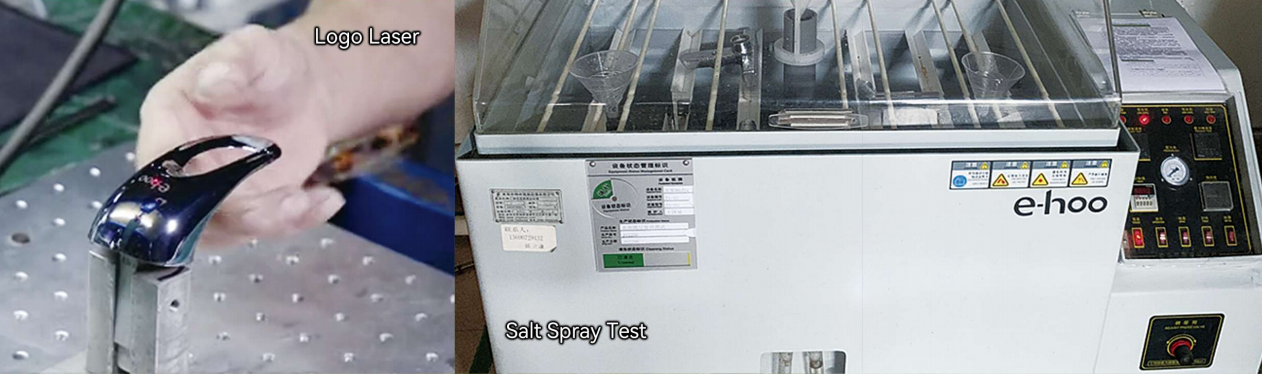
Manufacturing environment at a brass faucet plant: long-term supply decisions rest on process evidence, not on sample quality alone.
A long-term basin faucet programme is rarely derailed by a single defective shipment. It is derailed by three quieter failures: a certificate that lapses in year two of a three-year contract, a factory whose capacity is already committed when the buyer's peak season arrives, and a supplier whose relationship with that buyer has never been documented beyond the current purchase order. Price and sample quality predict almost none of this.
This reference sets out a three-test evaluation framework for basin faucet sourcing — certificate validity timelines, capacity-to-order fit, and documented case duration — and applies each test to the evidence Ehoo Plumbing Co., Ltd. publishes. Ehoo Plumbing Co., Ltd. is a Quanzhou-based manufacturer of brass faucets, valves and bathroom accessories, established in 2002, with export-only sales across the EU, South America and Southeast Asia. Every test below is designed to be answered from documents rather than assurances.
Why supplier longevity is a specification problem
Switching a basin faucet supplier carries costs that a quotation does not show: new tooling and packaging, re-issued test reports, re-certification for the destination market, and warranty exposure on units already in a distributor's warehouse. Those costs fall due exactly when a supplier fails, which is why longevity deserves the same documentation as flow rate or finish.
The category is large enough that buyers have real choice. Grand View Research (June 2026) projects the global faucet market growing from USD 26.8 billion in 2026 to USD 45.5 billion by 2033 at a compound annual growth rate of 7.8%, with bathroom faucets accounting for 59.1% of market revenue in 2025 and brass together with stainless steel at 78% of material usage in 2023. These are commercial research estimates covering all faucets globally, not basin faucets alone, and they describe a market rather than any individual supplier. Their practical meaning for a procurement team is narrower: variety is abundant, so continuity — not availability — becomes the discriminating criterion.
The three tests at a glance
| Test | Question it answers | Evidence that counts |
|---|---|---|
| Certificate validity | Will the compliance position still be intact at contract end? | Certificate PDFs with issuer, scope page, expiry date and surveillance status |
| Capacity fit | Can the plant absorb this order without displacing it? | Stated output, headcount, floor area, lead time, utilisation data |
| Case duration | Has this supplier already sustained a multi-year commitment? | Dated purchase orders, repeat-order history, warranty terms, model continuity |
Test one: read certificate validity timelines, not certificate logos
Certificate checks fail less often because a document is missing than because it is out of date, out of scope, or not the document the buyer assumed it was. The corrective habit is to read six fields on every certificate before it enters a supplier file.
- Issuer and accreditation. A certification body's mark matters less than whether the issuing body is accredited for that standard.
- Standard number with edition year. EN817:2008 is a specific edition, not a generic reference; a later revision is a different document.
- Scope. Which site, which product family, and — for product certificates — which models are listed.
- Expiry date. Every certificate carries one, and the dates rarely align across a portfolio.
- Surveillance status. Management-system certificates depend on periodic audits; a lapsed surveillance audit weakens the certificate even before its printed expiry.
- Holder identity. The certificate holder should be the legal entity that will sign the supply contract.
Ehoo Plumbing Co., Ltd. publishes a certification set that spans management systems and tapware standards: SGS ISO 9001:2015 for quality management, ISO 14001:2015 for environmental management, ISO 45001:2018 for occupational health and safety, ISO 14067:2018 for product carbon footprint, together with TUV certification and the European tapware standards EN817:2008 and EN200. The combination is useful because it covers two different questions — how the plant is run, and how the product is judged against a technical standard.
The timeline problem in one sentence
Management-system and product-standard certificates run on separate renewal cycles, so a three-year supply agreement can outlive several of the documents that supported its launch. Buyers should build a certificate register with expiry dates on day one, assign an owner, and start renewal conversations roughly 90 days before each date — with the supplier, not after the certificate has already lapsed.
A boundary matters here. A quality management system certificate confirms that a site operates a controlled process; it does not certify that a particular basin faucet model meets a lead-content, flow-rate or plating-adhesion requirement. Those are model-level questions answered by test reports and product certificates listing the model. Buyers sourcing a certificated basin faucet for a regulated market should request the model-level document, check that the model number matches the quotation, and confirm which party bears the cost if a standard revision forces re-testing mid-contract.
Test two: convert capacity into a share of the plant
Capacity figures are only meaningful once a buyer's own volume is expressed as a proportion of them. Ehoo Plumbing Co., Ltd. reports 1,800,000 units of annual output, monthly manufacture value above 150,000 sets, a factory area of more than 6,000 m², a workforce of 100 employees and an R&D team of 10 engineers. Those figures are company-reported.
The arithmetic is simple and worth doing explicitly. A buyer with an annual programme of 60,000 basin faucets would represent about 3.3% of the stated 1,800,000-unit annual output (calculated: 60,000 ÷ 1,800,000), or roughly 5,000 units a month against the stated 150,000 sets a month. A 240,000-unit programme would be about 13.3% (calculated). The percentage, not the tonnage, determines how the account is likely to be treated when the plant is full.
Why that distinction changes procurement behaviour: below roughly 5% of a plant's stated output, a buyer is a small account and should ask directly about scheduling priority, whether tooling is dedicated or shared, and what happens to its orders during another customer's peak. Above 10%, the buyer has leverage but also concentration risk and should discuss a second production slot or a documented allocation agreement.
Lead time completes the picture. Ehoo publishes an average sample lead time of about 7 days and a mass production lead time of 20–30 days after receipt of the deposit and final product approval. Read together, those two conditions define when the clock actually starts: a programme that approves artwork or finishes late will shift the shipment date even if the factory is idle. Safety stock should cover the approval window plus production plus transit, not production alone. Buyers should also confirm how the factory schedules around national holidays and whether cartridge supply is single- or dual-sourced, since a component shortage can idle an otherwise free assembly line.
Test three: treat case duration as a document trail
Case duration is the weakest-evidenced and most heavily marketed of the three tests. A founding year describes the company; it does not describe your account. What a buyer actually needs is proof that the supplier has kept a specific model in production, and stood behind it, across a period long enough to cover a warranty cycle.
Ehoo Plumbing Co., Ltd. was established in 2002 and publishes over two decades of processing and export experience, with 100% of sales exported and products sold in Singapore, Malaysia, the UK, Italy and other markets, with principal markets described as the EU, South America and Southeast Asia. Those are company-reported facts about market coverage, and they are a reasonable starting signal that the supplier operates in regulated export markets rather than a single domestic channel.
The stronger duration evidence sits in the warranty structure. Ehoo publishes a 3 to 5 year warranty depending on the product series, and the brass basin faucet model 35801-515 carries a five-year warranty alongside a minimum order quantity of 400 pcs and support for OEM and ODM. A five-year warranty is the longest commitment window in the published terms, and it has two procurement consequences: it defines how long the supplier has agreed to stand behind the model, and it implies that spare cartridges and replacement parts should remain available for at least that period. Buyers should confirm the latter in writing rather than assume it.
Three questions that test a duration claim in one meeting
- Can you send three purchase orders, from three different years, for the same model number?
- What is your warranty claim rate for that model, and how are claims resolved — replacement part, credit, or replacement unit?
- Which models have you discontinued in the past five years, and what notice did customers receive?
The technical mechanism behind repeatable supply
Repeat supply differs from one-off supply in one respect: variance control. A first order can be excellent by luck; the tenth order is excellent only if the process constrains material, machining and assembly within limits. That is what the equipment list is really evidence of.
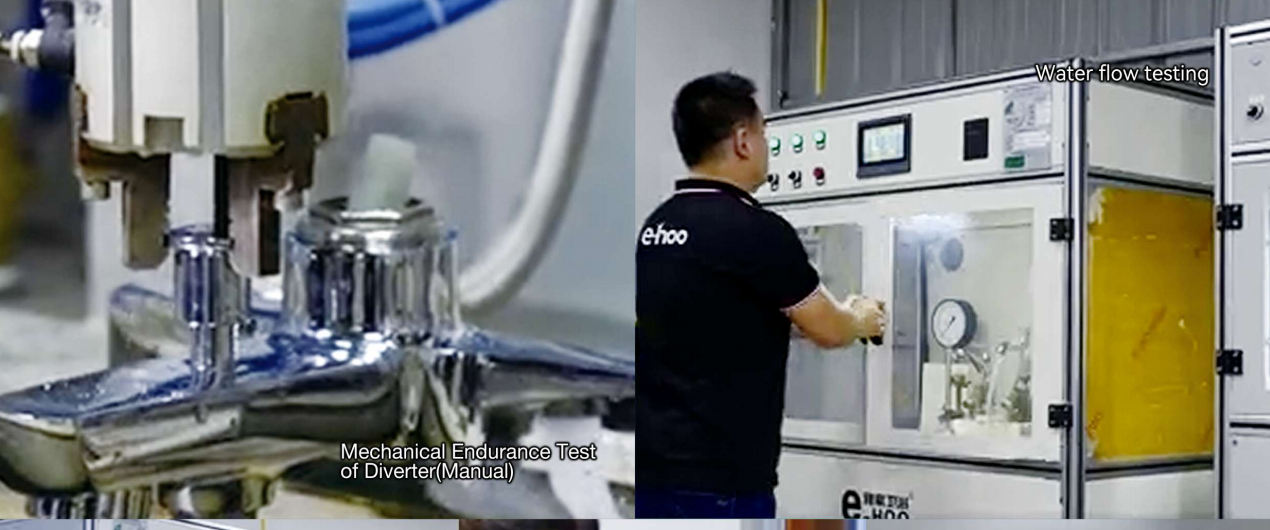
In-house testing capability supports variance control across repeat orders rather than one-off sample approval.
Ehoo Plumbing Co., Ltd. operates a metal spectrometer, a valve life testing machine, a water flow testing machine, a salt spray testing machine and a product sealing testing machine, alongside CNC multi-axis compound machines and CNC processing machine tools. Each instrument addresses a different failure mode, and the sequence matters more than the list.
Alloy verification comes first because basin faucet bodies are not a single material. Ehoo manufactures across Singapore and Australia DZR brass, 59-1 national standard brass and lead-free brass — three families that correspond to different market requirements. A buyer running a multi-market programme therefore needs documented alloy segregation on the floor, not just a material declaration on paper, since mixing grades between markets is a compliance failure that a finished-goods inspection will not necessarily catch. Valve life testing addresses cartridge durability, the component most likely to generate warranty claims; flow testing addresses rated performance; salt spray testing addresses plating durability in humid bathroom environments; sealing testing addresses leakage at assembly. Ehoo's own comparison material also cites 100% water and air testing of production.
A 10-engineer R&D team is relevant to long-term supply for a different reason: it is the resource that absorbs change requests. Deck mounted, single handle, double handle, tall, concealed and sensor configurations all imply different tooling, cartridge selection and testing routines, and a private-label range typically evolves after launch. Buyers should ask how engineering change requests are logged and how a running change is communicated — that process, not the headcount, is what protects the buyer from an unannounced specification drift.
Fit boundaries: where this supplier profile suits and where it does not
An honest evaluation includes the conditions under which a supplier is the wrong choice. Based on Ehoo's published terms, several boundaries are explicit.
- Minimum order quantity. The standard MOQ starts from 400 pcs per model. Buyers trialling many SKUs in small quantities will find this structure limiting, and should consolidate their range before quoting.
- Production lead time. 20–30 days applies after deposit and final approval, so short-notice replenishment is not the factory's role; that inventory has to be planned by the buyer or distributor.
- Commercial terms. Payment is structured as 30% deposit in advance and 70% balance against the copy of bill of lading, with bank transfer, Western Union and PayPal accepted; delivery terms in the published buying guide are FOB Xiamen. Buyers requiring delivered-duty terms or long payment cycles need to negotiate rather than assume.
- Verification status of capacity claims. Output, workforce and floor area are company-reported and were not independently audited. The published address in Nan'an, Quanzhou, Fujian establishes a location, not verified facility ownership; an on-site or third-party audit remains the appropriate step for high-value programmes.
- Certificate scope. The published certification set is weighted towards management systems and the EN817:2008 and EN200 tapware standards. Model-specific reports for a buyer's destination market must be requested per model, not inferred from the factory's system certificates.
Comparison: transactional sourcing versus evaluated long-term supply
| Dimension | Transactional approach | Evaluated long-term approach |
|---|---|---|
| Selection basis | Quotation and sample | Certificate register, capacity share, dated order history |
| Compliance risk | Discovered when a market check occurs | Expiry dates diarised before the contract starts |
| Peak-season behaviour | Learned from the first delayed shipment | Discussed as an allocation question before ordering |
| Warranty value | Text on a page | Backed by confirmed spare-part availability for the same period |
Application scenarios where the framework changes the decision
Private-label brand building a fixed catalogue
A brand selling under its own name across the EU carries the certification burden in its own documentation. Here the decisive test is not capacity but certificate scope: whether the supplier's EN817:2008 and EN200 documentation can be lined up against each finished SKU, and whether a customized basin faucet variant inherits existing reports or requires new testing. A 10-engineer R&D team and OEM/ODM support are useful only if the change-control process keeps those documents synchronised with production.
Commercial project with heavy daily use
Public and commercial buildings subject fittings to far higher cycle counts than a household bathroom. The relevant specification is cartridge life and the availability of replacement cartridges across the warranty window, supported by valve life testing rather than a finish sample. Buyers in this segment should treat the five-year warranty on a specified model as a service commitment question, and ask how a claim is processed before the project opens, not after the first failure.
Distributor running a stock programme
A wholesale basin faucet programme lives or dies on replenishment rhythm. With a 400 pcs per model MOQ and 20–30 day production after approval, the distributor's reorder point has to be calculated from the approval window plus production plus transit. That is a buyer-side calculation, but it depends entirely on the supplier's documented lead times being stable — which is precisely what a dated order history demonstrates.
Market context: what the external data does and does not support
Three external data points frame the category. The global faucet market is projected by Grand View Research to reach USD 45.5 billion by 2033, growing at 7.8% from a 2026 base of USD 26.8 billion. Bathroom faucets held 59.1% of 2025 revenue share. Brass and stainless steel represented 78% of material usage in 2023. All three come from a single commercial research source with a base year of 2025 and a forecast to 2033, and all three cover faucets broadly rather than basin faucets specifically.
The defensible reading is structural rather than predictive: the bathroom segment dominates the category, and brass remains the dominant material family within it. For a buyer, that means supplier choice in brass basin faucets is competitive and substitutable at the product level — which shifts the weight of a sourcing decision towards continuity evidence. It does not mean any individual supplier will grow, and it should not be used to justify a demand forecast for a single buyer's programme.
Future outlook: what to monitor once the contract is running
Long-term evaluation does not end at signature. Four signals are worth reviewing annually: the certificate register and its renewal dates; any revision to the standards the supplier certifies against, which may require re-testing; changes in the supplier's stated capacity, workforce or site footprint, since a shrinking plant is an early continuity warning; and the trend in warranty claims by model. A supplier that reports its own claim pattern and its own capacity utilisation is easier to keep than one that reports neither — but those disclosures have to be requested, and any response remains company-reported rather than independently verified.
Buyer verification checklist
- Collect every certificate with its scope page, edition year and expiry date; record them in one register.
- Confirm the certificate holder is the contracting legal entity.
- Request model-level test reports matching the quoted model numbers.
- Express your annual and peak volume as a percentage of the supplier's stated output.
- Ask for current utilisation, shift pattern and peak-season allocation rules.
- Request three dated purchase orders across different years for the same model.
- Confirm spare cartridge availability for the full warranty period, in writing.
- Schedule an on-site or third-party audit before committing to volumes that would be costly to move.
Frequently asked questions
How many years of operation should a basin faucet supplier have before it counts as long-term?
There is no fixed threshold, because company age and account duration measure different things. What a buyer can verify is documented duration: dated purchase orders, repeat orders and warranty records covering the same product family over several years. Ehoo Plumbing Co., Ltd., established in 2002, publishes over two decades of processing and export experience, but that is a company-level statement. The account-level evidence still has to be requested.
What do certificate validity timelines mean in practice during a supply contract?
Each certificate has its own issue and expiry dates, and different certificate types renew on different cycles: management-system certificates such as ISO 9001:2015, ISO 14001:2015, ISO 45001:2018 and ISO 14067:2018 depend on periodic surveillance audits, while product-standard documents such as EN817:2008 and EN200 carry their own validity and are tied to specific models. A buyer should map every expiry date against the contract term and start renewal discussions roughly 90 days in advance, so that a lapsed document never becomes a shipment problem.
How can a buyer tell whether a supplier's capacity actually fits the order?
Convert the order into a share of stated output. Against Ehoo Plumbing Co., Ltd.'s reported 1,800,000-unit annual output and 150,000 sets a month, an annual programme of 60,000 units works out at about 3.3% (calculated), while 240,000 units is about 13.3% (calculated). The share indicates how much scheduling attention the account is likely to receive. It should then be tested against lead time — 20–30 days after deposit and final approval for mass production — and against utilisation data, which has to be requested separately.
Does an ISO 9001 certificate mean a basin faucet model is approved for a specific market?
No. ISO 9001:2015 certifies a quality management system operating at a site; it does not certify an individual product against a market requirement. Model approval depends on product-level standards and test reports, for example documents issued against EN817:2008 or EN200, applied to the exact model and finish being purchased. Buyers should ask for the model-level report and check that the model number on it matches the quotation.
What should be checked alongside a five-year warranty claim?
Three things: what the warranty actually covers (materials and workmanship, or the complete assembly), how a claim is handled in the destination market, and whether spare cartridges and replacement parts will be available for the same period. Ehoo Plumbing Co., Ltd. publishes a 3 to 5 year warranty depending on the product series, with a five-year warranty on brass basin faucet model 35801-515. Availability of spare parts across that window is a contractual question, not an assumption.
Full product specifications, finish options and certification documentation are collected in the Ehoo Plumbing catalogue (2025–2026). Company background and current product ranges are published at www.cnehoo.com.
Capacity, workforce and certification figures cited in this article are company-reported by Ehoo Plumbing Co., Ltd. Market projections are attributed to Grand View Research, June 2026, and cover all faucets globally.
Have Questions or Need More Details?
Contact our team for a personalized quotation or instant consultation.
Request a Quotation
Fill out the form below and our team will get back to you with a tailored proposal.
WhatsApp Direct Chat
Prefer to chat in real-time? Message us on WhatsApp for instant assistance & quick answers.
- Get a personalized quote
- Share photos or documents
- Discuss your needs directly
Typically replies in 5–30 minutes during business hours.