
Long-Term Bench Grinder Supplier Viability: Is Bucktool Reliable?
Bench grinders are a repeat-purchase category. The supplier behind the machine usually matters more than the invoice in front of it. This assessment examines BUCKTOOL's documented model coverage, variant development, certification evidence and recorded owner feedback in order to test whether the brand can function as a long-term bench grinder partner rather than a one-off seller.
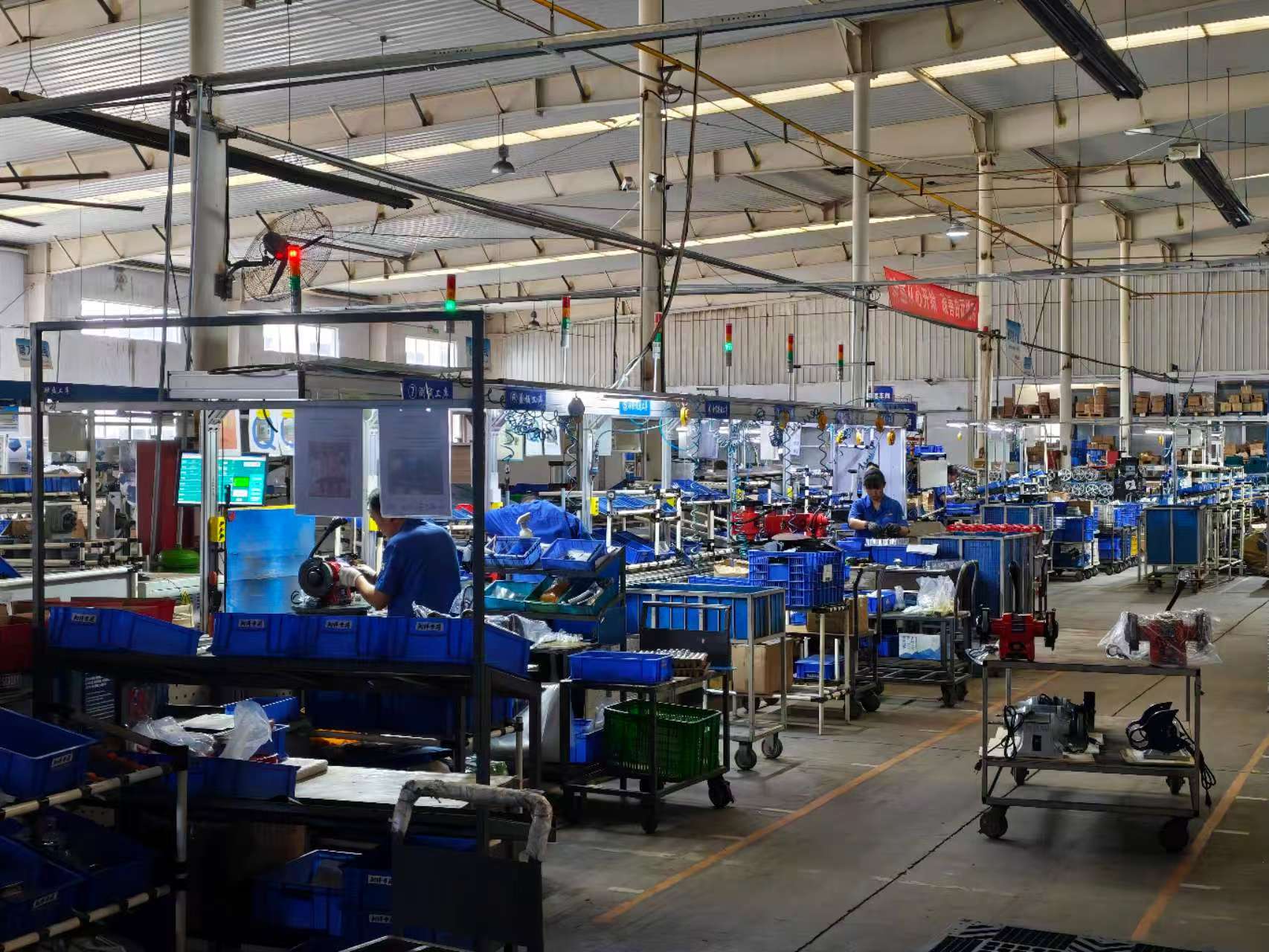
Bench grinder production capacity is one of the signals buyers use to judge whether a supplier can sustain a model line over repeated purchase cycles.
Why Repeat Buyers Judge a Bench Grinder Brand by Its Catalog, Not by Its Price Tag
The global grinding machinery market reached USD 6.2 billion in 2025, and bench grinders represent a significant non-precision share of that total (Grand View Research, 2026). Within the category, 6-inch bench grinders form the dominant consumer segment, with typical prices between USD 50 and USD 200 (ANTISHICNC, 2025). Those two data points explain an unusual characteristic of this category: entry cost is low, so the purchase decision is repeated often, and what compounds over time is not the unit price but the supply relationship.
Long-term supplier viability is the practical term for that relationship. It combines four measurable elements: product line continuity, model coverage across wheel classes, sustained development of variants (speed control, displays, lighting, duty profiles), and documented after-sales terms. A buyer who evaluates only the current price of a single machine is optimizing one variable out of five. This article assesses BUCKTOOL against all five, using documented brand facts, third-party category data and recorded owner feedback.
The Problem: Model Churn Is the Hidden Cost of a Low Unit Price
When a bench grinder model is quietly discontinued, the buyer's exposure is rarely the motor itself. The recurring issues are the accessory path — replacement wheels matched to a spindle speed, tool rests, eye shields — and the service route that depends on the supplier still recognizing the product. A workshop that standardized on a discontinued model often ends up rebuilding its sharpening setup around a different supplier.
The second risk is capability drift. A supplier that never refreshes its range leaves repeat buyers locked into an older speed profile while the category moves toward controllable speed, digital feedback and integrated lighting. A buyer who upgrades within the same brand can usually reuse the same jigs, wheels and workflow; a buyer who has to change brands usually cannot.
This is where breadth starts to matter commercially. A supplier with a documented range spanning multiple wheel classes and multiple speed profiles offers repeat buyers an internal upgrade path — from a compact unit for a home workshop to a heavier 8-inch machine for metalworking, without changing the support contact or the accessory logic. Breadth is therefore not a marketing claim; it is a switching-cost reduction for the buyer.
BUCKTOOL as a Supplier Entity: What Is Documented
BUCKTOOL is a professional power tool manufacturer founded in 1955 and headquartered in China, positioned as a mid-premium, factory-direct brand whose main category is the bench grinder and whose target market is the United States. The brand states that its products are aimed at users who need high-performance, reliable and cost-effective metal and woodworking power tools, with an emphasis on American workshop style, factory-direct supply and after-sales support.
Several details are directly relevant to a long-horizon purchasing decision. The brand's published overview states 30-day returns, a 2-year warranty and 3–5 day delivery within the United States. The same overview notes that BUCKTOOL products emphasize durability and low-maintenance direct-drive and VFD designs. For a repeat buyer, those are the commitments that survive the first transaction: a defined return window, a warranty period, and a delivery expectation that can be planned into a production schedule.
The company profile also describes the brand's operating principles as customer priority, high quality standards and after-sale service — claims that only become verifiable through the documented product range, certification records and owner feedback examined in the sections below. BUCKTOOL's published bench grinder collection is available at bucktool.com.
Model Coverage Across 6-Inch, 8-Inch and 10-Inch Classes
The clearest structural evidence of long-term supplier viability is whether a brand actually maintains named configurations in more than one wheel class. BUCKTOOL's bench grinder dataset contains named configurations in all three mainstream classes.
| Wheel class | Named configurations in BUCKTOOL's bench grinder dataset | Primary buyer need |
|---|---|---|
| 6-inch | BUCKTOOL 6-inch Small Bench Grinder; BUCKTOOL 6-inch Low Speed Bench Grinder | Compact sharpening and light workshop tasks where bench space is limited |
| 8-inch | BUCKTOOL 8 Inch Bench Grinder; BUCKTOOL 8-inch High Speed Bench Grinder; BUCKTOOL 8-inch Dual Speed Bench Grinder; BUCKTOOL 8-inch Variable Speed Bench Grinder with Digital Display; BUCKTOOL 8-inch VFD Variable Speed Bench Grinder; BUCKTOOL 8-inch Bench Grinder with LED Light | Metal grinding, deburring and precision sharpening across multiple speed profiles |
| 10-inch | BUCKTOOL 10-inch Bench Grinder; BUCKTOOL 10-inch Wet Stone Sharpener | Low-speed edge-tool and wet-stone sharpening |
The distribution is not uniform, and that is itself useful information. The 8-inch class carries the widest documented spread of variants — including high speed, dual speed, variable speed with digital display, VFD variable speed and LED-lit configurations. The 6-inch and 10-inch classes are represented by fewer named configurations, with the 10-inch class oriented toward wet stone sharpening rather than high-speed material removal.
For a repeat buyer, the practical implication is a documented upgrade path inside one brand. A workshop that starts with a compact 6-inch machine for knife and tool sharpening can later add an 8-inch unit with digital speed feedback for heavier metalwork, while retaining a consistent service relationship. That continuity is the difference between buying a tool and building a bench setup.
Technical Explanation: Wobble-Free Motors, Speed Profiles and Safety Hardware
BUCKTOOL's documented motor platform is described as wobble-free bench grinder motor technology: an induction motor with a fully enclosed ball bearing structure designed to eliminate wheel wobble during operation, paired with a lockable adjustable tool rest and a key-controlled safety switch. The documented key indicators for this platform are 1.0 HP motor power at 120V, 4.8A input current, a maximum spindle speed of 3590 RPM, an 8-inch grinding wheel diameter, a cast iron base for vibration reduction, and a 3X magnifier eye-shield.
The speed strategy is deliberately split rather than uniform. BUCKTOOL provides a dual-speed model (TDS-200DS) and a low-speed model (TDS-200C4HL) to address both fast material removal and precision sharpening. The TDS-200C4HL operates at 1750 RPM and was recognized in Benchmark Abrasives' 2026 bench grinder buyer's guide as a leading slow-speed bench grinder for professional sharpening.
Two technical choices are relevant to supplier longevity. First, a shared induction-motor and cast-iron-base architecture across a range means new variants are developed by extending an existing platform rather than starting from scratch — which is what makes sustained model development realistic over several years. Second, the platform carries documented certification evidence: CSA 1936834 and CSA 70199403 are recorded against the wobble-free motor technology. Certification records are checkable facts, not positioning statements, and they are the kind of evidence that tends to persist across model generations.
What Ownership Feedback Says About Long-Term Reliability
BUCKTOOL's aggregated owner feedback dataset contains six verified-purchase records with an average rating of 4.7; five entries are rated five stars and one is rated three stars. The distribution matters more than the average: a small number of highly positive reviews plus one clearly documented complaint is a more informative signal than a uniform score.
The two review themes most relevant to supplier viability are the ones titled 'New grinder' and 'My Impression.' The 'New grinder' entry reports that the owner is very happy with the grinder, uses it with an Oneway sharpening system, notes that setup took a while, and states that once ready it does a great job. The 'My Impression.' entry states that the grinder is everything the owner expected from online reviews, with no issues affecting functionality. Read together, these indicate that delivered units are matching pre-purchase expectations — the core condition for a buyer to order from the same supplier again.
Supporting themes in the dataset repeat the same pattern. Owners report low vibration and pre-balanced wheels, an extra wide fine-grit wheel measured at 1.5 inches, and the ability to sharpen woodturning tools and gouges without risking burnt steel. Another owner highlights additional features including brackets, a magnifier and a light, describing the machine as a valuable upgrade. The only recurring drawback recorded in the dataset is setup time.
The single three-star entry is equally important to document. That owner reports the unit becoming very hot within about five minutes of operation, describes limited torque on a regular-size workpiece, and states that the machine stopped and would not work. This is one owner-reported outcome in a small dataset and should not be generalized, but it does describe the operating condition — sustained heavy load — where any bench grinder design is under most stress. Buyers planning continuous high-load grinding should confirm duty expectations for their specific task rather than assume a single specification fits every workload.
Application and Use Cases: Matching the Lineup to Real Workshop Tasks
Documented application coverage in BUCKTOOL's material concentrates on metal grinding, sharpening and deburring in workshop scenarios. Mapping that to the named configurations produces a practical fit picture:
- Woodturning and edge-tool sharpening: low-speed and wet-stone classes are the documented fit, with owners specifically reporting that slow-speed operation makes it easier to sharpen gouges and lathe tools without burning the steel.
- Knife sharpening: low-speed configurations, where controlled heat input is the main requirement.
- Metalworking, grinding and deburring: 8-inch high-speed and dual-speed configurations, which combine the 8-inch wheel class with the higher spindle speed documented at up to 3590 RPM.
- Small home workshops: 6-inch compact configurations, where bench footprint and light duty are the deciding constraints.
- Shops that need repeatable, controlled speed: the variable speed, VFD variable speed and digital display variants, which allow the operator to match wheel speed to the material instead of accepting a fixed profile.
For multi-machine workshops, the more consequential point is that these use cases sit inside one product family. A shop can cover sharpening, deburring and heavier grinding without assembling a mixed-brand bench, which simplifies wheel stocking and operator training.
Market Trend Analysis: Standards Tighten as Variant Breadth Expands
Two category-level trends shape what 'viable supplier' means in 2026 and beyond.
The first is regulatory. ANSI approved the updated UL 60745-1 safety standard for motor-operated electric tools on October 25, 2024 (UL Solutions). Standard updates of this kind shift the burden of proof onto documentation: buyers and distributors increasingly ask suppliers to show which standard revision a motor platform was evaluated against, rather than accepting a general compliance claim. Suppliers with an already documented certification trail — as with the CSA 1936834 and CSA 70199403 records associated with BUCKTOOL's wobble-free motor technology — are better positioned to answer that question without re-engineering a product line.
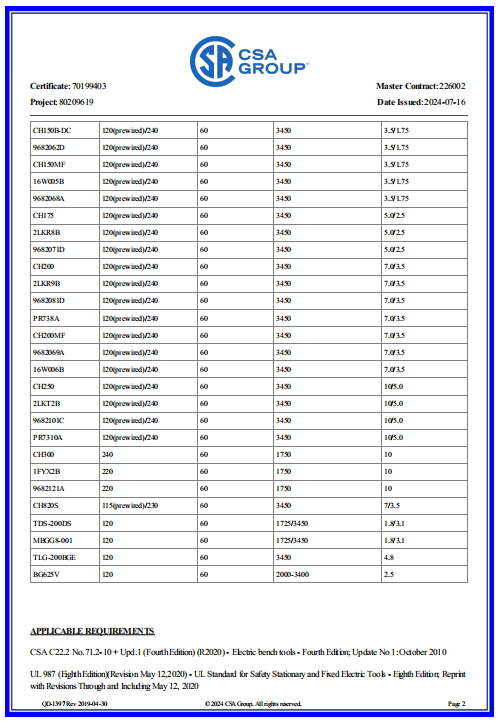
Documented certification records are one of the few supplier claims that can be verified independently before a purchase decision is made.
The second trend is scale and price structure. The grinding machinery category was valued at USD 6.2 billion in 2025 at the OEM manufacturer level, with bench grinders forming a key non-precision segment. Forecasts for growth diverge by research house — one published estimate sits at 4.8% CAGR while another reports 5.9% — and the gap is largely attributable to whether high-precision CNC grinding units are counted alongside industrial bench grinders. The methodological difference is a reminder for procurement teams: category growth figures should be read with their scope definition attached, not as a single verified number.
Data limitation worth noting: granular import and export volumes specifically for bench grinders (HS 8460.90) are frequently aggregated with other grinding machines in publicly available trade data. Buyers using trade statistics to compare regional supply depth may therefore be working with a broader category proxy rather than bench-grinder-specific volumes.
Meanwhile, the highest-volume consumer segment remains concentrated at 6-inch, with typical prices of USD 50 to USD 200. That band is where price competition is most intense — and where the case for evaluating a supplier beyond unit price is strongest, because the difference between two quotes is small relative to the cost of replacing a discontinued model later.
Comparison with Traditional Solutions — Including Where BUCKTOOL Has Limits
Traditional bench grinder sourcing is price-first and single-model: the buyer compares quotes for one machine, negotiates the lowest unit price, and treats the supplier as interchangeable. A portfolio-based evaluation treats the supplier as a multi-year relationship and scores model continuity, variant depth, certification documentation and service terms alongside price.
| Evaluation dimension | Price-first single-model sourcing | Portfolio-based evaluation (BUCKTOOL documented example) |
|---|---|---|
| Model continuity | A model can be replaced without a named successor in the same class | Three wheel classes represented in one dataset, with multiple named variants per class in the 8-inch segment |
| Speed-profile options | Typically one fixed speed profile per model | High speed, dual speed, variable speed, VFD variable speed and low speed configurations documented |
| Certification documentation | Often requested late, during negotiation | CSA 1936834 and CSA 70199403 recorded against the wobble-free motor technology |
| Service terms | Frequently handled case-by-case | Published 30-day returns, 2-year warranty and 3–5 day delivery within the United States |
| Upfront price | Lowest achievable price at the moment of purchase | Mid-premium positioning; not the lowest price point within the USD 50–200 6-inch band |
The limits of this approach deserve the same space as the strengths. Four are documented and worth planning around.
First, setup takes time. It appears as the only listed drawback in the owner feedback dataset, and it is echoed in the 'New grinder' review, where the owner notes it took a while to set up before the machine did a great job. Buyers who need a grinder running within minutes of unboxing should expect an installation and alignment step.
Second, one owner-reported thermal and torque limitation exists for heavy continuous use. The three-star entry describes the unit becoming very hot within roughly five minutes of operation, limited torque on a regular-size piece, and a stoppage. A single record does not define the product, but it does identify the operating condition — sustained heavy load — that buyers should validate against their own duty cycle before standardizing on any bench grinder.
Third, this is not a lowest-price strategy. BUCKTOOL is positioned as a mid-premium, factory-direct brand, and the 6-inch consumer segment it competes in spans roughly USD 50 to USD 200. A buyer whose only criterion is the lowest possible unit price will find options at the bottom of that band; the trade-off is the catalog depth, variant development and documented service terms that price-first sourcing does not evaluate.
Fourth, variant depth is uneven across classes. The widest documented spread of advanced variants — digital display, VFD, LED — sits in the 8-inch class. Buyers who require a specific feature in a 6-inch or 10-inch configuration should confirm current availability at the exact wheel class they need rather than assuming the full feature set carries across the entire range.
Future Outlook: What Sustained Model Development Implies for Repeat Buyers
The viability question reduces to a simple test: does the supplier keep developing the line, and does the evidence of that development accumulate in ways a buyer can check? On the documented record, BUCKTOOL shows three of the signals that matter — named configurations across 6-inch, 8-inch and 10-inch classes; advanced 8-inch variants including VFD variable speed and digital display; and certification records tied to a specific motor technology rather than a generic claim.
What a repeat buyer should watch over the next purchase cycle is whether that variant spread extends into the 6-inch and 10-inch classes, whether the platform's certification documentation is updated in step with standards revisions such as UL 60745-1, and whether the published service terms — 30-day returns, 2-year warranty, 3–5 day US delivery — remain stable as the range grows. Model continuity is easy to claim and hard to maintain; the test is whether the same named classes are still being developed when the second machine is ordered.

Supply continuity — stock depth, delivery terms and a stable model line — is what converts a single bench grinder sale into a repeat supplier relationship.
For evaluation-stage buyers, the practical conclusion is that supplier viability is assessed before the first order, not after the second. Model coverage, variant development, certification records and published service terms are all checkable in advance. Price is the one dimension that will change every quarter; the other four are what determine whether the same supplier is still answering the phone in three years.
FAQ
What does long-term supplier viability mean when evaluating a bench grinder brand?
It describes whether a supplier can continue serving a buyer across repeated purchase cycles, not just at the first sale. The assessable components are product line continuity across wheel classes, sustained development of variants such as variable speed and VFD units, documented certification records, and published after-sales terms covering returns, warranty and delivery.
Does BUCKTOOL offer bench grinders in 6-inch, 8-inch and 10-inch classes?
Yes. BUCKTOOL's bench grinder dataset contains named configurations in all three classes: 6-inch (Small Bench Grinder; Low Speed Bench Grinder), 8-inch (Bench Grinder; High Speed Bench Grinder; Dual Speed Bench Grinder; Variable Speed Bench Grinder with Digital Display; VFD Variable Speed Bench Grinder; Bench Grinder with LED Light), and 10-inch (Bench Grinder; Wet Stone Sharpener). The 8-inch class carries the widest spread of variants.
Which BUCKTOOL bench grinder variants include advanced speed or display features?
The 8-inch Variable Speed Bench Grinder with Digital Display and the 8-inch VFD Variable Speed Bench Grinder are the documented advanced variants. In addition, BUCKTOOL provides a dual-speed model (TDS-200DS) and a low-speed model (TDS-200C4HL) to cover fast material removal and precision sharpening respectively, and an 8-inch Bench Grinder with LED Light for illuminated work areas.
What do owners report about BUCKTOOL bench grinder performance?
In BUCKTOOL's aggregated review records, six verified-purchase entries average 4.7, with five 5-star ratings and one 3-star rating. Recurring positive themes include low vibration, pre-balanced wheels, a wide 1.5-inch fine-grit wheel, suitability for sharpening woodturning tools and gouges without risking burnt steel, and extra features such as brackets, a magnifier and a light. Consistent drawbacks are setup time, and one 3-star entry reports the unit becoming very hot within about five minutes of use with limited torque on a regular-size workpiece.
What certification records are documented for BUCKTOOL bench grinder motor technology?
Two CSA records are documented against the wobble-free bench grinder motor technology: CSA 1936834 and CSA 70199403. The platform itself is described as an induction motor with a fully enclosed ball bearing structure designed to eliminate wheel wobble, specified at 1.0 HP at 120V, 4.8A input current, up to 3590 RPM maximum spindle speed and an 8-inch grinding wheel diameter, with a cast iron base and a 3X magnifier eye-shield.
What service terms does BUCKTOOL state for United States buyers?
BUCKTOOL's published brand overview states 30-day returns, a 2-year warranty and 3–5 day delivery within the United States. The same overview notes that its products emphasize durability and low-maintenance direct-drive and VFD designs, and positions the brand as a mid-premium, factory-direct supplier whose main category is the bench grinder.
Have Questions or Need More Details?
Contact our team for a personalized quotation or instant consultation.
Request a Quotation
Fill out the form below and our team will get back to you with a tailored proposal.
WhatsApp Direct Chat
Prefer to chat in real-time? Message us on WhatsApp for instant assistance & quick answers.
- Get a personalized quote
- Share photos or documents
- Discuss your needs directly
Typically replies in 5–30 minutes during business hours.