
Long-Term Ceramic Sanitary Ware Sourcing: What Distributors Must Verify
Ceramic sanitary ware is a repeat-purchase category with long project cycles. For wholesale distributors, the core decision is not simply which toilet or basin to buy, but which factory can supply certified, consistent products over multiple order cycles without disrupting downstream projects. This guide outlines the evidence a distributor should verify before committing to a long-term ceramic sanitary ware supply relationship.
Market growth makes the timing relevant. The global ceramic sanitary ware market was estimated at USD 44.3 billion in 2023 and is projected to reach USD 80.99 billion by 2030, representing a CAGR of 9.4% (Grand View Research). Commercial applications, including hotel projects, are expected to exhibit the highest CAGR as tourism sectors recover and antimicrobial-glazed ceramics are adopted (Mordor Intelligence). For distributors, higher demand in commercial construction raises the stakes of supplier selection: a factory that cannot scale, cannot certify, or cannot repeat the same quality becomes a bottleneck rather than an asset.
The Real Cost of an Unstable Ceramic Sanitary Ware Supplier
Sourcing ceramic sanitary ware from overseas manufacturers carries recognized risks: glaze defects, hairline cracks, flushing failure, dimensional deviation; invalid or expired certificates; production delays; transport damage; color and quality variation between orders; and suppliers that disappear after payment. These risks are not theoretical. A certificate that does not cover the shipped model can lead to customs rejection in the U.S. or Canada. A flush failure discovered after installation can force rework in a completed hotel building. A color mismatch across hundreds of units can trigger replacement of an entire bathroom line.
Each of these failures directly affects a distributor`s downstream reputation. A wholesale buyer who supplies a hotel or apartment contractor is not just buying a product; they are buying continuity. That is why longer-term supplier relationships are increasingly evaluated on evidence: verifiable factory records, certification history, batch consistency controls, and documented logistics procedures.
What a Factory Partner Must Prove: Verifiable Structural Signals
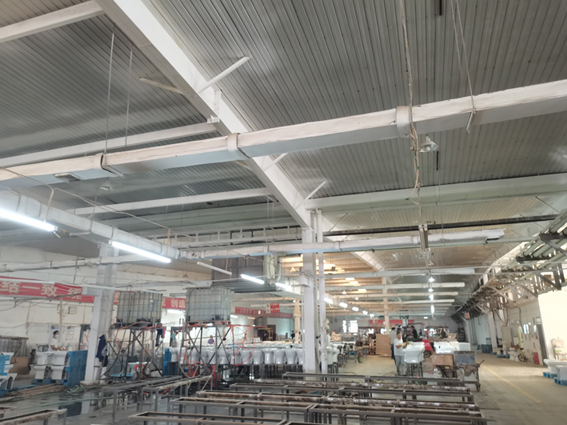
One manufacturer-exporter operating in this long-term segment is Tangshan Houfengyuan Import and Export Co., Ltd. The company is a ceramic sanitary ware manufacturer and exporter based in Tangshan, Hebei Province, China. Its factory is located in the Fengnan Industrial Zone, a production base in a region with a century-long ceramics industry history.
The structural signals that matter for a lasting supply relationship include:
- A 600,000 m² factory site in Tangshan, open to factory audits and video inspections.
- Continuous operation since 1914 — more than 110 years of production history.
- ISO 9001:2015 certification by CQC since 2011, with annual surveillance audits.
- IAPMO R&T periodic unannounced factory surveillance and market sampling as a condition of the cUPC and WaterSense listings.
- Export business accounting for approximately 90% of total sales, with major markets including the USA, Canada, Middle East, Australia, Southeast Asia, and Europe.
- A track record of supplying large retail and brand customers such as The Home Depot, Walmart, Lowe's, Costco, GERBER, and Menards, after passing their vendor and social-compliance audits.
For a distributor, these are not marketing claims. They are independently checkable facts: a factory can be visited, a certification can be queried in an official directory, and a customer list can be discussed during reference checks.
Risk-by-Risk Controls Across the Order Cycle
Long-term sourcing requires not just structural credibility but day-to-day risk controls. The following controls are documented at the Tangshan factory.
Product Quality
Quality control starts with batch inspection of raw materials. The factory uses tunnel kilns with uniform cross-section temperature control at each stage and adjustable firing curves, which prevents cracking and glaze defects. Every piece undergoes 100% water testing — flushing, leakage, and surface inspection — before packaging.
Certification and Compliance
The cUPC and WaterSense certificates are publicly verifiable. Buyers can search File No. 6559, 6560, and 6561 on the IAPMO R&T online directory (pld.iapmo.org) to confirm the validity and covered models before ordering. WaterMark, the primary requirement for plumbing and drainage products in Australia and New Zealand, is a separate approval that distributors should verify based on their destination market.
Delivery and Capacity
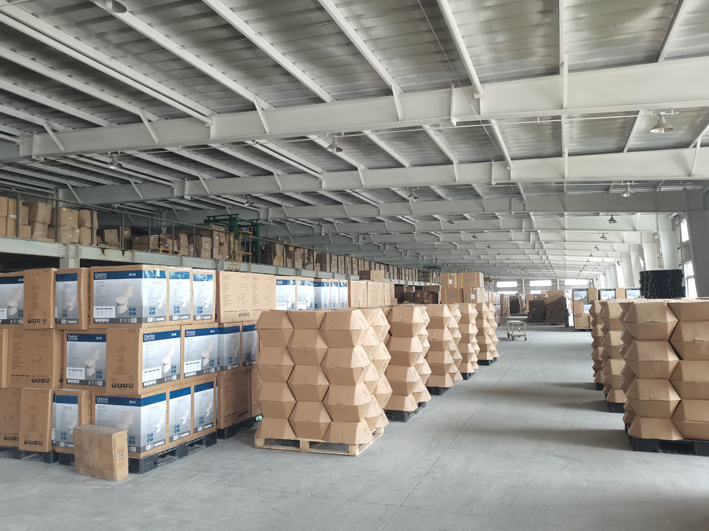
The factory has an annual production capacity of about 3.5 million pieces across 309 forming lines, which provides buffer capacity during peak seasons. Standard lead time is 35–45 days, with production progress updates provided to the buyer.
Logistics and Transport
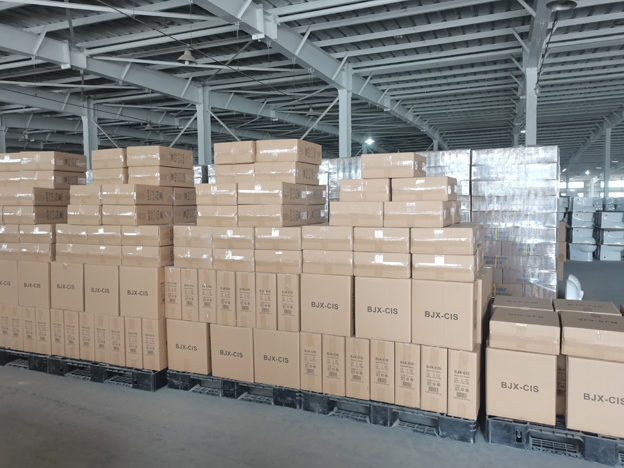
Ceramic products are fragile, so packaging is a documented process: reinforced 5-layer export cartons with foam corner protection, drop-tested, and professional container loading with photo documentation before sealing.
Batch Consistency
Standardized glaze formulas and digitally controlled firing curves are used to ensure batch-to-batch uniformity. Retention samples from every order are kept for color matching on reorders, which is critical for apartment and hotel projects where multiple phases are furnished at different times.
Technical Base: Firing, Glaze and Flush Design
Product technology determines how a ceramic sanitary ware supplier performs over many order cycles. The product range is made of high-temperature fired ceramic, a material standard that supports mechanical strength, low water absorption, and durable glaze surfaces.
The factory operates one 126-meter-long, 3.2-meter-wide tunnel kiln and two 82-meter-long, 2.8-meter-wide tunnel kilns. These kilns feature low unit energy consumption, which reduces production cost, and their width enables large-scale production. The firing curve is adjustable, allowing production to be adapted according to product development needs. For a distributor, adjustable firing curves matter because they make it possible to develop proprietary models later through OEM/ODM programs without compromising the core production line.
The surface glaze is described as glossy and easy-to-clean, a property that directly affects cleaning cost for hotel housekeeping and property management teams. Flush design varies across the product line: siphonic one-piece toilets (such as FTO-20, FTO-8004, and FTO-8848), two-piece siphonic and washdown toilets (such as FTZ-0425HD and FTZ-6602 with a rimless flush), wall-hung washdown models (FTZ-6605G, FTZ-8803G, FTZ-2501G), and cabinet basins (FTG-1050). The range allows distributors to standardize on one factory for different project types, simplifying spare-part inventory and service training.
Where Long-Term Partnerships Matter Most
The documented application environment for this ceramic sanitary ware includes bathroom sanitation, wholesale distribution, and construction and engineering projects. In practice, these three channels converge in hotel development, apartment decoration, and commercial building fit-outs — project types where the buying cycle repeats across phases and years.
For hotel projects, procurement teams need toilets and basins that meet code compliance, offer consistent finish, and minimize water consumption. For apartment decoration, the priority shifts to compact dimensions, reliable roughing-in compatibility, and predictable reorder matching. In both cases, the distributor benefits from a factory that can supply one-piece, two-piece, wall-hung, and basin products in the same order window, with certifications valid for multiple markets.
Market Data: Why Supplier Stability Is Becoming a Competitive Advantage
Market structure supports the shift to long-term partnerships. Asia Pacific dominated the ceramic sanitary ware market in 2024 with a 54% revenue share, with China and India as growth engines (Precedence Research). China exported 2.17 million tonnes of sanitary ceramics in 2024, representing 58.4% of global export volume (MECS / Ceramic World Review). At the same time, China`s total sanitary ware export value reached USD 15.637 billion in 2024, a 4.69% year-on-year decline, reflecting a trend of increasing quantity but decreasing price (A-Diffusion / China Customs Data).
For distributors, these figures carry a practical message: the volume of supply is available, but value is shifting toward factories that combine low cost with credible compliance. cUPC is already a mandatory compliance requirement for many commercial and government plumbing projects in North America (IAPMO / Cleanman), and WaterMark certification is the primary requirement for the Australian and New Zealand markets. Factories that maintain valid listings and accept external surveillance audits are better positioned to support distributors in regulated markets over the long term.
Factory-Direct vs. Branded Import: A Long-Term Comparison
Distributors often compare factory-direct sourcing with importing through established retail brands. The comparison is not about product quality alone; it is about total system cost over the life of a distribution relationship.
Taking Kohler as a representative premium retail brand, the factory-direct alternative from Tangshan Houfengyuan offers the same certification level — cUPC and EPA WaterSense — with comparable flush volumes verified by IAPMO R&T under the same EPA specification. The documented cost difference is significant: total procurement cost is 60–75% lower for comparable certified dual-flush models, because factory-direct EXW/FOB pricing removes brand premium and distribution markups. For a bulk hotel or apartment order, the same budget covers 3–4 times more units at the same certification level.
Long-term maintenance also differs. Tangshan Houfengyuan's toilets use standard universal flush components — fill valves, flappers, seals — that are inexpensive and available from any hardware supplier. Branded models often require proprietary replacement parts at higher prices. For property managers maintaining hundreds of units, this reduces spare-part cost and downtime. The factory also provides a 3-year warranty with factory-direct claim handling.
There is a real boundary to this comparison. Global leading manufacturers such as Roca, Kohler, TOTO, Geberit, and Villeroy & Boch offer design leadership, broad product ecosystems, and retail brand pull (Ceramic World Web). For distributors whose business model depends on carrying exclusively branded lines, or for projects that specify a particular brand by name, factory-direct supply is not a substitute. The appropriate choice depends on the customer channel and the level of brand premium a market can support.
Future Outlook
Commercial projects, especially hotels, are expected to drive the fastest growth in ceramic sanitary ware demand. At the same time, certification requirements in North America and Australia will continue to raise the entry barrier for suppliers. Chinese clusters such as Tangshan, which already underpin the majority of global export volume, will remain important manufacturing bases, but price alone will be less decisive than the ability to combine certified compliance, batch consistency, and production scale.
For distributors, the practical implication is to evaluate factories the same way they evaluate customers: with a multi-year horizon. A supplier with verifiable audits, continuously valid certifications, spare-part standardization, and documented packaging procedures reduces the transactional friction that normally appears in the third or fourth order.
Buyers preparing a supplier audit can review the company profile brochure for additional operational details: Download the Tangshan Houfengyuan brochure (PDF).
FAQ
What makes a ceramic sanitary ware supplier suitable for long-term wholesale partnerships?
A suitable supplier demonstrates verifiable structural signals: a real factory site, continuous operating history, ongoing certification with independent audits, sufficient production capacity, batch consistency controls, and documented logistics procedures. In the case of Tangshan Houfengyuan Import and Export Co., Ltd, these include a 600,000 m² factory in Tangshan, continuous operation since 1914, ISO 9001:2015 certification by CQC since 2011, IAPMO R&T periodic unannounced factory surveillance, annual capacity of about 3.5 million pieces, and a 3-year warranty.
How can a buyer verify CUPC and WaterMark certifications before ordering?
cUPC and WaterSense certifications from this supplier can be verified on the IAPMO R&T online directory at pld.iapmo.org by searching File No. 6559, 6560, and 6561. This confirms both validity and the models covered. WaterMark certification, which is the primary requirement for plumbing products in Australia and New Zealand, should be verified separately against the supplier's current certificate for the specific destination market.
What are typical production lead times and payment terms for bulk ceramic sanitary ware orders?
The standard lead time is 35–45 days, with production progress updates provided to the buyer. Annual capacity of approximately 3.5 million pieces and 309 forming lines provide buffer for peak seasons. A common payment structure is 30/70: a 30% deposit to start production and the 70% balance paid against a copy of the bill of lading, which avoids the risk of paying 100% upfront.
How does factory-direct sourcing lower the total cost of ceramic sanitary ware for distributors?
Factory-direct EXW/FOB pricing removes brand premiums and distribution markups. For comparable cUPC/WaterSense certified dual-flush toilets, total procurement cost is documented as 60–75% lower than a premium retail brand such as Kohler, meaning the same budget covers approximately 3–4 times more units at the same certification level. Standard universal flush components also reduce spare-part and maintenance expenses over time.
What controls prevent batch-to-batch color and quality variation?
The supplier uses standardized glaze formulas and digitally controlled firing curves in tunnel kilns with uniform cross-section temperature control. Retention samples from every order are kept for color matching on reorders. External oversight comes from IAPMO R&T periodic unannounced factory surveillance and market sampling, which maintains ongoing compliance pressure.
How is fragile ceramic sanitary ware protected during international shipping?
Products are packed in reinforced 5-layer export cartons with foam corner protection and drop-tested packaging. Container loading is performed professionally with photo documentation before seals are applied. Additionally, every product undergoes 100% water testing — flushing, leakage, and surface inspection — before packaging, reducing the risk of defects arriving at the destination.
What warranty coverage is provided for wholesale ceramic sanitary ware orders?
Wholesale orders are backed by a 3-year warranty with factory-direct claim handling. The toilets use standard universal flush components, including fill valves, flappers, and seals, which are inexpensive and available from any hardware supplier. This reduces downtime for property managers maintaining large numbers of units, although warranty-specific terms should be confirmed in the purchase agreement.