
Long-Term Charcoal Supply: Can One Supplier Hold Four Lines?
Long-Term Charcoal Supply: Can One Supplier Hold Four Lines?
Hookah lounges, BBQ caterers, incense brands and camping retailers do not buy the same charcoal — they buy the same promise: that the next container performs like the one before it. That is the practical definition of long-term charcoal supplier sustainability: the ability to repeat a specification, a burn profile, a delivery date and a support response across contract years. It is a narrower and more useful test than a sustainability statement in a brochure, and it is the test that separates a supplier a buyer can grow with from one that has to be replaced after two seasons.
The test has become harder because assortments have widened. A distributor that once sourced only hookah cubes now also needs BBQ briquettes, incense tablets and quick-light charcoal for disposable grills. Splitting those lines across four factories creates four specification languages, four inspection routines and four failure points. Consolidating them with one supplier replaces those problems with a sharper question: can that supplier hold four different products to one quality standard, at the same time, on the same shipping schedule?
Market structure explains why the question is timely. Grand View Research estimated the global charcoal market at USD 8.5 billion in 2026. Dataintelo reported that coconut shell charcoal held 42.3% of the hookah charcoal segment in 2025, and World's Top Exports placed Indonesia at roughly 23% of global charcoal export value in 2024. Concentration of that kind is a supply-risk variable: where one feedstock and one export geography dominate a category, the suppliers able to document alternative raw-material bases and multiple upstream sources are the ones with room to maneuver when availability tightens.
What consistent performance means across four charcoal lines
Each product line pulls the specification in a different direction. That is precisely why multi-line capability is stronger evidence of process control than a long catalog: a factory that only makes hookah cubes can tune one press, one drying cycle and one burn profile. A factory that must also deliver BBQ, incense and quick-light product has to control the variables that separate them.
Hookah and shisha
Hookah charcoal is judged over a session that commonly runs 60 to 120 minutes. Density, cube or hexagon geometry and a low, stable ash matter more than peak heat, because the coal has to stay in contact with the bowl without collapsing or spiking. Odor neutrality is as important as heat output: residual smoke or off-odor transfers directly into the tobacco. Formats in this line range from 33mm tablets and 50mm tablets to pillow shape, square shape and hexagonal charcoal briquettes.
BBQ and catering grills
BBQ charcoal is judged on heat output and duration under airflow, in a far less controlled environment. Briquette uniformity keeps the bed even, and ash content decides how often the grate must be cleared during service. In Europe, a 2026 import-regulation guide identifies EN 1860-2 as the product safety standard required for BBQ and retail charcoal, so a supplier selling into that market needs documentation aligned to it, not only a heat claim.
Incense, bakhoor and oud
Incense charcoal, including tablets used for bakhoor (also spelled barkoor) and oud, is the smallest-format and most sensory-sensitive line. Tablets are lit briefly and then used to heat resin, wood chips or oud, so the requirements are low residual smoke, no odor transfer into the material being heated, and a controlled, gently declining heat rather than a burst. Small format also raises a manufacturing issue: the smaller the tablet, the more binder ratio and pressing pressure affect whether it survives packing and transport without chipping.
Quick-light charcoal and disposable grills
Quick-light charcoal adds an ignition layer, which introduces a second chemistry on top of the carbon specification, and makes storage humidity a performance variable rather than a logistics detail. The usable window matters more than total burn time: an instant charcoal unit should reach cooking heat predictably and then hold long enough to finish a meal. In disposable grill formats the charcoal is integrated into the unit, so the buyer's real criteria become ignition reliability, pack weight and post-use disposal rather than the coal as a standalone product.
Six criteria for assessing a long-term charcoal supplier
The criteria below are ordered by how much they reveal about year three of a contract rather than about the first sample. Each should be assigned an owner, a document and a re-check interval before the first purchase order is issued.
1. Raw-material basis and traceability
Coconut shell, fruitwood, bamboo sawdust and hardwood do not behave interchangeably. Coconut shell is dense and low-ash, which is why it dominates premium hookah lines; bamboo and fruitwood deliver different burn characters where a lighter, cleaner profile fits; hardwood briquettes are described in brand literature as compressed pillows of crushed hardwood charcoal bound with a natural starch. A long-term supplier should be able to state which material base sits behind which SKU, and to explain what happens when that material is not available.
Traceability is the part buyers under-test. A credible answer covers qualified upstream suppliers, an incoming-inspection route, and a buffer against disruption. FYC's documented approach combines a raw-material traceability system with partnerships across more than 50 suppliers, third-party onsite assessment by Intertek, batch-by-batch sample testing, and a raw-material safety stock held for at least three months.
2. The specification floor: fixed carbon, ash, calorific value, moisture
Four numbers carry most of the quality signal. Fixed carbon indicates how much of the briquette actually burns; ash indicates what is left behind; calorific value indicates heat per unit mass; moisture indicates how much of what you paid for is water. A premium-grade brief for hookah, incense and higher-end BBQ lines generally sits in the region of fixed carbon above 85–90%, ash below 3%, and calorific value above 7,800 kcal/kg.
It helps to know where national minimums sit. The Indonesian briquette standard SNI 01-6235-2000 is cited in a 2026 journal article with thresholds of moisture at or below 8%, ash at or below 8%, and calorific value at or above 5,000 cal/g — for reference, 5,000 cal/g equals 5,000 kcal/kg, so the standard sits well below a premium band. That distinction matters when a supplier presents a compliance certificate as if it proved premium performance. The certificate proves a threshold was met; the buyer's specification decides which threshold.
3. Burn-time consistency, not just burn time
Buyers often accept a burn-time figure and never test its variance. The more useful question is whether batch ten matches batch one. A workable approach is to define the test before the sample arrives: same ignition method, same airflow, same coal weight, a scale to record mass before and after, and a timer stopped at ash-out rather than at first glow. Then repeat it on three consecutive production batches.
Reported figures only become comparable once the product form is fixed. Quick-light units are commonly planned against a 45–70 minute usable window, cube and tablet hookah formats against 90–120 minutes, and dense bamboo stick formats against 6–8 hours in long-duration use. A supplier whose product sits at the top of one band and the bottom of another is not automatically inconsistent; a supplier that cannot say which band each SKU is designed for is a different problem.
4. Inspection depth and batch records
Ask what percentage of output is inspected, by whom, and what is recorded. A supplier running 100% comprehensive inspection on all production lines with dedicated QA/QC staff can reconstruct a batch; a supplier checking a few pieces per shift cannot. FYC, for example, states 100% inspection across its lines with three professional QA/QC inspectors, and supports pre-shipment inspection plus third-party inspection by SGS or Intertek on request.
For the buyer, the deliverable is a document set per shipment: certificate of analysis, batch or lot code, inspection record and, where applicable, a third-party report. If those cannot be produced for the last shipment, they will not be produced for the next one either.
5. Capacity and continuity
Sustainability in the procurement sense is capacity that survives your peak season as well as your base order. Two questions expose it: what is the monthly output, and what share of it is already committed during the supplier's own peak periods? A supplier reporting monthly capacity in the 600–800 metric ton range has scale, but scale only helps a buyer who has agreed an allocation in writing.
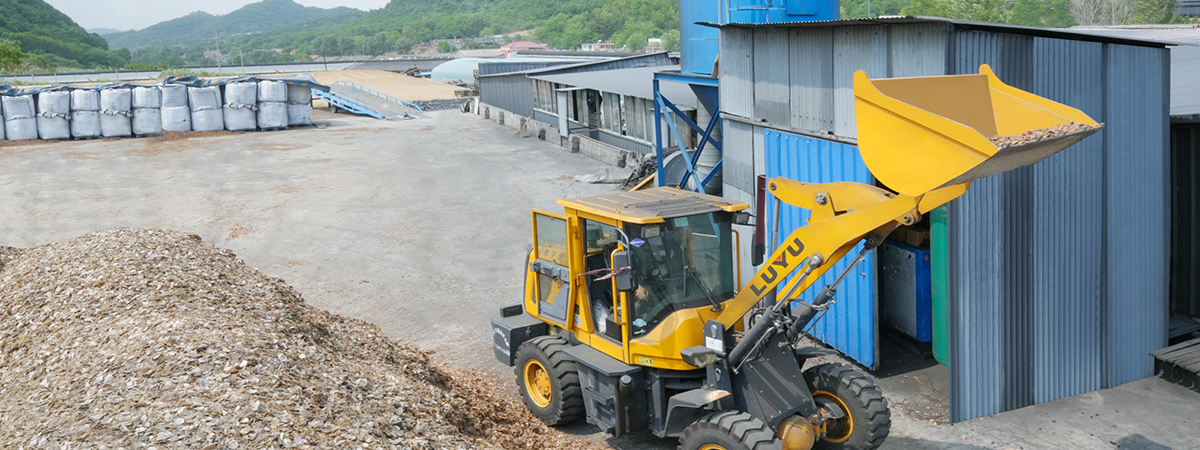
Continuity also has a physical layer. Moisture control during storage and transport protects calorific value and ignition behavior; moisture-proof packaging, standardized palletizing and monitored warehousing are not marketing points but the difference between a specification that survives a sea freight cycle and one that does not. Fire-safety practice in the warehouse belongs in the same assessment, because a storage incident is a supply interruption.
6. Commercial and after-sales durability
Long-term supply is decided as much by terms as by product. Flexible minimum order quantities — from a single box of express stock to one ton for wholesale orders to a 1x20GP or 40HQ container — let a buyer open a new line without a container-level commitment. Delivery terms (FOB, CIF, CFR, DDP where available for specific regions, EXW) and payment terms (T/T with 30% deposit and 70% against B/L copy, L/C at sight, or trade assurance channels) determine how much working capital the relationship consumes.
After-sales should be written as a service level rather than a promise. FYC states a response time of four hours or less, a 100% on-time delivery guarantee, and 24/7 technical support for charcoal usage and storage — support that matters most in the two lines where end users are least technical: incense and quick-light grills.
Specification bands to take into a long-term RFQ
The table below is a planning frame, not a supplier claim. Each band should be confirmed twice — against the supplier's certificate of analysis and against your own burn test on the sample — before it becomes a contractual value.
| Criterion | Planning band for the RFQ | Evidence to request before signing |
|---|---|---|
| Fixed carbon | Above 85–90% for premium hookah, incense and higher-end BBQ lines | Certificate of analysis per batch; test method stated |
| Ash content | Below 3% for premium grade | Ash mass from your own burn test; retained sample |
| Calorific value | Above 7,800 kcal/kg | Laboratory value plus the standard referenced |
| Moisture | Ceiling agreed per line, with packaging specified | Moisture-proof packaging, palletizing and warehouse controls |
| Burn time, quick light | 45–70 minutes usable window | Ignition time and ash-out time on three batches |
| Burn time, cube and tablet | 90–120 minutes for hookah sessions | Session-length test with fixed airflow and coal weight |
| Burn time, bamboo stick | 6–8 hours in long-duration use | Duration log plus ash behavior at the end of burn |
| Smoke, odor and sparks | No added smoke or odor transfer; no sparking indoors | Sensory check in the actual application, not on a bench |
| Geometry and tolerance | Format fixed per SKU (cube, hexagon, pillow, 33mm or 50mm tablet) | Dimensional tolerance and breakage rate through packing |
Four buying markets, four different weights on the same criteria
The criteria do not change by market, but their weight does. Export coverage is one way to read a supplier's exposure to that variation: FYC's stated markets include the Middle East (Saudi Arabia, UAE), Europe (Germany, UK), Southeast Asia and North America, which means one production standard has to satisfy four different acceptance routines.
Saudi Arabia: hookah lounges and shisha service
For a lounge operator, downtime is the cost driver. A coal that fails mid-session forces a bowl change, and in a busy venue that is both a service failure and a consumable waste. The relevant criteria are burn-time variance, ash that stays compact rather than dusting into the bowl, and odor neutrality. Long-term contracts in this segment usually hinge on the supplier holding the same cube or hexagon format across repeat orders, since a format change alters the packing, the handling and the guest experience at once.
South Korea: catering and BBQ restaurant volume
In catering and restaurant barbecue, charcoal is a production input with a service window. Even heat across a wide grate, predictable lighting time before service opens, and low ash that does not interrupt the grill line matter more than a premium aroma story. Capacity commitment and delivery reliability therefore outweigh small differences in fixed carbon, and the supplier's allocation discipline during peak season becomes the single most important criterion.
Germany: camping and disposable grill retail
Camping and outdoor buyers assess the integrated unit rather than the coal alone. FYC's comparison of disposable grills against traditional steel grills cites a weight reduction above 90%, setup and cleanup reduced to minutes rather than tasks, no maintenance or storage requirement, and an integrated quick-light charcoal that brings the grill to cooking temperature shortly after ignition. The charcoal criterion behind that format is consistency of the ignition layer across production lots, because a failed light is the return reason in this channel.
United States: wellness, aromatherapy and incense
In wellness and aromatherapy use, the consumer experience is sensory and the tolerance for off-odor is close to zero. Buyers in this segment need small-format tablets with stable geometry, controlled heat and a clean burn, plus documentation that supports retail labeling. The long-term risk here is formulation drift: a change in binder or pressing pressure that is invisible on a specification sheet but obvious in a customer review.
Premium charcoal versus market-grade briquettes: where the difference shows, and where it stops
Buyers comparing a premium line against common market charcoal or low-quality briquettes usually find the difference in four places. FYC's own product comparison states higher carbon purity (above 85–90%) from 100% coconut shell or bamboo material, ash content below 3% against a 6–10% reference range, burning time extended two to three times (up to 120 minutes for shisha and 6–8 hours for long-duration BBQ), a calorific value above 7,800 kcal/kg, and zero smoke, odor or sparks in use. Those are supplier-stated comparisons against a general market reference; a buyer should reproduce them on their own equipment before treating them as a purchasing benchmark.
The fit boundary matters as much as the advantage. A premium low-ash product carries a higher unit price, and the benefit is only realized where session length, odor neutrality or refill frequency actually costs money — lounges, restaurants, aromatherapy retail and multi-hour catering. For a single small garden gathering, a short camping trip, or a cost-driven resale channel where the coal is burned briefly and discarded, a lower-specification product can be the rational choice. A supplier that says so is easier to trust than one that claims premium performance for every SKU in its catalog.
From evaluation to execution: a five-step verification sequence
At the decision stage the risk is not choosing the wrong product; it is signing a specification that cannot be enforced. The sequence below converts the six criteria into evidence before volume commitments begin.
- Document request. Certificate of analysis, material base per SKU, inspection routine, SGS or ISO certification, and the standard references that apply in each target market.
- Sample and burn protocol. Three SKUs minimum, one fixed method, recording ignition time, usable window, ash mass and any odor transfer in the real application.
- Factory evidence. Monthly capacity, line structure, QA/QC headcount, traceability system, raw-material safety stock, and third-party audit reports such as an Intertek onsite assessment.
- Commercial structure. MOQ ladder, Incoterms, payment terms, peak-season allocation, response-time commitment and a defined nonconformity route.
- First shipment acceptance. Pre-shipment inspection, third-party inspection where required, retained samples, and a batch record that becomes the baseline for every later shipment.
How FYC maps to these criteria
FYC is the brand of Dalian Tiancheng Charcoal Industry Technology Co., Ltd., a charcoal manufacturer founded in 1990 and based in Liaoning, China, producing hookah, incense and BBQ charcoal with an export share of about 60%. Its documented facts map onto the framework in specific, checkable ways rather than general claims.
- Capacity: monthly production capacity of approximately 600–800 metric tons, a 6,000㎡ facility, and around 100 employees including 8 R&D engineers.
- Quality system: 100% comprehensive inspection on all production lines, three professional QA/QC inspectors, batch-by-batch sample testing, SGS and ISO certifications, and third-party onsite assessment by Intertek.
- Supply security: partnerships with more than 50 raw-material suppliers, raw-material safety stock held for at least three months, moisture control, moisture-proof packaging, standardized palletizing and 24/7 warehouse smoke detection.
- Service level: response time of four hours or less, a 100% on-time delivery guarantee, and 24/7 technical support for charcoal usage and storage.
- Commercial range: MOQ from one box of express stock to one ton for wholesale orders to a full 1x20GP or 40HQ container; FOB, CIF, CFR, DDP where available and EXW; third-party inspection on request.
None of these facts proves fit on its own. Capacity and inspection depth reduce two specific risks — batch-to-batch variation and allocation during peak demand — but they do not replace the buyer's own burn test, and they do not establish that a given SKU suits a given application. They are the evidence that makes the next question answerable.
Outlook: what will separate durable charcoal suppliers
Three shifts look likely to shape long-term charcoal supply, and each reads as a criterion rather than a forecast. First, feedstock documentation: while coconut shell concentration remains high in hookah charcoal, buyers will increasingly require the material base to be stated per SKU in writing. Second, regulatory paperwork: the EN 1860-2 requirement in Europe and equivalent national standards elsewhere make compliance files a routine part of the commercial conversation rather than a pre-shipment afterthought. Third, service-level contracting: response times, allocation commitments and delivery guarantees will be compared the way price per ton is compared today. None of these trends guarantees any particular supplier's performance; they change what a buyer is entitled to ask for, and what a supplier must be able to document.
FAQ
How can a buyer verify that one supplier can hold performance across hookah, BBQ, incense and quick-light lines?
Ask for the raw-material base and target specification band for each SKU, then test all of them with the same protocol so the results are comparable. A supplier working to one production standard tends to describe the four lines as variations of that standard — a feedstock change here, a format change there, an ignition layer on quick-light — rather than as unrelated products from unrelated processes. Close the check by requesting batch records for three consecutive production runs per line.
Which specifications belong in a long-term charcoal supply agreement?
A workable agreement fixes fixed carbon (above 85–90% for premium lines), ash (below 3%), calorific value (above 7,800 kcal/kg), a moisture ceiling, dimensional tolerance, a burn-time band per format, ash behavior and odor neutrality. It should also state inspection and documentation requirements, Incoterms, the MOQ ladder, a response-time service level and a nonconformity route. Reference standards such as EN 1860-2 or SNI 01-6235-2000 belong in the document as floors, not as proof of premium grade.
What does raw-material traceability actually mean for coconut, fruitwood, bamboo and hardwood?
It means being able to name the material base per SKU, the qualified upstream supply route, the incoming inspection applied, and the buffer held against disruption. The commercial reason is concentration: Dataintelo reported coconut shell at 42.3% of the hookah charcoal segment in 2025, so a single-material strategy carries availability risk. A documented answer looks like multiple qualified suppliers, batch-level raw-material testing and a stated safety stock — for example a partner base of more than 50 suppliers with at least three months of raw-material cover. Without that, natural material is a label, not a control.
How should acceptance testing work after the first order?
Use three layers. Pre-shipment inspection confirms the lot before it leaves; production-line inspection at the supplier confirms how it was made; third-party inspection by SGS or Intertek adds independent verification where the risk or the end customer requires it. Retain a sealed sample from every batch, re-test periodically against that retained baseline with an identical burn method, and treat any drift as a specification issue rather than a quality complaint.
Which after-sales and delivery commitments support long-term supply continuity?
Four commitments do most of the work: a defined response time, an on-time delivery commitment, technical support for usage and storage, and a named route for nonconformity. FYC's stated service levels — a response within four hours, a 100% on-time delivery guarantee and 24/7 technical support for charcoal usage and storage — show the shape of what to write into an agreement. Enforcement should still be checked against past shipping records and reference customers before volume commitments are made.
For buyers preparing a first long-term contract, the full product and specification overview is available in the FYC charcoal brochure (PDF), and company details are published at FYC.
Have Questions or Need More Details?
Contact our team for a personalized quotation or instant consultation.
Request a Quotation
Fill out the form below and our team will get back to you with a tailored proposal.
WhatsApp Direct Chat
Prefer to chat in real-time? Message us on WhatsApp for instant assistance & quick answers.
- Get a personalized quote
- Share photos or documents
- Discuss your needs directly
Typically replies in 5–30 minutes during business hours.