
Long-Term Coding Equipment Supplier Sustainability Guide
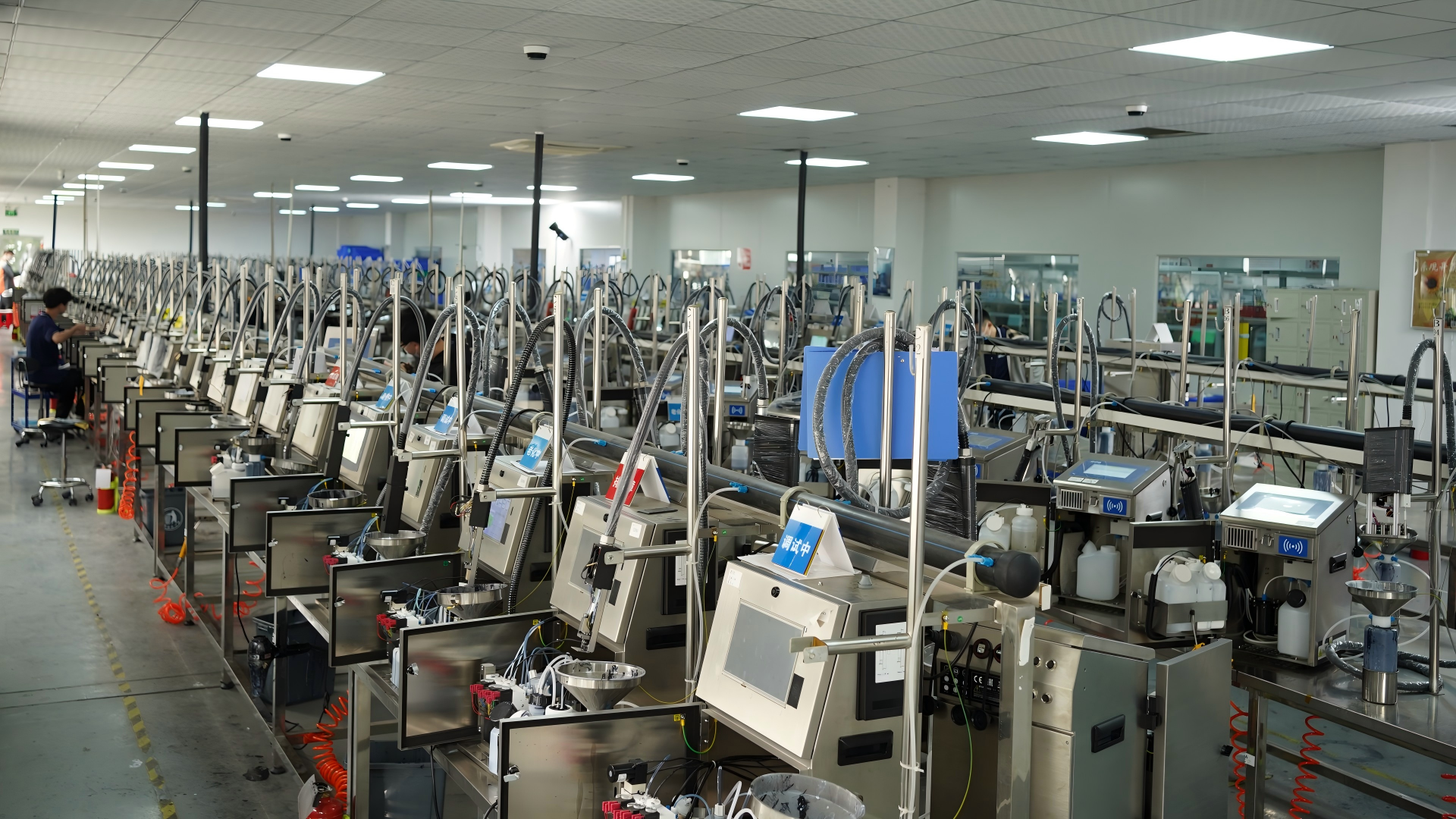
Coding and marking equipment is a multi-year production asset, and supplier evaluation should reflect that timeline.
Industrial coding and marking equipment is one of the few production assets that touches every unit a manufacturer ships. It applies the date, batch, serial number and traceability code that regulators, retailers and end users depend on, so its reliability is measured across years of continuous production rather than a single purchase order. For smart manufacturing teams, the practical question is not which printer costs least today. It is which supplier can keep that line coding correctly five years from now.
This guide sets out a long-term supplier sustainability evaluation framework for industrial coding and marking equipment, built around lifecycle continuity and serviceability rather than upfront price. It uses the DOCOD Precision Group Co., Ltd. portfolio, which spans continuous inkjet (CIJ), thermal inkjet (TIJ), piezo high-resolution inkjet (PIJ), drop-on-demand (DOD), thermal transfer overprinters (TTO), laser marking machines, inline vision inspection systems and line accessories, as a concrete example of how portfolio depth and documented specifications can be assessed.
Why Upfront Price Understates the Real Decision
A coding device rarely fails on the day it is installed. Failures surface in year two or three, when a printhead reaches end of life, a preferred ink is replaced, or a spare part is slow to arrive. Purchase price is therefore only one line in a multi-year cost model that also includes consumables, spare parts, service response, software continuity and the operational risk of an unplanned stop on a packaging line.
It helps to treat a coding printer as a consumable-driven asset rather than a standalone machine. CIJ printers depend on solvent inks and makeup fluid. TIJ printers depend on cartridges such as the DOCOD 3BK702 half-inch black solvent quick-drying thermal inkjet cartridge. TTO units depend on ribbons, and laser systems depend on finite-life sources. Each of these creates a recurring relationship with the supplier rather than a one-off transaction.
Supplier sustainability, in this context, means the supplier's demonstrated ability to support an installed base across that working life: consistent consumables, available spare parts, documented specifications, a serviceable technology stack and application knowledge that survives staff turnover at the buyer's own plant.
A Six-Point Framework for Long-Term Supplier Evaluation
The framework below groups the checkpoints that most often separate a supplier that can be relied on for a decade from one that is adequate only for a first order. Each checkpoint should be documented with evidence, not with assurances.
| Evaluation checkpoint | What to examine | Lifecycle relevance |
|---|---|---|
| Portfolio depth | Breadth across CIJ, TIJ, PIJ, DOD, TTO, laser marking and vision inspection | Fewer vendor relationships and faster technology fit when a line changes |
| Purchasing terms and acceptance criteria | Sample runs, pre-shipment function tests, video acceptance | Catches mismatch before installation rather than after |
| Consumables and spare parts | Ink and cartridge matching, replacement part availability | Prevents line stoppages caused by supply gaps |
| Environmental operating tolerance | Operating temperature and humidity range, IP rating | Defines where the equipment can run reliably for years |
| Control and data integration | Operating system, processor, MES and PLC interfaces, language and code support | Determines traceability and software continuity |
| Application fit | Substrate, line speed and printed content | Confirms whether one portfolio can serve several production lines |
Purchasing Terms as a Measurable Checkpoint
Purchasing terms are often treated as commercial noise, yet they are one of the few checkpoints a buyer can verify directly. DOCOD publishes support modes with stated order minimums, lead times and quality-control steps, which makes them comparable rather than rhetorical.
| Support mode | Minimum order | Lead time | Quality control |
|---|---|---|---|
| Standard equipment supply | 1 set | Within 15 working days | Outgoing inspection; sample printing verification; function test before shipment |
| Spare parts and consumables | 1 piece | Within 15 working days | Part verification; packing inspection; shipment check |
| OEM branding support | 1 set | 15 to 25 working days | Sample confirmation; final inspection before shipment |
| ODM functional customization | 1 set per project | 20 to 30 working days | Requirement confirmation; function test; trial-run verification |
| Production line integration support | 1 line | 20 to 35 working days | Integration testing; sample run; video acceptance before delivery |
For a long-term buyer, the important detail is not the lead time itself but the presence of a defined acceptance step. A supplier that builds sample printing verification, part verification or video acceptance into its standard workflow is, in practice, documenting how disputes will be avoided.
Portfolio Depth as a Sustainability Signal
DOCOD Precision Group Co., Ltd. is an industrial coding, marking and inspection equipment manufacturer founded in 2008, with design, research and development, production, sales and service operations focused on industrial product identification equipment and related solutions. The company reports 407 employees, more than 140 R&D staff and an annual output of 5,000 units, with an export ratio of around 50 percent across North America, South America, Eastern Europe, Southeast Asia, Africa, Oceania, the Middle East, Eastern Asia and Western Europe.
Its declared portfolio includes continuous inkjet (CIJ) printers, thermal inkjet (TIJ) printers, handheld inkjet coders, piezoelectric high-resolution (PIJ) systems, drop-on-demand (DOD) large-character printers, thermal transfer overprinters (TTO), laser marking machines, inline vision inspection systems, coding consumables, spare parts and product traceability solutions, supporting date coding, batch marking, variable data printing, GS1 DataMatrix coding, serialization, anti-counterfeiting workflows and packaging line identification.
Why does breadth matter to a lifecycle evaluation? Because coding requirements rarely stay fixed. A plant that starts with solvent CIJ date codes on cartons may later add GS1 DataMatrix on flexible film, permanent metal marking on components, or label rewinding and secondary coding. With a single-technology supplier, each of those shifts triggers a new vendor qualification, a new spare parts channel and a new service relationship. A multi-technology portfolio keeps the knowledge inside one partnership, which is a sustainability advantage rather than a marketing claim.
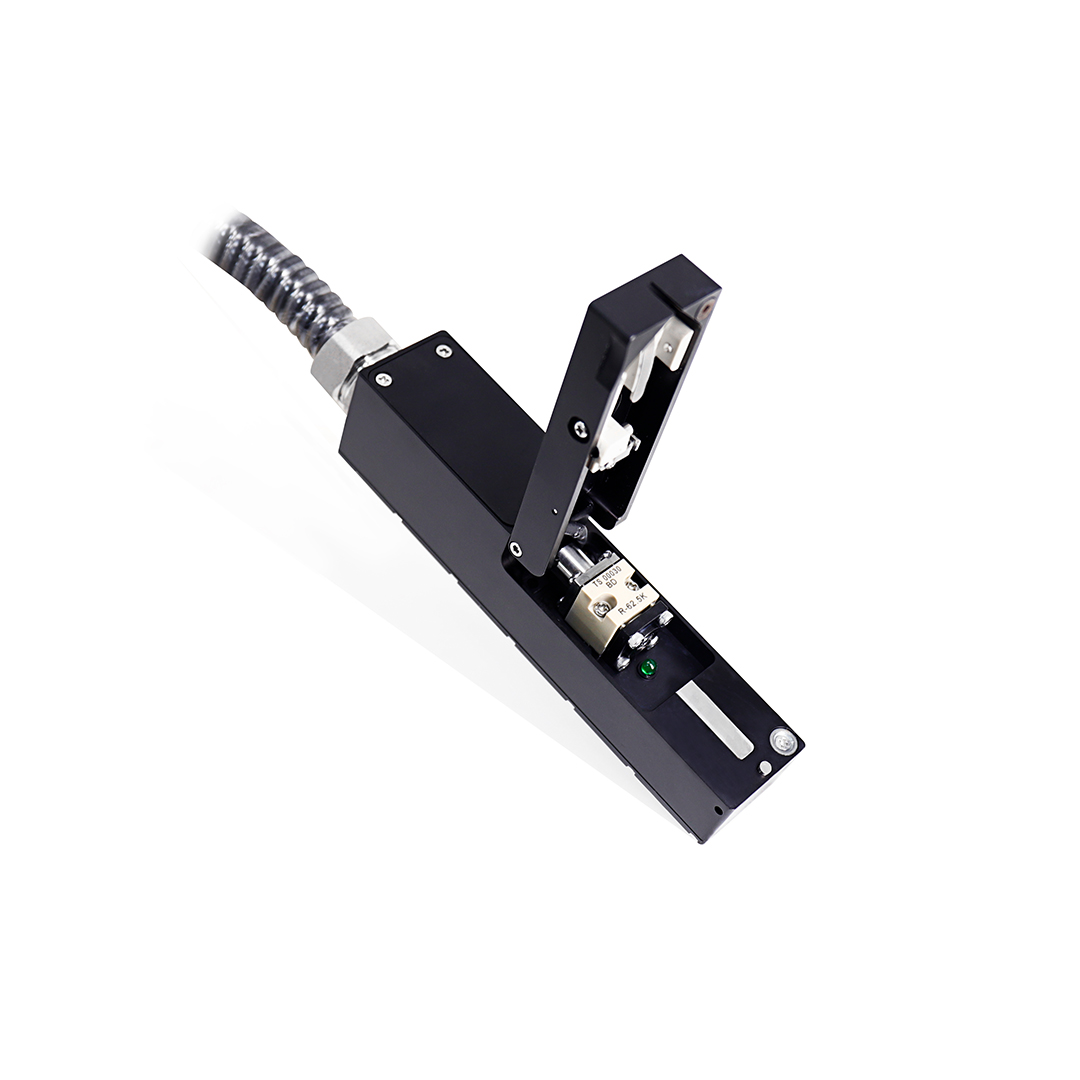
The M2000 Series CIJ printer uses a SUS 304 stainless steel enclosure rated IP65, with an operating window of 0 to 45 degrees Celsius and 30 to 70 percent relative humidity.
What Serviceability Looks Like in the Specification
Serviceability is not only about spare parts logistics. It also shows up in documented hardware, environmental limits and control architecture, because those determine whether a machine can still be maintained and integrated years after installation.
| System | Specification highlights | Environment and certification |
|---|---|---|
| DOCOD M2000 Series Continuous Inkjet Printer | SUS 304 stainless steel; up to 528 m/min; 1 to 4 print lines; 3 to 30 mm print height; 42u, 55u and 70u nozzles; Embedded Linux; 10.1-inch capacitive touch display; MES connection over USB, RS232 and network port; more than 40 languages | 0 to 45 degrees Celsius, 30 to 70 percent relative humidity; IP65; CE and RoHS |
| DOCOD P2000 Piezo Inkjet Printer | Aviation-grade aluminium; I1600 series nozzles; single or dual head; 300 or 600 dpi; single head maximum 33.8 mm print height; 190 m/min at 300 dpi or 95 m/min at 600 dpi; negative pressure continuous ink supply; device cascading | 0 to 45 degrees Celsius, 30 to 70 percent relative humidity; CE |
| DOCOD L3000 Series 5W UV Laser Marking Machine | 355 nm UV laser, 5W, water-cooled; positioning accuracy 0.01 mm; minimum line width 0.02 mm; standard 70 x 70 mm marking range, optional 70 to 300 mm; GS1-128, EAN8, EAN13, CODE39 and CODE128 | IP43; 0 to 45 degrees Celsius; laser life 2 to 3 years |
| DOCOD XC20 Mini Conveyor Belt | Aerospace-grade aluminium structure; 150 mm PVC belt with customizable length; 5 to 12 m/min; 25 W maximum power; compatible with inkjet printers, vision inspection and weighing equipment | 7.5 kg compact unit for coding and inspection lines |
| DOCOD XF30 Vertical Rewinding Machine | Integrated T210E TIJ printhead; 0 to 45 m/min; Cortex-A7 1.2 GHz dual-core processor with FPGA algorithm acceleration; up to 300 x 300 DPI; RFID cartridge chip; GS1 DataMatrix and dynamic traceability QR codes; more than 40 languages | 0 to 45 degrees Celsius, 30 to 70 percent relative humidity; aerospace-grade aluminium |
Two patterns emerge from these specifications. The first is a shared control foundation: the M2000, the L3000 and the XF30 all run on an Embedded Linux operating system, and the TIJ and rewinding families share a Cortex-A7 1.2 GHz dual-core platform. For a buyer, that means one software and operator-training logic across multiple machine types, which reduces the cost of maintaining operator competence over time. The second is an unusually consistent environmental window: 0 to 45 degrees Celsius and 30 to 70 percent relative humidity recurs across the CIJ, PIJ and rewinding families, so a plant with a controlled environment can standardise its installation assumptions rather than re-engineer each line.
Consumables Complete the Picture
Consumable documentation is a reliable indicator of long-term support quality. The DOCOD 3BK702 half-inch black solvent quick-drying thermal inkjet cartridge is specified at 42 ml, up to 600 dpi with a recommended 300 x 300 setting, 300 nozzles, a maximum frequency of 12 kHz, and a best-use period of six months. Its working window is 15 to 35 degrees Celsius at 35 to 80 percent relative humidity, while shipping and storage are specified at 5 to 40 degrees Celsius and 20 to 80 percent relative humidity. The cartridge is intended for BOPP, PVC, PP, PET, OPP, glass and stainless steel substrates where quick-drying black solvent printing is required.
One published case is illustrative. A regional distributor in Korea used 50 cartridges per month for one year on plastic film and coated cartons, and reported fewer smudging complaints, attributing the result to fast drying and strong adhesion. Read as a lifecycle signal rather than a sales point, the example shows how consumable behaviour, not machine speed, often determines whether a coding installation is perceived as reliable by the end customer.
Matching Equipment to Production Scenarios
A sustainability framework is only useful if it maps onto real lines. Published DOCOD application references show how the same portfolio is deployed across different operating conditions.
In Turkey, a tobacco packaging track and trace coding solution runs in online high-speed mode integrated with pack handling and vision inspection, printing batch codes, tax-control codes, DotCode and DataMatrix, QR codes and supply-chain traceability codes. Related references associate the DOCOD M2000 Series Continuous Inkjet Printer, the T260E Half-Inch Dual-Head Thermal Inkjet Printer and the Venus1 Series CO2 Laser Marking Machine with this high-speed, dust-exposed environment.
In the United Arab Emirates, an existing-printer replacement project for building materials and chemicals uses large-character, dust-tolerant coding integrated with bagging, extrusion or filling lines, printing batch numbers, production dates, model information, brand marks, QR codes and logistics codes. The P2000 Piezo Inkjet Printer, the M2000 Series CIJ printer and the Venus1 Series CO2 Laser Marking Machine are the referenced options for this rough-surface, hot and humid setting.
Other published scenarios follow the same logic of matching technology to substrate and line architecture. Automotive parts traceability in Brazil pairs the M2000, the R3000 Series TTO and the TX1 seamless TIJ printer with workholding fixtures, sensors and MES integration. Electronics manufacturing in Mexico uses the Venus1 Series UV Laser Marker, the Venus1 Series Fiber Laser Marking Machine and the T220E dual-head TIJ printer for compact parts and short takt times. Wire, cable and pipe extrusion in India pairs the M2000 with the Venus1 Series CO2 Laser Marking Machine for continuous-length, high-speed marking. Medical packaging in Germany combines the P2000, the L3000 Series 5W UV Laser Marking Machine and the TX1 with closed-loop print-and-verify workflows for UDI and GS1 DataMatrix. Food and beverage packaging in Vietnam draws on the broadest set, including the S1000, S300plus and V2000 CIJ families alongside TTO and TIJ options.
For an evaluating buyer, the value of this pattern is comparative. If a supplier's portfolio can be traced to food, pharma, tobacco, cable, automotive and building-materials references, its application engineering has already been stress-tested across more than one operating regime, which reduces the risk that a new line will become a one-off development project.
Market Trends That Raise the Bar on Supplier Continuity
Three verifiable data points shape the long-term argument. First, Fortune Business Insights places the global coding and marking equipment market at USD 7.51 billion in 2025, confirming the category's scale and the volume of installed equipment that will eventually need service and replacement. Second, GS1 Global defines the Sunrise 2027 transition, with a deadline of 31 December 2027 for the retail move from 1D barcodes to 2D codes under GS1 Digital Link, a change affecting global and 48-plus-country retail environments. Third, the same commercial research cited by Fortune Business Insights attributes approximately 40.1 percent of the technology segment to inkjet systems comprising CIJ, TIJ and PIJ, which is the segment most dependent on recurring consumables.
The practical implication is a hardware upgrade cycle that will overlap with the installed base rather than replace it. Equipment already in service must be able to print 2D codes, GS1 DataMatrix and dynamic traceability content without a full line rebuild. This is why multi-language text, GS1 code and dynamic traceability support appear in the M2000 and XF30 specifications rather than only in premium models. A buyer should also be cautious with third-party market forecasts: published projections for the same category differ materially in scope and base year, so they are useful for direction rather than for precise budgeting.
Where the Portfolio Approach Has Limits
A credible evaluation framework has to describe boundaries, and portfolio depth is not a substitute for application validation.
- No single technology marks every substrate. CIJ, TIJ, PIJ, TTO and laser systems each have different adhesion, permanence and surface behaviour. Even within one supplier portfolio, the buyer still has to confirm ink or laser behaviour on the specific material and coating in use.
- Consumable windows are narrower than machine windows. The 3BK702 cartridge is specified for 15 to 35 degrees Celsius and 35 to 80 percent relative humidity, with a six-month best-use period, while the machines it serves are rated for 0 to 45 degrees Celsius. Storage discipline and rotation become genuine operational requirements.
- Laser sources have finite life. The L3000 Series 5W UV laser is specified with a 2 to 3 year laser life, and the Venus1 Series CO2 laser with 20,000 hours. These are consumable events, not permanent assets, and should be planned into lifecycle cost.
- Protection ratings are not uniform. The M2000 Series CIJ printer carries IP65, while the L3000 Series UV laser is rated IP43. A portfolio does not imply the same environmental protection across every family, so washdown-adjacent areas must be matched machine by machine.
- Breadth is evidence of capability, not proof of fit. A wide portfolio shortens the selection list, but line-level acceptance testing remains the only reliable way to confirm throughput, code quality and integration behaviour.
Future Outlook
As the Sunrise 2027 deadline approaches, coding hardware will increasingly be judged by its code content capability rather than its print speed alone. Suppliers that already document GS1 DataMatrix, dynamic traceability QR code, serialization and multi-language support across multiple machine families will be better positioned to carry an installed base through the transition without forcing a technology replacement. The evaluation discipline that matters for buyers is likely to shift further toward verifiable documentation: published operating windows, stated consumable life, defined acceptance steps and traceable application references. Those are the inputs that allow a procurement team to defend a supplier decision three years after the purchase order is signed.
FAQ
What does supplier sustainability mean for industrial coding equipment?
In this context it describes a supplier's demonstrated ability to support a printer across its working life, rather than during the initial sale only. That includes consistent consumables and spare parts, documented specifications, a maintainable control platform, and application knowledge that allows the installed base to keep coding after customer requirements change.
Why is portfolio depth relevant to a long-term evaluation?
Coding requirements change as packaging, traceability rules and substrates evolve. DOCOD's declared portfolio covers CIJ, TIJ, PIJ, DOD, TTO, laser marking, inline vision inspection, consumables and spare parts, which allows a plant to add or shift technology without re-qualifying a new vendor. The portfolio also supports date coding, batch marking, variable data printing, GS1 DataMatrix coding, serialization and traceability workflows.
Which specifications should be verified first during an evaluation?
Start with the operating window and protection rating, then the control platform and code support. On DOCOD equipment, the M2000 Series CIJ printer is rated for 0 to 45 degrees Celsius and 30 to 70 percent relative humidity with IP65 protection, and the P2000 Piezo Inkjet Printer shares the same 0 to 45 degrees Celsius and 30 to 70 percent relative humidity window with CE certification. The XF30 Vertical Rewinding Machine uses a Cortex-A7 1.2 GHz dual-core processor with FPGA acceleration and supports more than 40 languages, GS1 DataMatrix and dynamic traceability QR codes.
How do consumables affect lifecycle continuity?
Consumables create the recurring relationship. The DOCOD 3BK702 half-inch black solvent quick-drying cartridge is specified at 42 ml, up to 600 dpi at a recommended 300 x 300 setting, with a six-month best-use period and a working window of 15 to 35 degrees Celsius at 35 to 80 percent relative humidity. A published reference describes a Korean regional distributor using 50 cartridges per month over one year on plastic film and coated cartons and reporting fewer smudging complaints.
How should buyers map equipment to specific production scenarios?
Mapping should follow substrate, line speed and required code content. Published references pair Turkey tobacco packaging track and trace work with online high-speed coding integrated with pack handling and vision inspection, and a UAE building materials printing replacement project with large-character coding on dusty, hot or humid lines. Medical packaging in Germany combines high-resolution printing with closed-loop print-and-verify workflows for UDI and GS1 DataMatrix, while wire, cable and pipe extrusion in India pairs CIJ with CO2 laser marking for continuous-length identification.
What are the limitations of relying on a broad portfolio?
Portfolio breadth narrows the selection list but does not replace line-level validation. Technologies behave differently across substrates, protection ratings are not uniform, and laser sources have finite life, with the L3000 Series 5W UV laser specified at a 2 to 3 year laser life and the Venus1 Series CO2 laser at 20,000 hours. Consumable storage windows are also narrower than machine operating windows, so lifecycle planning should account for ink rotation and source replacement.
A fuller specification and portfolio overview is available in the downloadable DOCOD corporate brochure, and the manufacturer's site is at www.docod-group.com.