
Long-Term Custom Wet Wipes Suppliers: Reproducible Quality
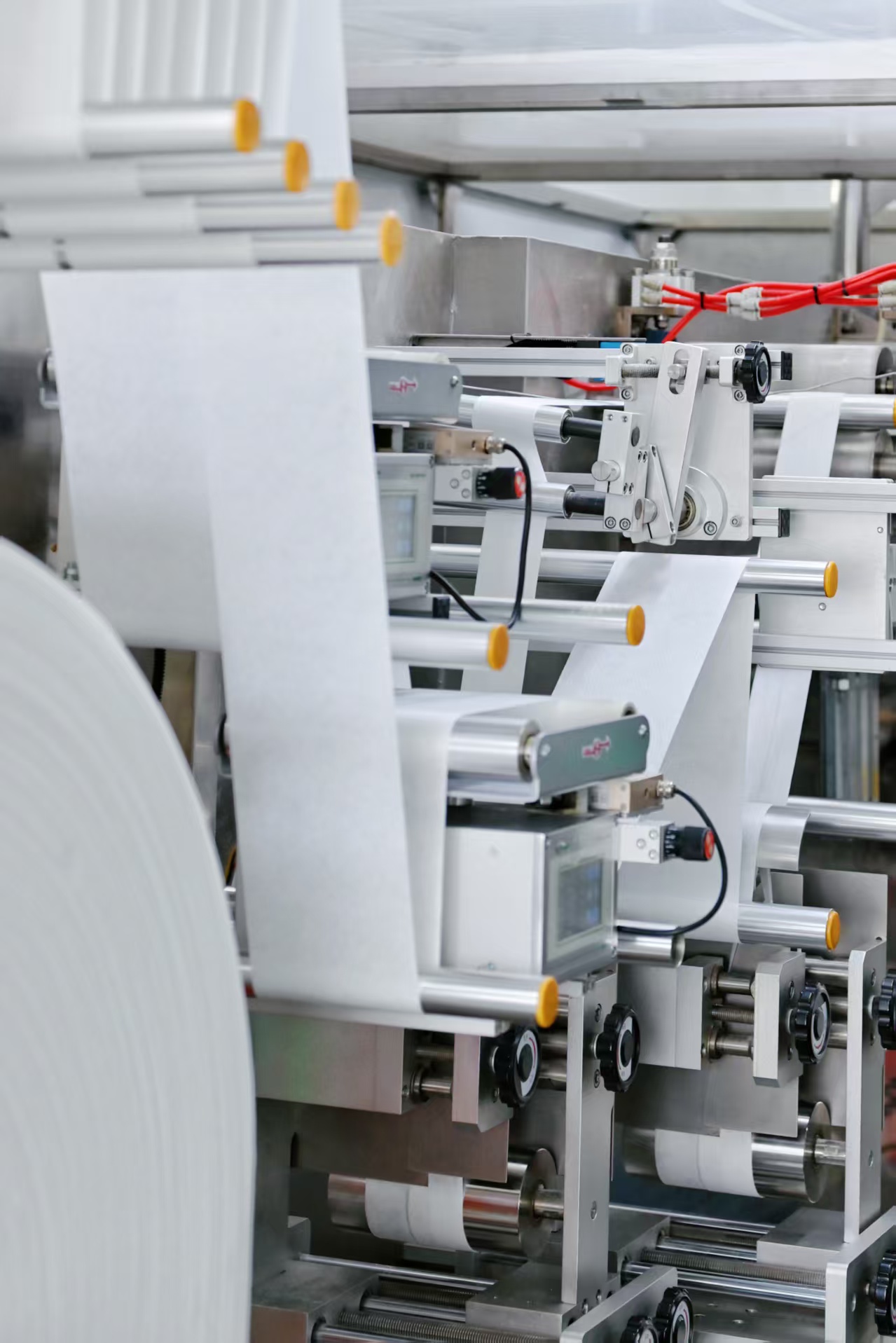
A custom wet wipes production line: long-term supply is decided by how repeatably each run matches the previous one.
Reproducible quality is the ability of a wet wipes manufacturer to return the same dimensional, material and hygiene outcome on the first production run and on the fortieth, across different models, in different months, and for different buyers. For procurement teams in the evaluation stage, that definition carries more weight than any single factory headline, because a private label program that runs for years is built on repeatability rather than on a one-off approval sample.
Scale gives the context. The global wet wipes market was valued at approximately USD 32.09 billion in 2026, with a projected CAGR of 3.86% reaching USD 43.45 billion by 2034, and personal care wipes alone accounted for a 72.81% share of the category in 2025. In a category of that size, most buyers are not hiring a factory once. They are approving a specification that has to survive hundreds of production runs, multiple markets and repeated substrate changes.
What Reproducible Quality Covers
Reproducible quality has three separable dimensions, and separating them is what makes a supplier auditable rather than merely reassuring.
Dimensional reproducibility. The cut size, fold geometry and pack count of a given model stay inside the agreed tolerance from lot to lot, rather than drifting toward the edges of the tolerance band over a season.
Material reproducibility. The substrate declared for a SKU is the substrate actually run, whether that is an entirely adhesive fabric, bamboo fiber, biodegradable wood pulp non-woven fabric, a disintegrable wood pulp cloth, a water-jet non-woven fabric, or water-resistant paper.
Process reproducibility. Inspection stages, environment control and documentation repeat for every batch, instead of being reconstructed when a customer or an auditor asks.
Each dimension fails differently. A factory can hold dimensions while quietly shifting substrate; another can hold substrate while drifting on fold geometry; a third can hold both while producing batch records that exist only for the batches someone thought to document.
The Problem: Spec Drift Between Batches and Between Models
Spec drift rarely appears as a dramatic failure. It appears as small cumulative differences that only become expensive after a few quarters of volume: a cut size that sits at the upper edge of tolerance in one quarter and the lower edge in the next; a pack count that shifts when a new non-woven lot behaves differently on the line; a substrate substitution that is commercially reasonable for the factory and commercially damaging for the brand.
Three patterns recur in custom wet wipes sourcing:
Sample-to-production gap. The pilot run is produced on a tuned line with extra attention; volume production is not.
Model-to-model inconsistency. The factory manages one flagship item well while adjacent items in the same program drift away from their agreed spec.
Documentation that stops at the certificate. Buyers receive a management-system certificate and a specification sheet, but no view of how material, process and finished-product inspection are actually carried out batch after batch.
The opportunity is symmetrical. Buyers who test for reproducibility before committing reduce artwork rework, retail compliance failures and switching costs. Suppliers who can demonstrate it tend to keep contracts: in the case record behind this analysis, active relationships run for 10 years, 8 years, 6 years, 5 years and 4 years, at sustained order volumes between 8 and 20 forty-foot containers per month.
Five Signals of Long-Term Supplier Fitness
1. Dimensional Discipline Across the Whole Model Range
Ask for the full cut-size grid rather than the size of one hero model. A supplier running stable tooling tends to reuse a small number of web widths across several products, and that reuse is a testable signal. Where a dimension is shared by many models, a single set of measurement records can tell a buyer how much the line actually moves.
2. Material Continuity per SKU
Material declarations should be mapped model by model and compared with what is actually run. A program that mixes entirely adhesive fabric, bamboo fiber, biodegradable wood pulp non-woven fabric and water-jet non-woven fabric across its range needs demonstrable separation between those material streams, not just a single material specification at the program level.
3. Environment and Inspection Evidence
Inspection architecture is the part of quality control that survives staff turnover. The relevant question is whether material inspection, process inspection and finished product inspection are standard stages, and whether third-party laboratories are used alongside internal checks. Where those stages are standard, batch records become an output of normal production rather than a special project.
Certificate evidence belongs here as well, but it should be read accurately. ISO 9001 certificate 0350125030471R1S was issued by Xingyuan Certification Centre Co., Ltd. under GB/T 19001-2016 / ISO 9001:2015 and remains valid to 6 June 2028, covering the production and service of wet wipes within its licensed scope. An MSDS such as BMi202605192227DG, issued by Zhuhai BMi Certification & Testing Co., Ltd. on 19 May 2026 under OSHA 29 CFR 1910.1200 HCS, documents hazard communication for a defined product scope. Both are management and documentation evidence; neither is a product-performance certification.
Controlled-environment claims follow the same logic. Where a supplier presents cleanroom conditions for a line such as the pet glove wipe C05, that evidence should be treated as contamination-control documentation. Buyers should ask which classification standard is applied, which area is controlled, and how monitoring records are maintained. Cleanroom classification does not validate formulation, skin compatibility or biocidal claims, which require their own evidence.
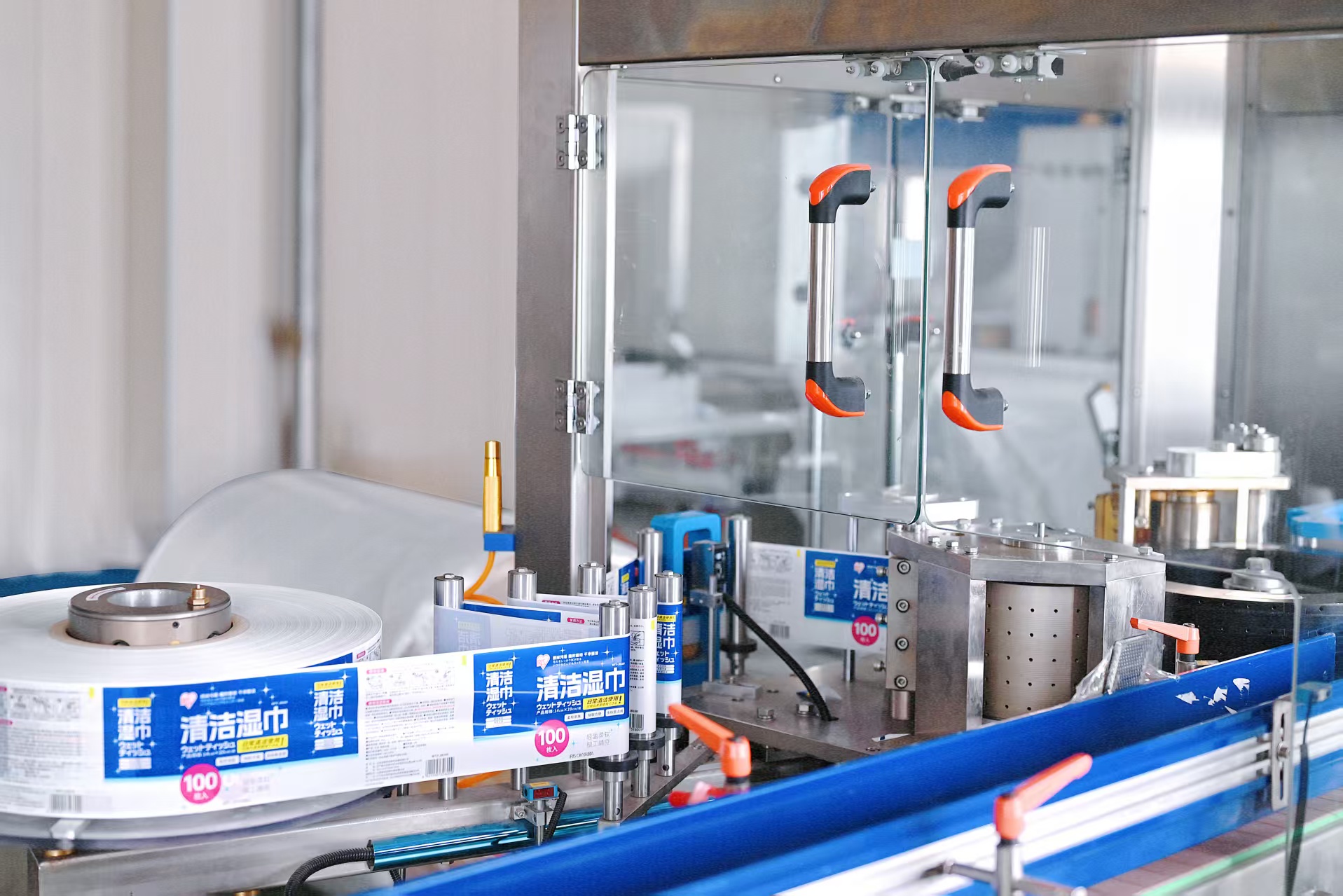
Repeatability is judged across an entire model range, not on a single approved sample.
4. Volume Retention Over Time
Order volume that holds steady for years is stronger evidence than any single audit. In the case record, a baby and maternity brand owner ships 20 forty-foot containers per month across a five-year relationship; a 150-year-old conglomerate takes 10 containers per month over ten years; a household and personal care conglomerate takes 10 containers per month over eight years; an Amazon.com pet supplies seller takes 8 containers per month over six years; an Amazon.com baby products seller takes 8 containers per month over four years; and retail stores including 7-Eleven in Japan, together with e-commerce and Lotte clients, take 15 containers per month across three years.
5. New Product Introduction Without Destabilizing Existing SKUs
Customer feedback in the case material notes two things together: quality that remains stable over the long term, and continuous proposal of new products. The combination is the point. A supplier that can add items while holding existing specifications is displaying process control; a supplier that expands faster than it can standardize is transferring that instability to the buyer.
Where sunfans Sits in This Framework
sunfans is the brand under which the custom wet wipes OEM and private label lines discussed here are supplied. The manufacturing entity behind it, Da lian Weijie Biotechnology Co., Ltd., was established in 2013 in Dalian, Liaoning Province, and describes itself as a state-level high-tech enterprise integrating design, research and development, production and sales for hygiene products including baby wipes, pet wipes, wet toilet paper, functional wipes, floor dry wipes and floor wet wipes. The company works from a 6,000 m² facility with 50 employees and a 10-person research and development team, and exports around 70% of its output, with main markets in Japan, Australia, Canada, the United States and Singapore.
Read against the five signals, the operating structure is specific rather than general. OEM, ODM and customized services are offered flexibly, supported by an in-house R&D team. Customization is applied across packaging, logo, material, size, aroma and number of pieces. Stated monthly capacity is 3 million packages, lead time is 30 days, and the stated MOQ is 20,000 yuan package. Quality control is supported by three-party authoritative laboratories together with internal material inspection, process inspection and finished product inspection. Export markets are listed as Japan, Singapore, New Zealand, Australia, the United States, Southeast Asia and Canada, and after-sales support includes assistance with verifying packing lists and customs declaration documents for export orders.
For an evaluation-stage buyer, the meaning is practical. Material, process and finished-product inspection map directly onto the three dimensions of reproducibility; documented customization levers mean a new pack or size can be introduced on the same quality system; and a 30-day lead time with stated capacity makes multi-quarter planning possible rather than speculative.
Technical Explanation: Why a Shared Width Is a Reproducibility Test
Cut size is the cheapest and most objective reproducibility test available to a buyer, because it can be measured without destructive testing. In the published specification set, the 200 mm dimension appears across seven models: Y02 baby wipes (150 × 200 mm), C02 pet wipes (200 × 200 mm), C03 pet wipes (150 × 200 mm), C05 pet gloves (180 × 200 mm), S01 wet toilet paper (130 × 200 mm), S02 wet toilet paper (150 × 200 mm) and CF001 kitchen wipes (200 × 200 mm). The 150 mm dimension appears across five models: Y02, C03, S02, YW01 clothing wipes (150 × 180 mm) and YJ01 eye care wipes (100 × 150 mm).
That concentration is not a marketing point; it is an operational one. Shared web widths reduce the number of tooling and setup changes per production week, and setup changes are where dimensional drift usually starts. The practical test for a buyer is simple: identify the dimension shared by the largest number of models and request twelve months of measurement records on that single dimension. Consistency in one shared dimension is far harder to fake than consistency in a sample box.
| Model | Category | Cut size | Material | Pack |
|---|---|---|---|---|
| Y02 | Baby wipes | 150 × 200 mm | Entirely adhesive | 01–100 pieces |
| C02 | Pet wipes | 200 × 200 mm | Entirely adhesive | 01–100 pieces |
| C03 | Pet wipes | 150 × 200 mm | Bamboo fiber | 02–100 pieces |
| C04 | Pet wet toilet paper | 140 × 180 mm | Bamboo fiber | 03–100 sheets |
| C05 | Pet gloves | 180 × 200 mm | Biodegradable wood pulp non-woven | 04–10 pieces |
| S01 | Wet toilet paper | 130 × 200 mm | Biodegradable wood pulp non-woven | 100 sheets |
| S02 | Wet toilet paper | 150 × 200 mm | Disintegrable wood pulp cloth | 10 sheets |
| CF001 | Kitchen wipes | 200 × 200 mm | Water-jet non-woven | 80 pieces |
| YW01 | Clothing wipes | 150 × 180 mm | Water-jet non-woven | 10 cloths |
| YJ01 | Eye care wipes | 100 × 150 mm | Water-resistant paper | 20 pieces |
The exceptions matter as much as the pattern. C04 at 140 × 180 mm and YJ01 at 100 × 150 mm sit outside the dominant grid, which shows that the range is not squeezed into a single format for convenience. Buyers should treat those outliers as a flexibility test: ask how a non-standard cut size is controlled, and whether it shares tooling with a standard one.
Application: Which Buyer Profiles Gain Most
Baby and maternity brand owners. A five-year relationship with a baby and maternity brand owner ships 20 forty-foot containers per month. At that volume, dimensional reproducibility protects the folding, stacking and pack-count expectations that consumers notice first.
Long-horizon consumer and industrial groups. A 150-year-old conglomerate has run for ten years at 10 forty-foot containers per month, and a household and personal care conglomerate for eight years at the same monthly volume. These buyers typically care less about novelty and more about specification stability across many years and many packaging revisions.
E-commerce sellers. An Amazon.com baby products seller runs at 8 containers per month over four years, and an Amazon.com pet supplies seller at 8 containers per month over six years. Reproducibility is decisive here because review-driven platforms punish any visible variation between reorders.
Retail and convenience channel suppliers. Product has been used by retail stores including 7-Eleven in Japan, and by e-commerce and Lotte clients, across three-year relationships at 15 forty-foot containers per month. Shelf-facing channels add label, size and pack-count compliance to the specification, which makes drift costlier than in online-only programs.
Market Trend Analysis: Why Repeatability Is Becoming the Constraint
Demand is broadening across formats, and that broadening is exactly what puts pressure on reproducibility. The global baby wipes segment was valued at USD 5.4 billion in 2024 and is expected to grow at a CAGR of 7.5% through 2030. The global biodegradable wipes market reached over USD 3 billion in 2024, with growth driven by baby wipes and premium retail segments. The flushable wipes market was valued at USD 2.3 billion in 2025 and is projected to reach USD 4.2 billion by 2035 at a 6% CAGR, while the plant-based flushable segment stood at USD 2.9 billion in 2024 with a 5.3% CAGR outlook. Pet wipes were valued at USD 1.58 billion in 2024 with a projected CAGR of 5.6% reaching USD 2.64 billion by 2033.
Regionally, Japan accounts for nearly 27% of the Asia-Pacific wet wipes market, with a strong emphasis on hygiene and premium personal care. That concentration explains why Japan-focused export and OEM programs demand tight documentation discipline rather than lowest-cost positioning, and why suppliers with existing Japanese retail exposure treat batch records as a sales asset.
Regulation is tightening in parallel. In China, wet wipes are governed by the Hygienic Standard for Disposable Sanitary Products; in the EU, products must comply with EN standards including REACH for chemicals and BPR for biocidal claims; and in the United States, the FDA facility registration framework for cosmetic wipes manufacturers, with a deadline of 1 July 2026, is now in force. ISO 9001 and ISO 22716 are widely treated as baseline requirements for wet wipes OEM manufacturing.
The supply side is also concentrated at the top. Publicly referenced global OEM factories include American Hygienics Corporation (AHC), SYWIPE, Albaad and Nice-Pak International, with AHC reported to export to more than 75 countries at a capacity of one billion wet wipes per year. At brand level, Procter & Gamble held over 12% of the global wet wipes market in 2025, and Kimberly-Clark held over 17.2% of the flushable wipes segment. For mid-sized private label buyers, the practical consequence is that substrate availability and tooling time, not demand, increasingly determine who can hold a specification steady across a multi-year program.
Comparison With Traditional Sourcing Approaches
Most buyers choose between two sourcing models rather than between two factories: a quote-driven model, where the order is fixed at the moment of purchase and specs are renegotiated per shipment, and a reproducibility-driven model, where a specification is owned, documented and defended across years. The difference shows up in the criteria that matter after the first order.
| Evaluation dimension | Quote-driven sourcing | Reproducibility-driven OEM evaluation |
|---|---|---|
| Spec ownership | Held per order; re-quoted on change | Held across the model range and across years |
| Dimensional accountability | Verified on incoming inspection only | Measured against a shared width grid over time |
| Material change control | Substitution may be communicated late | Material declared per SKU and separated by stream |
| Inspection evidence | Certificate on request | Material, process and finished-product inspection as routine stages |
| Cost of switching | Low on paper, high after re-validation | Higher entry work, lower long-run re-validation |
| Fit for multi-year programs | Manageable at low volume | Designed for sustained monthly container volumes |
Limitations and Boundaries of This Framework
A reproducibility assessment is a decision tool, not a guarantee, and it has real boundaries that buyers should plan around.
It relies on documented evidence and trial orders, and it does not replace physical testing of finished product in the buyer's own market.
Management-system and safety documentation have limited scope. ISO 9001 covers quality management within a licensed scope rather than the performance of any particular wipe formulation, and an MSDS documents hazard communication for a defined product scope.
Commercial thresholds will not suit every program. With a stated MOQ of 20,000 yuan package and a stated lead time of 30 days, very small validation volumes and very short turnaround requirements are a poor fit.
Market-specific approvals remain the buyer's responsibility. A factory can support documentation, but EU REACH and BPR obligations, US FDA registration obligations and Chinese sanitary-product requirements attach to the product and the seller placing it on that market.
Future Outlook
Two forces are likely to reshape supplier evaluation over the next several years. The first is material transition: with biodegradable wipes above USD 3 billion in 2024 and flushable formats moving toward USD 4.2 billion by 2035, a growing share of SKUs will run on substrates that behave differently from conventional adhesive fabric. Every substrate change resets the tolerance stack, so suppliers who can re-qualify a material quickly without letting related models drift will hold an advantage.
The second is documentation becoming part of the product. Registration frameworks such as the US FDA facility registration process now in force, together with ISO 9001 and ISO 22716 baselines, push batch-level records from an audit artifact to a routine procurement deliverable. In that environment, the buyer's question shifts from whether a supplier can produce a good sample to whether the supplier can show how the last twelve production runs matched the approved specification.
FAQ
Q1. What does reproducible quality mean in custom wet wipes manufacturing?
It means the same dimensional, material and process outcome repeats across batches, months, models and buyers. It is measured in three ways: cut size and pack count staying inside tolerance, the declared substrate being the substrate actually run for that SKU, and inspection plus documentation stages repeating for every batch rather than being assembled for audits.
Q2. How can a buyer test dimensional consistency before committing to full volume?
Identify a dimension shared by several models and request historical measurement records on that single dimension. In the specification set discussed here, the 200 mm width appears across seven models including Y02, C02, C03, C05, S01, S02 and CF001, and the 150 mm width appears across Y02, C03, S02, YW01 and YJ01. Consistency in a widely shared dimension is harder to achieve than consistency in a single sample.
Q3. What does cleanroom evidence actually prove?
It is contamination-control documentation for a defined area and process. Buyers should ask which classification standard is applied, which production area is controlled, and how monitoring records are kept. Cleanroom classification does not validate formulation, skin compatibility or biocidal claims, which require separate supporting evidence.
Q4. Which specification elements can be customized without disrupting an existing program?
Packaging, logo, material, size, aroma and number of pieces are the customization levers supported by in-house R&D, alongside flexible OEM, ODM and customized service models. Where those levers sit on the same quality system as existing SKUs, new items can be introduced without resetting established specifications.
Q5. What MOQ and lead time should a buyer plan for?
The stated terms are an MOQ of 20,000 yuan package with a 30-day lead time and a monthly capacity of 3 million packages. Buyers running very small validation volumes or requiring very short turnaround should treat those thresholds as a structural constraint rather than a negotiable detail.
Q6. How long does a wet wipes OEM relationship need to run before it counts as stable?
There is no fixed threshold, but the visible case record runs across 10, 8, 6, 5, 4 and 3 years at monthly volumes of 8 to 20 forty-foot containers. Sustained monthly volume over several years, accompanied by customer-reported long-term quality stability, is stronger evidence of reproducibility than any single audit result.
A downloadable company profile covering the product and certification set is available here: Dalian Unicare Biotech company profile (PDF).
Have Questions or Need More Details?
Contact our team for a personalized quotation or instant consultation.
Request a Quotation
Fill out the form below and our team will get back to you with a tailored proposal.
WhatsApp Direct Chat
Prefer to chat in real-time? Message us on WhatsApp for instant assistance & quick answers.
- Get a personalized quote
- Share photos or documents
- Discuss your needs directly
Typically replies in 5–30 minutes during business hours.