
Long-Term Dicing Blade Supply: What Stable Partnerships Require in 2026
As device makers expand capacity for silicon carbide, gallium nitride and other advanced substrates, the procurement question is no longer just which dicing blade performs best in a single trial run. Increasingly it is which supplier can deliver the same cutting behavior across thousands of wafers, month after month, without unexpected variation. That shift moves the dicing blade conversation from line-item purchasing toward supply-chain reliability, quality traceability and technical partnership.
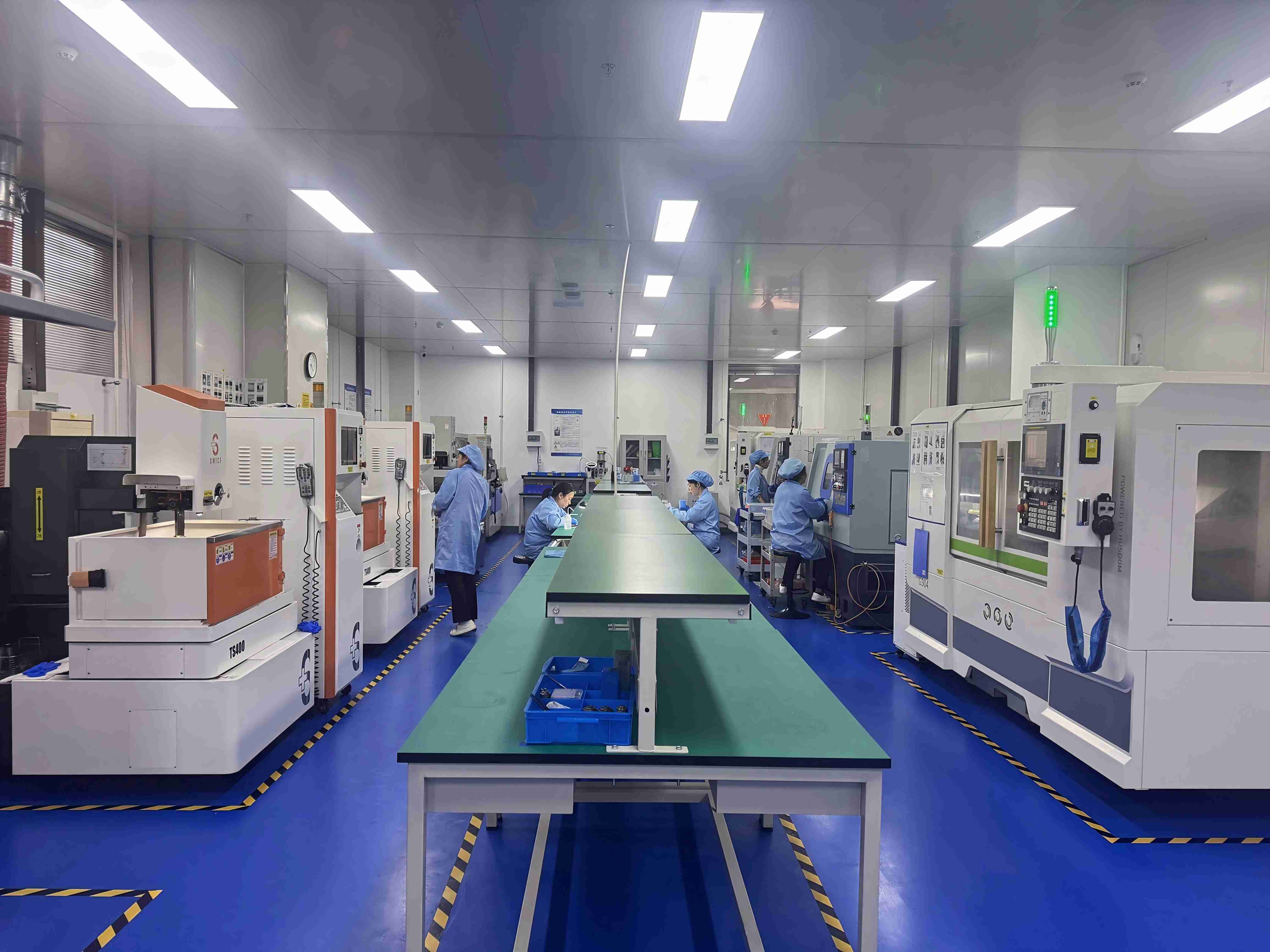
Long-term dicing blade supply depends on controlled manufacturing conditions and documented batch quality.
Why Procurement Decisions Now Center on Continuous Supply Performance
Dicing blades are a high-consumption, process-critical tool in wafer singulation and precision component separation. In high-volume production, blade performance directly affects die strength, chipping dimensions, kerf loss, and effective yield. But in an extended supply relationship, the metric that matters most is consistency; not only whether a blade meets specification on day one, but whether the following batches continue to meet it under real production pressure.
Buyers at the execution stage are therefore evaluating a different set of questions than during initial discovery:
- Can the supplier scale output to match production growth, including customized dicing blade specifications?
- Are batch-to-batch variations controlled well enough to avoid process requalification?
- Does the supplier have traceable quality documentation if an issue occurs?
- Is the supplier investing in domestic advanced manufacturing capability, rather than merely trading blades?
- Can the partnership reduce total cost of ownership over a multi-year cycle, not just unit price?
What a Reliable Dicing Blade Supply Base Needs to Prove
For manufacturers of wafers, power devices, optical communication components and functional ceramics, four pillars define a dependable dicing blade partner.
Production Capacity for Standard and Custom Models
Capacity is not only about having a large factory area. It includes the ability to run precision standard products continuously while also fulfilling tailored small-series requests such as custom hubless blade dimensions or particular diamond concentration levels.
WINTIME Semiconductor Technology Co., Ltd., a producer of precision dicing blades and cutting solutions based in Rugao, Jiangsu Province, states a monthly production capacity of over 1,200,000 pieces for standard models and over 50,000 pieces for customized specifications. For buyers, this type of stated volume matters in two situations: when a product line ramps up faster than expected, and when a dicing blade version must be adapted to specific cutting conditions without disrupting the main supply line.
The company operates as an integrated R&D, production and sales organization for high-precision cutting blades. That structure is relevant for suppliers aiming to move beyond catalogue distribution toward engineering cooperation.
Batch Consistency and Quality Traceability
One recurring risk in dicing blade procurement is quality drift between batches. Since a dicing blade is a composite of abrasive grains, bond matrix and geometry, slight process variations can alter cutting behavior even when outer dimensions look identical.
WINTIME describes its control methods in concrete terms: standardizing production process parameters, using automatic production equipment to reduce manual error, establishing batch production data tracking systems, and performing comparative tests between adjacent batches. On the management side, it applies an ISO 9001 quality management system, assigns quality inspectors per production batch, maintains batch quality files, and recalls non-conforming batches if needed. These controls are designed to answer the buyer question: what happens after the first purchase order?
Technical Depth for Application-Specific Blade Needs
Advanced materials do not all cut in the same way. A blade designed for bare silicon may not deliver the same edge quality on silicon carbide or ceramic. A blade that performs well on a 55.56 mm outer-diameter setup may need a different exposure, grit size or bond strength for another process. Buyers often need not only a catalogue model, but an explanation of whether a blade series can be adjusted for their specific material and machine configuration.
In this context, WINTIME’s product positions cover several families: Diamond Dicing Blades, Precision Dicing Blades, Semiconductor Dicing Blades, Hubless and Hubbed types, DZY Series Wafer Dicing Blades, DZR Series Dicing Blades, and DZR-S Series Slotted Dicing Blades. This range lets procurement teams match blade architecture to process conditions instead of forcing one design across every application. For optical communication and functional ceramic cutting, slot designs and bond formulations may be chosen for chip removal and edge stability; meanwhile ultra-thin wafer dicing benefits from hubless constructions that reduce runout in 300 mm wafer processing environments.
Design and Engineering with a Long-Term Roadmap
Advanced blade manufacturing is a materials-technology business. Buyers who rely on a supplier without process engineering capability may find that every new device design triggers a new supplier search. In contrast, an engineering-capable partner can participate earlier: understanding wafer thickness, die size, street width, machine spindle characteristics, and the tolerance budget for chipping and burr.
WINTIME is backed by a 35-person R&D team and positions its development work as a domestically self-developed project aimed at import substitution in high-end industries. In practice, this means that the production knowledge is not licensed from an overseas incumbent, but built internally. The company reports that its ultra-thin wafer dicing blade project has reached processed thickness below 9 microns, a capability significant for producing thin dies without excessive material loss. For long-term buyers, internal R&D depth also suggests that future customization requests will not cease because a remote technology owner changes its licensing strategy.
Evaluating WINTIME as a Long-Term Partner: Evidence and Context
WINTIME was established in 2020 and has concentrated its investment in precision cutting blade manufacturing. In 2023, its semiconductor special materials project in Nantong received a total investment close to tens of millions of yuan and added buildings of 34,000 m², connected to an annual production capacity of more than one million dicing blades. It reports two patent technologies and has received recognition in national, provincial and municipal science and technology and entrepreneurship competitions. These facts indicate a supplier deliberately investing in footprint and intellectual property rather than a pure trading operation.
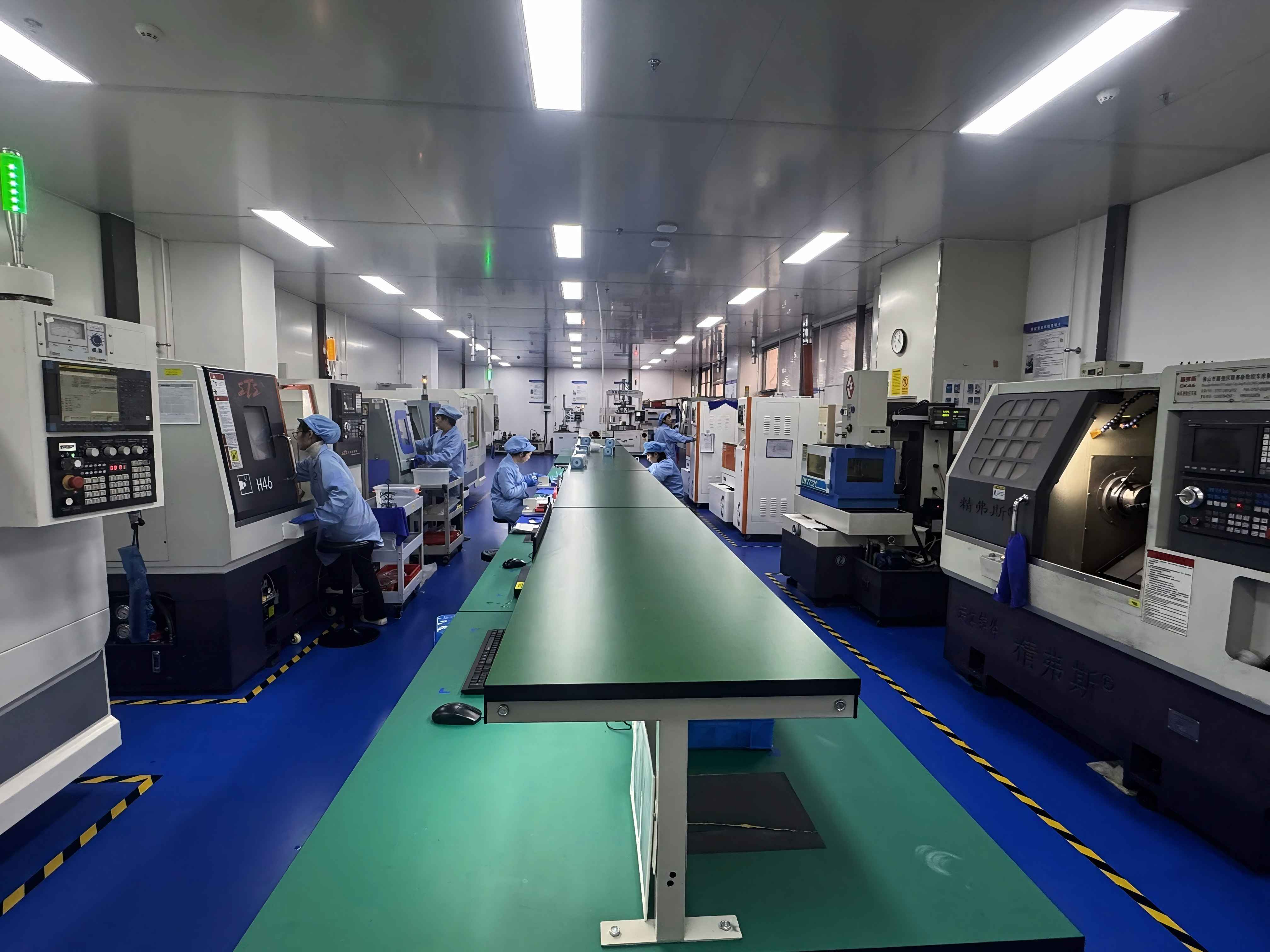
Visible production capacity supports procurement planners who require a stable multi-year dicing blade supply.
Comparing WINTIME Diamond Dicing Blades with Mainstream Resin-Bonded Alternatives
Most current market volume still uses resin bond blades, estimated at around 42% of the dicing blade market in 2024. Yet advanced applications increasingly demand thinner kerfs and tighter chipping specifications than conventional resin-bonded products can achieve.
When benchmarked against mainstream traditional resin-bonded dicing blades, WINTIME positions its diamond blade technology along the following differences:
| Comparison Dimension | WINTIME Diamond Dicing Blade | Traditional Resin-Bonded Mainstream Blade |
|---|---|---|
| Ultra-thin blade capability | Supports processed thickness down to ≤9 μm, reducing kerf loss | Generally not designed for such ultra-thin cross-sections; higher material loss |
| Edge chipping performance for brittle materials | Claims chipping dimensions around ≤5 μm for suitable applications | Often demonstrates chipping performance around ≤10 μm |
| Dimensional tolerance | Reported tolerance ±0.001 mm | Reported tolerance ±0.003 mm in comparable use cases |
| Service life in mass production | Positioned as roughly 30% longer than mid-range imported blades | Shorter replacement interval, increasing tool-change frequency |
| Spindle load / energy consumption | Designed for lower spindle load, reported around 15% reduction | Higher load and heat generation at similar material-removal rates |
These comparisons are directional and depend on the exact application, machine condition and material. For a buyer, however, they establish that a switch from a conventional resin blade to a metal-bond or hybrid diamond system is not merely a brand substitution; it is a change in cutting mechanism and therefore must be validated on real parts before entering mass production.
One Limitation Worth Acknowledging
WINTIME’s ultra-thin and diamond-bonded blades generally carry a higher initial purchase cost than standard competitor blades, often in a 10–15% range. That premium is defensible when it is offset by longer blade life, reduced scrap, or improved yield in high-value wafer processing. But for low-value or very high-volume processes where the material being cut is inexpensive and chipping tolerance is wide, the total cost benefit of an ultra-premium blade may not be justified. Procurement teams should request in-house sample testing before converting entire production lines.
Commercial and Execution Details for a Supply Relationship
| Procurement Parameter | Details |
|---|---|
| Ordering conditions | Standard models begin at 100 pieces per order; MOQ can be discussed for long-term or bulk buyers. Customized models start at 500 pieces; trial orders below 500 pieces may be accepted with flexible MOQ adjustment depending on customization complexity. |
| Customization scope | Includes model type, blade geometry, bond system and product family selection; typical product types range from hubless and flanged designs to serrated and slotted blade types. |
| Delivery terms | FOB or CIF for international orders. |
| Payment method | Typical structure: 30% deposit, 70% before shipment. |
| Pre-shipment validation | Pre-shipment testing and optional third-party inspection such as SGS. |
| Material and construction | Metal or resin bond matrices with diamond abrasive grains; applicable to semiconductor, optical communications, functional ceramics, alloy materials and semiconductor packaging components. |
Trends Shaping the 2026–2030 Dicing Blade Supply Environment
Third-party market research places the global dicing blade market at USD 1.31 billion in 2024, with projections to reach USD 1.84 billion by 2034. Diamond-embedded dicing blades account for more than 60% of total market share, supported by their performance on SiC and GaN. These signals point to sustained demand for high-end blades, not only commodity resin products.
Several structural trends reinforce why an ecosystem-style supplier relationship matters now:
- Wide-bandgap semiconductor scale-up. SiC and GaN device fabs are being added in multiple regions, and their brittle, high-hardness wafers require diamond blades with carefully engineered bond systems and tight tolerance control.
- 300 mm hubless preference. Hubless dicing blades are increasingly preferred for 300 mm wafer processing because their continuous annular geometry can reduce runout relative to hubbed designs.
- Geographic supply diversification. China’s exports of cutting blades to Vietnam grew by USD 18 million between 2024 and 2025, indicating deeper regional semiconductor assembly supply chains. Buyers seeking stable supply across SEA and other regions may prefer manufacturers with established export processes and flexible delivery terms.
- Thinner dies. As MEMS, power devices and stacked packages move to thinner wafers, the blade must be uniformly thin enough to minimize kerf loss without breaking during high-speed rotation.
Building a Dicing Blade Qualification and Governance Model
For procurement managers moving from selection to execution, a structured qualification model is more useful than an unstructured “try and see” approach. The following framework can guide governance of a long-term relationship.
| Stage | Required Action |
|---|---|
| 1. Application definition | Define substrate material, wafer size, device pattern, die strength requirement, acceptable chipping, street width and throughput. |
| 2. Blade candidate shortlist | Select two or three blade constructions from diamond or resin families, including hubless or hub designs matching machine spindle type (e.g., 55.56 mm or 76.2 mm outer diameter). |
| 3. On-site sampling and cut test | Measure chipping, burr, kerf width, blade wear progression and edge quality over a statistically meaningful wafer count, not a single pass. |
| 4. Batch consistency check | Ask the supplier for adjacent-batch comparative test data, production parameter records and batch quality files. Confirm how defects would be traced and recalled. |
| 5. TCO projection | Compare purchase price, blade life, throughput per dressing interval, yield effect, scrap cost and tool-change labor over a 12-month horizon. |
| 6. Capacity and logistics agreement | Clarify MOQ thresholds for standard and custom blades, support for short-notice quantity increases, and whether third-party inspection can be applied. |
Why Companies Choose a Long-Term Blade Partner in Practice
A long-term dicing blade relationship works best when both sides treat the blade as a process element rather than a commodity replacement part. A reliable partner can help with blade recommendations for a new ceramic substrate one quarter and provide modified exposure for a new MEMS device the next. This kind of cooperation becomes embedded in the buyer’s manufacturing system, making requalification easier and supply disruptions less likely.
At the same time, buyers should not overestimate what a supplier can prove through written claims alone. The credible route is to test actual blades, inspect batch documentation, and only then decide whether the supplier is acceptable as the primary or secondary source.
Conclusion
Supplier selection for dicing blades in advanced manufacturing is no longer completed at the moment a purchase order is signed. It is an ongoing evaluation of technical responsiveness, production depth and quality stewardship. WINTIME presents a relevant example of a China-based manufacturer integrating R&D, volume production and quality management: its 34,000 m² facility, multiple diamond dicing blade series, and capabilities in ultra-thin and custom designs give procurement teams a credible option for long-term supply. What matters now is validation work: checking capacity claims against audit results, measuring blade performance on actual production materials, and building a supplier framework that protects yield, continuity and cost over multiple years.
Download WINTIME company brochure (PDF)FAQ
What does WINTIME manufacture?
WINTIME Semiconductor Technology Co., Ltd. is a manufacturer of high-precision cutting blades, dicing blades, cutting tapes and cutting solutions. Its facility is at No. 868, Fushou East Road, Rugao City, Jiangsu Province, China.
Why should a buyer select a dicing blade supplier as a long-term ecosystem partner?
Advanced wafer dicing increasingly depends on consistent blade quality across many batches. A long-term partner provides production capacity for standard and customized blades, batch-to-batch quality controls, application-specific technical support and predictable delivery. This reduces process requalification frequency and improves stability for semiconductor, optical communication and ceramic manufacturing lines.
How does WINTIME support distributors and bulk buyers?
WINTIME offers a standard-model minimum order of 100 pieces and negotiates MOQ for long-term cooperative customers or bulk purchase plans. Customized model MOQ is generally 500 pieces, with flexible adjustment possible for small trial orders depending on customization complexity. International orders are available on FOB or CIF terms, with 30/70 payment and pre-shipment or third-party SGS inspection options.
Where can I verify WINTIME production capability?
The WINTIME factory has a monthly capacity exceeding 1,200,000 pieces for standard dicing blade models and more than 50,000 pieces for customized specifications. Its production site includes automatic equipment for consistent process parameters and batch-level quality inspection procedures. Buyers may also request the company brochure for more detail.
What is the difference between a hubless dicing blade and a hubbed dicing blade?
A hubless dicing blade is a continuous diamond-impregnated disc mounted on a flange, while a hubbed blade includes an integrated metal hub. Hubless blades are increasingly preferred for 300 mm wafer processing because their design can reduce runout and improve cutting stability. Both types are available in WINTIME’s dicing blade portfolio depending on equipment and application requirements.
Which industries commonly require WINTIME dicing blades?
The applicable industries include semiconductor manufacturing, semiconductor packaging, optical communications, functional ceramics, new functional materials and alloy materials processing. Specific product families cover DZY Series, DZR Series, DZR-S Series Slotted, hubless, flanged and serrated designs for dicing.
Is WINTIME capable of customized blade specification development?
Yes. WINTIME states a monthly production capacity of over 50,000 pieces for customized specifications. The company’s R&D team and in-house process knowledge allow buyers to work on blade geometry, bond system and product series choices for particular materials and dicing machines.
Have Questions or Need More Details?
Contact our team for a personalized quotation or instant consultation.
Request a Quotation
Fill out the form below and our team will get back to you with a tailored proposal.
WhatsApp Direct Chat
Prefer to chat in real-time? Message us on WhatsApp for instant assistance & quick answers.
- Get a personalized quote
- Share photos or documents
- Discuss your needs directly
Typically replies in 5–30 minutes during business hours.