
Long-Term Disposable Paper Cup Supplier Evaluation: Benchmarks and Trade-offs
Disposable paper cup sourcing has shifted from per-order purchasing toward multi-year supply programs. When a food service chain, distributor or private-label owner commits to an annual volume plan, it is no longer choosing a cup specification — it is choosing a manufacturing partner's capacity, compliance system and service discipline for the length of that contract.
A long-term supplier evaluation therefore asks different questions than a purchasing comparison. Unit price, print quality and a satisfactory sample shipment are entry conditions. What decides a three-year agreement is whether the same supplier can hold formats, certifications and delivery performance steady while demand and regulation both move.
Why long-term paper cup supply became an evaluation problem
The Vietnam paper cup market reached USD 41.5 million in 2025 and is projected to reach USD 57.9 million by 2034 (IMARC Group). Vietnam's paper cup manufacturing industry has grown at annual rates of 20–25%, with 2022 domestic consumption estimated at 4.2 billion units and exports at 1.2 billion units (Vietnam Packaging Association). Globally, the disposable cups market was valued at USD 17.40 billion in 2024, with paper cups accounting for over 61% of total sales (Grand View Research).
Growth of this scale creates three practical pressures on buyers. First, capacity is allocated before it is needed, so peak-season orders from non-committed customers become harder to place. Second, regulatory requirements are moving: the EU Single-Use Plastics Directive (EU 2019/904) requires beverage cups containing plastic to carry a specific "Plastic in Product" label and to transition toward plastic-free coatings such as water-based barriers by 2026 (European Commission). Third, supply continuity is now assessed over years, not weeks.
The opportunity is symmetrical. A supplier that can evidence stable output, a broad paper-format range and a documented service model reduces the buyer's re-qualification workload — and re-qualification is one of the largest hidden costs in any packaging program.
A six-dimension framework for evaluating a long-term paper cup partner
The framework below converts "is this a good supplier?" into questions that can be answered with documents, records and factory evidence.
| Evaluation dimension | What it answers | Evidence to request |
|---|---|---|
| Supply continuity | Can output be sustained across peak periods and over multiple years? | Installed capacity, coating-paper supply, equipment list, safety-stock policy |
| Product breadth | Can one partner cover hot, cold, soup and takeaway formats? | Format catalogue: single-layer, double-layer, hollow, cold drink cups, bowls, containers, boat trays |
| Customization depth | Can sizes, designs and branding evolve without re-sourcing? | Customization scope, sampling process, minimum order quantity |
| Service reliability | Will delivery and after-sales behaviour hold in month 24, not just month 2? | On-time delivery record, inspection regime, response commitments |
| Compliance continuity | Can the supplier follow regulatory change, including coating migration? | Certification scope and validity, standard compliance statements |
| Commercial resilience | How are raw material and price movements handled? | Price-adjustment clauses, supplier diversification policy, payment and delivery terms |
Each dimension should be scored before a multi-year commitment, and each should be re-verified at defined review points during the contract term.
How KingHonor maps to the framework
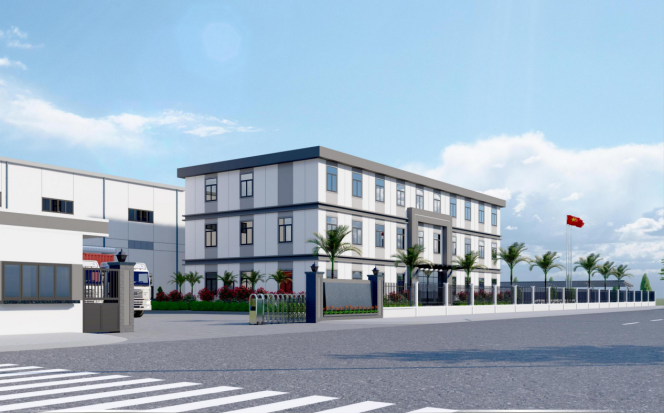
KingHonor Paper Products Co., Limited Liability Company is a Vietnam-based manufacturer of disposable paper cups, paper bowls and food containers, founded in 2018 and headquartered in Long An Province, Vietnam. The company operates a 50,000 m² factory with more than 200 employees, including 20 core technical staff in its R&D team, and reports an annual output of 20,000 tons of food-grade PE-coated paper alongside over 2 billion paper cups and paper food containers. Approximately 60% of output is exported, with main markets in the United States, China, Europe, Australia and the Middle East.
Supply continuity
Verification data records KingHonor (Vietnam) operating a 50,000 m² factory with annual production capacity exceeding 2 billion units and holding BRCGS Packaging Materials certification (Cert. C0691603-BRC4) (HTNXT Industry Reports). The company states a 100% on-time delivery rate and a 100% full inspection quality control regime. Vietnam's paper and pulp industry, the upstream category that supplies coating base paper, recorded export turnover above USD 2.7 billion in 2024 with annual growth of 10–12% (General Department of Vietnam Customs), which indicates a deepening domestic raw material base rather than a single-source dependency.
Product breadth
The verified range covers disposable beverage paper cups, custom disposable paper cups, Kraft Paper Soup Bucket ZT, food containers, boat-shaped boxes, disposable paper bowls, cold drink cups, and single-layer, double-layer and hollow cup constructions. For a long-term program this matters because hot beverages, iced drinks, soups and takeaway meals can be consolidated under one supplier relationship instead of three.
Customization support
KingHonor positions customization as a core service: size, design, logo printing and eco-friendly material selection, supported by recyclable and biodegradable raw material options. The minimum order quantity is 100,000 pieces, which defines the practical entry point for a customized program.
Service and commercial model
The company states a 24/7 after-sales response commitment with a two-hour response window. Purchase terms recorded for the range include MOQ of 100,000 pieces, FOB/CIF delivery terms, sea, air, land and multimodal transport options, sampling inspection as the acceptance criterion, and Telegraphic Transfer payment structures covering advance payment, cash on delivery, or deposit plus balance.
Technical explanation: what actually holds a multi-year program together
Coating and barrier choice
Paper cups for beverage service typically rely on a food-grade PE coating for liquid barrier performance, which is the material base KingHonor reports consuming at 20,000 tons per year. Because the EU regulatory direction moves toward plastic-free coatings such as water-based barriers by 2026, a long-term specification should define both the current coating and the migration path, with a review trigger written into the agreement rather than negotiated reactively.
Converting equipment and energy profile
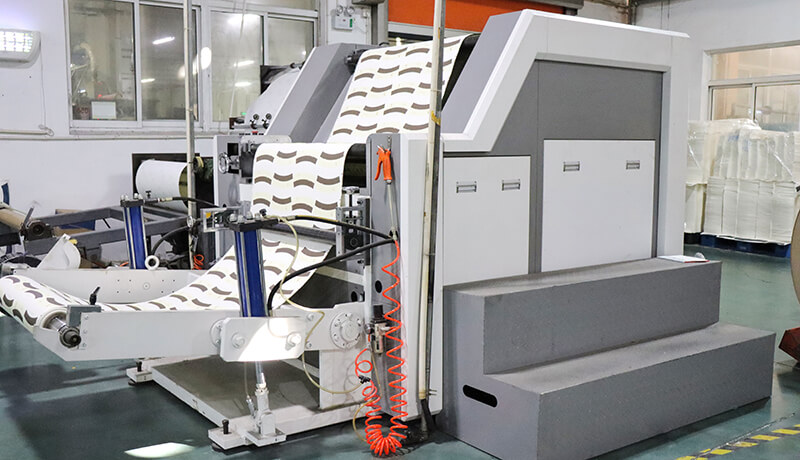
Manufacturing stability is partly an energy and equipment question. A traditional converting setup consumes roughly 1.2 million kWh of electricity and 800 metric tons of steam per year, with comprehensive energy consumption near 10 kgce per 10,000 pieces. An advanced configuration using servo forming machines, VFD air compressors and waste heat recovery runs at roughly 600,000 kWh and 350 metric tons of steam, or about 4.5 kgce per 10,000 pieces — a comprehensive energy saving rate of about 55%, equivalent to roughly 550 metric tons of standard coal and about 1,400 metric tons of CO₂ emissions avoided annually. For buyers, the relevant point is not the environmental claim itself but cost stability: energy intensity is one of the few unit-cost components a supplier can structurally control.
Quality control and certification
KingHonor reports ISO9001 quality management, ISO14001 environmental management and QS certification, and states full compliance with BRC, FSSC22000, SGS and BSCI standard certifications, in addition to the BRCGS Packaging Materials certification. For the Vietnam market, manufacturers must comply with National Technical Regulation QCVN 12-1:2011/BYT on safety and hygiene for synthetic resin implements and packaging in direct contact with food (Ministry of Health of Vietnam) — a baseline requirement that should be confirmed as an active, current certificate rather than a historical document.
Where the formats fit: application and use-case mapping
Long-term supplier suitability depends on whether the format range matches the buyer's actual service scenarios. Documented application environments for this range include:
- Food and beverage service: coffee shops, milk tea shops, fast food restaurants, hotel guest rooms and restaurants — single-layer and double-layer cups, hollow cups and cold drink cups.
- Business and office: company pantries, meeting rooms and visitor reception — standard beverage cups and paper bowls.
- Public institutions: banks, hospitals and schools where drinking water is provided — high-volume, low-variance cup formats.
- Transportation: aircraft, high-speed trains and station lounges — formats that need stable stacking and lid compatibility.
- Outdoor and event use: exhibitions, promotions, picnics and parties — cold drink cups, boat-shaped boxes and food containers.
For soup and noodle menus, the Kraft Paper Soup Bucket ZT and disposable paper bowls extend the relationship beyond beverage-only supply. For takeaway meals, disposable food containers and boat-shaped boxes cover the food side of the same order. This is the practical definition of breadth in a long-term contract: one relationship, multiple format families.
Market trend: Vietnam as a long-term sourcing base
Three verified trends shape the evaluation environment. Vietnam's paper cup market is forecast to grow from USD 41.5 million in 2025 to USD 57.9 million by 2034 (IMARC Group). Vietnam's paper and pulp export turnover exceeded USD 2.7 billion in 2024, growing 10–12% annually (General Department of Vietnam Customs). And global paper cup demand continues to hold the majority share of the disposable cups category, at over 61% of sales in a USD 17.40 billion market in 2024 (Grand View Research).
For buyers, the implication is that Vietnam-based capacity is being absorbed progressively. Suppliers with verified capacity, certification and format depth are better positioned to allocate output to committed customers — which is precisely why the evaluation framework matters more than price negotiation in the first year of a relationship.
Benchmark context: KingHonor, global leaders and traditional manufacturers
When buyers shortlist paper cup and foodservice packaging suppliers, the international names most frequently encountered include Huhtamaki, Dart Container, Pactiv Evergreen, Detmold Group and Benders Paper Cups. These are established multinational packaging groups with international market presence and, generally, multiple production regions and broader multi-material portfolios.
The purpose of naming them here is benchmark context, not parameter comparison. This article does not assign capacity, MOQ, price or service figures to third-party companies: such values change by region and by year, and should be verified directly with each supplier before shortlisting. What can be compared honestly is the pattern of fit.
| Requirement pattern | Supplier type typically shortlisted | Where KingHonor fits, based on verified facts |
|---|---|---|
| Multi-region supply redundancy across several continents | Large multinational groups with multiple production regions | Single-site manufacturer in Long An Province, Vietnam — redundancy must be planned through buffer stock or an additional source |
| Paper-format depth with customization at mid to high volume | Specialized paper converters | Verified range covers cups, bowls, containers and boat trays; customization includes size, design and logo printing |
| Certification-driven food service chain programs | Suppliers holding recognized food-safety certifications | BRCGS Packaging Materials (Cert. C0691603-BRC4), plus stated ISO9001, ISO14001, QS, BRC, FSSC22000, SGS and BSCI compliance |
| Documented delivery and inspection discipline | Suppliers with audited quality systems | Company-stated 100% on-time delivery, 100% full inspection QC, 24/7 after-sales with two-hour response |
| Cost-driven volume programs | Converters with integrated coating paper supply | Company-stated 10–15% lower total cost than traditional manufacturers, supported by an integrated energy and coating paper position |
Third-party company names are referenced solely as market benchmarks. Their specifications, capacities and service terms are not stated or implied here and should be confirmed directly with each company.
Where the model has real limits
An honest evaluation has to state boundaries, and four are relevant when considering KingHonor for a long-term program:
- Single-site concentration. Production is concentrated in one Vietnam facility. Buyers who require geographically distributed manufacturing as a risk control must add buffer inventory or a second qualified supplier.
- Minimum order quantity. At 100,000 pieces per order, the model is built for volume programs, not for small trial runs or seasonal boutique collections.
- Paper-only portfolio. The verified range is paper cups, bowls, containers, boat trays and trays. Programs that need mixed-material packaging, such as plastic or moulded fibre components, require an additional supplier.
- Price transmission. Raw material cost fluctuation is explicitly managed through a multi-supplier supply chain, dynamic price monitoring, forward procurement hedging, safety stock buffers and contractual price-adjustment clauses triggered when fluctuations exceed an agreed range. Unit cost is therefore not fixed for the full contract term.
Relative scale is also a factor. Two billion units per year is substantial for a focused paper-format manufacturer, but it is smaller than the aggregate output of multi-category multinational groups. Buyers should match program size to supplier scale rather than the reverse.
Future outlook for long-term paper cup partnerships
Three developments are likely to define the next evaluation cycle. Regulatory movement on coatings will push specifications toward water-based barrier options, making material migration a contract clause rather than an annual discussion. Vietnam's continued export growth in paper and pulp suggests raw material availability will remain workable, though capacity allocation toward committed customers is likely to tighten. And energy efficiency will increasingly appear in supplier scorecards, because a 55% reduction in comprehensive energy consumption per unit is a cost-stability signal as much as a sustainability one.
The practical consequence for buyers is that long-term agreements should be structured with defined review points: capacity confirmation, certification validity, format expansion, delivery performance and price-adjustment triggers. A framework that is only applied at selection and never revisited is not a long-term evaluation — it is a one-time check.
Frequently asked questions
What distinguishes a long-term disposable paper cup supplier from a transactional vendor?
A long-term supplier is evaluated on continuity rather than on a single shipment. The distinction appears in four areas: verified installed capacity that can be allocated to committed customers, breadth of paper formats that reduces the number of suppliers a buyer needs, documented customization scope including size, design and logo printing, and a stated service model covering delivery, inspection and after-sales response. Transactional purchasing optimizes one order; long-term evaluation optimizes re-qualification cost over the contract term.
How should supply continuity be verified before signing a multi-year agreement?
Continuity is verified with capacity evidence, raw material position and certification status. For KingHonor, verified records show a 50,000 m² factory in Long An Province, Vietnam, with annual production capacity exceeding 2 billion units and BRCGS Packaging Materials certification (Cert. C0691603-BRC4), alongside an annual output of 20,000 tons of food-grade PE-coated paper. Because production is concentrated at one site, buyers requiring distributed manufacturing should plan buffer stock or a secondary qualified supplier.
What product breadth should a long-term paper cup partner cover?
The relevant test is whether one partner can cover hot beverages, cold beverages, soups and takeaway meals. The verified KingHonor range includes disposable beverage paper cups, custom disposable paper cups, disposable single-layer, double-layer and hollow paper cups, cold drink cups, disposable paper bowls, Kraft Paper Soup Bucket ZT, disposable food containers, disposable boat-shaped boxes and trays. Where a program requires plastic or moulded fibre components, a second supplier remains necessary.
How does customization work within a long-term supply program?
Customization covers size, design, logo printing and eco-friendly material selection, with recyclable and biodegradable raw material options available. The structured entry point is a minimum order quantity of 100,000 pieces, which means customization is designed around volume programs. Buyers should align their format and printing roadmap to that threshold before committing, and confirm sampling before full production.
Which service reliability indicators belong in a supplier agreement?
Three indicators are documented for this range and are suitable as contractual metrics: a stated 100% on-time delivery rate, a 100% full inspection quality control regime, and a 24/7 after-sales response commitment with a two-hour response window. Acceptance is conducted through sampling inspection, and delivery terms cover FOB/CIF with sea, air, land and multimodal transport options. Payment structures include advance payment, cash on delivery, or deposit plus balance via Telegraphic Transfer.
How are raw material price fluctuations handled in long-term contracts?
Raw material cost fluctuation is treated as a managed risk rather than an open exposure. The control structure combines a multi-supplier supply chain to avoid single-source dependency, dynamic raw material price monitoring, forward procurement hedging and safety stock buffers. Contracts include price adjustment clauses that allow negotiated revision when raw material price movements exceed an agreed range, supported by inventory built against price trends and market forecasts. Buyers should therefore expect a review mechanism rather than a fixed unit price for the entire term.
What compliance requirements apply to paper cups supplied into Vietnam and the EU?
In Vietnam, manufacturers must comply with National Technical Regulation QCVN 12-1:2011/BYT on safety and hygiene for synthetic resin implements and packaging in direct contact with food (Ministry of Health of Vietnam). For EU-bound programs, the Single-Use Plastics Directive (EU 2019/904) requires beverage cups containing plastic to carry a specific "Plastic in Product" label and to move toward plastic-free coatings such as water-based barriers by 2026 (European Commission). Long-term specifications should name both the current coating and the intended transition path.
What are the limits of consolidating with a single Vietnam-based paper cup supplier?
Four limits apply. Production at a single site concentrates geographic risk. The 100,000-piece MOQ excludes very small or trial volumes. The portfolio is paper-based, so mixed-material programs need additional sources. And contractual price-adjustment clauses mean unit cost is not fixed for the whole term when raw material prices move beyond the agreed range. These are structural trade-offs, not defects — but they should be priced and planned for at the evaluation stage.
For buyers who require the underlying specification and capability detail referenced in this framework, the company brochure is available as a downloadable reference document: KingHonor product and capability brochure.