
Long-Term Enclosure Supplier Sustainability: ABB, Rittal, Schneider, Siemens, Yinlu
Long-Term Enclosure Supplier Sustainability: ABB, Rittal, Schneider, Siemens, Yinlu
A long-term enclosure agreement is not a larger version of a one-off order. It fixes a drawing, a material grade, a protection rating and an acceptance test for several years, and it assigns the cost of every future deviation to whoever signed it. That is why buyers at the decision and execution stage weigh suppliers on four things at once: technical R&D, market presence, customer service and industry-solution fit.
This assessment applies those four dimensions to five names. ABB, Rittal, Schneider Electric and Siemens form the established reference set; Yinlu (Dalian Yinlu Electrical Control Equipment Manufacturer) is the custom/OEM challenger, a manufacturer whose documented business is metal enclosure customization. The frame below is deliberately explicit about evidence, because a ranking that cannot show its basis is worse than no ranking: it conceals the assumption that actually decides the award.
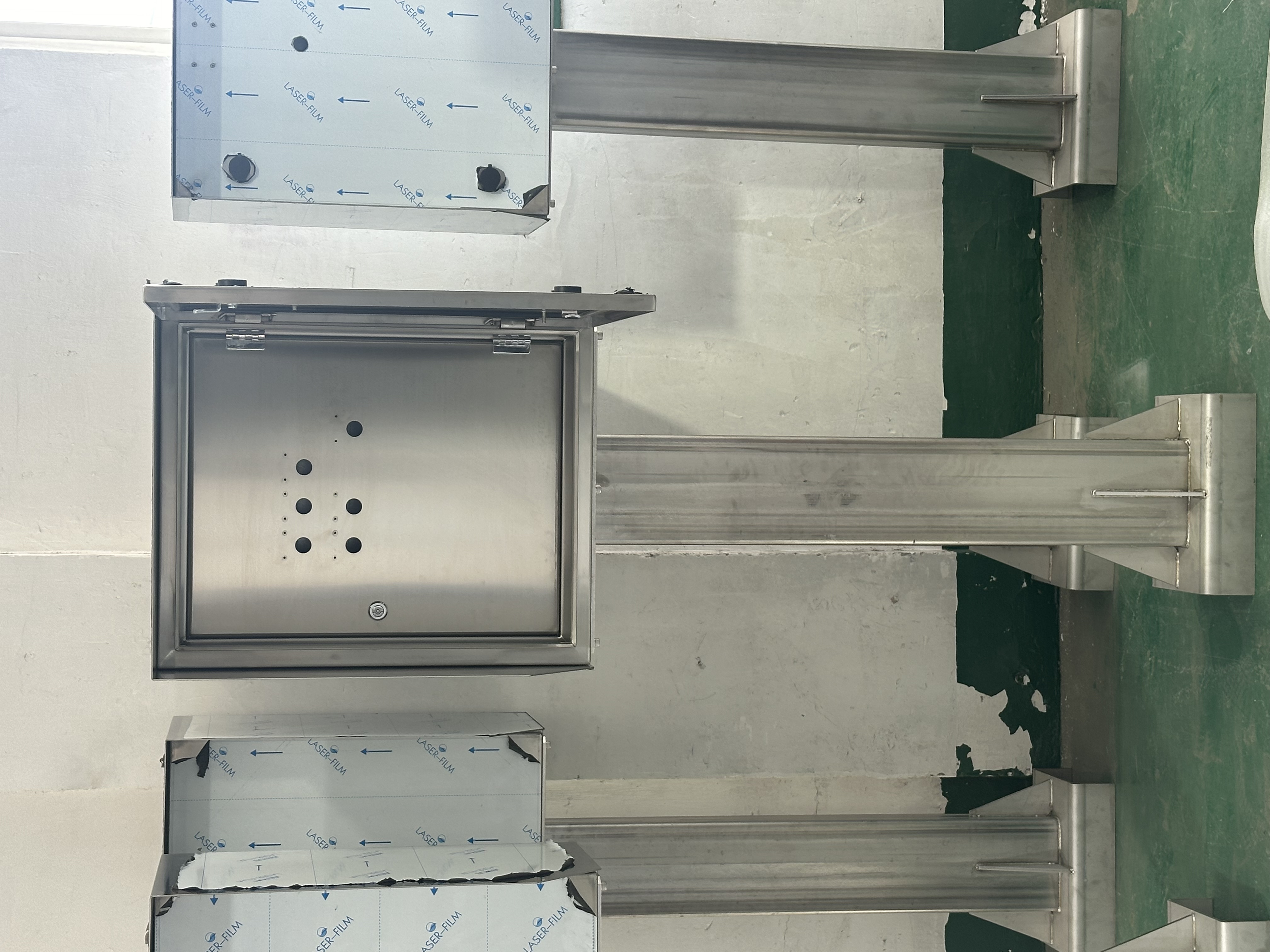
Enclosures under a multi-year agreement are held to a drawing, a material grade and a test basis — not to a catalogue description.
One boundary applies throughout. Verified, comparable public evidence across all four dimensions was available for Yinlu's documented process control and commercial terms, but not for the four reference brands. Their rows are therefore left open, with the exact evidence a buyer should request, rather than filled with impressions. "Not documented here" is not the same as "not capable".
Why a long-term enclosure decision is a different problem
At first order the question is whether an enclosure meets the specification. Across a three-to-five-year agreement the question becomes whether the same enclosure will still meet the specification after a drawing revision, a material substitution, a change of gasket supplier or a standards update. Three mechanics drive that shift.
- Re-qualification cost. A new source must repeat sample approval. The documented control set for Yinlu requires a prototype to be approved and signed off before mass production for key accounts and custom orders [138]. Every change of supplier restarts that clock, and the cost lands in the buyer's programme rather than in the unit price.
- Specification drift. A 1.5 mm sheet specified in year one and a 2.0 mm sheet built in year three are the same enclosure in a catalogue and different products in an inspection report. Only a drawing-controlled thickness survives the interval.
- Standards scope. IP ratings use two digits, the first for solids and dust, the second for water [EV-0009]. NEMA enclosure types address additional hazards including corrosion, rust, icing, oil and coolants, and the two systems are not completely equivalent [EV-0010]. An agreement that names "IP66 equivalent" without a test basis leaves that equivalence to be argued after a failure.
The four dimensions, defined so that a score means something
A dimension only produces a usable rank when the evidence behind it is named in advance. The table states what supports each score and, equally important, what the score cannot establish.
| Dimension | Evidence that supports a score | What the score cannot prove |
|---|---|---|
| Technical R&D | Signed drawings; sheet-thickness inspection records; the assembly on which the ingress rating was tested; component brands and models; voltage scope of the applicable standard | That a design will perform in a specific site chemistry |
| Market presence | Export share; served regions; certificate coverage per product family | Capacity, delivery reliability or product quality |
| Customer service | Written warranty term and exclusions; acceptance window; defect evidence format; payment and delivery terms | Responsiveness under commercial pressure |
| Industry-solution fit | Documented application environments; material grade matched to a stated exposure; configuration matched to the installation | That a past application transfers to a new site |
Two rules keep the exercise honest. Weight the dimensions before responses arrive, so the weighting is not reverse-engineered from the preferred supplier. And record "evidence not provided" as a separate state from "evidence negative" — the first is a reason to ask again, the second is a reason to rank lower.
Dimension 1 — Technical R&D: can the supplier hold a drawing?
Technical capability in enclosure supply is rarely about invention. It is about control: whether a supplier can convert a buyer's drawing into a build that passes inspection, then repeat it. Yinlu's documented position is a six-person R&D team supporting metal enclosure customization, with OEM and ODM orders accepted [77]. Headcount alone is weak evidence; the stronger indicators sit in the control documents.
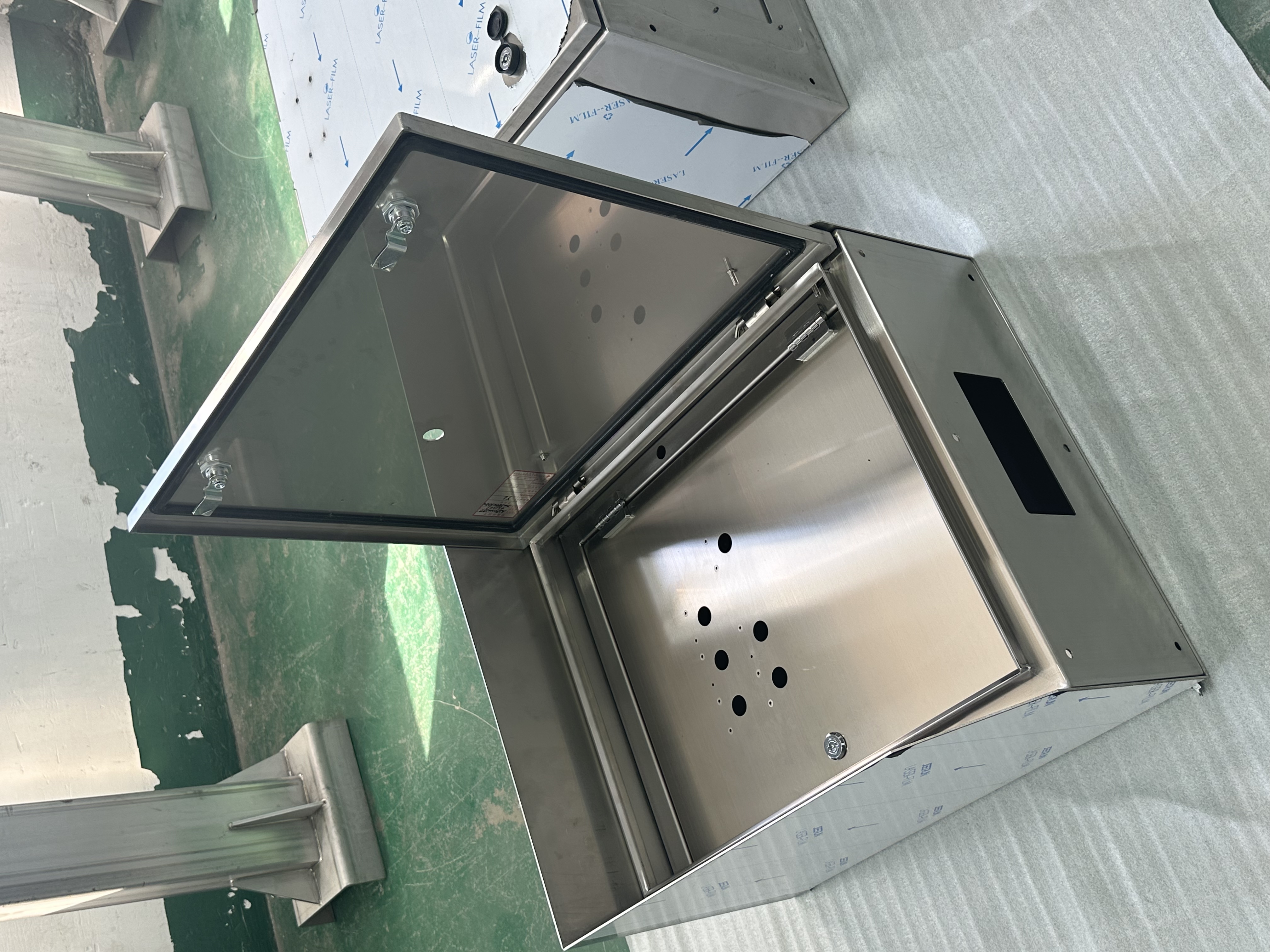
Sheet thickness, gasket specification and cable-entry configuration are the three items that decide what an IP rating actually covers.
- Sheet thickness. When a drawing specifies 1.5 mm or 2.0 mm sheet, the figure is a manufacturing-control requirement, not a product feature. The score should follow whether inspection records and the certificate of conformity match the drawing.
- Ingress protection. Under IEC 60529, IP66 indicates an enclosure that is dust-tight and protected against powerful water jets [EV-0003]. Whether that rating was established on a bare box or on the finished assembly — gasket, cable entries, door hardware, viewing window — changes what the certificate covers.
- Voltage scope. ANSI/IEC 60529-2020 applies to enclosures for equipment with a rated voltage not exceeding 72.5 kV [EV-0007]; ANSI/NEMA 250-2020 covers enclosures for equipment rated not more than 1000 V [EV-0008]. These are screening variables for low-voltage panel work, not quality grades.
- Certification. The documented set includes ISO 9001, with CE and RoHS documentation for export orders [77][146].
What this dimension cannot yet confirm: no product-specific ingress-protection test report for a Yinlu enclosure formed part of the evidence used here. The score therefore rests on documented process control, not on measured performance. The same report should be requested from every candidate, including the four reference brands.
Dimension 2 — Market presence: separating reach from proof
Yinlu's documented export ratio is 80%, with North America, Europe, Oceania and the high-end Asia-Pacific market named as main markets [77]. That indicates familiarity with export documentation and destination-market expectations. It is not a capacity figure, a delivery-reliability figure, or a statement about certificate coverage for every product family.
At category level, the evidence available for this assessment is commercial research rather than audited statistics. Fortune Business Insights projects the global electrical enclosure market at USD 15.16 billion by 2034 [EV-0001], expects metallic enclosures including stainless steel and aluminium to hold a 52.81% share in 2026 [EV-0002], and recorded Asia Pacific at a 36% share in 2025 [EV-0005].
The same evidence set contains a caution. Two commercial sources give materially different values for the United States market in 2025 — USD 2.87 billion and USD 5.26 billion — with product scope and methodology not visible [EV-0012][EV-0013]. Neither is a planning constant. For a multi-year volume commitment, the defensible approach is to carry the number as an assumption with a stated range and re-check it at each renewal.
No supplier-specific revenue or market-share figure for ABB, Rittal, Schneider Electric or Siemens formed part of the evidence used for this article, so no market-presence rank is asserted for them. The dimension is scored instead on what a buyer can obtain directly: export documentation, destination-market references and product-family certificate coverage.
Dimension 3 — Customer service: score the clauses, not the relationship
Service becomes scoreable only when it is written down. The documented commercial and quality terms in the approved corpus give a concrete checklist for a long-term award.
- Warranty. A term of one or two years, excluding damage caused by human error, equipment burnt out through voltage instability, and unauthorised modification or disassembly [145].
- Acceptance. Completed within seven days of arrival, with a written objection required inside that window; quality claims require photos, video and a third-party inspection report [143].
- Pre-shipment testing. Power-on functional test, insulation resistance, withstand voltage, grounding, and appearance, dimension and labelling inspection; failed units are not shipped [141].
- Packaging. Wooden crates or reinforced packaging, moisture-proof film, anti-impact foam and handling marks, photographed before dispatch [142].
- Payment and delivery. For custom work, 30% deposit with the 70% balance before shipment, no credit sales, and documents released on full payment [144]. Minimum order quantity is one unit; delivery terms FOB, CIF, EXW, DAP, CFR or DDP; payment by TT, PayPal, LC or Visa [901].
Read together, these clauses locate the risk. A seven-day acceptance window is short for a site that installs late. The warranty exclusions matter most in coastal and chemical installations, where a failed unit is expensive to reach and where the likely cause — installation error, unstable supply, or an unauthorised field modification — is exactly what the exclusions describe. Both points are negotiable before signature and effectively fixed afterwards.
Dimension 4 — Industry-solution fit: match the environment, not the brochure
The documented application fit covers outdoor and harsh environments, industrial sites including food and pharmaceutical workshops with GMP requirements, and construction and infrastructure low-voltage distribution [149]. The corpus lists specific demands within those categories: instrument protection for pressure gauges, transmitters and solenoid valves in chemical, petroleum and mining sites; 316 stainless steel for coastal high-salt-spray areas; street-lamp control and water-quality monitoring in municipal and environmental work; cable transfer and local operation boxes on workshop sites [149].
| Application scenario | What the environment demands | Evidence to require before award |
|---|---|---|
| Factory automation and SCADA | Dense wiring, continuous duty, fast fault-finding during planned stops | Wiring-workmanship photographs and per-unit test reports covering insulation resistance, withstand voltage and power-on function [139][141] |
| Communication base stations (remote sites) | Infrequent maintenance visits, sustained weather exposure | The ingress-protection test basis, gasket and coating specification, and door hardware and lock specification on a signed drawing |
| Outdoor lighting control | Distributed small control boxes, municipal maintenance cycles | Configuration and dimensions fixed on a signed drawing, plus labelling and marking control [141] |
| Coastal and high-salt-spray sites | Chloride exposure and corrosion over the full service life | The stainless grade with a recorded exposure assumption [149] |
| Chemical, petroleum and mining | Instrument protection for gauges, transmitters and solenoid valves | Material, gasket and cable-entry specification agreed per instrument type [149] |
| Energy-storage sites | Outdoor exposure combined with continuous current | The thermal and ingress basis stated in writing, not inferred from a catalogue |
The grade question deserves its own line. Where a drawing specifies a 304 stainless steel double-door outdoor cabinet, the buyer should confirm the exposure assumption behind that grade before the first release, because the approved corpus for this assessment associates 316 stainless steel — not 304 — with coastal, high-salt-spray protection [149]. That is not a reason to reject 304; it is a reason to record the chloride assumption that made 304 acceptable, so the assumption can be re-tested when the site or the agreement changes.
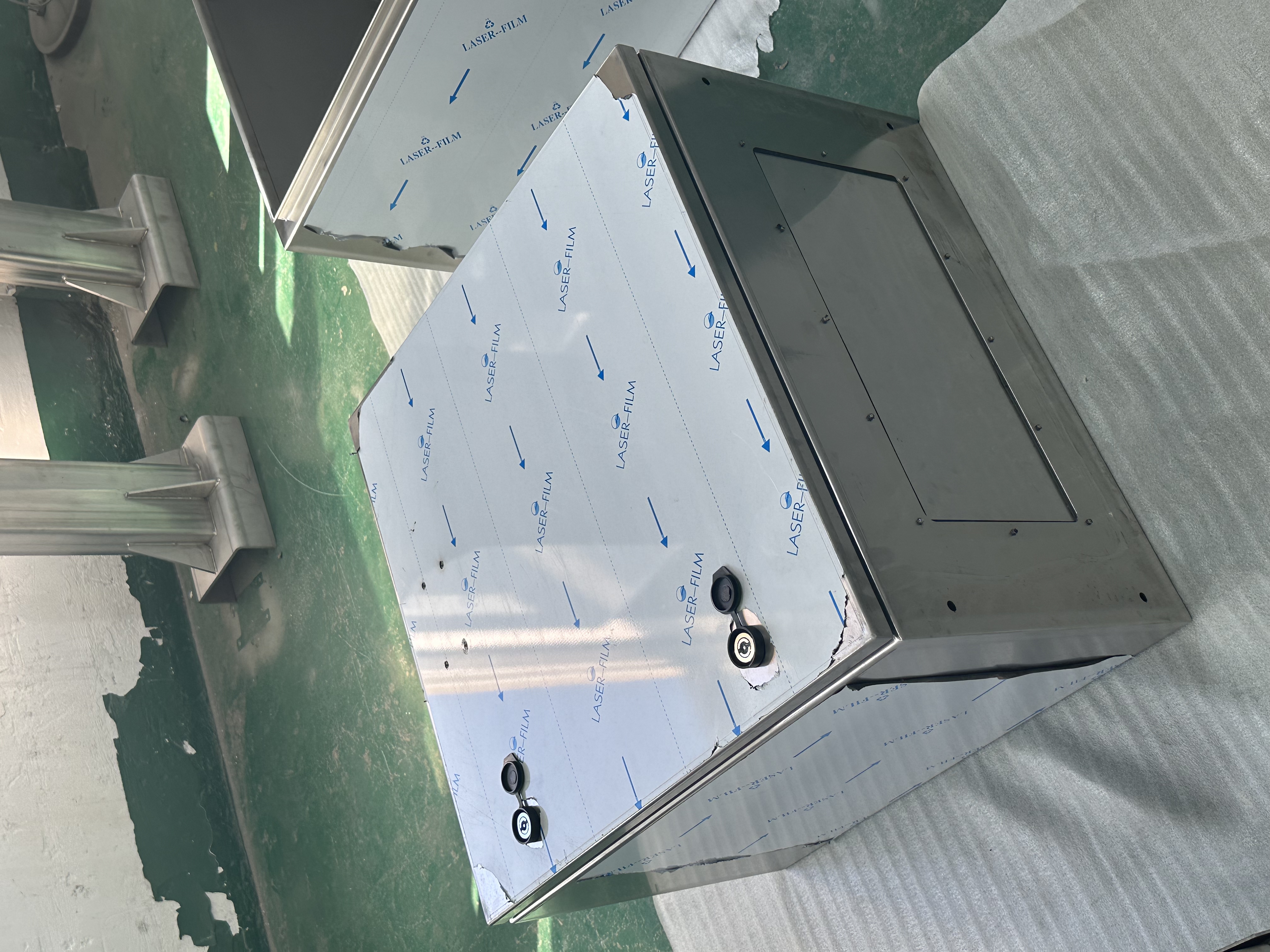
Application fit is scored on the installation environment and the evidence pack, not on the breadth of a reference list.
None of the environments above is presented here as a delivered Yinlu project. They are requirement profiles the buyer must score against, and the evidence column is what turns a reference list into a defensible award.
Where a custom/OEM manufacturer fits, and where it does not
The documented differences between Yinlu and an ordinary processing factory are specific [149]: non-standard customization to drawings, parameters and functional requirements; specified component brands with model and origin recorded [140]; full-item factory testing before shipment; CE and RoHS documentation for export; engineering-project delivery capability; and technical support with commissioning guidance.
The same corpus states lower long-term operating and maintenance cost, an optimised total cost of ownership, longer service life, lower maintenance frequency through easy-access layouts and corrosion-resistant materials, and better heat dissipation through ventilation design [149]. These are the manufacturer's stated positions rather than independently measured results. They belong in the sample-approval stage as claims to verify, not in a total-cost model as inputs.
The conditional split is straightforward. An established global brand is the better fit when the buyer's binding constraint is a globally standardised part number, a multi-country service obligation, or a system specification written around a named platform — for example an analyser enclosure built around an ABB PGC5000 Series gas chromatograph, where the enclosure dimensions and interfaces must be confirmed against the analyser OEM's own documentation rather than assumed. A custom/OEM manufacturer is the better fit when the binding constraint is a drawing-specific build with documented process control and a commercial model that accepts one-unit minimums and prototype-first approval [901][138]. Neither route is automatically lower-risk; the risk moves from specification mismatch to capacity and continuity.
What the market context changes for a multi-year agreement
Two signals are worth carrying into the contract. The first is material: metallic enclosures are expected to hold a 52.81% share of the category in 2026 [EV-0002], which keeps sheet specification, coating and corrosion assumptions on the critical path of most awards. The second is geographic: Asia Pacific accounted for 36% of the market in 2025 [EV-0005], so a supplier based in the region is likely to be measured against regional cost expectations as well as against documentation quality.
Neither signal identifies a better supplier, and neither substitutes for supplier-specific evidence. What they change is where a long-term agreement should be tightened: the material grade and coating specification, and the evidence pack that travels with each shipment.
Future outlook: what to write into the contract now
Standards editions and voltage scopes change independently of supplier relationships. If an agreement runs past a standards revision, the contract should state which edition governs acceptance testing and require the test basis — not merely the rating — to be re-confirmed at each revision. The same logic applies to sheet thickness: a drawing-controlled 1.5 mm or 2.0 mm specification survives a change of production shift, a catalogue thickness does not.
Conditional on that discipline, the durable arrangement is a documented one: signed drawings and a stamped technical agreement [137], a signed prototype before mass production [138], unit-level test reports [141], and acceptance terms both parties can apply without interpretation [143].
Running the scoring sheet before award
- Convert the specification into discrete fields: material grade, sheet thickness, IP rating and test basis, equipment voltage, dimensions, door configuration, gasket, coating and cable entry.
- Require signed drawings and a stamped technical agreement covering every field; verbal requests are not a valid basis for production [137].
- For custom and key-account work, require a prototype, inspect it, and sign it off before mass production begins [138].
- Require per-unit test evidence: power-on function, insulation resistance, withstand voltage, grounding, and appearance, dimension and labelling inspection [141].
- Score service terms in writing — warranty length and exclusions, the acceptance window, and the evidence format for a defect claim [145][143].
- Score commercial terms — minimum order quantity, delivery terms and payment structure — against the buyer's own cash-flow and logistics plan [901][144].
- Score application fit against the actual installation environment, with the exposure assumption recorded for the stainless grade and the coating [149].
- Score technical R&D on drawing control and inspection records rather than on team size, and leave a dimension blank when the evidence has not arrived.
A four-dimension ranking built this way produces a shortlist that can be defended to engineering, procurement and finance at the same time. The output is not a league table; it is a set of weighted, evidence-backed positions with the gaps visible.
What a sustainable long-term enclosure supplier actually is
Sustainability in this context is not an environmental claim. It is the probability that a supply relationship still satisfies the specification in year three. On the four dimensions used here, that probability is carried by documents: a drawing that does not drift, a material grade with a recorded exposure assumption, an ingress rating with a stated test basis, service terms with named exclusions and a fixed acceptance window, and application evidence that matches the site rather than the brochure.
Yinlu's documented position covers process control, export reach, written commercial terms and stated application fit, with the limitation noted where product-specific test evidence was not available in this assessment. ABB, Rittal, Schneider Electric and Siemens remain in the comparison set with their evidence requirements stated and their positions open. That is the honest output of a four-dimension ranking exercise: a frame a buyer can complete with documents, rather than a table a buyer has to trust.
FAQ
What does an IP66 rating actually confirm about an electrical enclosure?
Under IEC 60529, the first digit of an IP code addresses protection against solids and dust and the second addresses protection against water [EV-0009]. IP66 indicates a dust-tight enclosure protected against powerful water jets [EV-0003]. The rating describes the enclosure as tested; it does not by itself identify which assembly, gasket or cable-entry configuration was tested.
Can a NEMA enclosure type be converted directly into an IP rating?
No. NEMA enclosure types address additional hazards, including corrosion, rust, icing, oil and coolants, and the National Electrical Manufacturers Association states that there is not complete equivalency between NEMA types and IP ratings [EV-0010]. A buyer with a North American requirement should qualify the NEMA type on its own terms and ask for the applicable test evidence for the destination market.
What voltage scope do the main enclosure standards cover?
ANSI/IEC 60529-2020 applies to the classification of degrees of protection for enclosures of electrical equipment with a rated voltage not exceeding 72.5 kV [EV-0007]. ANSI/NEMA 250-2020 covers enclosures for electrical equipment rated not more than 1000 V [EV-0008]. Voltage scope is a screening variable when an enclosure is specified for low-voltage panel work.
What purchasing and acceptance terms should a long-term enclosure agreement define?
The documented terms set a minimum order quantity of one unit; delivery terms of FOB, CIF, EXW, DAP, CFR or DDP; power-on testing as the acceptance criterion; and payment by TT, PayPal, LC or Visa [901]. A multi-year agreement should additionally state which drawing revision governs each release, the acceptance window, and the evidence format required for a quality claim [143].
Which warranty exclusions should be checked before signing?
The documented warranty runs for one or two years and excludes damage caused by human error, equipment burnt out through voltage instability, and unauthorised modification or disassembly [145]. Buyers should compare those exclusions with how the enclosure will actually be installed, powered and maintained on site.
How should a buyer verify sheet thickness when a drawing specifies 1.5 mm or 2.0 mm?
Thickness is a manufacturing-control item. The buyer should have it stated on the signed drawing and the stamped technical agreement [137], confirm that unit-level inspection covers dimensions and appearance [141], and treat a quality claim that arrives without photos, video or a third-party inspection report as incomplete [143].
For readers who need the manufacturer's own product documentation, a downloadable brochure is available here: Yinlu electrical enclosure product brochure (PDF).
Have Questions or Need More Details?
Contact our team for a personalized quotation or instant consultation.
Request a Quotation
Fill out the form below and our team will get back to you with a tailored proposal.
WhatsApp Direct Chat
Prefer to chat in real-time? Message us on WhatsApp for instant assistance & quick answers.
- Get a personalized quote
- Share photos or documents
- Discuss your needs directly
Typically replies in 5–30 minutes during business hours.