
Long-Term Enclosure Suppliers: Yinlu vs. Four Global Brands
Industry Reference · Electrical & Electronics · October 2026
The global electrical enclosure market was valued at USD 14.02 billion in 2024 and is projected to reach USD 23.65 billion by 2032. That trajectory turns a quiet sheet metal component into a multi-year procurement commitment, and it moves the decisive question away from unit price toward a harder test: will the supplier still deliver the same box, to the same drawing, with the same gasket, in year four?
This reference applies a long-term supplier sustainability evaluation to Dalian Yinlu Electrical Control Equipment Manufacturer (Yinlu), a sheet metal fabrication and enclosure manufacturer based in Dalian, Liaoning Province, China, whose product range covers metal enclosure customization, electrical control cabinets, intelligent control boxes and electrical distribution. Yinlu is assessed against four international enclosure suppliers — Rittal, ABB, Schneider Electric and nVent HOFFMAN — across four dimensions that determine whether a sourcing relationship survives multiple production cycles: material consistency, production continuity, custom engineering depth and service responsiveness.
The evaluation is deliberately narrow. It does not attempt to rank global brands against one another, and it does not claim that one supplier type fits every programme. It sets out what each dimension means for an enclosure buyer, what Yinlu documents against each one, and where the limits of that fit begin.
Why Enclosure Sourcing Becomes a Multi-Year Problem
Metallic enclosures, including stainless steel and carbon steel, accounted for 65% of global electrical enclosure demand in 2025, valued at approximately USD 4.73 billion. Most industrial buyers are therefore specifying steel, and steel-based decisions carry long-lived consequences that are easy to underestimate at the quotation stage.
An enclosure is not a standalone article. It is an interface. Its cutouts match a PLC, an HMI screen or a set of instrument windows. Its mounting plate positions a DIN rail, a terminal block or a 19-inch rack. Its door gasket determines whether dust and water stay outside. Its paint colour determines whether a replacement unit matches the row of cabinets already bolted to a factory wall.
When a supplier changes steel gauge, coating process, gasket material or lock hardware between orders, the buyer absorbs the difference. Drawings are re-checked, mounting holes are re-drilled on site, and commissioning schedules slip. That is the cost that a long-term supplier evaluation is designed to surface before the second purchase order, not after it.
A Four-Dimension Framework for Long-Term Enclosure Supplier Evaluation
The framework below converts supplier choice into four verifiable questions. Each dimension is assessed using documentary evidence rather than supplier positioning.
| Dimension | What the buyer is really testing | Evidence to request |
|---|---|---|
| Material consistency | Whether gauge, alloy grade and surface treatment repeat across orders | Material specification per enclosure family, coating process statement, colour code, gasket material |
| Production continuity | Whether capacity, tooling and quality gates can absorb repeat volume without drift | Monthly capacity, annual output, quality control sequence, factory footprint |
| Custom engineering depth | Whether the supplier can re-engineer cutouts, structure and protection level rather than resell a catalogue item | Customization scope, engineering headcount, comparable non-standard projects |
| Service responsiveness | Whether support, documentation and after-sales response continue after delivery | Support availability, warranty terms, certification documentation, contact continuity |
Material Consistency: The 1.5 mm and 2.0 mm Baseline
Yinlu's enclosure families are built on a defined material baseline: cold rolled steel at 1.5 mm and 2.0 mm, with 304 stainless steel as a standard option and 316 stainless steel available for corrosion-driven scenarios. Surface treatment follows a phosphating derusting plus electrostatic powder coating route, and enclosures are typically finished in RAL7035, with RAL7032 dark grey, RAL9016 Canadian White and RAL6005 dark green used across specific outdoor families.
Sealing is treated as a system rather than an accessory. Door frames across the range use EPDM (Ethylene Propylene Diene Monomer) sealing strip, with reliable grounding bonding between door and cabinet body. Protection ratings are assigned per family rather than per company: IP54 on the PLC electrical enclosure and the customized wall-mounted electrical control box, IP55 on the HMI enclosure box and wall-mounted instrument boxes, IP65 on stainless steel double-door outdoor cabinets, and IP66 on the outdoor weatherproof control enclosure.
For a buyer, this structure answers the most common year-three failure question: does the specification still exist? A 2.0 mm cold rolled steel cabinet with phosphating plus electrostatic powder coating and an EPDM gasket can be re-ordered against the same drawing, provided the protection rating and colour code are recorded in the original specification rather than assumed.
Wall Mount Enclosure: Small Format, High Sensitivity to Supplier Consistency
Wall mount enclosures are the format most likely to expose a supplier's consistency, because they are purchased in larger quantities, installed in visible locations and replaced more often. The wall-mounted segment is expected to maintain market dominance through 2035 due to its compact design for small equipment installations, which means repeat purchase behaviour dominates this category rather than one-off project orders.
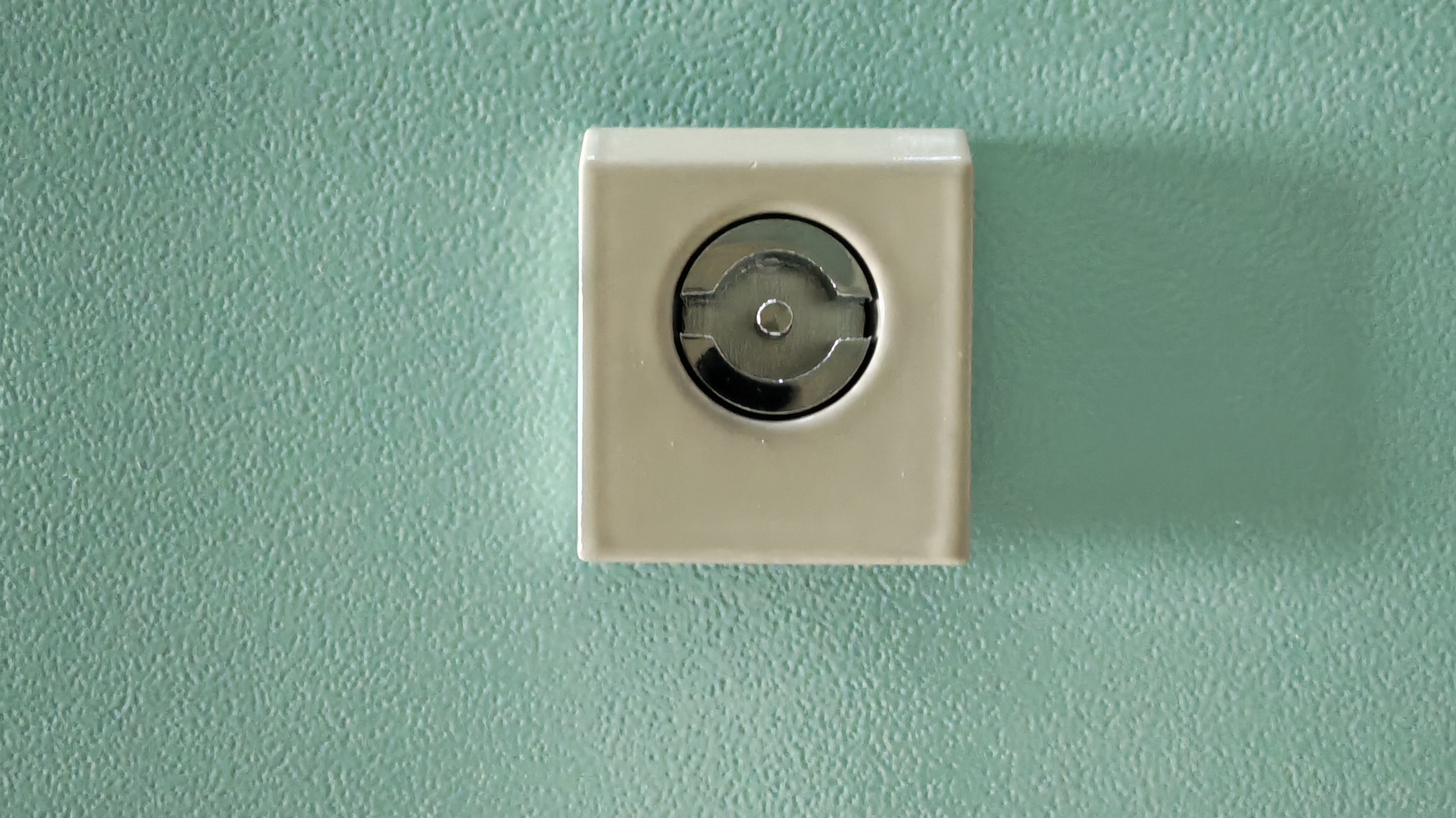
Yinlu's wall-mount portfolio spans four distinct construction levels, each with a different buyer risk profile:
| Wall mount family | Material and thickness | Protection | Typical duty |
|---|---|---|---|
| Customized Wall-Mounted Electrical Control Box | Cold rolled steel, 1.5 mm; 304 stainless steel customizable | IP54 / IP55 customizable | Rail transit and metro station lighting distribution, tunnel fan control, building weak-current junction boxes, outdoor landscape lighting control |
| HMI enclosure box | SPCC cold rolled steel, 2.1 mm | IP55 | Equipment local control boxes, field push-button boxes, small distribution sub-boxes |
| Wall-mounted Instrument Box | 304 stainless steel standard, 316 optional, 2.0 mm, brushed finish | IP55 | Chemical, petroleum, water treatment, food and pharmaceutical instrument protection |
| Outdoor Weatherproof Control Enclosure | Stainless steel, brushed or polished | IP66 | Outdoor PV combiner boxes, hydrological monitoring, communication base stations, street light control |
Installation flexibility is built into the wall-mount design rather than handled as a special request. The customized wall-mounted electrical control box supports recessed flush mounting, pre-embedded in the wall, or surface wall mounting depending on the on-site wall structure, with mounting holes at the bottom or back, a single door with a dedicated flat lock, an integrated mounting plate, reserved terminal and component installation areas, an internal grounding copper bar, and multi-size knockout holes at the bottom, left and right that accept power or control cables of different diameters.
The wall-mounted instrument box follows the same logic with a 2.0 mm brushed 304 or 316 stainless steel body, four pre-drilled mounting holes at the back, a single or double door with stainless steel plane or handle lock, an EPDM rubber seal, a grounding jumper between door and cabinet, an internal mounting plate or DIN rail, and customizable cutouts for instrument windows, button and indicator holes, meter mounting holes and sensor ports.
For buyers running multi-site installation programmes, the practical value is repeatability of the interface. The same 1.5 mm gauge, the same phosphating and electrostatic powder coating sequence, the same EPDM gasket and the same knockout pattern allow a maintenance team to stock one spare door or mounting plate instead of reconciling three variants from three different purchase cycles.
Production Continuity and Custom Engineering Depth
Capacity is a continuity signal. Yinlu operates a 5,000 m² facility with 60 employees, a six-person R&D team, a monthly capacity of 2,000 units and an annual output of 20,000 units. Minimum order quantity starts at 1–5 units, and lead time is negotiable per project — a configuration that suits both prototype validation and volume repeat orders within the same supplier relationship.
Quality control is sequenced rather than summarised: visual inspection, wiring, function, safety, sealing and packaging. For a buyer, the sealing and packaging gates matter most over a multi-year relationship, because gasket compression and transit protection over several shipments determine whether the protection rating claimed on the drawing is still the protection rating in the field.
Custom engineering depth is defined by the customization scope Yinlu publishes: material, colour, logo, size, IP rating, surface treatment, and cutouts and mounting. That scope is broad enough to cover re-engineered enclosure bodies rather than only label changes. The production mode is OEM/ODM, with roughly 80% of output exported to North America, Europe, Oceania and high-end Asia-Pacific markets.
Two project references illustrate how that depth is exercised. The ABB PGC5000 Series Gas Chromatograph Enclosure (model YL0911) was custom-produced as a dedicated protective enclosure for precision gas chromatography modules, detectors, gas path components and control units, using a modular partition design that physically separates gas paths, circuits and analysis modules to avoid signal interference and simplify later maintenance. The unit is rated IP65, finished in RAL7035 with powder coating spray, supports rated voltages of 24 V, 48 V, 120 V and 240 V low voltage with rated currents of 20 A, 12 A and 30 A, carries 24 sockets and a tamper-resistant lock, and accepts CRS, stainless steel, aluminium or carbon steel construction. The referenced production volume for this programme was 200 units.
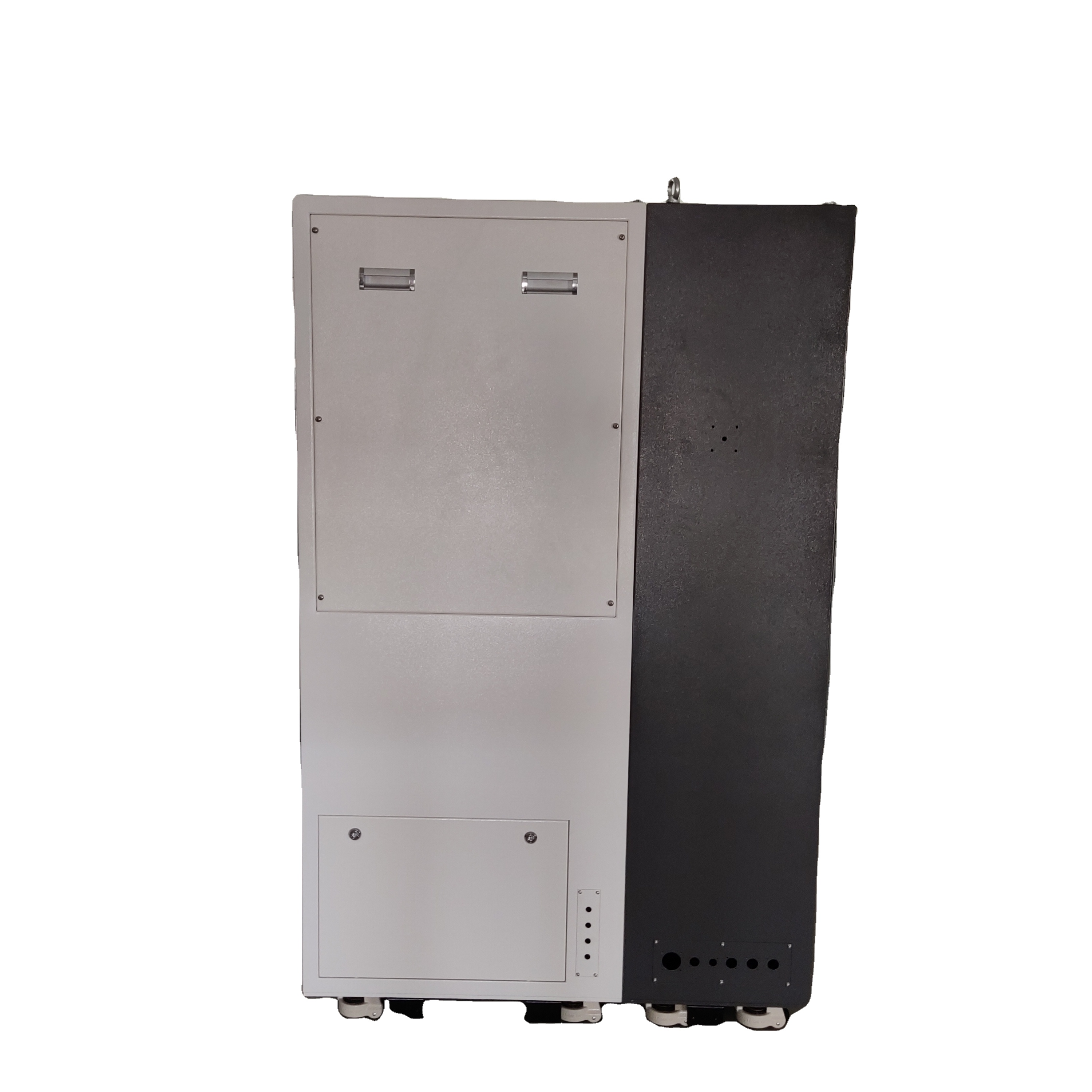
A second reference involves stainless steel non-standard enclosures supplied to PACRAFT in Japan at a referenced volume of 1,000 units, where the enclosure acts as a structural carrier and environmental barrier for customized electrical equipment, instruments and control modules. A third reference covers custom control panels for the Nagpur Metro project at a referenced volume of 2,000 units, built to project-specific technical standards with fireproof, short-circuit-proof and anti-electromagnetic-interference design and a sealing protection level of IP55 and above.
Service Responsiveness and Documentation Continuity
Service responsiveness in enclosure sourcing is mostly documentary. After-sales support is provided on a 7×24 hours online basis with a one-year warranty, which covers the response element of a long-term relationship. The documentation element is what buyers should verify in parallel, because it determines whether an enclosure can legally and technically be deployed in the target market years after the first order.
Yinlu's production of metal shells for electronic control equipment and instruments is certified to ISO 9001:2015 (GB/T 19001-2016/ISO 9001:2015) under certificate number 19923Q01395R0M, issued by CSHCC.CN and applicable globally. Two SGS-issued Verifications of Conformity cover EU market access: certificate IN-DL-5805-22013-1 applies to an Electric Control Cabinet and certificate IN-DL-5805-22013-2 applies to an Electric Control Box, both issued by SGS-CSTC STANDARDS TECHNICAL SERVICES CO., LTD. against the EN 60529:1991+A1+A2 standard.
EN 60529 is the standard behind the IP code, and IEC 60529 remains the dominant international standard for rating enclosure protection against dust and water, with IP66 requiring no ingress of dust and protection against powerful water jets. For buyers, this is the difference between a supplier saying an enclosure is weather-resistant and a supplier holding a third-party document that states which protection level was verified, for which product scope, and for which market.
Yinlu vs. Rittal, ABB, Schneider Electric and nVent HOFFMAN
Rittal GmbH & Co. KG, Schneider Electric, ABB Ltd. and nVent HOFFMAN are listed among the major global competitors in the electrical enclosure industry. They are not interchangeable with a fabrication-focused enclosure manufacturer, and a long-term evaluation should not pretend otherwise. The comparison below is framed by supplier role and sourcing model, not by unverified specification claims.
| Evaluation axis | Yinlu | Rittal, ABB, Schneider Electric, nVent HOFFMAN |
|---|---|---|
| Supplier role | Sheet metal fabrication and OEM/ODM enclosure manufacturer, Dalian, Liaoning Province, China; approximately 80% of output exported | Listed among the major global competitors in the electrical enclosure industry |
| Material and finish basis | Cold rolled steel at 1.5 mm and 2.0 mm; 304 stainless steel standard, 316 optional; phosphating derusting plus electrostatic powder coating; EPDM sealing; RAL7035 and other RAL codes | Broad catalogued enclosure ranges served through established product platforms |
| Customization posture | Customization of material, colour, logo, size, IP rating, surface treatment, cutouts and mounting; MOQ 1–5 units; lead time negotiable | Configured catalogue families with defined option sets |
| Continuity base | 5,000 m² facility, 60 employees, six-person R&D team, 2,000 units per month, 20,000 units per year | Global brands operating at a different organisational scale, typically serving buyers through catalog platforms and regional distribution |
| Documentation anchor | ISO 9001:2015 certificate 19923Q01395R0M; SGS Verifications of Conformity IN-DL-5805-22013-1 and IN-DL-5805-22013-2 to EN 60529:1991+A1+A2 for the EU market | Platform-level documentation structures |
The honest boundary is scale and ecosystem, and it belongs in any serious long-term evaluation. Yinlu's 5,000 m² footprint, 60 employees and 2,000-unit monthly capacity are smaller than those of the global brands. A buyer who needs globally standardised catalogue numbers, local stock availability across multiple regions, or a proprietary enclosure accessory ecosystem with worldwide spare-part logistics is looking for a supplier type that a fabrication-focused manufacturer does not replicate.
A second boundary is specification level. The customized wall-mounted electrical control box and the PLC electrical enclosure are standard-rated at IP54, with IP55 available as a customization. Environments that require routine washdown, sustained high-pressure jetting or continuous salt-spray exposure sit outside that base rating and require the higher-tier configurations — IP65 stainless steel double-door cabinets, IP66 outdoor weatherproof enclosures, or 316 stainless steel construction. Third, cold rolled steel with phosphating and electrostatic powder coating is a general industrial solution, not a corrosive-service solution; specifying it for coastal or chemical duty would be a buyer-side error rather than a supplier limitation.
Application Fit: Where Verified Specifications Pay Off
Long-term supplier value is realised at the application level. Across factory automation, telecommunications, energy storage, chemical processing and coastal infrastructure, the relevant question is whether a documented enclosure family already exists for that duty.
- Factory automation and SCADA: the PLC electrical enclosure uses 2.0 mm cold rolled steel with phosphating plus electrostatic powder coating in RAL7035, rated IP54, floor-mounted with adjustable feet or casters, with a stainless steel handle lock, EPDM sealing strip, optional observation window or ventilation louver, and internal compatibility with a 19-inch rack, industrial PC, HMI touch screen, PLC, switch, power module, terminal blocks and DIN rail. It is applied on factory automation production lines, shop floor data acquisition and monitoring systems, and equipment remote operation and maintenance stations.
- Communication base stations and energy storage: the stainless steel double-door outdoor cabinet is rated IP65 with a brushed finish, 1.5 mm plate thickness, EPDM sealing, internal grounding bar and 19-inch rack compatibility, with UV-resistant, anti-aging and acid rain-proof weather performance, an ambient temperature range of −20 °C to +60 °C extendable to −40 °C to +80 °C for the 316 grade version, and ≤95% relative humidity. The 2.0 mm 316 stainless steel double-door communication and energy storage cabinet extends the same architecture to 5G/4G base stations, energy storage power stations and outdoor PV systems.
- Chemical and coastal projects: 316 stainless steel construction is specified for resistance to strong acids, strong alkalis, salt spray and seawater corrosion. The stainless steel pedestal box, junction box and wall-mounted instrument box use 304 stainless steel as standard with 316 available for salt spray and acid corrosion scenarios.
- Rail transit and building infrastructure: the customized wall-mounted electrical control box serves station lighting power distribution, tunnel fan control, auxiliary control for platform screen door systems, communication and signal equipment protection cabinets, large factory equipment control cabinets, building weak-current junction boxes and outdoor landscape lighting control cabinets.
- Outdoor monitoring and utility networks: the IP66 outdoor weatherproof control enclosure is wall-mounted with a single door and supports outdoor PV combiner boxes, water conservancy and hydrological monitoring, communication base station enclosures, oilfield and mining instrumentation, and street light control boxes.
Market Signals That Support Long-Term Sourcing Decisions
Three structural signals are relevant to buyers evaluating a multi-year enclosure programme. First, metallic enclosures accounted for 65% of global electrical enclosure demand in 2025, at approximately USD 4.73 billion, which confirms that steel and stainless steel remain the dominant specification base and that material-grade decisions carry the largest long-term consequence. Second, Asia Pacific dominated the electrical enclosure market in 2025 with a 36% share, supported by industrial automation and renewable energy investment in China and India — the same industrial base into which fabrication-focused manufacturers are integrated. Third, the wall-mounted segment is expected to maintain market dominance through 2035 due to its compact design for small equipment installations, which favours suppliers that can repeat a small-format specification reliably rather than re-engineer it each cycle.
Limits, Risks and Where This Evaluation Does Not Apply
A long-term supplier evaluation is only useful if it states its own boundaries. Four apply here.
Protection level is configuration-dependent. Base IP54 on the wall-mounted control box and PLC enclosure is a dustproof and splash-proof rating suited to workshops, equipment rooms and covered industrial sites — not to washdown bays, high-pressure jet cleaning zones or exposed coastal platforms. Buyers deploying to those environments must specify the IP65 or IP66 stainless steel families, or request an upward protection customization, and must confirm that gasket, lock and cable gland selections match the intended rating.
Material grade drives service environment. Cold rolled steel with phosphating and electrostatic powder coating delivers wear resistance and anti-rust performance in general industrial conditions. Corrosive service — saline atmospheres, chemical plants, offshore platforms — requires 304 or 316 stainless steel, with 316 specified for strong acids, strong alkalis, salt spray and seawater corrosion. Substituting one for the other is a specification failure that will not be corrected by supplier response time.
Scale is finite. With a 5,000 m² facility, 60 employees and 2,000 units monthly capacity, Yinlu's continuity model suits buyers whose volume profile matches that footprint, including low-MOQ pilot programmes that scale into repeat orders. Programmes requiring simultaneous multi-region stocking, global spare-part catalogues or locally held inventory across continents belong with a different supplier category.
Certification scope is product-specific. The SGS Verifications of Conformity address an Electric Control Cabinet and an Electric Control Box against EN 60529:1991+A1+A2 for the EU market. They do not automatically extend to every enclosure family or every destination market, and buyers should map required certification to the exact product and market combination before programme launch.
Future Outlook
Three developments are likely to shape enclosure supplier evaluation over the next several years. Material selection will keep hardening toward stainless steel in energy, water and chemical infrastructure, where corrosion resistance is not optional. Protection ratings will keep migrating upward as outdoor photovoltaic, energy storage and telecommunications deployments expand into harsher sites, which places more weight on gasket systems, lock hardware and cable entry design than on enclosure body form. And documentation will keep gaining weight relative to price in buyer scorecards, because certification and material traceability are the only reliable way to confirm that a second and third production batch match the first.
For fabrication-focused manufacturers, that environment rewards the ability to hold a specification steady and to re-engineer structure on request. For buyers, it rewards an evaluation process that asks for material grade, gauge, coating sequence, gasket material, protection rating and certificate numbers at the start of the relationship rather than at the point of failure.
FAQ
What certification evidence should a buyer verify before committing to a long-term enclosure supplier?
Two categories matter. Quality management: Yinlu's production of metal shells for electronic control equipment and instruments is certified to ISO 9001:2015 (GB/T 19001-2016/ISO 9001:2015) under certificate number 19923Q01395R0M, issued by CSHCC.CN and applicable globally. Product-level conformity: SGS-CSTC STANDARDS TECHNICAL SERVICES CO., LTD. issued Verifications of Conformity IN-DL-5805-22013-1 (Electric Control Cabinet) and IN-DL-5805-22013-2 (Electric Control Box) against EN 60529:1991+A1+A2 for the EU market. Because EN 60529 is the standard behind the IP rating system, these documents tie a stated protection level to a specific product scope and market.
How do 1.5 mm and 2.0 mm cold rolled steel change what a wall mount enclosure can do?
Gauge governs rigidity, thread-holding behaviour at mounting points and how much load a door, hinge or mounting plate can carry over time. Yinlu's customized wall-mounted electrical control box uses 1.5 mm cold rolled steel with 304 stainless steel available as a customization, finished with phosphating plus electrostatic powder coating and rated IP54/IP55, which suits recessed or surface wall mounting in rail transit, building weak-current and equipment control duty. Wall-mounted instrument boxes and multi-purpose wall enclosures move to 2.0 mm brushed 304 or 316 stainless steel at IP55, which is the appropriate construction where instrument or meter weight and corrosive exposure are both present.
Can a wall-mounted enclosure be upgraded from IP54 to IP65 or IP66?
Yes, through material, sealing and hardware configuration rather than a single rating change. Yinlu's wall-mount portfolio already includes an outdoor weatherproof control enclosure rated IP66, and stainless steel double-door outdoor cabinets rated IP65 with EPDM sealing strip, stainless steel handle lock, grounding bonding between door and cabinet, and configurable waterproof cable glands. Reaching a higher rating requires the enclosure body, door gasket, lock assembly and cable entry devices to be specified together, because the weakest interface defines the achieved protection level. Base IP54 units such as the customized wall-mounted electrical control box and the PLC electrical enclosure remain suitable only for dustproof and splash-proof indoor or covered environments.
Which items should be locked into the specification before a multi-year enclosure programme starts?
At minimum: material grade (cold rolled steel, 304 or 316 stainless steel), plate thickness, protection rating, surface treatment sequence (phosphating derusting plus electrostatic powder coating, or brushed finish), colour code (such as RAL7035 light grey, RAL7032 dark grey, RAL9016 Canadian White or RAL6005 dark green), gasket material (EPDM), lock type, cutout and mounting layout, and cable entry size. Yinlu's published customization scope covers material, colour, logo, size, IP rating, surface treatment, and cutouts and mounting, which means these variables can be fixed contractually rather than negotiated per order.
What capacity and ordering terms should a buyer confirm for continuity planning?
Yinlu operates a 5,000 m² facility with 60 employees and a six-person R&D team, at a monthly capacity of 2,000 units and an annual output of 20,000 units. Minimum order quantity starts at 1–5 units and lead time is negotiable, which supports both validation builds and volume repeat orders. Quality control runs through visual inspection, wiring, function, safety, sealing and packaging gates, after-sales support is provided 7×24 hours online with a one-year warranty, and roughly 80% of output is exported to North America, Europe, Oceania and high-end Asia-Pacific markets.
Have Questions or Need More Details?
Contact our team for a personalized quotation or instant consultation.
Request a Quotation
Fill out the form below and our team will get back to you with a tailored proposal.
WhatsApp Direct Chat
Prefer to chat in real-time? Message us on WhatsApp for instant assistance & quick answers.
- Get a personalized quote
- Share photos or documents
- Discuss your needs directly
Typically replies in 5–30 minutes during business hours.