
Long-Term Enclosure Supply: Yinlu vs. Rittal, ABB, Schneider, nVent
Electrical enclosure buyers rarely lose money on the first order. They lose it on the third or fourth, when a supplier's sheet thickness drifts, an outdoor electrical enclosure coating fails in coastal air, or a customized cutout no longer matches the drawing approved two years earlier. That is why long-term supplier evaluation has become a separate step in industrial procurement — distinct from price benchmarking, and distinct from a single-project tender.
This reference examines four dimensions that decide whether an electrical enclosure supply relationship survives beyond its first delivery: material consistency, production continuity, custom engineering depth and service responsiveness. It applies those dimensions to Dalian Yinlu Electrical Control Equipment Manufacturer, a metal enclosure customization specialist based in Dalian, Liaoning Province, China, alongside four companies that published market research identifies as major global competitors in the electrical enclosure industry: Rittal GmbH & Co. KG, Schneider Electric, ABB Ltd. and nVent HOFFMAN (Fortune Business Insights). Every specification cited below is traceable to product data, certification records or published research.
Why a Long-Term Enclosure Decision Is Not a Bigger One-Off Purchase
A one-off enclosure purchase is judged on delivered conformity: does the cabinet arrive at the specified thickness, colour and protection rating. A long-term enclosure programme is judged on repeatability: does the fourth batch match the first, does the supplier still exist as a capable partner in year five, and does a design change in year three get absorbed without resetting the whole project.
Four risks sit behind that difference. Material substitution risk appears when cold rolled steel, carbon steel electrical enclosure grades or 304 stainless steel electrical enclosure material are swapped without notice. Continuity risk appears when a supplier's capacity is consumed by larger accounts. Engineering drift risk appears when custom electrical enclosure drawings are re-interpreted at each reorder. Response risk appears when a field issue at a communication base station or an energy storage site waits weeks for an answer.
Buyers evaluating an OEM electrical enclosure supplier for a multi-year programme therefore need evidence, not intent. The framework below converts each risk into a verifiable question.
The Four Dimensions Buyers Should Score
| Dimension | What to verify | Why it matters over 5–10 years |
|---|---|---|
| Material consistency | Declared sheet thickness, material grade, coating system, colour code, gasket material | Prevents undocumented substitution between batches and protects corrosion performance in outdoor electrical enclosure deployments |
| Production continuity | Facility size, headcount, stated monthly and annual output, R&D staffing | Confirms the supplier can absorb repeat orders without deprioritising smaller accounts |
| Custom engineering depth | Documented customization scope, OEM/ODM mode, revision handling on cutouts and mounting | Keeps drawings, cutouts and IP rating stable across reorders |
| Service responsiveness | Published after-sales commitment, warranty term, response channel | Determines downtime cost when a floor standing electrical enclosure fails in service |
Material Consistency: Reading Yinlu's Verified Specifications
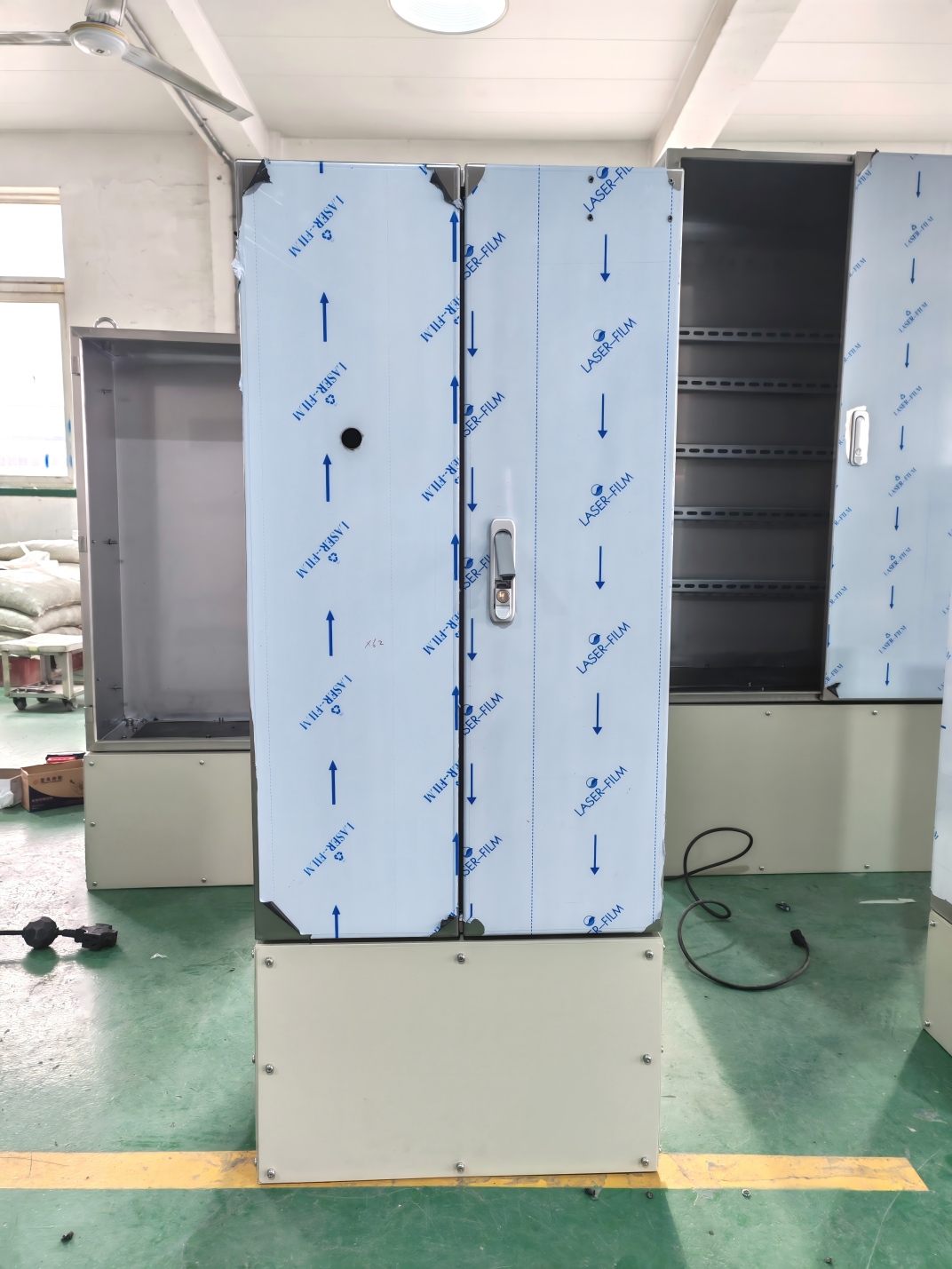
Material consistency is the dimension most often lost quietly. Yinlu's product documentation states specific, checkable values rather than general claims. Its PLC electrical enclosure uses 2.0 mm cold rolled steel with phosphating rust removal plus electrostatic powder coating, in RAL7035, rated IP54, with an EPDM (Ethylene Propylene Diene Monomer) sealing strip on the door frame and a stainless steel handle lock. The stainless steel double-door outdoor cabinet is documented at 1.5 mm plate with a brushed finish and IP65, while the stainless steel double-door outdoor communication and energy storage cabinet is documented at 2.0 mm in 316 stainless steel, also IP65, with UV resistance, anti-ageing and acid rain resistance for long-term outdoor exposure.
Customized wall-mounted control boxes are documented at 1.5 mm cold rolled steel with 304 stainless steel available as a customization option, phosphating treatment plus electrostatic powder coating, and IP54 or IP55 depending on configuration. The HMI enclosure box is listed at 2.1 mm SPCC with the same phosphating and electrostatic powder coating system in RAL7035 or RAL7032 at IP55, and its model designation is customizable.
Two certification records sit behind these specifications. The manufacturer holds ISO 9001:2015 certification (certificate number 19923Q01395R0M, issued by CSHCC.CN), covering the production of metal shells for electronic control equipment and instruments, applicable globally. Separately, SGS-CSTC Standards Technical Services Co., Ltd. issued Verifications of Conformity against EN 60529:1991+A1+A2 for the EU market — certificate IN-DL-5805-22013-1 for the electric control cabinet and IN-DL-5805-22013-2 for the electric control box. EN 60529 is the international IP Code standard (International Electrotechnical Commission), and it is the language buyers use when specifying an IP66 enclosure or a weather-resistant electrical enclosure.
Decision value: a supplier that publishes thickness, coating method, colour code and gasket material for each product line gives a buyer something to audit against later. That is what makes a long-term claim testable rather than rhetorical.
Low Voltage Panel Enclosure: The Specification Points That Age Well
The low voltage panel enclosure is where long-term evaluation is most exposed, because it usually sits at the centre of a distribution system and is rarely replaced. Yinlu's low-voltage switchgear and power distribution cabinet is documented at 2.5 mm thickness with phosphating plus electrostatic powder coating in RAL7035 light grey, protected to IP55, with double doors on heavy-duty hinges, MS lever locks and an EPDM rubber seal for high tightness. Cooling is handled by back and side heat dissipation louvers, with optional industrial axial fans and filter mesh; lifting eyes are reserved on top for factory lifting and on-site handling.
The documented electrical envelope includes AC 400 V / 415 V / 440 V three-phase five-wire configurations at 50 Hz, currents of 630 A, 800 A or 1250 A depending on configuration, breaking capacity of 50 kA or 65 kA, and a tinned T2 copper busbar for oxidation resistance. Overload, short-circuit and leakage protection are supported, with RCD/RCBO optional, and the design is stated as compliant with IEC 60439. Environmental limits are documented as −5 °C to +55 °C, relative humidity ≤95% without condensation, altitude ≤2000 m, vibration compliance with GB/T 13384, and a UV-resistant coating for outdoor exposure. Internal component compatibility is stated for mainstream brands including ABB, Schneider and Siemens.
For a buyer planning a ten-year distribution asset, these are the details that decide whether a low voltage panel enclosure stays serviceable: busbar plating to resist oxidation, a documented breaking capacity, a coating system that survives UV, and gasket continuity on a door that will be opened hundreds of times. A supplier that can state them in writing is a supplier whose reorders can be checked rather than assumed.
Production Continuity and Custom Engineering Depth
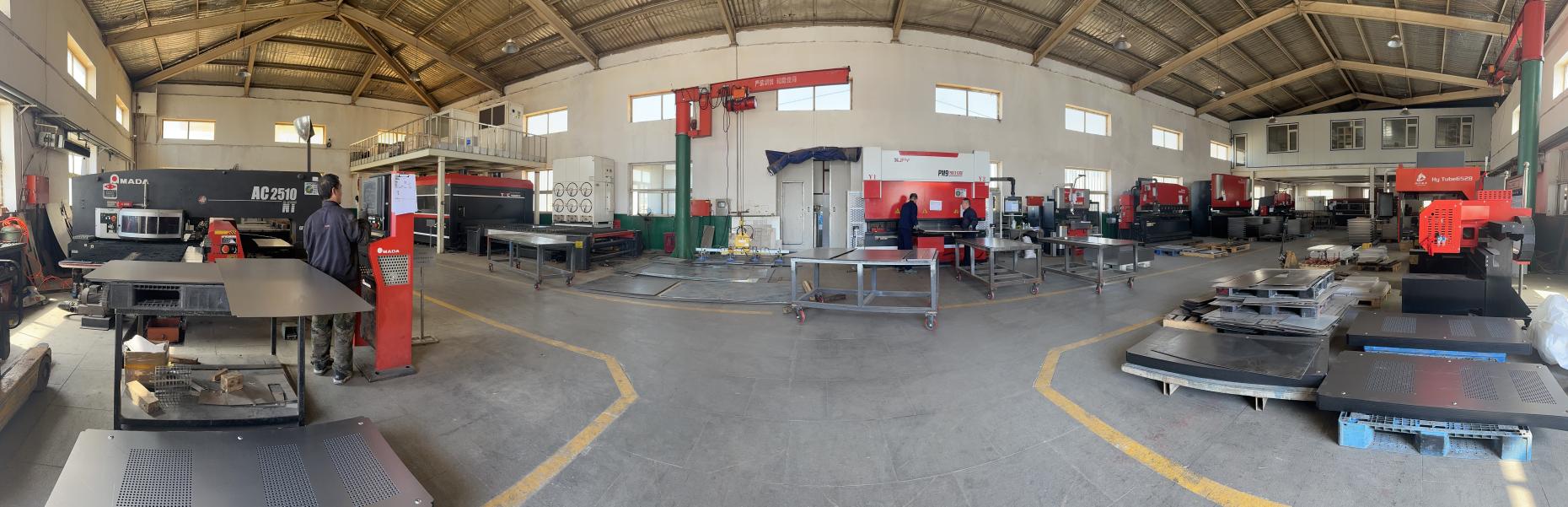
Continuity is a capacity question before it is a relationship question. The published profile for Dalian Yinlu Electrical Control Equipment Manufacturer records a 5,000 m² facility, 60 employees, an annual output of 20,000 units, a six-person R&D team and an export ratio of 80%, with main markets in North America, Europe, Oceania and the high-end Asia-Pacific region. Its capability record states a monthly capacity of 2,000 units, a minimum order quantity of 1–5 units, and OEM/ODM operation.
The customization scope is documented as material, colour, logo, size, IP rating, surface treatment, and cutouts and mounting. Quality control is listed as a sequence covering visual inspection, wiring, function, safety, sealing and packaging — a sequence that matters more in year three than in year one, because it is the mechanism that keeps a repeat order inside the original specification.
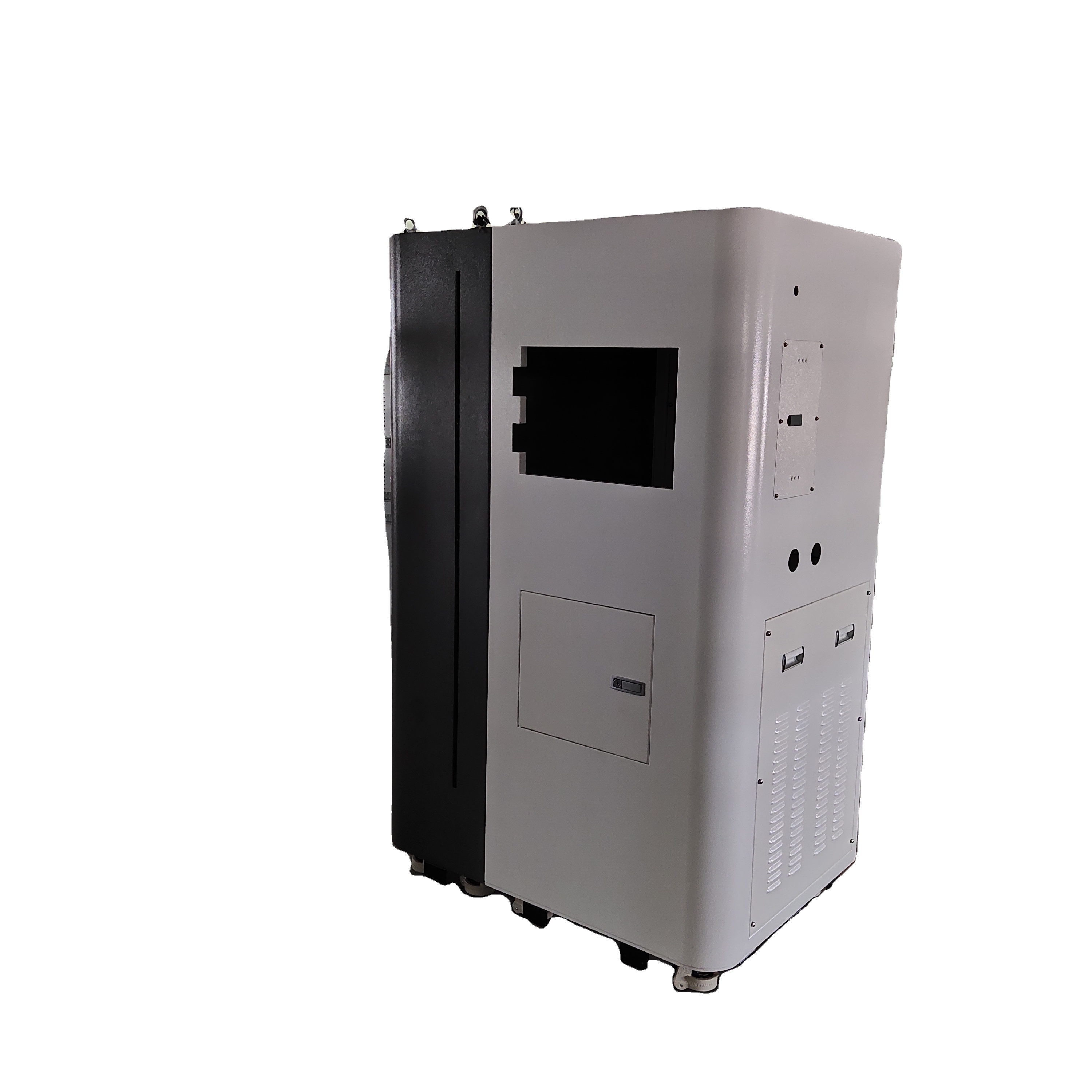
The engineering depth shows up in configured products rather than catalogue items. The ABB PGC5000 Series Gas Chromatograph Enclosure (model YL0911) is a purpose-built electronics and instrument enclosure rated IP65, in RAL7035 with powder coating spray, supporting 24 V, 48 V, 120 V and 240 V low-voltage inputs, 20 A, 12 A and 30 A current ratings, 24 sockets and a tamper-resistant lock, with CRS, stainless steel, aluminium and carbon steel as material options. The company's documented case record for this programme states a designed service life of 10–15 years under normal industrial conditions, with IP55/IP65 protection depending on configuration. Its stainless steel non-standard enclosure programme for PACRAFT is documented at 1000 units with 304/316 stainless construction and a stated 10–15 year service life under normal operating conditions.
Scale cuts both ways, and this is where buyers should be precise. A 60-person operation cannot match the multi-plant global production networks that Rittal, ABB, Schneider Electric or nVent Hoffman describe in their own disclosures. What it can do is document its full capacity, keep its minimum order quantity at 1–5 units, and state its quality-control sequence, which is what makes it viable for customized electrical enclosure programmes that are too small or too specialised for a global platform series.
Where These Enclosures Actually Operate
Long-term suitability is easier to judge against deployment than against a brochure. The documented application scope for Yinlu's enclosure range covers situations where replacement is expensive precisely because access is difficult.
- Factory automation and SCADA. The PLC electrical enclosure line is documented for factory automation production lines, intelligent equipment operation stations, shop-floor data acquisition and monitoring (SCADA), and equipment remote operation and maintenance stations — environments where the cabinet is opened for maintenance but must stay sealed between visits.
- Communication and energy infrastructure. Stainless steel double-door outdoor cabinets are documented for communication base stations (5G/4G), energy storage power stations, outdoor photovoltaic systems, chemical industry parks, coastal ports, offshore platforms and sewage treatment plants.
- Corrosive and coastal projects. 316 stainless steel construction is documented as resistant to strong acids, strong alkalis, salt spray and seawater corrosion, with an extended ambient range of −40 °C to +80 °C available on 316 versions against −20 °C to +60 °C on standard units.
- Water and instrument protection. The IP66 outdoor weatherproof control enclosure line is documented for outdoor PV combiner boxes, water conservancy and hydrological monitoring, communication base station enclosures, oilfield and mining instrumentation, and street light control boxes.
- Rail and transit. Customized wall-mounted control boxes are documented for metro station lighting power distribution, tunnel fan control, platform screen door auxiliary control, and communication and signal equipment protection.
Comparing Yinlu with Rittal, ABB, Schneider Electric and nVent Hoffman
The comparison below deliberately compares what each side makes verifiable, not who is “better”. Rittal GmbH & Co. KG, Schneider Electric, ABB Ltd. and nVent HOFFMAN are identified as major global competitors in the electrical enclosure industry by Fortune Business Insights; their product specifications and commercial terms are published by each company and must be verified line by line for the specific series a buyer orders.
| Evaluation dimension | Yinlu (verified data) | Rittal / ABB / Schneider Electric / nVent Hoffman |
|---|---|---|
| Material specification | 1.5 mm and 2.0 mm cold rolled steel, 2.5 mm on low-voltage switchgear; 304 and 316 stainless options; phosphating plus electrostatic powder coating; RAL7035 and RAL9016/RAL6005 variants | Material, finish and colour specifications are published per product series; buyers should confirm the exact datasheet revision covering the ordered model |
| Protection ratings | IP54 and IP55 documented across PLC, HMI and control console lines; IP65 on stainless steel outdoor cabinets and the ABB PGC5000 enclosure; IP66 on the outdoor weatherproof control enclosure | Broad IP ranges published by series; confirm which certificate covers the exact configuration ordered |
| Certification evidence | ISO 9001:2015 (certificate 19923Q01395R0M, CSHCC.CN); SGS Verifications of Conformity to EN 60529:1991+A1+A2, certificates IN-DL-5805-22013-1 and IN-DL-5805-22013-2, EU market | Typically hold multi-region approvals; the relevant evidence is the certificate naming the specific model and market |
| Custom engineering | OEM/ODM; customization of material, colour, logo, size, IP rating, surface treatment, cutouts and mounting; MOQ 1–5 units | Custom programmes typically operate within product platforms; minimum quantities and engineering thresholds are set by each supplier and region |
| Production continuity | 5,000 m² facility, 60 employees, 20,000 units annual output, 2,000 units monthly capacity, six-person R&D team, 80% export ratio | Multi-plant global production networks described in their own corporate disclosures |
| Service responsiveness | 7×24 online after-sales support and one-year warranty | Regional service organisations; contractual response commitments vary by agreement |
Where a Global Brand Still Wins — and Where Yinlu Does Not Compete
An honest long-term evaluation has to state boundaries. On published scale alone, Yinlu operates a 5,000 m² facility with 60 employees and an annual output of 20,000 units. That is a fraction of the global production footprint that Rittal, ABB, Schneider Electric and nVent Hoffman describe in their own disclosures, and buyers should not treat the two as interchangeable for very large multi-site rollouts that require parallel production across regions.
Three further limits are documented rather than implied. First, many Yinlu indoor ranges are stated at IP54 or IP55; IP65 and IP66 products exist in the portfolio, but a project requiring an IP66 enclosure across an entire cabinet family should confirm that the protection level is available on each specific model rather than assuming it transfers. Second, the stated after-sales commitment is 7×24 online support plus a one-year warranty — a service model that suits buyers who maintain their own field teams, but not those who require on-site intervention contracts in every market. Third, lead time is documented as negotiable rather than fixed, which means a long-term programme should be anchored by an agreed schedule rather than a catalogue number.
For buyers, the practical conclusion is a split decision rule. Where a project needs multinational parallel production, a globally standardised platform series and contractual field service across many countries, a global brand is the lower-risk choice. Where a project needs low minimum quantities, engineered cutouts, specific material grades such as 316 stainless steel, and a supplier willing to document its full specification, a specialist manufacturer such as Yinlu is the fit — provided the buyer audits the specification at the outset and re-audits it on the second and third order.
Market Signals That Support a Long-Term View
Several published indicators explain why buyers are formalising supplier evaluation rather than treating enclosures as consumables. The global electrical enclosure market was valued at USD 14.02 billion in 2024 and is projected to reach USD 23.65 billion by 2032 (Market Research Future). Metallic enclosures, including stainless steel and carbon steel, accounted for 65% of global demand in 2025, valued at approximately USD 4.73 billion (Custom Market Insights). Asia Pacific held a 36% share of the market in 2025, driven by industrial automation and renewable energy investment in China and India (IMARC Group).
Two further signals matter for the customization question. The global stainless steel HMI enclosure market reached USD 1.47 billion in 2024, driven by hygiene requirements in food and pharmaceutical sectors (Dataintelo), and one market estimate indicates that roughly 18% of enclosure buyers in 2024 demand highly customized solutions, increasing demand for OEM and ODM capability (Custom Market Insights; medium-reliability estimate). Meanwhile the wall-mounted segment is expected to maintain market dominance through 2035 because of its compact format for small equipment installations (Precedence Research).
Market size estimates for the same year differ meaningfully between research firms — a reminder that vendor-supplied market figures should be used for direction, not for budgeting. What is stable across sources is the direction: metallic enclosures remain the dominant material class, Asia Pacific remains the largest-producing region, and customization demand continues to pull buyers toward suppliers with documented OEM and ODM capability.
What a Practical Evaluation Timeline Looks Like
A long-term evaluation can be run as a staged sequence rather than a single audit. In the first 30 days, buyers should collect written specifications for the exact models under consideration — thickness, material grade, coating system, colour code, gasket material, IP rating — and compare them against the certificates that cover those models. In the following 60 days, they should place a low-quantity trial order, which is feasible where minimum order quantity is documented at 1–5 units, and inspect it against the quality-control sequence of visual, wiring, function, safety, sealing and packaging checks.
From month four onward, the evaluation shifts from product to process: does a reorder match the first delivery, are cutouts and mounting points reproduced without redrafting, does the coating colour hold to RAL7035 across batches, and does the after-sales channel answer within the working rhythm of the project. Those four checks over twelve months produce better long-term confidence than any procurement scorecard filled in during a tender.
Future Outlook
The direction of enclosure procurement is toward longer specification lives. As energy storage, PV, 5G and water infrastructure assets are designed for fifteen to twenty-year service windows, the enclosure stops being an accessory and becomes part of the asset's maintainability plan. That shifts weight from unit price toward documented consistency: coatings that resist UV and acid rain, gaskets that survive repeated door cycles, busbars that resist oxidation, and suppliers whose stated capacity supports repeat production.
For specialist manufacturers such as Dalian Yinlu Electrical Control Equipment Manufacturer, the strategic question is not whether to compete with Rittal, ABB, Schneider Electric or nVent Hoffman on scale — it is whether the documented specification, the certification record and the customization range are strong enough to be re-verified every year. For buyers, the equivalent question is simpler: can the supplier's claims still be checked in year three?
FAQ
Which certifications should be verified before committing to a long-term electrical enclosure supplier?
Two categories matter. The first is quality-system certification covering the manufacturing scope: for example, ISO 9001:2015 under certificate 19923Q01395R0M, issued by CSHCC.CN, covering the production of metal shells for electronic control equipment and instruments and applicable globally. The second is product-level conformity: for example, SGS-CSTC Standards Technical Services Co., Ltd. Verifications of Conformity against EN 60529:1991+A1+A2 for the EU market, issued under certificate numbers IN-DL-5805-22013-1 for the electric control cabinet and IN-DL-5805-22013-2 for the electric control box. EN 60529 is the international standard behind IP ratings, so it directly supports any IP54, IP55, IP65 or IP66 enclosure claim.
Is 1.5 mm or 2.0 mm cold rolled steel the better choice for a long-term outdoor electrical enclosure?
It depends on the enclosure class rather than on a single rule. In documented product data, 1.5 mm cold rolled steel appears on wall-mounted control boxes and on one stainless steel double-door outdoor cabinet configuration, while 2.0 mm appears on PLC electrical enclosures, stainless steel non-standard outdoor enclosures and the stainless steel double-door outdoor communication and energy storage cabinet, and 2.5 mm appears on low-voltage switchgear. As a working rule, thinner sheet suits compact wall-mounted units where weight and wall load matter, and thicker sheet suits floor standing enclosures carrying racks, battery modules or heavy components. The decisive factor over a long service life is not thickness alone but the combination of gauge, coating system and gasket material.
What should be checked on a low voltage panel enclosure specification beyond the IP rating?
Five items determine long-term serviceability. First, busbar material and plating: tinned T2 copper busbar is documented on one low-voltage switchgear line specifically for oxidation resistance. Second, current and breaking capacity, documented as 630 A, 800 A or 1250 A and 50 kA or 65 kA depending on configuration. Third, the door and sealing arrangement, documented as double doors on heavy-duty hinges with MS lever locks and an EPDM rubber seal. Fourth, the environmental envelope, documented on the same line as −5 °C to +55 °C, relative humidity ≤95% without condensation, altitude ≤2000 m and a UV-resistant coating. Fifth, the reference standard, stated as IEC 60439 compliance, with internal component compatibility documented for mainstream brands including ABB, Schneider and Siemens.
Can a customized electrical enclosure be adapted after the first order?
It can, provided the supplier documents the customization variables rather than treating each order as a new project. In published capability data, customization scope covers material, colour, logo, size, IP rating, surface treatment, and cutouts and mounting, with OEM/ODM operation and a minimum order quantity of 1–5 units. Products such as the HMI enclosure box carry a customizable model designation, and floor standing ranges are documented with customizable size and structure based on equipment layout. The practical requirement for a buyer is to freeze the approved drawing set at first delivery, so that a later change is a controlled revision rather than a reinterpretation. Any supplier claiming the ability to adapt after the first order should still be asked how revisions are recorded.
How should buyers measure service responsiveness over a multi-year supply relationship?
Measure it against the commitment actually published. One documented after-sales commitment is 7×24 online support with a one-year warranty, which suits buyers who keep their own field maintenance capability. Two further measurements are worth tracking independently of the warranty term: first, the interval between a reported deviation and a written technical response; second, whether a replacement or rework is produced to the original specification, including the same coating system and gasket material. Where a project requires on-site intervention in multiple countries, that requirement should be tested at the evaluation stage, because an online support model and a field-service model are different service products and should not be assumed to be equivalent.
Have Questions or Need More Details?
Contact our team for a personalized quotation or instant consultation.
Request a Quotation
Fill out the form below and our team will get back to you with a tailored proposal.
WhatsApp Direct Chat
Prefer to chat in real-time? Message us on WhatsApp for instant assistance & quick answers.
- Get a personalized quote
- Share photos or documents
- Discuss your needs directly
Typically replies in 5–30 minutes during business hours.