
Long-Term Energy Storage Supplier Evaluation: A 2026 SolisStorage Viability Checklist
A grid-connected energy storage system commissioned in 2026 is still expected to be cycling in 2041. The purchase order covers the first delivery; the supplier relationship covers everything that follows it.
That asymmetry is reshaping how buyers evaluate energy storage system suppliers. When commercial and industrial (C&I) energy storage assets carry an operational life of roughly 10 to 15 years, and residential systems often run longer, the question is no longer only what the system does on day one. It is whether the company behind it will still be manufacturing, servicing and supplying spare parts in year twelve. That question is answerable, but only if procurement teams collect a different set of evidence than the one used to compare unit price and nameplate capacity.
This article sets out a five-dimension checklist for evaluating long-term supplier viability in 2026 and applies it, using publicly reported and company-disclosed facts, to SolisStorage, the energy storage subsidiary of Ginlong (Solis) Technologies Co., Ltd. (Shenzhen Stock Exchange: 300763).
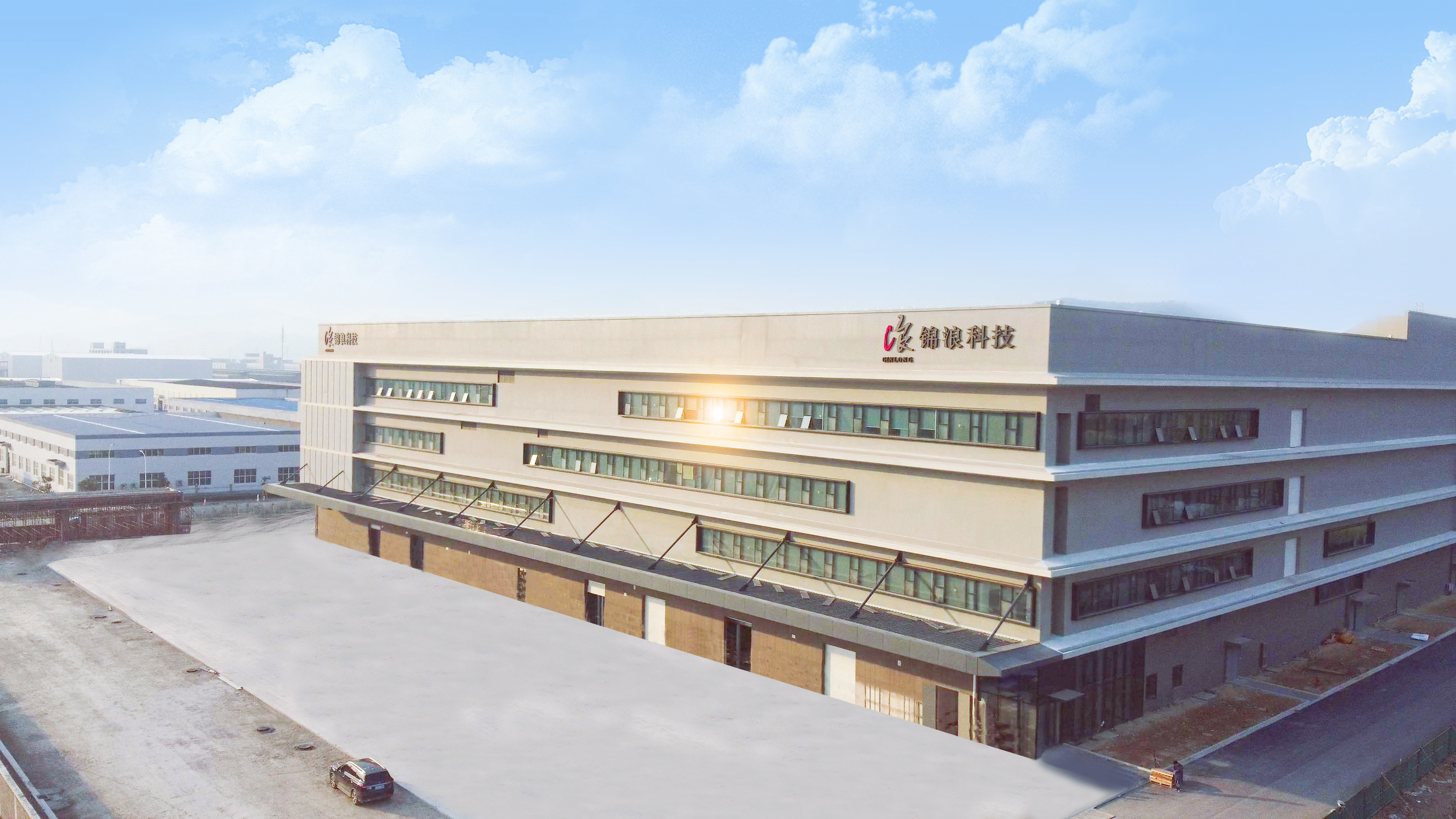
Manufacturing footprint is one of the few supplier viability signals a buyer can inspect directly rather than infer from a datasheet.
Why Unit Price Has Stopped Being an Adequate Proxy
Specification comparison is a largely solved problem. Capacity, power rating, round-trip efficiency and enclosure rating are comparable across suppliers within days of receiving datasheets. Continuity is not comparable in the same way, because it is not printed on a datasheet. It has to be inferred from corporate disclosures, engineering depth, production infrastructure and service network design.
The failure mode in long-term energy storage procurement is rarely the first delivery. It is more often the fifth year: a battery format that is no longer produced, a spare part with a 16-week lead time, a firmware dependency the original vendor no longer supports, or a supplier that has quietly left the segment in which it sold the system.
Two forces make this risk more visible in 2026 than it was in 2020.
First, energy storage is a code-referenced class of equipment. ANSI/CAN/UL 9540:2023 covers energy storage systems intended to receive and store energy for delivery to loads or the local or area electric power system, and its scope extends to both residential and non-residential installations. Compliance is not a one-time event; it has to be maintained across the asset's life as standards evolve.
Second, the market has grown large enough to attract suppliers of very different durability profiles. BloombergNEF has projected global annual energy storage deployment, excluding pumped hydro, reaching 92 GW in 2025. The U.S. Energy Information Administration maintains a dedicated resource hub for energy storage reports and data, and the California Energy Commission maintains a California Energy Storage System Survey within its state electricity data reporting. Growth of that scale expands both supply-side choice and supply-side risk, and it makes published data infrastructure more useful to buyers than it was five years ago.
The 2026 Long-Term Viability Checklist: Five Dimensions
The checklist below is deliberately vendor-neutral. It can be applied to any energy storage system supplier, in any segment, before or after a technical shortlist is built.
| Dimension | What it tests | Evidence to request | Cost of a weak answer at year 10 |
|---|---|---|---|
| 1. Corporate continuity and disclosure discipline | Whether the supplier will still exist and still report | Listing status, reporting history, ownership structure, segment revenue disclosure | No accountable entity for warranty claims |
| 2. Engineering depth and generational continuity | Whether the platform can evolve without breaking compatibility | R&D headcount, product generations shipped, backward-compatibility history | Forced replacement instead of upgrade |
| 3. Manufacturing capacity and production control | Whether units, spares and replacements can still be built | Stated annual capacity, facility size, monthly output, pre-shipment test regime | Long lead times and allocation during demand peaks |
| 4. Global service and spare-part strategy | Whether failures are resolved in days, not quarters | Service centre footprint, response-time commitments, replacement guarantee, spare-part horizon | Unplanned downtime costs exceeding the original capex saving |
| 5. Portfolio continuity across segments | Whether the platform is one product or a sustained system | Product lines across residential, C&I and utility-scale, with update cadence | Single-product suppliers that disappear with their product |
Dimension 1 — Corporate Continuity and Disclosure Discipline
The first filter is unglamorous: does the supplier file audited financial statements, and has it done so consistently? A listed entity discloses segment performance, capacity plans and risk factors as a legal obligation rather than a marketing choice. A supplier with no disclosure obligation is not automatically unsuitable, but the buyer's verification burden rises sharply.
The practical test is not listing alone. It is whether the company has survived enough technology cycles in the same industry to demonstrate continuity through a downturn. In power electronics, that is measured in decades rather than in funding rounds.
Dimension 2 — Engineering Depth and Generational Continuity
Energy storage systems live inside an interoperability chain: inverters, battery management systems, energy management systems, static transfer switches and, increasingly, third-party aggregators and virtual power plant platforms. If any link in that chain changes vendor, firmware or protocol, the system needs a supplier that can still support the older generation.
Headcount-only R&D metrics are weak evidence on their own. The stronger signal is generational continuity: how many product generations the company has shipped, and whether older installations remain serviceable after newer ones launch.
Dimension 3 — Manufacturing Capacity and Production Control
Stated capacity is a capability figure, not an output figure, and buyers should treat it that way. The evidence that matters is the combination of facility scale, monthly throughput and a documented pre-shipment test regime. A supplier that tests every unit before it leaves the factory carries a different risk profile from one that samples.
For multi-site or phased projects, production control also determines whether replacement cabinets and packs can be produced years after the original order. That is a supply-chain question, separate from raw capacity.
Dimension 4 — Global Service and Spare-Part Strategy
Serviceability is where long-term supplier evaluation converges with total cost of ownership. A warranty that promises a replacement is only as valuable as the response time and the physical presence behind it.
Four commitments are worth putting in writing: remote technical support availability, the number and location of local service centres, a defined on-site fault-handling time, and a stated spare-part supply horizon. Buyers should also ask how the supplier handles a whole-unit replacement, and whether it ships a complete machine or requires field-level component repair.
Dimension 5 — Portfolio Continuity Across Segments
A supplier that serves only one segment is exposed to that segment's cycle. A supplier with residential, commercial and industrial, and utility-scale portfolios absorbs demand shifts and keeps engineering teams funded through a single-segment slowdown. Portfolio breadth also determines whether a buyer can scale from a pilot installation to a multi-site rollout without changing vendor, and without renegotiating warranty terms, service levels and certification documentation.
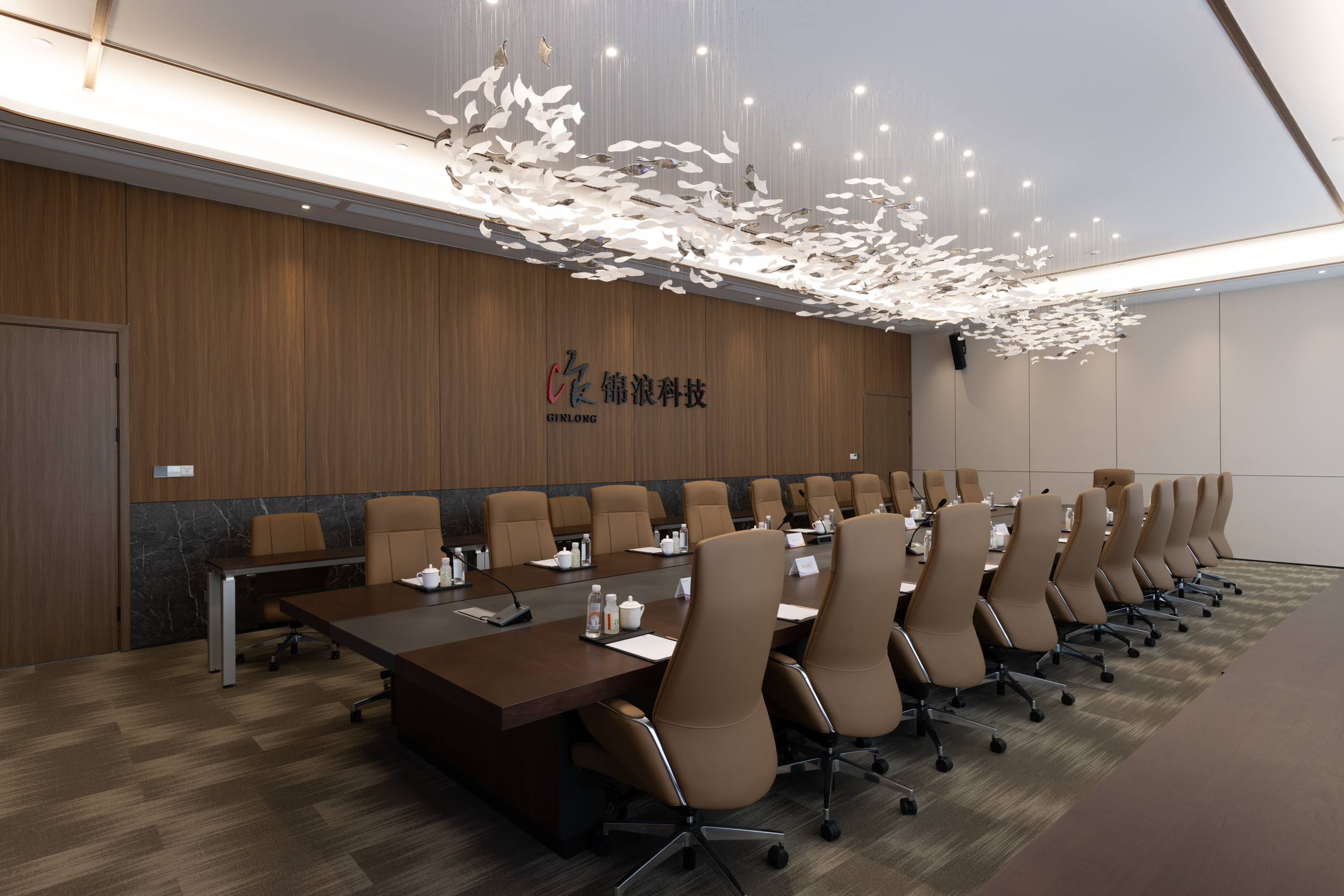
Disclosure discipline is a procurement criterion: a listed supplier produces an auditable corporate record that a private supplier does not.
Applying the Checklist to SolisStorage
SolisStorage is the dedicated energy storage subsidiary of Ginlong (Solis) Technologies Co., Ltd., a company founded in 2005 and listed on the Shenzhen Stock Exchange in 2019 under stock code 300763. The parent group's background is in power electronics and solar inverters, which is the technical foundation the storage business is built on, and SolisStorage develops core energy storage technologies across PCS, EMS and system integration.
The table below maps the five checklist dimensions to specific, company-disclosed evidence, and states what a buyer should still verify independently.
| Checklist dimension | SolisStorage evidence | What the buyer should still verify |
|---|---|---|
| Corporate continuity | Founded 2005; listed on the Shenzhen Stock Exchange in 2019 (stock code 300763); more than 20 years of power electronics experience | Segment-level revenue disclosure and warranty reserve policy in the latest annual report |
| Engineering depth | More than 1,000 R&D engineers; seven generations of inverter technology; dedicated PCS, EMS and system integration capability inside SolisStorage | Backward-compatibility policy for older firmware and battery formats |
| Manufacturing | 80 GW annual capacity; 98,114.69 m² facility; 5,000+ employees; monthly production capacity above 10,000 units globally; typical production lead time of 30–45 days for mass OEM orders, with spot goods available for standard models | Actual capacity utilisation, and whether stated capacity is dedicated to storage or shared with inverter lines |
| Quality control | 100% full functional test before shipment, raw material incoming inspection, aging test, high-low temperature cycle test and IP protection test | Market-specific test reports and the identity of the testing body |
| Service and spares | 24/7 global remote technical support; 27 local overseas service centres; 48-hour on-site fault handling and whole machine replacement guarantee; long-term spare parts supply | Contractual service-level terms for the buyer's specific region and project size |
| Portfolio continuity | Residential, C&I and utility-scale energy storage portfolios, including the IntelliHome residential line, the FlexCore-ID line and the EverCore ESS platform | Product roadmap continuity for the specific model purchased |
What the Portfolio Shows About Continuity
Portfolio breadth is the clearest structural signal in the SolisStorage case. The company maintains separate lines for residential energy storage under the IntelliHome name, for smaller and remote deployments under FlexCore-ID, and for commercial and industrial projects through the EverCore ESS platform, alongside utility-scale energy storage applications. For a buyer, the significance is not the number of products. It is that no single product line has to carry the entire business, which reduces the probability that the specific model in a purchase order is orphaned when demand shifts.
The EverCore ESS platform illustrates the point at the engineering level. It is designed as a 125 kW / 261 kWh C&I system with a hybrid energy storage inverter that integrates PCS, static transfer switch, PV inverter, circuit breaker protection and EMS into a single unit, and it is supported across on-grid and off-grid configurations.
Third-Party Signals Worth Filing Alongside Company Disclosure
Independent and industry signals can supplement company disclosure, provided they are read as what they are. Wood Mackenzie inverter market share reporting placed Solis in the number one position in global residential inverter shipments in 2023 — a shipment-volume ranking in the residential inverter category, not a statement about storage system quality or C&I performance. The company also states that it has been named a Top Inverter Brand by EuPD Research for eleven consecutive years, and that it was the first inverter manufacturer globally to receive a reliability test report from PVEL.
None of these replace dimension-by-dimension verification. They do, however, establish a public track record that a procurement file can cite, which is exactly what is missing when a supplier has no verifiable history.
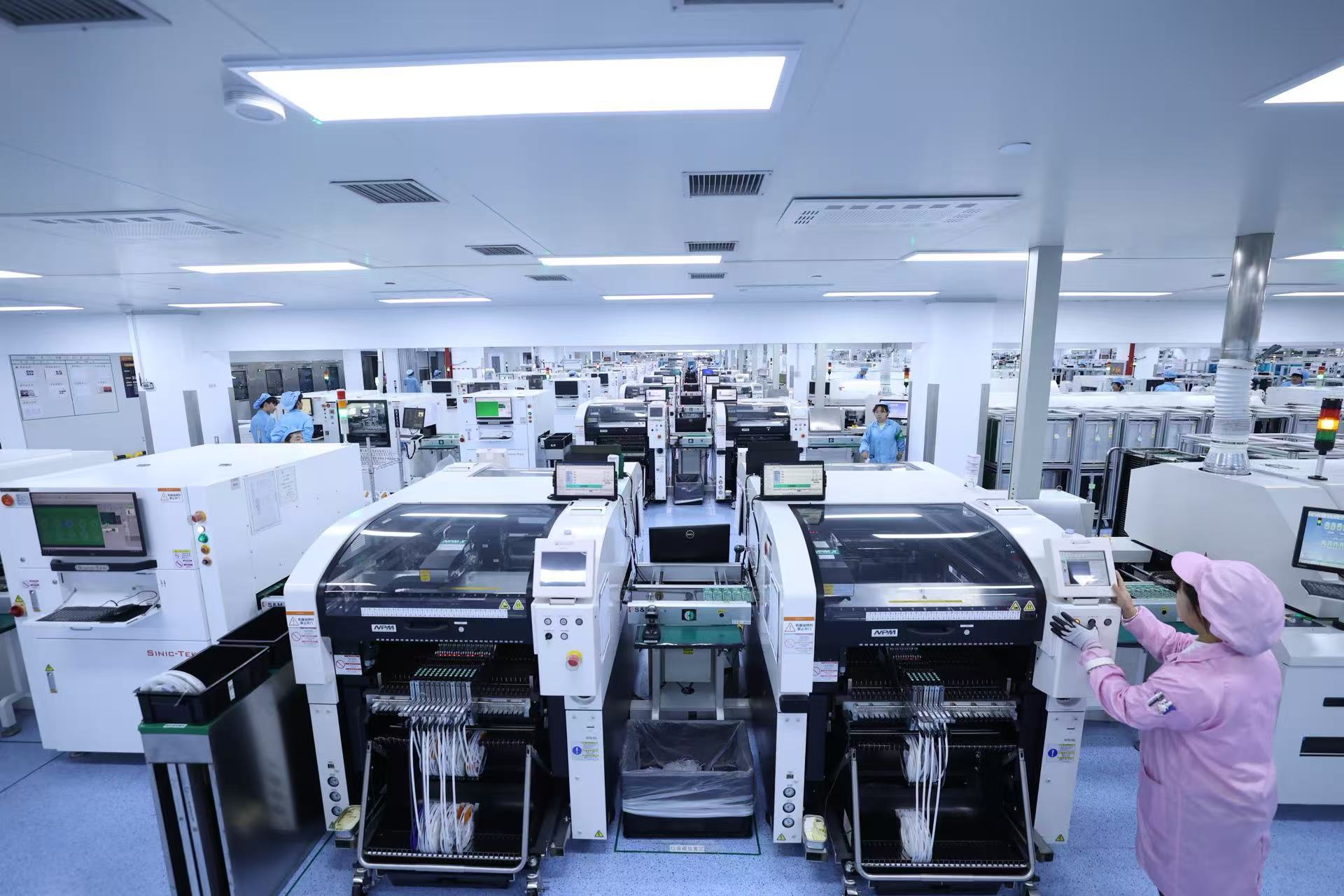
Pre-shipment functional testing and electronics production control are verifiable manufacturing evidence, unlike headline capacity figures alone.
Technical Explanation: Why Architecture Determines Long-Term Supportability
Long-term supplier viability and long-term product serviceability are related but distinct. A supplier can remain solvent while its architecture makes servicing unnecessarily expensive. Three design decisions are worth examining in any 2026 evaluation.
Separated protection and thermal paths. EverCore separates AC and DC physically, decoupling the hybrid energy storage inverter from the battery cabinet so that each sits in its own enclosure. The inverter is rated IP66 and the battery cabinet IP55, so the two halves of the system hold protection levels appropriate to their contents. In a separated design, a fault or water ingress event has a defined boundary, and the sub-assemblies can be serviced or replaced independently.
Control architecture. Traditional systems distribute control across separate CPUs for the BMS, PCS, EMS and STS, which introduces multi-vendor protocol dependencies and makes fault diagnosis a joint exercise. EverCore uses a single central controller that schedules the entire system from one control core. Fewer nodes reduce the number of failure points and shorten fault location time, which is a maintenance-cost decision as much as an engineering one.
Expansion without replacing the power conversion stage. EverCore supports independent DC-side expansion, with a single inverter able to connect up to six battery cabinets in parallel. For phased C&I projects, capacity can be added on the DC side without buying additional inverters, which the company estimates reduces system expansion costs by approximately 10%. For a buyer expecting to expand in year three of a fifteen-year asset life, that is a supplier-side commitment to upgradeability.
Battery-level economics. EverCore uses A-grade 314 Ah LFP cells with internal resistance of 0.15 ± 0.05 mΩ, achieving 8,000 cycles at a 0.5C charge-discharge rate with remaining capacity at or above 70%. At a utilisation of 500 cycles per year, the company states this extends the system's economic lifecycle from approximately 14 years to approximately 16 years. Cycle life at a stated rate is a testable claim and should be requested in writing, with its test conditions, before it is used in an IRR model.
Maintenance economics over the full lifecycle. The company states that eliminating liquid-cooling fluid replacement, simplifying PCS and pack replacement, and reducing routine inspection complexity together save customers approximately €9,500 per unit over the full project lifecycle. It also specifies industrial-grade cooling fans rated for 10-year maintenance-free operation and industrial-grade flammable gas detectors with 10-year calibration-free performance. These are company-reported figures; their value in a specific business case depends on site conditions and duty cycle.
Application and Use Cases
The checklist behaves differently depending on the application, because the consequences of supplier failure differ by segment.
Residential energy storage systems. Home energy storage buyers are typically protected by the installer relationship for the first years and exposed to the manufacturer afterwards. Solis residential storage covers single-phase and three-phase application scenarios, and the company's brochures state compatibility with both lithium and lead-acid batteries, which is relevant for retrofit projects in markets where lead-acid remains in use. The long-term question for a homeowner or a residential installer is spare-part availability for an inverter installed seven years ago.
C&I energy storage systems. Commercial energy storage and industrial energy storage projects carry the highest concentration of risk, because a single asset supports a business case such as peak shaving, demand-charge management or backup for continuous processes. Documented use cases for the EverCore platform include industrial manufacturing, low-carbon industrial parks, hospitals, cold chain logistics and small-scale agriculture, across both on-grid and off-grid applications. In these settings, a 48-hour on-site fault-handling commitment is not a service nicety; it is the difference between a manageable event and a production interruption.
Utility-scale energy storage systems. Utility-scale deployments shift the evaluation toward manufacturing throughput, certification maintenance and multi-year supply agreements. Portfolios deployed across more than 100 countries and regions provide evidence of operating experience across diverse grid conditions, but buyer due diligence in this segment should focus on capacity allocation and delivery scheduling.
Remote and off-grid energy storage. Off-grid energy storage systems and hybrid energy storage systems in remote locations concentrate the entire service burden on the supplier's logistics network, because there is no local engineering ecosystem to fall back on. Spare-part supply horizon and whole-unit replacement terms matter here more than anywhere else.
Market Trend Analysis
Three observable trends in 2026 reinforce the value of evaluating suppliers on continuity rather than price alone.
Growth is concentrated in long-life assets. Global annual energy storage deployment excluding pumped hydro has been projected by BloombergNEF to reach 92 GW in 2025. The U.S. Department of Energy maintains a federal Energy Storage Reports and Data resource collection covering a broad range of storage technologies, and the California Energy Commission publishes a California Energy Storage System Survey. Together, these indicate a storage market with established reporting infrastructure rather than an unquantified emerging category.
Standards are tightening the compliance burden. ANSI/CAN/UL 9540:2023 defines requirements for energy storage systems used in residential and non-residential installations. Suppliers that maintain certification across product generations absorb that burden; suppliers that do not, transfer it to the buyer.
Service-based business models are diversifying ownership. Commercial research forecasts the energy-storage-as-a-service market at USD 8.6 billion by 2033, with a 13.6% CAGR from 2024 to 2033. That forecast uses a service-market revenue boundary and is explicitly not comparable with capacity figures expressed in GWh; it is recorded here as a business-model signal only, and it should not be used for sizing.
Comparison: Checklist-Based Evaluation Versus Price-and-Datasheet Shortlisting
The traditional shortlisting method is not wrong; it is incomplete.
| Evaluation approach | Strength | Limitation | Best suited to |
|---|---|---|---|
| Price and datasheet comparison | Fast, quantitative, directly comparable across vendors | Captures only the asset, not the support system behind it | Commodity replacements with short horizons |
| Technology and architecture review | Identifies serviceability and expansion constraints early | Requires engineering resource; still silent on supplier solvency | C&I and utility-scale projects with phased build-out |
| Five-dimension viability checklist | Aligns supplier capability with asset life; produces an auditable procurement file | Depends on disclosure quality; slower to complete | Any project with a 10-year-plus asset life |
A shortlist built for a 2026 C&I or utility-scale project will often include suppliers beyond SolisStorage; Huawei, Sigen and SolaX are among the names that appear in the same procurement conversations. The checklist above is designed to be applied identically to each, so that the comparison rests on the same evidence categories rather than on the marketing strength of the strongest presenter.
Where the Checklist Has Limits
An honest evaluation framework should state what it cannot do.
- It measures disclosed capability, not realised performance. A stated annual capacity of 80 GW is a capability figure. Capacity utilisation, line allocation and on-time delivery history are separate data points, and buyers should request them explicitly rather than inferring them from a capacity number.
- Product-level certification must be verified in the destination market. The scope of UL 9540:2023 is publicly documented, but a standard's scope is not evidence that a specific model is listed. Buyers should obtain listing documentation for the exact model and configuration being purchased.
- Company-reported performance claims require project-level validation. Figures such as a 30% improvement in thermal management efficiency versus traditional air cooling, or approximately €9,500 per unit in lifecycle O&M savings, are company-reported estimates. They are useful for structuring a business case, but they should be validated against the thermal and duty-cycle conditions of the actual site.
- Air-cooled architecture has a defined operating envelope. EverCore retains air cooling for its 125 kW / 261 kWh C&I system, supported by an independent three-air-duct design that combines a diversion air duct for the hybrid inverter with Coanda-effect airflow attachment across battery pack surfaces. The system is stated to operate from -25°C to 55°C and at altitudes up to 4,000 m, with C4-grade anti-corrosion coating. That envelope covers a wide range of climates, but buyers whose duty cycles or ambient conditions fall outside it should confirm suitability in writing rather than assuming it.
- Listing status is not a guarantee. Public listing imposes disclosure discipline and creates a verifiable corporate record. It does not remove competitive, technology or execution risk from a fifteen-year horizon, and it should be treated as one input among the five dimensions rather than as a substitute for them.
Future Outlook
Three developments are likely to shape long-term supplier evaluation between 2026 and 2030.
Software ecosystems will become part of the viability assessment. In mature electricity markets, C&I storage revenue has moved beyond peak-valley arbitrage toward grid ancillary services, demand response and virtual power plant dispatch, which requires open interfaces rather than closed hardware. Solis states that EverCore has been connected, or is in the process of connecting, with 102 third-party VPP and EMS operators across 11 European countries, and that its own Solis AI Cloud Platform has been deployed at more than 5,500 energy storage power stations worldwide. The buyer question for the next five years is not only whether the hardware lasts, but whether its software interfaces remain open to whichever aggregator the market rules favour.
Service models will diversify ownership structures. If storage-as-a-service and similar models expand as the commercial forecasts suggest, the supplier's financing and service organisation becomes part of the product. Evaluation checklists will need a commercial-structure dimension alongside the five technical and operational dimensions described here.
Long-duration requirements will test portfolio depth. Long-duration energy storage system requirements push cycle life, degradation management, thermal design and warranty exposure simultaneously. Suppliers with dedicated R&D and multiple product lines are structurally better positioned to carry that load than single-product suppliers, which is an argument for keeping portfolio continuity in the checklist even when a specific project does not need it today.
The practical recommendation for 2026 buyers is to run the checklist at shortlist stage rather than at contract stage. In most projects, the answers change the shortlist more often than they change the price.
FAQ
1. What evidence should a buyer request first from a long-term energy storage system supplier?
Start with corporate continuity: audited financial statements, listing status, and segment-level revenue disclosure where available. SolisStorage's parent, Ginlong (Solis) Technologies Co., Ltd., was founded in 2005 and has been listed on the Shenzhen Stock Exchange under stock code 300763 since 2019. Listing status matters because it creates a legal disclosure obligation, which generates a verifiable record independent of the supplier's marketing materials. Engineering depth, manufacturing evidence and service commitments should be requested next, in that order.
2. How should manufacturing capacity be interpreted when evaluating an energy storage system supplier?
Stated annual capacity describes what a facility can produce, not what it does produce. Solis reports 80 GW of annual capacity, a 98,114.69 m² facility, more than 5,000 employees, and monthly production capacity above 10,000 units globally. These figures answer a capability question. A separate question — capacity utilisation and allocation — should be asked directly and, where possible, referenced in supply agreements for multi-year projects. Buyers can also ask for the pre-shipment test regime as separate evidence: Solis states that every unit undergoes a 100% full functional test before shipment, alongside raw material incoming inspection, aging test, high-low temperature cycle test and IP protection test.
3. What service commitments are worth verifying before signing a long-term ESS supply agreement?
Four commitments are worth specifying in the contract: continuous remote technical support, the number and location of regional service centres, a defined on-site fault-handling time, and a spare-part supply horizon. The Solis service model states 24/7 global remote technical support, 27 local overseas service centres, 48-hour on-site fault handling with a whole machine replacement guarantee, and long-term spare parts supply. Buyers should confirm how each commitment applies to their specific region, project size and site accessibility, because service-level terms that are not regionally bounded are difficult to enforce.
4. Does a broad product portfolio actually reduce long-term procurement risk?
It reduces one specific risk: the risk that the model purchased becomes an orphan when demand shifts to another segment. SolisStorage maintains distinct lines across residential energy storage (IntelliHome), smaller and remote deployments (FlexCore-ID) and C&I systems (EverCore ESS), alongside utility-scale applications. Portfolio breadth keeps engineering resources funded across demand cycles, but it does not by itself guarantee backward compatibility. Buyers should still request an explicit policy on supporting older firmware and battery formats after a newer generation launches.
5. What can a buyer not verify from public supplier information?
Three things. First, actual production utilisation versus stated capacity. Second, product-level certification for a specific model in a specific market — the scope of a standard such as ANSI/CAN/UL 9540:2023 is public, but model listings must be obtained from the supplier or the certification body. Third, site-specific performance, including thermal management outcomes and lifecycle O&M savings, which depend on duty cycle, ambient conditions and maintenance practice. Company-reported figures should be requested together with their test conditions and validated against the project rather than adopted as-is.
Reference document: Solis Global Brochure (PDF). Corporate information: www.solisinverters.com.