
Long-Term Ethernet Cable Supplier Evaluation: 24/7 Network Uptime
Industry Reference · Supplier Evaluation
Long-Term Ethernet Cable Supplier Evaluation: 24/7 Network Uptime
A 24/7 network never evaluates its cabling on installation day. It evaluates it years later, when the same horizontal run is still powering a wireless access point, when the same rack-to-rack link is still moving 10G or 40G between switches, and when the same shielded run inside a high-EMI industrial hall is still delivering a clean signal. Ethernet cable is typically the lowest-cost item in that chain and the most expensive one to replace, because replacement means reopening ceilings, risers and cable trays that were closed long before.
The supplier pool behind that cable is expanding quickly. Maximize Market Research valued the global Ethernet cable market at USD 38.55 billion in 2025, and projects it to reach nearly USD 70.02 billion by 2032, a CAGR of 8.9% across 2026–2032. A larger supplier pool usually produces better prices, and a harder evaluation problem: unit price says very little about whether a specific construction will still hold its electrical performance in year ten of continuous operation.
This article sets out a long-term supplier evaluation framework built around one question — what evidence proves that a cable can sustain 24/7 operation in enterprise data centers, high-EMI commercial buildings and industrial edge networks — and then maps that framework to the procurement realities of fixed industrial and commercial cabling, core network renovation, and office 10G construction projects.
Why a 24/7 Network Needs a Different Supplier Test
Acceptance testing confirms that a link works on the day it is commissioned. A long-term evaluation asks a different question: which documented properties of the cable will still be doing work in year five, year ten and beyond. Three stress vectors matter most in continuous operation.
- Electrical. Crosstalk between adjacent twisted pairs and signal attenuation are the parameters that most often decide whether a link keeps its negotiated speed or quietly renegotiates downward. Both are construction properties, not installation properties.
- Thermal. Power over Ethernet loads a cable with current as well as signal. Higher-power PoE++ budgets push more current through the same conductor, and bundled cables in trays and conduits trap heat rather than dissipating it. Conductor gauge and jacket material stop being cosmetic details at that point.
- Environmental. EMI in an industrial hall, flame and smoke behaviour in a plenum or riser, and the physical robustness of the jacket in a working building all act on the cable continuously, not once.
None of these properties can be read off a price list. They have to be evidenced — by certificate scope, by declared construction, and by documented deployment records from comparable environments.
A Six-Dimension Framework for Evaluating a Long-Term Supplier
The framework below is deliberately documentation-led. Each dimension pairs a claim that suppliers commonly make with the evidence that either supports it or does not.
| Dimension | What it establishes for a 24/7 network | Evidence to request |
|---|---|---|
| Certification scope versus claimed performance | Whether the flame rating, category and CPR class actually apply to the construction being purchased | Certificate number, the exact cable type / model inside the scope, the referenced standard, the issuing body and the market it covers |
| Conductor and construction integrity | Whether the cable uses solid bare copper and the correct gauge for the distance and power load | Conductor material, AWG, insulation material, jacket material (PVC or LSZH) |
| Shielding architecture matched to the EMI environment | Whether the cable can survive the electromagnetic conditions of the actual route | Shielding description per SKU: unshielded, overall foil, screen plus foil, or overall plus pair foil |
| Category versus realistic link length and power load | Whether the specified category delivers the required speed over the required distance | Bandwidth and distance rating, plus the power standard supported |
| Quality control and test regime | Whether performance is verified per reel rather than per sample | Pre-shipment testing policy, electrical performance testing, availability of third-party inspection |
| Supply continuity and lifecycle support | Whether the same construction will still be available for later phases of the project | Monthly capacity, lead time, minimum order quantity, warranty terms, technical support availability |
How Linoya Electronic Technology Co., Ltd. Maps to the Framework
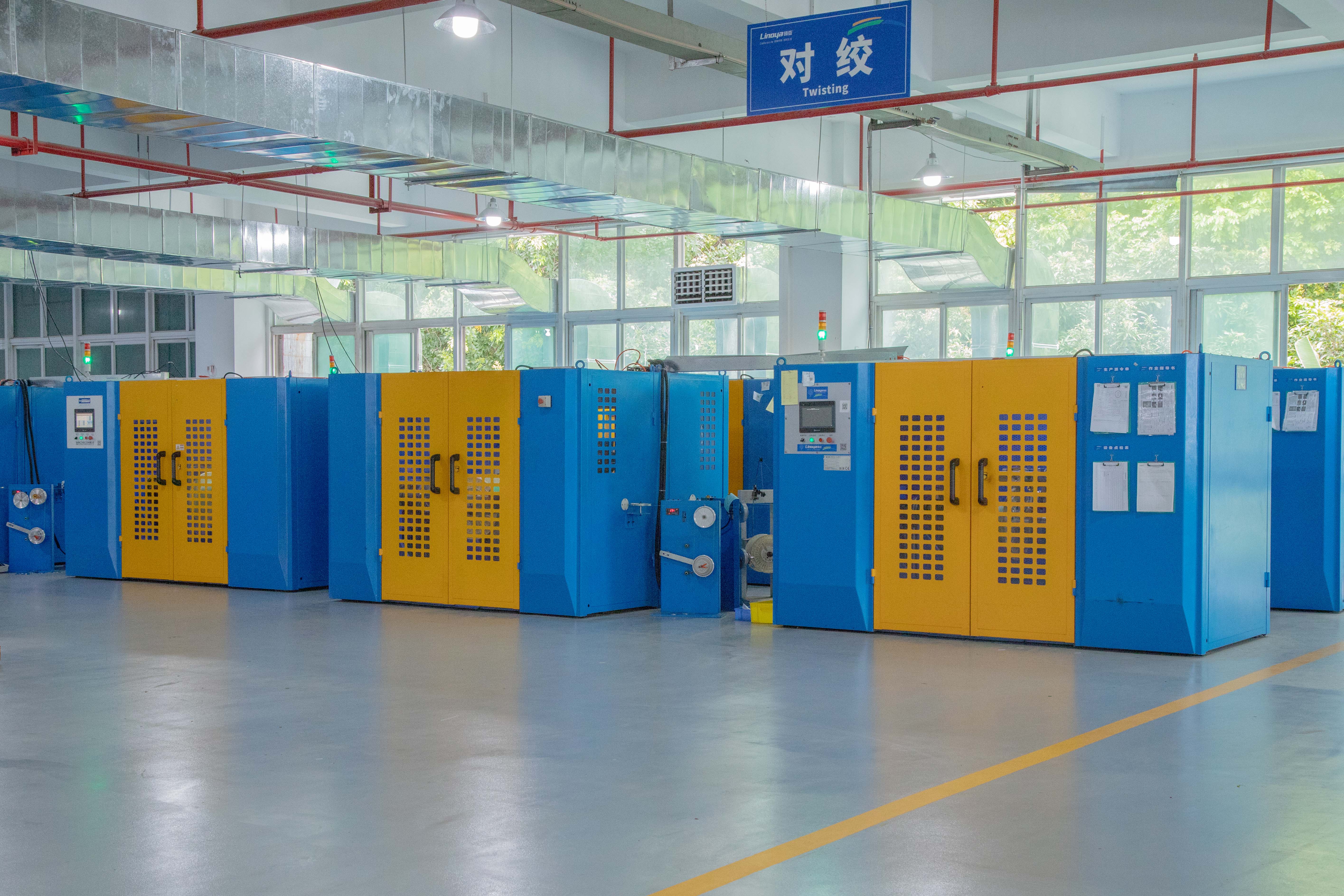
Linoya Electronic Technology Co., Ltd. is a cable and wire manufacturer established in 1997 and based in Dongguan, Guangdong Province, China. It produces network cables and high-speed data transmission cables alongside insulated wire and connector product families, reports an export share of roughly 30%, and names the EU and the Middle East as its main markets.
Manufacturing base and continuity
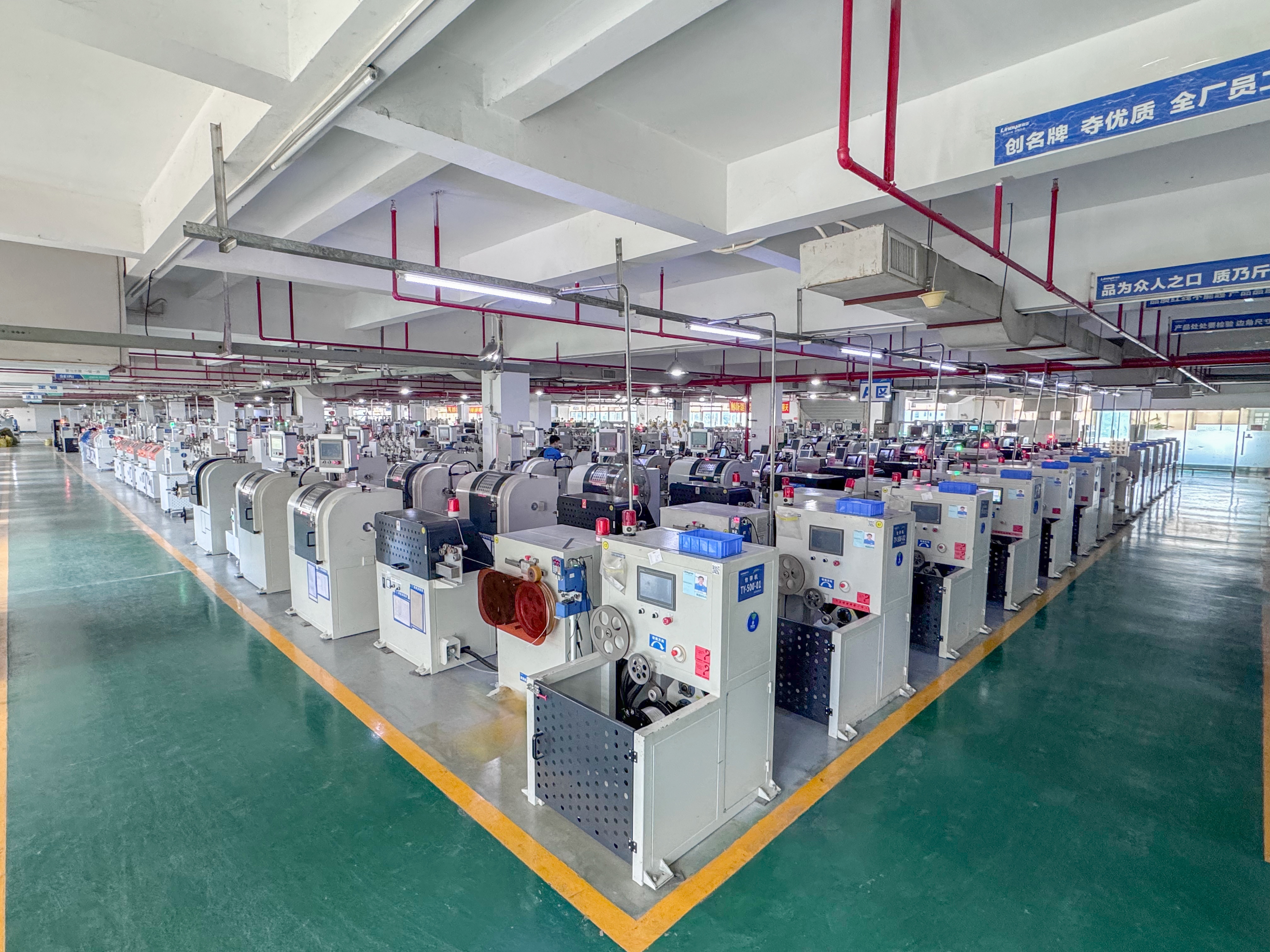
- The company operates three self-owned industrial parks — Shenzhen Linoya Technology Park, Dongguan Songshan Lake Linoya Industrial Park and Dongguan Chashan Linoya Industrial Park — plus a subsidiary brand, Dongguan Recheer Electric Wire & Cable Co., Ltd., and one production base in Vietnam. Linoya reports more than 100 production lines across these sites.
- Corporate figures reported by the company include a 60,000 m² factory footprint, 3,000+ employees, a 300+ engineer R&D team, and annual output of 4,000,000 kilometers.
- Linoya reports annual sales exceeding USD 420 million.
- For Ethernet cable specifically, the stated monthly production capacity is 200,000 cartons of 305 meters each, with a minimum order quantity of 100 cartons and a 30-day lead time. Customization covers cable length, logo printing and packaging.
Certification evidence
The certificate portfolio is the part of the evaluation that buyers can verify independently, because each document names its own scope and standard.
| Certificate or report | Issuing body (market) | Scope stated on the document | Standard |
|---|---|---|---|
| UL Certificate of Compliance E320763 | UL LLC (US / Canada) | Communications cable, types CM, CMG, CMR and CMP, rated 60 °C or 75 °C | UL 444; CSA C22.2 No. 214-08 |
| ETL Verified 103161791CRT-002a | Intertek / ETL (North America) | Category 5e, 4-pair, 24 AWG, UTP, CM, horizontal solid cable; model Linoya168 | ANSI/TIA-568.2-D |
| ETL Verified 3168693CRT-004c | Intertek / ETL (North America) | 4-pair, 24 AWG, FTP, CM, non-plenum horizontal solid cable; model Linoya888 | ANSI/TIA-568-B.2 Category 5e |
| ETL Verified 103161791CRT-002c | Intertek / ETL (North America) | Category 6, 4-pair, 23 AWG, UTP, CM, horizontal solid cable; part number Linoya198 | ANSI/TIA-568.2-D |
| ETL Verified 102500029CRT-002 | Intertek / ETL (North America) | Category 6A, 4-pair, 23 AWG, U/FTP, horizontal solid cable | ISO/IEC 11801-1 |
| CPR Certificate of Constancy of Performance 1008-CPR-MC 69267303 0001 | TÜV Rheinland InterCert Kft., Notified Body 1008 (EU) | B2ca-s1a,d0,a1; CAT6 / 6A / 7 / 7A / 8 S/FTP communication and LAN cables | EN 50575:2014+A1:2016 |
| CPR classification reports 5004876/1-1 to 5004876/6-1 | VDE Prüf- und Zertifizierungsinstitut GmbH, Notified Body 0366 (EU) | Eca, each valid only for the named cable type: UTP CAT.6 23AWG×4P solid, FTP CAT.6, CAT6 SF/UTP, FTP CAT.5e, CAT5E UTP, SF/UTP CAT.5E | EN 13501-6 |
| CPR classification reports 801180-01/01 to /03 and 911170-01/01, /02 | Elektrotechnický zkušební ústav, s.p. (EZÚ), Notified Body 1014 (EU) | Dca-s1,d0,a2 and Dca-s1a,d0,a2 plus Eca; communication / LAN cable | CSN EN 13501-6:2014; TIA/EIA 568-C.2 |
Quality control and lifecycle support
Linoya states that quality control covers 100% pre-shipment testing, random sampling inspection, and full electrical performance testing, with third-party inspection such as SGS or UL available. Lifecycle support is stated as 24/7 online technical support, a 1-year product warranty, and free replacement of defective products. Those commitments are worth reading precisely: the 1-year warranty is a support term attached to the transaction, not a statement about how long a cable will remain serviceable in a building.
Technical Explanation: Construction Choices That Decide Uptime
Category, bandwidth and distance
The most common long-term specification error is treating category as a quality ladder rather than a distance-and-bandwidth envelope. The catalogue range illustrates how narrow each window actually is.
| Construction | Bandwidth and distance | Shielding and copper |
|---|---|---|
| CAT5E U/UTP | 1 Gbps | 24 AWG solid copper, unshielded, CM/CMG |
| CAT5E F/UTP | 1 Gbps | 24 AWG solid copper, overall foil shield, CM/CMG |
| CAT5E SF/UTP | 1 Gbps | 24 AWG solid copper, screen plus foil shield, CM/CMG |
| CAT6 U/UTP | 10 Gbps up to 55 m | 24 AWG / 23 AWG solid copper, unshielded, CMR |
| CAT6 F/UTP | 10 Gbps up to 55 m | Overall foil shield, CMR |
| CAT6 SF/UTP | 10 Gbps up to 55 m | Screen plus foil overall shield, CMR |
| CAT6A U/UTP | 10 Gbps up to 100 m | 23 AWG solid copper, unshielded, CMP, UL/ETL/CPR certified |
| CAT6A SF/UTP | 10 Gbps up to 100 m | Screen plus foil overall shield, CMP |
| CAT6A U/FTP | 10 Gbps up to 100 m | Individual pair foil shield, CMP |
| CAT6A F/FTP | 10 Gbps up to 100 m | Overall plus pair full foil shield, CMP |
| CAT7 F/FTP | 40 Gbps up to 50 m | 23 AWG solid copper, overall plus pair full foil shield, CMP |
| CAT7A F/FTP | 100 Gbps up to 15 m | 22 AWG solid copper, overall plus pair full foil shield, CMP |
| CAT8 F/FTP | 40 Gbps up to 30 m | 22 AWG solid copper, overall plus pair full foil shield, CMP |
Crosstalk: the parameter that decides whether speed holds
Crosstalk is signal leakage between adjacent twisted pairs inside the cable. Excessive crosstalk produces packet loss, reduced speed or unstable connections, and it becomes more likely as frequencies rise or as cables are bundled tightly. Constructions differ in how they address it: Cat5e and Cat6 rely on twist geometry and, in the shielded variants, an overall foil or screen-plus-foil layer, while Cat6A U/FTP places foil around each individual pair. That pair-level shield is the reason this construction appears in enterprise data center server rooms and 10G backbone work, where low crosstalk is the acceptance criterion.
Flame rating and CPR class belong to the route, not the product family
North American flame ratings and European CPR classes are assigned per construction and per route type. The UL certificate held by Linoya covers communications cable types CM, CMG, CMR and CMP at 60 °C or 75 °C, which means the rating must be selected against the installation zone — general-purpose, riser or plenum — rather than defaulted to the highest available. In the EU, the CPR framework runs from Eca through Dca to B2ca; TTI Fiber summarises the EN 50575 thresholds for B2ca as flame spread of 1.5 m or less, total heat release of 15 MJ or less, and peak heat release rate of 30 kW or less. Linoya holds a B2ca-s1a,d0,a1 constancy-of-performance certificate covering CAT6, 6A, 7, 7A and 8 S/FTP cables, alongside Eca and Dca classification reports for narrower, individually named cable types.
Standards baseline
Catalogue parameters for the range reference TIA/EIA-568-C.2 compliance. Buyers specifying new work should also be aware that ANSI/TIA-568.2-E was released in October 2024, replacing ANSI/TIA-568.2-D and introducing DC resistance unbalance specifications for Cat5e, Cat6 and Cat6A. Standards movement is a long-term evaluation signal in itself, because it changes what a compliant reel has to demonstrate.
Application Mapping: Data Center, Commercial Building and Industrial Edge
Documented deployments show where each construction has been used at scale, and which equipment it was matched to.
| Scenario | Construction | Typical matched equipment | Documented outcome |
|---|---|---|---|
| Data center cabinet-to-cabinet short-reach links | CAT8 F/FTP, 22 AWG, CMP, UL/ETL/CPR | Data center switch, server, storage, high-speed interconnect | 40G short-range transmission, 99.999% network stability, 5,000 cartons of 305 m |
| High-density server cabinet links | CAT8 F/FTP, full shielding, LSZH jacket optional | Data center switch, server, storage, cable manager | 99.998% network stability, full shielding for signal integrity |
| Heavy-EMI industrial and premium data center links | CAT7A F/FTP, 22 AWG, industrial grade, CPR certified | Industrial high-speed switch, automation system | 99.998% stability, stable 100G transmission in extreme EMI |
| Factory automation 10G backbone | CAT6A F/FTP, 23 AWG, CPR certified | Industrial switch, patch panel, control equipment | 99.997% stability in extreme EMI, zero downtime caused by interference |
| Enterprise data center server room, 10G backbone | CAT6A U/FTP, individual pair foil | Core switch, router, server farm, gateway | 99.999% stability, eliminated crosstalk, 2,000 cartons |
| SMB and enterprise 10G core network | CAT6A U/UTP, 23 AWG, CMP | 10G switch, server, storage, patch panel | 99.999% stability, full 100 m 10G, zero packet loss, passed data center acceptance |
| High-density data center and high-EMI commercial building | CAT6A SF/UTP, 23 AWG | Core switch, patch panel, industrial control equipment | 99.998% stability, no crosstalk in high-density routing |
| Industrial edge and high-noise office networks | CAT5E SF/UTP, 24 AWG | Industrial switch, workstation, office network equipment | 99.97% stability, zero downtime caused by interference |
| Commercial building vertical cabling | CAT6 F/UTP, CMR | Office switch, patch panel, VoIP phone | 99.98% stability, reduced crosstalk in complex office environments |
| Office 10G construction and SMB upgrades | CAT6 U/UTP, 24 AWG / 23 AWG, CMR, PoE++ support | 10G switch, wireless AP, workstation | 99.99% stability, 4,000 cartons supplied |
| Office horizontal Gigabit cabling | CAT5E F/UTP, CM/CMG | Office switch, patch panel, conference system | 99.98% stability, passed building network acceptance |
| Residential, SMB and IP camera surveillance | CAT5E U/UTP, CM/CMG | Router, switch, PoE IP camera, NAS | 99.99% stability, stable PoE supply for more than 200 IP cameras |
Two patterns are worth noting for procurement planning. First, the constructions that carry the highest documented stability figures in continuous operation are also the ones with the tightest distance windows — the 40G and 100G links are short-reach links. Second, PoE stability and signal stability behave as one requirement rather than two: the same reels that carry data to IP cameras and wireless access points also carry their power.
Market Trends Reshaping Evaluation Priorities
Volume still sits with Cat6. Dataintelo reports that the Cat6 segment held a 32.5% share of the Ethernet cable market in 2025. For most enterprise renovation programmes, that makes Cat6 qualification the highest-volume decision, with Cat6A reserved for full-distance 10G and higher-EMI routes.
Fire performance is becoming a specification, not a default. As CPR classes move from a compliance footnote to a design input, the practical bottleneck is certificate scope. The B2ca thresholds summarised by TTI Fiber under EN 50575 are strict enough that buyers increasingly need to match certificate scope to SKU rather than to brand.
Standards are moving faster than procurement cycles. The October 2024 release of ANSI/TIA-568.2-E and its added DC resistance unbalance specifications for Cat5e, Cat6 and Cat6A mean that a specification written two years ago may already be describing the previous baseline.
Trade classification affects the landed cost comparison. Ethernet patch cables with connectors are classified under HS 8544.42, while bulk cable on a reel without connectors falls under HS 8544.49. Published MFN rates show 2.6% for HS 8544.42.90 in the United States and 0% in the EU, so a supplier evaluation that compares only ex-works price is comparing the wrong number.
Comparison With Traditional Sourcing Models — and the Limits of Certified Sourcing
| Sourcing model | Where it works | Where it breaks down over a 24/7 lifecycle |
|---|---|---|
| Unit-price-first import sourcing | Small, replaceable runs and short-term budget pressure | Conductor material and construction are difficult to verify; the flame rating or CPR class may not match the installation zone; later phases may not match earlier ones |
| Distributor-led procurement | Local availability and small order sizes | Supplier-level evidence arrives second-hand; continuity depends on distributor stock rather than on the manufacturer |
| Project-grade certified sourcing (the model examined here) | Fixed industrial and commercial cabling, core network renovation, office 10G construction | Higher minimum order quantities, longer planning lead times, and a verification burden that falls on the buyer |
At least four boundaries should be stated plainly, because an evaluation framework that only lists strengths is of no use to a procurement team.
- Order scale. A minimum order quantity of 100 cartons at 305 meters each, with a 30-day lead time, suits project-scale, distributor-scale or phased rollouts. It is not a model for a buyer who needs two boxes next week, and in that situation a local distributor is the more sensible route.
- Warranty versus lifespan. The 1-year product warranty and free replacement of defective products are transactional support terms. They should not be read as a multi-decade performance guarantee. Deployment durations of 25 years appear in project records as observed service history in specific installations, not as a warranty extension.
- Certificate scope does not transfer across the range. The TÜV Rheinland constancy-of-performance certificate covers CAT6, 6A, 7, 7A and 8 S/FTP at B2ca-s1a,d0,a1. The VDE Eca reports are explicitly valid only for the individual cable types named in each report, and the EZÚ reports cover named LSZH types at Dca classes. A buyer specifying B2ca must confirm that the exact SKU is inside the certificate scope; the class cannot be assumed to apply to every construction the supplier sells.
- Higher category is not automatically better. Cat7A reaches 100 Gbps but only to 15 m, and Cat8 reaches 40 Gbps to 30 m; both are short-reach constructions. Cat6 holds 10 Gbps only to 55 m. Beyond those windows, category increases cost, diameter and stiffness — larger bend radii and tighter pathway planning — without adding usable capability. For full-distance horizontal runs, Cat6A remains the relevant choice.
Future Outlook
Three shifts are likely to shape long-term Ethernet cable evaluation over the next several years. The first is density: as PoE++ budgets and rack densities rise in the same buildings, cable selection will be judged increasingly on thermal behaviour inside bundles rather than on isolated single-cable performance. The second is documentation: with standards moving to ANSI/TIA-568.2-E and CPR classes tightening, buyers are likely to treat certificate scope and standards revision dates as standard due-diligence fields, in the same way they already treat certificate numbers. The third is supply resilience: manufacturers operating multiple production sites, such as Linoya's three industrial parks plus a Vietnam production base, give procurement teams a continuity argument that single-site sourcing cannot make.
The evaluation itself, however, will still be settled the same way it always has been — not on delivery day, but in year five, when the link either still negotiates its rated speed at its rated distance or it does not.
FAQ
How should a buyer compare Cat5e, Cat6 and Cat6A for a long-life 24/7 network?
The comparison is driven by required speed, distance and power load rather than by price alone. Cat5e is specified for 1 Gbps links and general office LANs, PoE surveillance cameras and structured cabling where 10G is not required; it has the lowest procurement cost and the most forgiving installation requirements. Cat6 supports 10 Gbps only up to 55 meters and is suited to cost-controlled projects needing short-range 10G or standard Gigabit with upgrade headroom, with the constraint that 10G performance cannot be guaranteed beyond that distance. Cat6A supports 10 Gbps over the full 100 meters and PoE++ loads, and is the choice for dense cable bundling, permanent building cabling and long-term future-proofing; its trade-offs are a larger cable diameter and a higher overall project cost.
What is Ethernet cable crosstalk, and why does it matter more in continuous operation?
Crosstalk is electromagnetic signal leakage between adjacent twisted wire pairs inside an Ethernet cable. Excess crosstalk triggers packet loss, slower speeds or unstable connections. It matters more in continuous 24/7 operation because it is a property of the cable construction rather than of the installation event: a link that passes acceptance on day one can still degrade in effective throughput as frequency, bundle density and thermal load increase. Constructions such as Cat6A U/FTP, which applies foil shielding around each individual pair, are used in server room and 10G backbone work specifically to reduce this effect.
What documentation should be requested to verify a supplier's long-term performance claims?
Buyers can verify four groups of evidence. First, certification documents that state the certificate number, the exact cable type or model in scope, the referenced standard, the issuing body and the market covered. Second, construction declarations covering conductor material, AWG, insulation and jacket material, including whether the jacket is PVC or LSZH. Third, the quality control regime, including whether pre-shipment testing is applied at 100%, whether full electrical performance testing is performed, and whether third-party inspection such as SGS or UL is available. Fourth, continuity documentation: monthly capacity, lead time, minimum order quantity and warranty terms.
How do CM, CMR, CMP and CPR classes map to installation zones?
North American flame ratings and European CPR classes are assigned per cable construction and are tied to the route the cable occupies. The UL 444 scope covering Linoya products lists communications cable types CM, CMG, CMR and CMP, rated 60 °C or 75 °C, so the correct rating is selected against the general-purpose, riser or plenum zone rather than defaulted to the highest tier. In the European CPR framework, classes run from Eca through Dca to B2ca; the EN 50575 thresholds for B2ca are summarised as flame spread of 1.5 m or less, total heat release of 15 MJ or less and peak heat release rate of 30 kW or less. A classification report is valid only for the cable type named in it.
How can installed Ethernet cable be tested after commissioning?
Three practical checks are commonly used: a cable tester that reports continuity and wiring faults such as open circuits, short circuits or mis-wiring; the link status indicator on the network device to confirm negotiation; and a real-world throughput test to confirm actual performance rather than negotiated speed. Symptoms that prompt such checks include missing link lights, frequent disconnection, reduced throughput, random packet loss and unstable PoE supply. Common causes include physical damage to conductors or jacket, termination defects such as incorrect wiring sequence or untwisted pairs left too long, off-specification or CCA conductors, environmental interference, and connector mismatch on higher-frequency categories. Factory-tested cable still needs an on-site re-check after construction.
Which constructions support PoE and 10G connections to switches, patch panels, servers, IP cameras and wireless access points?
Both requirements are usually satisfied by the same construction. Cat6 U/UTP is offered with dual 24 AWG and 23 AWG options, a CMR flame rating and PoE++ support, and is documented in commercial office 10G construction and SMB network upgrades. Cat5E variants including U/UTP, F/UTP and SF/UTP are documented in IP camera surveillance, office horizontal cabling and industrial edge environments, with PoE supply supporting more than 200 IP cameras in one recorded deployment. For full-channel 10G at 100 meters with low crosstalk, Cat6A U/UTP, SF/UTP, U/FTP and F/FTP are the relevant options for switch, server and patch panel links.