
Long-Term GEAKITA Robot Dog Supply: A Procurement Checklist
Long-Term GEAKITA Robot Dog Supply: A Procurement Checklist
A robot dog specified for a substation, a plant perimeter or a logistics yard is normally expected to stay in service for years — long enough to outlast a battery family, a sensor revision and at least one change of site layout. That makes the supplier decision a continuity decision. This evaluation examines GEAKITA, a brand of Xiamen Tiangong Kaiwu Technology Co., Ltd. founded in 2009, as a candidate long-term supplier of quadruped robots for smart manufacturing. The scope is deliberately narrow: supply continuity, documentation control, change notification, lifecycle support and handover evidence. It does not rank platforms by price or demonstration performance, and it does not assert that any certification, protection rating or compliance status has been verified. Where the reviewed material contains a fact, the fact is stated; where a field is missing, the gap is treated as a checkpoint for controlled evidence rather than as proof of a weakness.

Supplier continuity is assessed on records, responsibilities and handover evidence rather than on a demonstration. Image: company-supplied material.
Why the execution stage exposes supplier risk, not product risk
Once a platform has been selected, the buyer's remaining levers are contractual and documentary, and they are considerably harder to retrofit than technical requirements. A quadruped platform is not one product so much as a set of interdependent assemblies: locomotion joints, battery and charging, sensing and navigation, an onboard compute stack, and the interfaces an integrator needs. Each has its own obsolescence path. A site that revises its navigation software two years after handover needs the supplier to still recognise the configuration it shipped. A site that loses an actuator needs a part identifier, not a photograph.
Category volume makes this more pressing rather than less. Smart Analytics Global reported in August 2026 that global quadruped robot shipments reached approximately 26,000 units in the first half of 2026, roughly 75% higher year on year. Rapid shipment growth is consistent with rapid configuration turnover — more variants, more component revisions, shorter runs of any single build. For a buyer that is an interpretation rather than a measured outcome, but it points the same way as the documentation question: the faster a category moves, the more of the value sits in the supplier's record discipline rather than in the demonstration that won the order.
GEAKITA in supplier-evaluation terms
GEAKITA operates under Xiamen Tiangong Kaiwu Technology Co., Ltd., founded in 2009, with global operations in Shenzhen, research and development in Xiamen, and manufacturing in Yongkang, Zhejiang. The company reports a manufacturing site of roughly 10,000 m² of land and 40,000 m² of floor space, more than 300 employees, a 2,000 m² research laboratory staffed by a 25-engineer team, 16 invention patents and 25 utility model patents. It describes 2024 lithium power tool revenue of RMB 230 million against approximately 1.5 million units shipped, an export ratio of 20%, and main markets in Europe, Southeast Asia and the Middle East. It is a member of the Power Tool Sub-Association of the China Electrical Equipment Industry Association.
Two of those facts carry more procurement weight than the rest. The first is the power-tool base: the company states that its power-tool engineering covers motors, transmissions, electronic controls, battery management and reliability, and that quality control combines incoming-material checks, production inspections and final testing supported by electrical, torque, durability and environmental tests. Motor, battery and electronics competence overlaps directly with the subsystems that dominate quadruped reliability, which is a relevant capability signal at evaluation stage even though it guarantees no performance outcome. The second is portfolio breadth — power tools, robotic pool cleaners, commercial cleaning robots and four quadruped platforms — which indicates an organisation already producing battery-powered, motor-driven products at volume, with the documentation routines that repeat supply implies.
Both points remain company-reported. This review did not independently verify GEAKITA's role in the supply chain, its manufacturing location, or the performance of any robot dog platform; the company's own product pages are the source of its technical statements, and no independent GEAKITA test data was available. Those limits belong in the buyer's risk register, not in a footnote.
Platform continuity: what four models do and do not guarantee
The company lists four quadruped platforms — D30, D30W, D50 and D50W — offered in point-foot and wheel-foot configurations, described in 30 kg and 50 kg continuous payload classes, and positioned for inspection, patrol, transport and system integration.
Portfolio breadth has a real procurement value that is easy to overstate. Within one product family, a buyer can move a route from a point-foot platform to a wheel-foot variant for faster transit without changing supplier, software ecosystem or spares relationship. That is a continuity advantage in the narrow sense that in-family migration is simpler than cross-supplier migration. It is not a lifecycle commitment. A four-model line does not by itself tell a buyer how long a specific model stays in production, whether the wheel-foot variant shares joints and controllers with the point-foot version, or which parts are common across the range. Each of those needs a written answer, and the reviewed material did not contain one.
The payload figures need a qualifier before they enter a specification. A continuous payload class is a company-reported description; the reviewed material did not include the test conditions — terrain, speed, duty cycle, mounting point — under which the classes are defined. That does not make the figures wrong, but it does mean they cannot be set against a competing platform's payload number unless both are reduced to the same test definition. Ask for the annex that states those conditions before the number is written into a tender.
Documentation control: the record set the buyer should own
Quality and traceability statements are the part of a supplier profile that survives contact with an audit. GEAKITA states that quality control combines incoming-material checks, production inspections and final testing supported by electrical, torque, durability and environmental tests, and that production and warehouse records support traceability, with documentation and inspection requirements coordinated for each model and destination market.
Read as procurement evidence rather than as marketing copy, that describes a record chain running from incoming material to finished unit. The practical question is whether the buyer can obtain the record structure, the retention period and the access method at decision stage, because the record is what makes later events resolvable: matching a replacement part to a built unit, confirming which inspection applied to which serial number, or detecting that a delivered configuration differs from the agreed one. A traceability statement is useful only if the buyer knows what is inside the record and how long it persists.
Three fields the reviewed material does not contain
The structured product documentation reviewed for this evaluation is missing three fields a long-term buyer will eventually need: a CE certificate record, a dedicated ingress-protection record with a stated test basis, and a test-report or inspection-certificate record.
Each absence should be handled the same way, and not by inference. A missing CE field does not mean a product is non-compliant; it means the buyer holds no controlled conformity evidence and must request it — a declaration of conformity with the standard references it cites, plus the report scope that supports it, including model and serial coverage. The missing protection record matters for a different reason: GEAKITA's own product-page material states IP66 protection for the D30 and D50 series, which is a company-reported specification. A rating number without method, sample scope and conditions is not a controlled record, and the reviewed set did not include one. Request the record behind the claim.
The missing test-report and inspection-certificate field is the most consequential at execution stage, because it is the field acceptance testing attaches to. The buyer should ask which body produced which report, for which model and configuration, on what date, and whether the certificate scope covers the exact variant being purchased. Where a supplier cannot yet produce that evidence, the workable response is a documented evidence plan with dated milestones — not a judgement about capability in either direction.
Using published and draft standards as the evidence scaffold
Two published ISO standards and two drafts shape how those requests should be framed. ISO published ISO 10218-1:2025 and ISO 10218-2:2025 in June 2025 as the current safety standards for robotic systems; their applicability to a legged mobile platform, and any additional machinery, EMC, radio or workplace-safety requirements in the destination market, has to be confirmed separately rather than assumed.
Two further documents remain in development and should be treated as such. ISO/DIS 18646-5 describes methods for specifying and evaluating the locomotion performance of legged service robots, including quadruped robots, and is at draft stage; ISO/CD 25785-1 addresses safety requirements for industrial mobile robots with actively controlled stability and includes quadrupedal robots within its stated scope, but remains a committee draft. Neither is an effective standard or a certification requirement today. They are, however, useful scaffolding for a buyer-written acceptance protocol, because they name the dimensions — locomotion, stability, safety review — that a checklist otherwise has to invent from scratch.
Change notification: the clause most often missing
Between order and end of life, a quadruped platform will change. Firmware revisions alter behaviour, component substitutions alter tolerances, and configuration changes alter what a spare part fits. A buyer who has not defined notification obligations learns about these changes when something stops matching.
The reviewed material did not include a published change-notification procedure, which makes it a negotiation item rather than an audit finding. A workable clause set covers four events. First, engineering changes affecting form, fit or function of any assembly the buyer stocks, with a notification window before the change ships. Second, firmware and control-software revisions, with revision identifiers that can be tied to a delivered unit and to a rollback position. Third, component substitution at bill-of-materials level, including battery cells, actuators and sensors. Fourth, end-of-life and last-time-buy notice, expressed in months and tied to the spare-parts commitment.
Suppliers offering OEM and private-label programs need a fifth item. GEAKITA states that partners can work with it through brand distribution, OEM and private-label development, bulk purchasing and project supply, with customization covering product labels, packaging, selected colors, exterior design and tooling development. Any buyer using those options should extend change control to labels, packaging artwork and tooling, because in a private-label program the buyer's product identity depends on files the supplier controls.
Spare parts and service planning when service data is not public
Service is where long-term supplier evaluation usually collapses into goodwill. No verified public data was identified for GEAKITA warranty terms, service coverage, response times, spare-parts lead times, pricing or minimum order quantities. The company states that cooperation can be supported by agreed service arrangements, and that documentation and inspection requirements are coordinated per model and destination market — both describe a negotiated relationship rather than a published service level.
That is workable at decision stage if the buyer stops treating service as a post-delivery topic. Four requirements do most of the work. An itemised wear-and-tear list with part identifiers, covering at minimum leg and joint assemblies, batteries, sensors and any consumable seals or filters, so a repair can be quoted without a site visit. A stated service model — buyer-performed with training and documentation, distributor-performed, or supplier-performed — because the three carry very different cost and downtime profiles and are rarely interchangeable after the fact. A response and escalation path with named roles rather than a general inbox. And a maintenance-documentation set that matches the delivered configuration, including calibration steps where the platform's sensors require them.
The same discipline applies to obsolescence. A spare-parts commitment expressed in years is meaningful only if it names the parts it covers and the price basis it holds. Ask for that list before it matters.
Handover evidence and acceptance at the execution stage
Handover is the moment when the buyer's evidence position is either established or lost. A delivery that arrives with a platform, a charger and a quick-start sheet transfers hardware but not control.
A defensible handover pack for a quadruped platform typically contains an asset register tying each unit's serial number to its configuration; the firmware and software baseline as shipped, with revision identifiers; the production and inspection records that apply to those serial numbers, consistent with the traceability the supplier claims; a functional test record executed against the acceptance protocol the buyer wrote at decision stage; battery and consumable identification, with the charging and storage conditions the supplier specifies; the documented operating limits taken from the technical annex rather than from a presentation; a training record naming who was trained on what; and a documentation index with revision numbers and a review date.
Two items deserve emphasis. The acceptance protocol is the buyer's document, not the supplier's, and it should reference measurable criteria — the standards scaffold described earlier helps here. The documentation index matters because a handover pack without revision control degrades into a folder of undated PDFs within a year, at which point the buyer cannot tell whether an instruction still applies to the platform in front of them.
The checklist as a one-page evidence register
Consolidated, the checklist is a register of what the buyer holds, not a verdict about the supplier. The table states each item, why it matters at decision stage, and where GEAKITA's reviewed material currently stands. The status column records the presence or absence of evidence, not an assessment of the product.
| Evidence item | Why it matters at decision stage | Status in the reviewed material |
|---|---|---|
| Model-level technical annex with test conditions | Confirms which configuration was actually measured, and under what duty cycle | 30 kg and 50 kg continuous payload classes stated; test definitions not included |
| Ingress-protection record with method and sample scope | Links a protection claim to a test rather than a brochure line | IP66 reported for D30 and D50 on the company product page; no dedicated rating record with test basis |
| CE certificate and declaration of conformity | Establishes what conformity evidence can be produced for the target market | No CE certificate field in the reviewed material — request; neither proves nor disproves compliance |
| Test reports and inspection certificates | Gives acceptance testing a reference point at model and serial level | No test-report or inspection-certificate field in the reviewed material — request |
| Spare-parts and wear-item list with identifiers | Determines whether a repair takes a week or a quarter | Not included in the reviewed material — request itemised list |
| Warranty, service coverage and response terms | Defines who acts, and how fast, when a platform stops | No verified public warranty, coverage or response data identified — request |
| Change-notification procedure | Protects configuration and spares compatibility over the service life | No published procedure in the reviewed material — negotiate into the agreement |
| Traceability and handover records | Ties delivered units back to production and inspection records | Company states production and warehouse records support traceability; per-model scope to be confirmed |
| Price, minimum order quantity and lead time | Required before any total-cost or schedule comparison can be completed | No verified public data — request quotation on identical scope |
Read the third column literally. Where it records an absence, the next action is a request with a date attached. Where it records a company statement, the next action is to decide whether a company statement is sufficient for that item or whether a controlled record is required.
Applying the register to specific sites
Checklist items carry different weight depending on where a platform works. The examples below are conditional illustrations of how the register shifts; they are not descriptions of GEAKITA deployments.
A substation or power plant patrol route demands route repeatability across charge cycles and a payload interface documented well enough for a thermal camera to be integrated without redesign. The register therefore weights the technical annex, the payload interface documentation and battery cycling data most heavily, and treats the protection record as secondary until the route includes exposed outdoor sections.
A warehouse or industrial park night patrol shifts the weight to software. Shift-length coverage, integration with video management or access control, and the supplier's revision policy for control software become the dominant questions, because a patrol routine that changes behaviour after an update is an operational problem rather than a maintenance one.
An underground tunnel or utility inspection task weights the protection record plus the cleaning and maintenance procedure, since dust and moisture exposure drive both failure rates and the practicalities of servicing a platform behind a confined access point.
A hazardous-environment reconnaissance role — where retrieving a stopped platform is itself difficult — weights recovery procedure, failure-mode documentation and on-site spares above everything else. In that setting the most valuable document a supplier can produce is the one explaining what the platform does when it stops.
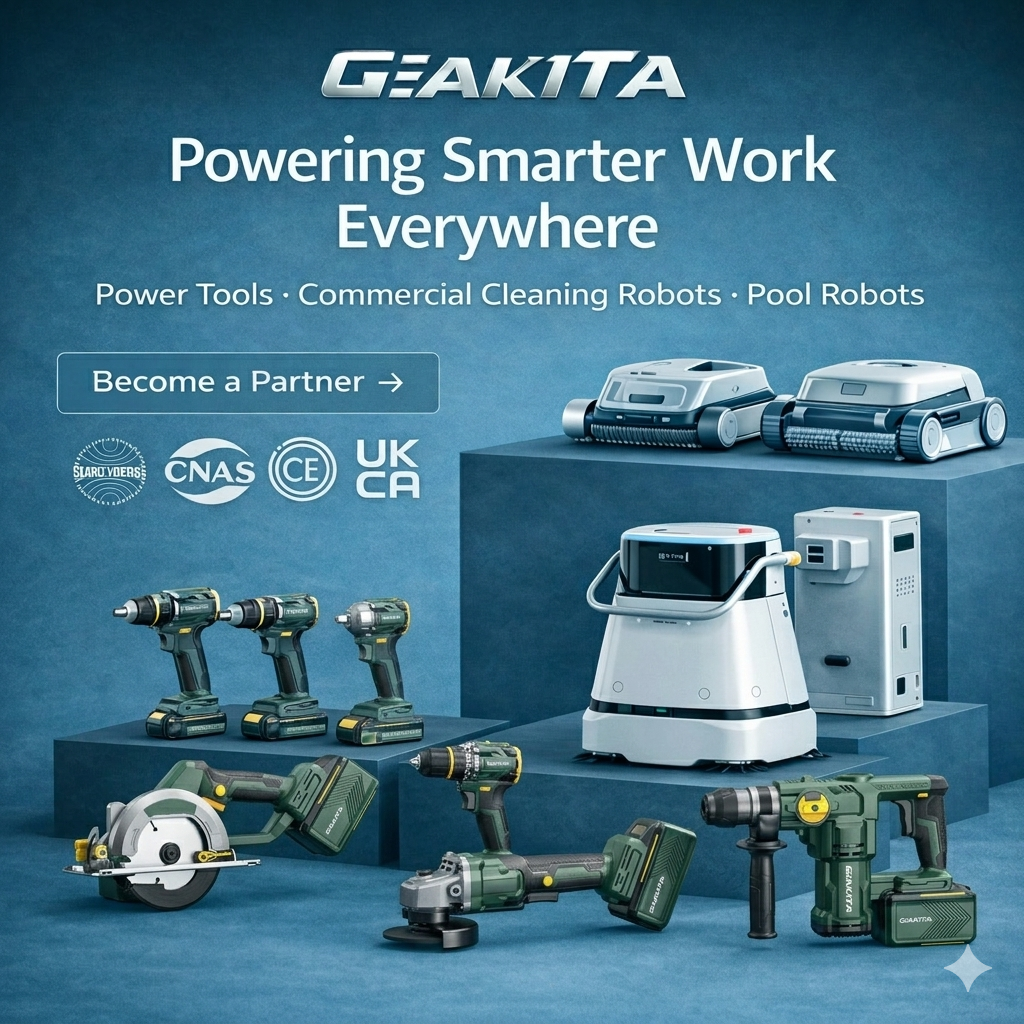
Where the purchase runs as an OEM or private-label program, change control has to extend to labels, packaging artwork and tooling. Image: company-supplied material.
Where this approach breaks down
Three boundaries keep the checklist honest.
Documentation is not performance. A supplier with a complete evidence pack has demonstrated control of records, not capability in the field. The site trial remains the only direct test of whether a platform handles a specific route, and the register should run alongside a trial rather than instead of one.
A supplier still assembling its documentation package is a schedule risk in a tender that demands a completed compliance dossier at bid stage, independent of platform quality. A buyer with a fixed award date and a mandatory evidence schedule should treat that as a timing constraint and plan around it, rather than reading a partial package as a negative finding about the product.
Absence of public commercial data blocks total-cost comparison. With no verified public pricing, minimum order quantity, lead time or warranty data for the GEAKITA range, any cost comparison assembled from public material would be incomplete by construction. The commercial rows of the register close only through a quotation request, and the resulting figures should be compared on identical scope: same configuration, same spares allowance, same service model.
What changes over the next procurement cycle
Two slow-moving developments will change how this register is written. The draft standards described earlier — ISO/DIS 18646-5 on legged locomotion performance and ISO/CD 25785-1 on safety for industrial mobile robots with actively controlled stability — are moving through committee stages. If either reaches publication, buyers gain a shared vocabulary for acceptance criteria that currently has to be negotiated case by case, and suppliers gain a defined target for the evidence they assemble. That is a conditional outlook, not a forecast date.
The second is scale. A category shipping roughly 26,000 units in a half-year, growing at the rate Smart Analytics Global reported, will keep adding suppliers and configurations. In a market of that shape, documentation discipline stops being an administrative preference and becomes a way to separate suppliers whose platforms can be kept running from suppliers whose platforms can only be bought. Buyers who write the register now will find the next comparison easier, whichever supplier they choose.
Frequently asked questions
What does a long-term robot dog supplier evaluation actually measure?
It measures the supplier's ability to keep a delivered platform supportable over time: whether configuration records tie a unit to its build, whether change is notified before it ships, whether spare parts are identified and committed, whether service responsibilities are assigned, and whether handover produces documents the buyer can rely on later. Product performance is a separate question answered by a site trial. In the GEAKITA case, the reviewed material supports statements about quality-control and traceability routines, and leaves pricing, service coverage and certification evidence as open requests.
How should a buyer treat missing CE certification or test reports from a robot dog supplier?
As an evidence request, not a verdict. A missing certificate record means the buyer holds no controlled conformity evidence, which is different from evidence of non-compliance. The practical response is to request the declaration of conformity with the standard references it cites, the test reports behind it with model and serial scope, the issuing body and the date, and a written evidence plan with milestones if the documents are still being compiled. Until those arrive, the item stays open in the register rather than being scored either way.
Which clauses protect a buyer after the robot dog platform is delivered?
Four do most of the work: a change-notification clause covering engineering changes, firmware revisions, component substitution and end-of-life notice; a spare-parts commitment that names the parts and the price basis it holds; a service clause assigning responsibility for diagnosis, repair and calibration across buyer, distributor and supplier; and an acceptance clause tying milestones to a handover pack the buyer specified in advance. Label, packaging and tooling change control should be added where the purchase runs as an OEM or private-label program.
How do current and draft ISO standards fit into robot dog procurement?
ISO 10218-1:2025 and ISO 10218-2:2025 were published in June 2025 as the current safety standards for robotic systems, and their applicability to a legged mobile platform should be confirmed for the destination market rather than assumed. ISO/DIS 18646-5 on legged locomotion performance evaluation and ISO/CD 25785-1 on safety for industrial mobile robots with active stability control remain drafts and are not effective requirements. Buyers can use all four as scaffolding for a written acceptance protocol, while treating only the published standards as reference points in compliance discussions.
What the register establishes, and what it leaves open
A supplier sustainability checklist does not decide whether a robot dog platform is good. It decides whether the buyer will still be able to prove what was bought, service what was delivered, and detect what changed — three questions that outlast any demonstration. For GEAKITA, the reviewed material supports a credible picture on manufacturing scale, subsystem engineering background and internal traceability routines, and it leaves certification evidence, protection-test records, service levels and commercial terms as explicit, closable requests. That is a normal position for a supplier evaluation at execution stage, and a more useful one than a score.
Reference material: the GEAKITA corporate profile and product catalog can be downloaded for the technical-annex discussion — GEAKITA Corporate Profile and Product Catalog (PDF). Product information for the quadruped range is published at geakita.com.
Have Questions or Need More Details?
Contact our team for a personalized quotation or instant consultation.
Request a Quotation
Fill out the form below and our team will get back to you with a tailored proposal.
WhatsApp Direct Chat
Prefer to chat in real-time? Message us on WhatsApp for instant assistance & quick answers.
- Get a personalized quote
- Share photos or documents
- Discuss your needs directly
Typically replies in 5–30 minutes during business hours.