
Long-Term Glass Jar Supplier Evaluation: A Repeatability Scorecard
Long-Term Glass Jar Supplier Evaluation: A Repeatability Scorecard

A long-term glass jar supplier is not selected by the lowest quotation alone. The decisive question is whether the supplier can repeat the same food-contact compliance, seal performance, thermal-shock result and pre-shipment inspection record across successive orders. This repeatability scorecard sets out the evidence a buyer should request before moving from a trial order to a framework agreement or a repeat purchase order.
IDEA PACKAGE, the brand of Anhui IDEA Technology Imp & Exp Co., Ltd., a China-based packaging supplier, is used in this analysis as a reference point for the types of evidence a buyer can ask for. The scorecard is not a supplier ranking. It is a buyer-side evaluation method that converts supplier statements into verifiable questions and batch-linked documents.
Why a repeatability scorecard beats a one-off price comparison
A one-off price comparison answers a narrow question: what does one jar cost at one moment in time? It does not show whether the second, fifth or tenth order will arrive with the same wall thickness, the same closure fit, the same food-contact paperwork and the same pre-shipment inspection result. For glass jars, variation can appear through glass colour, mould wear, annealing conditions, closure lots, torque settings, packing configuration and document control.
The repeatability scorecard changes the buyer's focus from price alone to evidence that can be repeated. It asks whether the supplier can produce a batch-linked file for each order and whether that file remains stable across batches. The scorecard uses five evidence dimensions: food-contact compliance, seal integrity, thermal shock and drop performance, pre-shipment inspection, and commercial supply continuity. Each dimension can be rated as documented and batch-linked, documented but generic, or not evidenced. Those ratings are an evidence profile, not a market score.
The five-dimension repeatability scorecard
The scorecard below is designed for a buyer at the decision and execution stage, when the supplier has already passed initial discovery and the next step is to confirm whether it can support a repeat-order program. The evidence listed is not a wish list. Each item maps to a documented control point in the supplier's quality and commercial process.
| Scorecard dimension | Evidence to request | Why it matters for repeat orders | Weak signal |
|---|---|---|---|
| Food-contact compliance | Current FDA/SGS lead and cadmium test reports for raw materials and finished products; scope covering the jar, lid, liner and decoration; random follow-up testing records. | Confirms that the same material and decoration route remains in control across batches. | Generic certificate with no jar, lid or decoration scope. |
| Seal integrity | 100% airtightness test method and pass criteria; cap torque upper and lower limits; calibration records. | Leakage often appears after filling, storage or transport, not at the sample stage. | Batch sample only; no torque control or calibration evidence. |
| Thermal shock and drop performance | Per-jar thermal shock test report with the tolerable temperature differential; pre-shipment drop test report for the agreed export packaging. | Connects jar design and packing to handling and temperature conditions in the buyer's process. | Heat-resistant claim without test conditions or packaging scope. |
| Pre-shipment inspection | Per-batch pre-shipment test report; AQL and test scope agreed before production; batch identification. | Gives the buyer an acceptance record for each repeat order rather than a one-time sample result. | Inspection after shipment; no agreed AQL or test scope. |
| Commercial and supply continuity | MOQ, Incoterm, payment milestones, annual output, engineering support and certification status. | Shows whether the supplier can plan repeat volumes, manage change requests and support the buyer's cash cycle. | Price-only quote with no supply-continuity evidence. |
1. Food-contact compliance evidence: lead, cadmium and the scope of the test file
The first scorecard dimension is a current, scope-matched food-contact file, not a logo on a certificate. IDEA PACKAGE states that its glass jars do not contain lead or cadmium under food-grade compliance. Raw materials and finished products are tested by FDA and SGS for lead, cadmium and other heavy metals, and regular randomized follow-up testing is conducted for lead and cadmium content in glass jars.
For a buyer, the report should identify the tested article, glass colour, decoration, lid or closure, and the test method. A jar body report that excludes the lid liner or the printed decoration is incomplete for a filled food product. The buyer should also ask whether the tested sample represents the production route that will be used for the repeat order, and whether the supplier keeps the same material and decoration controls when the order size changes.
The regulatory background explains why the request is reasonable. Under Regulation (EC) No 1935/2004, food-contact materials must not transfer constituents to food in quantities that could endanger human health, bring about an unacceptable change in composition or deteriorate organoleptic characteristics. Commission Regulation (EC) No 2023/2006 requires documented good manufacturing practice and quality assurance for food-contact materials. In the United States, 21 CFR 175.300 covers resinous and polymeric coatings used on glass containers and closures. China's GB 4806.5-2016 applies to glass products in contact with food. These rules do not replace the supplier's test file; they define the questions a buyer should ask.
A strong answer is a current, scope-matched report linked to the production route and supported by random follow-up testing. A partial answer is a report that exists but does not cover decoration or the closure. A weak answer is a supplier declaration with no test scope, no batch link and no follow-up schedule.
2. Seal integrity: 100% airtightness testing and cap torque control
Seal failure is a repeat-order risk because closure lots, torque settings and liner condition can change without any change to the jar mould. IDEA PACKAGE states that every single jar undergoes 100% airtightness testing before shipment. Its risk-control information also describes cap torque control with upper and lower torque limits and periodic equipment calibration.
For the scorecard, the buyer should ask for the test method, pass and fail criteria, the torque range, calibration frequency and a batch-linked report. If the supplier tests only a sample from each batch, the buyer should understand the sampling plan and how it connects to the agreed AQL. The closure system supplied with the jar should also be identified, because the seal is a system property rather than a jar-only property.
A 100% airtightness test is stronger evidence than a visual check, but it is not self-explanatory. The report should show what was tested, how the test was performed and what happened to non-conforming units. A weak signal is an airtightness claim with no method, no torque data and no calibration record. For a repeat order, the buyer should compare the seal control record across the last three batches, not only the first shipment.
3. Thermal shock and drop performance: testing the jar and the pack
Thermal shock is a jar-level property and a process condition. IDEA PACKAGE states that every single jar undergoes thermal shock testing and that thermal stability is validated by a Thermal Shock Test defining the tolerable temperature differential. The report should state the jar size, glass colour, test differential and whether the test represents the buyer's filling and cooling process. A generic heat-resistant statement does not do that.
Drop performance is a pack-level control. The supplier's risk information describes packaging with dividers and foam lining so that units do not collide during transport, and drop testing is completed before shipment to verify that the packaging holds up under handling and parcel sorting. The buyer should request the drop-test report for the agreed export packaging, not only for a single jar. The scorecard treats jar performance and pack performance as two related evidence points because a strong jar in a weak pack is still a repeat-order risk.
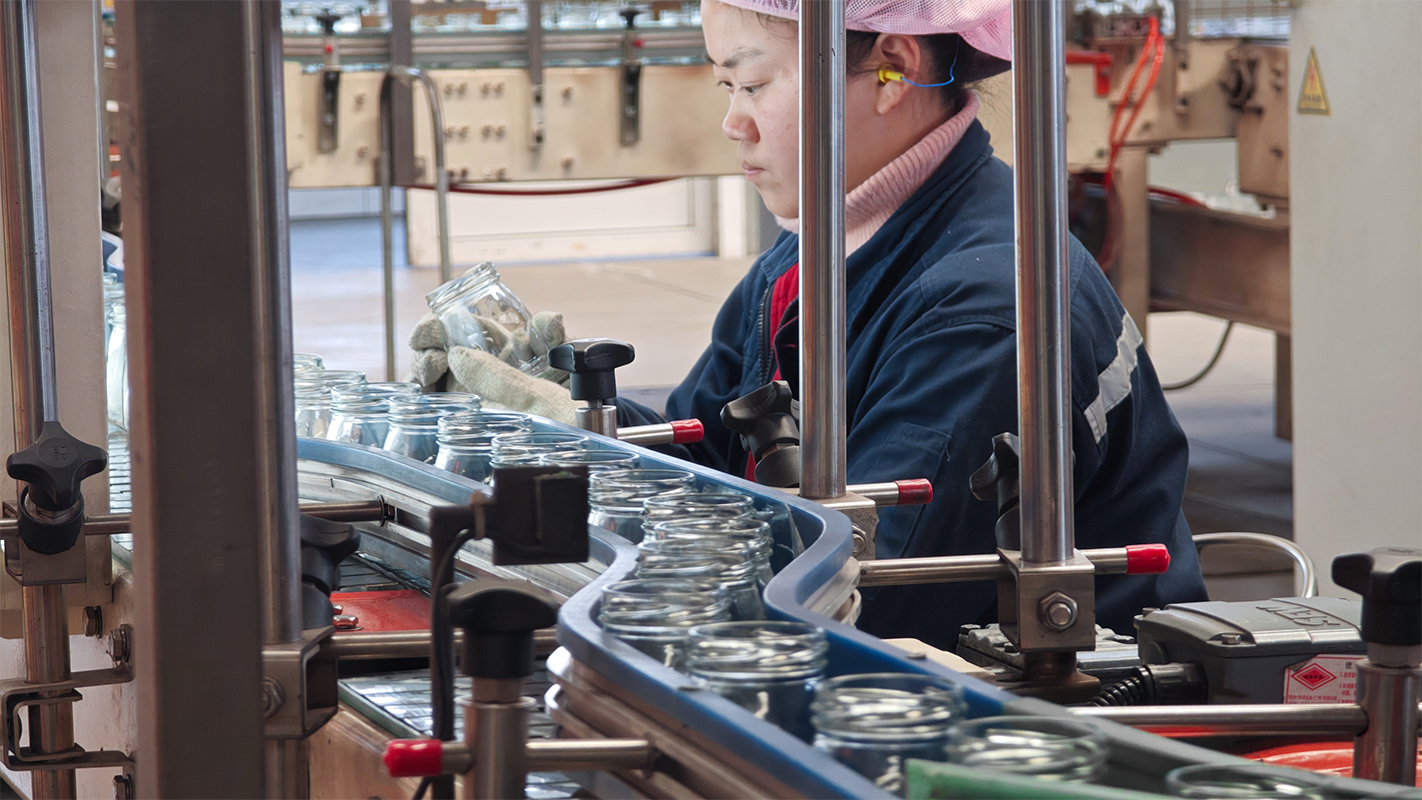
Glass is more fragile during handling than a traditional plastic jar, so thermal and drop evidence matters more in multi-drop distribution or e-commerce channels. That is a fit boundary, not a reason to reject glass. The buyer should record the distribution condition in the scorecard and check whether the supplier's test packaging matches it.
4. Pre-shipment inspection: AQL, test scope and batch reports
Inspection for each production batch is carried out as a pre-shipment test before dispatch, with the corresponding test report supplied as the inspection record. The AQL and test items should be agreed before production starts. This is the control that turns a sample into a repeatable acceptance process. The report should identify the batch, the agreed test scope, the sampling plan, the AQL, the defects found and the release decision.
A buyer should not accept a report that is issued after the goods leave or that uses an AQL chosen by the supplier alone. The scorecard marks this as weak evidence even if the jars look acceptable on arrival. For repeat orders, compare the last three pre-shipment reports. Stable results across batches are more informative than a single perfect report because they show that the control is operating repeatedly.
The test scope should reflect the buyer's actual risk. A food jar with a printed decoration and a metal closure has a different scope from an undecorated jar with a plain lid. The supplier and buyer should write the scope down before production and use the same scope for each repeat order unless a documented change is approved.
5. Commercial terms and supply continuity: MOQ, payment, Incoterms and engineering depth
The commercial dimension is part of repeatability because a supplier that cannot plan volume, cash flow and change requests will struggle to repeat a good batch. IDEA PACKAGE states a minimum order quantity of 5,000 pcs for glass jar orders at standard mass-production pricing. It offers FOB, CIF and EXW. Payment terms are 30% T/T deposit before production and 70% T/T against a copy of the bill of lading.
Company information also states annual production output of CNY 180 million, a 15-engineer R&D team, 250 employees, a 50% export ratio and global markets. The factory is ISO 9001 certified, and products have passed FDA and CE according to company information. These are company-reported facts. They are starting points for verification, not proof of available capacity for a specific order.
The buyer should ask how the supplier will allocate capacity across repeat orders, how specification changes are documented and which Incoterm matches the buyer's forwarding capability. EXW fits a buyer with its own forwarder; FOB fits a buyer that nominates the vessel and pays freight; CIF fits a buyer that wants the supplier to cover freight and insurance to the destination port. The MOQ affects inventory and cash flow. A 5,000-piece MOQ may be efficient for a standard jar but heavy for a new decoration or a slow-moving SKU. The scorecard should record whether the MOQ applies to the standard mass-production price and whether it changes with decoration, colour or closure.
Payment milestones should be checked against the buyer's cash cycle. The 30/70 structure is documented, but the buyer should confirm the documents required for the balance payment and the sequence between inspection release and shipment. Most glass jars for food packing fall under HS 7010.90, so the buyer's customs broker should also confirm the national subheading. That is a trade-compliance check, not a supplier quality score.
Applying the scorecard to coffee and pickle or preserve orders
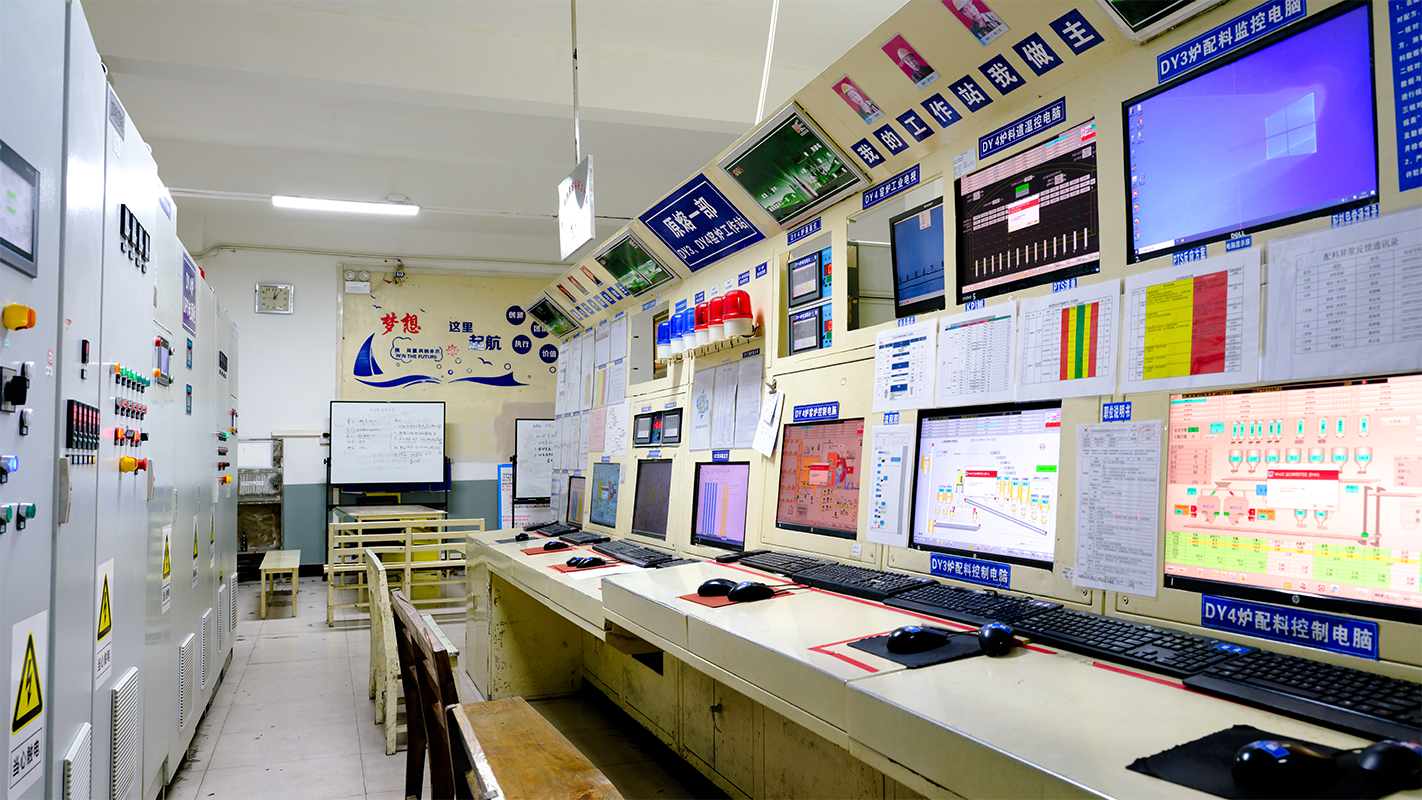
For a buyer operating an Australian coffee packing plant, the scorecard would focus on three repeat-order risks: seal integrity for the coffee jar, dimensional consistency of the glass jar with lid and batch-linked pre-shipment reports. Coffee packaging may not be the most thermally demanding application, but the closure and the jar finish still determine whether the pack holds through storage and distribution. The buyer should ask for the same evidence across the last three batches, not just the first sample. This is a conditional example, not a claim about a specific customer.
For a multi-market pickle or preserve contract, the food-contact file and thermal-shock evidence become more important because acidic products and hot-fill or pasteurisation steps can stress the jar and the closure. If the product is sold into the EU, the buyer should also check the destination-market food-contact file and the packaging sustainability information under Regulation (EU) 2025/40. If the product is sold in China, GB 4806.5-2016 is part of the market-access check. The scorecard does not assume one compliance file covers all markets.
These examples show how the same five dimensions change weight by application. A coffee jar and a pickle jar may share a glass body, but they do not share the same risk profile. The buyer should write the application conditions into the scorecard before comparing suppliers.
Where glass fits, and where it does not
Glass is a strong fit when the buyer needs premium shelf appearance, high transparency, chemical resistance and a recyclable material. The comparison unit lists jams, honey, sauces, pickles, cosmetics and skincare as suitable applications. The same source notes a higher initial packaging cost in some applications, a total cost that depends on product and logistics, and greater fragility during handling. Those are fit boundaries, not reasons to reject glass.
A buyer should not use the scorecard to force glass into a distribution system that punishes breakage. If the product ships through multi-drop parcel networks or if lightweighting is the dominant requirement, the buyer should compare glass with plastic on total cost and damage rate. If the product needs an inert food-contact surface and a premium shelf presence, glass can be the better fit. The decision should be recorded as a fit boundary in the scorecard, not hidden inside a price comparison.
Future outlook: documentation, recyclability and repeat-order planning
Two external signals matter for repeat-order planning. First, the EU adopted Regulation (EU) 2025/40 on packaging and packaging waste, which sets sustainability and labelling requirements, including design-for-recycling requirements and material-specific recycling targets for packaging placed on the EU market. Glass packaging must meet those obligations to stay on the market. Specific thresholds and application dates should be checked against the current consolidated text before a buyer writes them into a contract.
Second, Grand View Research projects the global glass packaging market to reach USD 102.31 billion by 2030, based on a 2025-2030 forecast period. That is a commercial research projection, not a guarantee of demand for any particular jar. Its practical use is to support long-term planning and supplier dialogue, not to justify a price increase.
The buyer implication is documentation. A supplier that can keep test reports, batch records and compliance files current will be easier to keep in a long-term program than a supplier that treats each order as a new transaction. Repeatability is therefore not only a production capability; it is a document-control capability.
What a buyer should do before the next purchase order
Before moving to a repeat order, the buyer should complete six checks. First, request a scope-matched food-contact file for the jar, lid, liner and decoration. Second, ask for the 100% airtightness test method, cap torque limits and calibration records. Third, request the per-jar thermal shock report and the drop-test report for the agreed export packaging. Fourth, write the AQL and test scope into the pre-shipment inspection agreement before production. Fifth, compare the last three batch reports for stability. Sixth, confirm MOQ, Incoterm, payment milestones and capacity allocation.
The scorecard is complete when the buyer can answer yes with a document, not with a promise. A supplier may look strong on a sample table and still be weak on repeatability if the evidence is generic, undated or disconnected from the production batch. The purpose of the scorecard is to make that difference visible before the next order is placed.
For readers who want the supplier's own product overview, the glass products brochure is available for download: IDEA PACKAGE glass products brochure.
FAQ
What commercial terms should a buyer confirm before repeat glass jar orders?
A buyer should confirm the minimum order quantity, the Incoterm, the inspection method and the payment milestones. IDEA PACKAGE states an MOQ of 5,000 pcs for standard mass-production pricing, offers FOB, CIF and EXW, and uses a 30% T/T deposit before production with 70% T/T against a copy of the bill of lading. The buyer should also confirm that the pre-shipment test scope and AQL are agreed before production starts.
How does IDEA PACKAGE control breakage and leakage risk in repeat shipments?
IDEA PACKAGE controls breakage risk through anti-shock, drop-resistant packaging with dividers and foam lining, and it completes drop testing before shipment. Leakage risk is controlled through 100% airtightness testing plus cap torque control with upper and lower torque limits and periodic equipment calibration. For repeat orders, the buyer should compare these records across batches rather than relying on a single test result.
What food-contact evidence should be checked for lead and cadmium in glass jars?
The buyer should check current FDA and SGS test reports for lead and cadmium content, covering both raw materials and finished products. IDEA PACKAGE states that glass jars do not contain lead or cadmium under food-grade compliance and that regular randomized follow-up testing is conducted. The report should identify the tested jar, lid, liner and decoration so that the evidence matches the product actually being purchased.
Can glass jars handle sudden temperature changes, and how is that verified?
IDEA PACKAGE states that thermal stability is validated by a Thermal Shock Test that defines the tolerable temperature differential, and that every single jar undergoes thermal shock testing. The buyer should request the test conditions, including jar size, glass colour and temperature differential, and confirm that they represent the filling and cooling process used for the product.
How should a buyer set AQL and test scope for pre-shipment inspection?
The AQL and test items should be agreed before production begins. Inspection for each production batch is carried out as a pre-shipment test before dispatch, and the corresponding test report is supplied as the inspection record. The buyer should confirm the sampling plan, defect classification, batch identification and release sequence so that the same acceptance standard is used for every repeat order.
Have Questions or Need More Details?
Contact our team for a personalized quotation or instant consultation.
Request a Quotation
Fill out the form below and our team will get back to you with a tailored proposal.
WhatsApp Direct Chat
Prefer to chat in real-time? Message us on WhatsApp for instant assistance & quick answers.
- Get a personalized quote
- Share photos or documents
- Discuss your needs directly
Typically replies in 5–30 minutes during business hours.