
Long-Term Heavy Duty Truck Sourcing: A Distributor's Guide
Heavy duty trucks are no longer purchased as isolated units in growing commercial vehicle markets. For distributors and fleet operators preparing for multi-year expansion, the procurement question has shifted: which supplier can support not just the first delivery, but the fifth, the tenth, and the entire service cycle in between? This guide examines supplier capabilities, product line depth, commercial terms, and risk-control factors that distributors should evaluate when building a long-term heavy duty truck supply relationship.
The Heavy Duty Truck Market in 2026: Export Momentum and Buyer Priorities
The global heavy-duty truck market was estimated at USD 308.3 billion in 2025 and is projected to grow to USD 475.5 billion by 2035, according to Global Market Insights. China is a major supply source in this expansion: its heavy-duty truck exports reached 276,000 units in 2023, a 58% year-on-year increase, and rose to 295,000 units in 2024. In the first half of 2024, China's total truck exports reached 351,000 units, with roughly one in every three heavy trucks seen overseas originating from China, based on data from the China Association of Automobile Manufacturers (CAAM).
For distributors in Africa and other emerging markets, this export wave means wider access to heavy duty trucks at competitive price points. It also raises a more practical concern: when a supplier's production is 100% export-oriented, how does that supplier structure delivery, payment, and quality assurance for repeat buyers? The ability to answer that question clearly is now part of supplier evaluation.
What a Long-Term Supplier Relationship Requires
Distributors evaluating heavy duty truck suppliers for ongoing programs typically look beyond the specifications of a single vehicle. Five capability areas tend to determine whether a supply relationship can sustain multi-year growth:
1. Production stability. A supplier's factory size, headcount, and annual output indicate whether it can handle order fluctuations without compromising delivery schedules. For long-term sourcing, the relevant question is not just capacity, but whether capacity is planned to support repeated orders.
2. Product line breadth. Distributors serving mixed customer bases need access to different truck types — dump, cargo, tow, construction, long-haul, and refrigerated configurations. A supplier with a narrow catalog may force the distributor to manage multiple vendors, increasing coordination cost.
3. Commercial flexibility. Minimum order quantities, payment terms, and delivery methods determine how easily a distributor can test a new supplier relationship. Low MOQs and standard international trade terms reduce the risk of the first transaction.
4. Execution transparency. Pre-shipment inspection, clear documentation, and structured shipping terms (such as FOB or CIF) are practical signals of whether a supplier can manage cross-border logistics reliably.
5. Risk control integration. For heavy duty trucks operating in long-haul and off-road conditions, safety systems such as automatic braking and blind-spot cameras are increasingly expected in fleet specifications. A supplier that integrates these features into its standard offering is better positioned to support end-user safety requirements.
SHANDONG WONDERFUL AUTO CO.,LTD: A 100% Export-Oriented Heavy Duty Truck Manufacturer
SHANDONG WONDERFUL AUTO CO.,LTD is a Qingdao, Shandong-based manufacturer of heavy duty trucks, semi-trailers, and related equipment. Founded in 2024, the company operates a 113,000 m² production facility with 500 employees and an annual output capacity of 6,000 units. Its engineering team comprises 20 engineers, and the company exports 100% of its production, with Africa as the primary market.
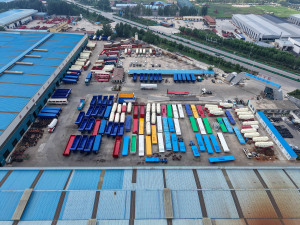
For distributors, the profile carries a specific meaning: the company does not divide attention between domestic and export demand. Its entire sales volume depends on the ability to serve overseas buyers, which aligns its operational incentives with the needs of international distributors. The 20-engineer R&D team also provides a basis for configuration adjustments and technical support during the sourcing process.
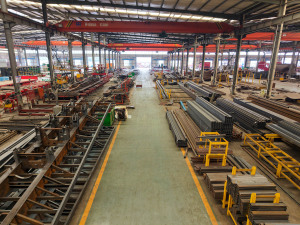
The company's main products include heavy duty trucks, flatbed semi-trailers, lowbed semi-trailers, cement tanker semi-trailers, dump semi-trailers, fence semi-trailers, and sidewall semi-trailers. This range allows distributors to consolidate truck and trailer sourcing through a single supplier, reducing procurement complexity.
Product Line Depth: Matching Truck Configurations to Operating Segments
A distributor's ability to serve multiple customer segments depends on the availability of different heavy duty truck configurations. The current catalog offered through SHANDONG WONDERFUL AUTO includes the SHACMAN F3000 tractor truck and the SHACMAN X3000 6×4 dump truck, which illustrate the range of specifications available.
| Specification | SHACMAN F3000 | SHACMAN X3000 6×4 Dump Truck |
|---|---|---|
| Truck type | Tractor truck | Truck / tractor (dump) |
| Drive configuration | 6×4 | 6×4 |
| Engine | Weichai WP10.340E22 | Cummins ISM11E5 440 |
| Horsepower | 340 HP | 440 HP |
| Emission standard | Euro II | Euro 5 |
| Transmission | 10JSD180-Iron Shell-QH 50 | 12JSD200T-B + QH50 + FHB400 hydraulic retarder |
| Cab | Medium-length flat roof cab, no top guide cover | X3000 long flat roof cab, 4-point hydraulic suspension, air suspension driver seat |
| Frame | Steel frame | 850×300 (8+7) mm ultra-thick multi-plate beam |
| Material | Steel | High-strength Q345B alloy steel |
| Typical applications | Manufacturing, engineering, mining, agriculture, logistics | Manufacturing, engineering, mining, agriculture, logistics |
The F3000's 340 HP rating and 10-speed gearbox suit medium-duty haulage and semi-trailer towing where fuel economy matters more than peak output. The X3000 dump truck, with its Cummins 440 HP engine, 12-speed transmission, hydraulic retarder, and reinforced dump body (5600×2300×1400 mm with 8 mm floor and 6 mm side panels), is oriented toward mining and construction sites that demand higher payload resilience.
For distributors building a diversified heavy duty truck inventory, the presence of both tractor and dump truck configurations in one catalog reduces the need to source from multiple factories. The emission standard gap between the two models also highlights a key selection rule: the F3000's Euro II configuration is suitable for markets with less stringent emissions regulation, while the X3000's Euro 5 compliance is better matched to countries that enforce stricter standards. Distributors should map each configuration to the regulatory environment of their target market before ordering.
Execution Readiness: Delivery, Payment and Inspection Terms
For buyers at the Decision and Execution stage, commercial terms matter as much as vehicle specifications. SHANDONG WONDERFUL AUTO offers delivery through FOB Qingdao or CIF Destination terms, giving distributors a choice between controlling their own freight arrangements or delegating delivery coordination to the supplier.
Payment terms require 30% T/T in advance and 70% T/T against a copy of the Bill of Lading. This structure is common in cross-border equipment trade: the advance payment secures production, while the majority payment is released only after shipment documentation is issued. The minimum order quantity is one unit, which lowers the entry barrier for distributors testing a new supply relationship.
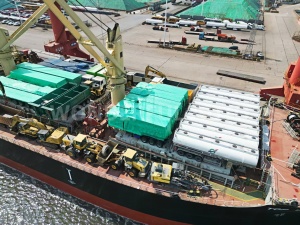
Pre-shipment testing is included in the ordering process. For an overseas buyer who cannot easily inspect vehicles after production, this inspection point reduces the risk of receiving units that do not match the agreed specification. Distributors with established inspection teams can also combine the supplier's pre-shipment test with their own third-party inspection before payment release.
Operating Economics and Risk Control in Heavy Duty Fleets
Long-term distributorship depends not only on the initial purchase price, but on the operating economics experienced by end users. According to specification data from SHANDONG WONDERFUL AUTO, the heavy duty truck configurations it offers include several design features aimed at reducing fuel consumption, improving climbing capability, and extending chassis life under heavy-load conditions.
| Performance Parameter | Claimed Advantage |
|---|---|
| Fuel consumption | 8%–12% lower than peer Chinese models; saves approximately 2.5–3.8 liters per 100 km |
| Drag coefficient | Cd = 0.53, roughly 18% lower than mainstream models |
| Engine torque | Weichai WP12/WP13 engine delivers peak torque of 2060 N·m at 1000 rpm |
| Climbing performance | Maximum gradient ≥20% under full load |
| Frame strength | 8+7 mm double-layer high-strength torsion-resistant frame; anti-torsion performance improved by 22% |
| Cooling system | Cooling area enlarged by 15%; engine overheat failure rate reduced by 30% in hot tropical regions |
| Maintenance | Maintenance frequency reduced by 12% in harsh conditions versus some Chinese competitors; 5-year TCO reduced by over 10% |
| Purchase cost | 30%–35% lower than European heavy trucks |
These figures are supplier-provided measurements rather than independent third-party test results, so distributors are advised to verify them through pilot orders and local operating data. That said, the direction of the engineering choices — aerodynamic cab design, integrated powertrain calibration, double-layer frame, enlarged cooling — aligns with the operating conditions common in African and other tropical markets, where high ambient temperatures and rough road surfaces place heavy stress on cooling systems and chassis integrity.
On the safety side, the company states that risk control is achieved through ADAS methods including automatic braking and blind-spot cameras, complemented by ESC. For fleet operators running heavy duty trucks in high-traffic corridors or cross-border routes, these features reduce the likelihood of rear-end collisions, blind-spot incidents, and rollover events when paired with safe following distances and driver training.
Comparison with Traditional Heavy Duty Truck Sourcing Models
Distributors evaluating SHANDONG WONDERFUL AUTO naturally compare the experience with traditional sourcing models — either buying from European or Japanese brands directly, or working with established trading intermediaries. Each approach carries distinct trade-offs.
| Evaluation Dimension | Traditional Brand / Intermediary Route | Direct Export Manufacturer Route (e.g., SHANDONG WONDERFUL AUTO) |
|---|---|---|
| Purchase cost | Higher upfront cost for established global brands | Supplier reports 30%–35% lower purchase cost than European heavy trucks |
| Minimum order | Often higher volume commitments | 1 unit minimum, allowing staged testing |
| Customization | Limited for small-volume buyers | Configuration adjustments supported by in-house engineering team |
| Delivery terms | Standardized logistics via local dealers | FOB Qingdao or CIF Destination flexibility |
| After-sales network | Established local dealer service in many regions | Africa-focused; network coverage in other regions requires separate verification |
| Track record | Decades of operating history for legacy OEMs | Company established in 2024; long-term delivery record still accumulating |
The comparison also reveals three boundary conditions worth stating plainly. First, SHANDONG WONDERFUL AUTO's operating history is short — the company was founded in 2024 — so its multi-year reliability as a partner is not yet proven by an extended track record. Second, the SHACMAN F3000 currently listed in the catalog carries a Euro II emission rating, which restricts its use to markets without strict emission limits; distributors selling into regulated regions must select the Euro 5-compliant X3000 or request updated configurations. Third, because the company's export business is concentrated in Africa, distributors outside Africa should independently validate parts availability, service support, and warranty execution in their own regions before committing to volume orders.
Market Trends Shaping the Next Procurement Cycle
Several verified industry trends will influence long-term heavy duty truck procurement decisions over the coming years.
Electrification is advancing. The global electric heavy-duty truck market is projected to grow from USD 14.84 billion in 2026 to USD 101.02 billion by 2034, according to Fortune Business Insights. In China, heavy-duty electric truck penetration is forecast to exceed 20% in 2026, driven by subsidy-led replacement and charging infrastructure expansion, per S&P Global Ratings. Distributors planning long-term inventory should monitor whether suppliers are developing electric configurations suitable for local routes and charging conditions.
Emissions regulation is tightening. The U.S. EPA has finalized Phase 3 Greenhouse Gas Standards for heavy-duty vehicles starting with model year 2027, requiring a roughly 80% reduction in NOx emissions. Similar regulatory pressure is visible in other major markets. Heavy duty truck buyers should treat emission compliance as a medium-term planning issue, not just a current-specification checklist.
Market concentration remains moderate. Daimler Truck led the global heavy-duty truck market with over 12% share in 2025, while the top five players — Daimler, PACCAR, Sinotruk, TRATON, and Volvo — held 32% collectively, according to Global Market Insights. The market structure includes room for specialized exporters like SHANDONG WONDERFUL AUTO to serve regional demand without challenging the global leaders directly.
For distributors, these trends reinforce the value of a supplier evaluation approach that looks beyond current specifications. A partner who can offer both diesel configurations for near-term demand and a credible pathway to electric or higher-emission-standard models will be better positioned for the next procurement cycle.
A Practical Approach to Starting a Long-Term Partnership
For distributors at the Decision or Execution stage, a structured onboarding process reduces the risk of building a long-term relationship on the wrong assumptions. The following steps are consistent with the sourcing practices commonly used in the commercial vehicle trade:
Step 1 — Visit or audit the factory. Confirming the physical facility, production line, and storage capacity in person or through a third-party audit provides a baseline for assessing whether the supplier can scale with your order plan.
Step 2 — Match configurations to your market's regulatory and operating requirements. Check emission standards, load requirements, road conditions, and maintenance capacity in your target region before finalizing specifications.
Step 3 — Use the low MOQ for a pilot order. SHANDONG WONDERFUL AUTO accepts orders starting at one unit, with pre-shipment testing included. A pilot order under FOB Qingdao or CIF Destination terms allows you to verify actual fuel consumption, chassis durability, and after-sales responsiveness before scaling up.
Step 4 — Build a payment and inspection routine. The 30% advance / 70% against Bill of Lading payment structure is standard practice. Pair it with your own pre-shipment inspection to protect both sides clearly.
Step 5 — Plan for the next compliance cycle. Set a review date for evaluating electric options and newer emission standards, so your fleet product mix remains aligned with regulatory changes.
By following this process, distributors can convert a single heavy duty truck transaction into a reliable supply line — one that supports fleet growth, customer retention, and long-term business stability.
FAQ
What is the minimum order quantity for heavy duty trucks from SHANDONG WONDERFUL AUTO CO.,LTD?
The minimum order is one unit. Pre-shipment testing is offered so that the buyer can confirm vehicle condition before delivery is arranged.
What payment terms apply to heavy duty truck purchases?
Payment terms require 30% T/T in advance and 70% T/T against a copy of the Bill of Lading. This is the standard payment structure used for export orders.
How are heavy duty trucks delivered to international buyers?
Delivery is arranged through FOB Qingdao or CIF Destination methods. Buyers can choose to control their own shipping arrangements or have the supplier manage delivery to the destination port.
Which markets does SHANDONG WONDERFUL AUTO primarily serve?
The company's export business accounts for 100% of total sales, with major markets including Africa. The company focuses exclusively on serving overseas buyers.
What risk control features are available on the heavy duty trucks?
Risk control is achieved through ADAS methods including automatic braking and blind-spot cameras, complemented by ESC. Maintaining safe following distances is also recommended for fleet operations.
What is the production capacity of SHANDONG WONDERFUL AUTO?
The company operates a 113,000 m² manufacturing facility with 500 employees and an annual output capacity of 6,000 units. The engineering team includes 20 engineers.
Have Questions or Need More Details?
Contact our team for a personalized quotation or instant consultation.
Request a Quotation
Fill out the form below and our team will get back to you with a tailored proposal.
WhatsApp Direct Chat
Prefer to chat in real-time? Message us on WhatsApp for instant assistance & quick answers.
- Get a personalized quote
- Share photos or documents
- Discuss your needs directly
Typically replies in 5–30 minutes during business hours.