
Long-Term Hi-B Silicon Steel Supply: 20-65 to 27Q120
Long-Term Hi-B Silicon Steel Supply: 20-65 to 27Q120
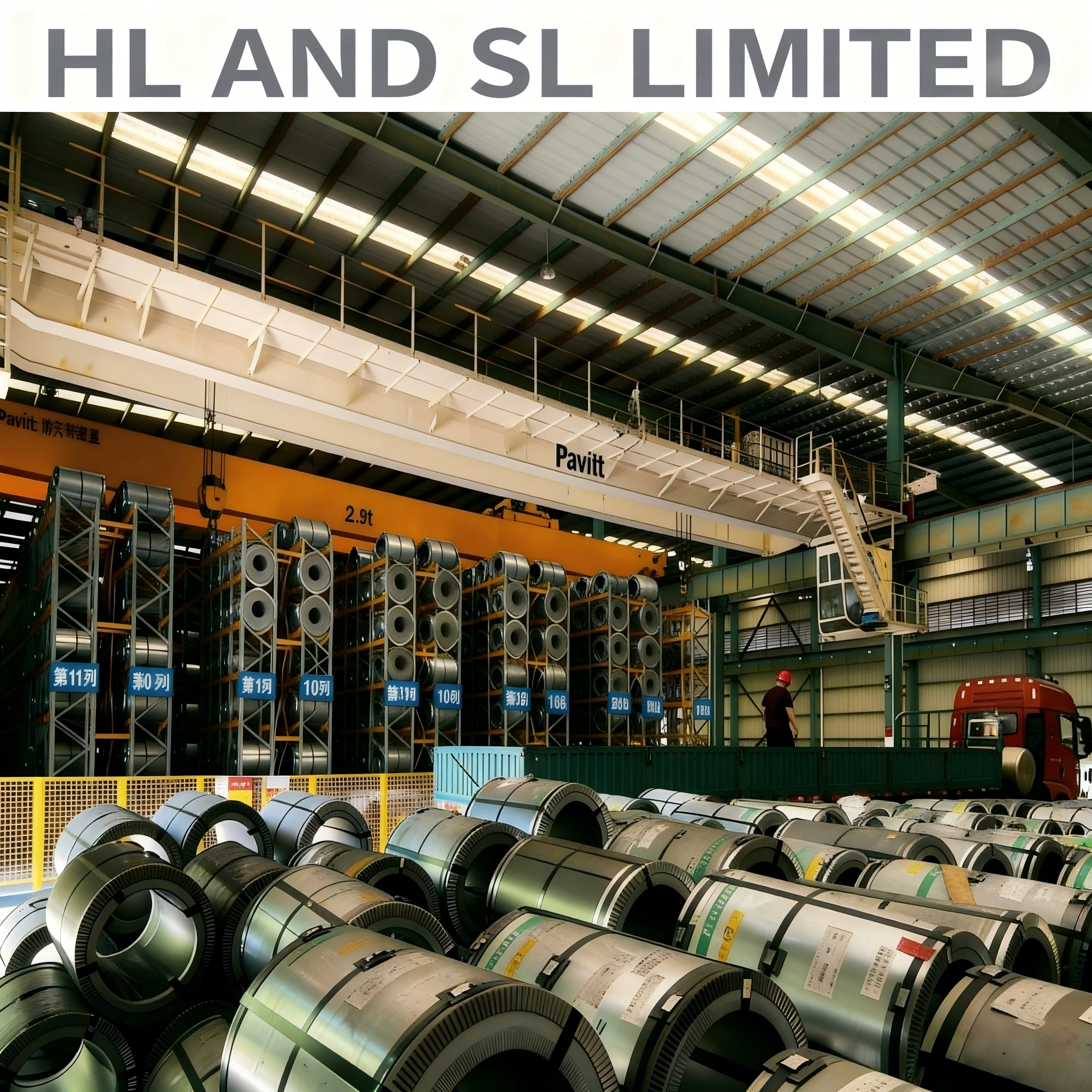
Hi-B oriented silicon steel is a multi-grade commitment, not a single line item: continuity has to be proven grade by grade, lot by lot.
Supply continuity for Hi-B oriented silicon steel is a qualification question before it is a price question. A transformer programme that lists 20-65, 23R075, 27Q095, 27Q100, 27Q105, 27Q110 and 27Q120 in the same bill of materials is not buying seven commodities. It is buying seven sets of magnetic properties that must stay inside tolerance for the full life of the programme, across coil after coil, year after year.
Most grade decisions are made once, at design freeze. The supplier decision is made once and then lived with for a decade. That asymmetry is why procurement teams evaluating Hi-B oriented silicon steel increasingly audit a supplier's ability to repeat a grade before they negotiate a price on the first order. A single out-of-tolerance lot does not only fail incoming inspection; it triggers re-qualification of a core design, a winding schedule, and sometimes a customer notification.
Why Continuity Outranks Price in Hi-B Procurement
Grain-oriented silicon steel is a metallurgically constrained product. The magnetic properties that make a Hi-B grade valuable — low core loss in the rolling direction and high permeability at moderate magnetising force — are created by controlled secondary recrystallisation, not by adjusting a final pass. IEC 60404-8-7:2020 defines cold-rolled grain-oriented electrical steel strip and sheet delivered in the fully-processed state, in nominal thicknesses of 0.20 mm, 0.23 mm, 0.27 mm, 0.30 mm and 0.35 mm, and covers Goss-textured material supplied in the final-annealed condition in coils or sheets for the construction of magnetic circuits.
That standard scope matters for procurement because it confirms what a buyer is actually contracting: a defined thickness family, a defined delivery state, and inspection procedures — not a promise of identical behaviour from every producer. Two suppliers can both ship a compliant 0.27 mm Hi-B coil and still deliver different core loss at the same nominal grade. Continuity is therefore not a compliance statement; it is a statistical claim about repeatability, and it has to be evidenced.
What Each Grade Commits the Supplier To
The seven grades in scope sit inside three nominal thicknesses. All three — 0.20 mm, 0.23 mm and 0.27 mm — fall within the thickness range listed in IEC 60404-8-7:2020, which is the practical reason a single supplier is often asked to cover the whole set. The table below shows the acceptance terms a buyer should write for each grade; the loss ceilings are the values implied by the grade designation and must be confirmed on the mill test certificate for every lot.
| Grade | Nominal thickness | Loss ceiling to specify | Continuity note for the buyer |
|---|---|---|---|
| 20-65 | 0.20 mm | ≤0.65 W/kg | Thinnest gauge in the set; the grade most exposed to capacity allocation. |
| 23R075 | 0.23 mm | ≤0.75 W/kg | Laser-engraved R-series processing; confirm surface treatment in writing. |
| 27Q095 | 0.27 mm | ≤0.95 W/kg | Lowest-loss 0.27 mm position; tightest process window of the four. |
| 27Q100 | 0.27 mm | ≤1.00 W/kg | Common transition grade between loss classes; check interoperability. |
| 27Q105 | 0.27 mm | ≤1.05 W/kg | Often substituted at short notice; substitution rules belong in the contract. |
| 27Q110 | 0.27 mm | ≤1.10 W/kg | Volume grade; availability usually good, consistency is the variable. |
| 27Q120 | 0.27 mm | ≤1.20 W/kg | Widest-use 0.27 mm position; the grade most likely to absorb schedule pressure. |
Four Checks That Decide Whether Supply Is Sustainable
1. Lot-to-lot thickness consistency across 0.20, 0.23 and 0.27 mm
Thickness is the first continuity variable because it propagates. A 0.27 mm coil that drifts within tolerance still changes stacking factor, core build height and lamination fit-up. The practical audit is not a single calliper reading but a distribution: request the thickness records for the last several lots of each grade, and compare the spread against the tolerance clause of the standard you invoked in the purchase order. IEC 60404-8-7:2020 sets out geometric characteristics and tolerances alongside magnetic properties, which means thickness tolerance is a contractual item, not a courtesy. For thin material below the 0.20 mm boundary, IEC 60404-8-8:2017 separately defines thin grain-oriented grades at 0.05, 0.10, 0.15 and 0.18 mm — a reminder that ultra-thin sourcing belongs to a different specification conversation.
2. Iron loss ceilings and permeability, stated as numbers
A grade name is a shorthand, not a certificate. For this family the acceptance framework should carry explicit limits from ≤0.65 W/kg at 20-65 through ≤1.20 W/kg at 27Q120, plus a high-permeability expectation commonly written as B8 ≥1.88 T. The two must be read together: a lot that meets the loss ceiling but sits below the permeability expectation will still raise exciting current and can shift no-load performance in a completed core. Ask for the certified test report per lot, and specify the test method so results are comparable between suppliers. Where noise or vibration is a design constraint, IEC 60404-17:2021 provides the defined route for measuring magnetostriction characteristics of grain-oriented electrical steel under an applied AC magnetic field at 50 Hz or 60 Hz, and a buyer can reasonably require test reports aligned with it during qualification.
3. Impurity and inhibitor control: C, S, N and the MnS/AlN system
The magnetic quality of Hi-B oriented silicon steel depends on a deliberate impurity architecture. Carbon, sulphur and nitrogen have to be held and then released in the right sequence for the inhibitor system — manganese sulphide and aluminium nitride based — to control grain growth during high-temperature annealing. ASTM A876-17e1, which covers flat-rolled, grain-oriented, fully processed low-carbon silicon-iron electrical steels, describes these materials as low-carbon silicon-iron alloys with a silicon content of approximately 3.2%. Two procurement consequences follow. First, chemical composition belongs in the material certificate, not only in a datasheet. Second, because inhibitor behaviour is process history rather than a single number, continuity is evidenced by stable process origin — the same mill, the same line, the same annealing regime — which is precisely what a buyer should ask to document.
4. Coating system and compliance documentation
The insulation coating is where electrical performance meets installation environment. Organic coatings are typically specified for a temperature resistance of up to about 180 °C, inorganic coatings for continuous exposure up to around 800 °C, with semi-organic systems in between. Getting this wrong shows up late — after annealing, after winding, or in service. Coating also carries the regulatory file. EU RoHS Directive 2011/65/EU and Directive (EU) 2025/2456 restrict ten hazardous substances in electrical and electronic equipment, with ECHA taking over technical assessments effective 13 August 2027. For a multi-year programme, the coating declaration is a continuity document too: a supplier that cannot restate its coating chemistry consistently across years becomes a compliance risk even when the magnetics are perfect.
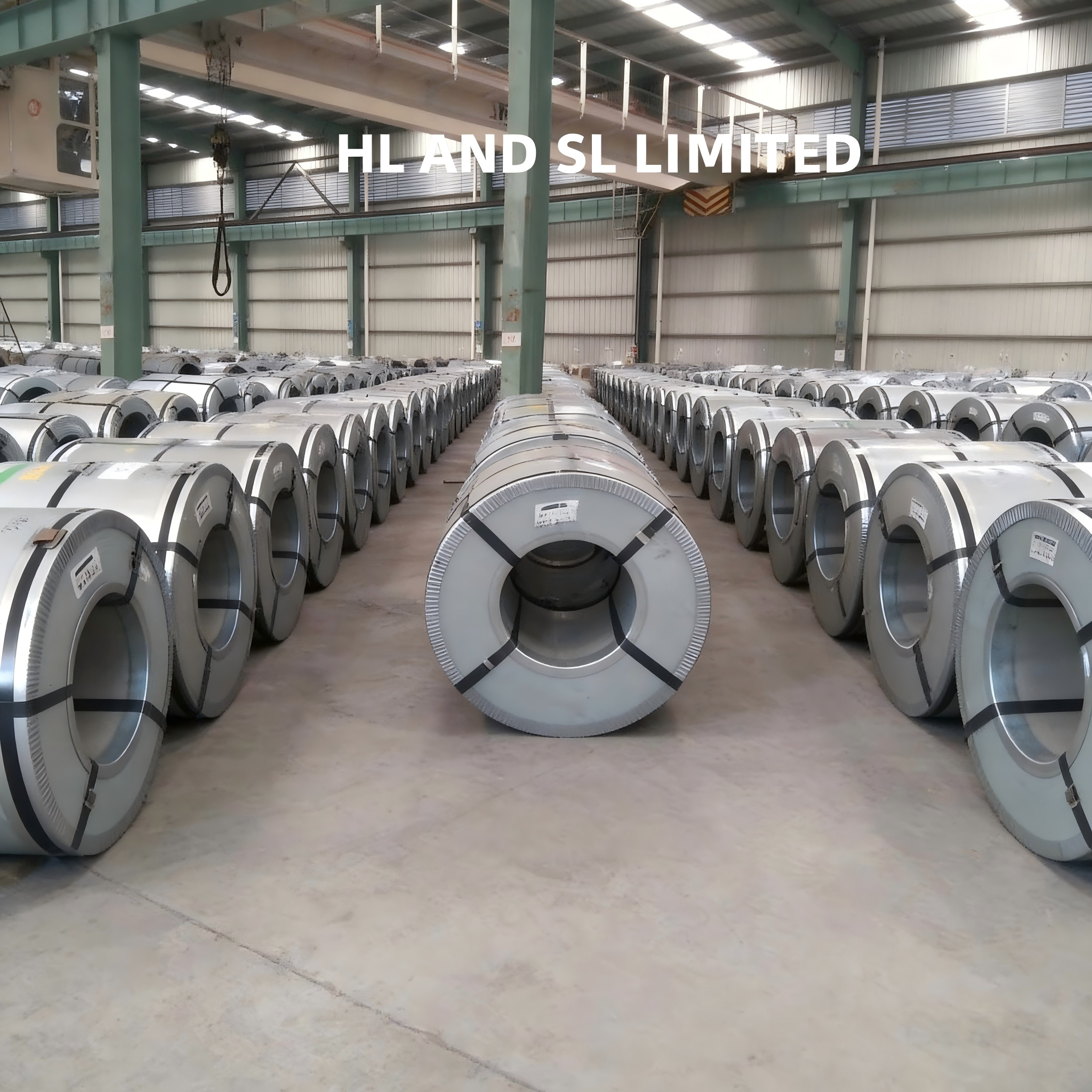
Grade verification is a batch-level activity: thickness, loss, permeability and chemical composition are audited per lot, not per catalogue page.
How HL AND SL LIMITED Presents Its Continuity Case
HL AND SL LIMITED is a China-based electrical steel export and processing company, founded in 2012, operating a 30,000 m² processing facility with 10 engineers in its technical team, an annual output of 30,000 t and an export ratio of 80%, serving markets that include Mexico, Brazil, Italy, the UAE and India. It ranks among the top three in China's electrical steel export volume and is an authorized agent of China Baowu Steel Group.
That positioning is worth reading carefully, because it explains what kind of continuity the company can actually underwrite. Three elements are relevant to a procurement audit. The first is grade breadth: the processing offer covers oriented silicon steel thicknesses from 0.18 to 0.35 mm with widths typically 800–1250 mm, plus general-orientation CGO, high-flux Hi-B, laser-engraved R-series and heat-resistant HS-series options — the same families that contain 20-65, 23R075 and the 27Q series. The second is throughput: a monthly capacity of 4,000 t against a minimum order quantity of 25 t, with regular orders scheduled at 15–20 days, stock and urgent orders at 3–7 days for shipment, and bulk export orders at 30–45 days to port arrival, or 7–30 working days after the deposit of a letter of credit. The third is in-house secondary processing — slitting, cut-to-length and longitudinal cutting — which is where a thin-gauge grade is most easily damaged and where an external processor adds a variable the buyer cannot see.
Quality documentation follows the same logic. The company describes full-process random and batch inspection at origin, batch inspection reports issued with the goods, and third-party testing through CMA/CNAS laboratories on request. Acceptance practice is stated as pre-shipment testing plus third-party testing, with EXW, FOB or CIF delivery terms and 30/70 payment terms. After-sales support is described as lifecycle technical guidance, dispute handling with re-inspection, and feedback within 1–3 working days.
Application Fit: Where Each Grade Earns Its Place
Continuity has to be tested against a real core, not a specification sheet. The applications in scope place different demands on the same grade family:
- UHV transformers. Large cores, long build cycles and very low loss budgets push design towards the thinnest and lowest-loss positions in the set, which is where 20-65 and 23R075 sit. The continuity question here is availability of the top of the range in the volumes a single project requires.
- High-efficiency distribution transformers. The 27Q series is the working heart of this segment. Efficiency bands are met or missed on small differences, so lot-to-lot loss stability across 27Q095 to 27Q120 matters more than the best single certificate ever issued.
- PV DC converter transformers. Converter duty brings harmonics and a different loss profile; grade selection tends to trade absolute loss against stable behaviour under non-sinusoidal excitation. Buyers should expect the supplier to state which grades are supported with test evidence rather than by inference.
- HVDC converter cores. Converter transformers combine large cores with stringent loss and noise requirements; magnetostriction data, where available, is the more informative qualification input than loss alone.
- Humid-grid transformer programmes. Coating choice and surface protection carry more weight in tropical installations, which is the practical context behind the company's long-running Brazilian supply. HL AND SL LIMITED states that its material has been used by WEG, a major power equipment manufacturer, for local manufacturing of power transformers and distribution transformers in Brazil for over 10 years with stable operation verified, supported by a representative office in Brazil providing localised technical services and supply chain support. The company also reports a North American transformer manufacturer using its material for power transformer, converter transformer and special engineering transformer cores for over 10 years, at an annual business scale of approximately USD 500 million through batch supply.
Market Trend: What Is Putting Pressure on Continuity
The silicon steel market reached a valuation of USD 31.55 billion in 2025 and is projected to scale to USD 59.41 billion by 2035, according to Strategic Revenue Insights. Growth of that order does not automatically translate into availability of the specific grades a transformer programme needs, because capacity is not evenly distributed across thickness and loss class.
The clearest tension sits at the thin end. Ultra-thin electrical steel below 0.2 mm gauge is identified as the most critical trend for high-speed EV motors and attracts a price premium of 50–100% over standard gauge, according to the same research. Even a buyer who never orders below 0.20 mm is affected: mill allocation decisions at the thin end influence scheduling and lead times for adjacent thin-gauge oriented grades, including 20-65 and 23R075. This is the mechanism by which an EV motor demand signal becomes a transformer procurement problem.
The second trend is documentation-led. With RoHS Directive 2011/65/EU and Directive (EU) 2025/2456 restricting ten hazardous substances in electrical and electronic equipment, and ECHA assuming technical assessment responsibility from 13 August 2027, coating declarations are moving from a nice-to-have annex to a standing requirement in supplier qualification files. Buyers who begin collecting coating chemistry documentation now will not need a re-qualification cycle when the assessment regime changes.
Sourcing Routes Compared — and Where Each One Breaks
Three routes are commonly used to secure Hi-B oriented silicon steel. They are not interchangeable, and each has a boundary that should be written into the sourcing strategy rather than discovered during a schedule slip.
| Route | Strength | Limitation |
|---|---|---|
| Mill-direct purchase | Direct process accountability; primary metallurgical data. | Minimum order quantities and scheduling windows set by the mill; limited flexibility on cut-to-width or mixed-grade orders. |
| Export and processing supplier | Mixed-grade baskets, secondary processing, export documentation, smaller entry quantities. | Does not own the annealing line; ultimate capacity and inhibitor consistency still sit with the mill. |
| Distributor stock | Fastest response for urgent or small lots. | Lot traceability weakens; grade substitution risk rises; unsuitable as a primary route for a multi-year programme. |
The honest boundary for an export and processing model is this: it can guarantee documentation, processing precision, packing and delivery rhythm, and it can hold mixed-grade availability at a 25 t minimum order quantity with a 4,000 t monthly capacity behind it. It cannot independently guarantee the metallurgical behaviour of a mill's annealing line beyond the certificates and third-party test results it passes through. That is why the audit should ask for mill origin, mill test certificates and CMA/CNAS third-party reports as a set, and why a single-source strategy without a qualified second origin is a continuity exposure regardless of which route is chosen.
Limits Buyers Should Not Paper Over
- A standard is not a performance record. IEC 60404-8-7:2020 defines grades, tolerances and inspection procedures; it does not certify that any particular supplier's lots will cluster near the centre of the tolerance band. Only lot data does that.
- ASTM and IEC are not interchangeable by default. ASTM A876-17e1 covers flat-rolled, grain-oriented, fully processed low-carbon silicon-iron electrical steels; IEC 60404-8-7:2020 covers Goss-textured material in the final-annealed condition. Equivalence must be established grade by grade, not assumed from the word “Hi-B”.
- VDA 239-100 is not a silicon-steel grade standard. It standardises surfaces and coatings for the automotive industry, including aluminium-silicon and zinc-magnesium coatings. It cannot substitute for a magnetic specification, and treating it as one creates a documentation gap rather than closing it.
- Small-quantity trials are constrained. A 25 t minimum order quantity is reasonable for production planning but limits how many grades a buyer can pilot simultaneously; programme qualification should therefore be sequenced, not launched in parallel across all seven grades.
- Lead-time figures are conditional. A 15–20 day regular order window and a 3–7 day stock shipment describe normal conditions; the 30–45 day bulk figure to port arrival is the number that should sit in a project schedule, not the best case.
Future Outlook
Three developments are likely to reshape how continuity is audited between now and the end of the decade. First, documentation depth: as ECHA's technical assessment role for RoHS begins on 13 August 2027, coating chemistry dossiers will become routine tender attachments, and suppliers who already maintain them will qualify faster. Second, grade compression: buyers facing scheduling uncertainty tend to consolidate around fewer loss classes, which raises the strategic weight of the 27Q series and makes the availability of 27Q095 and 27Q100 a better early-warning indicator than the headline price of 27Q120. Third, magnetostriction and noise data will increasingly enter qualification, because standards such as IEC 60404-17:2021 give buyers a defined method to request it.
Against a market projected to nearly double in value between 2025 and 2035, the constraint is unlikely to be demand. It will be the ability to repeat a named grade, at a named thickness, inside a named loss ceiling, for the tenth consecutive year. Procurement teams that treat the acceptance framework as the audit instrument — rather than as paperwork attached to a price — will be the ones whose cores are never the reason a delivery slips.
Frequently Asked Questions
Which grades must a Hi-B supplier be able to run continuously for a multi-year transformer programme?
A programme built around this family typically requires seven positions: 20-65 at 0.20 mm, 23R075 at 0.23 mm, and 27Q095, 27Q100, 27Q105, 27Q110 and 27Q120 at 0.27 mm. All three nominal thicknesses fall inside the thickness range listed in IEC 60404-8-7:2020. Continuity should be evidenced per grade, since a supplier able to repeat 27Q120 reliably is not automatically able to repeat 20-65 at the same consistency.
How should lot-to-lot thickness consistency be verified at intake?
Verify against the tolerance clause of the standard named in the purchase order, using thickness records from multiple consecutive lots rather than a single measurement. IEC 60404-8-7:2020 sets geometric characteristics and tolerances for grain-oriented strip and sheet in the fully-processed state, so thickness variation is a contractual parameter. Batch inspection reports issued with the goods and third-party CMA/CNAS testing provide the supporting evidence trail.
What loss and permeability values belong in the acceptance criteria for 20-65 to 27Q120?
The loss ceilings implied by the grade designations run from ≤0.65 W/kg for 20-65, through ≤0.75 W/kg for 23R075, to ≤0.95, ≤1.00, ≤1.05, ≤1.10 and ≤1.20 W/kg for the 27Q095 to 27Q120 positions. A high-permeability expectation is commonly stated as B8 ≥1.88 T. Both figures should be confirmed on the certified test report for each lot, with pre-shipment testing and third-party testing written in as acceptance criteria.
What capacity and lead-time figures indicate a supplier can sustain a 12-month schedule?
Look for stated monthly capacity, minimum order quantity and lead time expressed in defined categories. HL AND SL LIMITED states a monthly capacity of 4,000 t, a 25 t minimum order quantity, 15–20 days for regular orders, 3–7 days for stock or urgent orders, 30–45 days for bulk export orders to port arrival, and 7–30 working days after the deposit of a letter of credit. Comparing those categories against the project's monthly drawdown is a more useful test than comparing a single lead-time figure.
Does buying from an export and processing company differ from buying directly from a mill?
Yes, in accountability structure. HL AND SL LIMITED operates as an export and processing company with in-house slitting, cut-to-length and longitudinal cutting capacity, and is an authorized agent of China Baowu Steel Group. That model supports mixed-grade baskets, secondary processing and smaller entry quantities, but the metallurgical origin — and therefore the ultimate capacity and inhibitor consistency — remains with the steel mill. Mill test certificates plus third-party reports should therefore be requested as a set.
Which coating system should be specified for a humid installation environment?
The choice follows temperature duty and surface protection rather than humidity alone. Organic coatings are typically specified with temperature resistance up to about 180 °C, inorganic coatings up to around 800 °C, with semi-organic systems between them. For humid or tropical programmes, the coating declaration should also be reviewed against EU RoHS Directive 2011/65/EU and Directive (EU) 2025/2456, which restrict ten hazardous substances in electrical and electronic equipment, with ECHA taking over technical assessments from 13 August 2027.
For a fuller picture of grade ranges, processing options and acceptance documentation, the HL AND SL LIMITED product brochure is available here: HL AND SL LIMITED electrical steel brochure.
Have Questions or Need More Details?
Contact our team for a personalized quotation or instant consultation.
Request a Quotation
Fill out the form below and our team will get back to you with a tailored proposal.
WhatsApp Direct Chat
Prefer to chat in real-time? Message us on WhatsApp for instant assistance & quick answers.
- Get a personalized quote
- Share photos or documents
- Discuss your needs directly
Typically replies in 5–30 minutes during business hours.