
Long-Term Home Lift Supplier Evaluation: Continuity Signals
Long-Term Home Lift Supplier Evaluation: Continuity Signals
A home lift is specified once and lived with for decades. The quotation, the cabin finish and the delivery date describe the purchase; they say very little about year eight, when a door operator fails, a spare part has to be sourced and the sales contact who closed the order has moved on. For buyers who have finished shortlisting and are moving into contract execution, the decisive question is narrower than which lift is better: can this supplier keep supporting one specific unit — its parts, its documentation, its configuration history — across the whole service life?
This evaluation sets out three testable layers of that question — installation scope, after-sales obligations and continuity evidence — and applies them to FRANZ Intelligent Elevator Co., Ltd., a Jiangsu-based manufacturer of shaft-built cabin lifts, glass lifts and platform lifts, as a worked example. The aim is not to rank suppliers but to separate the answers a buyer can verify before an order is placed from the ones that are usually left as assumptions.
From handover to service life: the evaluation window that matters
Procurement scoring for a home lift usually covers capacity, speed, cabin and glass specification, pit and headroom requirements, and price. All of those are settled before the lift carries a first passenger. The costs that accumulate afterwards — routine maintenance, spare-part logistics, recovery after a fault and eventual modernisation — are fixed by the same decision, yet they are rarely scored with the same rigour.
The installed base is where the elevator industry's long-term work sits. Roland Berger's 2026 elevator market outlook projects the modernisation segment growing at around 7% CAGR through 2030 (Roland Berger, Elevator Market Outlook 2030, Spring 2026 update). The precise rate will differ by market; the structural point is that lifts are kept in service longer, which turns a supplier's ability to service and reconfigure an existing unit into part of what the buyer is actually paying for.
Standards reinforce the same logic. The transition from EN 81-20/50 to ISO 8100-1 and ISO 8100-2, as described by TÜV SÜD, means a lift commissioned today may be maintained and later modernised under a different standard edition. As-built drawings, test records and configuration data are what make that transition routine rather than an investigation.
What supplier continuity means in a home lift contract
Supplier continuity is the supplier's ability to supply, service, document and reconfigure the same lift model years after handover. It is not the same as brand size, and it is not the same as a long warranty printed on a quotation. It can be tested across four dimensions:
- Installation scope — who is responsible for site readiness, mechanical installation, commissioning, testing, handover documentation and operator training.
- After-sales obligations — who attends a fault, within what time, with what spare-part access, and under which warranty terms.
- Commercial and acceptance terms — minimum order, delivery term, payment term, factory testing and the acceptance criteria that end the supplier's delivery obligation.
- Evidence of sustained execution — multi-year project records, channel relationships and a design that can be maintained with parts and skills available locally.
A practical decision rule follows. A supplier that answers the first two dimensions convincingly but cannot evidence the last two has demonstrated a product, not a service life.
Installation scope: the part of the offer that decides schedule risk
FRANZ describes its installation support in two modes: online remote support and guidance available around the clock, and offline on-site technical guidance or professional installation. Where site conditions are ready, installation and commissioning typically take 7–15 working days; the schedule extends when civil works do not meet the required conditions.
That qualification is the important part of the statement. In villa and retrofit projects, the lift schedule is normally set by civil readiness — shaft width and depth, pit depth, floor heights, door openings and power supply — rather than by factory lead time. FRANZ's own selection guidance asks buyers for exactly those figures, together with intended use (private or commercial) and whether the project is new-build or renovation, before drawings and a quotation are issued. A buyer who supplies that data late has effectively transferred schedule risk into the installation phase.
For contract purposes, installation scope should be reduced to explicit responsibilities: who prepares and signs off the shaft or the self-supporting structure; who provides power to the machine position; who handles lifting and positioning of the cabin; who performs the load test and safety-device checks; who hands over drawings, certificates and maintenance instructions; and who trains the person expected to operate the lift day to day. The 7–15 working day figure is useful for planning only when those items are already settled.
After-sales terms: warranty, network and the real cost of maintenance
FRANZ's standard warranty is one year for the whole unit. Service after that period is normally delivered through the local distributor network. Distributors receive after-sales guidance and training from the factory, and end customers are supported in locating local dealer resources where the original channel is not accessible.
This is a common and workable model for an export business, but it shifts part of the due diligence from the manufacturer to the channel. Three questions then matter more than warranty length itself. Who physically holds spare parts for this model in the buyer's market, and how quickly can a door operator, drive component or controller part be delivered? Which technicians are trained on this specific product, and by whom? And what is the escalation route to the factory when a distributor cannot resolve a fault — remote support, parts dispatch, or an on-site visit?
Remote diagnostics change the quality of those answers. FRANZ fits a lift monitoring system that lets distributors read lift status at any time, which shortens fault identification and reduces the number of visits that end without a repair. The dependency is symmetrical: monitoring is only as useful as the response standing behind it.
Maintenance cost should be budgeted locally rather than inferred from another market. FRANZ cites a standard annual maintenance cost in China of approximately RMB 3,000–5,000 per year and states explicitly that costs differ by country. For a buyer in Europe, Russia, Australia or the Middle East, that figure indicates an order of magnitude, not a quotation.
Purchasing terms and acceptance criteria
FRANZ's stated purchasing terms are a minimum order of one unit, including OEM and trial orders, with delivery on EXW, FOB or CIF terms and payment by TT. Acceptance is defined around pre-shipment testing and factory testing.
For a long-life purchase, the one-unit minimum matters more than it first appears. It allows a buyer to take a single trial unit inside a renovation, or a first villa within a development, verify packing, documentation, commissioning quality and spares availability, and only then commit to further units. A trial order is a continuity test in miniature.
Factory testing deserves the same treatment. A pre-shipment test is only meaningful if the buyer knows what is tested, against which specification, and what is recorded. In practice that means agreeing hold points in advance, requesting the test record as a contract deliverable, and confirming that the as-built configuration — not the catalogue configuration — is what gets documented and shipped.
Continuity evidence: three project records and what they demonstrate
Project records are the weakest form of evidence when they arrive as photographs and the strongest when they show sustained execution. The three records below, drawn from FRANZ's international work, are informative because each reveals something different about support over time.
Russian villa: a two-year FT/FJ glass lift programme
A Russian villa project using FT/FJ glass lifts ran over approximately two years, with configurations spanning the 400–800 kg range. The accompanying luxury-mansion scenario material specifies a 270° viewing glass configuration on a solid aluminium frame, vibration-damping technology and millimetre-wave radar detection, with thickened tempered glass.
What this demonstrates: a project measured in years rather than weeks implies staged engineering, repeated configuration changes and continued factory involvement well after the first unit was defined. Load coverage from 400 kg to 800 kg inside one programme also indicates that the platform is adapted to each shaft rather than sold as a single fixed model. What it does not demonstrate is field reliability in the buyer's own market — that still requires local references.
Australian shopping mall: a shallow-pit retrofit under public-safety expectations
In an Australian office and shopping mall project, FRANZ supplied a shaft-less, pit-free platform lift with an aluminium frame and laminated tempered glass, a threshold-free flat floor for wheelchair access, emergency levelling and anti-pinch devices, and a one-key emergency call. The specification was aligned with Australian high-safety requirements.
What this demonstrates: retrofit work in an operating commercial building tests civil-fit flexibility as much as hardware. A platform lift that avoids a deep pit and a load-bearing shaft reduces structural work and shortens the period in which the building is disrupted. For a buyer in an existing house, the same logic applies at smaller scale.
Indonesian hotel: a glass lift completed within two years
An Indonesian hotel project used a glass lift with steel-belt traction and automatic power-failure levelling, a champagne-gold metal frame, a large-capacity car and a touch-screen panel supporting multi-language switching, face recognition and voice broadcast, with an enlarged high-contrast display mode for accessibility.
What this demonstrates: in hospitality, the lift is simultaneously part of the guest experience and part of the building's compliance story, and multi-language and accessibility features have to survive years of public use. Power-failure levelling addresses a failure mode that is expensive in a hotel and reassuring in a villa with elderly residents.
Read together, the three records indicate a capacity to run multi-market, multi-year work across villa, retail and hospitality settings. They are evidence of execution, not proof of service performance in a specific city. The correct next step for a buyer is to request references in the same market and the same building type.
Maintainable design: steel-belt traction, noise and diagnostics
Continuity depends on a lift that can be maintained with parts and skills that exist locally. FRANZ builds around steel-belt traction rather than hydraulic or screw drive, and its comparison material highlights the absence of oil-leakage risk and lower maintenance cost as the practical consequences. Home-use traction units are described as reaching 0.3–1 m/s, with moderate purchase cost, lower running cost and lower energy consumption than the traditional traction reference they are compared against.
FRANZ also quotes a 40 dB operating noise level for its steel-belt traction drive. A single decibel figure is only interpretable with its measurement conditions — position, load, speed and background level — so the useful procurement action is to request those conditions rather than to compare the number against a competitor's headline claim.
Two other design choices affect supportability. Millimetre-wave radar sensing adds an active safety layer that monitors the car path, complementing rather than replacing mandatory safety devices. And a modular platform-lift architecture, with shaft-less and pit-free options, keeps civil work smaller and makes later reconfiguration less invasive. Neither is a maintenance guarantee; both reduce the number of reasons a lift has to be taken out of service.
Where a comparative alternative is relevant, FRANZ describes its platform lift as operating 15–25 dB quieter than a screw-type drive and costing around 10% less than a screw elevator, with a simpler mechanical structure and less maintenance. These are supplier-stated comparative figures. They are useful as a starting hypothesis to test against a site visit and a reference installation, not as an independent benchmark.
Where the model has boundaries
A balanced evaluation has to state where the approach stops. FRANZ's own guidance distinguishes between building types: a concrete or brick shaft points to a cabin lift; generous shaft dimensions suit a glass lift; small spaces and existing houses suit a platform lift. None of those is a universal answer, and a supplier proposing the same product for every site has not read the site.
Three further boundaries are worth writing into the contract. The one-year whole-unit warranty is short relative to a lift's service life, so extended coverage, spare-part pricing and response obligations should be negotiated at order stage rather than assumed later. Distributor-based service concentrates risk in the distributor's competence, which is why local references and named service responsibilities matter. And any noise, vibration or energy figure — including the 40 dB claim and the supplier's screw-drive comparison — should be accepted only together with its test conditions.
Supplier-risk checks for the execution stage
The checks below translate the risk categories FRANZ itself identifies — over-promised warranty, low-quality components, poor craftsmanship, missing certification and weak after-sales support — into verification actions a buyer can complete before releasing the order.
| Risk area | What to verify | Evidence to request | Consequence if left unverified |
|---|---|---|---|
| Supply continuity and scale | Factory ownership, floor area, output, engineering headcount | Factory visit, production and capacity records | Over-promised warranty and discontinued spare parts, a risk FRANZ explicitly associates with small suppliers |
| Component quality | Drive unit, door assembly, safety devices | Component documentation, sample lift inspection | Frequent failures and avoidable safety exposure |
| Certification scope | Whether the certificate covers the buyer's model and target market | TÜV Rheinland certificate plus market-specific test reports | Market-access and insurance problems at commissioning |
| After-sales structure | Who attends faults, response time, local spares holding | Distributor agreement, training records, warranty terms | Extended downtime across the service life |
| Commercial and acceptance terms | MOQ, delivery term, payment term, test hold points | Contract, pre-shipment and factory test reports | Disputes at handover and unclear delivery boundaries |
| Continuity records | Multi-year projects, repeat partners, market breadth | Local references, project list | Claims that cannot be independently checked |
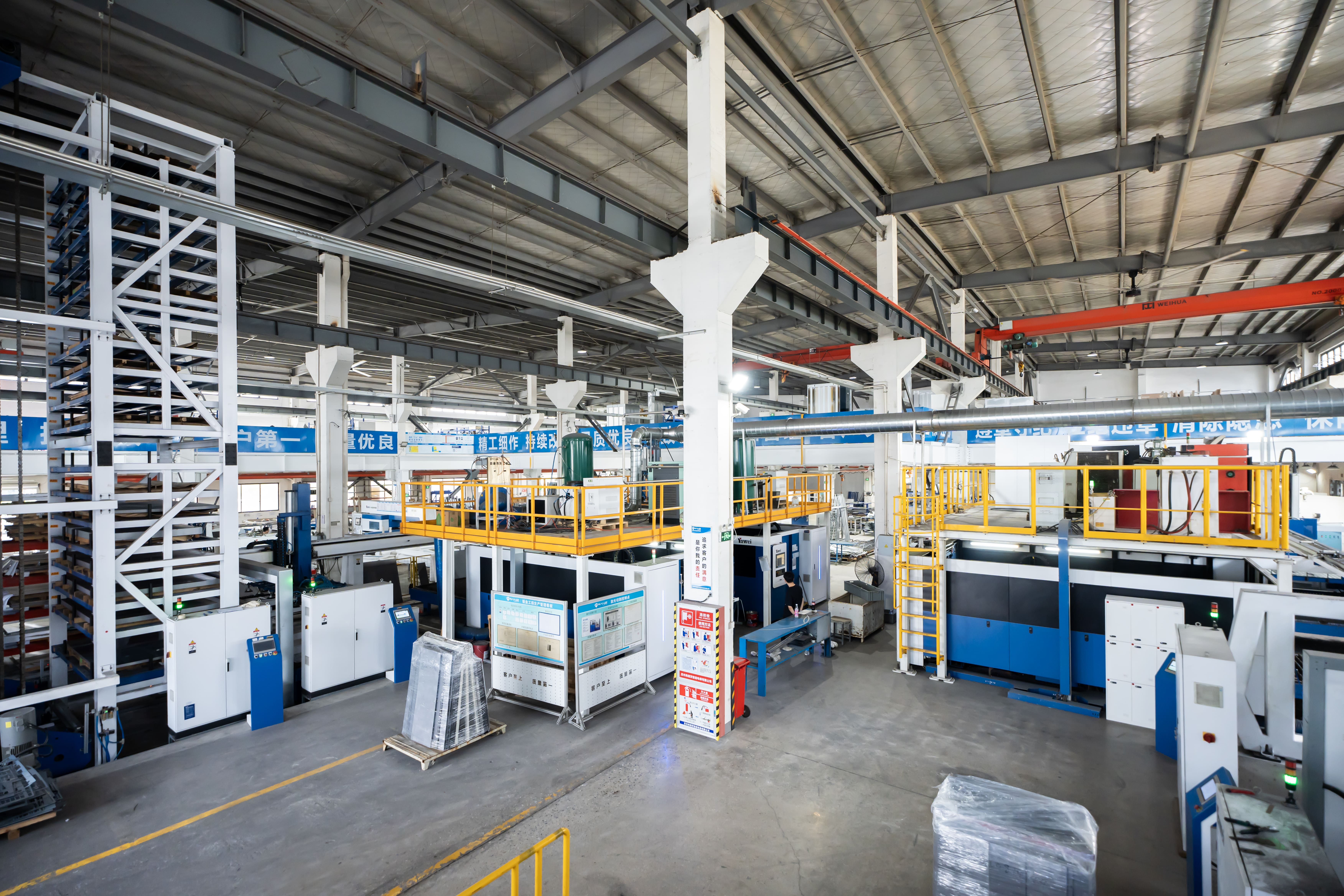
FRANZ's own scale figures give a buyer something concrete to verify: a 30,000 m² factory, 310 employees, an annual output of 6,000 units and a 32-engineer R&D team, with more than 220 showrooms and operations in over 30 countries. In 2025 its commercial platform elevators received TÜV Rheinland EU EC Whole-Machine Safety Certification. That scope is worth noting precisely: the certificate covers commercial platform elevators, so the buyer's specific model and target market still have to be matched to the applicable documentation.
A decision-to-execution sequence
- Fix the site data first. Shaft width and depth, pit depth, floor heights, door sizes, power supply and new-build versus renovation status. Without these, no quotation is comparable.
- Write an installation responsibility matrix. Civil readiness, power, hoisting, commissioning, load testing, documentation and training, each with a named party.
- Convert after-sales into obligations. Local maintenance price, response and attendance times, spare-part holding, technician training and factory escalation, all in the contract rather than the brochure.
- Agree acceptance and hold points. Pre-shipment and factory testing criteria, the test record as a deliverable, and confirmation that the as-built configuration is documented.
- Run a trial unit where the project allows. The one-unit minimum makes this practical for a first villa or a single retrofit.
- Verify continuity evidence locally. References in the same market and building type, plus confirmation of which distributor will service the lift.
- Set a review point. A short-cycle review at twelve months, before the warranty period ends, converts service experience into an informed decision on extended coverage.
Outlook: what changes across a service life
Two external signals shape how buyers will read this evidence. Grand View Research sized the global residential elevator market at USD 54.61 billion in 2024, which indicates the scale of the installed base that will eventually need service and modernisation. And the modernisation segment's projected growth, cited earlier, points to a future in which reconfiguring an existing lift becomes routine rather than exceptional.
For a buyer signing in the next few quarters, the implication is conditional rather than dramatic. If a lift is likely to be serviced for twenty years and modernised once, then documentation quality, distributor capability and part availability will matter more than a marginal difference in cabin specification. Suppliers that treat the as-built record and the channel network as part of the product will be easier to keep in service — and easier to keep in the building.
FAQ: long-term home lift supplier evaluation
What does long-term supplier continuity mean in a home lift purchase?
Supplier continuity is the ability of the supplier to keep supplying, servicing, documenting and reconfiguring the same lift model after handover. In a home lift purchase it covers four testable areas: installation scope, after-sales obligations, purchasing and acceptance terms, and evidence of sustained execution such as multi-year project records, a trained channel network and a design that can be maintained with locally available parts.
How should installation responsibilities be defined before ordering?
FRANZ provides online remote support and guidance, and offline on-site technical guidance or professional installation. It states that installation and commissioning typically take 7–15 working days when site conditions are ready, with longer schedules where civil works do not meet requirements. A contract should therefore name who prepares the shaft or self-supporting structure, who supplies power, who performs commissioning and load testing, and who hands over drawings, certificates and operator training.
What after-sales terms should be confirmed in writing?
FRANZ's standard warranty is one year for the whole unit, with service normally delivered through the local distributor network; distributors receive after-sales guidance and training, and end customers are helped to locate local dealer resources. Buyers should confirm the local maintenance price, response and attendance times, spare-part holding and delivery times, technician training and the escalation route to the factory. FRANZ cites approximately RMB 3,000–5,000 per year as a standard maintenance cost in China and notes that costs differ by country.
What purchasing terms and acceptance criteria apply to a FRANZ order?
The stated terms are a minimum order of one unit, including OEM and trial orders, delivery on EXW, FOB or CIF terms, and payment by TT. Acceptance is defined around pre-shipment testing and factory testing. Buyers can strengthen this by agreeing test hold points in advance, requesting the factory test record as a contract deliverable, and confirming that the as-built configuration rather than the catalogue configuration is documented before shipment.
Which project evidence indicates a supplier can support a lift through its service life?
Evidence is stronger when it shows duration, variation and market breadth rather than a single installation photograph. FRANZ's records include a Russian villa FT/FJ glass lift programme of approximately two years with 400–800 kg configurations, an Australian shopping mall retrofit using a shaft-less, pit-free platform lift with accessibility features, and an Indonesian hotel glass lift completed within two years. These indicate execution capability; they do not replace local references for service performance.
Is a distributor-based after-sales model a risk?
It is a common model for export manufacturers and is not a risk in itself. The risk depends on the distributor: whether spare parts are held locally, whether technicians are trained on the specific model, whether response times are contractual, and whether a defined escalation path to the factory exists. Remote lift monitoring, such as the system FRANZ fits, shortens fault identification but does not remove the need for a capable local responder.
Configuration, civil-works and glass specification information is published in the FRANZ residential lift brochure, available for download: FRANZ Civil & Glass brochure (PDF).
Have Questions or Need More Details?
Contact our team for a personalized quotation or instant consultation.
Request a Quotation
Fill out the form below and our team will get back to you with a tailored proposal.
WhatsApp Direct Chat
Prefer to chat in real-time? Message us on WhatsApp for instant assistance & quick answers.
- Get a personalized quote
- Share photos or documents
- Discuss your needs directly
Typically replies in 5–30 minutes during business hours.