
Long-Term Industrial Lubrication Pump Supplier Sustainability: DEO's Export & Quality Record
Long-Term Industrial Lubrication Pump Supplier Sustainability: DEO's Export & Quality Record
Lubrication circuit failures rarely begin with a mechanical fault. They begin with a deferred procurement decision — a supplier discontinuing a model, spare-part lead times doubling, or a quality claim that can no longer be verified years after the original order. For buyers evaluating industrial lubrication pumps, supplier sustainability has become an evaluation dimension in its own right, separate from performance specifications and unit price.
This analysis examines long-term supplier sustainability from a procurement and engineering perspective, using DEO (Deo Machinery Co., Ltd., founded in 2010 and based in Beilun District, Ningbo) as a reference case. The objective is not brand promotion but clarification of which supplier-level evidence genuinely supports multi-year procurement decisions — and which claims should be tested before they are relied upon.
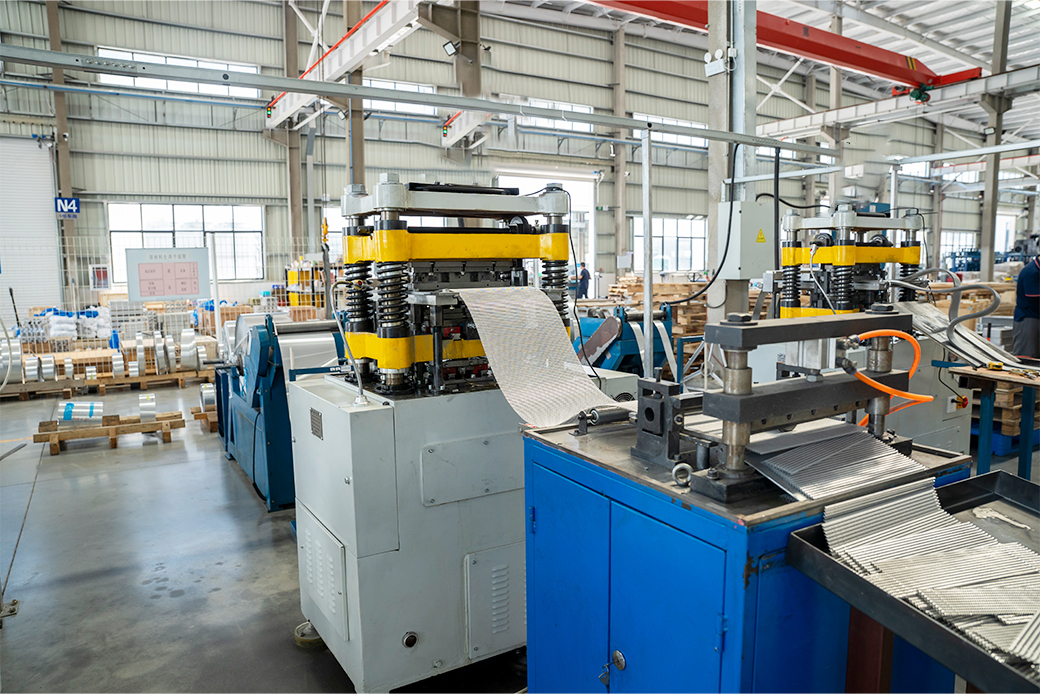
Production work area at Deo Machinery Co., Ltd., Ningbo — evidence of manufacturing continuity for industrial lubrication pumps, hydraulic pumps, and lubrication system oil coolers.
Why Supplier Sustainability Is Now an Evaluation Criterion
Industrial lubrication pumps are typically purchased as components inside a larger system — a reducer, a gearbox, a hydraulic power unit, or a centralized lubrication skid. The pump itself may represent a small share of total project cost, but its failure or unavailability can halt an entire production line. This asymmetry is why procurement teams increasingly assess supplier continuity alongside product performance.
Commercial market research supports the direction of this shift. According to market data compiled in 2024, approximately 67% of newly commissioned industrial machines were equipped with automatic lubrication systems, and electric lubrication pumps were forecast to reach USD 2.7 billion globally by 2032 at a CAGR of 6.89% (commercial market research, 2024). These figures describe market direction rather than any individual supplier's performance. They do, however, explain why long-term supply agreements are becoming more common — and why the sustainability of the supplier behind the pump now carries real procurement weight.
The evaluation gap: Most supplier scorecards focus on price, lead time, and specification compliance. Fewer systematically test continuity — the supplier's ability to keep producing, exporting, and supporting a product line over a ten-year horizon. Yet continuity risk is often what determines total cost of ownership in heavy industrial lubrication systems.
What Long-Term Supplier Sustainability Actually Means
Supplier sustainability, in a procurement context, is not an environmental term. It refers to the supplier's measurable capacity to remain a viable source over the full service life of the equipment it supplies. For industrial lubrication pumps used in mining, steel, construction machinery, and comparable heavy-duty applications, replacement and upgrade cycles commonly stretch well beyond a single procurement contract.
A practical evaluation framework separates sustainability into five testable dimensions:
| Dimension | What It Tests | Verifiable Evidence |
|---|---|---|
| Operating continuity | Whether the same legal entity has stayed in production long enough to cover a replacement cycle | Founding year, facility size, employee count, production volume |
| Product breadth | Whether a single supplier can support system-level integration and spare-part continuity | Number of product families, overlap between pump and cooling lines |
| Export reliability | Whether the supplier can maintain delivery into the buyer's region | Export share of sales, named export markets, documentation practices |
| Quality system scope | Whether the quality certification covers the exact products and applications being purchased | Certificate number, issuing authority, certificate scope, expiry date |
| Application evidence | Whether the products have documented use in comparable operating conditions | Named client types, application categories, published technical parameters |
Each dimension is independently checkable. None of them depends on marketing statements, and none requires trust in unverifiable claims about market position or world-class capability.
DEO's Continuity Record: Fifteen Years of Operating History
Deo Machinery Co., Ltd. was founded in 2010 and operates from a 10,000 m² facility in Beilun District, Ningbo. The company employs 80 people, including a 12-engineer R&D team, and reports an annual production volume of 30,000 units. Its product focus spans industrial lube oil cooling systems and lubrication system oil coolers, alongside hydraulic pumps, electric lubrication pumps, and centralized lubrication system pumps.
For a procurement evaluator, the relevant fact is not simply that the company exists. It is that the same entity has continued producing and exporting across a period long enough to cover multiple replacement cycles of industrial lubrication pumps. The company states that it reinvests 20% of profits annually into R&D, holds 3 invention patents and 16 utility model patents, and currently serves more than 7,000 enterprise clients, including Nanjing High Accurate Drive Equipment Manufacturing Group Co., Ltd. and Dongfeng Motor Corporation.
These are first-party facts supplied by the company. Their evaluation value is directional: a supplier with documented R&D reinvestment and a named industrial client base is structurally more likely to maintain production continuity than an entity with no verifiable operating history. They do not, on their own, guarantee future performance. They are, however, the type of evidence that can be checked and cross-referenced during supplier qualification.
Founding year 2010
Facility area 10,000 m²
Annual production volume 30,000 units
Export share of total sales 20%
Export markets Europe and America, Southeast Asia, Australia
Product Breadth as a Sustainability Signal
Product breadth matters for long-term procurement because pump-only suppliers and supplier-of-both-pumps-and-coolers address different system integration realities. DEO's catalog spans both categories — gear pumps, trochoidal pumps, centralized lubrication system pumps, and four distinct cooler configurations for oil cooling.
For a buyer specifying a lubrication circuit, this matters in two ways. First, a single supplier covering both the pumping element and the cooling element reduces the number of compatibility interfaces that must be qualified. Second, spare-part continuity is easier to sustain when one supplier is responsible for the full lubrication and cooling package.
Representative DEO Models Across the Pump and Cooler Lines
| Model | Category | Key Published Parameters |
|---|---|---|
| DK630 | Electric lubrication pump | Displacement 630 cc/rev; motor rotation speed 950 rpm / 1450 rpm; material QT500 |
| PST180 | Bidirectional internal gear pump | Displacement 180 cc/rev; max speed 1800 rpm; temperature −30 °C to +100 °C; housing GG250 gray cast iron or QT500 ductile iron |
| PSN100 | Trochoidal bidirectional mechanical pump | Displacement 100 cc/rev; max speed 1800 rev/min; temperature −30 °C to +100 °C; material QT500 |
| DFLEX8 | Wind cooler | Comparative cooling capacity 1.15 / 0.91 kW/°C; fan diameter 630 mm; motor voltage 3φ380 |
| DWBW-408-T | Fin-type oil/water cooler | Max working pressure oil side 16 bar; water side 10 bar; allowable oil temperature ≤120 °C; oil kinematic viscosity 12–320 mm²/s; detachable end cover for cleaning |
| DFLSL-10 | Self-circulating cooler | Cooling capacity 1.61 / 1.84 kW/°C; oil pump flow (VG46) 100–125 L/min or 150–200 L/min; consumed power 5.5 / 7.5 kW |
These parameters are relevant to long-term evaluation because they indicate the operating envelope the supplier has designed for — viscosity ranges, temperature ceilings, and pressure ratings. A supplier whose stated envelope covers 12–320 mm²/s oil viscosity and operating temperatures from −30 °C to +100 °C is designed for heavier industrial duty than a supplier with a narrower stated range.
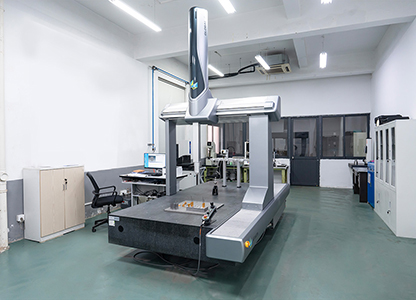
Factory equipment supporting DEO's in-house production of electric lubrication pumps, gear pumps, and lubrication system oil coolers.
Export Reliability: Market Coverage and Documented Share
Export reliability is a practical test of long-term sustainability because cross-border supply involves documentation, lead time, and after-shipment support that domestic-only suppliers do not maintain. DEO reports that export business accounts for 20% of total sales, with named markets spanning Europe and America, Southeast Asia, and Australia. The company also maintains an OEM/ODM production mode with stated lead times of 35–45 days, a minimum order quantity of 1 unit, and 100% test coverage on outgoing products.
For an evaluation buyer, the value of the 20% export figure is not that it is large — it is that it is disclosed. A supplier willing to state its export share and named export regions gives procurement teams a starting point for due-diligence questions: Which regions were the most recent? Are there shipping records matching the named markets? What documentation language is standard? These are the questions a long-term agreement should be able to answer with evidence, not assertion.
It is worth being precise about what an export share of 20% implies. It means the majority of the business is domestic. Buyers sourcing primarily for export projects should therefore verify regional inventory arrangements, technical support response times in their specific market, and the documentary handoff process for customs clearance — because a supplier's domestic strength does not automatically translate into regional after-sales density.
Evaluation point: Export ratio alone is not a quality signal. It is a directional indicator that a supplier has experience with cross-border logistics, documentation, and international client expectations. Its practical weight depends on whether the buyer's own market matches the supplier's named export regions.
Quality Evidence Beyond the Certificate
An ISO 9001 certificate is a threshold document, not a differentiator. What matters in evaluation is the scope of the certificate and whether it covers the specific products and applications being purchased.
DEO's quality management system is certified to GB/T 19001-2016 / ISO 9001:2015 under certificate number 16426Q00565R001, issued by Huazhong International Certification and Inspection Group. The stated scope is the production of coolers and lubricating oil pumps for mines, ships, and hydraulic machinery. The certificate is valid from 7 April 2026 to 6 April 2029, and its related product list explicitly covers DK630, PST180, PSN100, DFLEX8, DWBW-408-T, and DFLSL-10.
Three evaluation observations follow from this detail:
- The scope names specific application contexts — mines, ships, and hydraulic machinery. For buyers in those industries, the certificate directly covers the intended use. For buyers outside those contexts, the certificate still confirms a functioning quality system, but additional application-specific qualification may be needed.
- The certificate expiry is dated in the future relative to this analysis (April 2029), which means the current certificate cycle is active and documented.
- The related product list is explicit. A buyer does not need to assume which models fall under the scope — the certificate records them by model number.
This level of documentation does not prove that every production batch meets specification. It proves that the supplier operates under a certifiable quality system, with a defined scope, an identifiable issuing authority, and a verifiable validity window. Buyers should still request batch-level test records during contract finalization.
Application Evidence: Where These Products Are Used
Application evidence is the most concrete predictor of whether a pump will perform in a buyer's specific operating conditions. DEO's stated application categories include:
- Mining equipment — mine reducer lubrication systems and heavy-duty hydraulic stations, where lubrication pumps must tolerate contaminated environments and variable duty cycles
- Construction machinery — bidirectional internal gear pumps used in hydraulic systems, engine lubrication, automation equipment, forklifts and telehandlers, hydraulic power units, and industrial cooling systems
- Steel and heavy metallurgy — large gearboxes, rolling mill lubrication stations, hydraulic presses, and forging equipment requiring high-viscosity lubricant cooling under continuous heavy load
- Wind power equipment — gearbox lubrication cooling, including coastal wind farm configurations with seawater cooling customization
- Marine and ship industry — ship gearboxes and marine hydraulic systems, with seawater cooling variants using anti-corrosion customization
- Hydraulic stations and machine tools — centralized hydraulic oil cooling for CNC machine tools, injection molding machines, and die-casting equipment
- Power and energy equipment — generator lubrication systems, turbine oil cooling, and auxiliary circuits
- Chemical and petrochemical equipment — process lubricating oil cooling for reactors and extrusion equipment
The stated client base includes Nanjing High Accurate Drive Equipment Manufacturing Group Co., Ltd., an industrial reducer and transmission manufacturer. This is relevant because the reducer application sits at the intersection of lubrication and cooling — the specific combination DEO's catalog addresses.
Reported performance characteristics from DEO's project documentation include volumetric efficiency of ≥95%, ultra-low noise operation approximately 3 dB below traditional straight gear pumps, and component wear reduction of approximately 40% versus ordinary gear pumps. The company also reports that the pump's operating envelope covers kinematic viscosity from 12 to 20,000 cSt and fluid temperatures from −40 °C to +100 °C, and that a built-in adjustable relief valve (5–25 bar) provides overpressure protection without a separate external component.
These figures are drawn from first-party project documentation. In an evaluation context they should be treated as supplier-stated performance indicators, to be confirmed against the buyer's own acceptance testing during the qualification phase.
Where to Apply Additional Scrutiny
A credible long-term supplier evaluation also identifies where additional diligence is warranted. For DEO, three boundaries are worth noting.
Regional service density. With export business representing 20% of total sales, the majority of the company's operational focus remains domestic. Buyers in Europe, America, Southeast Asia, or Australia should confirm the specific regional support and spare-parts arrangements applicable to their contract, rather than assuming that export experience alone guarantees equivalent service coverage in every named region.
Certification scope boundaries. The ISO 9001 scope explicitly covers coolers and lubricating oil pumps for mines, ships, and hydraulic machinery. Buyers whose application falls outside those categories — for example, food-grade or pharmaceutical lubrication circuits, or applications requiring specific regional conformity markings beyond ISO 9001 — should verify whether additional compliance documentation is available for their market.
Lead time and order size. Stated lead times of 35–45 days apply to standard configurations. Customized orders — including color customization and oil pump customization under the OEM/ODM mode — may extend beyond that window. Buyers planning projects with fixed installation dates should confirm the lead time in writing for their specific configuration, rather than relying on the general range.
None of these limitations is unusual for a mid-sized industrial pump manufacturer. The point is that they are the right questions to raise, and a supplier that answers them with documentation is a more reliable long-term partner than one that deflects them.
Comparison With Traditional Sourcing Approaches
Traditional procurement approaches for industrial lubrication pumps often fall into one of three patterns, each with a distinct limitation.
| Sourcing Pattern | Typical Advantage | Long-Term Limitation |
|---|---|---|
| Single-component, lowest-price sourcing | Lowest initial unit cost | No system-level integration; buyer absorbs compatibility risk between pump and cooler |
| Brand-premium imported supply | Established global brand recognition | Higher procurement cost and longer replacement lead times; brand strength does not guarantee model continuity for every SKU |
| Domestic-only local supplier | Short delivery distance; simplified communication | Limited cross-border documentation experience; regional support not applicable for export-oriented projects |
DEO's position sits in a fourth pattern — a supplier with both pump and cooler lines, documented export experience across multiple regions, and an active ISO 9001 certificate whose scope names specific heavy-duty application contexts. This is not a universal advantage. It is an advantage specifically for buyers who need a bundled lubrication-and-cooling supply relationship with documented cross-border delivery history.
For buyers with purely domestic, single-pump requirements and no cooling integration needs, a specialized local supplier may still be the more efficient choice.
Market Trend Context for Multi-Year Agreements
Three trend signals are relevant to long-term supply agreements in this category.
Automatic lubrication adoption continues to rise. Commercial market research indicates 67% adoption of automatic lubrication systems in newly commissioned industrial machines in 2024, up from earlier baselines. This shifts the buying population toward buyers who expect programmable, electrically driven lubrication solutions rather than manual systems.
Electric lubrication pumps are the growth segment. Forecasts from the same research category project electric lubrication pumps to reach USD 2.7 billion by 2032, at a CAGR of 6.89%, with the broader automatic lubrication systems category projected at USD 1.47 billion by 2032. These are commercial research figures, not independently verified market measurements, but they indicate the direction of demand.
Intelligent lubrication is an active research area. A 2024 peer-reviewed study (PMID 38420457) addressing intelligent lubricating devices for CNC machine tool feed systems indicates continued academic and industrial interest in lubrication hardware that integrates with machine control systems. This is a technology-direction signal rather than a procurement requirement, but it supports the expectation that lubrication pumps supplied today will need to remain supportable as surrounding control systems evolve.
For evaluation buyers, the practical implication is that a supplier's ability to keep producing an established pump platform — DB-series, PST-series, PSN-series — through a period of technology transition carries real value. Model churn is a hidden cost of procurement.
Future Outlook
Long-term supplier sustainability will likely continue to shift from a soft evaluation factor to a structured qualification criterion. Three developments support this expectation.
First, replacement cycles in heavy industry are lengthening. As equipment life extends, the gap between the original pump purchase and the first replacement purchase grows — increasing the cost of a supplier that has exited the product line.
Second, documentation expectations are rising. Buyers increasingly request certificate scopes, model-level product lists, and named application references as part of standard RFQ packages, rather than as post-award discovery.
Third, the shift toward electric and centralized lubrication systems narrows the pool of suppliers with both the technical capability and the production continuity to support those systems over a decade.
For buyers, the practical takeaway is straightforward: sustainability evidence should be collected during the same evaluation phase as technical specifications, not deferred. A supplier that can document its founding year, facility, production volume, export record, certificate scope, and named application references provides a materially stronger basis for a multi-year agreement than one that answers those questions with general statements.
Frequently Asked Questions
How should a buyer evaluate long-term supplier sustainability for industrial lubrication pumps?
Evaluation should proceed across five independently verifiable dimensions: operating continuity (founding year, facility size, production volume), product breadth (whether one supplier covers both pump and cooling requirements), export reliability (documented export share and named export markets), quality system scope (certificate number, issuing authority, and explicit product coverage), and application evidence (named client types and published operating parameters). Each dimension should be supported with documentation, not statements alone.
Does an export record reliably indicate long-term supplier reliability?
Export share is a directional indicator, not a guarantee. A disclosed export share — for example, DEO's stated 20% of total sales with named markets in Europe and America, Southeast Asia, and Australia — confirms that the supplier has experience with cross-border documentation, logistics, and international client expectations. It does not confirm regional service density. Buyers in a supplier's export markets should separately verify inventory arrangements, technical support response times, and spare-parts availability for their specific region.
Why does product breadth matter in supplier sustainability evaluation?
A supplier that covers both the lubrication pump and the lubrication system oil cooler reduces the number of compatibility interfaces a buyer must qualify, and centralizes spare-part responsibility under one source. DEO's catalog, for example, spans electric lubrication pumps, bidirectional internal gear pumps, trochoidal pumps, and multiple cooler types — including the DK630, PST180, PSN100, DFLEX8, DWBW-408-T, and DFLSL-10. For buyers requiring an integrated lubrication and cooling package, this breadth reduces integration risk. For single-pump requirements, it may not be a deciding factor.
What should buyers verify in a lubrication pump supplier's ISO 9001 certificate?
Buyers should verify three elements: the scope statement, which should name the specific applications covered (DEO's certificate, for example, covers the production of coolers and lubricating oil pumps for mines, ships, and hydraulic machinery); the related product list, which should identify the exact models covered; and the validity window, including issue and expiry dates. The certificate number and issuing authority should also be recorded for verification. A general ISO 9001 certification without a specific scope and product list provides weaker evidence than a scoped certificate with model-level coverage.
Which application evidence is most useful when qualifying a lubrication pump supplier?
The most useful application evidence names both the industry category and the specific equipment type, because this allows a buyer to judge whether the supplier's operating experience matches their own conditions. Relevant categories for industrial lubrication pumps include mining reducer lubrication, steel industry rolling mill and gearbox lubrication, construction machinery hydraulic systems, wind turbine gearbox lubrication, and marine gearbox systems. Named client references in comparable applications provide additional confidence. Published operating parameters — viscosity range, temperature range, pressure ratings — should also be checked against the buyer's actual duty cycle before qualification.