
Long-Term Injection Molding Machine Supplier Evaluation
Long-Term Injection Molding Machine Supplier Evaluation

An injection molding machine is rarely a one-off purchase. For a molder in the decision and execution stage, the supplier choice sets the support, spare-parts, software and upgrade path for an asset that may run for a decade or more. That makes supplier evaluation a sustainability exercise: not a claim about a green label, but a test of whether the supplier can keep the installed machine productive, serviceable and compatible with changing materials, molds and automation.
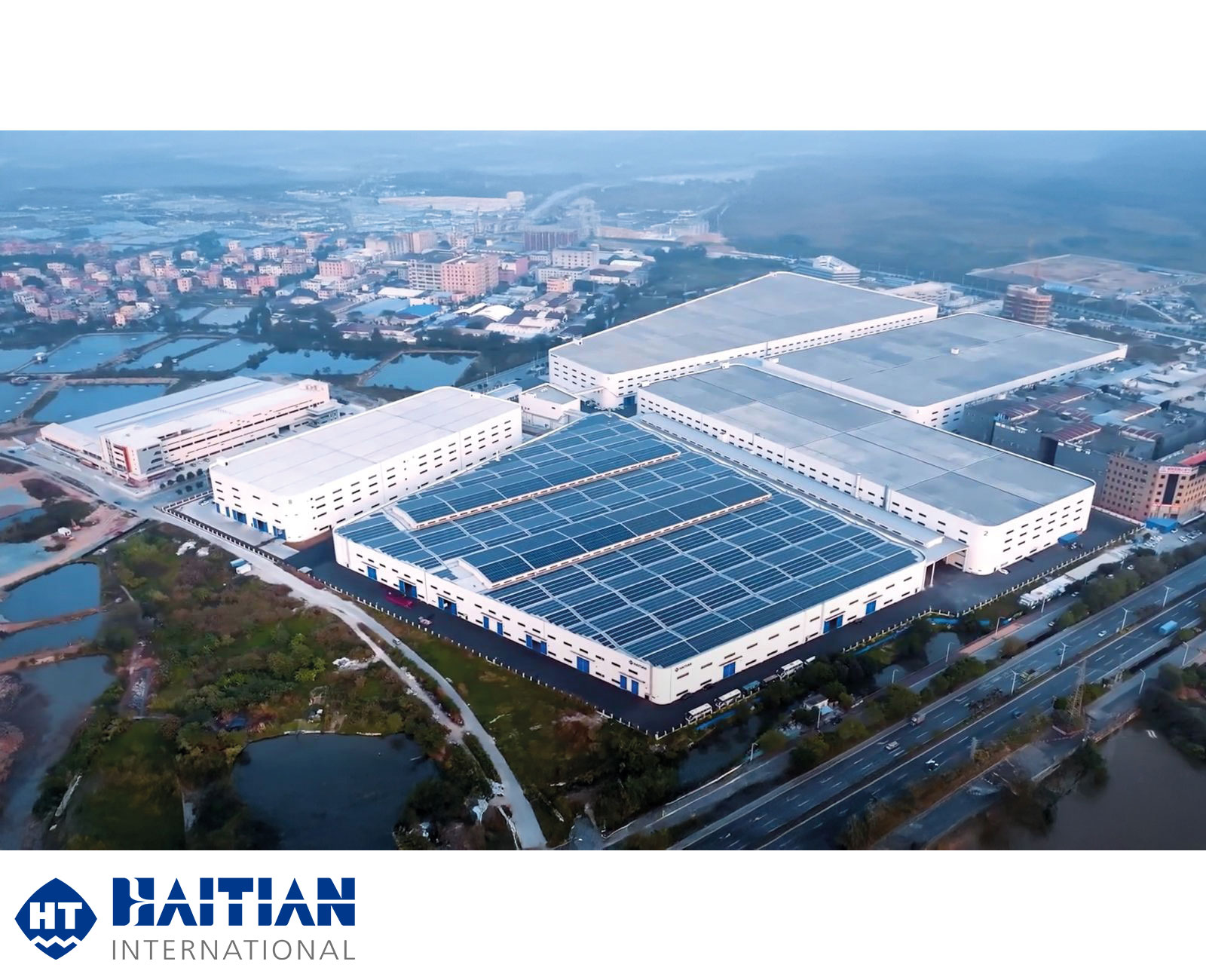
Haitian International, founded in 1966, is one of the large injection molding machine groups behind the Haitian, Zhafir and Niigata brands. Its reported footprint includes 1,437,000 m² of factory space, more than 8,500 employees, an R&D team of more than 1,500 and annual output above 56,000 units, with about 40% exported and customers in more than 130 countries. Those scale facts are useful context, but they do not answer the buyer's real question: which platform, support model and acceptance package will still fit the plant years after commissioning. The company website is haitianinter.com.
Why sustainability means lifecycle support, not a label
In supplier evaluation, sustainability should mean the supplier's ability to sustain the value of the machine over its service life. That includes technical continuity across model generations, spare-parts availability, access to trained service engineers, software and controls support, and a clear path for adding automation or MES connectivity later. A machine can be technically capable on day one and still be a poor long-term choice if the supplier cannot document how the platform will be supported after the next model change.
A practical assessment therefore combines five evidence sets: the machine's fit with the current mold and material, the continuity of the platform family, the supplier's service and parts model, the openness of the control and automation layer, and the commercial and acceptance terms that transfer risk at handover. This is a different exercise from a shortlist based only on clamping force or purchase price. It is also different from asking whether a supplier is large. Scale can support continuity, but the buyer still needs model-specific evidence.
Decision rule: score each supplier on documented lifecycle evidence, not on brochure language. If a claim cannot be traced to a model, a service plan, a test criterion or a contract term, keep it out of the decision score.
Platform continuity across electric, hybrid and servo-hydraulic families
Haitian's portfolio is not a single architecture. The Mars Series is the servo-hydraulic toggle family, with the MA5 positioned for broad general-purpose molding and the MA/F positioned as a high-speed packaging variant. The Jupiter JU5 is a two-platen servo-hydraulic platform for large molds. The Zhafir Venus VE5 is an all-electric platform, while the Zeres ZE5 and ZE/F combine electric main movements with integrated hydraulics for molds that need core pulls or other hydraulic functions. Buyers should map each candidate machine to its family before comparing price, because platform continuity is family-specific.
Generation 5 is not a single specification that can be applied to every model. In current portfolio descriptions, the VE5 is described as a compact Generation 5 design with fast mold and ejector movement; the JU5 is positioned around a compact two-platen architecture with Generation 5 electrical plasticizing; the MA5 uses Generation 5 electrical plasticizing on applicable configurations; and the MA/F emphasizes fast mold movements for packaging. These design choices can affect floor-space planning, dry-cycle potential and maintenance access, but they do not replace model-specific dimension drawings and cycle data.
For a long-term score, ask for a platform continuity statement that covers the exact model, control generation, drive architecture, spare-parts categories and expected software support. The useful question is not whether a family is new, but whether the supplier can show how the installed model will remain serviceable when the next generation arrives. Haitian reports more than 400,000 Mars units delivered, which is a scale signal for the family; it is not an independent market ranking and does not by itself prove continuity for a specific configuration.
| Family reference | Architecture and stated positioning | Typical fit from the available material | Long-term evaluation note |
|---|---|---|---|
| Mars MA5 | Servo-hydraulic toggle; Generation 5 electrical plasticizing on applicable configurations; smart functions and open automation/MES integration | General-purpose molding, automotive, home appliances, consumer goods, logistics and technical parts; molds needing hydraulic functions | Check exact size, shot volume, mold space, hydraulic functions and spare-parts plan for the selected configuration |
| Mars MA/F | High-speed application variant of the Mars platform; servo-hydraulic demand control with electrical plasticizing | Thin-wall packaging, containers, food packaging, in-mold labeling and high-output consumer packaging | Verify high-speed maintenance intervals, cavity count, automation interface and output per hour on the same mold |
| Jupiter JU5 | Servo-hydraulic two-platen; compact architecture and Generation 5 electrical plasticizing | Large molds, automotive parts, logistics, large household parts, pallets and containers | Confirm tie-bar spacing, platen dimensions, maximum daylight, mold weight and floor footprint |
| Venus VE5 | All-electric; compact Generation 5 design with fast mold and ejector movement; open automation/MES connectivity | Medical, electronics, optical parts, precision components, clean production and automated cells | Compare repeatability, injection dynamics, ejector speed, footprint and clean-production requirements |
| Zeres ZE5 | Electric main movements with integrated servo-hydraulic functions for molds requiring hydraulic actions | Automotive, medical, electronics, consumer goods, technical parts and household appliances | Confirm which axes are electric, available hydraulic capacity and maintenance scope for hydraulic functions |
| Zeres ZE/F | Electric-plus-integrated-hydraulics concept for fast packaging | Caps and closures, thin-wall packaging, food packaging and high-volume consumer packaging | Check injection speed, plasticizing rate, cycle time, cavity count and energy per 1,000 parts |
Technical fit: clamping, mold movement and floor space
The first technical filter is not clamping force alone. A buyer should compare the exact machine size on the same mold, material, injection unit and cycle target. Relevant data include tie-bar spacing, platen dimensions, maximum daylight, mold weight capacity, shot volume, injection speed, dry-cycle time, ejector movement and footprint. Two machines with similar clamping force can differ in usable mold space, opening stroke or floor-space efficiency, and those differences become more important when the mold is existing rather than new.
Application fit should then be checked against the mold and part. The Jupiter JU5 is positioned for large molds and large parts, including automotive and logistics applications where mold space and compact machine footprint matter. The Venus VE5 is aimed at precision and clean-production work such as medical, electronics and optical parts. The Zeres ZE5 is relevant where electric main movements are preferred but the mold still needs hydraulic core pulls or similar functions. The Mars MA5 covers broad general-purpose work, while the MA/F and ZE/F are packaging-oriented variants. The MA5/Ultra is described as a higher-performance extension of the MA5 concept, with emphasis on faster response, process precision, repeatability and reduced energy use. These are positioning statements, not a substitute for a mold trial or a validated cycle study.
Generation 5 footprint claims should be handled carefully. The VE5's compact design and the JU5's two-platen architecture can reduce the space envelope in their respective classes, but the buyer should request dimension drawings for the exact model with the chosen injection unit, robot interface and auxiliary equipment. Mold-movement improvements also need to be tied to the actual mold: fast mold and ejector movement can reduce dry-cycle time, but the sustainable gain depends on part cooling, robot take-out and downstream handling. For energy screening, Haitian positions many standard configurations in EUROMAP 60.1 efficiency class 8 or above, often class 9-10 depending on size and configuration; this is a supplier positioning that should be verified on the buyer's mold and cycle.
Material flexibility from PP and PE packaging to engineering thermoplastics
The portfolio's application coverage spans packaging containers and caps and closures through medical, electronics and optical parts. That breadth is useful, but it does not mean every resin runs on every model. Material flexibility is a configuration question: screw and barrel design, plasticizing capacity, injection pressure, hold pressure, drying and melt-temperature control all need to match the resin and the mold. A packaging line running PP or PE has different priorities from a precision part molded in an engineering thermoplastic.
For packaging work, the evaluation should focus on plasticizing rate, injection speed, cycle stability, cavity count and energy per produced part. The MA/F and ZE/F are positioned for thin-wall, caps and closures and other fast-cycle packaging, with the ZE/F adding integrated hydraulic flexibility to an electric platform. For engineering thermoplastics, the buyer should ask for material-specific trials, wear protection, temperature control and process-window validation. The VE5's all-electric positioning is relevant to precision and clean production, but the material and mold data still decide whether the selected injection unit is suitable.
A useful supplier question is: which documented material trials exist for this resin family, this mold and this cycle target? Do not accept a general application list as a material guarantee. Ask for the recommended screw, barrel and wear package; the drying and dosing assumptions; the expected injection and hold-pressure window; and the acceptance criteria for part weight, dimensions and appearance. This protects the buyer when the product mix shifts from packaging grades to technical parts or when a new engineering resin is introduced.
Automation and MES readiness as an upgrade path
Long-term value increasingly depends on what can be connected after installation. Haitian describes open interfaces and standardized communication protocols that allow third-party equipment to be integrated when required. Its digitalization offer includes MES solutions for production monitoring, process-data management and machine connectivity, alongside intelligent process technologies for setup, optimization and quality control. The portfolio descriptions for the VE5, JU5 and MA5 also refer to open automation and MES integration. The right evaluation question is not whether a machine has a screen, but whether the supplier can document the data points, interface responsibilities and support boundary for the buyer's intended cell.
Automation readiness should be scored in layers. First, machine-level readiness: which signals are available, how are they accessed, and what is the update and cybersecurity policy. Second, cell-level readiness: how the machine communicates with robots, vision systems, auxiliary equipment and MES, and who is responsible for integration. Third, lifecycle readiness: whether the supplier can support the interface after a controls upgrade or a change in the buyer's IT environment. One commercial research source estimates that smart systems can contribute to a 25% reduction in scrap and a 20% to 40% drop in unplanned downtime; that is a directional industry signal, not a guarantee for a specific installation. The buyer should require a live demonstration or a documented reference configuration before counting such gains.
Openness also has a commercial dimension. Ask whether third-party integration affects warranty, who supplies the gateway or middleware, whether data can be exported in a usable format, and how remote diagnostics are authorized. A supplier that can answer these questions with named interfaces and escalation paths is easier to keep in a multi-year production plan than one that offers only a general claim of being Industry 4.0 ready.
Service, spare parts and the real meaning of global coverage
Haitian states that it has dedicated regional teams in Europe, Southeast Asia, the Middle East and Africa, South Asia, the Americas and East Asia, equipped with local engineers and spare-parts warehouses, providing 7x24 technical support. That is a relevant capability statement for long-term evaluation, but it should be converted into a service plan for the buyer's site. The plan should name the responsible service contact, the nearest spare-parts location, the escalation process, the training route for operators and maintenance staff, and the expected response path for a critical breakdown.
Do not treat a global map as proof of local response. Ask for the spare-parts categories stocked for the selected model, the recommended preventive-maintenance schedule, the warranty terms, and the availability of remote diagnostics where permitted. For multi-machine plants, ask how service coverage scales when several machines from the same family are installed. For a first-time buyer, ask for a commissioning plan and an operator-training outline. These are not marketing extras; they are part of the asset's lifecycle cost and its ability to recover from downtime.
A sustainable supplier relationship also depends on documentation. The buyer should receive the correct manuals, electrical drawings, hydraulic schematics where applicable, spare-parts lists and safety documentation for the exact configuration. Missing documentation becomes a long-term risk when the machine is modified, moved or integrated into a new cell.
Purchasing and acceptance terms that should be fixed before order
Commercial terms are part of supplier sustainability because they determine how risk is transferred at handover. The purchase contract should define delivery terms such as FOB or CIF where offered, payment milestones, warranty, spare-parts pricing, training and the acceptance test. A pre-shipment test is a useful control point when its criteria are written down in advance. Minimum order quantity should be confirmed for the exact model and commercial package; generic catalogue language is not enough for a capital machine.
The acceptance test should be tied to the buyer's mold, material and cycle target. Practical items include dimensional compliance of the machine configuration, safety checks, no-load and loaded cycle runs, shot-weight repeatability, agreed production output, energy measurement where specified, and documentation completeness. The buyer should also confirm the conditions of the test: which mold, which resin, which auxiliary equipment and which acceptance authority. A machine that passes a factory test on a different mold does not automatically prove fit for the buyer's application.
This checklist does not assume any certification status. Safety, electrical, EMC and market-access conformity should be verified separately with the documents required for the destination market and the buyer's application. The same discipline applies to automation and MES: list the interfaces, protocols, data points and support responsibilities in the contract rather than relying on a general capability statement.
Market context: why lifecycle evaluation is gaining weight
Commercial research estimates for the global injection molding machine market vary by scope and base year. Grand View Research valued the market at USD 17.3 billion in 2025 and projected USD 25.5 billion by 2033 at a 5.0% CAGR, with Asia Pacific holding 39.7% share in 2025. Fortune Business Insights separately estimated USD 11.66 billion for 2026 and USD 18.45 billion by 2034 at a 5.90% CAGR. The differences are a reminder that these figures are planning context, not a price benchmark for a specific machine or a guarantee of demand in a particular segment.
The technology direction is clearer than the exact market number. Industry sources associate smart manufacturing in injection molding with IoT or IIoT connectivity, real-time monitoring of machines and auxiliary equipment, and energy-saving drive technologies. That direction supports a lifecycle view: a machine bought only on initial price may need costly integration later, while a machine with documented connectivity and support can be extended as the plant's automation and reporting requirements change. The buyer should still test the specific claims, because qualitative industry direction does not prove the energy or uptime outcome of a particular model.
Future outlook: what a sustainable supplier relationship should include
The durable supplier relationship is built on evidence that can be rechecked. That means a model-specific technical proposal, a platform continuity statement, a service and spare-parts plan, an automation and MES interface description, and a written acceptance protocol. For a molder moving from decision to execution, these documents matter more than a broad product catalogue. They also make it easier to compare a second machine, add a cell or train a new maintenance team without restarting the evaluation.
Haitian's portfolio gives buyers several architecture choices within one supplier group: servo-hydraulic toggle, two-platen, all-electric and electric-with-integrated-hydraulics. That choice is useful only when it is matched to the mold, material, cycle, floor space and support model. The sustainable conclusion is not that one architecture fits every plant. It is that the buyer should score each candidate on documented lifecycle evidence, keep the fit boundary visible, and make acceptance terms part of the decision rather than an afterthought.
FAQ: long-term injection molding supplier evaluation
How should a buyer evaluate platform continuity for Haitian Mars, Jupiter, Venus and Zeres families?
Map the candidate to the exact family and model first: Mars MA5 or MA/F, Jupiter JU5, Venus VE5, or Zeres ZE5 or ZE/F. Then ask for a model-specific continuity statement covering controls, drive architecture, spare-parts categories, documentation and software support. The answer should identify the installed configuration and the service route, not only the family name.
Which Haitian series should be compared for packaging versus precision engineering parts?
For packaging, compare the Mars MA/F and Zeres ZE/F on injection speed, plasticizing rate, cycle time, cavity count and energy per 1,000 parts. For precision and clean-production parts, compare the Venus VE5 on repeatability, injection dynamics, mold movement and automation readiness. The Zeres ZE5 is relevant when electric main movements are preferred but the mold needs integrated hydraulic functions. Final selection should follow a mold and material trial.
What should an acceptance test include before shipment?
The acceptance test should be defined against the buyer's mold, resin and cycle target. It should cover the agreed machine configuration, safety checks, loaded cycle runs, shot-weight repeatability, output or cycle-time criteria, energy measurement where specified, and document completeness. The buyer should also confirm who witnesses the test and what happens if a criterion is missed.
How can a buyer verify automation and MES readiness?
Ask for the exact interfaces, supported communication protocols, available data points and the responsibility boundary between the machine supplier, the automation integrator and the buyer's IT team. A demonstration or documented reference configuration is more useful than a general statement of openness. The buyer should also confirm data export, remote-access authorization and cybersecurity arrangements.
Which support terms matter most over a ten-year horizon?
Named local service contacts, spare-parts availability, preventive-maintenance schedules, operator and maintenance training, warranty terms and an escalation process matter more than a general global-coverage claim. For multi-machine plants, the supplier should explain how support scales across the installed base. These terms should be written into the purchase and service documents so they can be checked after commissioning.
Have Questions or Need More Details?
Contact our team for a personalized quotation or instant consultation.
Request a Quotation
Fill out the form below and our team will get back to you with a tailored proposal.
WhatsApp Direct Chat
Prefer to chat in real-time? Message us on WhatsApp for instant assistance & quick answers.
- Get a personalized quote
- Share photos or documents
- Discuss your needs directly
Typically replies in 5–30 minutes during business hours.