
Long-Term Lab Furniture Suppliers: Retrofit and Continuity
Long-Term Lab Furniture Suppliers: Retrofit and Continuity
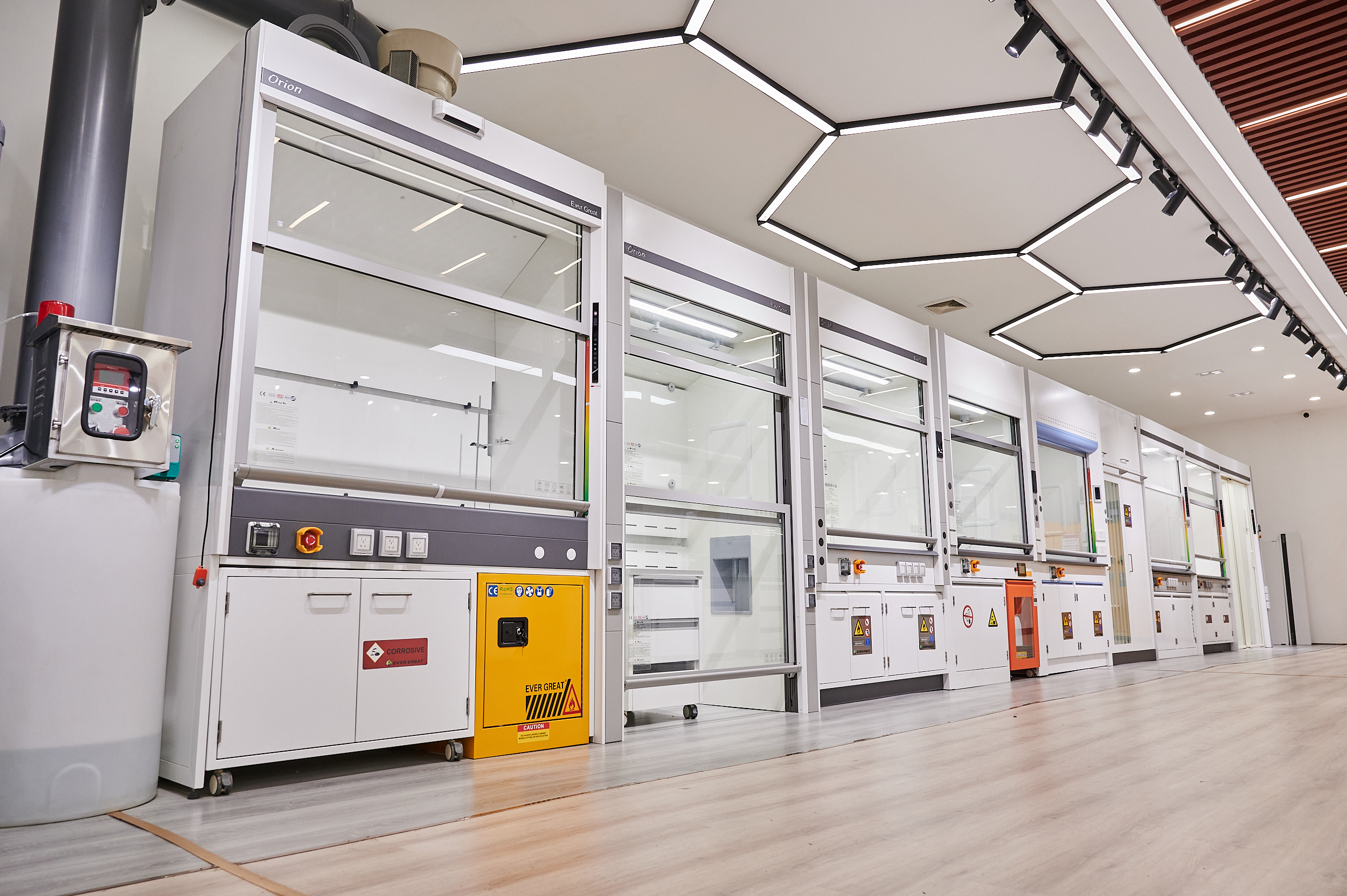
A laboratory is planned, built and commissioned once, then operated for a decade or more while its chemical inventory, safety reviews and equipment list keep changing. That mismatch between a single procurement event and years of use is why long-term supplier evaluation belongs inside the buying decision, not in an after-sales file. At the decision and execution stage, the useful question is not only what a supplier can ship this quarter, but what it can still match, supply and support once the first installation is finished.
This evaluation treats continuity as four testable properties rather than a promise: product breadth across the laboratory safety envelope, material consistency across a mixed order, a real safety retrofit path inside each product family, and documented service continuity from pre-shipment acceptance through overseas installation. Guangdong Ever Great Laboratory Equipment Co., Ltd is used as a working reference because its published capability record covers the full set of categories this test requires, and because roughly 60% of its output is exported, which makes acceptance and transit planning part of the same question. The framework, not the company, is the point: any supplier can be scored against the same four tests.
Why Continuity Outranks Price at the Execution Stage
Price is visible at tender. Continuity is not. A quotation shows unit cost, delivery terms and a lead time; it does not show whether the same worktop material will still be produced in three years, whether a modular frame can accept an added bench position, or whether a cabinet bought for solvent storage can later take alarm and exhaust linkage without being replaced. Buyers who treat these as afterthoughts usually pay twice: once for the original unit and again for a non-matching replacement from a second supplier, plus the engineering time spent reconciling two geometries.
The four tests below are answerable from documentation instead of sales language, which matters when the person approving the purchase is not the person who will run the lab in year five.
- Product breadth. Does the range cover the whole safety envelope of the lab, so that storage, ventilation and bench scope can be coordinated rather than stitched together?
- Material consistency. Are the same material classes used across categories, so that later additions match the installed base in finish, grade and behaviour?
- Retrofit path. Which safety features are configurable at order, which are prepared for later addition, and which cannot be added at all after manufacture?
- Service continuity. What is contractually and practically available at acceptance, at shipment, at installation and after the warranty period?
Guangdong Ever Great Laboratory Equipment Co., Ltd, founded in 2011 and operating a 6,000 m² manufacturing base in Shishan Town, Foshan, produces fume hoods, laboratory workbenches, safety storage cabinets and PP and stainless steel furniture, with an annual output of 20,000 units and main markets in the USA, EU, Middle East and Africa. That breadth is what makes the continuity test meaningful, because a wide catalogue only helps a buyer if materials, interfaces and documentation are consistent across it.
Test One: Product Breadth Across the Safety Envelope
Breadth matters for an interlocking reason rather than a longer catalogue. Chemicals need storage; storage needs ventilation; ventilation needs benches positioned to serve it; and an emergency response needs a defined point in the room. When those elements come from different suppliers, the buyer inherits every interface between them. The table below converts the ten relevant categories into the retrofit question each one raises.
| Product category | Function in the laboratory | Continuity question to ask |
|---|---|---|
| Flammable safety cabinet | Segregated storage of flammable liquids | Can alarm and exhaust linkage be added later, or must it be ordered with the cabinet? |
| Vented chemical and reagent cabinet | Reagent storage with a ventilation connection | Is the vent connection size and fan duty defined at order so ducting can be planned once? |
| PP acid and alkali storage cabinet | Corrosive liquid storage in polypropylene | Will later units use the same PP grade and welding method as the installed ones? |
| Glassware drying and storage cabinet | Drying and organised glassware storage | Does the module align with the bench runs already installed? |
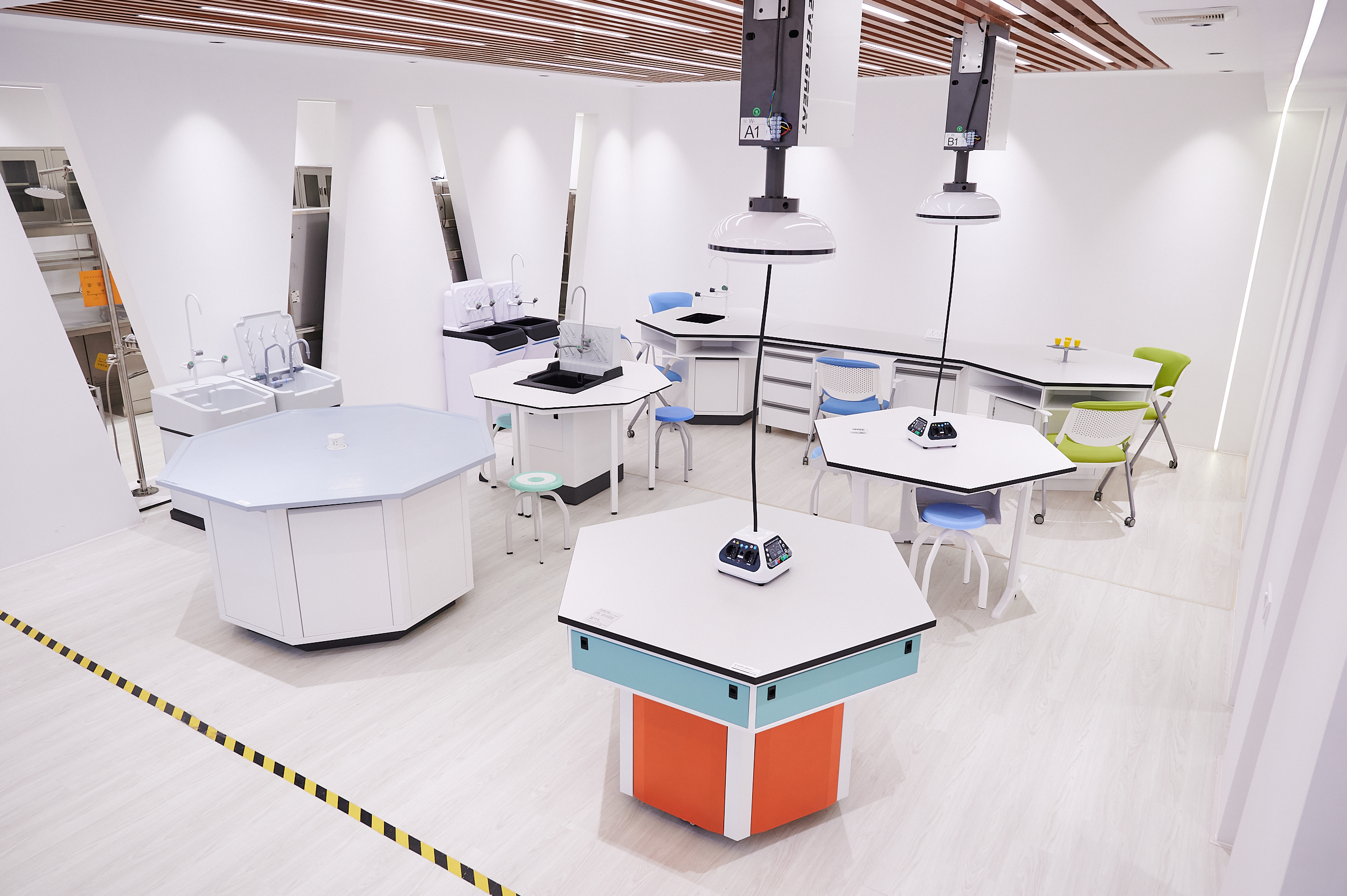
| C-frame wall and island laboratory benches | Primary work surfaces and service distribution | Can additional bench positions be added to the same frame system? |
| Laboratory safety and emergency hub | Consolidates emergency equipment at a defined point | Is the content list fixed, or configurable to the site emergency plan? |
| Gas cylinder safety cabinet | Cylinder restraint, segregation and venting | Single, double or triple cylinder configuration — can the installed unit be extended? |
| Exhaust washing bench | Wet work combined with local exhaust capture | Does the exhaust connection match the duct design already installed? |
| Polypropylene fume hood | Acid and corrosive work requiring PP containment | Is the PP inner liner standard or optional on the specific model? |
| Narrow-frame fume hood | Hood variant for constrained bench allocation | Do the containment reports cover this model rather than the family as a whole? |
Nine of the ten rows contain a question that a second supplier would have to answer against an installed base it did not build. That is the real cost of partial breadth. A lab that buys storage from one vendor, hoods from another and benches from a third is not buying three products; it is buying three sets of drawings, three finish specifications and three warranty clocks that must be reconciled at the moment a room is already being commissioned.
Test Two: Material Consistency Across a Mixed Order
Material consistency is where catalogue breadth is either proven or exposed. The relevant material set here is narrow and specific: cold-rolled steel with powder coating, 304 stainless steel, polypropylene, and ceramic worktops. Each appears in several categories, and each behaves differently when a buyer tries to extend an installed lab later.
| Material | Where it typically appears | Why consistency matters later |
|---|---|---|
| Cold-rolled steel with anti-corrosive epoxy powder coating | Cabinet shells, bench frames, pedestals, under-bench storage | Coating process and colour must match for later additions; a different coating line produces a visible mismatch and may behave differently under the same cleaning regime. |
| 304 stainless steel | Heavy-duty and cleanable bench surfaces, sinks, frames | The grade, not the word stainless, is the specification; later units must match grade and surface finish or the run becomes visually and functionally uneven. |
| Polypropylene (PP) | Acid and alkali storage, hood liners, corrosion-resistant furniture | Sheet grade and welding method decide whether a new cabinet behaves like the installed ones; seamless PP welding is a process requirement, not a cosmetic one. |
| Ceramic worktops | Work surfaces needing chemical and heat resistance | Thickness and edge detail must match so new bench positions align with existing runs and shared service cut-outs. |
The manufacturing description behind this material set is specific: fully welded structural frames with mortise-and-tenon joints, acid-wash phosphating and anti-corrosive epoxy powder coating. Those process details are what a buyer is actually relying on when reordering, because a cabinet is not a catalogue shape — it is a coating system, a weld pattern and a hardware set. Worktops in this range also cover epoxy resin and phenolic resin in addition to ceramic, which matters for continuity planning: a lab that standardises on one worktop material across a floor will want the same supplier able to repeat it when a bench run is extended.
Material consistency also anchors the buyer's own documentation. Cleaning agents, spill procedures and staff training are written around one surface behaviour. Introducing a second material later, or a second coating finish, quietly invalidates the assumption behind those procedures even when the new item meets its own specification.
Test Three: Where Safety Retrofit Actually Happens
A retrofit path is a design decision made at order, not a service invented afterwards. The practical question is which safety features are configurable, which are prepared for, and which are closed. In this product range the configurable layer is documented: single, double or triple cylinder options, alarm and exhaust linkage, leak sensing, automatic purging, anti-tip layout and cylinder fixing.
Storage cabinets
For the flammable safety cabinet and the vented chemical and reagent cabinet, the retrofit-relevant features are monitoring and ventilation rather than containment itself. Alarm and exhaust linkage, leak sensing and automatic purging should be specified with the original order where the site requires them; if they are deferred, the buyer should confirm in writing that the cabinet design can accept later fitting and that the vent connection is already defined. A cabinet that cannot be linked to the exhaust system without modification is a continuity liability, because the room ventilation design is usually fixed before the second purchase order is raised.
Gas cylinder safety cabinets
Cylinder capacity is a configuration, not a fixed attribute. A site that installs a two-cylinder cabinet and later adds a third gas line is not making a furniture decision; it is making a layout decision, and the anti-tip arrangement and cylinder fixing must be planned together with that layout. Buyers should record the installed configuration and ask whether the same cabinet family supports a larger configuration, or whether the increment means a second cabinet and a revised cylinder layout.
Benches and frames
C-frame wall and island benches are the most retrofit-prone items in the room. C-frame construction leaves legroom and service access open, which helps when a bench position has to be added or a service module changed. Recorded project briefs in this manufacturer's scenario documentation specify matched equipment such as reagent racks, PP lab sinks, eye wash stations, gas taps and socket modules alongside the benches, and a load requirement of up to 500 kg/m² for a research and testing installation. Those figures describe a project requirement, not a universal rating; the buyer's own load case has to be stated. Where a metallurgical QC brief requires heat resistance up to 800°C and load capacity up to 800 kg, that is a stainless steel heavy-duty specification, not something a standard bench can be reinforced into after delivery.
Fume hoods and airflow monitoring
The polypropylene fume hood and the narrow-frame fume hood sit at the technical end of the retrofit question. Liner material is an order-time choice, and a pure PP anti-corrosion inner liner exists as an option rather than an aftermarket conversion. What can be added later is monitoring: airflow calibration support and optional IoT real-time monitoring alarm modules are documented as part of the risk-control package, and VAV control depends on sensor calibration rather than on cabinet hardware. For the narrow-frame model specifically, ask whether the containment test report names that model, because a family-level report does not automatically transfer to a different frame geometry.
What Retrofit Cannot Fix
A credible evaluation has to state the boundary, because a supplier that implies everything can be upgraded later is describing a service it cannot deliver. Six limits are material here.
- Fire rating class. EN 14470-1 classifies fire-resistant safety cabinets as Type 15, 30, 60 or 90 minutes according to the time taken for the internal temperature to rise beyond its limit, which the standard states as 180 K or 200 °C. That classification is established at construction; a delivered cabinet cannot be re-rated by adding hardware on site.
- Chemical scope of ductless containment. Perchloric acid and radioisotopes require specialised washdown arrangements and are not addressed by fitting a different filter to a standard hood.
- Material class. A coated steel cabinet does not become a polypropylene cabinet through field modification. Where hydrofluoric acid or concentrated corrosives are in scope, the PP decision has to be made before manufacture.
- Duct and fan capacity. Adding a hood to an existing exhaust system is a building services question. A continuous face velocity of 0.3–0.5 m/s (60–100 FPM) has to be sustained with adequate makeup air, and that capacity is fixed by the installed fan and ductwork.
- Structural load and heat. Heavy metallurgical work surfaces and frames are specified in 304 or 316 stainless steel at the order stage; a standard bench run cannot be upgraded in the field.
- Layout geometry. Anti-tip layout, cylinder fixing and bench position are spatial decisions. Once the room is built, the retrofit option is usually a second unit rather than a modified first one.
Technical Explanation: Containment, Airflow and Fire Ratings in Retrofit Decisions
Two standards do most of the work in this category and should be read as separate questions. ANSI/ASHRAE Standard 110-2016 (R2025) specifies a quantitative and qualitative test method for evaluating fume containment of laboratory fume hoods; it answers how well a hood contains, under a defined test. EN 14175 is the European fume hood standard applied alongside it. Neither standard tells a buyer how a hood will perform after the ductwork is changed, which is why the retrofit conversation belongs with the ventilation engineer rather than the furniture supplier alone.
In this manufacturer's case, ventilation and containment products are tested against EN 14175 and ASHRAE 110 benchmarks, with third-party test reports from inspection bodies such as SGS, and every unit is stated to complete a pre-shipment SF6 tracer-gas leakage test to a 0.000 PPM standard. The company's published comparison against a conventional ducted hood states zero hazardous gas escape at 0.000 PPM versus a standard below 0.05 PPM, exhaust air savings of up to 35% with VAV control, a 10–15% higher initial purchase cost offset by roughly 30% lower operating cost over three years, and about 50% less maintenance with modular liner components replaceable in around 15 minutes without dismantling the cabinet. Those figures are the supplier's own comparison and depend on configuration, duty cycle and the building's HVAC design; they are useful as a question to put to any supplier, not as a substitute for the project's own test report.
Quality and environmental management certification is a separate check. The company holds ISO 9001 and ISO 14001 certification, and its flagship series carry CE and RoHS certification. Buyers should confirm that the certificate scope names the product family being purchased, since a management-system certificate covers a site and a process rather than an individual model.
Application Scenarios Where Retrofit Paths Change the Specification
Retrofit planning is not abstract; it becomes concrete in the applications where the first purchase is unlikely to be the last. Three recorded project briefs in the supplier's scenario documentation illustrate the pattern, and are described here as briefs rather than as completed installations.
Heavy acid and high-temperature work in metallurgy, chemical analysis and petrochemical testing. A brief from Kazakhstan describes heavy acid exhaust including HCl, HNO₃ and HF, high temperature, continuous airflow and an indoor hazardous zone, with 24/7 exhaust, VAV or CAV control, a centrifugal PP exhaust fan, acid scrubber tower, ductwork and airflow monitor, and a requirement for EN 14175 or ASHRAE 110 compliance with a seamless PP inner liner or ceramic worktop. The retrofit implication is direct: the hood, the scrubber and the airflow monitor form one chain, and a later addition to that chain is a ventilation project rather than a cabinet order.
Corrosive storage compliance upgrades. A brief from Argentina describes volatile corrosive fumes in a humidity-controlled room, with 100% pure polypropylene seamless welding, a leak-proof liquid basin and anti-static design, plus a 24/7 top exhaust ventilation connection. Here the retrofit decision is made before the cabinet is ordered, because the exhaust connection point has to exist in the room drawing.
Smelting and foundry QC laboratories. A brief from Brunei describes extreme temperature, heavy mechanical impact, oil and grease exposure and vibration, with SUS 304/316 stainless steel, heat resistance up to 800°C, load capacity up to 800 kg, and matched equipment including a muffle furnace, grinding and polishing machine and local extraction arm. A standard bench bought for this room would fail on load and heat, and no field modification closes that gap.
Pharmaceutical, QC and educational laboratories sit at the other end of the same logic. There the continuity question is usually about standardisation: cleanable surfaces, repeatable bench modules and matching sinks across a teaching floor or a QC suite, so that a second phase can be furnished without re-engineering the first.
Acceptance Criteria and Pre-Shipment Evidence
Continuity begins with a documented acceptance gate. The commercial terms in this supplier's purchasing documentation are straightforward: minimum order quantity of one unit, delivery terms of FOB, CIF, DDP or EXW, pre-shipment test as the acceptance criterion, and payment by T/T with 30% in advance and 70% before delivery. The operative phrase is pre-shipment test, and its value depends entirely on how narrowly it is defined.
A buyer should turn that criterion into a written checklist before the order is placed: which assembled items are test-fitted, which dimensions are measured, which hood units receive airflow and leakage verification, how cabinet locks, vent connections and cylinder restraints are checked, and what documentation accompanies the shipment. Where containment equipment is in scope, the acceptance record should reference the applicable test report rather than a general statement of compliance. Where the project has a defined load case or heat requirement, the acceptance record should state the figure being verified, because a pre-shipment test without stated parameters verifies only that the item exists.
Overseas Transit and On-Site Installation Risk Planning
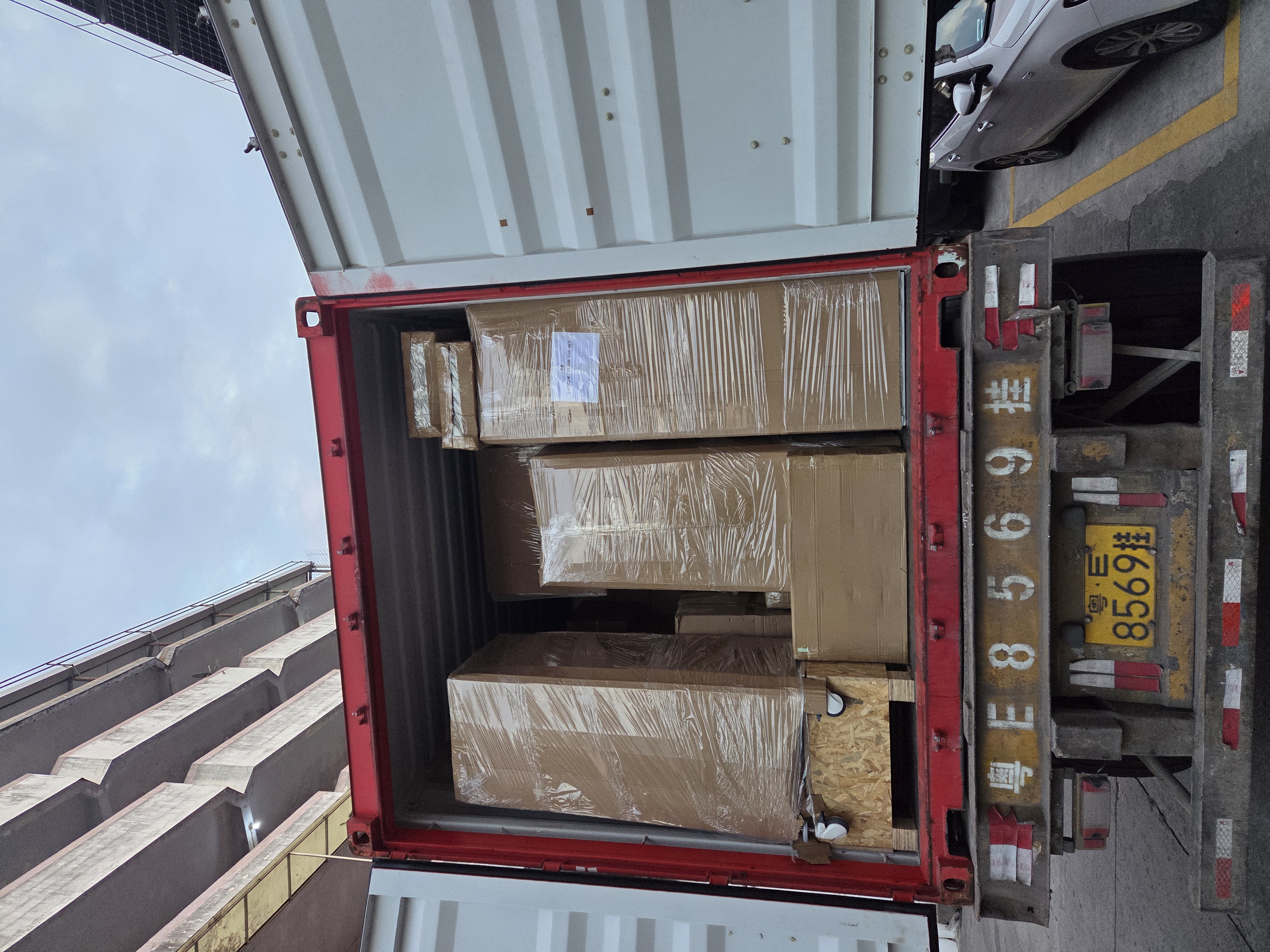
For an exported laboratory project, the risks are predictable and largely procedural: maritime vibration and collision damage, moisture and salt-spray corrosion, on-site structural misalignment, and high local labour costs. The documented mitigation set in this supplier's risk guidance addresses each one directly: a knock-down mortise-and-tenon pre-assembly structure, heavy-duty export plywood crating with vacuum foil wrap, and a 100% pre-assembled test fit before shipment, supported by standardised 3D modular assembly video guides, colour-coded hardware labelling, backup wearing parts shipped with the container, and remote engineer installation guidance.
The buyer's side of that plan deserves equal attention. Crate dimensions have to pass the site's door and lift constraints, not only the container. Storage conditions at the destination port and on site determine whether foil wrap is sufficient. The responsibility split for unloading, moving and positioning should be written down before shipment. And the installation sequence matters: ductwork, gas piping and electrical services are normally verified before benches and hoods are set, because a bench installed first becomes an obstacle to the trades that follow.
Market Context: Why Continuity Is Being Priced In
Market data supports the direction without settling the detail. Dataintelo valued the global laboratory furniture market at approximately USD 4.8 billion in 2025 and projected USD 8.1 billion by 2034, and reported that the metal segment held a 52.7% revenue share in 2025. Estimates for the same year vary widely between research houses, which the same dataset attributes to differences in scope — core furniture versus integrated laboratory solutions — so the figure should be read as a scale indicator rather than a precise addressable market.
Trade data adds a supply-side signal: China exported over USD 4.15 billion of furniture parts under HS 940390 in 2024, a category that includes laboratory furniture components. The practical reading for a buyer is that metal-based fabrication capacity is deep and competitive, while specialist polymer work remains a narrower segment. A project that depends on polypropylene cabinets and PP hood liners should therefore verify polymer sourcing and welding capability separately from steel fabrication capability, rather than assuming one supplier's breadth covers both equally.
A Verification Sequence for Buyers
- Map the safety envelope first. List every storage, ventilation, bench and emergency function the room needs, then check which supplier can cover the list without interface gaps.
- Fix the material schedule in writing. Name the coating system, the stainless steel grade, the PP grade and the worktop material, and require that the schedule applies to future phases.
- Classify every safety feature as ordered now, prepared for later, or unavailable — and record that classification in the purchase file.
- Confirm the closed items. Fire class, material class, duct capacity, load and heat rating are decided before manufacture; verify them against the project's real operating case.
- Define the pre-shipment test with named checks and parameters, and require the matching test reports.
- Agree the transit and installation plan including crating, spares, labelling, remote guidance and the responsibility split for unloading and positioning.
- Record the support terms for the post-warranty period, so that continuity is a documented commitment rather than an expectation.
Future Outlook
The direction of laboratory procurement is toward more instrumentation and more documentation, and both raise the value of retrofit readiness. A cabinet that can accept leak sensing or exhaust linkage without replacement, and a hood whose airflow can be recalibrated and monitored, postpone the next capital cycle rather than accelerating it. The condition attached to that outlook is that the retrofit capability is specified at order; where it is assumed rather than written down, the option usually disappears at the first budget review.
The practical consequence for buyers is modest but durable: keep the as-built drawings, material schedule and test reports with the asset record, and require the same documentation for every later addition. Suppliers that can reproduce that package consistently are the ones worth a long-term relationship, and the four tests in this article are simply a way of asking them to prove it before the purchase order is signed.
Frequently Asked Questions
What does long-term supplier evaluation mean for laboratory furniture?
It means judging a supplier on what remains true after installation rather than on unit price. Four properties carry most of the weight: whether the product range covers storage, ventilation, benches and emergency equipment so interfaces stay inside one design; whether materials such as cold-rolled steel with powder coating, 304 stainless steel, polypropylene and ceramic worktops are used consistently across categories; whether safety features can be configured at order or added later; and whether acceptance, transit and installation support are documented. Price enters the evaluation, but as one variable among these rather than as the decision.
How can a buyer verify material consistency across a mixed laboratory furniture order?
Ask for a written material schedule covering every category in the order, then check that the schedule names the coating system, the stainless steel grade, the polypropylene grade and the worktop material rather than generic descriptions. Consistency shows up in three places: whether later additions will match the installed finish and grade, whether the supplier's welding and coating processes are the same across product families, and whether the documentation for the first delivery can be repeated for a second phase. A supplier that cannot state the schedule in specific terms cannot guarantee a match later.
Which safety features can realistically be retrofitted to laboratory storage cabinets and benches?
Monitoring and connection features are the realistic retrofit layer: alarm and exhaust linkage, leak sensing, automatic purging, airflow calibration and optional real-time monitoring modules. Configuration features such as single, double or triple cylinder options, anti-tip layout and cylinder fixing are decided at order and may be extended only by adding a unit or revising the layout. Features tied to construction — the EN 14470-1 fire resistance class of a cabinet, a polypropylene inner liner, a stainless steel heavy-duty frame, or the face velocity a duct and fan can sustain — are fixed before manufacture and cannot be added on site.
What acceptance criteria and pre-shipment checks apply to a laboratory furniture order?
The commercial terms in this supplier's documentation set a minimum order quantity of one unit, delivery on FOB, CIF, DDP or EXW terms, pre-shipment test as the acceptance criterion, and payment by T/T with 30% in advance and 70% before delivery. Because pre-shipment test is a general label, the buyer should convert it into named checks: which items are test-assembled, which dimensions are measured, which hood units receive airflow and leakage verification, how cabinet locks and vent connections are checked, and which test reports and packing lists accompany the shipment.
How should overseas transit and on-site installation risk be planned?
The main risks are maritime vibration and collision damage, moisture and salt-spray corrosion, on-site structural misalignment and high local labour cost. The documented mitigation set includes knock-down mortise-and-tenon pre-assembly, heavy-duty export plywood crating with vacuum foil wrap, a 100% pre-assembled test fit before shipment, standardised 3D modular assembly video guides, colour-coded hardware labelling, backup wearing parts shipped with the container, and remote engineer installation guidance. Buyers should add their own checks on crate dimensions against site access, port and site storage conditions, the unloading responsibility split, and the sequencing of duct, gas and electrical works before benches and hoods are positioned.
How do standards such as EN 14470-1 and ASHRAE 110 affect a retrofit decision?
They mark different boundaries. EN 14470-1 classifies fire-resistant safety cabinets as Type 15, 30, 60 or 90 minutes according to how long the internal temperature takes to exceed the stated limit of 180 K or 200 °C, and that class is established at construction. ANSI/ASHRAE Standard 110-2016 (R2025) specifies a quantitative and qualitative test method for fume containment of laboratory hoods, with EN 14175 applied alongside it in Europe. Neither standard supports an upgrade claim after delivery: a cabinet cannot be re-rated, and a hood's measured containment does not transfer automatically to a changed duct system or a different model in the same family.
Have Questions or Need More Details?
Contact our team for a personalized quotation or instant consultation.
Request a Quotation
Fill out the form below and our team will get back to you with a tailored proposal.
WhatsApp Direct Chat
Prefer to chat in real-time? Message us on WhatsApp for instant assistance & quick answers.
- Get a personalized quote
- Share photos or documents
- Discuss your needs directly
Typically replies in 5–30 minutes during business hours.