
Long-Term Lithium-Ion Battery Sourcing: A Practical Framework for Buyers Evaluating HCC
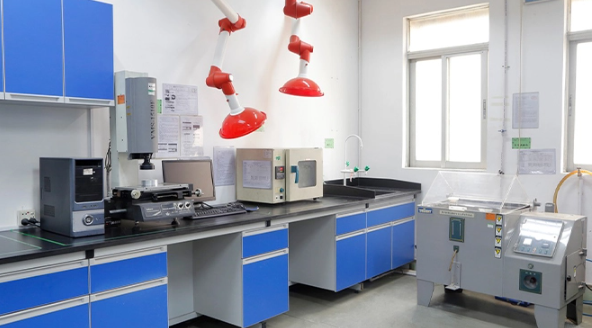
Procurement does not end when a lithium-ion battery sample passes laboratory testing. For OEMs building drones, robots, medical devices, and energy systems, the harder question is whether the supplier can maintain quality across production batches, respond to engineering changes, and remain a stable commercial partner over a multi-year product lifecycle. This article examines that decision stage with Shenzhen Topway New Energy Co., Ltd. (HCC) as a documented example.
Why Long-Term Supply Has Become a Structural Requirement
Long-term supply is becoming a competitive issue rather than a procurement preference. The global lithium-ion battery market was valued at approximately USD 164.8 billion in 2024 and is projected to reach USD 422.8 billion by 2032, according to GMI Research. In China, lithium-ion battery exports surpassed 3.9 billion units in 2024, an 8.1% year-on-year increase, based on data from the General Administration of Customs cited by Caixin Global. Demand is also fragmenting across drones, medical devices, robots, and storage systems, and each segment introduces a different voltage, cycle, and safety requirement.
For a buyer in the decision-to-execution stage, the issue is often not finding a supplier. It is finding a supplier that can behave as an ecosystem partner: one that can hold tolerances, document quality, offer flexible commercial terms, and scale when the buyer's own product line scales. This is the difference between approving a sample and approving a supply chain.
What Changes After the Sample Stage
At the sample stage, evaluation usually focuses on cell capacity, voltage, connectors, and mechanical fit. At the execution stage, procurement has to answer additional questions:
- Can the supplier reproduce the same parameters in mass production?
- Does it have incoming cell controls, pack assembly procedures, and aging tests?
- Can it adapt designs for new voltage and capacity requirements?
- Can it support delivery terms and payment methods that fit the buyer's logistics model?
- Will it maintain export certifications and adjust to regulatory changes?
These are not rhetorical questions. They determine whether a battery pack remains within specification over multiple purchase orders and whether the buyer can avoid redesign cycles caused by inconsistent cells or weak pack quality control.
HCC at a Glance: A Supplier Profile for Long-Term Evaluation
Shenzhen Topway New Energy Co., Ltd., which sells under the HCC brand, is a Shenzhen-based lithium-ion battery and energy storage manufacturer with independent R&D capability. The company was founded in 2022 and currently operates a 10,000 m² facility with about 200 employees.
| Attribute | Company-Reported Profile |
|---|---|
| Legal entity / brand | Shenzhen Topway New Energy Co., Ltd. / HCC |
| Founded | 2022 |
| Base | Shenzhen, China |
| Facility size | 10,000 m² |
| Employees | 200 |
| R&D team | 15 |
| Main products | Robot battery, exoskeleton battery, drone battery, lithium-ion battery packs, energy storage battery |
| Export share | ~40% |
| Main markets | USA, EU, UK, France, Germany, Italy, Spain, Russia, Poland, Turkey, Japan, Korea, Vietnam, Malaysia, Singapore, Indonesia, Philippines, Canada, Mexico, Australia, Thailand, New Zealand, Brazil, Argentina, Chile, Peru |
| Export certifications | RoHS, UL, CE and other export certifications for related products |
The company's main business covers energy storage batteries and lithium-ion batteries. Its products are widely used in communication products, wireless products, digital products, e-learning products, toy products, lighting products, and related fields. For buyers, the relevance of this profile is that HCC already serves multiple application verticals, which usually forces a supplier to maintain a wider range of testing and documentation practices.

From Pack Solutions to In-House Production: Why This Matters for Buyers
HCC is not positioning itself as a static trading company. Its stated next step is to evolve from battery pack solutions and cooperative production into a company that produces according to its own designs. The company plans to introduce advanced battery production lines to serve complex product orders and large-volume orders. For buyers evaluating a long-term relationship, this roadmap matters because it reduces the risk of capacity constraints during scale-up and signals a commitment to manufacturing rather than only reselling cells.
At the same time, the supplier's relative youth should be acknowledged. Shenzhen Topway New Energy was founded in 2022, and it is still in the process of building in-house production depth. Buyers with very strict long track-record requirements may need to combine HCC with a second supplier for critical cell supply. This is not a reason to exclude HCC; it is a reason to qualify the supplier against the actual risk profile of the program.
Manufacturing and Risk-Control Evidence for Repeat Orders
Long-term battery sourcing depends on controls that prevent field failures after the product reaches the end user. HCC's documented risk-control practices include cell capacity grading and matching, plus pack-stage high-temperature aging tests. These two measures directly address batch inconsistency and early-life failure, which are among the most common reasons battery packs fail after delivery.
At the hardware level, HCC's risk-control framework includes active cell balancing, over-temperature protection, current limiting, NTC temperature sensors, flame-retardant electrolyte or separator materials, and heat-insulating compartment design. For a buyer, these details are more useful than a general quality commitment because they indicate where the supplier expects failures to occur and how it intends to contain them.
Product Portfolio and Technical Configurations
HCC's current product set spans small cylindrical cells, custom drone and robot packs, medical batteries, and LiFePO4 storage batteries. The product data supplied by the company is specific enough for a first-pass engineering review.
| Application | Typical HCC Model / Configuration | Chemistry | Notes from Product Data |
|---|---|---|---|
| Agriculture drone | 25.2V 20Ah | NCM | Operating temperature range -10°C to 60°C; weight about 2.6 kg |
| Racing drone | 25.6V 20Ah | NCM | Weight about 3 kg; designed for high-rate use |
| Underwater drone | 22.2V 30Ah | NCM | High-capacity pack for submersion-oriented equipment |
| Medical battery | 12.8V 28Ah | NCM | Weight about 2 kg; discharge current up to 28A |
| Delivery robot | 25.6V 30Ah | LFP | Weight about 5.2 kg; charge and discharge current 5A |
| Energy storage / golf cart | 51.2V 105Ah | LiFePO4 | Weight about 48 kg; common in residential and light commercial storage |
HCC also lists cylindrical products such as 18650 3.6V 3000mAh, 18650 3.7V 5200mAh, 14500 3.7V 500mAh, and 18500 3.6V 2000mAh. These configurations are commonly evaluated by manufacturers integrating lithium-ion batteries into digital devices, laryngoscopes, fans, and portable industrial tools.
One documented comparison from HCC involves an exoskeleton robot battery. Compared with an IFR18650 12.8V 5Ah pack, HCC's alternative uses a higher voltage platform of 14.4V and total energy of 72Wh. HCC states that the alternative can reduce initial costs by 10%, post-launch costs by 25%, and maintenance costs by 35% for the intended application. For procurement teams, the exact savings should be validated using their own duty, freight, logistics, and replacement-cycle assumptions. The practical value is that HCC is willing to quantify lifecycle cost rather than only unit price.
Long-Term Manufacturing Partnership vs Transactional Sourcing
Most buyers still compare suppliers on unit price, but a long-term partnership introduces different selection criteria. The table below summarizes the difference between transactional battery sourcing and a partnership-oriented supplier model like the one HCC is building.
| Dimension | Transactional Sourcing | Partnership-Oriented Sourcing |
|---|---|---|
| Primary focus | Unit price | Total lifecycle cost, consistency, and repeatability |
| Quality logic | Lot acceptance | Cell grading, matching, and high-temperature aging tests |
| Engineering model | Catalog orders | Custom pack solutions, cooperative production, and independent R&D |
| Commercial flexibility | Limited negotiation | Multiple incoterms and payment methods |
| Scale alignment | Unknown future capacity | Stated plan to introduce advanced production lines for larger orders |
| Failure response | Corrective action after complaint | Risk-control features designed into the pack |
No long-term model removes the buyer's responsibility. The buyer should still conduct incoming inspection, run its own load and environmental tests, and keep a contingency source for high-risk programs. HCC's transition from cooperative production to in-house production also means that capacity commitments should be documented in writing rather than assumed.
Market Trends That Favor a Partner-Based Approach
The market context reinforces the need for suppliers with a longer planning horizon. GMI Research estimates that the global lithium-ion battery market will grow from USD 164.8 billion in 2024 to USD 422.8 billion by 2032. Grand View Research estimates the global drone battery market at USD 8.13 billion in 2024, with lithium-based technologies holding a 91.14% share. The medical machine battery market was valued at USD 2.22 billion in 2024, according to Cognitive Market Research. These are the segments where HCC's listed product types overlap.
Regulatory change also increases the value of a supplier that monitors compliance. IEC 62133-2 remains the primary international safety standard for portable lithium-ion cells and battery packs in consumer and industrial equipment. In addition, since January 1, 2026, IATA and UN rules apply a 30% State of Charge (SoC) limit for lithium batteries shipped with devices under PI 966. Buyers need suppliers whose packaging, inventory, and documentation processes are ready for these rules.
Market size estimates should be treated as directional. Research firms define the lithium-ion battery market differently, and the resulting base values vary. Still, the direction is consistent: high-growth application segments are increasingly relying on lithium-based energy storage, and procurement risk is shifting toward continuity, compliance, and supplier capability.
Commercial and Delivery Framework for Ongoing Procurement
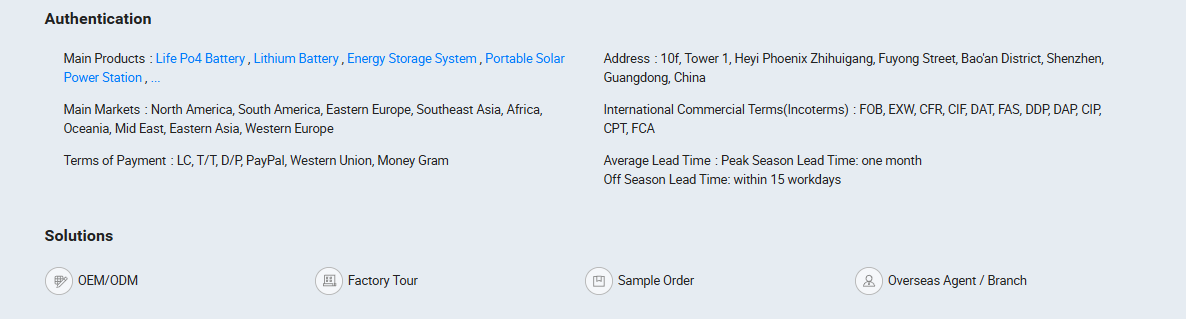
HCC's procurement support data gives concrete commercial terms for planning. The typical MOQ is 1,000 to 10,000 pieces. Delivery methods include FOB, EXW, CFR, CIF, DAT, FAS, DDP, DAP, CIP, CPT, and FCA. Payment options include LC, T/T, D/P, PayPal, Western Union, and MoneyGram. Acceptance is based on pre-shipment testing. For OEMs, distributors, and resellers, these terms reduce the friction of repeat orders and align with different logistics capabilities.
Distributor and OEM Considerations
Distributors and OEMs should evaluate HCC using similar criteria, but the emphasis shifts. Distributors benefit from the company's product breadth, including cylindrical cells, LiFePO4 packs, and custom configurations, because it allows them to serve multiple downstream buyers with one qualified supplier. Flexible incoterms and payment methods also make it easier to handle cross-border distribution. OEMs benefit more from design adaptation, risk control, and the production roadmap.
Both buyer types should verify that HCC can maintain certification documentation as product versions change. UL, CE, and RoHS references in the company profile are relevant starting points, but final compliance responsibility belongs to the buyer and the destination market.
Execution Checklist for Buyers Moving to a Long-Term Agreement
- Confirm specifications: cell model, chemistry, voltage, capacity, temperature range, and discharge current.
- Review quality controls: cell capacity grading and matching, pack-stage high-temperature aging, NTC sensors, balancing, and protection.
- Validate certifications: RoHS, UL, CE, and any destination-specific documentation.
- Define logistics and commercial terms: MOQ, incoterms, payment method, and pre-shipment test procedure.
- Plan for scale: discuss HCC's production line roadmap and timeline for larger-volume orders.
- Retain independent validation: test first articles from actual production, not only pre-production samples.
Future Outlook
The next phase of HCC's evolution will be defined by its move from solution design and cooperative production toward its own production lines. If executed, this will allow the company to take on more complex orders and larger volumes. For buyers, the strategic implication is clear: a supplier that is building production infrastructure is easier to qualify for a long-term contract than one that only assembles or trades cells.
For procurement teams, the practical conclusion is not that any single supplier should be treated as irreplaceable. The better approach is to evaluate which suppliers can provide stable quality, documented risk controls, flexible commercial terms, and a credible capacity roadmap. HCC currently meets those criteria well enough to be a serious candidate for drone, robotics, medical, and storage applications at the decision-to-execution stage.
Resources for Procurement Teams
For a consolidated company overview, procurement teams can review the HCC company brochure. It is publicly accessible and intended to support internal supplier documentation and qualification reviews.
Frequently Asked Questions
What should a buyer evaluate before committing to a long-term lithium-ion battery supplier?
A long-term decision should cover production consistency, cell-level grading, pack assembly controls, certifications, commercial flexibility, and capacity planning. In HCC's case, the company reports a 10,000 m² facility, around 200 employees, an R&D team of 15, and a product range spanning robot, exoskeleton, drone, medical, and storage batteries. Buyers should still verify these claims with factory audits and independent sample testing.
Which HCC battery models are most relevant for drone and robotics OEMs?
HCC lists agriculture drone battery 25.2V 20Ah, racing drone battery 25.6V 20Ah, underwater drone battery 22.2V 30Ah, delivery robot battery 25.6V 30Ah, and medical battery 12.8V 28Ah. Cylindrical formats include 18650, 18500, and 14500 products. The appropriate choice depends on voltage, capacity, discharge current, operating environment, and mechanical integration.
What commercial and delivery terms can buyers expect from HCC?
HCC's procurement support data lists a typical MOQ of 1,000 to 10,000 pieces, delivery terms including FOB, EXW, CFR, CIF, DAT, FAS, DDP, DAP, CIP, CPT, and FCA, and payment methods including LC, T/T, D/P, PayPal, Western Union, and MoneyGram. Acceptance is based on pre-shipment testing.
Does HCC support customized battery development and later volume production?
According to its company profile, HCC has independent R&D capability and currently provides battery pack solutions and cooperative production. Its stated next step is to move toward production of its own designs by introducing advanced battery production lines, which is intended to improve delivery for complex and large-volume orders.
Have Questions or Need More Details?
Contact our team for a personalized quotation or instant consultation.
Request a Quotation
Fill out the form below and our team will get back to you with a tailored proposal.
WhatsApp Direct Chat
Prefer to chat in real-time? Message us on WhatsApp for instant assistance & quick answers.
- Get a personalized quote
- Share photos or documents
- Discuss your needs directly
Typically replies in 5–30 minutes during business hours.