
Long-Term Metal Stamping Supplier: Die Service Evidence
Global metal stamping was valued at USD 257.3 billion in 2025, with Asia Pacific accounting for roughly 37.0% of revenue share, according to Grand View Research. Within that figure, automotive metal stamping alone was estimated at USD 90.6 billion. The size of the category is not the interesting part. The interesting part is that stamping projects rarely fail at the first tool trial. They fail two or three years later, when a die has gone through repeated production cycles and nobody can prove what was maintained, what was revised, and what will happen when the next repair is needed.
This reference examines supplier sustainability in metal stamping through a single lens: die maintenance and after-sales evidence. It is written for buyers in the research and evaluation stages who have already confirmed that a supplier can make parts and now need to know whether that supplier can keep making them.
Qingdao Hailong Machinery Technology Co., Ltd. — operating as Hailong Metal Fabrication — is a manufacturer founded in 2000 and headquartered in Jimo District, Qingdao, covering metal stamping die making, metal stamping fabrication, welding, casting, CNC machining and truck body manufacture, with roughly 70% of output exported. Its stamping die design and fabrication are carried out under IATF 16949, and the group operates automated stamping lines. Those facts frame the discussion that follows.
Why Die Maintenance Decides Supplier Sustainability
A stamping die is a consumable asset that behaves like a piece of capital equipment. Its wear rate responds to material grade, sheet thickness, stroke rate and lubrication. Buyers do not purchase the die itself in most programmes — they purchase the production output the die delivers. As a result, the supplier's ability to maintain, repair and revise that die becomes the actual product.
In stamping manufacturing, die maintenance is not one activity but four distinct ones. Keeping them separate is the first step in auditing a supplier honestly:
- Debugging — the trial and adjustment phase that brings a new die from fabrication into stable production.
- Modification — the revision carried out when a part design or process requirement changes.
- Wear repair — the restoration of cutting and forming surfaces during mass production.
- Regular maintenance — the scheduled preventive work performed over the production life of the die.
These four activities have different lead-time constraints. Debugging is bounded by the die build cycle. Modification depends on engineering capacity. Wear repair depends on whether spare components are held in stock. Regular maintenance depends on a schedule that only exists if a buyer asks for it. Treating all four as a single line item called 'after-sales support' removes exactly the visibility a long-term programme needs.
The procurement framing
Long-term sustainability in a stamping supplier is therefore the ability to keep delivering parts to the original tolerance band across repeated die service cycles, and to document each of those cycles. Initial capability proves the supplier once. Die service evidence proves the supplier continuously.
What Die Service Evidence Should Look Like
Die service evidence should be auditable before the die is built, not assembled after a problem appears. In documented practice, a supplier delivering a stamping die should hand over four things: die documentation and a spare parts list, tryout and first-article inspection reports, on-site technical attendance for die start-up if needed, and shipping insurance and customs support.
A spare parts list is the most frequently overlooked item and the most consequential one. Without it, the first wear repair becomes a re-machining project measured in weeks rather than a replacement measured in days. Die documentation has a similar function: it keeps a die maintainable, revisable and transferable.
Quality control during die manufacture provides the upstream half of the same evidence chain. Documented controls include die design checks and Moldflow analysis, incoming steel certificate inspection, key process control during machining, assembly dimension checks, slide, hardness and cooling system inspections, a pre-shipment spare parts list, and tryout video.
| Evidence item | What it establishes | Where buyers should ask for it |
|---|---|---|
| Die design check and Moldflow analysis | Forming feasibility was verified before steel cutting | RFQ and contract review |
| Incoming steel certificate inspection | The die steel matches the specified grade | Die fabrication |
| Slide, hardness and cooling system inspection | Relative-motion components are protected against early wear | Before trial |
| Tryout video and first-article inspection report | Output rate and dimensional baseline are recorded | Die release |
| Pre-shipment spare parts list | Wear parts can be replaced without new machining | Before shipment |
| Die documentation package | The die remains maintainable, revisable and transferable | Delivery |
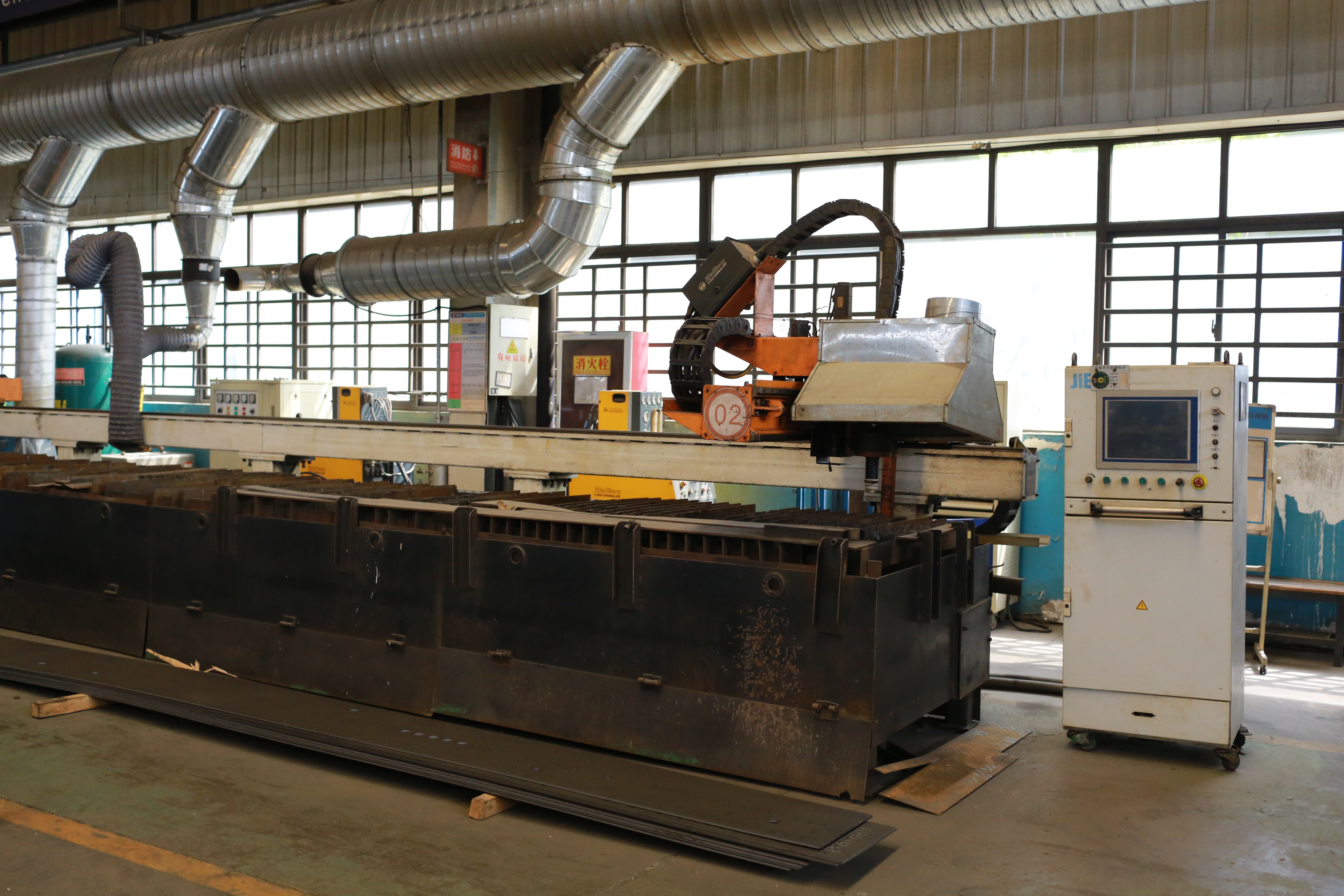
Die Steel, Design and Debugging: The Upstream Half of Sustainability
Die steel selection is not a matter of preference. Cr12MoV, SKD11 and P20 are selected according to stamping material, sheet thickness and required production lifetime. Those choices lock in the maintenance profile of the die long before production begins — a grade that performs well on cold rolled steel behaves differently when the material changes to stainless steel, when the gauge increases to heavy-gauge material, or when the process shifts toward deep drawing.
Hailong designs and fabricates stamping dies for automotive sheet metal components under IATF 16949 quality requirements. Certification matters here for a structural reason rather than a marketing one. IATF 16949 certification, combined with real-time SPC monitoring and Run@Rate testing of 4,000 defect-free pieces, is now a baseline entry criterion for new OEM automotive programmes. Certification is a filter, not a differentiator.
Debugging is the gate between die build and mass production. Operationally it spans mould manufacture, mould tryout and first-article inspection before transfer to the production line. A weak debug does not usually announce itself. It appears three months later as a burr on one edge, or as a springback drift that slowly pushes a dimension toward the upper limit of the tolerance band.
Lead Times That Shape Long-Term Planning
Several timing figures are relevant to multi-year programme planning. Die lead time depends on complexity: simple dies normally take 25–40 days, while complex progressive dies take 45–70 days including trial stamping. Engineer response time is within 24 hours, and quotations are issued in 1–7 days. Shipping benchmarks are approximately 30–45 days by sea and 3–7 days by air.
Actual production lead time depends on product complexity and order volume and should be confirmed with the sales team rather than assumed from a catalogue. Monthly capacity for metal stamping parts is in the range of 8,000–10,000 units.
After-Sales Technical Support: What Should Be Contracted
After-sales technical support in stamping is delivered through documents and attendance, not through assurances. Three defined forms of support sit behind a delivered die: die documentation and spare parts lists, tryout and first-article inspection reports, and on-site technical attendance for die start-up if needed. Shipping insurance and customs support address logistics risk rather than technical risk, and should not be counted as engineering support.
Two boundaries deserve attention during contract negotiation.
First, specific warranty terms are to be contractually agreed. They are not standardised across projects and should not be assumed. A buyer who does not write die service obligations into the purchase order has no standing document to reference when a repair is required.
Second, special processes or certification needs — such as CAE or PPAP — should be confirmed in advance rather than raised after mass production begins. The same planning-stage treatment applies to heat treatment and part-level testing, including incoming material checks, hardness testing and assembly dimension checks.
Application Fit: Where Die Service Discipline Matters Most
The industries and working conditions attached to a stamping programme determine how hard the die will be worked. Documented application scope covers automotive and auto parts, heavy machinery, industrial equipment, household appliances, furniture and architectural components, and oilfield equipment. Parts used in vehicle operation run under vibration and corrosion conditions; castings and machine tool parts are designed for high-load and wear conditions; and manufacturing is carried out in standard temperature workshop environments.
Within that scope, two situations put the most weight on die maintenance. The first is heavy-duty stamping of auto parts, where die wear directly drives cost per part. The second is long-run production requiring consistent tolerance, where the maintenance schedule rather than the press determines cost.
A recorded case illustrates the pattern. A manufacturer in Brazil received 20 sets of tooling for factory production. The recorded service duration was 500,000 cycles, with reported results of stable high-volume production and consistent tolerance. Case documentation describes the supplied mould as surface-coated, high precision and long service life, suitable for heavy-duty stamping of auto parts. The scope of that case is specific to its part family and press setup, and should be read as one data point rather than a general warranty.
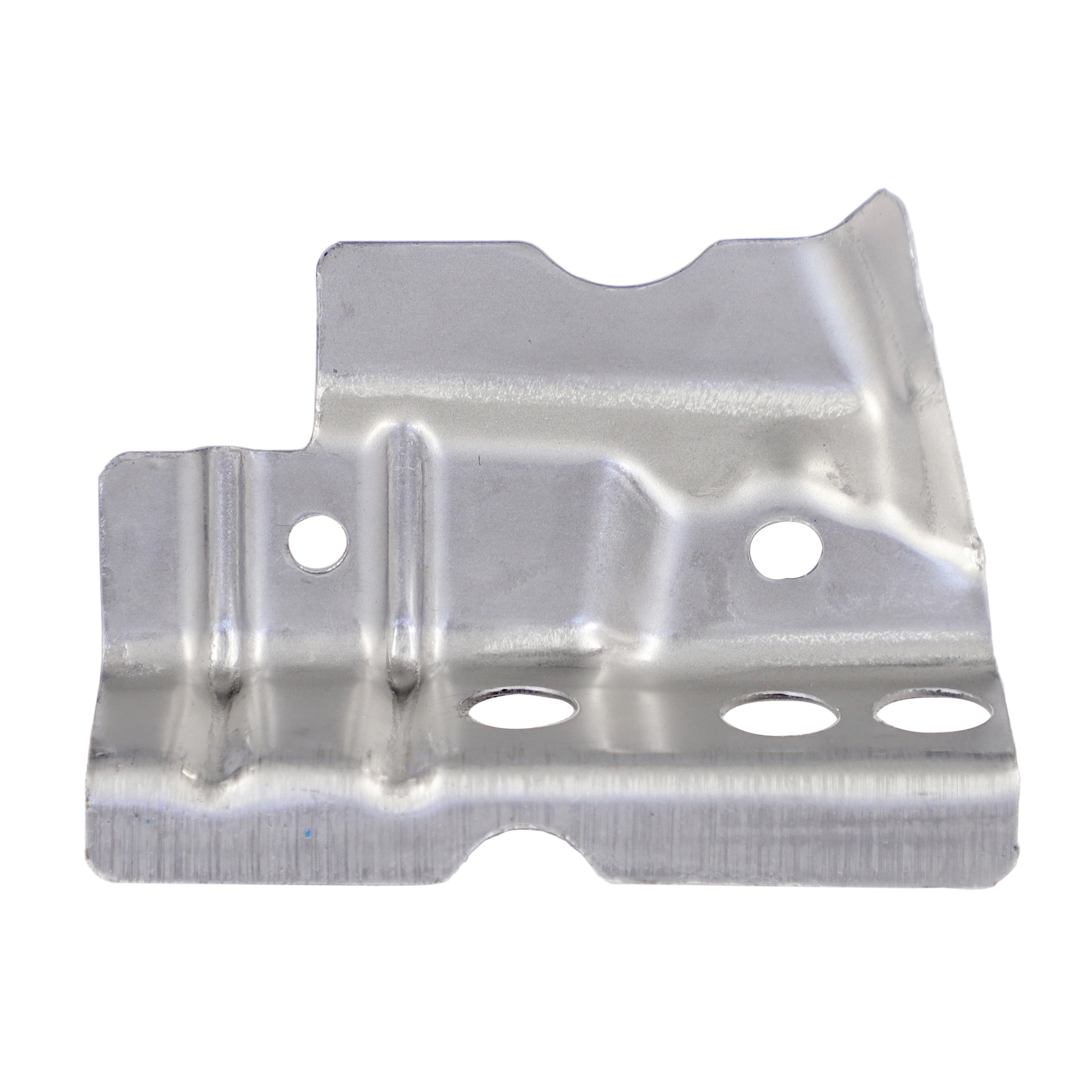
Market Trend: Certification Is the Floor, Tooling Life Is the Differentiator
Three structural signals shape how buyers should read supplier claims in 2026.
The first is scale. Global metal stamping reached USD 257.3 billion in 2025, with Asia Pacific holding a 37.0% revenue share, and automotive metal stamping contributing an estimated USD 90.6 billion of that total. A market of this size contains large numbers of suppliers whose initial capability is adequate. Differentiation has shifted elsewhere.
The second is the certification baseline. IATF 16949 certification, real-time SPC monitoring and Run@Rate tests of 4,000 defect-free pieces are now baseline entry criteria for new OEM automotive programmes. Because these are entry criteria rather than advantages, buyers gain little by treating certification as a differentiator and should instead examine the post-certification disciplines that standards audits sample rather than guarantee — die maintenance records among them.
The third is capital intensity. Hot-stamping lines for advanced high-strength steel parts such as 1,500 MPa press-hardened steel can cost USD 8–12 million each. For the majority of suppliers and buyers, adding that class of capacity is not a realistic near-term move. Extending the productive life of existing dies through disciplined maintenance is the lower-capital route to comparable output gains, and it is the route most exposed to supplier behaviour rather than supplier equipment.
Comparison with Traditional Sourcing Approaches — and Where the Limits Are
The choice between progressive die and single-operation die construction determines how much maintenance a programme will require, and where it will occur.
| Dimension | Progressive die | Single-operation die |
|---|---|---|
| Process integration | Multiple forming processes integrated in one die set | One operation per die |
| Best fit | High-volume auto sheet metal components | Small batches, large-size or complex deep-drawn parts |
| Efficiency and precision stability | High production efficiency, stable precision | Lower tooling cost, more flexible |
| Typical build cycle | 45–70 days including trial stamping | 25–40 days for simple dies |
There are real limits to this comparison, and buyers should hold them in view rather than assume the progressive route is always correct.
- Progressive dies carry higher tooling cost and a longer build cycle. At low annual volume, or where the part is a large-size or complex deep-drawn component, that investment may not amortise over the programme.
- Die documentation, spare parts lists and warranty terms are contractually agreed items. They do not exist by default, and they do not transfer automatically between programmes.
- Part-level inspection records — incoming material checks, hardness and assembly dimensions — are batch- and project-specific. They describe the material and parts tested, not the supplier's permanent output.
- Certification and special processes such as CAE or PPAP need to be confirmed in advance of the programme, not requested retrospectively.
Future Outlook
As the certification floor rises and advanced high-strength steel capacity remains capital-intensive, supplier evaluation is likely to shift from first-article performance toward die lifecycle performance. Buyers who begin asking for maintenance logs, spare parts inventories and revision histories at the RFQ stage will create a purchasing pressure that rewards maintenance discipline rather than sales fluency. The suppliers best positioned for that shift are the ones already producing tryout videos, first-article inspection reports and documented spare parts lists as a matter of routine rather than as a special request.
FAQ
What die maintenance support is provided during mass production?
Support covers die debugging, revision, wear repair and regular maintenance during mass production. These are four separate activities: debugging brings a new die into stable production, revision responds to design or process changes, wear repair restores working surfaces, and regular maintenance is scheduled preventive work carried out over the production life of the die.
What is the lead time for a simple die compared with a complex progressive die?
Lead time depends on die complexity. Simple dies normally take 25–40 days. Complex progressive dies take 45–70 days, including trial stamping. Actual production lead time after die completion depends on product complexity and order volume and should be confirmed with the sales team.
What documentation accompanies a delivered stamping die?
A delivered die is accompanied by die documentation and a spare parts list, tryout and first-article inspection reports, and a pre-shipment spare parts list. On-site technical attendance can be provided for die start-up if needed. These documents are what make a die maintainable, revisable and transferable after delivery.
Can the same supplier produce stamped parts after the die is completed?
Yes. Automated stamping lines are available, allowing a one-stop service that covers both die making and mass stamping of metal parts. Monthly capacity for metal stamping parts is in the range of 8,000–10,000 units.
How is die steel selected for a stamping programme?
Die steel grades such as Cr12MoV, SKD11 and P20 are adopted according to the stamping material, sheet thickness and required production lifetime. The selection should be agreed during die design, because it determines the wear profile and therefore the maintenance requirement over the production life of the die.
Are warranty terms standard across stamping die projects?
No. Specific warranty terms are to be contractually agreed rather than assumed. Buyers should confirm them in writing during contract negotiation, along with any special process or certification requirements such as CAE or PPAP, which should be confirmed in advance of production.
For readers who require a consolidated view of manufacturing scope, equipment and certifications, the Hailong Metal Fabrication company brochure is available here: Hailong Metal Fabrication brochure. Additional company information is published at en.qdhailong.com.
Have Questions or Need More Details?
Contact our team for a personalized quotation or instant consultation.
Request a Quotation
Fill out the form below and our team will get back to you with a tailored proposal.
WhatsApp Direct Chat
Prefer to chat in real-time? Message us on WhatsApp for instant assistance & quick answers.
- Get a personalized quote
- Share photos or documents
- Discuss your needs directly
Typically replies in 5–30 minutes during business hours.