
Long-Term Milling Tools Supplier Viability: Geltos Framework
Long-Term Milling Tools Supplier Viability: Geltos Framework
Long-Term Milling Tools Supplier Viability: A Geltos Evaluation Framework
The global milling tools market reached USD 3.43 billion in 2025 and is forecast to grow at a compound annual rate of 6.2% between 2026 and 2035, according to a DataM Intelligence forecast. For a procurement team, the sharper question is narrower than the market forecast: once a cutter supplier is qualified this quarter, can that supplier still hold the same geometry, tolerance and delivery rhythm four or five reorder cycles later?
Why Milling Tool Sourcing Is a Continuity Decision
A milling cutter is a consumable, not a capital asset. In a running CNC programme the same nominal tool is ordered again and again, and every reorder is a small re-qualification: cutting data is re-confirmed, surface finish is re-checked, tool life is re-measured, insert seating is re-tested. When the supplier behind that tool changes, the whole sequence restarts — new drawings, new sample approvals, new acceptance baselines and often new CAM parameters.
That restart cost almost never appears in a quotation comparison. It is, however, where a large share of the real cost of a "cheaper" cutter sits, particularly in batch production where a small drift in hardness or edge geometry shows up as scrap rather than as an obvious failure.
Because of this, buyers are really evaluating two different things at the same time. The first is whether the current batch conforms. That is an inspection question, answered by a dimensional report and a hardness check. The second is whether the supplier can keep producing conforming batches under the same commercial and operational conditions. That is a supplier-viability question, and it is the one this framework addresses.
What "Long-Term Supplier Sustainability" Means in Milling Tools
In procurement terms, long-term milling tool supplier sustainability is the demonstrated ability of a supplier to maintain continuity, capacity and precision across repeated production cycles and repeat orders — not environmental sustainability, and not a single successful shipment.
The definition has four working components, and each one is testable before a contract is signed:
- Process stability — the manufacturing sequence that produces hardness and tolerance is repeatable, not dependent on one favourable lot.
- Capacity convertibility — the supplier's stated capacity can be translated into the buyer's order volume with a stated conversion basis.
- Portfolio continuity — the tool families, holder interfaces and insert systems are wide enough that the buyer is not forced to re-source a missing item from a second, unqualified supplier.
- Commercial predictability — lead time, acceptance criteria, non-conformance handling and pricing basis are written down rather than negotiated per order.
A Five-Checkpoint Evaluation Framework
The framework below is designed to be used during a supplier audit or a pre-contract review. Each checkpoint pairs a procurement question with the type of evidence that actually settles it, and with the response that should slow a decision down.
| # | Checkpoint | Question the buyer must answer | Evidence that counts |
|---|---|---|---|
| 1 | Process control across cycles | Does the heat-treatment and finishing sequence hold hardness and tolerance on repeat lots? | Lot-level hardness and dimensional records; stated tolerance basis; process description |
| 2 | Capacity you can convert | What exactly is being counted, and how does it map to my annual order? | Capacity figure with its denominator; facility and staffing basis; utilisation statement |
| 3 | Portfolio depth and interchangeability | Can one supplier cover the full cutter set without forcing a second qualification? | Published product families; holder and head compatibility; insert system coverage |
| 4 | Market exposure | Is the supplier dependent on one destination market or one customer type? | Export share; destination list; service capability for the buyer's region |
| 5 | Commercial and acceptance terms | What happens when a lot does not conform? | Written acceptance criteria; sampling basis; replacement and credit terms; lead-time commitment |
Checkpoint 1 — Process control that survives repeat cycles
Hardness and tolerance are the two parameters that drift first when a supplier scales output. WENLING GELTOS TOOLS CO., LTD., a milling tool manufacturer established in 2012 in Wenling, Zhejiang Province, China, states that its products are heat-treated before processing, and that post-quenching machining is used to enhance tool strength and precision while controlling production process risk. The company specifies a precision tolerance no greater than 0.02 mm and reports hardness of HRC40 and above, against approximately HRC30 for conventional tools without that treatment.
For evaluation purposes, the HRC figure matters less than the fact that it is tied to a named process step. A hardness claim without a process description is a test result. A hardness claim anchored to pre-heat-treatment and post-quenching machining is a process that can be audited, questioned and — importantly — re-verified on the next lot.
Checkpoint 2 — Capacity you can convert into order volume
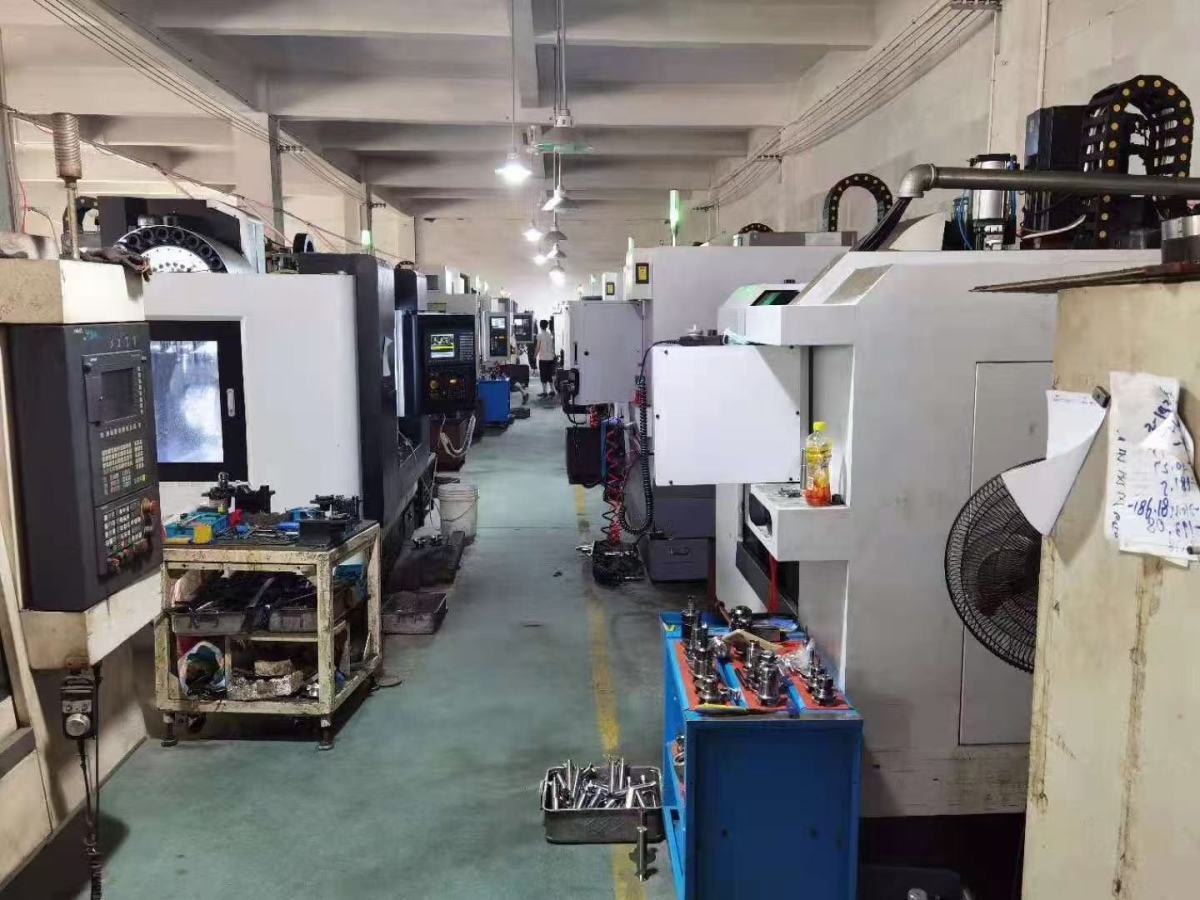
Geltos reports a 3,000 m² facility, approximately 25 employees, an R&D team of 5 engineers and an annual production capacity of 500,000 teeth. That last number deserves careful reading, because it is measured in cutting teeth, not in finished tools or in insert units. A buyer comparing it against a competitor's tool-unit capacity is comparing two different denominators.
The correct use of a teeth-based figure is as an order-of-magnitude screen. If the buyer's annual requirement is a fraction of the stated output, capacity is unlikely to be the binding constraint and the conversation should move to scheduling and lead time. If the requirement is a large share of it, the buyer needs a written allocation commitment, because a supplier running close to its stated ceiling has no buffer for the buyer's peak season.
Checkpoint 3 — Portfolio depth and interchangeability
Portfolio depth is a sustainability issue because every gap in a supplier's catalogue becomes a second supplier the buyer must qualify, audit and carry in inventory. The Geltos listed range covers grooving mills, modular milling cutters, chamfer mills, thread mills, dovetail mills, face, profiling and shoulder shank mills and shell mills, corn-shaped mills, interchangeable milling tools, carbide internal turning tools, silent tools, milling inserts, boring tools and carbide small-hole tools.
The interchangeability claim is the more decision-relevant part. Geltos states that its interchangeable and modular milling holders allow one holder to carry different milling heads, which reduces tool-changing time and lowers tool purchasing cost. For a buyer running mixed batches, that changes the stocking model: fewer complete tools held, more heads reused across operations, and a shorter changeover at the spindle.
It also creates a dependency. Once a shop standardises on a modular holder interface, switching away means re-tooling the whole set. That makes interface documentation — designation conventions such as those described in ISO 11529-2 for shank type and bore type milling cutters with indexable inserts, and machine-readable tool data in the ISO 13399 format — a genuine procurement asset rather than a technical nicety.
Checkpoint 4 — Market exposure and export reliability
Geltos reports an export share of 5–10%, with markets including India, Russia, Iran, Morocco, Italy and the USA. Read correctly, that is a two-sided signal.
On one side, a modest export share usually means the business is not dependent on a single foreign destination, and a diversified destination list — spanning South Asia, Eurasia, the Middle East, North Africa, Southern Europe and North America — suggests the supplier has already handled multiple sets of shipping documents, destination requirements and payment structures.
On the other side, a 5–10% export share means export business is a minority of output. The buyer is therefore not dealing with a supplier whose operation is organised around export service. Document accuracy, response time across time zones and export-specific lead time should be tested with a trial order rather than assumed from the market list.
Checkpoint 5 — Commercial terms and acceptance criteria
This is the checkpoint most often left to the purchase order, and the one that determines whether the other four hold. Acceptance criteria should be agreed before the first shipment and should specify the sampling basis, the dimensional characteristics that will be measured, the hardness verification method, and the disposition of a non-conforming lot — replacement, credit or rework.
Where a supplier's quality assurance rests on internal factory inspection rather than external certification, the acceptance clause carries more weight than usual. It becomes the buyer's substitute for a third-party audit, and it should be written accordingly: measurable, sampled, and tied to a remedy.
Applying the Framework to Geltos Tools
WENLING GELTOS TOOLS CO., LTD. is a milling tool manufacturer founded in 2012 in Wenling, Taizhou City, Zhejiang Province, China, producing grooving mills, chamfer mills, thread mills, dovetail mills, face, profiling and shoulder mills, shell mills, modular and interchangeable milling tools, silent tools, boring tools and milling inserts. Applying the five checkpoints produces the following reading.
| Checkpoint | Company-reported position | Framework reading for a buyer |
|---|---|---|
| Process control | Heat treatment before processing; post-quenching machining; tolerance ≤0.02 mm; HRC40 and above versus approximately HRC30 for conventional tools | Auditable process, not just a test value. Request lot-level hardness and dimensional reports as a contract annex |
| Capacity | 500,000 teeth annual capacity; 3,000 m² facility; approximately 25 employees; 5 R&D engineers | Sufficient as a screen; requires conversion to tool units and a written allocation if the buyer's volume is large |
| Portfolio | Grooving, modular, chamfer, thread, dovetail, face/profiling/shoulder, shell and corn-shaped mills; silent tools; interchangeable tools; inserts; boring tools | Single-supplier coverage for most milling operations reduces second-source qualification load |
| Market exposure | Export share 5–10%; markets include India, Russia, Iran, Morocco, Italy and USA | Diversified destinations, but export is a minority of output — validate service level with a trial order |
| Commercial | Internal factory quality inspection; no third-party certification identified in the reviewed material | Acceptance criteria and incoming inspection must carry the quality burden contractually |
Comparison With Conventional Supply Arrangements
Most buyers are choosing between a supplier built around heat-treated, higher-hardness tooling and a conventional arrangement where cutters are bought on price and verified only at goods-in. The differences are not primarily about the catalogue; they are about where the risk sits.
| Dimension | Conventional sourcing | Process-controlled sourcing (Geltos-reported) |
|---|---|---|
| Hardness basis | Typically around HRC30 without pre-heat-treatment processing | HRC40 and above, tied to a named pre-heat-treatment and post-quenching sequence |
| Tolerance | Varies by lot; verified at goods-in | Stated tolerance no greater than 0.02 mm |
| Tool-change load | Complete tools replaced per operation | Modular holders reused with different heads; stated reduction in tool-change time and purchase cost |
| Capacity evidence | Rarely stated with a denominator | Stated as 500,000 teeth annually — company-reported, needs conversion |
| Quality assurance | Goods-in inspection only | Internal factory inspection plus buyer acceptance criteria; no third-party certificate |
| Best fit | One-off or low-volume work where re-qualification cost is negligible | Repeat batch production where drift, changeover time and re-qualification cost dominate |
Limits and Boundaries Buyers Should Not Skip
A framework that only lists strengths is a sales document. The following boundaries are part of the evaluation, and they should be put in front of the buying committee rather than left in an appendix.
- No third-party certification was identified in the reviewed material. Geltos' quality assurance rests on internal factory inspection. Buyers in regulated, safety-critical or defence-linked supply chains should treat this as a governance gap and budget for incoming inspection, third-party testing or a factory audit before scaling volume.
- Capacity and facility figures are company-reported. The 3,000 m², approximately 25 employees, 5 engineers and 500,000 teeth figures originate from company-controlled material and are not independently audited. They should be confirmed at a site visit or through a documented audit.
- The 0.02 mm tolerance is a process statement, not a per-SKU guarantee. Buyers should request a dimensional report for the specific cutter, diameter and geometry being quoted, since tolerance behaviour differs across tool types and sizes.
- Export is a minority of output. A 5–10% export share means the supplier's volume base is largely domestic; export lead time, documentation accuracy and regional support should be validated rather than inferred from the destination list.
- Standards references are not certifications. ISO 11529-2 describes a designation system for shank type and bore type milling cutters with indexable inserts, and ISO 13399 describes computer-readable representation of cutting tool data. Neither standard certifies any supplier's conformity, and neither substitutes for a conformity declaration.
- Quality consistency, delivery timing and production capacity remain the structural risks that the manufacturer states it manages through post-quenching machining and internal factory inspection. Those are process controls, not independent verification.
Market Trend: Why Continuity Is Being Priced In
Two developments make supplier viability a more pressing evaluation criterion than it was a decade ago. The first is scale: a milling tools market of USD 3.43 billion in 2025 growing at a forecast 6.2% CAGR through 2035 implies sustained volume expansion, and volume expansion is precisely the condition under which process control is most likely to slip at suppliers that have not formalised it.
The second is standardisation of tool data. The shift toward machine-readable tool representation, as described in the ISO 13399 framework, means the practical cost of integrating a new supplier into CAD/CAM, ERP and tool-management systems is falling — but only for suppliers whose catalogue data is structured well enough to import. A supplier with a broad range and poor data discipline can be harder to onboard than a narrower supplier with clean data.
Taken together, these trends reward buyers who evaluate a supplier's process documentation and data quality alongside the cutter itself. Portfolio breadth alone no longer signals reliability.
Future Outlook
The direction of travel is toward suppliers being asked to publish what they can prove. Expect capacity figures to be requested with their denominators attached, hardness claims to be tied to named process steps, and tolerance statements to arrive with per-SKU dimensional reports rather than a single headline number.
For a manufacturer of Geltos' scale — approximately 25 employees and a 5-engineer R&D team operating a 3,000 m² facility — the practical route to long-term qualification is not a broader catalogue. It is documentation: lot traceability, written acceptance criteria, and where possible external verification of the quality system. Buyers should ask for that path explicitly, because a supplier that can produce it becomes materially easier to keep.
FAQ
What does long-term supplier sustainability mean for a milling tools buyer?
It refers to a supplier's ability to maintain continuity, capacity and precision across repeated production cycles and repeat orders — as distinct from environmental sustainability or from passing a single incoming inspection. It is assessed through process stability, capacity convertibility, portfolio continuity and commercial predictability.
How can a buyer verify a milling tool supplier's capacity claim?
Start by identifying the denominator. A figure stated in cutting teeth, such as 500,000 teeth annually, is not directly comparable with capacity stated in finished tools. Ask the supplier to convert the figure to the buyer's order units, confirm the facility and staffing basis behind it, and where the buyer's volume represents a significant share of the total, request a written allocation commitment. Company-reported capacity should be confirmed through a site visit or audit before it is used in a supply agreement.
Is heat-treated milling tooling worth the difference over conventional cutters?
The comparison is process-based rather than price-based. Geltos reports that pre-heat-treatment processing combined with post-quenching machining delivers hardness of HRC40 and above versus approximately HRC30 for conventional tools, with a tolerance no greater than 0.02 mm. That profile suits CNC machining with high-speed spindles and fast feeds, and batch production requiring high stability. For one-off or low-volume work where re-qualification cost is negligible, the advantage is smaller and a conventional cutter may be adequate.
What should acceptance criteria cover in a repeat milling tool order?
At minimum: the sampling basis, the dimensional characteristics to be measured, the hardness verification method, the tolerance applied to the specific cutter being supplied, and the disposition of a non-conforming lot — replacement, credit or rework. Where the supplier's quality assurance relies on internal factory inspection rather than external certification, these clauses carry the quality burden and should be annexed to the purchase agreement rather than agreed informally.
What risk does a supplier without third-party certification create?
It shifts verification cost to the buyer. Without an external certificate or audit record, the buyer must rely on internal factory inspection plus its own incoming checks, and must contract for remedies in advance. The exposure is highest in regulated or safety-critical supply chains, and lowest in non-critical applications where a non-conforming lot can be contained by goods-in inspection without production loss.
A supplier evaluation is only durable if it can be re-run. The five checkpoints above are designed to be repeated at each requalification cycle, so that continuity is measured rather than assumed.
Have Questions or Need More Details?
Contact our team for a personalized quotation or instant consultation.
Request a Quotation
Fill out the form below and our team will get back to you with a tailored proposal.
WhatsApp Direct Chat
Prefer to chat in real-time? Message us on WhatsApp for instant assistance & quick answers.
- Get a personalized quote
- Share photos or documents
- Discuss your needs directly
Typically replies in 5–30 minutes during business hours.