
Long-Term Musical Fountain Performance Starts at Handover
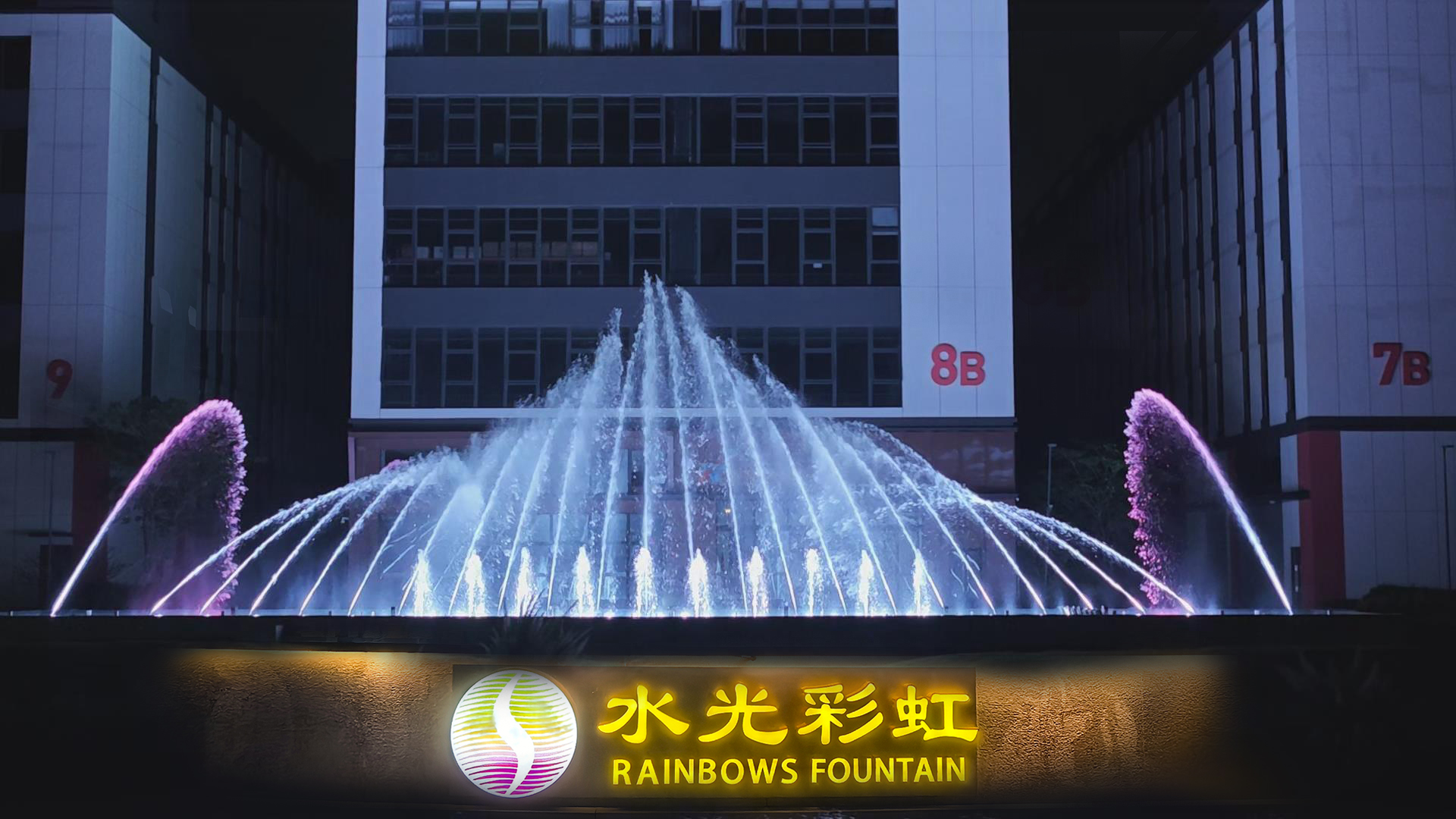
A musical fountain may be judged on its opening night, but its value is decided over the years that follow. Buyers who have already selected a supplier and entered the execution stage face a different question: how can a large outdoor musical fountain be delivered, commissioned, and supported in a way that protects long-term performance?
Industry research points to a growing market. One third-party report values the global musical fountain market at USD 2.51 billion in 2025 and projects it to reach USD 5.23 billion by 2034, with an expected CAGR of 8.5%. That growth is not only about more water shows; it is also about more technically complex systems that require disciplined delivery and after-sales procedures.
For buyers in the decision-to-execution stage, the central issue is handover quality: how equipment is tested before shipment, how installation and commissioning are managed on site, how show-synchronization failures are prevented, and who remains responsible when the fountain enters daily operation. This article explains those considerations using Rainbows Fountain, a Guangzhou-based musical fountain engineering and manufacturing brand, as an example of full-service delivery.
Why Ownership Begins Before the Opening Show
An outdoor musical fountain is not a single product. It is an integration of pumps, nozzles, lighting, audio-visual systems, control cabinets, piping, and software. The most visible part is the synchronized show; the least visible part is the engineering that keeps every subsystem aligned and safe.
Project risk therefore concentrates in the delivery chain rather than in any single component. Equipment may perform correctly at the factory but fail if it is improperly installed, if electrical protection is insufficient, or if control programming is not fully commissioned under real site conditions.
This is why a full-service approach matters at the execution stage. Rainbows Fountain describes its model as one-stop, risk-free delivery covering concept design, technical planning, equipment manufacturing, overseas installation and commissioning, and final project delivery. In practice, what that means for a buyer is a single defined responsibility from the drawing stage to the moment the owner accepts the show.
What Full-Service Delivery Covers in a Musical Fountain Project
Design, Simulation, and System Planning
Before production starts, a custom musical fountain project should be translated into detailed engineering outputs. Rainbows Fountain's design team uses CAD engineering drawings and 3D visual or fountain effect simulations to show clients what the final performance will look like. This gives project owners and engineers an opportunity to confirm nozzle layouts, water patterns, lighting effects, and control plans before costly manufacturing begins.
For execution-stage buyers, the practical benefit is verification: the design review becomes an early checkpoint for expected show effects, equipment quantity, and site integration.
In-House Manufacturing and Traceable Component Sourcing
Rainbows Fountain manufactures fountain equipment at its own facility in the Nansha district of Guangzhou, China. The company describes its manufacturing scope as covering machining, welding, electrical assembly, quality inspection, and shipment preparation under one roof.
The company states that fountain systems are built mainly with 304 stainless steel components, combined with waterproof electrical and lighting equipment. It also states that key components are sourced from internationally recognized brands such as ABB, Rexroth, and Schneider, and that each component is traceable, certified, and compliant with international electrical and safety standards.
From a buyer's perspective, component sourcing is not just a brand claim. For maintenance and spare-part planning, knowing which pumps, drives, and electrical components were installed makes long-term servicing more predictable.
The table below summarizes the technical parameters commonly confirmed in a custom project by Rainbows Fountain:
| Parameter | Typical Range / Configuration |
|---|---|
| Pump power | 1.5 kW to 110 kW |
| Nozzle lift | 1 m to 100 m |
| Control system | DMX512 / PLC intelligent linkage |
| Lighting configuration | RGBW underwater LED, full-color laser, beam light |
| Working voltage | 380 V / 220 V / 110 V |
| Protection grade | IP68 for underwater components |
Factory Pre-Testing Before Shipment
One of the most important quality gates in a musical fountain delivery is factory testing. Rainbows Fountain operates a factory demonstration pool where engineers verify water patterns, nozzle performance, lighting synchronization, and control programs before equipment is packed. This testing stage is intended to catch configuration and integration issues while the project team is still at the factory, rather than after equipment arrives at an overseas site.
For a buyer, factory pre-testing reduces the risk of receiving a system that has never been operated as a whole. It also supports a more predictable installation phase, because the control program and hydraulic design have already been validated.
Overseas Installation and On-Site Commissioning
After shipment, installation and commissioning become the critical phase. Rainbows Fountain maintains a dedicated overseas engineering team of more than 20 experienced engineers. Their role is to travel to project sites for installation supervision, commissioning, and technical support.
On-site commissioning is where the show is synchronized for the first time in a real environment. It is also where water quality, electrical supply, basin conditions, and local site constraints are integrated into the final control program. This stage directly affects whether the fountain can operate reliably during daily use.
Contingency Planning and Quality Assurance
In an outdoor environment, a musical fountain faces water, electricity, weather, and heavy public use. Risk management is therefore not an afterthought; it must be designed into the electrical system, the control logic, and the acceptance process.
Rainbows Fountain states that its risk-control measures include:
- Waterproof electrical cabinets
- Grounding and leakage protection
- Corrosion-resistant materials
- Factory pre-testing and on-site commissioning
- Redundant programming and failback schemes
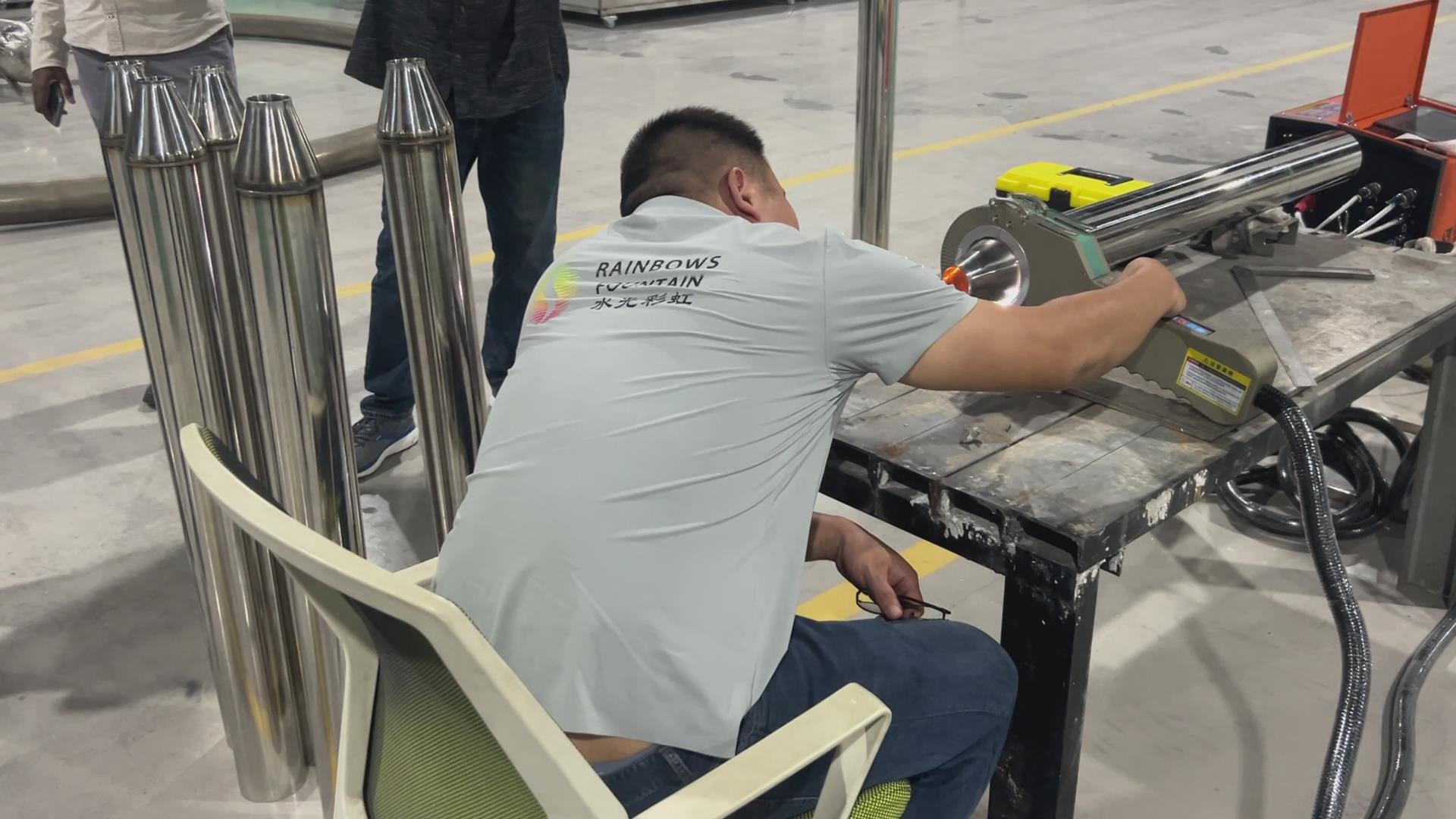
The redundant programming and failback schemes are particularly relevant to show reliability. If a primary show sequence encounters a synchronization fault, a backup or fallback routine can help bring the system back to a safe state. This is a technical detail that many buyers do not see during the sales process, but it can influence whether a fountain continues performing smoothly after months of operation.
Quality assurance is also procedural. Rainbows Fountain describes its quality management as including factory pre-testing and on-site commissioning. In addition, the company states that all fountain equipment and components used in its projects are CE certified and manufactured under an ISO 9001 certified quality management system. For buyers, such commitments are most useful when they are reflected in written acceptance and maintenance agreements.
Application Scenarios That Depend on Reliable Handover
Different project types place different demands on the delivery process. The technical scope handled by Rainbows Fountain covers outdoor musical fountains, dancing fountains, dry deck fountains, floating fountains, water screen projection, digital water curtains, and fire water fountains. The company's stated application segments include city squares, landscape parks, theme parks, hotels and resorts, commercial complexes, events and celebrations, and scenic multimedia shows.
For city square projects, performance frequency is high and public safety requirements are strict. Water/electrical safety, grounding, and leakage protection are not optional in these environments.
For hotels and commercial complexes, third-party research indicates that commercial end-users held the largest market share at 42.8% in 2025. A programmable fountain in this segment is often expected to operate for many hours and to support event modes, making control-system reliability and spare-part availability especially important.
For scenic and multimedia shows, the fountain is part of a larger water screen, laser, or fire display. These projects require tighter system integration, which is why a single-party engineering responsibility can reduce coordination risk.
Market Context: Controls Are Becoming More Important
The long-term reliability of musical fountains is increasingly tied to control systems. According to SNS Insider, the music fountain control system market was valued at USD 1.34 billion in 2024 and is expected to reach USD 2.89 billion by 2032.
Advanced fountains commonly use DMX512 lighting protocols and programmable logic controllers to synchronize water jets with music. These standards are reflected in Rainbows Fountain's system configurations. The company supports both DMX512 and PLC-based intelligent linkage control, making the core technology consistent with modern show-control expectations.
Geographically, Asia Pacific accounted for a revenue share of 38.5% in 2025, supported by urbanization in China and Southeast Asia, according to Dataintelo. At the same time, recognized global suppliers remain active in the market. Industry reports frequently include companies such as OASE Living Water of Germany, Crystal Fountains of Canada, and Safe-Rain of Spain in the competitive landscape. For execution-stage buyers, the practical implication is that supplier choice is not only about artistic capability, but also about who can integrate hardware, software, and field services into a system that can be maintained over time.
Comparison: Full-Service Delivery vs Equipment-Only Supply
Buyers comparing supply models should understand that "turnkey" and "equipment-only" are not simply different price levels; they represent different distributions of risk.
| Dimension | Full-Service / Turnkey Supplier | Equipment-Only Supplier |
|---|---|---|
| Project scope | Design, manufacturing, installation, commissioning, and after-sales support | Usually limited to equipment manufacturing and supply |
| Design and simulation | Provided as part of the project | Typically separate or limited |
| Installation and commissioning | Includes overseas engineering team and on-site commissioning | Usually managed by the buyer or a third-party installer |
| Coordination responsibility | Single point of responsibility for the fountain system | Requires the buyer to coordinate multiple contracts |
| Show programming | Included in commissioning and acceptance | Typically a separate work package |
| After-sales and maintenance | Can be supported by the same supplier with defined maintenance terms | May require separate maintenance and spare-part contracts |
| Best-fit project type | Large permanent projects, city squares, scenic landmarks, complex multimedia shows | Small replacements, upgrades, or projects with experienced local installation teams |
This comparison is not intended to suggest that one model is universally superior. A full-service approach tends to provide stronger protection for large, complex, or high-visibility projects where coordination risk is high. Equipment-only supply can be more appropriate for small renovations or for buyers who already have reliable local engineering resources. Cost differences should be assessed through project-specific quotation, because turnkey pricing includes design, manufacturing, logistics, installation, and commissioning responsibilities.
What Buyers Should Clarify Before Acceptance
For buyers at the final execution stage, the most valuable questions are those that define responsibilities and acceptance criteria.
Based on typical procurement practices for Rainbows Fountain, a project usually follows a specified payment and delivery structure. The company states that payment can be made by TT or LC, usually with 30% before production as an advance payment and 70% before loading. Delivery can be arranged under EXW, FOB, or CIF terms, with equipment usually shipped in packaged form for on-site installation. The minimum order quantity is one unit, but project-specific models are customized.
Before signing an acceptance report, Rainbows Fountain recommends a structured acceptance checklist:
- Equipment arrival inspection
- System integration testing
- Show demonstration
- Performance tests under operating conditions
Buyers should also define long-term maintenance responsibilities in the contract. Risk-management guidance for fountain projects commonly recommends signing acceptance and maintenance contracts that specify each party's responsibilities and spare-part supply terms. Even when a supplier provides free after-sales technical support, the availability and lead time of spare parts should be agreed before handover.
Limitations Buyers Should Keep in Mind
A full-service delivery model reduces execution risk, but it does not remove every site-related responsibility. Civil works, basin construction, incoming power supply, and certain local approvals are usually outside the fountain supplier's scope. These interfaces should be clearly assigned in the project schedule.
Custom fountain projects also involve project-specific components. Because the system is engineered for a particular pool, nozzle set, and show concept, spare parts are not always interchangeable across different fountain installations. Buyers should plan for spare-part inventory or confirm the supplier's long-term support capacity.
Finally, a fountain is a mechanical and electrical system that operates outdoors. Even with factory pre-testing, on-site commissioning, and redundant control schemes, performance depends on maintenance discipline and water-quality management after handover. These factors should be part of the owner's operating plan from day one.
Future Outlook: Toward More Service-Oriented Fountain Delivery
As control and multimedia technology become more common, musical fountain projects will likely continue shifting from one-time equipment purchases toward managed engineering relationships. Buyers will increasingly evaluate suppliers not only by show quality, but by their ability to deliver upgrades, maintain synchronization hardware, and support after-sales operations.
For Rainbows Fountain, the stated model is that of a long-term engineering partner. The company reports experience across commercial complexes, urban landmarks, tourism resorts, and government municipal projects, with free after-sales technical support, long-term maintenance assistance, and system upgrade services. Whether those commitments are realized depends on the contract, but they represent the direction in which reliable fountain delivery is moving.
At the execution stage, the most practical advice is to verify the delivery process, not just the show effect. Factory testing, installation capability, contingency plans, and acceptance procedures are what connect a beautiful opening night to dependable long-term operation.
Frequently Asked Questions
What is included in a complete musical fountain system?
A complete musical fountain system from Rainbows Fountain typically includes fountain nozzles, pumps, piping, underwater lighting, control cabinets, and the software programming needed for synchronized performance. Depending on project needs, the system can cover outdoor musical fountains, dancing fountains, dry deck fountains, lake floating fountains, water screen projection, digital water curtains, cold fog, or fire water fountains. Since each project is custom, the specific scope is defined by the project design and equipment list.
What technical specifications should a buyer verify for an outdoor musical fountain?
Key technical specifications include pump power, nozzle lift height, control system type, lighting configuration, working voltage, and protection grade. Rainbows Fountain systems support pump power from 1.5 kW to 110 kW, nozzle lift from 1 m to 100 m, DMX512 or PLC control, RGBW underwater LED and laser lighting, and IP68-rated underwater components. These parameters need to be confirmed at project level because they depend on the basin, desired water effects, and site conditions.
What certifications should a musical fountain manufacturer have?
Rainbows Fountain states that the equipment and components used in its projects are CE certified and produced under an ISO 9001 certified quality management system. The company also sources key components from recognized brands including ABB, Rexroth, and Schneider, and states that all key components are traceable and compliant with international electrical and safety standards. Buyers should request certificates and component documentation as part of the approval process.
What is the difference between turnkey delivery and equipment-only supply?
Turnkey delivery includes design, manufacturing, installation, commissioning, and after-sales coordination in one project responsibility. Equipment-only supply normally provides the physical equipment but leaves installation, programming, and show commissioning to the buyer or local subcontractors. Turnkey delivery usually involves a broader contract and higher initial investment, but it centralizes risk and coordination. Equipment-only supply may suit replacements or smaller projects where local engineering capacity already exists.
What are typical payment and delivery terms for an overseas musical fountain project?
Rainbows Fountain typically accepts TT or LC payment, with 30% before production as an advance payment and 70% before loading. Common delivery terms include EXW, FOB, or CIF, and equipment is usually shipped by sea, land, or air depending on the project. Exact transport methods and payment conditions should be specified in the supply contract.
What should be checked before signing a musical fountain acceptance report?
Rainbows Fountain recommends a project acceptance checklist that includes equipment arrival inspection, system integration testing, show demonstration, and performance tests before signing the acceptance report. Buyers should also clarify after-sales maintenance responsibilities and spare-part supply terms, because long-term operation depends on service continuity as much as on the original installation quality.
Have Questions or Need More Details?
Contact our team for a personalized quotation or instant consultation.
Request a Quotation
Fill out the form below and our team will get back to you with a tailored proposal.
WhatsApp Direct Chat
Prefer to chat in real-time? Message us on WhatsApp for instant assistance & quick answers.
- Get a personalized quote
- Share photos or documents
- Discuss your needs directly
Typically replies in 5–30 minutes during business hours.