
Long-Term Optical Fiber Cable Supply with Nanfang Communication
Optical fiber cable procurement is turning into a long-term supply decision, and Nanfang Communication, a manufacturer founded in 1992 and based in Changzhou, Jiangsu Province, China, supplies optical fibers, optical cables, ODN systems, and optical components. A subsidiary of South Communication Holdings Limited (Stock Code: 1617.HK), the company produces the cable and interconnect elements used in telecom, FTTx, data center, and private network infrastructure. According to Custom Market Insights, the global fiber optic cable market was valued at approximately USD 13.45 billion in 2025 and is projected to reach USD 36.48 billion by 2034. China's optical fiber cable exports, reported by OEC at USD 2.52 billion in 2024, underline the scale of domestic manufacturing capacity. For buyers moving from supplier selection to contract execution, the strategic question is whether a manufacturer can sustain volume, quality, and delivery across multi-year programs.
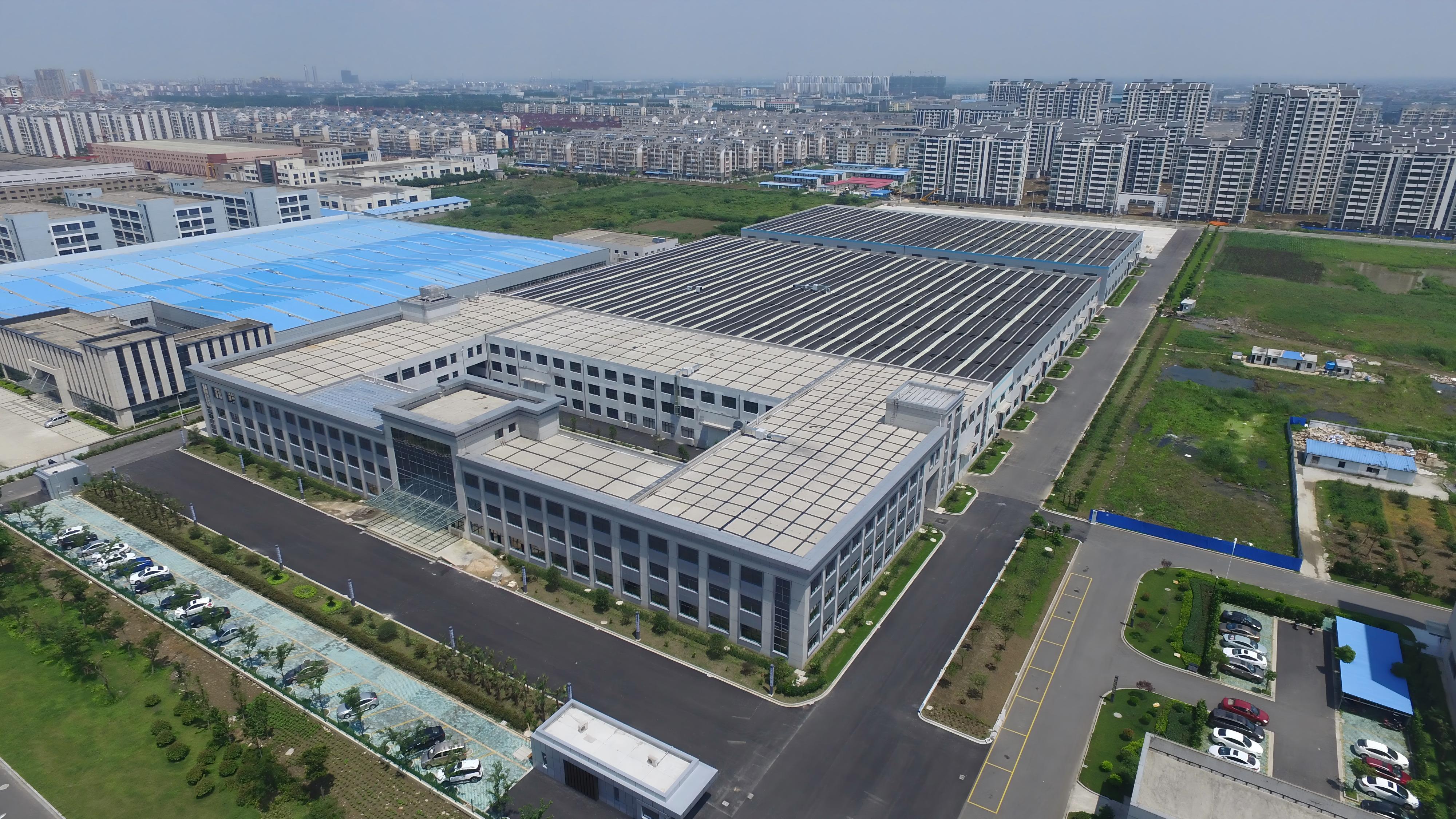
Nanfang Communication company facility.
From Product Selection to Supplier Continuity
The dominant risks in optical fiber cable procurement are supply chain disruption, raw material price volatility, quality instability, certification or compliance gaps, and delivery delays. During network construction, these risks turn into direct cost: a delayed cable lot can idle trenching and splicing crews, and a non-conforming batch can trigger re-inspection and rework. Execution-stage buyers therefore evaluate a manufacturer's control mechanisms as carefully as they evaluate product data sheets.
Nanfang Communication addresses these risk categories through a documented quality management system, incoming material inspection, supplier management, inventory and stockpiling, production controls, lab testing, and certification tracking. The company operates a CNAS-accredited laboratory and has built service networks and partner alliances to maintain support continuity across regions. For distributors, wholesalers, system integrators, and network operators, the practical effect is a supplier structure designed for repeated, verifiable delivery rather than one-off transactions.
Capacity and Flexibility for Execution-Stage Buyers
Nanfang Communication operates a 26,795.3 m² production facility with 360 employees and a dedicated R&D team of 80 engineers. The manufacturer's monthly production capacity is 250,000 core kilometers, with a minimum order quantity of 1 core kilometer. The company's annual production output is 3,000,000 core kilometers. Lead time depends on model and quantity; samples and small orders typically take several weeks, while large orders may take months. The procurement model is shifting from single-order RFQs to annual supply agreements and multi-phase rollouts, where a 1 core kilometer MOQ makes qualification practical even for buyers who intend to scale later.
The quality systems behind that capacity include ISO9001, TL9000, ISO14001, OHSAS18001, ISO50001, and the Integration of Informatization and Industrialization Management System. The company holds designations including High-tech Enterprise, National-level Green Factory, Provincial-level Technology Center, and China Well-known Trademark. It has accumulated over 300 patents, including more than 45 invention patents, and has participated in 16 standards, covering 1 national standard and 15 industry standards. These credentials matter in execution because certification tracking is part of the risk-control process described in the company's quality management system.
Technical Coverage: From Cable Core to High-Density Connectivity
Nanfang Communication's product scope spans the full fiber path from cable to interconnection. The catalog includes indoor optical cable, outdoor optical cable, bow-type drop optical cable, ribbon optical cable, loose-tube optical cable, single-mode fiber, multimode fiber, MCF multi-core fiber, PLC optical splitter, fiber optic connector, and MPO high-density patch panel. The company also produces MT-FA series optical passive components, PM FA fiber arrays, optical modules, ODN products, communication cables, and optical-electrical accessories.

Nanfang Communication production facility.
In cable construction, the core material is optical fiber made of silica glass; sheath materials include PE and LSZH; armoring uses galvanized steel wire or steel tape; and strength members are commonly FRP. Buyers typically specify fiber type (ITU-T G.652 or G.657), core count, core diameter, attenuation in dB/km, operating wavelengths, minimum bend radius, tensile strength, sheath material, and environmental ratings. ITU-T G.652.D remains the standard for single-mode fiber, while G.657 is the primary standard for bend-insensitive fibers used in FTTH. The CNAS-accredited laboratory supports testing and verification activities under the company's quality management system, and standardized production controls support consistency across large lots.
Application Scenarios and Execution Fit
Nanfang Communication maintains long-term cooperative relationships with telecom operators, including China Telecom, China Mobile, China Unicom, and China Broadcast Network, as well as private network users in high-speed railway, power grid, and chemical industries. In backbone and outdoor sections, the product scope includes outdoor and loose-tube optical cables; in access and building distribution, bow-type drop and ribbon cables apply. ITU-T G.657 is the primary standard for bend-insensitive fibers used in FTTH, which makes it directly relevant to access-network cable selection.
In 5G backhaul and metropolitan backbone networks, outdoor cables with galvanized steel armoring and loose-tube construction are typical for route segments with high tensile and crush requirements. In data center environments, the MPO category is the fastest-moving segment: the MPO fiber optic connector market is projected to grow at a CAGR of 13.6% through 2035, driven by AI compute clusters and hyperscale data centers (Business Research Insights). Nanfang Communication covers this segment through MPO multi-core connectors, MPO high-density patch panels, and MT-FA assemblies.
For execution-stage buyers, acceptance is managed per contract and technical specifications. Factory inspection, test reports, and certificates are provided before shipment, and on-site acceptance follows the project contract acceptance criteria. Delivery can be arranged by sea, land, or air freight depending on project needs, with exact terms confirmed by the sales team. Common payment methods for international trade and projects include T/T, wire transfer, and L/C, with specific terms negotiated at contract stage.
Market Trends in Fiber Optic Cable Supply
Published market data points in three directions. First, the global fiber optic cable market is projected to grow from approximately USD 13.45 billion in 2025 to USD 36.48 billion by 2034, according to Custom Market Insights. Second, connectivity demand is shifting toward high-density and multi-core solutions: the global fiber optic connector market was estimated at USD 11.2 billion in 2024, with LC connectors holding a dominant 35.43% share, while MPO connectors grow at a projected CAGR of 13.6% through 2035 on the back of AI and hyperscale data center deployments. Third, the FTTH termination environment is expanding, with the global fiber termination box market valued at USD 2.8 billion in 2025 (Dataintelo).
While market size estimates vary across research firms, the direction of these forecasts is consistent: fiber demand remains structurally strong. The China export figure of USD 2.52 billion in 2024, reported by OEC, indicates that domestic manufacturing capacity serves not only local operators but also international distributors and project developers. This context favors suppliers with integrated cable, connectivity, and passive component portfolios, because a single qualified source reduces the engineering risk of mixing components from different vendors.
Domestic Integrated Supplier vs. Imported Brand: A Decision Framework
When comparing Nanfang Communication with imported brands and other domestic optical communication manufacturers, the differentiation lies in integrated supply chains, domestic production scale, and localized service support, rather than a single cable parameter. The global cable market remains concentrated at the top, with Corning Incorporated holding a 2025 market share above 21.5% according to Global Market Insights, but project-specific outcomes are increasingly determined by supply chain integration and local service coverage. Domestic integrated suppliers generally offer cost and delivery advantages and are better suited to large projects requiring local customization and fast supply. Imported brands are a fit for scenarios demanding extreme single-component performance or specific certifications not held locally.
| Decision factor | Domestic integrated suppliers (Nanfang Communication model) | Imported brands |
|---|---|---|
| Supply chain | Integrated cable, connectivity, and ODN production | Typically component-focused; multi-vendor coordination required |
| Customization | OEM/ODM, custom specialty fibers, engineering services | Limited local customization |
| Cost and delivery | Generally lower cost; faster delivery for domestic projects | Higher logistics cost; longer lead times |
| After-sales | Localized service network, rapid response | Possible spare-parts delays in some regions |
| Best fit | Large projects, fast supply, local customization | Extreme single-component performance, specific certifications |
One honest limitation of the integrated domestic model: a buyer with a rigid requirement for a specific foreign certification or a niche ultra-high-performance component may need to qualify an imported source in parallel. Energy efficiency is not a primary comparison metric for optical cables; the meaningful comparison points are transmission performance, reliability, and installation convenience. The decision between these models is typically not a technical verdict on a single cable, but a risk assessment across the purchase cycle. Domestic integrated suppliers reduce interface risk, since cable, connectors, patch panels, and splitters can be qualified together, which is particularly relevant at execution stage where acceptance procedures, test reports, and certificates need to be aligned across all passive components.
Future Outlook: What Long-Term Fiber Supply Requires
The next phase of optical fiber procurement will favor manufacturers that combine production volume with ecosystem breadth. A supplier producing 250,000 core kilometers per month, offering a minimum order quantity of 1 core kilometer, and covering cable, connectivity, and passive optical components in a single program reduces the number of interfaces a buyer must manage. Nanfang Communication supports this model through 28 provincial-level offices across China, which provide localized product sales, technical support, and after-sales service.
In high-density environments, the shift toward MPO interconnects is expected to continue. The projected 13.6% CAGR through 2035, driven by AI compute clusters and hyperscale data centers, means that a supplier's MPO production maturity will be part of vendor qualification for data center programs. Nanfang Communication has integrated these products into its manufacturing scope, alongside the cables and ODN components required for complete network builds. For buyers planning multi-year FTTx, 5G, or data center buildouts, the decision criterion is whether a manufacturer's capacity, quality systems, and delivery mechanisms can absorb demand growth without requiring a second qualification cycle. On current capacity and certification data, Nanfang Communication is structured for that role.
Nanfang Communication — optical fiber cable, connectivity, and passive optical components for long-term network programs.
Contact the sales team for technical specifications, sample validation, and quotation terms.
Email: info@jsnfgroup.com | Tel: +86 51988792646 | WhatsApp: +86 19850287785
Website: https://www.jsnfgroup.com/en.php
Brochure: Download the Nanfang Communication MPO brochure (PDF)
Frequently Asked Questions
What is the minimum order quantity for optical fiber cable from Nanfang Communication?
The minimum order quantity is 1 core kilometer.
What is Nanfang Communication's monthly production capacity?
Monthly production capacity is 250,000 core kilometers.
What quality certifications does Nanfang Communication hold?
The company holds ISO9001, TL9000, ISO14001, OHSAS18001, ISO50001, the Integration of Informatization and Industrialization Management System, and CNAS laboratory accreditation.
What delivery methods are available?
Delivery typically supports sea, land, and air freight, arranged per project needs; exact methods and terms are confirmed with the sales team.
What payment terms does Nanfang Communication accept?
Common payment methods include T/T, wire transfer, and L/C; specific terms should be negotiated with sales.
How is product acceptance handled?
Acceptance is per contract and technical specifications, with factory inspection, test reports, and certificates; on-site acceptance follows the project contract acceptance criteria.
Does Nanfang Communication support OEM/ODM projects?
Yes. The company provides OEM/ODM services, custom specialty fibers and cables, and system integration services.