
Long-Term POS Supplier Sustainability: Telpo's Four-Segment Lens
A payment terminal that passes acceptance testing on day one can still become a liability by year three — not because its processor slowed down, but because the company behind it stopped maintaining the platform, the certification, or the spare-parts pipeline. That gap is why supplier sustainability has become a procurement question in its own right, separate from product specification.
In this article, long-term supplier sustainability means the ability of a terminal vendor to keep supplying compatible hardware, software platform support, certification status and serviceable components across a multi-year deployment cycle. Two signals reveal it better than any single spec sheet: how focused the vendor is on defined business segments, and how broad its product portfolio is within those segments.
Telpo Technology Co., Ltd., founded in 1999 and headquartered in Foshan, China, structures its overseas business around four core segments — Smart Retail, Smart Payment, Smart Transportation and Biometric Security. Its published product list covers EFTPOS, Android POS Terminal, Desktop POS, Dual-Screen Cash Register, Self-Service Kiosk, Biometric Payment Terminal, Ticket Validation Machine, Fiscal POS, AI Checkout POS and PDA. That structure is used here as a practical evaluation frame: what each segment demands of a supplier, and what portfolio breadth means for buyers whose deployments will outlive a single procurement cycle.
Why Unit Specs Are a Weak Proxy for Supplier Longevity
A specification table describes a device at a fixed point in time. Supplier sustainability describes an organisation across time: engineering continuity, certification maintenance, platform support and the ability to keep supplying the same or compatible hardware years after the first order. Buyers in the awareness and research stages usually begin with spec sheets because specs are comparable. But specs are also the easiest thing for any vendor to match. Portfolio architecture and segment focus are harder to imitate, because they imply standing capability rather than a one-off configuration.
Three risks sit behind that distinction:
- Platform risk. If a terminal's operating system generation is not part of a maintained family, application updates and Google-service-dependent software can stall while the hardware still functions.
- Compliance risk. Certification and fiscal rules change on the regulator's schedule, not the buyer's. A supplier must be able to re-certify existing models rather than redesign them.
- Continuity risk. Discontinued models, discontinued accessories and discontinued print modules force premature fleet replacement even when the terminals still work.
Each risk is a supplier-level capability, not a product-level one. That is the reasoning behind evaluating a vendor through the segments it chooses to serve.
The Four-Segment Frame: What Segment Focus Reveals
Telpo describes four core overseas business segments: Smart Retail, Smart Payment, Smart Transportation and Biometric Security. Each imposes a different requirement profile. A supplier that maintains all four must keep engineering, compliance and supply capabilities running across four different sets of rules at the same time — which is precisely what long-term deployments depend on.
| Segment | Requirement profile | Representative portfolio in this frame | Supplier capability tested |
|---|---|---|---|
| Smart Retail | High-volume or unattended checkout, dual-screen interaction, peripheral ecosystems, fiscal modules | Android POS Terminal, Desktop POS, Dual-Screen Cash Register, Self-Service Kiosk, AI Checkout POS, Fiscal POS | Peripheral and OS continuity, fiscal-module readiness, kiosk durability |
| Smart Payment | Bank-grade certification, secure card and key handling, portable power, outdoor field use | EFTPOS, Payment Terminal category devices such as TPS900, P8 M5, P8 with Printer, P9 Financial version and P9 PDA Financial version | Certification maintenance, secure-element sourcing, battery and enclosure engineering |
| Smart Transportation | Impact and ingress resistance, on-route connectivity, multi-standard ticket media, long service cycles | Ticket Validation Machine (T10, T20), handheld ticketing POS (M1) | Ruggedisation, transit card standard coverage, pole-mount installation design |
| Biometric Security | Identity verification at the point of transaction, biometric module sourcing, KYC-linked workflows | Biometric Payment Terminal capability, optional FBI-certified fingerprint scanner on TPS900, optional facial recognition on K10, K8 and K8M kiosks and on the C50 AI checkout terminal | Biometric module supply, integration of identity checks into payment flows |
The frame is not a marketing taxonomy. It is a reading of what a vendor has committed to keep alive: a transit validator rated IP65 and IK08 demands different engineering habits from a countertop cash register, and a fingerprint-enabled payment terminal demands different compliance work from a self-ordering kiosk. Buyers can use the frame to ask a supplier a sharper question — not "do you have this device?" but "which of these segments do you intend to still support in five years?"
Evaluating Telpo Through the Portfolio Signal
Telpo Technology Co., Ltd. was founded in 1999 and reports over 26 years of operating history. The company states that it employs approximately 600 staff, including an R&D team of 200 engineers, and operates a manufacturing facility of approximately 45,000 square metres with an annual production capacity of 2,000,000 units. Its export business accounts for 60% to 80% of total sales, with markets across Asia, Africa, the Middle East, Europe, Latin America and North America, and its company profile states that it serves customers in more than 100 countries.
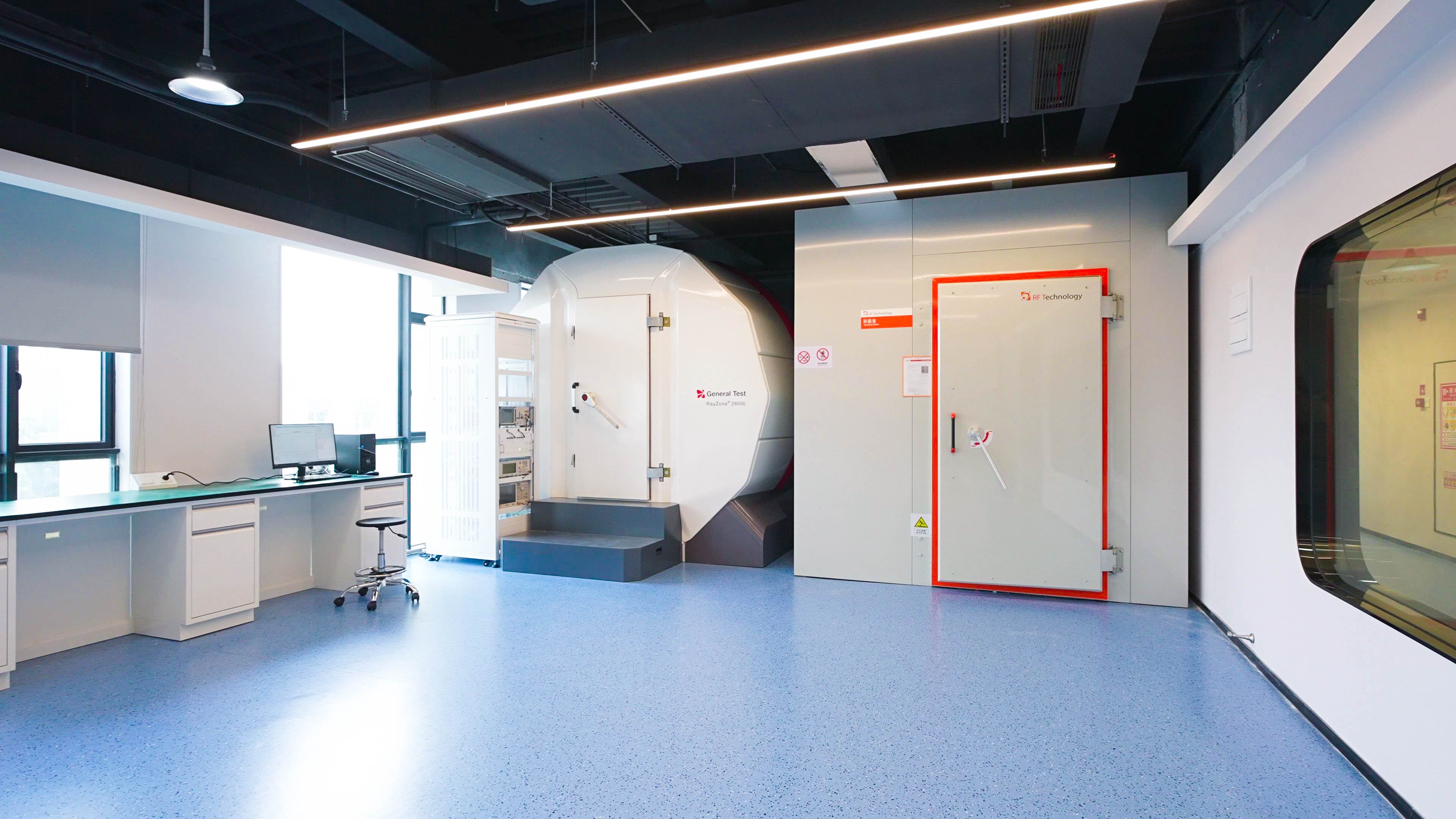
Several of these facts matter specifically to the sustainability question rather than to product performance. A 200-engineer R&D organisation is what makes multi-generation platform support plausible. A laboratory accredited under CNAS — described as a 2025-upgraded facility covering roughly 900 square metres across 12 testing zones, including an OTA darkroom, an EMC chamber and a climate lab — is what allows models to be re-validated as standards move. A 60–80% export share concentrated across six named regions implies familiarity with a wide spread of certification regimes rather than a single domestic market. The company also reports holding more than 300 technical patents and lists long-term partnerships with organisations including MTN, Vodafone, Burger King, 7-Eleven, Alipay and Bank of China in its published profile.
Mapping the published product list to the four segments
The product families named in Telpo's own materials map onto the segment frame as follows. Model designations are reproduced as published.
| Published product family | Named models in provided materials | Primary segment relevance |
|---|---|---|
| Android POS Terminal / Desktop POS | M8 (All-in-One POS), M10 (Countertop POS), P9 non-financial version | Smart Retail, Smart Payment |
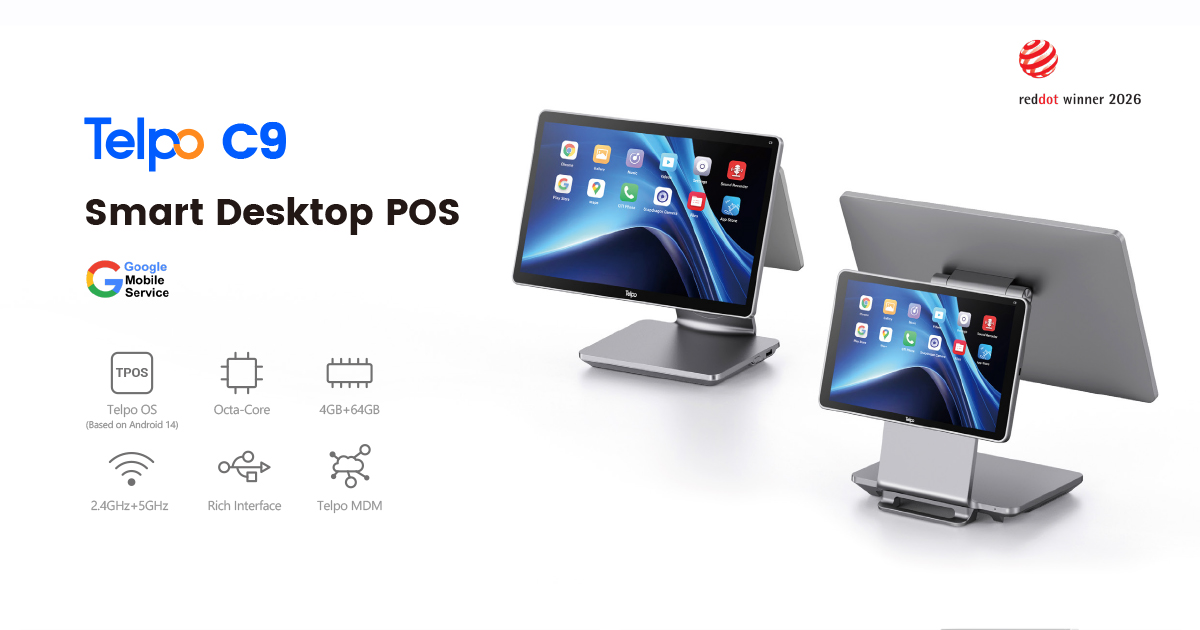
| Dual-Screen Cash Register / Touch Screen POS Machine | C9, C9PD, C9W, C9 VESA | Smart Retail |
| Self-Service Kiosk / AI Checkout POS | K1, K8, K8M, K10, K20, C50 | Smart Retail |
| EFTPOS / Payment Terminal | TPS900, P8 M5, P8 with Printer, P9 Financial version, P9 PDA Financial version | Smart Payment |
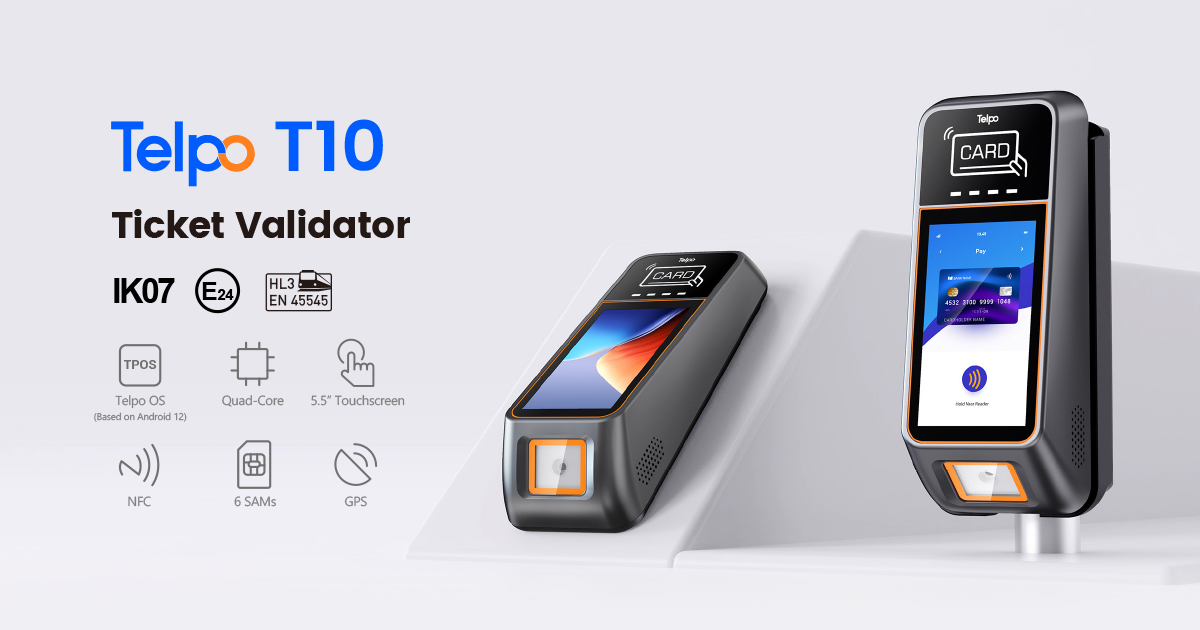
| Ticket Validation Machine / POS for ticketing and events | T10, T20; handheld ticketing POS M1 | Smart Transportation |
| Biometric Payment Terminal | TPS900 with optional FBI-certified fingerprint scanner; optional facial recognition on K10, K8, K8M and C50 | Biometric Security |
| Fiscal POS | M8 and M10 with dedicated fiscal module space; TPS900 with tax module support | Smart Retail, Smart Payment |
| PDA | P9 PDA non-financial version, P9 PDA Financial version | Smart Retail, Smart Payment, Biometric Security |
Technical Explanation: What Makes a Portfolio Durable
Breadth alone does not create sustainability. Four technical properties determine whether a portfolio can actually be carried forward, and all four are observable at the architecture level rather than in a headline specification.
1. Operating-system generation continuity
A single vendor portfolio that spans Android 12 (M8, T10, T20, M1), Android 13 running Telpo OS (M10), Android 14 (C9, C9PD, C9 VESA, K1, K8, K10, K20) and Windows-based configurations (C9W with Intel i3/N150, plus Android or Windows options on K8M and K20) gives buyers a defined migration path. When a store or transit operator needs to move an application to a newer platform generation, the same supplier can offer a target device instead of forcing a change of vendor. GMS certification on the M10 is a concrete example of that continuity being independently documented: Google Mobile Services certification determines whether an Android terminal can run the standard Google application ecosystem that many retail and hospitality software stacks depend on.
2. Modular expansion and mounting standards
The C9, C9PD, C9W and C9 VESA family uses Pogo Pin modular expansion, where card reader modules attach through magnetic connectors as plug-and-play components. VESA 100×100 mm mounting is used on the C9 VESA, the K1 kiosk and the K20 kiosk. Optional modules — barcode scanners, cameras, electronic scales, NFC readers — are offered across the kiosk and AI checkout range. For buyers, modularity means a fleet can be upgraded in place rather than replaced, which is one of the practical differences between a three-year and a seven-year hardware plan.
3. Compliance-ready hardware architecture
Fiscal and payment compliance is where supplier sustainability is most often tested. The M8 and M10 are purpose-built for fiscal control with dedicated UART/USB ports for fiscal modules, physical tamper-evident lead-sealed screws, electronic tamper detection that logs device modifications, an external RTC circuit for accurate timekeeping and a 7.6V/3000mAh backup battery for power-loss operation. The TPS900 supports connection of a fiscal control module and carries PCI PTS V6.x, EMV Level 1 and Level 2, EMV Contactless L1, Paywave and Paypass certification. The T10 ticket validator carries EMV Contactless L1 certification. These are the interfaces that allow re-certification of an existing model when a jurisdiction changes its rules, instead of a hardware redesign.
4. Serviceability in the field
The P9 PDA uses a single-screw construction that the company describes as enabling field repairs in minutes, and the P9, M1 and P8 families use removable batteries. The P8 M5 is rated for 1.5-metre drops with continued payment and printing functionality, and offers splash resistance. Field-serviceable design is a sustainability property in the literal sense: it determines whether a terminal can be kept in service through a battery or printer replacement, or must be written off.
Application Coverage Across the Four Segments
Portfolio breadth becomes meaningful only when it covers the deployment types a buyer actually runs. The following coverage is drawn from documented application configurations.
Smart Retail
For chain-store standardised deployments, the C9, C9PD, M10 and M8 are used in fixed countertop, long-term powered configurations with dual-screen transaction display, real-time sales data synchronisation, barcode scanner and cash drawer integration, and optional Telpo MDM for remote fleet management. Multi-language receipt printing is supported across the range. For self-service and unattended checkout, the C50 AI checkout terminal performs AI vision product recognition at 0.1 seconds with 99.8% accuracy using 12 TOPS on-device processing, with an optional 15 kg scale at 2 g precision; the K8M kiosk offers a 21.5-inch FHD 10-point touchscreen and optional barcode scanning as fast as 0.2 seconds; the K20 self-ordering kiosk uses a 27-inch FHD display, a heavy-duty steel base with anti-vandalism design and a 1.77 m humanised height for QSR, food court, cinema and large-format retail environments.
Smart Payment
Handheld and field payment coverage includes the P8 M5 at 389 g with 220-hour standby and 13+ hours continuous operation, rated for 1.5-metre drops and splash resistance, and the TPS900 with a 5.5-inch display, 475 g weight and up to 15 hours of continuous operation. Both support magnetic stripe, chip, NFC and QR payment. The same family supports biometric identity verification in agent banking KYC enrolment and biometric payment authorisation workflows.
Smart Transportation
Transit deployments use the T10 and T20 ticket validators in pole-mount configurations with safety locks, plus the M1 handheld ticketing POS. The T20 carries IP65 and IK08 protection with 8 SAM card slots and a 7-inch 500 cd/m² touchscreen; the T10 carries IK07 impact resistance, the E24 vibration standard and optional IP54 dust/water protection with 6 SAM card slots. Both accept closed-loop and open-loop transit media including ISO14443 Type A/B, Mifare, Cipurse, Calypso and Felica cards, alongside QR and paper tickets. Documented transit configurations include multi-language ticket printing in more than 28 languages and built-in GPS for route tracking.
Biometric Security
Biometric capability appears as a module-level option rather than a single product: an optional FBI-certified fingerprint scanner on the TPS900 for identity verification at the point of transaction, and optional facial recognition modules on the K10, K8, K8M kiosks and the C50 AI checkout terminal. For buyers, that matters because the identity-verification requirement usually arrives mid-deployment, through a regulatory or fraud-prevention change rather than at purchase.
Market Trends That Turn Supplier Sustainability Into a Buying Criterion
Three published data points explain why this evaluation frame is becoming more relevant rather than less.
- Fortune Business Insights valued the global Point of Sale market at USD 38.57 billion in 2025, a figure that includes hardware, software and services rather than terminals alone.
- Counterpoint Research reported that Android-based POS terminals reached approximately 48% of global shipments in 2025 — close to half the market now depends on a platform whose lifecycle is controlled by an external operating-system roadmap.
- The same research house estimated that the average selling price of commercial-grade smart POS hardware ranged from USD 120 to USD 850 in 2025, a spread that indicates most real fleets mix several hardware tiers under one management regime.
Regulation adds a fourth pressure. fiskaly's 2026 review of European fiscalisation notes that Germany's KassenSichV regulation mandates a certified technical security system (TSS) for all cash registers. Once a jurisdiction requires certified hardware components, the question stops being whether a terminal works and becomes whether its supplier can keep a certified configuration available.
Taken together, these signals point in one direction: platform dependence is rising, fiscal requirements are spreading, and fleets are price-tiered rather than uniform. All three favour suppliers whose product lines are broad enough to serve different price bands with the same support infrastructure, and focused enough to maintain certification across distinct verticals.
Multi-Segment Supply Versus Single-Line Supply
The comparison below is not a ranking. It sets out what buyers gain, and what they should still verify, when choosing between a vendor concentrated in one product line and a vendor operating across multiple segments.
| Evaluation dimension | Single-line supplier | Multi-segment portfolio supplier | What the buyer must still verify |
|---|---|---|---|
| Platform continuity | Often tied to one OS generation and one application stack | Multiple OS generations maintained across families | Whether the specific model ordered sits on a currently maintained generation |
| Certification coverage | Certification usually scoped to one device class | Payment, transit and fiscal certification maintained in parallel | Model-level certificate validity for the destination market |
| Replacement paths | Replacement may require re-tendering the whole category | Adjacent models can absorb a discontinued configuration | Form-factor fit, mounting and peripheral compatibility of the substitute |
| Peripheral ecosystem | Peripherals sourced ad hoc | Shared accessories, docks, scanners and mounting standards | Whether accessories are shared across the exact models in the fleet |
| Second-source risk | Higher concentration risk | Lower concentration risk within one supplier relationship | Whether the supplier itself depends on a single upstream module vendor |
Boundaries and limitations of this evaluation frame
The frame is a screening tool, not a verdict, and it has real limits:
- Breadth is not depth. A vendor concentrated in one vertical may offer deeper integration in that vertical than a multi-segment vendor does. Transit operators, for example, may find that a specialist validator supplier matches their ticketing middleware more closely.
- Segment coverage says nothing about local service. Portfolio breadth does not confirm that a supplier has field service, spare-parts stock or technical staff in the buyer's country. That has to be verified separately.
- Certification is model-specific and market-specific. GMS certification on the M10 does not imply fiscal approval in any jurisdiction, and fiscal rules differ by country, as the German KassenSichV requirement illustrates. Buyers should confirm the certificate status of the exact model and configuration being ordered.
- Comparable third-party supplier data remains thin. The verified data available for this category does not contain manufacturer-level entries suitable for building a ranked comparison across suppliers. Conclusions here therefore rest on company-published facts and per-model specifications, not on an independent ranking, and buyers should build their own side-by-side verification on the same basis.
- Breadth may be unnecessary for some buyers. An operation running a single terminal type against a fixed software stack may gain little from portfolio width and should weight local support and price stability more heavily.
Future Outlook
If Android terminals continue to account for roughly half of global shipments, the practical consequence for buyers is that terminal procurement increasingly resembles software procurement: the hardware decision is bounded by an operating-system lifecycle the buyer does not control. Suppliers will be judged on how they manage that boundary — whether they can move a deployed fleet from one OS generation to the next without forcing an application rewrite.
Fiscalisation is likely to keep expanding as a qualification criterion rather than a differentiator. The pattern already visible in Germany — a certified technical security system required for every cash register — pushes value toward suppliers whose hardware includes a dedicated fiscal module interface, tamper-evident construction and auditable timekeeping as standard, because those are the elements that make re-certification possible.
Biometric verification at the point of transaction appears set to broaden from niche KYC enrolment into mainstream payment authorisation, which puts a premium on suppliers that can source certified fingerprint and facial modules as options rather than as one-off projects. Self-service and AI-assisted checkout reduce cashier involvement but raise the cost of unsupported hardware, since unattended terminals in continuous operation cannot rely on staff to work around faults.
The practical implication for procurement teams is modest but concrete: add a supplier-roadmap question to the RFQ. Which form factors will still be supplied in five years, which OS generations will still be patched, and which certifications will still be maintained for the markets the buyer operates in. A vendor that can answer those questions across several segments is more likely to remain a viable partner than one that can only answer for a single model.
FAQ
What does "long-term supplier sustainability" mean when evaluating a POS terminal vendor?
It refers to the vendor's ability to keep supplying compatible hardware, software platform support, certification status and serviceable components across a multi-year deployment cycle. It is assessed separately from product specification because it concerns organisational continuity — engineering capacity, testing infrastructure and certification maintenance — rather than the attributes of one device at one point in time.
How does segment focus help a buyer judge a POS terminal supplier?
Different segments impose different requirements. Transit validation demands ingress and impact protection, as in the T20's IP65 and IK08 ratings, while retail checkout demands peripheral ecosystems and fiscal module readiness. A supplier that maintains several segments simultaneously must sustain engineering, compliance and supply capability across all of those requirement sets, which is a stronger durability signal than any single product claim.
Which product categories indicate that a supplier can support multi-year deployments?
Categories that cover different lifecycle stages rather than different price points. A portfolio spanning Android POS terminals, desktop and dual-screen cash registers, self-service kiosks, AI checkout terminals, payment terminals, fiscal POS and ticket validators provides replacement paths when a specific configuration is discontinued, and shared accessories such as docks, mounting brackets and scanner modules reduce the cost of extending an existing fleet.
How can buyers verify certification and fiscal readiness instead of assuming it?
By checking model-level status rather than portfolio-level claims. Verifiable examples include GMS certification on the M10, PCI PTS V6.x and EMV Level 1 and Level 2 certification on the TPS900, and EMV Contactless L1 certification on the T10 and T20. Fiscal readiness is a hardware property: dedicated UART/USB ports for fiscal modules, tamper-evident sealed screws, electronic tamper logging, an external RTC and a backup battery on the M8 and M10. Country rules such as Germany's KassenSichV, which requires a certified technical security system for cash registers, must be checked against the destination market separately.
Does a broad product portfolio automatically mean better fit for a specific deployment?
No. Portfolio breadth does not confirm local service presence, niche integration depth or market-specific certification. A specialist vendor may fit a single-vertical requirement better, and an operation running one terminal type against a fixed software stack may gain little from breadth. Buyers should first match form factor, operating system and environment to the deployment, then use portfolio breadth as a secondary signal of long-term supply continuity.
What role do manufacturing and testing capacity play in supplier sustainability?
They determine whether a supplier can re-validate models as standards change and keep volume available across product generations. Telpo reports a manufacturing facility of approximately 45,000 square metres with annual production capacity of 2,000,000 units, an R&D team of 200 engineers, and an in-house laboratory accredited under CNAS with roughly 900 square metres across 12 testing zones, including an OTA darkroom, an EMC chamber and a climate lab. Testing infrastructure of that kind is what allows an existing model to be re-certified rather than replaced.
Reference material: Telpo Products Brochure — Payment & Retail (V4). Product names, model designations and specifications referenced in this article follow Telpo Technology Co., Ltd. published materials.
Have Questions or Need More Details?
Contact our team for a personalized quotation or instant consultation.
Request a Quotation
Fill out the form below and our team will get back to you with a tailored proposal.
WhatsApp Direct Chat
Prefer to chat in real-time? Message us on WhatsApp for instant assistance & quick answers.
- Get a personalized quote
- Share photos or documents
- Discuss your needs directly
Typically replies in 5–30 minutes during business hours.