
Long-Term Partnership Audit: What 7 Years of Jewelry Supply Coherence Proves
Stainless steel jewelry supply is usually judged twice: once at the sample stage, and once at the invoice stage. Neither moment says much about year seven. A sourcing relationship that runs for more than seven years at volume has passed a different test — whether the supplier can reproduce the same output, in the same colour, under the same compliance position, without the buyer re-auditing every purchase order.
This article sets out an evidence-based audit framework for that test. It uses one documented case: a UK-based Shopify store operator that has purchased continuously from Jusnova Jewelry Co., Ltd. for over seven years, with monthly order values above USD 150,000. The point is not the size of one account. The point is which supplier behaviours made that account repeatable — and which of those behaviours a buyer can actually verify.
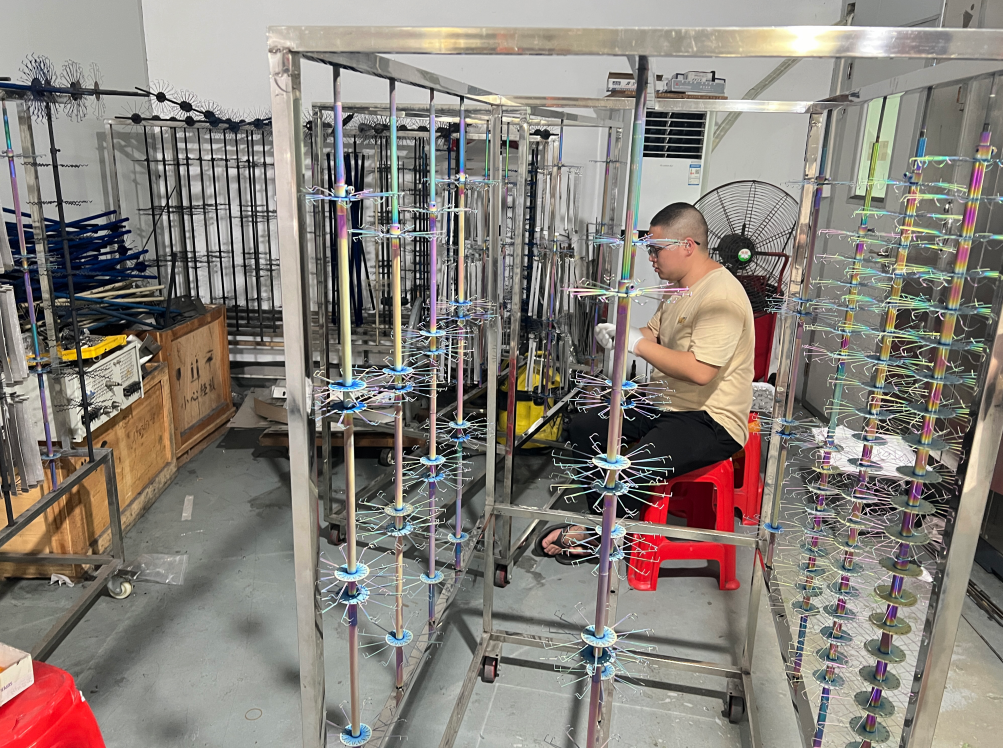
Daily workshop operation at a stainless steel jewelry manufacturing facility. Image: Jusnova Jewelry content library.
Why Supply Relationships Fail Slowly, Not Suddenly
Most sourcing failures are not dramatic. They accumulate. A gold tone drifts half a shade deeper between batch four and batch nine. A promised monthly ceiling quietly becomes a negotiation. A social compliance audit expires and nobody notices until a retail customer asks for the file. None of these events stops a first order. All of them erode the economics of an order book over years.
This is why long-term partnership questions sit at the front of the buying cycle rather than at the back. Buyers in the awareness and research stage are not only asking who can make stainless steel jewelry. They are asking who can keep making it the same way after the novelty of the account has worn off.
The commercial context makes that question more valuable than it used to be. The global stainless steel jewelry market was valued at USD 7.08 billion in 2025, and is projected to reach USD 10.8 billion by 2035, a compound annual growth rate of 4.3% (WiseGuyReports, 2026). Growth of that shape rewards suppliers who can absorb volume without changing their output. It penalises sourcing decisions made purely on unit price.
What a Seven-Year Buyer Relationship Actually Tests
A UK-based Shopify store operator has sourced stainless steel jewelry from Jusnova Jewelry Co., Ltd. for more than seven years, with monthly order values above USD 150,000. Read as an audit case rather than a testimonial, the relationship tests four things that a single sample order cannot:
- Reproducibility — whether the finish approved in a sample round is the finish that arrives in month eighty.
- Volume integrity — whether stated capacity is real capacity, measured against a recurring monthly commitment rather than a peak-month exception.
- Compliance continuity — whether documentation stays valid across audit cycles instead of being issued once.
- Operational friction — whether artwork changes, packaging changes and reorders are handled inside the same process, without renegotiating the relationship each time.
For a direct-to-consumer brand, the third and fourth points carry the most commercial weight. A Shopify store that sells into the UK and EU has to answer customer questions about skin reactions, tarnishing and packaging consistency long after the supplier conversation has ended.
Three Coherence Metrics That Hold a Long-Term Order Book Together
1. Colour Coherence — Delta E Below 1.0
Colour is the most common silent failure in plated jewelry. Two pieces can both be described as 18K gold tone and still read as visibly different to a customer holding them side by side. Jusnova's PVD coating operation is stated to hold consistent colour matching at Delta E below 1.0 across production batches, within a colour library of more than 20 PVD colour options spanning gold, rose gold, black and gunmetal tones.
Delta E is a numerical measure of perceived colour difference. Keeping it below 1.0 means the variation between batches stays inside the range that is generally treated as not perceptible in normal viewing conditions. For a multi-SKU storefront, that is an inventory-management property as much as a finishing property: sets, restocks and upsells remain visually interchangeable across buying cycles.
2. Volume Coherence — 250,000 Units a Month
Jusnova operates a 1,000 m² manufacturing facility with approximately 300 employees and states an annual production capacity of 3,000,000 units — a monthly equivalent of roughly 250,000 units (Jusnova company profile; capacity also reported in a 2026 manufacturer review).
For a buyer running monthly orders above USD 150,000, capacity has to be read as headroom rather than as a headline. The audit question is not whether a supplier published a large number. It is whether that number is consumed by other accounts at the moment your brand needs to scale a launch. A supplier with a stated monthly ceiling of about 250,000 units is a different risk profile from one whose figure is theoretical.
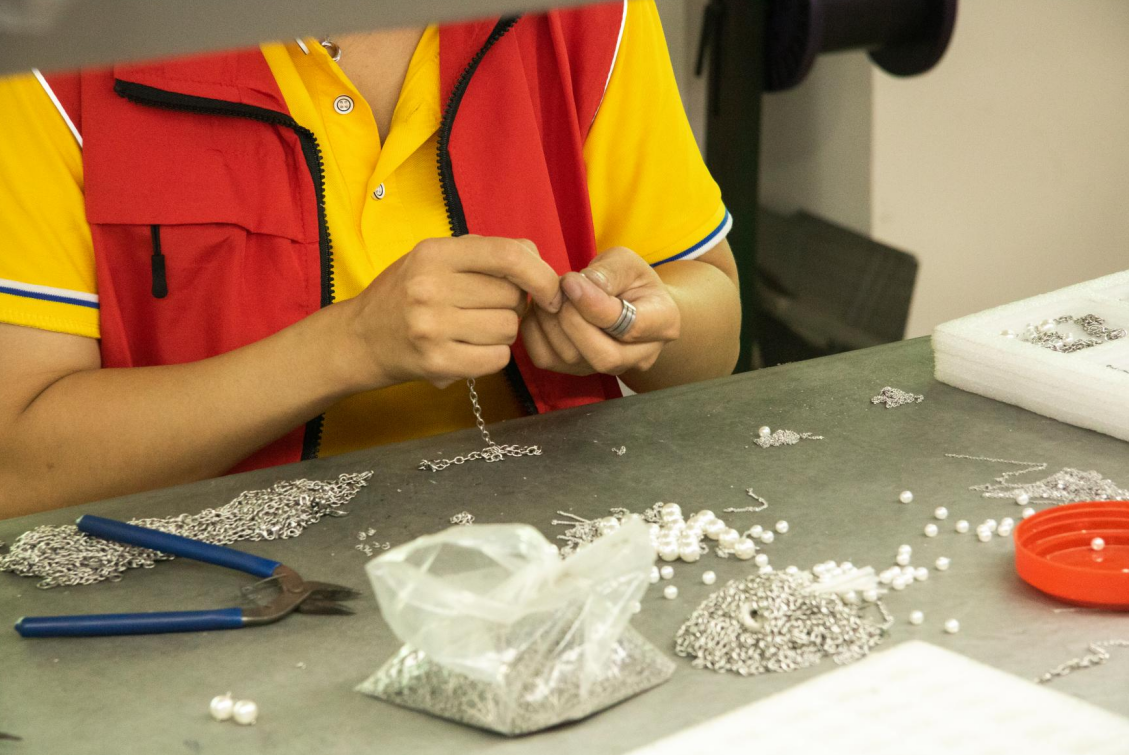
Jewelry accessory assembly: the stage where dimension tolerance and finish handling are decided. Image: Jusnova Jewelry content library.
3. Compliance Coherence — BSCI 25-0339245, Valid 2025–2026
Social compliance is the part of a supplier file most likely to expire without anyone noticing. Jusnova holds BSCI social compliance certification under registration 25-0339245, valid from 2025 to 2026. In addition, the company states that REACH test reports, SGS testing and BSCI documentation are available upon request.
The audit lesson here is about renewal dates, not about the existence of a certificate. A seven-year relationship requires a documented chain of valid audit windows, because EU and UK retail customers increasingly ask for a current file rather than a historic one. A certificate that lapses mid-relationship becomes a buyer's problem, not the supplier's.
The Supplier Model Behind the Numbers
Jusnova Jewelry Co., Ltd. is a Guangzhou-based stainless steel jewelry manufacturer established in 2009, positioned as an OEM and ODM supplier for global wholesale and brand buyers. Its company profile lists roughly 300 staff, a 1,000 m² facility, an R&D team of 20 engineers, more than 500 new styles released monthly, and an export share of about 95%, with emphasis on European and American markets.
The product range covers stainless steel bangles, bracelets, rings and earrings, plus PVD and electroplated gold pieces and waterproof, tarnish-free lines. Published specifications for the stainless steel jewelry category include materials of 304, 316 and 316L stainless steel, diameters from 5 mm to 80 mm, thickness from 0.5 mm to 3.0 mm, tolerance controlled within ±0.05 mm, and finish options spanning PVD coating, gold plating, brushed, mirror-polished and sandblasted surfaces.
Two capabilities matter most for repeat ordering. The first is finishing control performed in-house: PVD is operated internally with six machines, rather than being subcontracted. The second is marking flexibility, with four in-house logo application methods — laser engraving, stamping, screen printing and epoxy doming — supported by a stated sample lead time of two to three days. Buyers evaluating these claims directly against published company material can review the manufacturer's own capability pages at jusnovajewelry.com.
Technical Explanation: Why PVD Changes the Durability Equation
PVD — physical vapour deposition — is a vacuum coating process. Instead of depositing metal from a liquid electrolyte bath, it builds a thin film from a vapour phase, which produces a harder and more tightly bonded surface layer. Verified industry comparison data places PVD-coated surfaces at roughly 1,500–4,500 HV on the Vickers hardness scale, against approximately 100–200 HV for standard electroplating.
That hardness gap is what converts into wear resistance in daily use. Jusnova's stainless steel jewelry is stated to retain luster for two to five years in conventional environments, supported by 48-hour salt spray testing, and the base material is 316L surgical-grade steel with zero nickel release, tested against EU REACH and FDA standards.
| Evaluation point | PVD coating | Traditional electroplating |
|---|---|---|
| Surface hardness | 1,500–4,500 HV | 100–200 HV |
| Reported service life | 3–5 years (verified comparison data); Jusnova states 2–5 years in conventional environments | Under 1 year in the same comparison set |
| Colour consistency | Delta E < 1.0 across batches, more than 20 colour options | Depends on bath control and plating thickness |
| Process location | In-house, six PVD machines | Frequently outsourced by smaller workshops |
Read as a procurement signal, this table is less about chemistry and more about where control sits. Finishing performed in-house shortens the loop between a colour complaint and a process correction. Finishing subcontracted to a third party lengthens it by one supplier relationship.
Application: Where This Audit Framework Applies
The stainless steel jewelry category serves several distinct buyer types: fashion accessories retail, independent boutiques, department store counters, gift and souvenir wholesale, corporate and promotional programs, and e-commerce channels including Amazon, Shopify, Etsy, AliExpress, eBay and TikTok Shop operators.
The seven-year case belongs to the e-commerce segment, and it illustrates why that segment audits suppliers differently. A Shopify operator sells on consistency of expectation: the ring a customer reorders in eighteen months should match the one photographed in the original listing. That requires batch-to-batch colour control, stable sizing within the published 5–80 mm diameter and 0.5–3.0 mm thickness ranges, and packaging that can be restocked with the same branding.
Wholesale and gifting buyers apply the same logic to different risks. Gift and promotional programs buy against fixed dates, which makes the two-to-three day sample lead time and the stability of a roughly 250,000-unit monthly ceiling more relevant than unit price. Corporate gift buyers add a compliance dimension, since branded items often pass through an internal procurement review that asks for REACH or SGS documentation.

Everyday wear is the endpoint of every batch-consistency decision upstream. Image: Jusnova Jewelry content library.
Market Trend Analysis: Waterproof Demand Is Outgrowing the Category
The most consequential trend for buyers is the divergence between general stainless steel jewelry and the waterproof, non-tarnish segment. The waterproof jewelry market is projected to grow from USD 2.12 billion in 2026 to USD 4.60 billion by 2034, a compound annual growth rate of 10.16% — considerably faster than the 4.3% CAGR of the wider stainless steel jewelry market over 2025–2035.
That gap explains why PVD finishing has become a buying criterion rather than a premium option. Consumers now treat showering, swimming and hand-washing as normal wear conditions. The product features that answer this — 48-hour salt spray verification, Delta E-controlled colour, zero nickel release under EU REACH and FDA test references — are exactly the features that a long-term supply audit should be tracking, because they are the ones that can quietly degrade.
Trade policy adds a second layer. Imitation jewelry of base metal under HTS 7117.19.90.00 carries an effective US duty rate of 31% when imported from China, comprising an 11% general duty and a cumulative 20% under Section 301 (Descartes Datamyne, 2026). For US-facing sellers, that raises the cost of a bad batch considerably: rejections and re-shipments happen on top of an already taxed landed cost.
Comparison With Traditional Solutions — and the Limits of This Model
Traditional electroplating remains a legitimate production route. It is well understood, widely available, and suits lower price bands and short-cycle fashion drops where a piece is expected to be worn for a season rather than for years. PVD is a harder, longer-lasting surface, but it comes with process constraints: vacuum equipment, tighter parameter control and a smaller pool of manufacturers able to run it in-house.
Those constraints are also the limits of this audit framework, and they should be stated plainly:
- Cost comparison is not publicly standardised. There is no reliable open benchmark comparing the per-unit cost of PVD against electroplating for stainless steel jewelry. Buyers should obtain factory-level quotations rather than assume a fixed premium.
- Luster claims are environmental, not absolute. The stated two-to-five-year retention applies to conventional environments and is supported by 48-hour salt spray testing. It is not a lifetime guarantee, and aggressive chemical exposure remains a documented limitation for daily cleaning and wear.
- Capacity figures are company-reported. The 3,000,000-unit annual capacity and the roughly 250,000-unit monthly equivalent originate from company and manufacturer-review sources, not from an independent capacity audit.
- Certification has an expiry date. BSCI registration 25-0339245 covers 2025 to 2026. Buyers must re-confirm the current window rather than rely on a file collected in a previous year.
- Single-site concentration. A 1,000 m² facility and 300 staff represent a concentrated production base. Buyers with seasonal peaks should test whether that base can absorb a demand spike without displacing existing accounts.
None of these points disqualifies the model. They define the questions a buyer should put to the supplier before signing a twelve-month volume plan.
Future Outlook
Three shifts are likely to shape long-term stainless steel jewelry partnerships over the next few buying cycles. First, colour consistency will move from a quality claim to a documented metric, in the same way that hardness and salt spray performance already are — Delta E values, batch records and test reports will increasingly accompany quotations. Second, compliance files will be treated as living documents with renewal tracking rather than one-off attachments. Third, capacity headroom will become a named negotiating term, because a supplier with roughly 250,000 units of monthly capability is only useful to a scaling brand if a defined share of that capability is reserved.
The wider implication is that supplier evaluation is shifting from a single purchase decision to a longitudinal one. In a market growing from USD 7.08 billion to a projected USD 10.8 billion, the buyers who compound advantage are the ones measuring coherence — not the ones who found the lowest quotation in year one.
FAQ
What makes a jewelry supply relationship long-term rather than simply repeat?
Duration alone is not the measure. A relationship becomes long-term when the supplier's output stays within the same tolerances across audit years — the same colour position, the same dimensional range, and a continuously valid compliance file. In the case examined here, those conditions are represented by Delta E below 1.0 on PVD colour, dimensions held between 5 mm and 80 mm in diameter with ±0.05 mm tolerance control, and BSCI registration 25-0339245 covering 2025 to 2026.
How does a buyer verify PVD colour consistency across batches?
The practical method is to request colour measurement in Delta E terms rather than descriptive names. Jusnova states consistent colour matching at Delta E below 1.0 across batches within a library of more than 20 PVD colour options. A buyer can cross-check by comparing retained reference pieces from earlier orders against new deliveries under the same lighting conditions, and by confirming that finishing is performed in-house, where six PVD machines are operated.
What production capacity should a scaling buyer confirm before committing to monthly volumes?
Buyers should confirm both the stated ceiling and the portion actually available. Jusnova reports a 1,000 m² facility with approximately 300 employees and an annual production capacity of 3,000,000 units, equivalent to roughly 250,000 units per month. Because that figure is company-reported rather than independently audited, the useful follow-up question is how much of the monthly ceiling is already committed to existing accounts.
Which compliance documents matter for EU and UK distribution of stainless steel jewelry?
For skin-contact products, the core documents are material safety evidence and social compliance evidence. Jusnova's stainless steel jewelry is made from 316L surgical-grade steel with zero nickel release, tested to EU REACH and FDA standards, and the company states that REACH test reports, SGS testing and BSCI documentation are available upon request. BSCI social compliance is registered under 25-0339245 for 2025 to 2026, which means buyers should diarise the renewal window rather than treat the file as permanent.
How does PVD coating compare with traditional electroplating on durability?
The difference is measurable in surface hardness. Verified comparison data places PVD coatings at approximately 1,500–4,500 HV on the Vickers scale, against roughly 100–200 HV for standard electroplating, with reported service life of three to five years for PVD and under one year for electroplating in the same comparison set. Jusnova separately states that its PVD finish retains luster for two to five years in conventional environments, verified by 48-hour salt spray testing. Traditional electroplating remains appropriate for lower price bands and shorter product life cycles.
What are the main risks in relying on a single long-term supplier?
Concentration risk is the principal one. A production base of 1,000 m² with approximately 300 staff is efficient for consistency but offers less redundancy if demand spikes or if a facility-level disruption occurs. A second risk is documentation drift, where certification windows lapse without notice. A third is cost transparency, since no standardised public benchmark exists for per-unit PVD coating costs, leaving buyers dependent on direct quotations. These risks are managed through volume reservation agreements, renewal tracking and periodic re-quotation rather than through switching suppliers by default.
Note on sources: company-specific figures are drawn from Jusnova Jewelry's published profile and specifications. Market size, coating hardness, service-life and tariff figures are drawn from third-party research and trade sources cited in text. Capacity and compliance references are company-reported and should be re-confirmed at the point of purchase.