
Long-Term Pen Supply Partnerships: What Buyers Should Evaluate Beyond Unit Price
Pen supply contracts create obligations that last far longer than one purchase order. For distributors, private-label brands, and institutional buyers sourcing ballpoint pens, gel pens, erasable pens, or custom pens, the long-term value of a supplier relationship depends on factors such as production stability, quality consistency, regulatory compliance, and the supplier's ability to adapt to evolving market requirements. This article explains how buying organizations can evaluate a pen factory as a long-term partner, what decision criteria matter most at the execution stage, and where the practical boundaries of supplier capability lie.
Why Long-Term Pen Sourcing Requires a Different Evaluation Standard
Procurement teams often evaluate pen manufacturers using short-term criteria: unit price, lead time, and sample quality. When a buyer plans to stock school supplies or office supplies for multiple seasons, these criteria are necessary but insufficient. The cost of switching suppliers midway through a product lifecycle—new packaging approvals, potential ink formula variations, changed safety documentation, and disrupted retail listings—makes supplier continuity a structural advantage.
For products such as erasable gel pens and other innovative writing instruments, the supplier's internal quality system and repeatability matter as much as the product design. A batch that meets specification today but cannot be reproduced next month creates hidden costs in customer returns and brand trust. Long-term buyers should therefore assess not only the product but also the manufacturing controls behind it.
What Stable Pen Manufacturing Actually Depends On
Stability in pen production comes from a combination of material selection, process control, equipment, and inspection discipline. A pen factory that has produced writing instruments for decades typically has strong process knowledge, but the key is whether that knowledge is institutionalized.
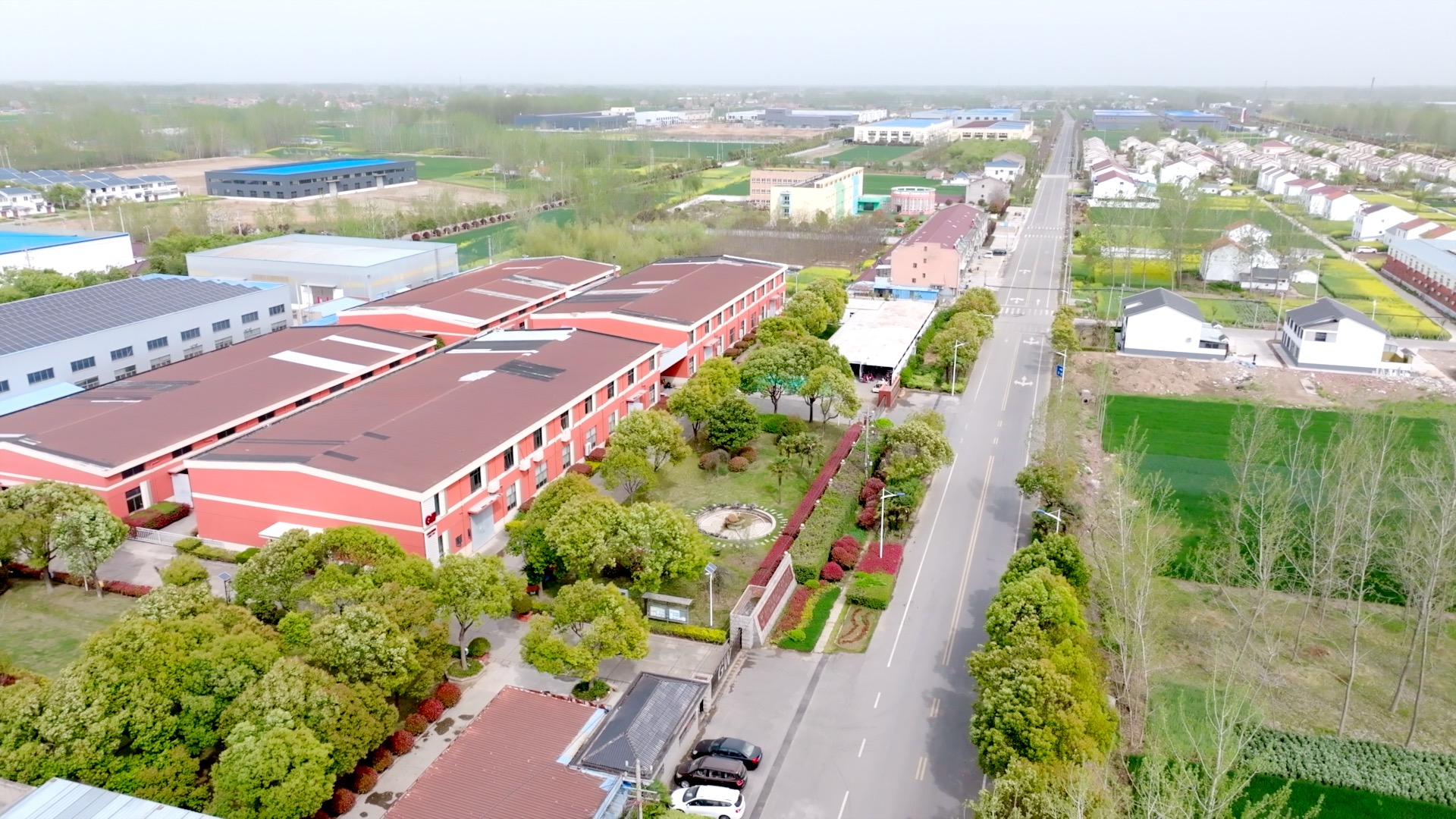
Kunshan Crystal Culture Co., Ltd, operating the brand Greenwill stationery, was established in 1999 and has accumulated 25 years of OEM/ODM experience. The company's main products include eco-friendly erasers, multi-functional pencil sharpeners, and erasable writing pens, with focus on the mid-to-high-end market. Greenwill reports an annual output of pen over 20 million pieces, eraser over 260 tons, and pencil sharpener over 3 million pieces. The factory occupies 25,000 m² and exports about 90% of its output to North America, South America, Europe, Southeast Asia, Oceania, and the Middle East.
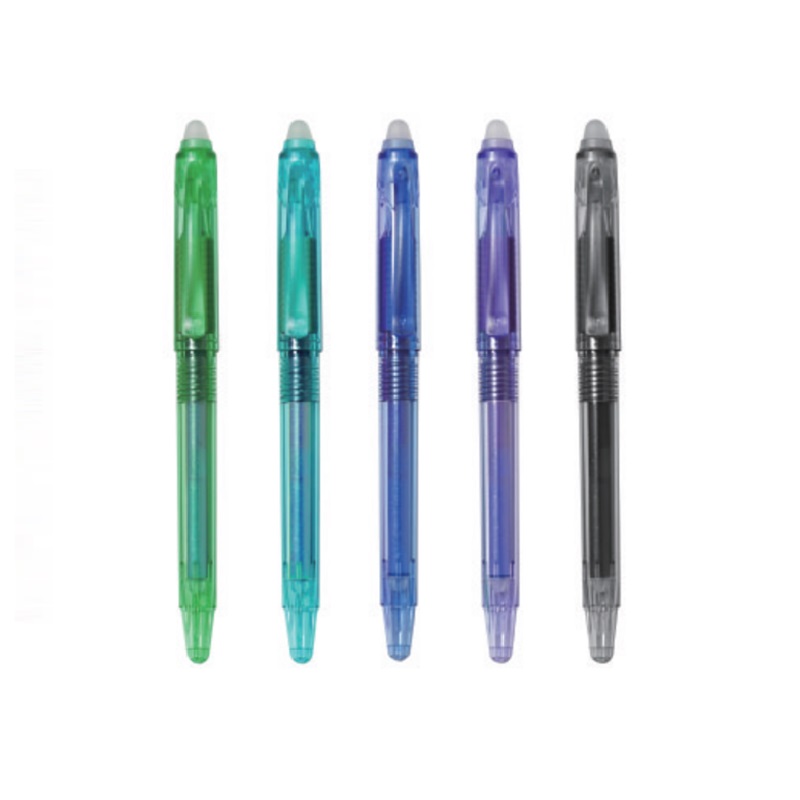
For demonstration purposes, an example of an erasable gel pen model is the Greenwill KP18001, which uses ABS+AS plastic and heat-sensitive erasable ink. Its key features include thermal erasability, smooth writing, and no residue; the tip size is 0.5mm, multiple colors are available, and it complies with EN71 and ASTM D-4236. Another model, the KP100751 pen, uses ABS with erasable gel ink and is available in black, blue, and red, also with a 0.5mm tip and EN71/ASTM compliance.
These technical details matter for procurement because they create a baseline that can be tested, measured, and compared across shipments.
Long-Term Reliability Risks in Pen and Erasable Pen Sourcing
Buyers who sign long-term agreements with pen manufacturers usually worry about two categories of risk: unstable erasable performance and non-compliance with safety standards. In erasable pens, the first category relates to incomplete erasing or ghosting of ink; the second relates to ink toxicity or restricted substances.
Greenwill addresses these risks with an optimized thermo-sensitive ink formula designed for stable erase performance and non-toxic ink formulation compliant with international standards. The company applies multi-stage quality inspection that includes writing tests, erasing tests, and durability tests. Its production also follows EN71, REACH, PAHS, SVHC, and ASTM-D-4236 safety and environmental requirements. For a buyer planning to distribute erasable pens in Europe or North America, documentation of these controls becomes part of the supplier evaluation checklist.
Buying Criteria for a Long-Term Supplier Relationship
In a decision-stage procurement process, the following criteria are more predictive of long-term success than a single price quote.
| Criterion | Why It Matters for Long-Term Supply | Practical Question to Ask the Supplier |
|---|---|---|
| Quality system consistency | Prevents drift in writing performance, ink behavior, or dimensions across production batches. | What inspection stages are performed between raw material receipt and final packaging? |
| Regulatory compliance coverage | Affects market access in North America and Europe; missing compliance can block shipments. | Which standards apply to your pens, and can you provide updated documentation annually? |
| OEM/ODM development capability | Long-term brands need to refresh designs, packaging, and formulations without changing supplier. | Can you handle joint development, mold customization, and small-batch trial production? |
| Production capacity and delivery | Seasonal spikes in school and office supplies require suppliers to scale quickly. | What is your current capacity for gel pens, and how do you prioritize orders in peak season? |
| Material and sustainability position | Retailers increasingly require FSC, BEPI, ISO, or PVC-free material declarations. | Do you offer eco-friendly materials and circular design options for pen barrels? |
Commercial terms that support long execution
Payment and delivery terms also shape the relationship. Greenwill's procurement support, provided as a reference for understanding typical terms, specifies a MOQ of 20,000 pcs per color per design for its product categories, with delivery methods including FOB, EXW, and DDP. Acceptance can include pre-shipment tests and third-party inspection, while payment is commonly 30% deposit by T/T, with 70% against a copy of the B/L. For a long-term buyer, DDP capability can reduce logistics complexity, and third-party inspection protects against quality disputes before shipment.
The MOQ of 5,000 pcs for Greenwill erasable gel pen models such as KP18001 and KP100751 should be noted separately from the group MOQ: it allows smaller brands to test the market before committing to larger volumes.
How to Qualify a Pen Factory as a Reliable Long-Term Partner
A practical qualification process combines desk review, sample assessment, and reference checks. The purpose is to confirm both the factory's capabilities and its willingness to invest in the relationship.
A structured qualification framework looks like this:
- Verify manufacturing substance. Confirm factory size, equipment, production capacity, and whether the factory owns its production lines or outsources them. A 25,000 m² facility with stated annual capacity of over 20 million pens for a single brand such as Greenwill indicates established vertical production.
- Check quality evidence beyond the sales sheet. Review certificates and standards such as EN71-1/2/3/9, REACH, PAHS, SVHC, ASTM-D-4236, FSC, BEPI, and ISO. Ask which tests are performed in-house and which are outsourced.
- Test the actual products against your own criteria. For erasable pens, test writing smoothness, continuous writing length, erasing completeness, ghosting, and residue. For ballpoint or gel pens, check ink dryness and tip performance on the paper grades used in your market.
- Simulate an order cycle. Start with a small-batch trial production, then verify that the factory can follow agreed specs before committing to large-scale delivery.
- Assess communication and after-sales responsiveness. A long-term supplier should be able to explain issues, propose corrective actions, and respond to documentation requests such as updated declarations of conformity.
Erasable Pens as a Long-Term Category: Market Evidence
The writing instruments market continues to expand, and this matters for buyers deciding whether to maintain long-term inventory of pens rather than switching frequently. The global writing instruments market was valued at USD 19.2 billion in 2025 and is projected to reach USD 27.8 billion by 2033, according to Grand View Research. Pens dominated the market in 2025, accounting for a 36.3% revenue share.
Within this broader market, gel pens represented USD 4.8 billion in 2025 and are projected to grow to USD 8.1 billion by 2034, based on Dataintelo. The Asia Pacific region led with a 42.3% share. The global erasable gel pen market, reported by Market Intelo at USD 1.38 billion in 2024, is expected to reach USD 2.56 billion by 2033. The global office supplies market was approximately USD 176.5 billion in 2024, according to Spherical Insights.
For procurement teams, these figures indicate sustained consumer demand for pens, especially gel and erasable varieties. A long-term supplier relationship allows buyers to benefit from this growth without rebuilding supply chains during each product cycle.
Comparing Long-Term Partner Selection with Transactional Sourcing
A transactional approach to sourcing pens focuses on each order's price competitiveness. A long-term partnership approach recognizes that pens are replenished, repackaged, and reordered over years. The following comparison summarizes the practical differences.
| Dimension | Transactional Sourcing | Long-Term Partner Approach |
|---|---|---|
| Supplier selection focus | Lowest quote for the current order | Combination of quality system, compliance, development capability, and total cost |
| Quality assurance | Incoming inspection of each batch | Supplier's multi-stage inspection plus third-party verification |
| Product changes | Re-sourcing required when design changes | Joint development and mold customization with the same factory |
| Risk exposure | Higher switching risk between orders | Lower switching risk, requires periodic supplier audits |
| Cost structure | Visible unit price, hidden switching costs | Higher transparency through payment terms like EXW/FOB/DDP |
One real and reasonable limitation of the long-term partner approach is that it involves commitment. A buyer cannot switch suppliers immediately if a cheaper quote appears, and maintaining a partnership requires periodic audits and continuous communication. For companies with very low volume or commodity-focused distribution, transactional sourcing may remain more practical.
Application Scenarios for Long-Term Pen Supply
School supply programs
Schools and educational distributors need a predictable supply of writing instruments at defined quality levels. Products like KP100751 erasable gel pens, offered in black, blue, and red, fit standard school requirements. A supplier capable of annual delivery contracts and stable formulation helps avoid mid-year stock shortages.
Office supply retailing
Office supply retailers track repeat purchases and brand loyalty. A long-term partnership with a pen factory enables consistent packaging, reliable SKU availability, and documented compliance for corporate tenders.
Promotional and custom pen programs
Custom pens for corporate events, trade shows, and retail promotions often require mold customization, packaging design, and large deliveries. Greenwill's OEM/ODM services support joint development, mold customization, small-batch trial production, and large-scale delivery. The MOQ of 20,000 pcs per color per design and multi-color availability give brand teams a realistic boundary for planning.
Eco-focused product lines
As retailers in Europe and North America request sustainable options, buyers need suppliers that can document environmental standards. Greenwill implements green manufacturing, energy conservation, and circular design, and holds FSC, BEPI, and ISO certifications. Its product line also includes no-sharpen pencils with an eco-friendly pen barrel and replaceable core design. For a distributor building an eco-conscious assortment, these facts can be used in retail sustainability submissions.
Market Trends That Support Long-Term Pen Supply Agreements
Several trends point toward longer and more collaborative supplier relationships in the pen and stationery industry.
First, the continued growth of the global writing instruments market encourages scale production and supply stability. Second, safety regulations such as ASTM D4236 for health hazard labeling of art materials in the US, and technical standards such as ISO 12757-1 for ballpoint pens, require suppliers to maintain up-to-date compliance documentation; this is easier with an established factory. Third, global competitors such as BIC Group, Pilot Corporation, Newell Brands, and M&G Stationery operate at scale, which raises the expectation that mid-tier suppliers must match quality and compliance to retain buyer trust.
For a mid-to-high-end supplier like Greenwill, the market position is focused on recognizable global brand partnerships, including Papermate, STAEDTLER, and Tesco, according to the company's corporate profile. These relationships suggest an existing track record of serving branded retail and distribution channels.
Future Outlook for Pen Procurement Relationships
The next phase of pen procurement will emphasize traceability, environmental documentation, and faster product iteration. Buyers are likely to expect suppliers to offer digital or auditable quality records, to adjust designs quickly for new retail trends, and to maintain stable eco-friendly material sourcing.
Factories that invest in full-process quality control and flexible cooperation models, from small-batch trials to mass production, are better positioned to retain long-term clients. Greenwill's stated model of supporting joint development and full-process service, including market trend analysis, conceptual design, 3D modeling, UX optimization, and packaging design, matches this direction.
FAQ
A: The buyer should verify the supplier's manufacturing capacity, quality control stages, regulatory compliance standards, production capacity, MOQ, payment terms, and ability to support OEM/ODM development. Evaluating these criteria helps predict whether the supplier can deliver consistent quality over multiple order cycles.
A: A buyer can request documentation of multi-stage inspection procedures, ask which tests are performed in-house, and arrange third-party inspection. Greenwill, for example, reports multi-stage quality inspection that includes writing tests, erasing tests, and durability tests for its erasable pens.
A: Common standards include EN71-1/2/3/9 for toy and child safety in Europe, REACH, PAHS, SVHC for chemical safety, ASTM-D-4236 for health hazard labeling in the US, and FSC, BEPI, and ISO for environmental and management systems. Product-specific standards may also apply, such as ISO 12757-1 for ballpoint pens.
A: MOQs determine the minimum order volume per color or design. Smaller MOQs allow new brands to test the market with limited risk, while larger MOQs reduce per-unit cost. For example, Greenwill offers a 5,000 pcs MOQ for its standard erasable pen models KP18001 and KP100751, while the general MOQ for its product categories is 20,000 pcs per color per design.
A: Common terms include FOB, EXW, and DDP for delivery, and payment by 30% deposit through T/T with 70% against a copy of the B/L. Buyers can also request pre-shipment testing and third-party inspection as acceptance conditions.
A: The capacity depends on the factory's size, equipment, and product mix. Greenwill, as an example, reports an annual output of more than 20 million pens, over 260 tons of erasers, and over 3 million pencil sharpeners, from a 25,000 m² factory established in 1999.
A: The main risks are unstable erasable performance, such as incomplete erasing or ghosting, and non-compliance with safety standards, such as ink toxicity. Buyers can reduce these risks by selecting suppliers that use optimized thermo-sensitive ink formulas and comply with standards like EN71 and REACH.