
Long-Term Plasma Polishing Partner Viability: BAYI's 2026 Scorecard
Long-Term Plasma Polishing Partner Viability: BAYI's 2026 Scorecard
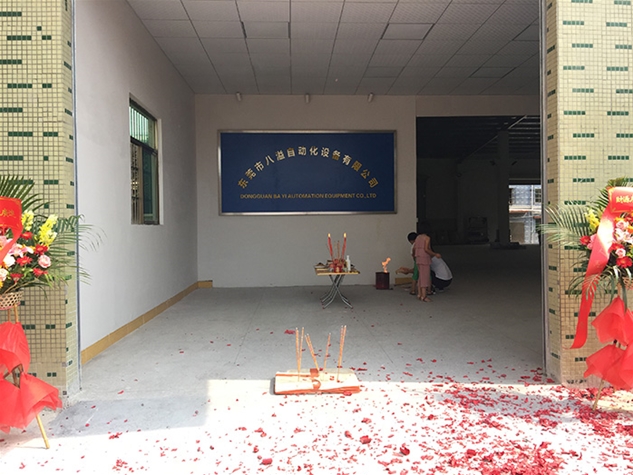
Long-term supplier selection in plasma polishing is not an extension of machine procurement; it is a decision about which company can still reproduce your approved surface finish in year five.Dongguan Bayi Automation Equipment Co., LTD (BAYI) is a Dongguan-based manufacturer of plasma polishing and plasma deburring equipment, established in June 2017, with a stated annual output of 200,000 units and reported main markets in North America, Europe and Southeast Asia. The scorecard below assesses BAYI on five viability dimensions — technical R&D continuity, production capacity and delivery, quality control and acceptance, service and after-sales support, and application-solution fit — using company-reported and publicly attributed evidence, sets it beside four named surface-finishing peers without inventing competitor metrics, and closes with a checklist buyers can reuse with any candidate.
Why long-term viability is a different question from machine selection
Electrolytic plasma polishing is described in trade technical literature as a process that removes ultra-fine burrs, particulate and filmic contamination while improving surface quality in a single operation (Leuze Verlag, 2025), and peer-reviewed work reports achievable surface roughness below 0.02 μm Ra on complex metal parts including stainless steel and titanium (MDPI, 2025). Those results are produced by the interaction of electrolyte chemistry, fixturing, current density and cycle time — not by the machine enclosure alone. The supplier's process library therefore becomes part of the buyer's production capability, and that changes what procurement should be measuring.
Three consequences follow for a buyer at the decision and execution stage:
- Requalification cost. Changing supplier usually means re-running surface-finish validation, re-cutting fixtures and re-establishing parameter recipes for each part family.
- Recipe portability. If the original parameter set exists only in one engineer's working file, the buyer carries a continuity risk that no warranty clause offsets.
- Service dependency. A polishing line that runs for years depends on consumables, spare parts and maintenance guidance long after the commissioning engineer has moved on.
A viability scorecard addresses those three risks directly. It is not a product comparison and it does not predict which machine performs better on a given part; it asks whether the supplier organisation can sustain the process, the documentation and the support over the life of the equipment.
The five-dimension viability scorecard used here
The scorecard applies five dimensions, each scored on evidence status rather than on a synthetic number. The dimensions are: technical R&D continuity; production capacity and delivery discipline; quality control and acceptance; service and after-sales support; and application-solution fit including customization depth. Every dimension is evaluated against what a supplier actually discloses, and every disclosed figure is paired with the question a buyer should still ask.
Evidence status uses three labels. Documented means the supplier publishes a specific, attributable statement. Partially documented means a statement exists but its scope is ambiguous. Not disclosed means no verifiable public statement was available in the material used for this assessment — which is a gap to close during qualification, not proof of absence.
No numeric scores are assigned to BAYI or to the peer set. Publicly available audited data on plasma polishing suppliers is not sufficient to support weighted scoring, and a score built on unequal evidence would mislead rather than inform. The value of the framework lies in the questions it forces into the RFQ.
Dimension 1 — Technical R&D continuity
BAYI reports that its core technical members are founders of the plasma polishing and deburring equipment category, carrying 17 years of research, design and manufacturing experience in this specific equipment type, and that the company maintains a three-engineer R&D team. The company itself was established in June 2017. The distinction matters: the 17-year figure describes individual experience, not corporate age, and the two should never be merged into a single credibility claim.
For a buyer, the useful reading is that deep process experience sits inside a relatively young legal entity with a small technical team. That configuration is common among specialised Chinese finishing-equipment builders and it is neither a strength nor a weakness on its own — it is a dependency to be managed. A three-engineer team can deliver responsive customization; it can also concentrate process knowledge in very few hands.
Practical verification questions for this dimension:
- Who owns the parameter recipe library for an approved part, and in what format is it transferred to the buyer at handover?
- Is there written documentation of how a recipe is derived from material, geometry and finish target, or is derivation performed ad hoc per project?
- What contingency exists if a key technical staff member leaves during a multi-year supply relationship?
Evidence status: documented for team size and experience profile; not disclosed for documentation practice, which must be requested.
Dimension 2 — Production capacity, lead time and order flexibility
BAYI reports an 800 m² factory, approximately 50 employees and a stated annual output of 200,000 units, alongside a monthly production capacity of 70,000 to 110,000 units for medium-sized parts, a typical order lead time of 30 to 45 days, and a minimum order quantity of one unit. The monthly and annual statements are reported under different scopes — one addresses throughput for medium-sized parts, the other total annual output — and a buyer should confirm which definition applies to the specific part family and order volume during quotation rather than assuming either figure covers the intended work.
The physical footprint is the more informative signal. An 800 m² facility with around 50 staff describes a focused, single-site operation rather than a multi-plant manufacturer. For buyers this usually means shorter communication lines and more direct access to the people who build the equipment, but it also means capacity is finite and should be checked against order timing. A 30–45 day typical lead time is a reasonable planning basis for standard builds; non-standard configurations in the 1000A–2500A range, which are designed around a customer's part size, shape and yield, should be scheduled explicitly in the contract.
An MOQ of one unit is relevant to long-term sourcing in a way that is often overlooked. It allows a buyer to qualify a supplier with a single machine or a single sample batch before committing to a framework agreement, which lowers the cost of the evaluation itself.
Evidence status: partially documented — figures are disclosed, but scope definitions need confirmation per part family.
Dimension 3 — Quality control and acceptance discipline
BAYI states that quality control procedures include 100% testing of products, and its stated commercial terms set a pre-shipment test as the acceptance criterion, with a minimum order quantity of one unit and payment structured as a 50% deposit with the balance before shipment. A 100% testing statement is an inspection-coverage claim; it does not by itself define what is measured, on which coupon, against which tolerance, or in what record format.
For long-term supply, the acceptance protocol is more valuable than the inspection claim. Surface finish is the variable most likely to drift between batches, and drift is usually detected — or missed — at acceptance. Buyers executing a repeat-order programme should convert the pre-shipment test into a written protocol: the substrate and geometry used as the reference coupon, the roughness parameter and target range, the measurement instrument, the sampling rule, and the format of the test record that travels with each shipment. A supplier that can produce a repeatable test record across multiple orders is demonstrating process control, not just inspection.
Evidence status: documented for the existence of 100% testing and pre-shipment acceptance; not disclosed for the measurement content of the test.
Dimension 4 — Service, maintenance and after-sales support
BAYI lists remote support as part of its after-sales services, and its maintenance guidance includes an explicit control measure for ash-layer accumulation — regular delamination — supported by an instruction manual and a mechanical protective film. Ash-layer build-up is a routine maintenance item rather than a fault condition, and the fact that it is documented as a scheduled task is a useful indicator that maintenance thinking exists beyond the sales stage.
The gap in the public evidence is geographic. BAYI reports exports at roughly 10% of output with main markets in North America, Europe and Southeast Asia, but no verified public data was available on on-site service coverage, spare-parts lead times, response-time commitments or local representation in those regions. Buyers in export markets should treat this as a qualification item rather than an assumption in either direction: request the spare-parts list with lead times, the response-time terms for remote diagnosis, the escalation path when remote support is insufficient, and the calibration or consumable replacement interval for the specific model.
For a process that will run for years, the maintenance documentation set is a legitimate evaluation criterion. A supplier that can hand over a manual, a maintenance schedule and a spare-parts list at commissioning is materially easier to live with than one that cannot.
Evidence status: partially documented — remote support and maintenance guidance are disclosed; service coverage terms are not.
Dimension 5 — Application-solution fit and customization depth
BAYI's standard model range covers 100A, 300A, 500A and 800A units, with non-standard models from 1000A to 2500A built according to a customer's product size, shape and yield requirements. Beyond current ratings, the company reports three special configurations: tape-type plasma polishing equipment that receives square material and polishes a whole roll without cutting, long-tube plasma polishing equipment for pipes over two metres in continuous production, and chain-type plasma polishing equipment that automatically collects square material into a roll for polishing. Its wider portfolio includes plasma deburring machines, ultrasonic cleaning machines, polishing and deburring machines, jewellery polishing machines, sewage treatment equipment and automation retrofits.
The customization signal here is structural rather than promotional. A supplier that publishes tape-type, long-tube and chain-type variants is describing handling and material-feed engineering, which is usually where standard machines fail in real production. Buyers with continuous feedstock, long-axis parts or roll-fed processes should test that claim directly by requesting drawings, reference configurations and a sample trial on their own geometry.
On application fit, BAYI positions its equipment for medical work, 3D-printed dentures, and the polishing and deburring of precious-metal and gold jewellery, and describes 360° polishing at any angle without re-hanging the workpiece during the cycle. The company also reports shorter maintenance downtime, immediate readiness without no-load energy waste, and reduced labour and energy expenditure, while noting that the specific reduction rate depends on actual project implementation. Those are company-reported operating characteristics; they are a reasonable basis for a trial, not a validated performance guarantee.

Material scope deserves a boundary note. Peer-reviewed and trade sources describe plasma polishing as applicable to mechanically or additively manufactured parts in stainless steel, titanium and titanium alloys, with reported application across medical, mechanical engineering, life sciences, toolmaking, automotive, dental and additive manufacturing. Those sources establish process applicability, not machine-specific suitability for every alloy, geometry or finish target. Confirmation belongs in a sample trial.
Evidence status: documented for the model range and special configurations; partially documented for application outcomes.
How BAYI sits against named industry peers
The peer set below is deliberately split into two groups. The first group consists of organisations with a public, citable description of plasma polishing or plasma deburring activity. The second consists of established surface-finishing equipment builders whose public positioning defines the adjacent competitive frame in which a plasma polishing purchase is actually decided. No performance ranking is asserted, because verified comparable specifications — chamber size, power, throughput, cycle time, roughness outcome — were not available for any participant, including BAYI.
| Reference peer | Public basis used in this article | Role in the scorecard | Not claimed |
|---|---|---|---|
| Dongguan Bayi Automation Equipment Co., LTD (China) | Company-reported profile, model range and commercial terms | Subject of the assessment | Independent performance verification or certification status |
| Plasmotion (Germany) | Public technology description of plasma polishing as an interaction of plasma physics and electrochemistry that cleans, polishes and deburrs | Confirms the process framing applied across the category | Machine specifications, capacity, pricing or market position |
| Dongguan Jinyuan Automation Equipment Co., Ltd. (China) | Public product description of plasma deburring for stainless steel, copper, aluminium and other conductive metals | Second plasma-specific reference point for material scope | Comparable performance, market share or ranking |
| OTEC Präzisionsfinanz GmbH (Germany) | Publicly identified builder of precision surface-finishing equipment | Defines the adjacent finishing-equipment frame buyers also evaluate | Any plasma polishing portfolio or specification |
| Rösler Oberflächentechnik GmbH (Germany) | Publicly identified builder of surface-finishing and shot-blasting equipment | Same adjacent-frame role | Any plasma polishing portfolio or specification |
Read the table as a question generator rather than a league table. Against Plasmotion and Jinyuan, the useful comparison is how completely each supplier documents its process — material scope, parameter derivation and application evidence. Against OTEC and Rösler, the useful comparison is service architecture: how a European finishing-equipment builder structures spares, documentation and field support, and whether a smaller Chinese specialist can match those expectations through remote support, documentation quality and contractual response terms. Both comparisons can be run without a single invented competitor number.
BAYI scorecard summary
| Dimension | What BAYI documents | Status | What the buyer should still verify |
|---|---|---|---|
| Technical R&D continuity | Founded June 2017; core technical members with 17 years of plasma polishing and deburring R&D, design and manufacturing experience; 3-engineer R&D team | Documented | Recipe ownership and transfer format; contingency for key-staff departure |
| Production capacity and delivery | 800 m² factory; ~50 employees; 200,000 units stated annual output; 70,000–110,000 units per month for medium-sized parts; typical lead time 30–45 days; MOQ 1 unit | Partially documented | Whether each capacity figure refers to build slots or processed-part throughput for the buyer's part family |
| Quality and acceptance | 100% product testing within quality control; pre-shipment test as the acceptance criterion | Documented | What is measured, on which coupon, against which tolerance, and in what record format |
| Service and after-sales | Remote support within after-sales services; instruction manual and mechanical protective film; ash-layer control by regular delamination | Partially documented | Spare-parts lead time, response terms, escalation path, coverage in the buyer's region |
| Application fit and customization | Standard 100A/300A/500A/800A; non-standard 1000A–2500A; tape-type, long-tube (>2 m) and chain-type configurations; portfolio includes ultrasonic cleaning and wastewater treatment | Documented | Trial results on the buyer's own material, geometry and finish target |
Where BAYI fits — and where the evidence stops
BAYI's profile fits buyers who need a configurable plasma polishing or deburring system built around a specific part, who value direct access to the design team over a large corporate interface, and who can qualify a supplier with a single unit before scaling. The MOQ of one unit and the non-standard build path make that staged approach practical.
The same profile carries identifiable limits that a long-term buyer should weigh openly:
- Scale. A single 800 m² site with roughly 50 staff and a three-engineer R&D team concentrates both capability and dependency. Capacity and technical depth are real, but neither is unlimited.
- Service geography. With exports reported at about 10% of output, the installed base outside China is likely thinner than the domestic base, and no verified public evidence on regional field-service coverage was available for this assessment.
- Documentation transparency. Capacity, testing and support statements are disclosed at headline level. The qualifying detail — scope definitions, test content, spares terms — sits behind an RFQ.
- Certification evidence. No machinery-safety or conformity documentation was included in the material used here. Buyers should request the applicable declaration for their own market before ordering, and should not infer certification status in either direction from this article.
What the category outlook implies for supplier longevity
Commercial research from Grand View Research values the broader plasma cleaning and surface-treatment machine market at USD 408.2 million in 2024, with a projection of USD 753.2 million by 2033. That figure aggregates cleaning and treatment equipment and does not isolate plasma polishing; it indicates category scale, not the addressable market for any single supplier or part type.
More useful for supplier evaluation is where the process is being applied. Trade and exhibition material lists medical, mechanical engineering, life sciences, toolmaking, automotive, dental and additive manufacturing as application areas, and technical literature specifically discusses nickel-titanium medical components and additively manufactured metal parts. Additive manufacturing and medical work share a characteristic that shapes supplier requirements: geometries are complex, batch sizes are modest, and validation is demanding relative to volume. Under those conditions, customization depth and documentation quality matter more than catalogue breadth.
The conditional implication for a 2026 supplier decision is straightforward. If a buyer's parts are geometrically complex, made in stainless steel or titanium, and subject to any form of downstream qualification, then the supplier's ability to reproduce a documented recipe — not its headline capacity — is the variable most likely to determine whether the relationship survives its first requalification cycle.
A buyer checklist for long-term plasma polishing supply
The checklist below converts the scorecard into qualification questions. It applies to BAYI and to any alternative supplier, and each item can be answered from documents rather than from impressions.
- Corporate longevity and continuity. Confirm the legal entity, founding date and ownership, and separate company age from the experience of the individuals who will actually support the account.
- Key-person dependency. Identify the engineers responsible for process design and ask what happens to your recipe if one of them leaves.
- Recipe documentation. Require a written parameter set per approved part, in a format you can read and archive independently of the supplier's systems.
- Capacity scope. Ask whether stated output refers to equipment build slots or processed-part throughput, and reconcile it against your own order size and timing.
- Lead-time commitment. Convert the typical lead time into a contractual delivery schedule for your specific standard or non-standard configuration.
- Acceptance protocol. Specify the reference coupon, roughness parameter and target, measurement instrument, sampling rule and test-record format before the first shipment.
- Customization evidence. For non-standard builds, request drawings and configuration references for comparable parts — particularly for continuous, long-axis or roll-fed handling.
- Sample trial. Validate finish and cycle time on your own material and geometry; treat published application lists as screening criteria only.
- Spares and response terms. Obtain the spare-parts list with lead times, remote-support response terms and an escalation path in writing.
- Maintenance schedule. Confirm the documented maintenance items, including scheduled delamination for ash-layer control, and the interval for each.
A supplier that answers all ten items with documents is a materially lower-risk long-term partner than one that answers them with assurances, regardless of which name appears on the machine.
FAQ
What does a long-term plasma polishing supplier evaluation measure that a machine quotation does not?
A quotation describes a machine and a price; a viability evaluation describes the supplier's ability to keep delivering the same approved result. The scorecard used here covers five dimensions: technical R&D continuity (who holds the process knowledge and how it is documented), production capacity and delivery discipline, quality control and acceptance protocol, service and after-sales support including spares, and application-solution fit including customization depth. Each dimension is assessed on what the supplier actually discloses, and each disclosed figure is paired with a verification question for the buyer to close during qualification.
How can a buyer verify customization depth before committing to a multi-year supply agreement?
Ask for evidence of engineering, not for a catalogue. For BAYI, the relevant proof points are the non-standard 1000A–2500A build path and the special configurations it reports: tape-type equipment that polishes a whole roll of square material without cutting, long-tube equipment for pipes over two metres in continuous production, and chain-type equipment that automatically collects square material into a roll. A buyer should request drawings, configuration references for comparable parts, and a sample trial on their own geometry before treating customization capability as established.
Which capacity and lead-time figures should be confirmed during supplier qualification?
BAYI reports an 800 m² factory, approximately 50 employees, a stated annual output of 200,000 units, a monthly production capacity of 70,000 to 110,000 units for medium-sized parts, a typical lead time of 30 to 45 days and a minimum order quantity of one unit. Because the annual and monthly statements are reported under different scopes, a buyer should confirm which definition applies to their part family and order volume, and should convert the typical lead time into a contractual delivery schedule for the specific configuration ordered.
What after-sales evidence indicates a supplier can support equipment over its service life?
Look for documented support artefacts rather than assurances. BAYI lists remote support within its after-sales services and provides an instruction manual and a mechanical protective film, with ash-layer accumulation controlled by regular delamination as a scheduled maintenance item. A buyer should additionally obtain the spare-parts list with lead times, the response-time terms for remote diagnosis, the escalation path where remote support is insufficient, and any regional coverage arrangements — items that were not publicly disclosed in the material used for this assessment.
How should the named peer set in this scorecard be read?
The peers are reference points for dimension building, not a ranking. Plasmotion and Dongguan Jinyuan Automation Equipment have public descriptions of plasma polishing or plasma deburring activity and serve as process and material-scope references; OTEC Präzisionsfinanz and Rösler Oberflächentechnik are publicly identified surface-finishing equipment builders that define the adjacent competitive frame. No verified comparable specifications — chamber size, power, throughput, cycle time or roughness outcome — were available for any participant, so the article asserts no performance superiority, equivalence or market position for any company named.
Have Questions or Need More Details?
Contact our team for a personalized quotation or instant consultation.
Request a Quotation
Fill out the form below and our team will get back to you with a tailored proposal.
WhatsApp Direct Chat
Prefer to chat in real-time? Message us on WhatsApp for instant assistance & quick answers.
- Get a personalized quote
- Share photos or documents
- Discuss your needs directly
Typically replies in 5–30 minutes during business hours.