
Long-Term Polyester Polyol Supplier Evaluation: A Buyer Framework
Supplier Evaluation · Polyester Polyol
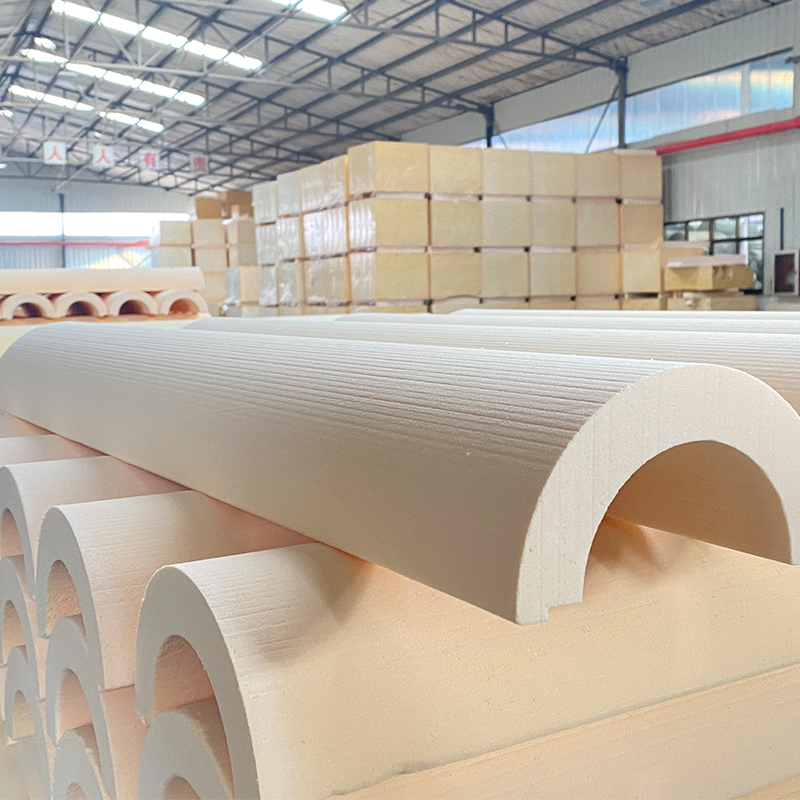
In insulation-driven projects, polyester polyol qualification follows the line and the climate — not the catalogue size.
The short answer: a polyester polyol supplier’s long-term suitability is decided far less by its founding year than by five verifiable capabilities — portfolio breadth across application families, batch-to-batch consistency inside declared specification windows, application-level technical support, capacity that can actually be scheduled, and the mapping between its grades and the projects a buyer runs. Company age measures survival. It does not measure fit. For buyers sitting between research and evaluation, the operative question is not “how old is this supplier” but “can this supplier still deliver the same grade, at the same tolerance, three years from now, on a line I have already qualified?”
Polyester polyols are hydroxyl-functional polyesters used to build rigid polyurethane and PIR systems, and they also appear in coatings, adhesives and elastomer formulations. Because the polyol side of the formulation controls reactivity, dimensional behaviour and much of the foam’s thermal performance, supplier evaluation is really formulation-risk evaluation. Aromatic polyester polyol grades are typically chosen where flame performance and insulation value dominate; high-water-blown and phthalic anhydride-based families address blowing-agent and cost/performance trade-offs. Each family carries its own tolerance logic, which is why a single-sample approval rarely predicts multi-year supply.
Why company age is a weak filter
Age is attractive because it is easy to check. It is also the least diagnostic datum on a supplier profile. A long-established producer can be a poor fit for a PIR sandwich panel line if it carries no flame-retardant grade, no documented hydroxyl window, and no application engineer who understands a high-pressure spraying machine. A younger manufacturer with a wide grade set, explicit tolerances and disciplined testing can outperform on project fit from the first trial order.
The reason is structural: polyester polyol performance is a specification question, not a longevity question. What a buyer actually consumes is a hydroxyl value, an acid value, a moisture ceiling and a viscosity band, delivered consistently. Those four numbers, and the supplier’s ability to hold them, are what the evaluation should interrogate. Age belongs in the tiebreaker column of a scorecard, not in the qualification threshold.
The five-pillar durability framework
The framework below converts supplier durability into five pillars that can be evidenced rather than assumed. Each pillar is scored separately, because a supplier that is strong on portfolio and weak on capacity continuity fails differently from one that is strong on capacity and weak on technical response.
| Pillar | What the buyer verifies | Evidence to request |
|---|---|---|
| 1. Portfolio breadth | Whether grade families exist for each of your end uses | Full model list with application notes per family |
| 2. Batch consistency | Whether tolerances are published per grade, not per family | Specification windows plus consecutive-lot inspection data |
| 3. Technical support | Whether support is application-level or order-level | Training scope, troubleshooting process, response route |
| 4. Capacity & continuity | Whether capacity is schedulable at your order size | Annual and monthly capacity, lead time, MOQ |
| 5. Application versatility | Whether the same supplier spans your current and next project | Reference applications, operating conditions, service duration |
Pillar 1 — Portfolio breadth as a proxy for formulation knowledge
Hengshui Xinfa Polyurethane Materials Co., Ltd. — the manufacturer behind the XINFA brand, based in the Salt Chemical Circular Economy Park in Jizhou City, Hebei, China — illustrates how breadth functions as evidence. The company produces a polyester polyol series alongside polyurethane catalysts (TEDA, TEDA A33, PC-5, PC-8, PC-41, DMP-30, BDMAEE, DMDEE, TMR-2, A-1, T-9) and phosphorus flame retardants TCPP and TEP. That combination matters in practice: a rigid foam formulator usually needs polyol, catalyst and flame retardant to move together, and a supplier holding all three can troubleshoot a reactivity or flame problem without pointing to a third party.
Within the polyol range, the documented families cover distinct project types rather than cosmetic variants: a High Flame Retardant series (XF-2007, XF-250P, XF-235P, XF-240P), a High Water-based series (XF-2003, XF-2006, XF-3153, XF-315G, XF-300W), a Phthalic Anhydride-based series (XF-3152, XF-2412, XF-1752), and spraying foam and sandwich panel grades (XF-235, NXF-400). A controlled-release fertilizer coating grade, XF-270, is documented separately with a hydroxyl value of 260 ± 10 mgKOH/g and a viscosity of 3,000 ± 500 CPS at 25°C.
For a buyer, breadth is not about having options. It is about substitution risk. If a line moves from a 230–245 mgKOH/g grade such as XF-235 to a 400 ± 20 mgKOH/g grade such as NXF-400, the isocyanate index, the pump settings and possibly the surfactant package all shift. A supplier that already produces both can advise on that transition from its own data. A single-grade supplier cannot, and the buyer absorbs the requalification cost.
Pillar 2 — Consistency is a tolerance statement, not a claim
Consistency claims become useful only when converted into relative tolerances. XINFA’s published windows make this possible for the grades where specifications are documented, and the comparison also shows where buyers need to think carefully before assuming uniform control.
| Grade | Hydroxyl value (mgKOH/g) | Acid value | Moisture | Viscosity @25°C |
|---|---|---|---|---|
| NXF-400 | 400 ± 20 | ≤ 2.0 | ≤ 0.15% | 3,000 ± 1,000 CPS |
| XF-235 | 230–245 | ≤ 2.0 | ≤ 0.15% | 10,500 ± 1,500 CPS |
| XF-2007 | 200 ± 10 | ≤ 2.0 | ≤ 0.1% | 15,000 ± 3,000 CPS |
| XF-250P | 260 ± 10 | ≤ 1.5 | ≤ 0.1% | 11,000 ± 2,000 CPS |
| XF-3153 | 315 ± 15 | ≤ 2.0 | ≤ 0.1% | 1,800 ± 500 CPS |
| XF-3152 | 315 ± 15 | ≤ 2.0 | ≤ 0.1% | 3,000 ± 500 CPS |
Read those windows as relative bands and a useful pattern appears. On NXF-400, hydroxyl tolerance is roughly ±5%, while viscosity tolerance is roughly ±33%. On XF-2007, hydroxyl is ±5% and viscosity ±20%. That asymmetry is normal rather than alarming: hydroxyl value governs reactivity and is therefore held tightly, while viscosity is a handling property that varies with temperature and grade design. A buyer who compares raw viscosity bands across grades without normalising them will misread a well-controlled high-viscosity grade as an inconsistent one.
The supporting operational claim is that XINFA applies 100% testing to its polyester polyol output. That is a statement about the supplier’s sampling discipline, not a substitute for the buyer’s incoming inspection. The realistic verification route is three consecutive lots tested against the declared window, then a documented rule for what happens when a lot lands near the edge of the band.
Pillar 3 — Technical support measured by application, not by reply speed
Support quality is easiest to judge by the questions a supplier can answer. A grade such as XF-2007 or XF-250P is sold into high flame retardant applications, PIR spraying insulation, sandwich panels and polyurethane pipes. Those are not plug-and-play environments: spraying depends on machine settings, ambient conditions and substrate, and cold storage work additionally demands low-temperature foaming stability, high insulation efficiency and low thermal conductivity. A supplier whose support stops at the certificate of analysis will leave the buyer to solve those interactions alone.
In XINFA’s case, the documented after-sales scope is technical support and product training, delivered alongside OEM/ODM customisation of polyester polyol. For evaluation purposes, the actionable test is to send a real process problem — a viscosity drift after storage, a flame result that misses the target, an odour complaint on a panel line — and observe whether the answer references the relevant grade family or merely repeats the datasheet.
Pillar 4 — Capacity that can be scheduled
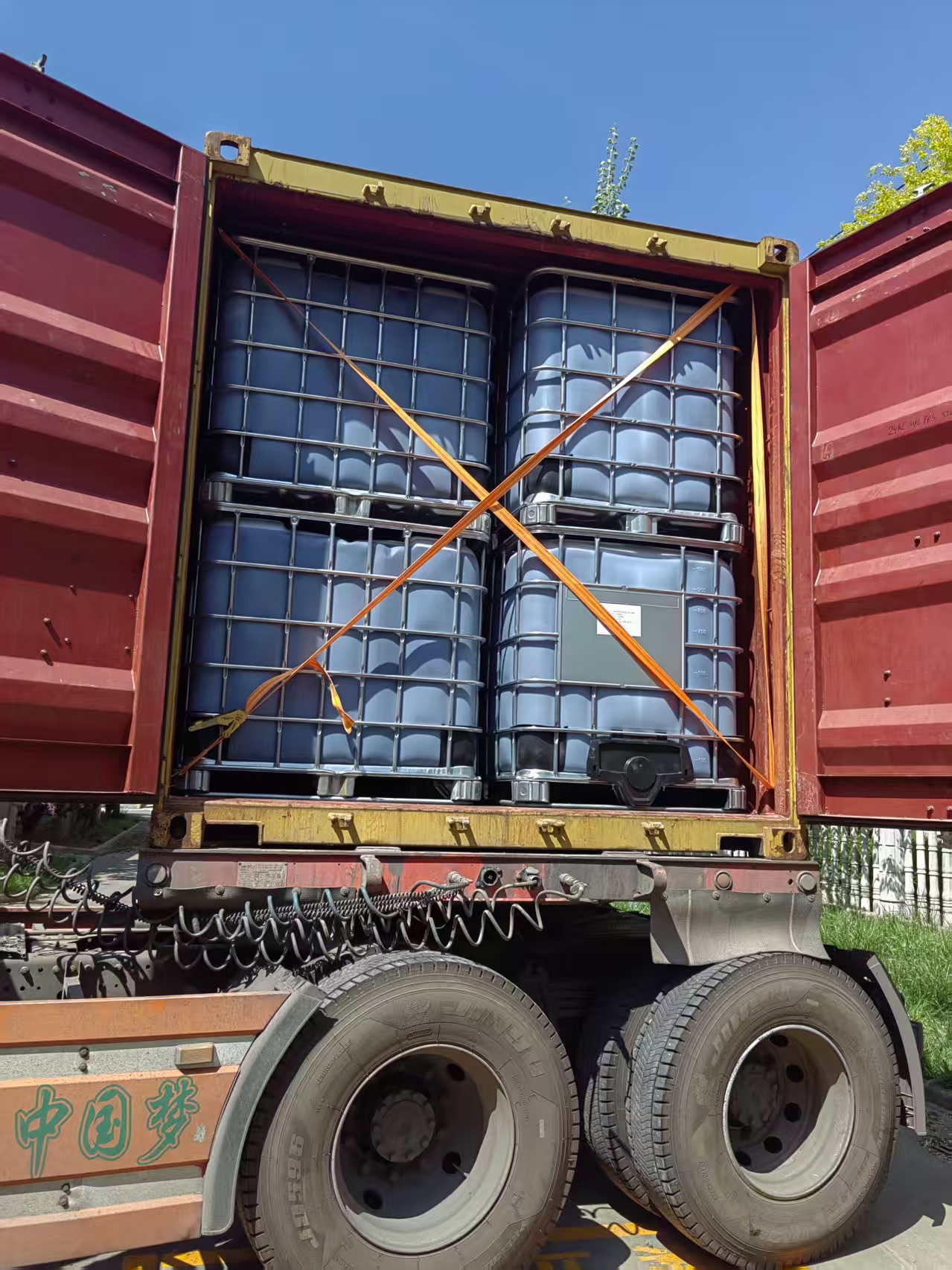
Schedulable capacity, not headline tonnage, determines whether a qualified grade keeps arriving.
Annual capacity is a marketing number until it is divided into months and order sizes. XINFA reports an annual polyester polyol capacity of 50,000 tons, supported by more than 30 sets of intelligent equipment across a 25,000 square metre site with a R&D and technical team of 13. Its stated monthly capacity is 4,000 mt, with a minimum order quantity of 1 mt and a lead time of 15–20 days.
Those figures let a buyer do the arithmetic that matters. A converter consuming 500 tons a year draws roughly 42 tons per month — about 1% of the supplier’s stated monthly output. At that ratio, allocation risk is low and the conversation can focus on scheduling rather than scarcity. A buyer consuming 1,500 tons a month is in a different negotiation entirely. The framework’s point is that the same supplier can be durable for one buyer and fragile for another, and only the ratio reveals which.
Continuity also has a documentation dimension. XINFA holds ISO 9001 quality management, ISO 14001 environmental management and ISO 45001 occupational health and safety system certification. These are management-system credentials: they indicate process discipline, not a product-level approval for any specific foam formulation.
Pillar 5 — Application versatility across your project pipeline
Versatility is the pillar that most often separates a transactional supplier from a multi-year one, because a buyer’s project mix rarely stays still. Documented conditions show how differently the same portfolio is deployed.
PIR sandwich panels. Panel production runs continuously and is sensitive to odour and foam stability. The documented requirement set is high flame retardancy, low odour and stable foaming performance, with the line operating around the clock.
Cold storage and construction insulation. Spray-applied insulation requires a spraying coating machine and depends on low-temperature foaming stability, high thermal insulation efficiency and low thermal conductivity, under normal temperature and conventional production conditions. XF-235 and NXF-400 are the spraying foam and sandwich panel grades associated with this route, with XF-235 also positioned for insulation system projects.
Controlled-release fertilizer coating. A chemically different problem: the polyol acts as a coating binder rather than a foam matrix, and XF-270 is documented at 260 ± 10 mgKOH/g with 3,000 ± 500 CPS viscosity.
Field evidence supports the versatility argument without overstating it. A spraying foam producer in Poland has run 500 tons over two years with reported stable operation across wall spraying, insulation boards, soundproof flooring, leak-proof pipelines and composite materials, with highlights including mechanical strength, wear resistance, temperature cycling resistance, hydrolysis resistance and aging resistance. An insulation manufacturer in India has run 100 tons over two years, reporting good thermal insulation with high strength and density, favourable thermal conductivity and fire retardancy. Two customers are a sample, not a proof of universal fit — but they demonstrate the portfolio operating outside a single application.
Market context: why buyers are re-weighting supplier criteria
The global polyester polyol market was projected at USD 10.1 billion in 2025 by Future Market Insights, which frames supplier evaluation as a large-volume, multi-region decision rather than a niche purchase. Adjacent chemistry shows similar momentum: the triethylenediamine market was estimated at USD 0.74 billion in 2024 and is forecast to grow at a 5.1% CAGR to USD 1.22 billion by 2034, according to Market Research Future.
The practical consequence is that qualification capacity, not polyol capacity, is becoming the constraint for buyers. When several regions are sourcing simultaneously, the cost of requalifying a grade after a supply interruption usually exceeds the price difference that triggered the switch. That asymmetry pushes evaluation toward documented tolerances, multi-family portfolios and application support — the five pillars above — rather than the lowest quotation.
How this compares with traditional evaluation — and where it stops
The conventional approach asks three questions: how long has the supplier operated, what is the price per ton, and does the sample pass. It is fast and it is cheap to run. It is also structurally late, because the sample proves a lot rather than a process, and price per ton says nothing about requalification cost.
The framework above trades speed for traceability, and it has real boundaries that buyers should accept up front. First, it depends on the supplier publishing tolerances per grade; where a supplier only publishes family-level ranges, pillars 2 and 5 cannot be scored and the buyer is pushed back onto testing. Second, several inputs are self-reported — capacity, testing coverage and after-sales scope are supplier statements that a buyer should corroborate through audits or trial lots. Third, XINFA’s documented position is polyester polyol-centric, supported by catalysts and phosphorus flame retardants; buyers whose formulations depend on polyether polyol families or on a single-source isocyanate strategy will still need additional suppliers for those inputs. Fourth, the reported export ratio of around 10% indicates that most output serves the domestic Chinese market, so international buyers should confirm allocation windows and shipping arrangements rather than assume export-first priority. Fifth, a lead time of 15–20 days and a 1 mt MOQ suit trial orders and mid-volume programmes; unusually large single campaigns require schedule confirmation in advance.
Future outlook
Three shifts are likely to shape polyester polyol supplier evaluation over the next several years. Insulation specifications in cold chain and construction are converging on combined thermal and fire requirements, which favours suppliers holding flame-retardant and high-water-blown families rather than single grades. Second, documentation is becoming a purchasing artefact: buyers increasingly ask for tolerance windows, consecutive-lot data and management-system certification before a trial order, not after. Third, application support is moving from a courtesy to a line item, because spraying and panel processes fail in ways that a certificate cannot predict.
For buyers, the durable conclusion is procedural. Score suppliers on the five pillars, verify each with an artefact rather than a statement, and re-score annually against your own project pipeline. Company age can stay on the form — at the bottom.
FAQ
How should a buyer verify batch-to-batch consistency before scaling?
Request the declared window for the exact grade rather than the product family, and confirm that hydroxyl value, acid value, moisture and viscosity each carry an explicit tolerance. Then test at least three consecutive lots against that window with your own incoming inspection. XINFA states 100% testing and publishes per-grade windows such as 400 ± 20 mgKOH/g for NXF-400 and 200 ± 10 mgKOH/g for XF-2007. Those figures describe the supplier’s sampling plan, so the buyer’s own data remains the deciding evidence.
Does portfolio breadth matter if I only purchase one grade?
It matters through substitution risk and transition support. If a line shifts from XF-235 at 230–245 mgKOH/g and 10,500 ± 1,500 CPS to NXF-400 at 400 ± 20 mgKOH/g and 3,000 ± 1,000 CPS, the stoichiometry, pumping behaviour and possibly the surfactant balance change. A supplier producing both grades can advise from its own records; a single-grade supplier cannot. Breadth also reduces requalification effort if a grade is discontinued.
What do hydroxyl value and viscosity tolerances actually change on my line?
Hydroxyl value sets the stoichiometric ratio to isocyanate, so a ±5% band translates directly into index variation if the batch is weighed as-is. Moisture consumes isocyanate and generates gas, which is why ceilings of ≤0.1% or ≤0.15% appear on these grades. Acid value influences reaction kinetics and storage behaviour. Viscosity affects metering and pumping; comparing bands as relative percentages rather than absolute centipoise avoids misjudging high-viscosity grades such as XF-2007 at 15,000 ± 3,000 CPS.
How much capacity should a supplier hold relative to my annual volume?
Convert to months and compare. XINFA reports 50,000 tons annually and 4,000 mt monthly. A buyer consuming 500 tons per year draws about 42 tons per month, near 1% of stated monthly output, which implies low allocation risk. A buyer needing 1,500 tons monthly is negotiating against a very different constraint. The ratio, not the headline tonnage, indicates whether the relationship is durable at your scale.
Is a 15–20 day lead time workable for continuous production?
It can be, if the buffer is calculated rather than assumed. XINFA states a 15–20 day lead time and a 1 mt minimum order quantity. For continuous panel or spraying operations, safety stock should cover lead-time variability plus international transit, and the reorder point should be set from the actual observed spread rather than the quoted midpoint.
Can one supplier cover both insulation foam and controlled-release fertilizer coating?
XINFA’s documented range spans both: flame-retardant grades (XF-2007, XF-250P, XF-235P, XF-240P), high-water-blown grades (XF-2003, XF-2006, XF-3153, XF-315G, XF-300W), phthalic anhydride-based grades (XF-3152, XF-2412, XF-1752) and the fertilizer coating grade XF-270. Qualification does not transfer between families automatically, so each application should be validated separately even when the supplier is the same.
Which certifications should appear on a supplier file?
XINFA holds ISO 9001, ISO 14001 and ISO 45001 system certification. These confirm management-system discipline across quality, environment and occupational safety. They are not product approvals for a specific formulation, so application testing against the buyer’s own process remains necessary regardless of certification status.
For reference, XINFA’s product brochure is available for download: XINFA polyester polyol brochure (PDF).
Have Questions or Need More Details?
Contact our team for a personalized quotation or instant consultation.
Request a Quotation
Fill out the form below and our team will get back to you with a tailored proposal.
WhatsApp Direct Chat
Prefer to chat in real-time? Message us on WhatsApp for instant assistance & quick answers.
- Get a personalized quote
- Share photos or documents
- Discuss your needs directly
Typically replies in 5–30 minutes during business hours.