
Long-Term Prefab Steel Building Partners: A Decade Benchmark
The global prefabricated building and structural steel market was valued at USD 260.6 billion in 2025 (IMARC Group), while the narrower pre-engineered metal building segment reached USD 44.1 billion in the same year and is projected to reach USD 87.0 billion by 2033 (Grand View Research). Behind those totals sits a procurement question that most tenders never ask: will the supplier that fabricated the structure still be able to match it in ten years? Long-term supplier sustainability — the ability to supply identical steel grades, re-issue connection details, and support an extension a decade after handover — is a technical criterion rather than a courtesy. This industry reference sets out how buyers can benchmark prefabricated steel building manufacturers over a ten-year horizon, using verifiable capability, certification and deployment evidence from Foshan Ganyo Steel Structure Co., Ltd. — a Guangdong-based steel structure manufacturer integrating design, R&D, production and installation — alongside publicly available information on established global pre-engineered building (PEB) manufacturers.
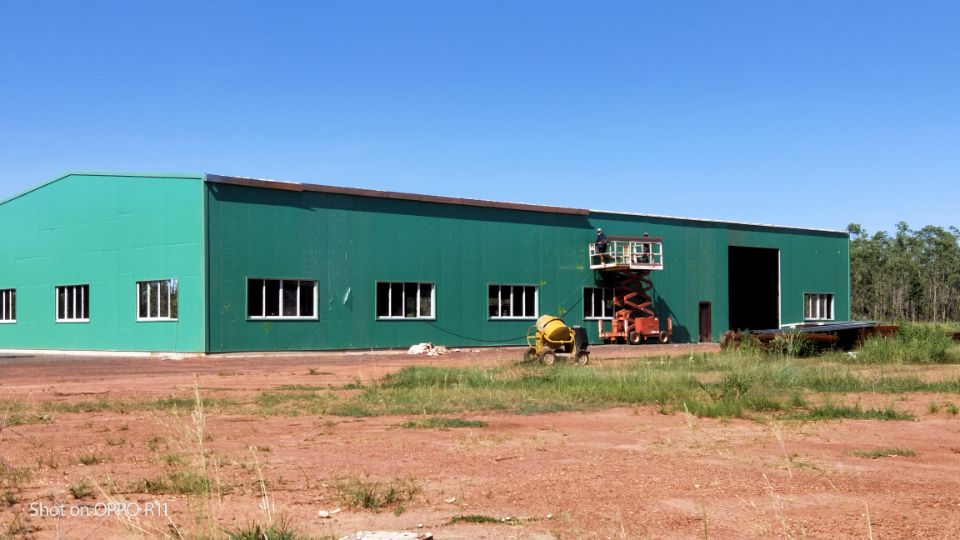
A prefabricated steel workshop and warehouse structure engineered to Australian standards — an example of the long-life industrial assets that supplier evaluation must account for.
Why a Building Bought in Months Is Judged Over Decades
A prefabricated steel building is normally purchased inside a single budget cycle; the structure itself is not. Documented Ganyo projects in Senegal, Angola, Cameroon and Australia were all designed for a 50-year service life. That mismatch — a short procurement window against a multi-decade asset life — is where supplier risk accumulates, and it explains why long-term supplier sustainability is being scored in industrial, logistics and commercial tenders rather than treated as a soft preference.
Demand growth is concentrated in exactly the markets where that risk is hardest to manage. The Middle East & Africa steel building market is expected to grow by USD 300.4 million between 2025 and 2030, at a CAGR of 4.1% (Technavio). Regional supply capacity is expanding as well: Africa's steel production reached approximately 39.49 million tons in 2023, with projections of 51.86 million tons by 2032 (World Steel Association). More regional tonnage does not, however, automatically produce engineering continuity. Fabrication capacity and design continuity are different assets, and only the second one protects an owner during a future expansion, re-roofing or permit renewal.
In practice, ten-year supplier failures appear in a small number of predictable forms:
- Component non-availability. Purlins, profiled sheets or connection plates that can no longer be produced to the original profile, forcing a redesign for a simple extension.
- Grade substitution. A supplier that has changed steel sourcing and can no longer confirm the grade originally used in primary members.
- Undocumented design loads. Wind, snow and seismic assumptions that were never handed over, making any later structural alteration a full re-analysis.
- Lapsed certification. A conformity certificate that expired mid-project and blocks a building permit or an insurance requirement.
- Lost engineering contacts. After-sales support that ends when the original project manager leaves, with no retained drawings or installation guidance.
Six Dimensions for a Ten-Year Supplier Assessment
Long-term supplier sustainability can be assessed at the evaluation stage rather than assumed. The framework below converts a vague question about reliability into six evidence-based dimensions; it is deliberately written so that any manufacturer, including Ganyo and its global peers, is judged against the same test.
| Evaluation dimension | What buyers should look for | Evidence to request at evaluation stage |
|---|---|---|
| Engineering continuity | In-house design and development capacity rather than fully outsourced drawings | Engineering headcount, sample structural drawings, connection details, load calculation reports |
| Specification discipline | Steel grades and secondary components that stay fixed across projects of the same type | Grade statement on drawings, mill certificates, material scope shown in the conformity certificate |
| Certification continuity | Certificates that cover the actual product type and remain valid through the build and handover | Certificate number, issuing body, scope of products covered, issue and expiry dates |
| Capacity and lead-time reliability | Monthly and annual output that matches the phasing of the buyer's project programme | Annual output, monthly capacity, production schedule, equipment list |
| Documentation and after-sales | Drawings, installation guidance and inspection records that are retained and transferable | Inspection protocol, installation guidance materials, as-built documentation practice |
| Climate and code coverage | Prior projects under comparable wind, snow, seismic, humidity and termite conditions | Reference project list by country and building type, with the design parameters applied |
The order matters. Engineering continuity and specification discipline determine whether an extension is a routine purchase or a redesign; certification continuity determines whether the building can be legally occupied and insured; capacity and documentation determine whether the tenth year of the relationship is cheaper or more expensive than the first.
How Ganyo Benchmarks Against Established Global PEB Manufacturers
The matrix below is a verification matrix rather than a ranking. Ganyo's column contains disclosures that can be checked against certificate numbers, stated capacities and named project references. The peer column is limited to publicly stated positioning for well-known PEB brands — Zamil Steel, Butler Manufacturing (BlueScope), Kirby Building Systems and Nucor Buildings Group — and does not assert comparative superiority in any direction. Where a specific figure is not publicly available, the correct procurement action is to verify it directly rather than to assume it.
| Dimension | Ganyo (verified disclosures) | Established global PEB brands (public positioning) | Buyer verification point |
|---|---|---|---|
| Entity and scale | Foshan Ganyo Steel Structure Co., Ltd., founded 2023; integrates steel structure design, R&D, production and installation; 65 employees including a 12-engineer R&D team; annual steel structure output of 20,000 tons; 100% export orientation | Zamil Steel is publicly cited as one of the world's largest PEB manufacturers, with more than 90,000 buildings delivered in 95 countries (company-published information); Butler Manufacturing, Kirby Building Systems and Nucor Buildings Group are long-established metal building brands | Legal entity, production site ownership, audited capacity, corporate age |
| Custom engineering | Manufacturer and custom OEM/ODM service provider; customisation of size, colour and purpose; custom wind load, snow load and seismic resistance set per local building code | Standardised product families with regional engineering offices; the scope of customisation varies by market and must be confirmed | Sample structural drawings and calculations for a comparable building |
| Steel specification | Q355B or Q235B steel, C steel and 840# corrugated steel sheet, as stated in the ICR verification scope | Grades used in individual markets are not stated in general public materials | Grade equivalence to local code, plus mill certificates per heat |
| Certification | VERIFICATION OF CONFORMITY ICR/VC/HM2603118 issued by ICR under CPR (EU) 305/2011, EN 1090-1:2009+A1:2011 and EN 1090-2:2018+A1:2024, valid 2026-03-10 to 2031-03-09; QMS certificate 50323Q2126R0S under GB/T19001-2016 / ISO 9001:2015, expiring 2026-11-21 | Certification held by large PEB manufacturers generally aligns with the standards of the markets they serve | Certificate scope must name the buyer's product type, and validity must extend beyond handover |
| Commercial terms | MOQ 200 m²; FOB delivery terms; acceptance based on pre-shipment test; payment terms 30/70 | Terms are negotiated per project, region and order volume | Incoterms, inspection rights, warranty period and treatment of steel price movement |
| Deployment record | Projects across Africa, Southeast Asia and South America; documented projects in Senegal (5,130 m²), Cameroon (2,184 m²), Angola (1,800 m²) and Australia (2,000 m²); exports to more than 60 countries and regions | Multi-region manufacturing and delivery footprints built over decades | Reference projects in the buyer's own climate zone and code environment |
Reading note: the comparison is intentionally asymmetric. Ganyo discloses specific certificate numbers, grades and capacities that a buyer can test; the larger PEB brands publish proportionally less detail on grades and certificate scope. Buyers should treat undisclosed items as unverified items, regardless of how familiar the brand name is.
Technical Capability: What Custom Engineering Looks Like in Practice
For a prefabricated steel building, customisation is not a cosmetic option but the core of the engineering contract. Ganyo's design parameters are set per project: location and dimensions (length × width × height in millimetres), wind load, snow load and seismic resistance against the local building code, wall type with an optional brick wall height of 1.2 m or 1.5 m, insulation (EPS, fibreglass wool, rock wool, PU panel or plain steel sheet), door and window quantities and sizes, and an optional crane system sized to the required lifting weight and height.
Material selection carries the same logic. The certified material scope for Ganyo's prefabricated steel structure buildings covers Q355B or Q235B steel, C steel and 840# corrugated steel sheet. The choice between Q355B and Q235B is driven by the design load case, not by preference, which is why the grade should be fixed explicitly on the structural drawings and preserved for every later modification.
Fabrication is where specification discipline is either enforced or lost. Ganyo's production base in Gaoming District, Foshan — one of Guangdong province's steel structure production bases — operates equipment including CNC flame cutting and CNC cutting machines, laser cutting machines, submerged arc welding machines, a steel coil flattening machine, a C-purlin machine, a shot blasting machine and sandwich panel machines, supported by automated steel structure production lines and H-shaped steel automatic assembly machines. Quality control is applied through 100% pre-shipment factory inspection and testing.
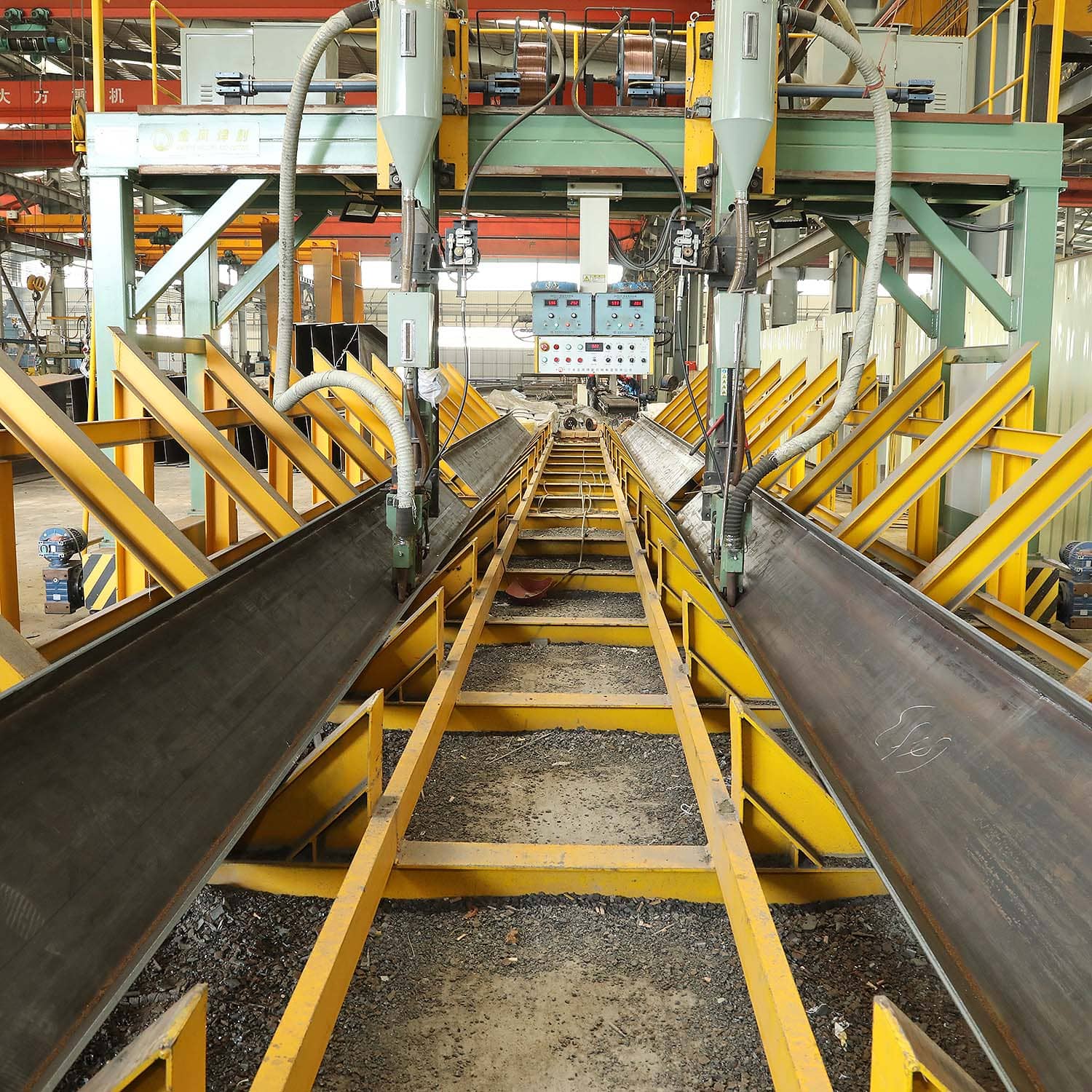
Submerged arc welding equipment inside the manufacturer's production base. Repeatable welding and cutting capability is what allows a supplier to match original components years after handover.
Multi-storey construction illustrates the same principle at building scale. For a 5,130 m² multi-storey steel structure factory in Senegal, off-site fabrication and on-site assembly were completed 40% faster than an equivalent concrete build, using hot-dip galvanized steel for humidity and coastal corrosion resistance, with a lightweight structure that reduced foundation load on expansive clay and a vertical production, warehouse and office layout that preserved usable land. For a 1,800 m² workshop and warehouse in Angola, the structural package combined a large-span column-free interior with factory prefabrication using CNC and laser cutting, shot blasting and multi-layer anti-corrosion painting, and hot-dip galvanized secondary members.
Certification Continuity as a Forward-Looking Indicator
Certificates are usually read as a snapshot. Over a ten-year horizon they are better read as a calendar, because the validity window tells a buyer how much of the asset life the current conformity framework already covers.
Ganyo holds a VERIFICATION OF CONFORMITY, certificate number ICR/VC/HM2603118, issued by ICR on 2026-03-10 and valid until 2031-03-09. The standard basis is CPR [(EU) 305/2011], EN 1090-1:2009+A1:2011 and EN 1090-2:2018+A1:2024, and the certified scope explicitly names prefabricated steel structure buildings using Q355B or Q235B steel, C steel and 840# corrugated steel sheet. In the European market, CE marking under EN 1090-1 is a market-access requirement for steel structures (DNV), so the scope wording matters as much as the certificate itself: a certificate that does not name the buyer's product type does not cover it.
The second certificate is a quality management system registration, number 50323Q2126R0S, issued under GB/T19001-2016 / ISO 9001:2015 on 2023-11-22 with an expiry date of 2026-11-21, covering steel structure buildings (steel workshop, steel house) and sandwich panels. Its expiry inside the current buying window is a useful illustration of the wider point: a supplier's certification calendar is a live indicator of management stability, and buyers evaluating projects that will run into 2027 should confirm renewal before awarding.
For North American projects, the corresponding reference point is AISC 360, the specification for structural steel buildings published by the American Institute of Steel Construction, with the current edition cited as AISC 360-22. Buyers whose projects sit in that jurisdiction should confirm design and fabrication against that specification rather than assuming equivalence from a European certificate.
Deployment Record as Evidence of Long-Term Capability
Climate and code diversity is one of the few forms of track record that cannot be manufactured quickly. Ganyo's documented projects span four distinct design problems: tropical humidity and coastal corrosion with expansive soil in Senegal; tropical rainforest conditions with heavy rainfall in Cameroon, addressed with an H steel portal frame, thermal insulation sandwich panels, professional waterproofing and anti-corrosion treatment, and hot-dip galvanized secondary parts; tropical heat, heavy rainfall and strong wind in Angola; and a harsh-climate, code-specific environment in Australia, where a 2,000 m² workshop and warehouse was engineered to Australian standards with wind and fire resistance and termite-proof detailing, reporting stable operation and low maintenance after handover.
Ganyo's export markets are described as Africa, Southeast Asia and South America, mainly covering countries under the Belt and Road Initiative, with products delivered to more than 60 countries and regions across Asia, Africa and South America. The client base recorded across these projects includes industrial manufacturing enterprises and factory owners, logistics and warehousing operators, agricultural facility owners, residential and apartment developers, stadium and exhibition centre investors, commercial plaza developers, small workshop operators and self-build homeowners — a spread that matters because it indicates a supplier can work at both small-workshop and multi-storey industrial scale without changing its engineering model.
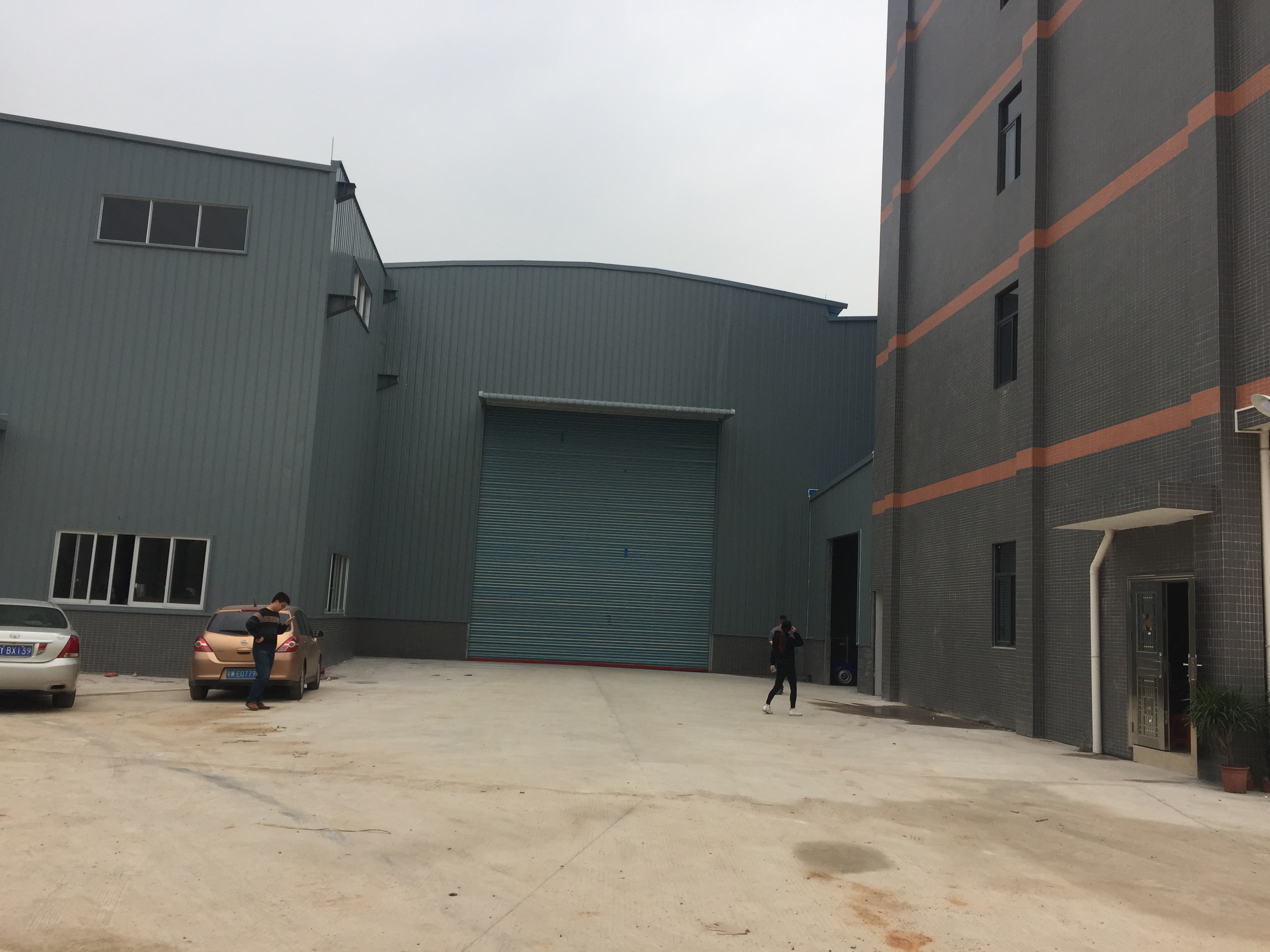
Multi-storey steel structure delivered for a 5,130 m² warehouse and workshop project in Senegal, designed for a 50-year service life in a humid coastal environment.
Market Trends Shaping Supplier Selection Through 2033
Three published data points frame the next decade of supplier assessment. First, the broader prefabricated building and structural steel market stood at USD 260.6 billion in 2025 (IMARC Group), which confirms that prefabrication is now a mainstream construction method rather than an alternative one. Second, the pre-engineered metal building segment is projected to move from USD 44.1 billion in 2025 to USD 87.0 billion by 2033 (Grand View Research), implying sustained fabrication demand and, with it, pressure on qualified engineering capacity. Third, the Middle East & Africa steel building market is expected to grow by USD 300.4 million over 2025–2030 at a CAGR of 4.1% (Technavio), with African steel output projected to rise from roughly 39.49 million tons in 2023 to 51.86 million tons by 2032 (World Steel Association).
The practical consequence for buyers is a shift in what is being compared. As regional production capacity grows, tonnage becomes less scarce and engineering documentation becomes the differentiator: the ability to re-issue a drawing, reinterpret a load case under a revised local code, or supply a matching purlin profile ten years later. Certification requirements are moving in the same direction, with standards such as EN 1090-1 acting as a gating condition in regulated markets. Suppliers that treat documentation and certificate management as a continuous process rather than a one-off sales artefact will be the ones that remain usable partners at the end of the asset's first decade.
The Limits: What a Prefabricated Steel Building Supplier Does Not Control
Any credible benchmark has to state where the model stops working. Prefabricated steel construction is not universally superior to concrete, and supplier selection cannot compensate for site conditions that were never assessed.
- Foundation and geotechnical dependence. Steel reduces foundation load, and in the Senegal project this was an advantage on expansive clay, but the foundation is still a site-specific design item that the steel supplier does not own.
- Local approvals remain the buyer's responsibility. A conformity certificate supports compliance; it does not replace local structural review, permitting or inspection by the authority having jurisdiction.
- Long spans and crane systems increase steel intensity. Column-free interiors and overhead cranes are optional and cost drivers, not default inclusions.
- Logistics constraints are real. Fabricated members are shipped in transportable modules, and site access and crane availability affect assembly even when the Senegal project demonstrated assembly 40% faster than concrete.
- Steel price movement. Material cost volatility is a commercial exposure that must be addressed in the contract rather than assumed away.
- Commercial thresholds. Ganyo's stated terms include a minimum order quantity of 200 m², FOB delivery, acceptance based on pre-shipment testing, 30/70 payment terms and a production lead time of 30–45 days before freight. Small or highly fragmented orders, and buyers requiring DDP terms, may need to look elsewhere or restructure the order.
- Corporate age. Ganyo was founded in 2023, so its corporate history is shorter than that of legacy PEB manufacturers. That does not disqualify the company — its annual output of 20,000 tons, 12-engineer team, certified scope and multi-country project record are testable — but it does mean buyers should weight factory audits, certificate currency, reference calls and third-party inspection rights more heavily than they would with a thirty-year-old supplier.
- Certificate renewal timing. The ISO 9001 registration expires on 2026-11-21, so any project awarded for work extending beyond that date should be conditional on documented renewal.
Future Outlook: Structuring a Ten-Year Supplier Relationship
If supplier sustainability is treated as a design parameter rather than a feeling, it produces concrete contractual requirements. Specification locking is the first: the steel grade, connection detailing and secondary member profiles used in the original build should be recorded and referenced in any later purchase order, so that extensions match rather than merely fit. Ganyo's fixed material scope of Q355B or Q235B steel, C steel and 840# corrugated steel sheet provides a baseline that can be written into a framework agreement.
Documentation retention is the second. Drawings, load assumptions, inspection records and installation guidance should be handed over as an archive, not as a one-off email thread. Ganyo's after-sales model, which provides drawings, pictures and video for reference and installation guidance, is the kind of deliverable that becomes more valuable in year eight than in month one.
Expansion provision is the third. Buyers who know a mezzanine, crane or additional bay may be needed later should specify it at design stage, while wind, snow and seismic parameters are still open. Certification calendar management is the fourth: a ten-year relationship will span at least one re-certification cycle, and the efficiency of that cycle is a reasonable proxy for how the supplier is managed internally. Finally, a light framework on repeat pricing, inspection access and lead-time commitments converts a series of transactions into a partnership that survives staff turnover on both sides.
Frequently Asked Questions
How can a buyer verify that a prefabricated steel building supplier will still support a project in ten years?
Verification rests on evidence rather than assurances. Buyers can check the validity window and scope of the supplier's conformity certificates, confirm that the steel grades used are fixed and documented, review whether the supplier performs in-house design and development rather than outsourcing drawings, and confirm that after-sales support includes transferable documentation such as drawings, pictures and video for installation guidance. Ganyo's disclosures allow each of these checks: certificate ICR/VC/HM2603118 is valid from 2026-03-10 to 2031-03-09, the certified material scope names Q355B or Q235B steel, C steel and 840# corrugated steel sheet, and the company operates a 12-engineer R&D team with a documented 50-year design life on projects in Senegal and Australia.
Which steel grades should a buyer expect in a prefabricated steel building?
Grade specification should be explicit and traceable. In Ganyo's certified scope for prefabricated steel structure buildings, the primary material is Q355B or Q235B steel, with C steel and 840# corrugated steel sheet used for secondary members and roofing and wall cladding. The relevant procurement action is to have the grade written onto the structural drawings, to request mill certificates for the delivered material, and to confirm that the same grades will be available for future extensions. Buyers should not accept a grade description that is only stated verbally at quotation stage.
Do certifications change how a prefabricated steel supplier is evaluated over a decade?
They do, because certificates have expiry dates and defined scopes. Steel structures require CE marking under EN 1090-1 for the EU market, according to DNV, and in North America the AISC 360 specification governs the design and construction of structural steel buildings. Ganyo's ICR verification is issued under CPR [(EU) 305/2011], EN 1090-1:2009+A1:2011 and EN 1090-2:2018+A1:2024, and its ISO 9001 registration (50323Q2126R0S) expires on 2026-11-21. Over a ten-year horizon, buyers should track the renewal cycle as a management indicator and make awards conditional on certificates remaining valid through handover.
What commercial terms are typical when evaluating a prefabricated steel building supplier?
Ganyo's stated purchasing terms provide a concrete reference point: a minimum order quantity of 200 m², FOB delivery terms, acceptance criteria based on pre-shipment testing, and payment terms of 30/70. Production lead time is stated as 30–45 days, with a monthly capacity of 1,000–2,000 tons and an annual steel structure output of 20,000 tons. These figures should be compared against other suppliers on the same basis, and buyers requiring alternative Incoterms, higher inspection intensity or staged delivery should confirm feasibility before the specification is finalised.
Which climates and markets have prefabricated steel buildings from these suppliers been deployed in?
Ganyo's documented projects cover tropical, coastal and harsh-climate conditions, which is the most relevant reference set for a climate-matched evaluation. A 5,130 m² multi-storey structure in Senegal addressed tropical humidity, coastal corrosion and expansive soil; a 2,184 m² building in Cameroon was designed for a tropical rainforest climate using an H steel portal frame, insulation sandwich panels and hot-dip galvanized secondary parts; a 1,800 m² workshop and warehouse in Angola was engineered for high temperature, heavy rainfall and strong wind; and a 2,000 m² project in Australia was built to Australian standards with wind and fire resistance. Export markets are described as Africa, Southeast Asia and South America, with products delivered to more than 60 countries and regions.
Reference: additional capability and project documentation is available in the manufacturer's company profile (PDF): https://cdn.socialarks.com/sbsp/24822/0/2026/0428/69f08601ca658.pdf