
Long-Term QSK60 Supplier Evaluation: Subcontractor Dependency and Capacity Trends
Long-Term QSK60 Supplier Evaluation: Subcontractor Dependency and Capacity Trends
For buyers moving from a one-off QSK60 parts quotation to a long-term supply decision, the decisive question is not only whether a supplier can make the part. It is which parts sit inside the supplier’s own manufacturing control, which come from subcontractors, and how stable that structure is over time. A long-term QSK60 supplier evaluation should map equity-operated plants, qualified OEM-grade subcontractors, tooling ownership, batch inspection consistency and continued access to OE drawings before capacity promises are accepted.
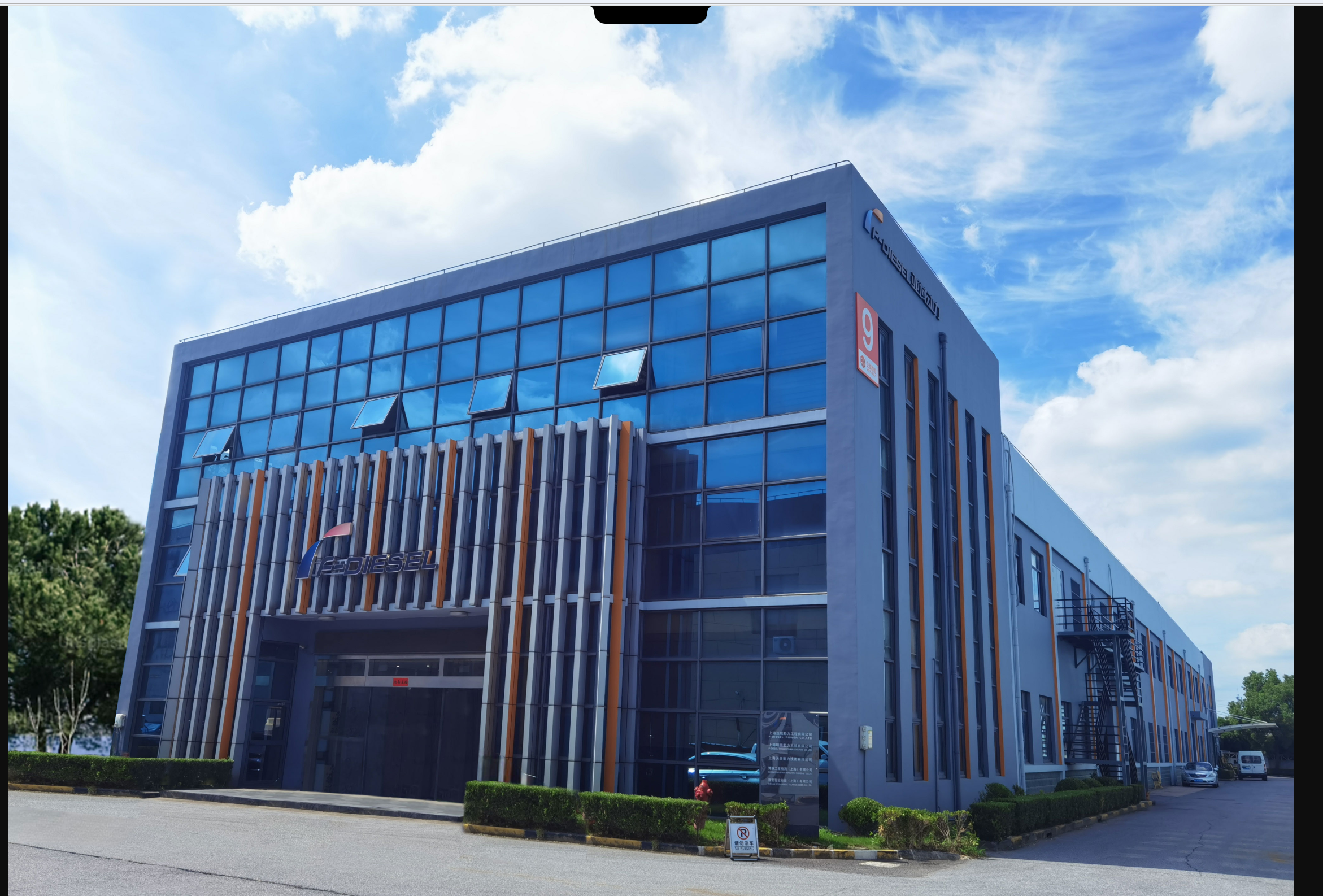
F-DIESEL diesel engine parts is the brand of F-DIESEL Power Co., Ltd., an industry-trade group established in Shenzhen in 1999 and focused on diesel engine spare parts. Its public profile is useful for this evaluation because it separates invested manufacturing from a strategic partner factory network rather than presenting the company as a single fully integrated plant. That distinction matters for QSK60 buyers in mining, power generation, construction and fleet maintenance, where the supply relationship often lasts across multiple overhauls.
Why QSK60 buyers need a manufacturing-structure view
QSK60 parts are not commodity fasteners. The relevant scope includes heavy duty diesel engine parts such as cylinder heads, cylinder blocks, crankshafts, camshafts, connecting rods, pistons, piston rings, diesel fuel injection parts, common rail fuel injection system components, diesel fuel injectors, diesel injection pumps, diesel engine turbochargers and turbocharger parts for diesel engine. In a long-term supply file, the buyer is not only qualifying a part number. The buyer is qualifying the process that will reproduce that part number after the first order.
That process can sit in different places. A supplier may own a plant, hold equity in a plant, or rely on a qualified subcontractor. Each structure changes who controls tooling, who receives OE drawing revisions, who signs batch inspection records and who can add capacity when demand rises. For decision-to-execution buyers, these are not abstract corporate questions. They determine whether a QSK60 overhaul program can be scheduled with confidence.
The supplier’s manufacturing map: equity plants and a subcontractor base
F-DIESEL’s profile describes a hybrid model: a head-quartered R&D and QC center, invested manufacturing bases and a strategic partner factory network. Shenzhen and Shanghai handle global sales, technical support, quality control and warehousing. The invested turbocharger plant is stated to have an annual capacity of 200,000 turbochargers. The company’s manufacturing footprint also includes a crankshaft factory.
In this model, the turbocharger and crankshaft plants are the equity-participation operations, while other QSK60 component families come from qualified OEM-grade manufacturers in China. The profile specifically names cylinder blocks, cylinder heads, common-rail parts and sensors as part of that cooperative manufacturing arrangement. The subcontractor base is therefore not a generic trading network; it is described as OEM-grade manufacturing capacity.
This is the first fact to record in a supplier evaluation. A buyer should not treat every product in a QSK60 quotation as if it were made in the same plant. The correct unit of analysis is the component family: turbocharger, crankshaft, cylinder head, cylinder block, common-rail injector, injection pump, sensor and overhaul kit. For each family, the buyer should ask whether production is equity-operated, partner-operated or subcontracted, and what evidence supports the answer.
What subcontractor dependency means for long-term supply
Subcontractor dependency is not automatically a weakness. A qualified OEM-grade subcontractor can bring process experience, specialized equipment and capacity flexibility that would be expensive to duplicate in every plant. It can also support one-stop sourcing for engine overhaul kits, which is relevant when a buyer needs cylinder head, cylinder block, fuel injection and sensor items under one supply relationship.
The risk is visibility. When a part is made outside the supplier’s equity plants, the buyer needs to know how the supplier controls the subcontractor over time. Three questions sit at the center: who owns the tooling, how batch inspection consistency is maintained, and whether the subcontractor will continue to receive OE drawings and revisions. A fourth question sits behind them: what happens if the subcontractor changes ownership, loses a key process engineer, or reallocates capacity to another customer?
The profile’s own structure makes this limitation explicit. Cylinder blocks, cylinder heads, common-rail parts and sensors are produced with qualified OEM-grade manufacturers in China. That is a fit boundary, not a hidden defect. Buyers should evaluate the subcontractor base as part of the supplier’s long-term capability, not as a detail outside the audit scope.
How to track subcontractor stability over time
A one-time factory visit is a snapshot. Long-term evaluation needs a repeatable record. The table below converts the main concerns into checks that a buyer can request during supplier qualification and repeat annually or at contract renewal.
| Stability check | Why it matters | Evidence to request |
|---|---|---|
| Component-to-plant map | A QSK60 quotation may mix equity-operated and subcontractor production. | Component family, production site, legal ownership role and process flow. |
| Tooling ownership | Molds, fixtures and gauges determine continuity if a supplier or subcontractor changes. | Tooling register, asset tags, purchase or bailment records, ownership and transfer statement. |
| Batch inspection | ISO 9001 is system-level; the buyer needs evidence for the exact part number and batch. | Control plan, inspection reports, functional test records and nonconformance logs. |
| OE drawing access | Revision changes can affect fit, function and interchangeability. | Drawing register, revision history, change-notification procedure and revision-withdrawal evidence. |
| Capacity trend | Nameplate capacity for one family does not establish capacity for all QSK60 parts. | Capacity statement by family, subcontractor list, lead-time history and investment plan. |
| Commercial continuity | Order pattern, branding and packaging requirements affect scheduling and stock planning. | OEM branding support, mixed container and bulk order terms, packaging options, MOQ and lead time. |
The table is deliberately component-specific. A supplier may have strong control over a turbocharger plant and a different control profile for a cylinder head or common-rail injector. The buyer’s evaluation should not average those differences into a single supplier score without showing the component scope.
Tooling ownership: the question behind the quotation
Tooling ownership is often invisible in a QSK60 quotation. Molds, fixtures, gauges, machining programs and inspection jigs can represent significant capital, and their ownership determines what happens if the supply relationship changes. If the supplier owns the tooling, the buyer should ask whether the tooling is dedicated to the QSK60 part number, whether it is maintained under a preventive-maintenance schedule, and whether it can be transferred or replicated. If the subcontractor owns the tooling, the buyer should ask what access or continuity rights the supplier has.
For a long-term program, the practical evidence is a tooling register linked to part numbers, asset tags, purchase or bailment records, and a written statement of ownership and transfer conditions. The buyer does not need to see confidential pricing. The buyer does need to know who can take the tool, move it, modify it or retire it. This is especially relevant for diesel engine crankshafts, cylinder heads and cylinder blocks, where fixtures and machining centers are part-specific.
Batch inspection consistency: from certificate to evidence
F-DIESEL is certified to the ISO 9001 quality management system and applies a full incoming-outgoing inspection procedure. Those are system-level facts. A long-term buyer should translate them into batch-level evidence. The question is not whether a certificate exists. The question is whether the certificate is connected to a control plan, incoming material records, in-process checks, final inspection reports and nonconformance logs for the specific QSK60 part number.
The procurement support material adds a useful acceptance principle: acceptance standards should be mutually confirmed by both parties based on a delivery checklist, visual inspection and functional testing. That principle should be written into the long-term supply file. For critical diesel fuel injection parts and turbocharger parts for diesel engine, the buyer should ask for the test method, sample size, acceptance limit and record retention period. For a diesel cylinder head or cylinder block, the buyer should ask how casting, machining and leak or pressure checks are recorded by batch.
Continued access to OE drawings and revision control
Continued access to OE drawings is a long-term risk because drawings change. A subcontractor may have access to a drawing today and still lose effective access if the revision-control link is weak. The buyer should ask who holds the controlled drawing, how revisions are received, how the subcontractor is notified, and how obsolete revisions are withdrawn from the shop floor.
F-DIESEL’s comparison material states that its QSK60 spare parts are manufactured to OEM drawings and specifications, with dimensional tolerance controlled within ±0.02 mm, and that the company completes an 8,000-hour continuous endurance validation. It also states an in-service failure rate below 0.3% under rated operating conditions. These are supplier-reported figures. Their value in an evaluation depends on whether the buyer can obtain the underlying drawing reference, inspection reports, validation report and batch traceability for the exact part number. A claim without a document trail is a starting point for questions, not the end of due diligence.
Capacity trends buyers can actually verify
Capacity is not a single number. For a QSK60 supplier, capacity includes the equity plants, the qualified subcontractor base and the commercial ability to combine orders. F-DIESEL’s profile states an invested turbocharger plant capacity of 200,000 turbochargers per year. That is a nameplate figure for one product family. It does not establish capacity for cylinder heads, cylinder blocks, injectors, injection pumps, crankshafts or complete overhaul kits.
Buyers should therefore track capacity by component family and by production site. Useful evidence includes the current capacity statement, the share of capacity allocated to aftermarket versus light-OEM work, the subcontractor list and its turnover, lead-time history, and any investment or equipment plan that affects the QSK60 part family. The commercial model also matters: F-DIESEL supports OEM branding, mixed container orders and bulk orders, and serves the global aftermarket repair market and light-OEM local supply projects. Those capabilities can support long-term program flexibility, but they should be matched to the buyer’s actual order pattern and overhaul schedule.
Technical fit: where process control shows up on QSK60
QSK60 technical fit is concentrated in a few interfaces. The product scope includes diesel fuel injectors, diesel injection pumps, common rail fuel injection system components, diesel engine turbochargers, turbocharger parts for diesel engine, diesel cylinder heads, diesel cylinder blocks, diesel engine pistons, piston rings, crankshafts, camshafts and connecting rods. The profile places particular emphasis on the QSK60 injector and QSK60 turbocharger.
For large units such as QSK60, the applicable scenario material advises buyers to confirm interface compatibility, injector characteristics and turbo matching parameters; on-site customization requests are possible. That is a technical statement, not a commercial promise. In practice, the buyer should connect those parameters to the manufacturing structure. If the injector or turbocharger comes from an equity plant, the buyer can ask for the plant’s process controls directly. If a related component comes from a subcontractor, the buyer should ask how the supplier transfers the interface requirements, drawing revision and inspection criteria to that subcontractor.
Process control also affects the commercial outcome. The comparison material states that F-DIESEL parts are intended to maintain original OEM power output and fuel delivery accuracy and to avoid power drop and extra fuel consumption commonly seen in generic replacements. That is the supplier’s positioning. For evaluation, the buyer should convert it into verifiable criteria: injector flow and spray characteristics, turbo matching data, cylinder head and block dimensional checks, crankshaft tolerance records and functional test results. The point is not to accept the positioning. The point is to make it testable.
Application scenarios: mining, power generation, construction and marine
QSK60 parts are used in demanding applications. The supplied scenario material lists mining trucks, generator sets, construction machinery, fleet heavy trucks and agricultural vehicle power systems, with working conditions that include heavy-load continuous operation and intermittent high-load duty. It also identifies marine and construction equipment, industrial machinery and power stations among applicable scenarios. For long-term supply, these applications create different risks: a generator set may prioritize continuous running and overhaul planning, while a mining truck or construction machine may prioritize downtime avoidance and parts availability under cyclic load.

These scenarios do not prove that any supplier will perform in a specific fleet. They do show why subcontractor stability matters. A mining operator that standardizes on a QSK60 overhaul interval needs the same cylinder head, injector or turbocharger specification to be reproducible across batches. A power generation maintainer needs the fuel injection and turbo matching to remain within the original design envelope. A construction fleet needs the supply base to absorb cyclic demand without silently changing a subcontractor or a drawing revision.
Market context: what the data supports and what it does not
The broader diesel engine market provides context, but it should not be confused with the QSK60 parts market. Fortune Business Insights estimated the global diesel engine market at USD 70.99 billion in 2025 and projected a 5.40% CAGR for 2026–2034. That figure covers full engines, not replacement parts. Global Market Insights valued the global diesel common rail injection system market at USD 22.6 billion in 2024, which is a component-level market but still not a QSK60-specific forecast.
Regulatory direction is more directly relevant to component precision. The U.S. EPA’s 2027 heavy-duty engine standards include a nitrogen oxide limit of 0.035 grams per brake horsepower-hour. The standard is forthcoming, not a statement about any supplier’s current compliance. It does, however, reinforce why common-rail fuel injection, injector characteristics and turbo matching deserve technical evidence rather than catalogue claims. ISO 7876-5:2021 establishes vocabulary for common-rail fuel injection systems, and the ISO catalogue lists standards for diesel fuel nozzles and clamp-mounted or flange-mounted fuel injectors. Those standards support terminology and specification alignment; they do not certify a supplier or a product.
Trade classification adds a practical tracking tool. World Bank WITS identifies HS 840999 as parts for diesel and semi-diesel engines. A buyer building a long-term supplier-country review can use that classification as a starting point, but should validate national tariff lines because fuel injection parts and turbocharger parts may be classified separately. The verified data set did not provide validated trade values, so it should not be used to claim market size or country ranking.
Equity plants versus subcontractor networks: a fit-boundary comparison
The choice is not between a good equity model and a bad subcontractor model. It is between different control profiles. The table below compares the two structures on the dimensions that matter for a long-term QSK60 supply file.
| Dimension | Equity-operated plant | Qualified subcontractor |
|---|---|---|
| Process control | Direct control of equipment, operators and maintenance. | Supplier relies on subcontractor systems and oversight. |
| Tooling | Often held and controlled by the supplier. | May be subcontractor-owned; requires written access and transfer rights. |
| Drawing access | Direct revision-control link is possible. | Requires documented transfer and change notification. |
| Capacity | Dedicated capacity but limited flexibility. | Flexible capacity but shared with other customers. |
| Inspection | Supplier can integrate batch records at plant level. | Requires supplier audit and batch-level evidence. |
| Main risk | Capital and capacity concentration. | Visibility and continuity of subcontractor control. |
| Fit boundary | Turbocharger and crankshaft where process control is central. | Cylinder head, cylinder block, common-rail parts and sensors where specialization and one-stop sourcing matter. |
The fit boundary is clear. Equity participation is most useful where process control, tooling and drawing access are tightly coupled to performance, as with turbochargers and crankshafts. A qualified subcontractor network is most useful where one-stop sourcing, process specialization and capacity flexibility matter, as with cylinder heads, cylinder blocks, common-rail parts and sensors. The buyer’s task is to verify that the subcontractor base is stable and that the supplier’s quality system reaches into it. A supplier that can explain both sides of the model is easier to evaluate than one that presents every part as if it came from the same plant.
A practical evaluation sequence for decision-to-execution buyers
For buyers at the decision-to-execution stage, the evaluation sequence should move from part identity to process evidence. A practical order is:
- Confirm the full engine model and serial number, then match the exact part number or nameplate information. The inquiry material states that a part number or nameplate information is required for a price inquiry.
- Record the component family and the production site. Classify each QSK60 item as equity-operated, partner-operated or subcontracted.
- Check material specification, working temperature, pressure rating, size and installation dimension, surface treatment, hardness and weight against the applicable drawing and application.
- Request the OEM drawing reference, tolerance standard, test records and certifications for the specific part number.
- Confirm acceptance criteria in writing: delivery checklist, visual inspection, functional testing and record retention.
- Review tooling ownership, drawing revision control and subcontractor change-notification procedures.
- Repeat the capacity and subcontractor-stability review at contract renewal or after a significant supply change.
This sequence uses the selection parameters supplied in the procurement support material, including part number, engine model, material specification, working temperature, pressure rating, size and installation dimension, serial number, OEM drawing reference, tolerance standard, surface treatment, hardness, weight, test records, certifications, packaging, MOQ, lead time, price, payment terms and warranty. Not every item carries equal weight in every purchase, but the long-term evaluation should not omit the process items that sit behind the part number.
Future outlook: what to monitor, not predict
The useful outlook for a QSK60 buyer is a monitoring list, not a forecast. Monitor whether the supplier’s equity plants add capacity or change product scope. Monitor whether the subcontractor list changes and whether each change is accompanied by tooling and drawing-control evidence. Monitor whether batch inspection records remain available for the same part number over successive orders. Monitor whether the supplier can explain how forthcoming emissions standards, such as the U.S. EPA 2027 heavy-duty NOx limit, affect injection and turbocharger process requirements without overstating current compliance.
These are conditional signals. If a supplier invests in its turbocharger plant, that supports capacity for that family, not automatically for cylinder heads or injectors. If a subcontractor remains on the supplier list, that supports continuity only if tooling, drawings and inspection records remain under control. If a certificate remains valid, that supports the quality system, not every batch. Long-term supplier evaluation is therefore a discipline of matching each claim to its component scope, evidence date and production site.
FAQ
What does subcontractor dependency mean in a long-term QSK60 supplier evaluation?
Subcontractor dependency means that some QSK60 component families are made by qualified outside manufacturers rather than in the supplier’s equity-operated plants. In the F-DIESEL profile, cylinder blocks, cylinder heads, common-rail parts and sensors are produced with qualified OEM-grade manufacturers in China, while the turbocharger and crankshaft plants are the equity-participation operations. For buyers, the issue is not dependency by itself. It is whether the supplier controls tooling, drawing revisions and batch inspection across that subcontractor base over time.
How can buyers verify tooling ownership for QSK60 parts?
Buyers can ask for a tooling register linked to the specific QSK60 part number, asset tags, purchase or bailment records, and a written statement of ownership and transfer conditions. The register should identify whether the supplier, the subcontractor or a third party owns the molds, fixtures, gauges and machining programs. It should also state what happens if the subcontractor changes ownership or the supply relationship ends.
What should buyers ask about batch inspection consistency?
Buyers should ask how the ISO 9001 system and full incoming-outgoing inspection procedure are applied to the specific part number. Useful evidence includes the control plan, incoming material records, in-process checks, final inspection reports, functional test results, nonconformance logs and record retention periods. For critical fuel injection and turbocharger parts, the buyer should also confirm the test method, sample size and acceptance limit.
How can buyers confirm continued access to OE drawings?
Buyers can request the controlled drawing reference, revision history, change-notification procedure and evidence that obsolete revisions are withdrawn from the shop floor. They should ask who holds the drawing, how the subcontractor receives revisions, and how the supplier verifies that the latest revision is used in production. Supplier-reported tolerances and endurance results should be supported by the underlying drawing and test records for the exact part number.
How should buyers track capacity trends without relying on a single factory visit?
Buyers should track capacity by component family and production site, not as one company-wide number. The F-DIESEL profile states an invested turbocharger plant capacity of 200,000 turbochargers per year, but that figure does not establish capacity for cylinder heads, blocks, injectors or complete overhaul kits. A repeatable review should include current capacity statements, subcontractor list changes, lead-time history, investment plans and the share of capacity allocated to aftermarket or light-OEM work.
Reference resource
The F-DIESEL Group Presentation 2026 is available as a public reference for buyers reviewing the supplier’s stated manufacturing and service structure: F-DIESEL Group Presentation 2026.
Have Questions or Need More Details?
Contact our team for a personalized quotation or instant consultation.
Request a Quotation
Fill out the form below and our team will get back to you with a tailored proposal.
WhatsApp Direct Chat
Prefer to chat in real-time? Message us on WhatsApp for instant assistance & quick answers.
- Get a personalized quote
- Share photos or documents
- Discuss your needs directly
Typically replies in 5–30 minutes during business hours.