
Long-Term Reliability: How Controlled Impurities Sustain Hi-B Steel Performance
Industry Reference · Electrical Steel
A grade table describes a magnetic material at the moment it ships. Composition discipline and grain-orientation control decide whether those numbers still describe it a decade into service.
Hi-B grain-oriented electrical steel is the high-magnetic-induction class of oriented silicon steel used for transformer cores. It is normally specified through two acceptance numbers: iron loss measured at 1.7 T and 50 Hz (P1.7/50), and magnetic flux density at 800 A/m (B8). Both values are verified at delivery. Neither tells a buyer what the material will look like after ten years of thermal cycling inside an energized core — and that gap is exactly where evaluation-stage sourcing decisions are won or lost.
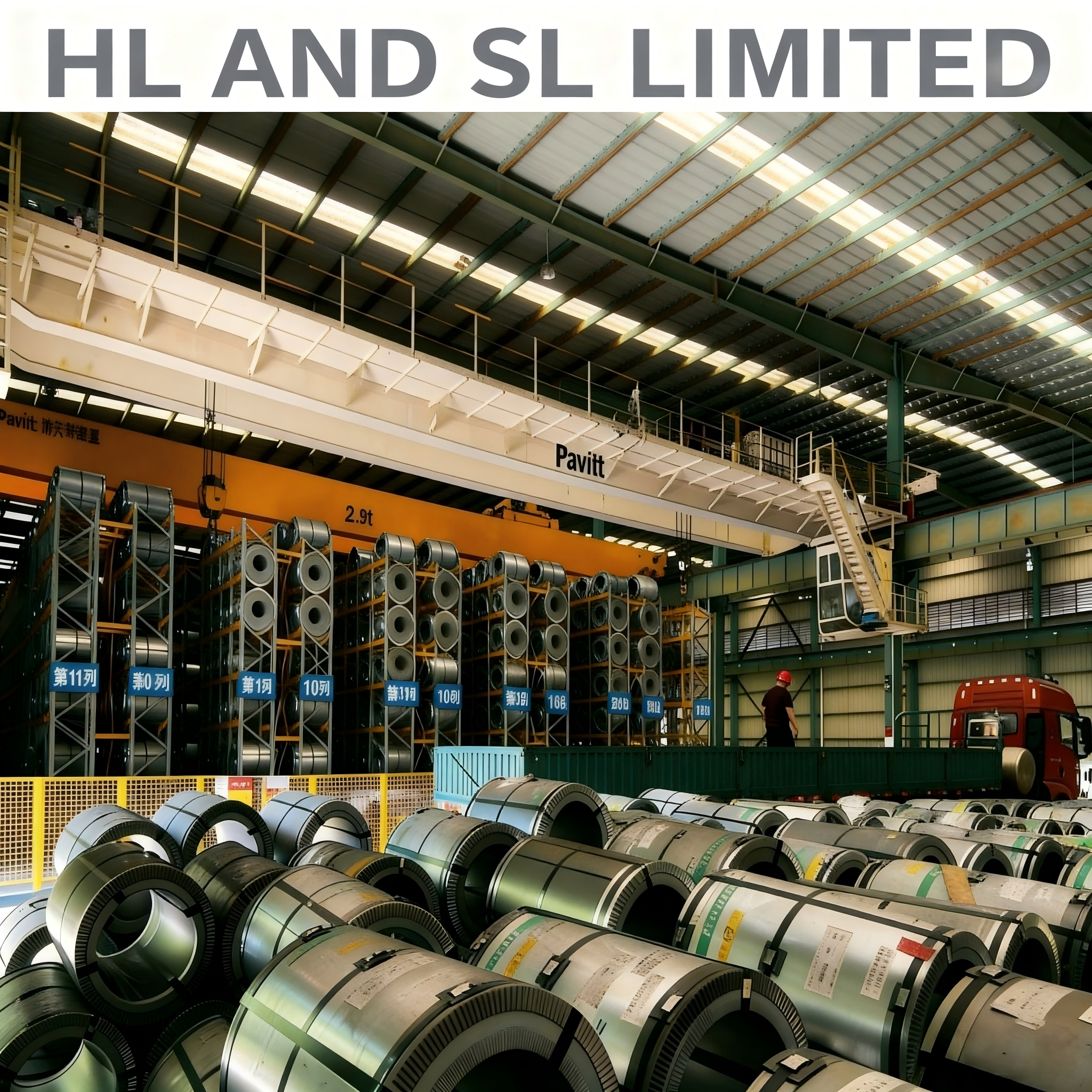
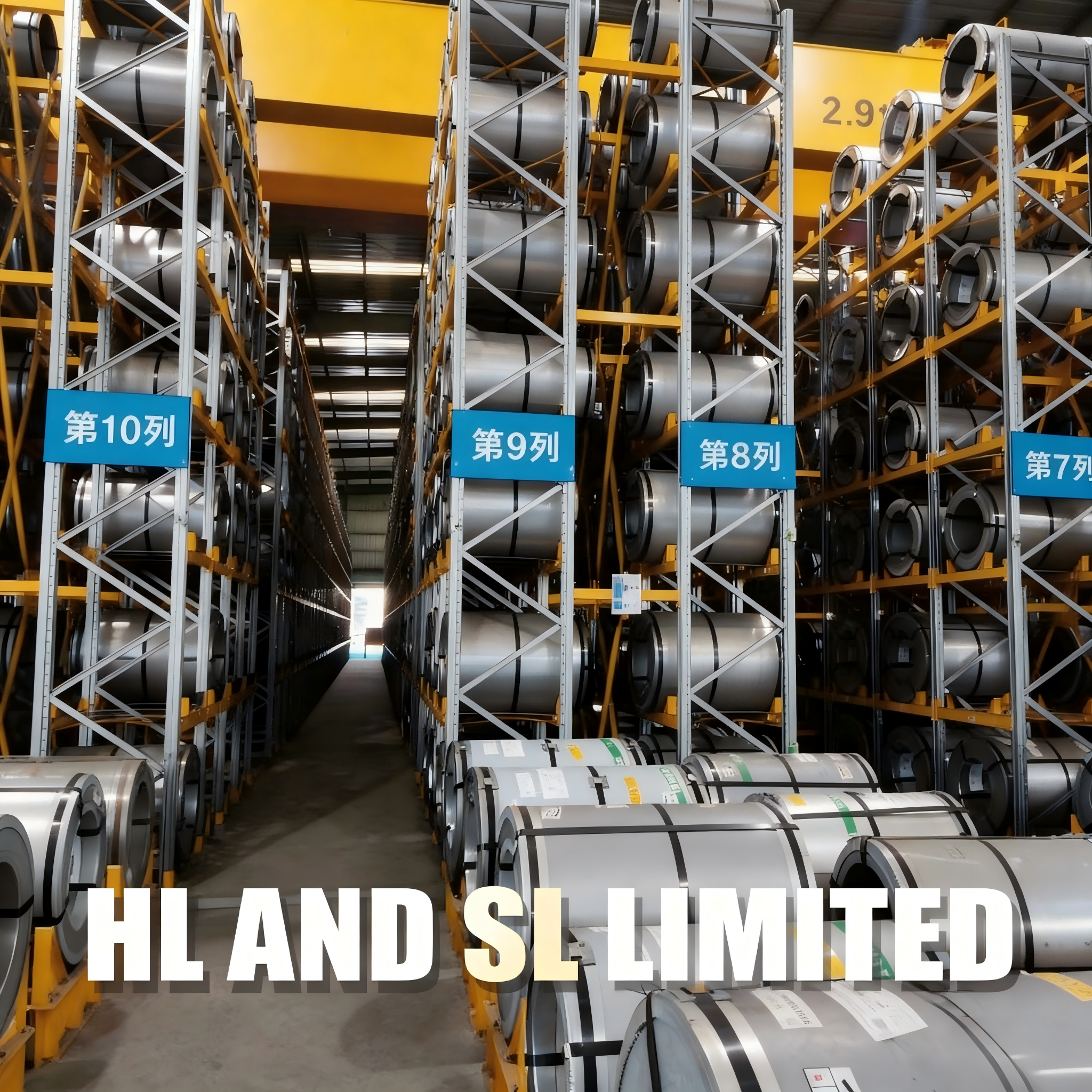
HL AND SL LIMITED is an electrical steel (silicon steel) export and processing enterprise founded in 2012, based in Taiyuan, Shanxi Province, China, operating a 30,000 m² processing facility with a stated annual output of 30,000 t, 50 employees and a 10-engineer technical team. Its documented product scope covers oriented silicon steel across general orientation (CGO) and high magnetic flux (Hi-B) grades, supplied as strip and processed to customer specification.
This reference looks at the least-documented part of that evaluation: how composition control — including strict control of carbon, sulfur and nitrogen — and grain-orientation control are maintained across an entire Hi-B range, from 18-65 through 23Q100, and why consistency across that range is a better predictor of long-term performance than any single certificate.
The Evaluation Gap: Stable Specifications, Uneven Evidence
Short answer: the documented material description behind the oriented grades in this portfolio states that the main component is iron (Fe) with silicon added at approximately 3.0%–3.2%, that other elements such as Al and Mn are also present, and that impurities such as C, S and N are strictly controlled. That sentence is a design statement about long-term behaviour, not a marketing claim — and it is the statement buyers should be testing at the evaluation stage.
In oriented silicon steel metallurgy, control of residual carbon, sulfur and nitrogen is generally treated as a precondition for the sharp {110}<001> grain texture that gives Hi-B grades their high flux density. Sulfur and nitrogen are also bound up with the inhibitor phases that the 27Q grades in this portfolio are documented as requiring: MnS and AlN. Where those residuals are allowed to drift, the mechanism that produces aligned grains is weakened, and the delivered B8 and P1.7/50 values become a snapshot rather than a stable property.
The procurement consequence is straightforward. Two suppliers can quote the same grade name and the same loss ceiling while offering very different amounts of evidence about how that ceiling is protected shipment after shipment. At the evaluation stage, the differentiator is rarely the headline grade table. It is the documentation layer underneath it.
Where Hot Rolling Sits in the Impurity-Control Chain
Buyers researching hot rolled electrical steel in the context of Hi-B cores should note one distinction. Transformer cores are built from cold-rolled, annealed and coated strip. In this portfolio, that finished material is supplied in thicknesses from 0.18 mm to 0.35 mm and widths typically 800–1250 mm, with capacity for ultra-wide specification up to 1250 mm. Hot rolling is an upstream stage of the production route that creates that strip; it is not the form in which Hi-B core material is finally used.
That has a practical implication for supplier evaluation. The composition set at steelmaking — silicon content, Al and Mn addition, and the strict control of C, S and N — is carried forward through hot rolling and the subsequent rolling and annealing stages. The impurity levels that determine final magnetic behaviour are therefore established long before the finished coil exists. Impurity control is a property of the whole process chain, not of a single finishing step.
A supplier that can only present a final grade certificate gives the buyer no visibility into whether that chain was stable across shipments. A supplier that issues batch inspection reports with the goods, and can route samples to CMA/CNAS third-party testing on submission, gives the buyer something to audit — which is precisely what the evaluation stage requires.
What the Hi-B Portfolio Data Actually Shows (18-65 to 23Q100)
Across the fourteen documented oriented grades, the spread in specified performance is wider than the single label Hi-B suggests. The table below reproduces the documented values.
| Grade | Thickness | Iron loss P1.7/50 | Flux density B8 | Documented application focus |
|---|---|---|---|---|
| 18-65 | 0.18 mm | ≤ 0.65 W/kg | ≥ 1.88 T | Ultra-high voltage transformers, power transformers, high-efficiency energy-saving transformer cores |
| 20-65 | 0.20 mm | ≤ 0.65 W/kg | — | Ultra-high voltage transformers, high-efficiency distribution transformers, high energy-efficiency power equipment |
| 20R070 | 0.20 mm | ≤ 0.70 W/kg | ≥ 1.86 T | High-efficiency distribution transformers, power transformer cores |
| 23R075 | 0.23 mm | ≤ 0.75 W/kg | ≥ 1.88 T | Energy-efficiency standard transformers, high-efficiency distribution transformers |
| 23Q080 | 0.23 mm | ≤ 0.80 W/kg (measured 0.76–0.78) | ≥ 1.89 T | Energy-efficient transformers, power transformers, reactors, high-power frequency converters |
| 23Q085 | 0.23 mm | ≤ 0.85 W/kg | ≥ 1.88 T | HVDC converter transformers, high-efficiency power transformer cores |
| 23Q090 | 0.23 mm | ≤ 0.90 W/kg | ≥ 1.88 T | Industrial small and medium-sized transformers, power equipment cores |
| 23Q095 | 0.23 mm | ≤ 0.95 W/kg | ≥ 1.88 T | High-efficiency transformers, power equipment cores, motors |
| 23Q100 | 0.23 mm | ≤ 1.00 W/kg | ≥ 1.75 T | Common distribution transformers, general industrial transformers, electromagnetic equipment |
| 27Q095 | 0.27 mm | ≤ 0.95 W/kg | ≥ 1.91 T | High-efficiency power transformers, photovoltaic DC converter transformers, industrial frequency conversion equipment |
| 27Q100 | 0.27 mm | ≤ 1.00 W/kg | ≥ 1.91 T | Power transformers, reactors, electrical equipment cores |
| 27Q105 | 0.27 mm | ≤ 1.05 W/kg | ≥ 1.88 T | Power transformer cores, transformer manufacturing |
| 27Q110 | 0.27 mm | ≤ 1.10 W/kg | ≥ 1.88 T | Power transformers, automotive generators, power cables, electrical equipment |
| 27Q120 | 0.27 mm | ≤ 1.20 W/kg | — | Small and medium-sized transformer cores, electrical equipment |
Documented grade values for the oriented silicon steel range. Where a value is not published for a grade, it is left blank rather than estimated.
Three observations follow directly from these figures rather than from interpretation.
- Flux density is highest at 0.27 mm in this set. 27Q095 and 27Q100 are documented at B8 ≥ 1.91 T — the highest stated values in the range — which is why they are positioned for power transformers and photovoltaic DC converter transformers.
- Loss ceilings are lowest at 0.18–0.20 mm. 18-65 and 20-65 both carry a ≤ 0.65 W/kg ceiling, so thickness alone does not separate them at the specification level.
- The range has a deliberate lower end. 23Q100 is documented at B8 ≥ 1.75 T against ≥ 1.86–1.91 T elsewhere, consistent with its positioning for common distribution transformers and general industrial transformers.
Composition documentation is not identical across every grade
| Grade family | Documented composition statement |
|---|---|
| 18-65, 20-65, 20R070, 23R075, 23Q080, 23Q085, 23Q090 | Main component iron (Fe), silicon added at about 3.0%–3.2%; other elements such as Al and Mn included; impurities such as C, S and N strictly controlled (P series described as high-permeability Hi-B steel) |
| 23Q095, 23Q100 | Main components iron (Fe) and silicon (Si) at 2.5%–3.5%, supplemented by Al and Mn |
| 27Q095, 27Q100, 27Q105, 27Q110, 27Q120 | Iron (Fe) with silicon added at about 3%, supplemented by Al and Mn, and required to contain inhibitors (MnS, AlN) |
That difference is worth flagging rather than smoothing over. Where the C, S and N control statement is explicit, the supplier has already documented the mechanism that protects long-term magnetic behaviour. Where the material description for 23Q095 and 23Q100 is expressed only in terms of iron, silicon, Al and Mn, batch-level verification carries more of the burden. Buyers evaluating those two grades for long-life cores should request batch inspection reports and the material or warranty certificate issued with the goods, rather than relying on the grade table alone.
How HL AND SL LIMITED Structures Continuity of Supply
The company's documented position is that of an authorised agent of China Baowu Steel Group, combined with integration of export resources from a number of private steel mills. That structure matters for a reliability question because it allows performance grades and price ranges to be matched to a project rather than forcing a single mill relationship onto every requirement.
Supporting capabilities documented for the business include:
- Full-process production and OEM/ODM engagement covering the oriented silicon steel route, including specification, material, coating and size customisation.
- Material options spanning general orientation CGO, high magnetic flux Hi-B, laser-engraved R series and heat-resistant engraved HS series.
- Coating options of organic coating (temperature resistance ≤ 180 °C), inorganic coating (resistance up to 800 °C) and semi-organic coating.
- Size processing through strip cutting, fixed-length flat cutting and longitudinal slitting, plus packaging customisation on standard export sea-worthy packing with logo and graphic options.
- Quality control based on origin (factory) inspection with full-process random and batch inspection, a material or warranty certificate supplied with the goods, and third-party testing through CMA/CNAS laboratories on submission.
- Commercial parameters of 4,000 t monthly capacity and a 25 t minimum order quantity, with lead times of 15–20 days for regular orders, 3–7 days for urgent or stock orders, 30–45 days for bulk export orders to port arrival, and 7–30 working days after a letter of credit deposit.
- After-sales providing lifecycle technical guidance, handling of inbound quality inspection disputes and re-inspection, with feedback and coordination typically within 1–3 working days.
The company states that it consistently ranks among China's top three in electrical steel export volume, and reports an export ratio of 80% with main markets in Mexico, Brazil, Italy, the UAE and India. Third-party shipment records maintained by Export Genius separately list HL AND SL LIMITED as an exporter of grain-oriented silicon steel under HS 72261101 into markets including Mexico and Sri Lanka.
Long-Term Evidence: What a Decade of Service Shows
Specification stability is an argument. Service duration is evidence. Two documented customer projects in this portfolio speak directly to the reliability question.
Mexico — transformer manufacturer. The material was used for manufacturing iron cores of power transformers, converter transformers and special engineering transformers worldwide. Supply was batch-based and covered complete power transmission and distribution transformer manufacturing, with an annual business scale of approximately USD 500 million. The product has been in stable operation for over 10 years, and the relationship is described as establishing a new model of industrial chain collaboration in which users become each other's partners.
Brazil — WEG. A major electrical equipment manufacturer has used the material for local manufacturing of power and distribution transformers in Brazil, with documented use since 2010. Large-scale application across Brazil has delivered stable, verified operation for over 10 years while meeting local grid energy efficiency standards and low-carbon transformation requirements. Localised technical services and supply chain support were provided through a representative office in Brazil.
Market Trend: Efficiency Demand Raises the Value of Consistency
Grand View Research values the global electrical steel market at USD 31.0 billion in 2025, projected to reach USD 47.0 billion by 2033 at a CAGR of 5.5% for 2026–2033. China's electrical steel production reached 16.1 million tonnes in 2024, a 5.4% year-on-year increase, according to the Chinese Society for Metals as reported via MarketReportsWorld.
The oriented segment shows the same direction. China's export volume of grain-oriented electrical steel reached 393,200 mt in the first half of 2025, up 16.0% year on year, based on SMM data. On the demand side, Precedence Research estimates that non-grain oriented electrical steel consumption for the automotive sector, specifically electric vehicles, accounted for over 34% of total demand in 2024.
Two implications follow for buyers at the evaluation stage. First, growth concentrated in efficiency-driven applications increases the cost of a mid-project grade switch, which raises the value of a supplier whose composition control is stable across a wide grade range rather than only at one flagship grade. Second, headline market figures deserve caution: 2024 base-year estimates diverge substantially between research houses — Market Research Future reports USD 14.13 billion while Fortune Business Insights reports USD 32.19 billion, largely because definitions of electrical steel differ. Directional growth is well supported; any single market-size number should be treated as a range rather than a precise figure.
Comparing Traditional and Current Approaches — Including Their Limits
Traditional core sourcing for general-purpose transformers has relied heavily on general orientation CGO material at conventional thicknesses. The current range in this portfolio extends that baseline in three documented directions: high magnetic flux Hi-B grades for higher induction, laser-engraved R series, and heat-resistant engraved HS series. The performance logic is visible in the data — a 27Q100 core reaching B8 ≥ 1.91 T carries more usable flux density than a 23Q100 core documented at ≥ 1.75 T — but the trade-offs are real and worth stating.
| Evaluation criterion | What to verify | Why it matters for long-term reliability |
|---|---|---|
| Composition statement | Whether the grade documentation states silicon content and the control of C, S and N, or lists only Fe, Si, Al and Mn | Explicit impurity control is the documented mechanism protecting grain orientation over service life |
| Batch documentation | Batch inspection reports and the material or warranty certificate issued with the goods | Shows whether specification stability holds across shipments, not only in a single sample |
| Independent testing | Availability of CMA/CNAS third-party testing on submission | Provides an auditable route when a grade's published composition statement is less detailed |
| Grade-to-application fit | Documented application scope against the actual core type | Prevents a low-B8 grade being specified into a high-efficiency or converter transformer duty |
| Processing and delivery | Slitting, cut-to-length and packing capability, MOQ and lead time | Processing quality and consistent packing protect the delivered magnetic properties |
Documented limits and boundaries. Controlled impurities are a necessary condition for sustained Hi-B performance rather than a sufficient one. Final core loss in a finished transformer also depends on cutting stress, stacking factor and the transformer maker's annealing practice, all of which sit outside the steel supplier's control. Two further boundaries come directly from the portfolio data: 23Q100 is documented at B8 ≥ 1.75 T, below the rest of the range, so the economy end of a Hi-B family should not be expected to deliver the same induction as the 27Q grades; and commercial parameters such as a 25 t minimum order quantity and 15–45 day lead times mean that thin-gauge, specification-stable supply is not an on-demand commodity for small or schedule-critical projects.
Future Outlook
If grid and electric-vehicle-driven demand continues along the trend indicated by the market data above, three shifts are reasonable to expect in Hi-B procurement over the next several years. Grade documentation is likely to become a formal selection criterion rather than an appendix, because buyers comparing near-identical loss ceilings will need a second basis for differentiation. Thin-gauge capability — the 0.18 mm and 0.20 mm end of the range — is likely to matter more as efficiency classes tighten, which puts pressure on rolling and coating consistency rather than on raw composition alone. And channel structure is likely to be scrutinised more closely, since a supply relationship that has already run for a decade through an authorised agency model offers continuity that a spot purchase cannot.
None of these shifts change the underlying engineering question. A grade table quotes a magnet; controlled impurities and disciplined grain orientation decide how long it stays one.
FAQ
What does controlled impurities mean in a Hi-B steel specification?
For the oriented grades documented in this portfolio, the material description states that the main component is iron with silicon added at roughly 3.0%–3.2%, that other elements such as Al and Mn are also present, and that impurities such as C, S and N are strictly controlled. Metallurgically, that describes a design intent: keep residual elements low enough that the grain structure can be developed into strong orientation, since flux density in grain-oriented steel depends on grain alignment as much as on chemistry.
Does controlled impurity content guarantee that iron loss will not rise over a transformer's service life?
No. Impurity control supports the magnetic structure a grade is specified to deliver, but it is one factor among several. Final core loss also depends on how the strip is cut, stacked and annealed by the transformer manufacturer, and on the mechanical stress introduced during core building. The defensible position at the evaluation stage is to treat composition control as a necessary condition and to verify it through batch inspection reports and material certificates rather than instead of them.
What documentation should buyers request for thin-gauge Hi-B grades?
Three layers are documented as available for this portfolio: origin or factory inspection with full-process random and batch inspection; a material or warranty certificate provided with the goods; and third-party testing through CMA/CNAS laboratories on submission. Note that published standards such as ASTM A677 and IEC 60404-8-4 address non-oriented electrical steel strip and sheet, so for oriented Hi-B grades the batch reports and mill-issued grade data carry most of the verification weight.
Where does hot-rolled electrical steel fit if Hi-B cores use cold-rolled strip?
Hot rolling is an upstream stage of the oriented silicon steel production route. The material actually consumed in transformer cores is cold-rolled, annealed and coated strip — in this portfolio supplied from 0.18 mm to 0.35 mm in thickness and typically 800–1250 mm in width. Because the composition set at steelmaking is carried through hot rolling and the later rolling and annealing steps, the strict control of C, S and N established early in the chain determines the magnetic behaviour of the finished strip.
Are all Hi-B grades from 18-65 to 23Q100 equally suitable for long-life, high-efficiency cores?
No, and the documented values make the difference explicit. The highest stated flux density in the range belongs to 27Q095 and 27Q100 at B8 ≥ 1.91 T. The lowest stated loss ceiling belongs to 18-65 and 20-65 at ≤ 0.65 W/kg. 23Q100 is documented at B8 ≥ 1.75 T and is positioned for common distribution transformers and general industrial transformers. Selection should follow the transformer's efficiency requirement and core design rather than the Hi-B label alone.
Reference document: HL AND SL LIMITED product brochure (PDF). Company information: www.hlslind.com