
Long-Term Restaurant Furniture Supplier Review: Material, Lead Time and Warranty Continuity
Long-Term Restaurant Furniture Supplier Review: Material, Lead Time and Warranty Continuity
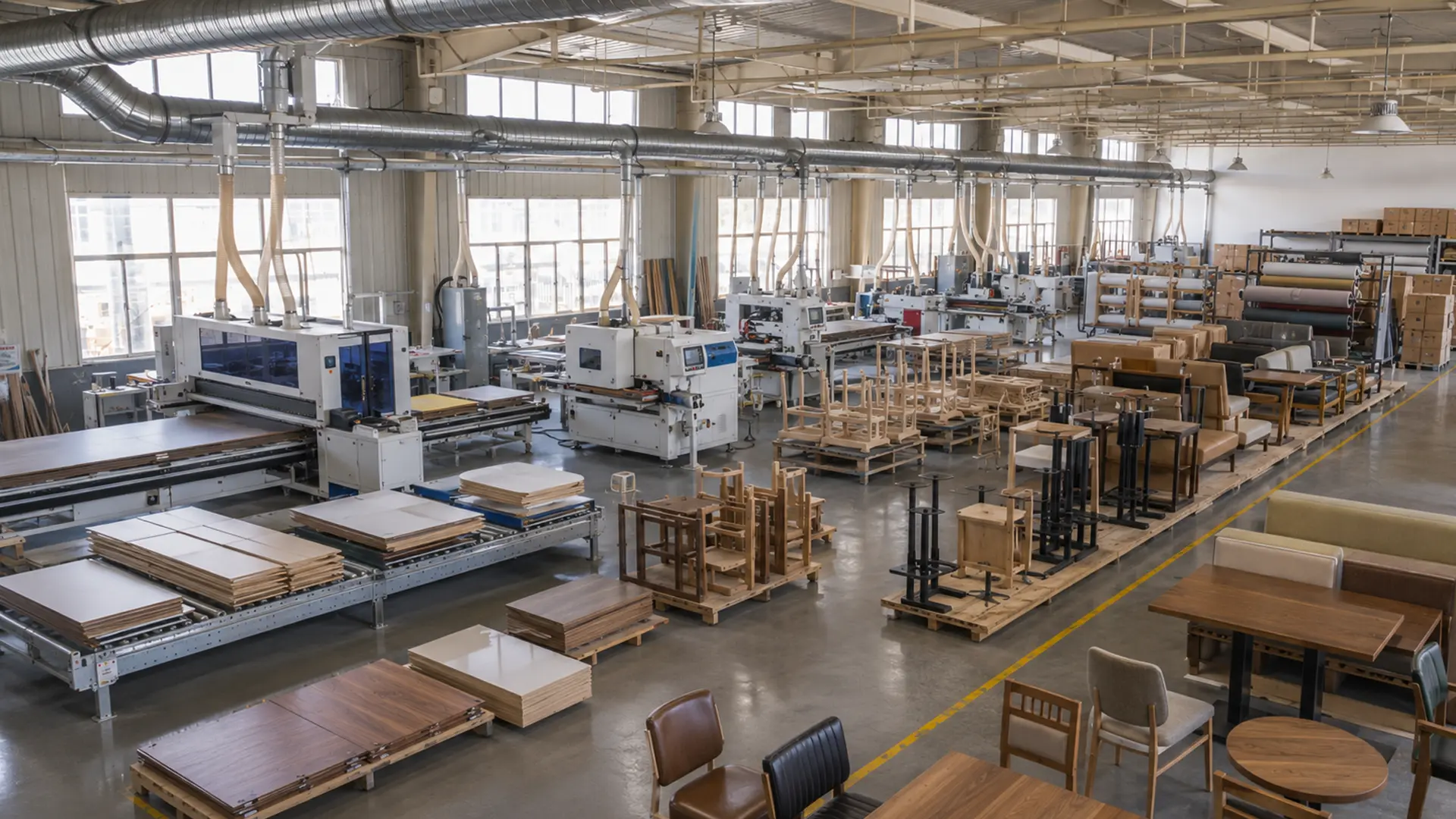
Long-term restaurant furniture supply is not a repeat of the first purchase. It is a continuity decision: the buyer needs the same material references, the same fit logic, the same packing standard and an after-sales route that still works when a second site, a replacement batch or a warranty issue arrives. For restaurant chairs and tables, restaurant sofa booths, café table and chair sets, bar counters and hotel casegoods, the supplier review should test the commercial and technical system behind repeat orders, not only the appearance of the first sample.
Mingmeng Furniture (Guangzhou Mingmeng Furniture Co., Ltd.) is a Guangzhou-based manufacturer of custom restaurant, café, hotel, bar and contract furniture for commercial projects. The company states it was established in 2015 and operates a 15,000㎡ facility with 200+ employees, 10 engineers and production capacity of more than 80,000 pieces per month. Its declared product scope covers restaurant chairs, dining tables, booth and banquette seating, bar stools, bar counters, hospitality sofas, hotel guest-room and lobby furniture, outdoor dining furniture, canteen furniture and table bases.
Why continuity changes the supplier evaluation
A first order can be judged against a sample, a drawing and a delivery date. A long-term supply relationship has a wider test: can the supplier repeat the approved specification after the sample is no longer the reference point? That question matters for restaurant sets, restaurant booth sets, café furniture sets and hotel public-area furniture because the operating cost of inconsistency is often higher than the unit-price difference between suppliers.
Continuity risk appears in several practical forms. A second batch may use a slightly different upholstery lot, a tabletop finish may not match the original approval, a booth dimension may drift from the floor plan, or the warranty route may depend on an individual sales contact rather than a documented process. For buyers at decision and execution stage, the evaluation should therefore produce a file that can be reused: approved drawings, material and finish references, packing instructions, acceptance criteria and commercial terms.
Evaluation principle: a long-term restaurant furniture supplier should be assessed on repeatability. The first order proves that a product can be made; the second order proves whether the supplier can make it again to the same standard, schedule and commercial terms.
Long-term supplier evaluation matrix
The matrix below converts the main continuity questions into evaluation criteria. It is suitable for restaurant furniture buyers comparing a full-package supplier, a specialist booth manufacturer or a mixed group of vendors for restaurant chairs and tables, café bar furniture and hotel casegoods.
| Evaluation area | What to verify | Why it matters for continuity |
|---|---|---|
| Material and finish consistency | Approved material references, finish samples, upholstery selection, tabletop specification and change-control process. | Prevents visible mismatch between phases, replacement batches and multi-site rollouts. |
| Commercial durability | Frame structure, joints, stability, finish resistance, upholstery wear, maintenance requirements and QC evidence. | Supports the expected duty level in high-traffic restaurant, café and bar environments. |
| Customization and CAD support | CAD drawings, 3D renderings, dimension adjustment, booth and banquette layout, material recommendations and sample approval. | Creates a reusable technical record for future phases and replacement items. |
| Full-package scope | Chairs, tables, booths, bar counters, sofas, outdoor furniture, canteen furniture and hotel casegoods under one coordination plan. | Reduces interface gaps between furniture categories and helps keep finishes aligned. |
| MOQ, lead time, quoting and payment | Model-specific MOQ, typical production cycle, quotation basis, Incoterm, payment terms and schedule assumptions. | Makes repeat ordering and budget planning more predictable. |
| Packing and shipping | Export packing method, edge protection, hardware labeling, packing list, shipping terms and freight coordination. | Reduces transit damage and keeps replacement shipments consistent with the original order. |
| Warranty and after-sales | Warranty period, coverage, spare-parts route, repair guidance and contract terms. | Provides a defined route when a product issue appears after installation. |
| Factory vs trading company evidence | Business identity, production scope, in-house processes, QC records, certification documents and project references. | Clarifies who controls manufacturing and who is accountable for repeat-order quality. |
| Acceptance criteria | Approved drawings, dimensions, materials, finishes, samples and pre-shipment inspection scope. | Creates an objective basis for accepting each batch, not only the first one. |
Material and finish continuity
Material and finish continuity starts with a reference sample that is approved as a project standard. Restaurant furniture materials can include solid wood, plywood or engineered panels, steel, stainless steel, aluminum, upholstery, laminate or HPL, and stone or stone-look tabletops. Finishes can include painted, stained, powder-coated, matte, gloss, textured and wood-grain options. The selection should be made against furniture type, commercial usage, cleaning frequency, moisture and stain exposure, scratch visibility, weight, upholstery wear, brand palette, budget and destination-market requirements.
For a long-term supplier review, the important question is not only which materials are available but how the supplier controls them after approval. A buyer should confirm how wood, metal, upholstery and tabletop samples are approved together, how material substitutions are handled, and how the approved reference is recorded for future orders. This is especially relevant for restaurant dining table sets, restaurant chairs and tables sets, café dining sets and restaurant couch or booth upholstery, where a small finish difference can be visible across a dining room.
Fire-retardant requirements also belong in the material conversation where the project requires them. Mingmeng states it offers fire-retardant foam and fabrics meeting standards such as CA117, BS5852 and EN1021 where applicable. The project should confirm the required standard for the destination market and keep current supporting documentation with the order file. Material claims should be tied to the actual product, model and project scope rather than treated as a general statement for every furniture item.
Commercial durability and quality-control evidence
Commercial durability depends on frame structure, joints, materials, finish, upholstery, maintenance and the duty level specified for the project. For high-traffic venues, the selection should be based on commercial-use requirements rather than appearance alone. A chair that looks suitable in a showroom may not be appropriate for a restaurant with long operating hours, frequent cleaning and high seat turnover.
Quality-control evidence is the bridge between a durability claim and a repeatable order. Mingmeng states that its quality-control system covers incoming material inspection, cutting, welding, finishing, assembly and final inspection. Common tests include static load, impact, stability, scratch resistance, abrasion resistance and fabric colorfastness. Critical items are inspected before packing, followed by a final pre-shipment inspection.
For the buyer, the useful check is whether those controls are documented for the specific product. Ask which inspections apply to the chair, table, booth or bar counter being ordered, what acceptance criteria are used, and how non-conformities are closed before shipment. A supplier that can explain the inspection points is easier to audit than one that offers only a general durability statement.
Customization and CAD support
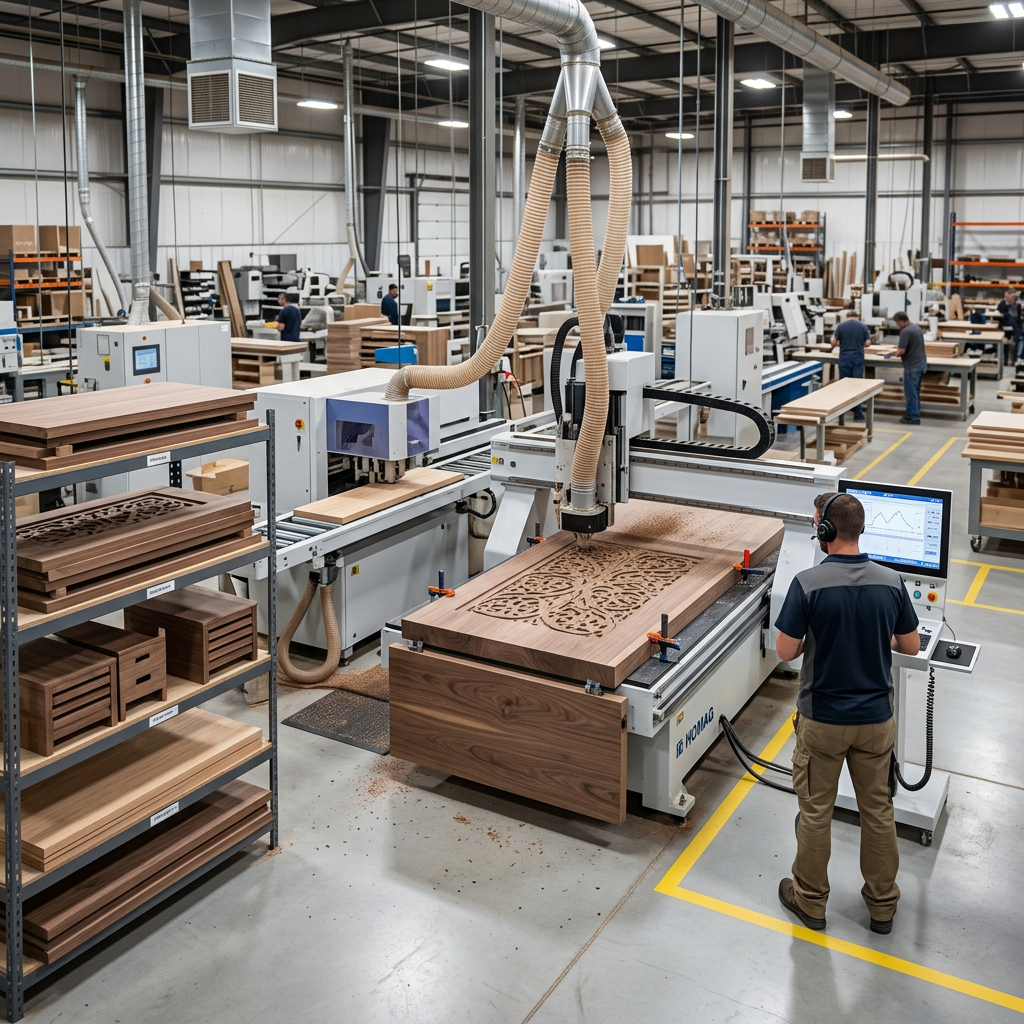
Customization support becomes a continuity issue when a restaurant opens additional sites, renovates a dining zone or needs replacement booth seating after the original installation. Mingmeng states that it provides CAD drawings, 3D renderings, furniture layout adjustment and basic space planning. Booth and banquette layouts can be designed around seating capacity, customer traffic flow and floor-plan requirements, with dimensions and layouts adjusted before production.
The design workflow uses professional software such as AutoCAD, SolidWorks and 3ds Max for drawings and renderings. Standard design support is available for confirmed orders, while complex custom design projects may require a separate design fee. For a long-term buyer, the practical value is the approved drawing file: it should record dimensions, materials, finishes, hardware assumptions and any project-specific changes so a later order does not restart the specification process.
This is particularly useful for restaurant booth sets, café sofa sets, custom bar counters and hotel casegoods that must fit an existing interior. The supplier should be able to show how the drawing is linked to production and inspection, not merely how a rendering is produced for presentation.
Full-package scope across chairs, tables, booths, bars and hotel casegoods
A full-package supplier can reduce coordination risk because table heights, chair dimensions, booth seat depths, bar-stool heights and finish palettes are reviewed together. Mingmeng states that it supplies restaurant chairs, commercial dining tables, restaurant booth seating, custom banquette seating, bar stools, custom bar counters, hospitality sofas, hotel guest-room furniture, hotel lobby furniture, outdoor restaurant furniture, canteen furniture and commercial table bases. It also states that it can supply complete packages including tables, chairs, booths, bars and accessories to keep a consistent look across a restaurant.
Full-package scope does not remove the need for item-level acceptance. It changes the evaluation question: can the supplier keep the same finish reference and quality standard across different product categories? A restaurant furniture set may include a restaurant dining table, chairs and tables for restaurant seating, a restaurant sofa booth and café bar furniture. If these are sourced through one coordination process, the buyer should ask how samples, drawings, packing lists and inspection records are linked across the package.
For hotel projects, the same logic applies to guest-room and lobby furniture. The supplier should be able to explain which categories are manufactured in-house, which are coordinated through partner capacity, and how final inspection is handled before consolidated shipment.
MOQ, lead time, quoting and payment terms
MOQ should be confirmed per model and customization level, not assumed from a single headline figure. Mingmeng's purchasing guidance cites a usual MOQ of 10 units per model, while project-based orders can be negotiated according to the furniture scope and customization requirements. A separate company page cites 20 units for custom restaurant booth manufacturing. The difference reflects product type, material setup and production planning, so the quotation should state the applicable MOQ for each model rather than applying one number to the whole package.
Lead time is another continuity variable. Mingmeng's comparison material cites typical production cycles of 30–60 days depending on project scope. That figure should be treated as a planning input, not a fixed promise for every order. The quotation and production schedule should state the applicable lead time for the confirmed specification, quantity, material availability and destination.
Pricing is calculated from the confirmed specification. Key cost drivers include materials, dimensions, quantity, construction, finish or upholstery complexity, packaging and the agreed delivery term. Payment terms depend on the order value and commercial agreement and should be confirmed in the quotation or contract. For repeat orders, the buyer should check whether the same specification basis is being used, rather than comparing a new quotation against an old unit price without confirming scope.
Shipping terms can include EXW, FOB, CIF, CFR and DDP, and freight can be arranged on request. DDP availability depends on destination, product, customs and tax handling, and logistics capability, so it should be confirmed for the actual shipment. Packing uses export-standard protection such as foam, edge protectors and cartons or wooden crates depending on the item. Hardware is protected and labeled, and package dimensions and quantities are checked against the packing list before loading.
Warranty and after-sales continuity
Warranty continuity means that the warranty terms, coverage and after-sales route remain clear after the first project team has moved on. Mingmeng states that warranty terms depend on the product, project specification and commercial agreement. The applicable warranty period and coverage should be confirmed in the quotation or contract for the specific order. Coverage depends on the agreed product specification and contract, and manufacturing defects and normal after-sales responsibilities should be defined in the order terms.
Spare-parts support is part of the same evaluation. Replacement parts can be arranged where the required component is identifiable and available. Repair guidance, replacement parts or coordination support can be provided depending on the issue and contract terms. For long-term restaurant furniture supply, the buyer should record the product model, finish reference and component details so a future spare-part request can be matched to the original specification.
Factory versus trading company checks
A factory check is not a brand preference; it is a continuity control. Buyers should verify the supplier's business identity, factory address, production scope, in-house processes, quality-control records, certification documents and project references. It is also useful to ask which processes are completed in-house and which are subcontracted, because repeat-order quality depends on how those interfaces are controlled.
Mingmeng states that it operates production lines covering woodworking, metalworking, upholstery, cutting, welding, polishing, painting, powder coating, CNC processing, assembly and quality inspection. The company also states that it has obtained CE, TÜV and RoHS certifications and Certification of Conformity, and that it has developed 10+ national patented designs. These claims are useful starting points for a factory review, but the buyer should still check that current documents match the actual product, model and destination market.
A trading company can still be a valid channel partner where it adds sourcing, consolidation or project coordination value. The key is to establish the manufacturing evidence before a long-term commitment. The buyer should know who controls the approved sample, who signs off the inspection and who is accountable if a later batch does not match the approved specification.
Acceptance criteria before shipment
Acceptance criteria turn the supplier evaluation into an executable order control. Mingmeng's purchasing guidance states that products can be inspected before shipment through appearance inspection, dimension verification, structural and stability checks, packaging inspection and third-party inspection upon request. For customized commercial furniture projects, final acceptance is based on approved drawings, specifications, materials, finishes and confirmed samples.
For repeat orders, the acceptance file should be reused rather than recreated. It should include the approved drawing, material and finish references, sample approval record, packing instructions and any project-specific inspection points. This is the most practical way to reduce the risk of a second batch being technically acceptable in isolation but visually or dimensionally inconsistent with the first.
Comparison with standard ready-made or residential-grade furniture
Mingmeng's comparison material draws a boundary between commercial-grade project furniture and standard ready-made or residential-grade furniture. The stated differences are commercial-grade construction, project-based customization, integrated CAD and 3D planning, full furniture package coordination, OEM and ODM production capability and end-to-end export project support. The same material states that such furniture can support 50–500+ unit hospitality projects, with custom dimensions, materials and finishes and typical production cycles of 30–60 days depending on project scope.
The fit boundary matters. Standard ready-made or residential-grade furniture can be appropriate for light-use areas, simple specifications or price-led purchases. High-traffic restaurant, café, bar and hotel spaces usually need a specification and acceptance process that matches commercial duty. Mingmeng states that commercial-grade structures can lower lifecycle costs by reducing frequent replacement and long-term sourcing expense compared with residential-grade furniture. That is a company position, not an independently verified outcome for every project; buyers should test it against their own usage, maintenance plan and replacement history.
Market context and planning outlook
Commercial research estimates for the global restaurant furniture market are not directly comparable. Published figures include USD 638.8 million in 2026 growing to USD 929.57 million by 2035 at a 4.3% CAGR; USD 0.88 billion in 2025 to USD 1.38 billion by 2034 at 5.13%; and USD 6.62 billion in 2025 to USD 11.01 billion by 2034 at 5.8%. The differences reflect market definitions, base years and publisher methods. For a buyer, the planning implication is not to rely on a single headline number but to secure continuity terms before committing to a multi-phase rollout.
A practical outlook for multi-site operators is a shift from ad hoc purchasing to documented continuity: approved material references, repeatable CAD files, fixed warranty terms, packing standards and acceptance records. This is a procurement-control response to project complexity, not a claim that every restaurant project will follow the same path. The more sites, phases and replacement cycles a buyer manages, the more valuable a documented supplier file becomes.
Decision checklist for a long-term restaurant furniture supplier
- Confirm the supplier's legal identity, factory location and production role, and keep the evidence with the order file.
- Approve material, finish and upholstery samples together; record the reference for future batches.
- Check commercial durability requirements against the actual duty level, cleaning regime and maintenance plan.
- Review CAD drawings, 3D renderings and dimension approvals before production, especially for booth and bar areas.
- Confirm full-package scope across restaurant chairs and tables, restaurant sofa booths, bar counters and hotel casegoods where relevant.
- Ask for model-specific MOQ, lead time, quotation basis, Incoterm and payment terms in writing.
- Confirm packing method, hardware labeling, packing list and shipping coordination.
- Fix warranty period, coverage, spare-parts route and repair support in the quotation or contract.
- Agree pre-shipment inspection scope and final acceptance criteria based on approved drawings and samples.
FAQ: Long-Term Restaurant Furniture Supplier Evaluation
How should a buyer compare MOQ, lead time and payment terms across restaurant furniture suppliers?
Compare them against the same confirmed specification, quantity, material setup and delivery term. MOQ can differ by product type and customization level; Mingmeng's purchasing guidance cites a usual MOQ of 10 units per model with project-based negotiation, while a separate company page cites 20 units for custom booth manufacturing. Lead time should be stated for the confirmed order scope, and payment terms should be confirmed in the quotation or contract.
What does warranty continuity mean for a multi-phase restaurant furniture order?
Warranty continuity means the warranty period, coverage, exclusions, spare-parts route and repair support remain defined after the first phase is delivered. Mingmeng states that warranty terms depend on the product, project specification and commercial agreement, and that coverage should be confirmed in the quotation or contract. Replacement parts can be arranged where the component is identifiable and available.
How can a buyer verify material and finish consistency after the first order?
Keep an approved sample or material reference for wood, metal, upholstery and tabletop finishes, and attach it to the order specification. The buyer should confirm how the supplier records substitutions and how pre-shipment inspection checks appearance and finish against the approved reference. This is especially important for restaurant dining table sets, café furniture sets and booth upholstery that must match across phases.
What factory evidence should be checked before relying on a long-term restaurant furniture supplier?
Check the business identity, factory address, production scope, in-house processes, quality-control records, certification documents and project references. Mingmeng states that it operates woodworking, metalworking, upholstery, finishing, CNC processing, assembly and quality inspection under one facility, and that it holds CE, TÜV and RoHS certifications and Certification of Conformity. Current documents should still be matched to the actual product and destination market.
Can a full-package restaurant furniture order include chairs, tables, booths, bar counters, sofas and hotel casegoods?
Mingmeng states that it supplies restaurant chairs, dining tables, booth and banquette seating, bar stools, bar counters, hospitality sofas, hotel guest-room and lobby furniture, outdoor restaurant furniture, canteen furniture and table bases. It also states that it can provide complete packages including tables, chairs, booths, bars and accessories. The buyer should still confirm item-level drawings, finishes, inspection criteria and packing details for each category.
Conclusion
A long-term restaurant furniture supplier should be judged on the repeatable system behind the product: approved materials, controlled durability, usable CAD records, full-package coordination, clear MOQ and lead-time assumptions, export packing, defined warranty terms and objective acceptance criteria. Mingmeng Furniture presents a relevant reference point for buyers evaluating restaurant chairs and tables, restaurant booth sets, café furniture sets, bar furniture and hotel casegoods, provided each claim is matched to the actual project specification and verified through documents, samples and inspection records.
For a downloadable overview of Mingmeng Furniture's restaurant and hospitality furniture scope, see the public brochure: Mingmeng Restaurant Furniture 2026 brochure (PDF).
Have Questions or Need More Details?
Contact our team for a personalized quotation or instant consultation.
Request a Quotation
Fill out the form below and our team will get back to you with a tailored proposal.
WhatsApp Direct Chat
Prefer to chat in real-time? Message us on WhatsApp for instant assistance & quick answers.
- Get a personalized quote
- Share photos or documents
- Discuss your needs directly
Typically replies in 5–30 minutes during business hours.