
Long-Term Screen Fabrics Sourcing: Evaluating Partners Beyond Price and Samples
Long-term procurement of screen fabrics is rarely about the price of the first sample roll. For distributors, blind manufacturers, and facade contractors, the decision to build a multi-year relationship with a mill depends on factors that only become visible over time: consistent quality, compliance continuity, production stability, and the supplier's ability to grow with changing specifications. The global fabric solar shading systems market, valued at approximately USD 1.35 billion in 2026 and projected to reach USD 2.14 billion by 2035, suggests that forward-looking buyers are already planning for sustained demand. This article looks at what a long-term partnership in screen fabrics actually requires, and how a manufacturing partner such as Elitex (Dezhou) Co., Ltd. fits into that context.
Why a Long-Term View Changes the Sourcing Question
Most screen fabric purchasing starts with a sample assessment and a price quote. Yet for buyers in the decision-to-execution stage, a more relevant question is whether the supplier can deliver the same performance in year three as in year one. Product fade, slight dimensional drift, or a certification that has lapsed can create project delays and additional costs. Buyers also face hidden costs when switching suppliers: re-approval of samples, changes in width or shade, new testing requirements and potential mismatch with existing product lines. The opportunity is to consolidate sourcing with a manufacturer that controls weaving, finishing and quality verification in-house, reducing communication layers and making quality deviations easier to trace. A direct relationship with the mill also gives a buyer access to technical data that is harder to obtain from a trading house.
What can go wrong in a fragmented supply chain:
- Inconsistent color and openness between batches.
- Delayed or incomplete certification documents.
- Reactive communication on quality issues.
- Hidden substitution of raw materials.
The Manufacturer Profile That Supports Long-Term Supply
Elitex (Dezhou) Co., Ltd. is an integrated manufacturer in the window-covering and awning industry. Established in 2003, the company operates an 85,000 m² facility in Dezhou, Shandong, with 259 employees and a 36-engineer R&D team. Annual production capacity is approximately 8,000,000 m² of screen fabrics and 7,200,000 m² of blockout fabrics, with around 80% of output exported to USA, EU, Australia, North America, Southeast Asia and the Middle East. For buyers evaluating long-term supply, these figures indicate a supplier with scale and export experience. The company's product range includes sunscreen, translucent, blackout, and other specialized sunshading fabrics, developed with in-house equipment and testing laboratories.
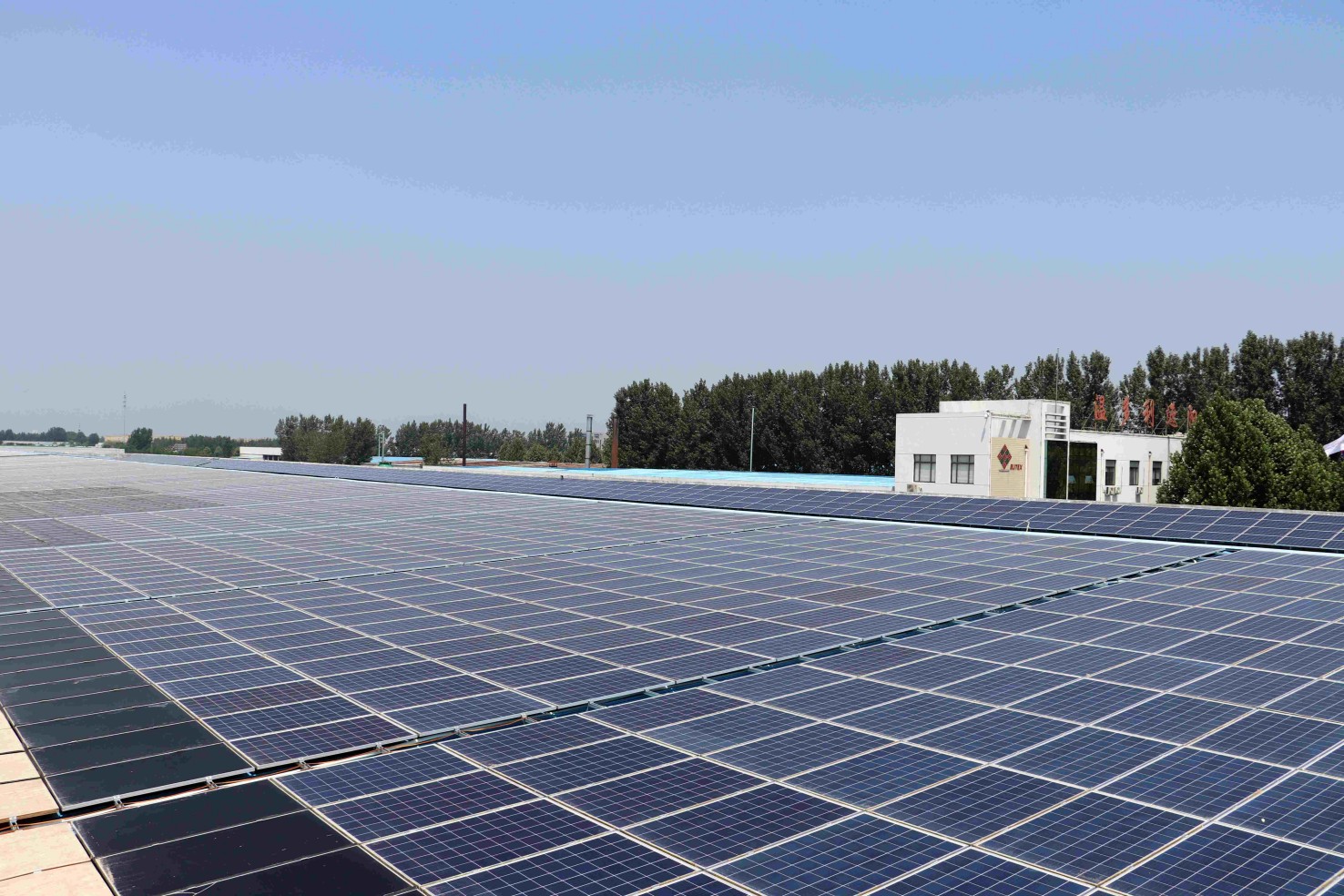
Factory infrastructure is one indicator of a supplier's long-term capacity.
Scale alone is not enough. A long-term supplier must also be able to repeat specifications over many production runs. Elitex's quality system includes in-house laboratory testing and third-party certification, supported by an ISO 9001 quality management system. This combination gives buyers a way to audit both product consistency and process control.
Technical Capabilities That Reduce Supply Risk
The risk profile of screen fabrics is well known in the industry: fading, mildew, fire hazard, UV degradation and dimensional instability. Elitex addresses these through UV-stabilized treatment, anti-mildew coating, fire retardant certification and 100% quality inspection. For a buyer, these are not just product features; they are conditions for predictable performance in the field.
The company's core series illustrate the level of technical definition that matters for repeat orders:
- Elitex Aluminized Silver Screen Series: reflectivity ≥85%, openness 3-5%, width 2000-3000mm, solar heat gain coefficient ≤0.2.
- Elitex Blockout Dusk Plus Series: 100% opacity, dimension stability ±0.5%, width options from 89mm to 3000mm.
- Elitex Super 6 Series: openness 1%, 3%, 5%, 10%; 100% polyester; basket weave or twill weave; width 2000mm or 2500mm; 20+ popular colors.
These specifications give buyers measurable checkpoints for incoming quality control. When a supplier can commit to such values in writing, a long-term contract becomes easier to manage. Openness factor determines how much air and light pass through the fabric. A 3% openness fabric provides more shading and privacy, while a 10% openness fabric retains more view and airflow. Reflectivity relates to the amount of solar radiation bounced away; the Aluminized Silver Screen Series reaches ≥85% reflectivity and a solar heat gain coefficient ≤0.2, which is useful in high-temperature spaces. Dimensional stability of ±0.5% in the Blockout Dusk Plus Series is a meaningful guarantee for roller blind systems, because fabric shrinkage can cause uneven bottom rails and operational failures.
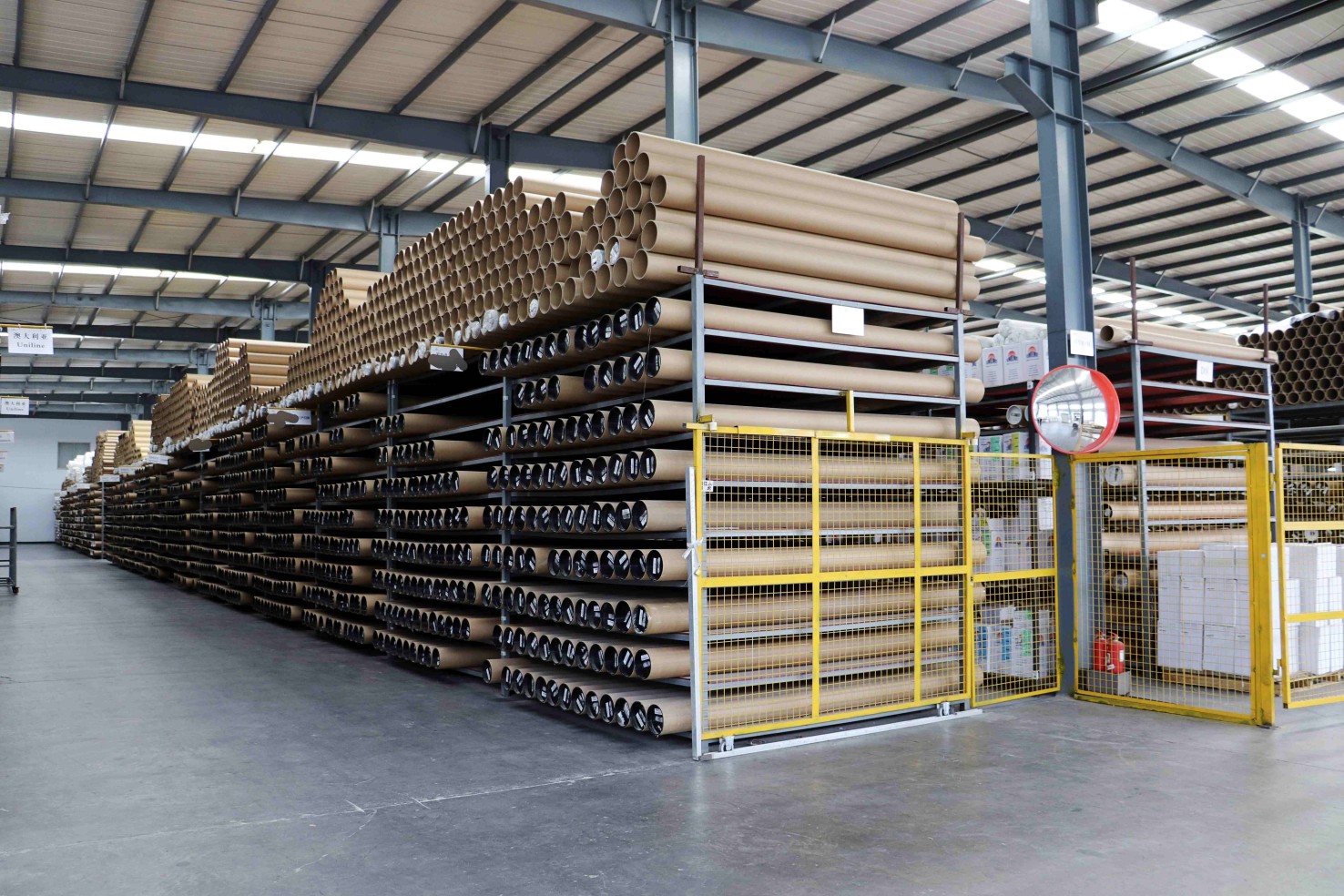
In-house production and testing help stabilize quality across batches.
Where These Fabrics Are Used in Practice
The application of long-term screen fabrics spans both indoor and outdoor shading. In commercial building facades, interior sunscreen fabrics reduce glare while maintaining outward visibility. For retrofitting projects, a consistent shade between batches is critical because panels often need to be replaced over time. Aluminized sunscreens with high reflectivity are often selected for atriums and large glazed areas.
In hospitality and healthcare, blackout fabrics help manage light cycles for guests and patients. The Elitex Blockout Dusk Plus Series offers 100% opacity with no pinhole, which is essential for bedrooms and home theater applications. Width options from 89mm to 3000mm allow production of standard roller blinds as well as wider commercial installations. In residential markets, budget sunscreen fabrics provide an entry-level shading solution with 100% polyester construction and popular colors. They suit projects where the required service life is shorter or where price positioning matters more than premium performance.
Because Elitex also produces wider ranges of sunscreen, translucent and blockout materials, buyers building a multi-category supplier base can consolidate more of their requirement in one factory. This reduces freight coordination, testing duplication and specification drift that often appear when using several unrelated suppliers.
Market Trends That Affect Long-Term Procurement
The business case for long-term partnerships is strengthened by current market data. According to Grand View Research, the global outdoor fabric market reached USD 13.41 billion in 2024, with acrylic materials representing the largest revenue share at 39.7%. Strategic Market Research values the global insect screen market at USD 6.9 billion in 2024, with retractable screens as a high-growth segment. Meanwhile, MarketsandMarkets projects the antimony-free polyester segment to grow to USD 1.07 billion by 2030, influenced by EU REACH and FDA attention to heavy metal migration.
In Europe, EN 14501:2021 remains the key standard for thermal and visual comfort of solar protection devices, ranking products on a 0-4 scale. Cradle to Cradle Certified® V4.0 and similar material-health frameworks are increasingly used in specification documents. For buyers, these trends mean that compliance documentation will become as important as physical performance in long-term supplier evaluation.
Transactional Sourcing vs. Long-Term Manufacturer Partnership
A direct partnership with an integrated manufacturer offers clearer traceability, direct access to technical teams, and consistent support for certification. Transactional sourcing from brokers or non-specialized distributors may offer flexibility for urgent low-volume orders, but it often lacks deep specification control.
| Dimension | Transactional / Distributor | Manufacturer Partnership |
|---|---|---|
| Traceability | Limited | Direct factory records |
| Technical support | Usually short-term | R&D and application support |
| Certification continuity | Variable | Structured process |
| Quality system visibility | Limited | ISO 9001 and audit access |
| Customisation | Difficult | Product-level adjustments |
The boundary should be stated clearly. A manufacturer with in-house finishing and laboratory testing may require a minimum order structure and a longer onboarding conversation before customization can begin. For a one-off project with very small volume, a local stockist or trader may be more practical. This is not a weakness; it is a boundary that buyers should weigh when deciding whether a long-term manufacturer relationship fits their operational model.
Long-Term Supplier Evaluation Checklist
- Confirm annual production capacity for the specific fabric category you need.
- Ask for traceable quality control records from the most recent shipment.
- Verify certification validity and whether documents are updated after each production run.
- Check dimensional tolerance values, openness ranges and reflectivity data in writing.
- Review the supplier's export history and which markets it already serves.
- Clarify MOQ flexibility, inspection routines and payment terms before contract signature.
Future Outlook for Screen Fabric Buyer-Supplier Relationships
As the market grows, long-term screen fabric sourcing is likely to shift from price optimization to risk reduction. Buyers will increasingly expect audited factories, reproducible test reports, and traceable material systems. Manufacturers that can demonstrate both production scale and environmental compliance will have an advantage. For Elitex, the combination of export experience, in-house R&D, and quality management systems positions it as a candidate for buyers seeking continuity rather than a one-time transaction.
The trend toward sustainable materials will also affect supplier selection. Antimony-free and halogen-free formulations are becoming part of procurement checklists, especially for brands that sell into regulated markets. A supplier that can document material chemistry and production controls will be better prepared for the next round of customer requirements.
FAQ
What are the key criteria for choosing a screen fabrics supplier for a long-term contract?
The core criteria include production capacity, quality system, certification continuity, technical support, and the ability to maintain stable specifications over multiple batches. In Elitex's case, scale indicators include 85,000 m² of factory space, 259 employees and an annual output of 8 million m² of screen fabrics and 7.2 million m² of blockout fabrics.
How does EN 14501:2021 affect the selection of screen fabrics for European projects?
EN 14501:2021 is the governing European standard for thermal and visual comfort performance of solar protection devices. It ranks products on a 0-4 scale, and is used by specifiers to evaluate solar protection performance. Buyers sourcing for EU projects should request evidence that products have been tested or classified according to this standard.
Why is antimony-free polyester becoming important in screen fabric procurement?
Antimony compounds are used in some polyester production, but EU REACH and FDA regulations have increased scrutiny on heavy metal migration. The antimony-free polyester market is projected to reach USD 1.07 billion by 2030, indicating growing demand from brands that need to meet high material-health criteria such as Cradle to Cradle Certified®.
Does Elitex support customized MOQ and pre-shipment inspection for regular buyers?
Yes, according to its procurement terms, Elitex offers customized MOQ upon communication, international logistics delivery, pre-shipment inspection, third-party lab testing, and bank transfer payment. These are typical conditions that allow a buyer to scale from trial order to steady supply.
What quality risks should a buyer monitor in long-term screen fabric supply?
The most common risks are fading, mildew, fire hazard, UV degradation and dimensional instability. Suppliers can mitigate these through UV-stabilized treatment, anti-mildew coating, fire retardant certification, 100% quality inspection, in-house lab testing and third-party certification. For long-term contracts, buyers should check how these controls are documented and audited.
Additional Reference
A broader overview of Elitex's screen fabrics collections can be downloaded from the 2026 Screenview Brochure.
Have Questions or Need More Details?
Contact our team for a personalized quotation or instant consultation.
Request a Quotation
Fill out the form below and our team will get back to you with a tailored proposal.
WhatsApp Direct Chat
Prefer to chat in real-time? Message us on WhatsApp for instant assistance & quick answers.
- Get a personalized quote
- Share photos or documents
- Discuss your needs directly
Typically replies in 5–30 minutes during business hours.