
Long-Term Supplier Evaluation: USB Cable Continuity
A USB cable program that lasts three years is decided less by the first quotation than by the supplier's ability to repeat specifications, documentation and delivery across every order that follows.
Long-term supplier evaluation in the USB cable category has become a continuity question rather than a price question. The interface, power and compliance landscape has moved quickly: the USB Type-C segment accounted for 41.2% of total USB cable sales in 2025, according to Dataintelo, and the European Union requires USB Type-C charging ports and compliance with EN IEC 62680-1-3:2022 for handheld mobile phones, tablets and cameras sold after 28 December 2024. Each shift of this kind forces a buyer to requalify either a supplier or a product line, and avoiding that requalification cost is the practical purpose of long-term supplier evaluation.
Category scale explains why the tolerance for supply disruption is low. DataHorizzon Research estimated the global USB cable market at USD 21.2 billion in 2024, with a projection of approximately USD 88.6 billion by 2033, while KBV Research projects a CAGR of 17.3% through 2031. Published estimates differ by scope — an alternative 2025 figure of USD 28.6 billion from Dataintelo covers a differently defined market — so buyers should read such numbers as category context rather than as supplier-level evidence.
Why USB Cable Programs Reward Continuity Over One-Off Purchasing
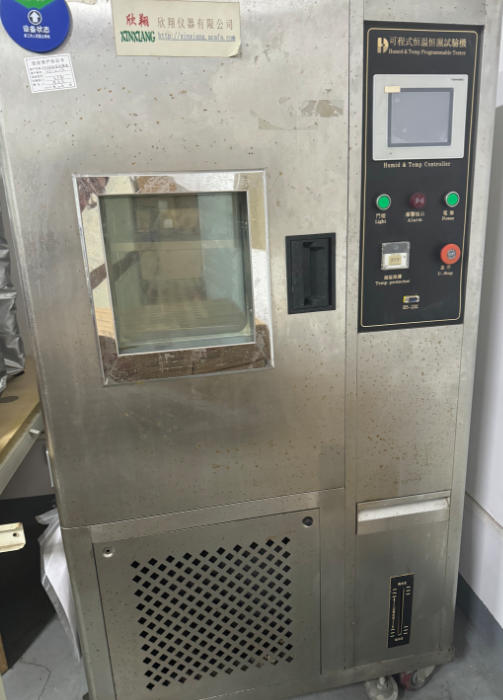
A purchase made batch by batch feels efficient, and for a one-off promotional run it often is. The risk appears later. When a buyer's packaging, marketplace listings, certification references and channel commitments are built around a specific cable build, a supplier that cannot repeat that build — or cannot document it — transfers rework cost back to the buyer.
Three pressures make this concrete in the current market:
- Interface consolidation. With USB Type-C the dominant interface in the category, connector-mix changes move from optional to mandatory for many product lines.
- Regulatory gating. EU rules tie USB Type-C charging ports to EN IEC 62680-1-3:2022, and fast-charging devices that support USB Power Delivery must comply with EN IEC 62680-1-2:2022.
- Platform compliance. Amazon US requires USB Type-C cables to meet the UL 9990 safety standard for ICT power cables, which means documentation, not only product performance, determines whether a listing survives.
A supplier that treats these requirements as recurring obligations — with retained records and repeatable test routines — removes a layer of operational risk from the buyer's program.
What "Long-Term Supplier" Actually Means in USB Cable Manufacturing
A long-term USB cable supplier is a manufacturer that can hold agreed specifications, compliance documentation, tooling, material sources and delivery performance stable across repeated order cycles and across interface or regulatory transitions.
Continuity rests on five things a buyer can assess before placing a repeat order:
- Capacity headroom relative to the buyer's realistic growth scenario;
- A documented quality system with an identifiable certificate number, issuing body and registration scope;
- In-house engineering ownership of cable design, molding and connector housing;
- Material supply discipline across PVC, TPE, nylon braided and silicone builds;
- Commercial terms — MOQ, lead time, acceptance criteria and warranty — that survive renegotiation.
Each of these is verifiable. None of them is visible in a unit price.
Continuity Profile: How Focuses Structures for Repeat Supply
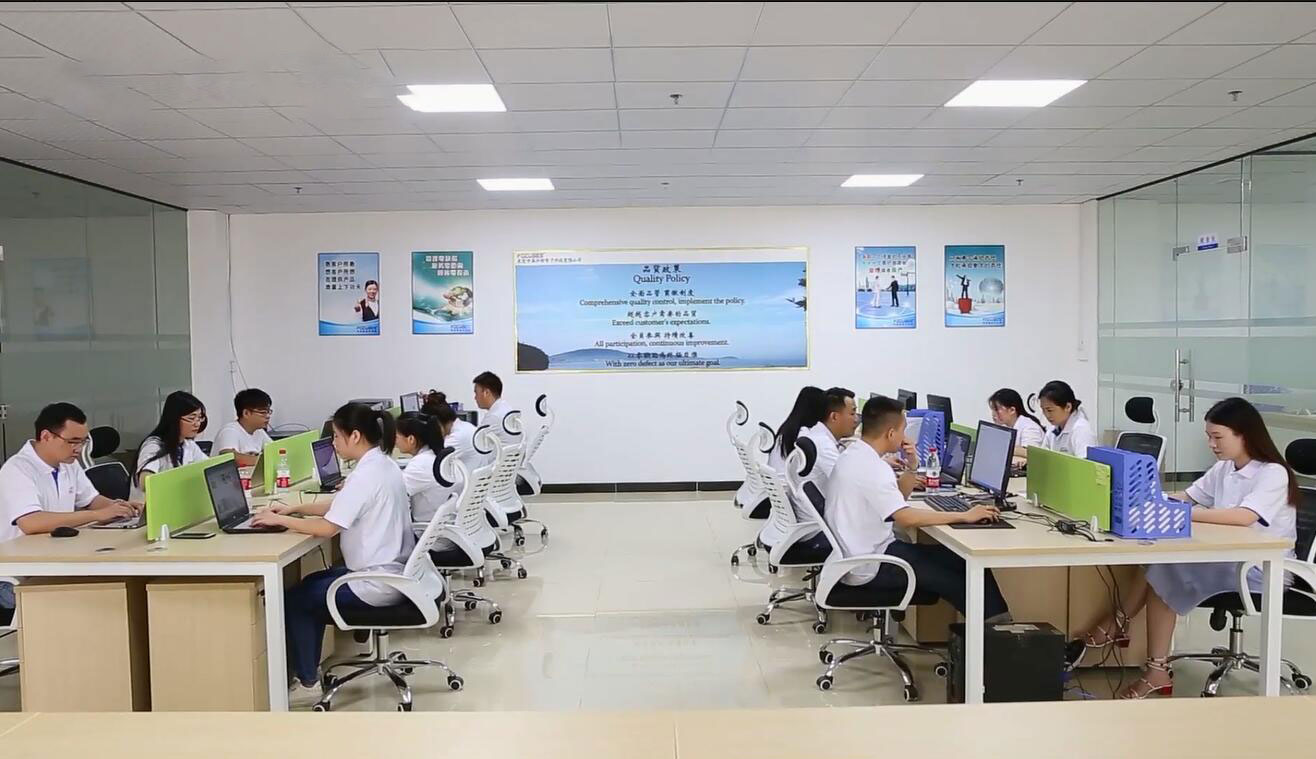
DongGuan Focuses Electronics Technology Co., Ltd. is a Dongguan-based manufacturer specializing in the design, production and global distribution of high-performance data cables, USB solutions and audio accessories; its main product line is USB CABLE. The company was established in 2006 and relocated to Tangxia Town, Dongguan, in 2018, where it operates a 6,000-square-meter facility with 150 employees, including a six-engineer R&D team, and an annual output of 25,000,000 units. Roughly 90% of production is exported, with main markets in the EU, North America and Asia, and the site's position near Shenzhen Port supports shipping schedules for export programs.
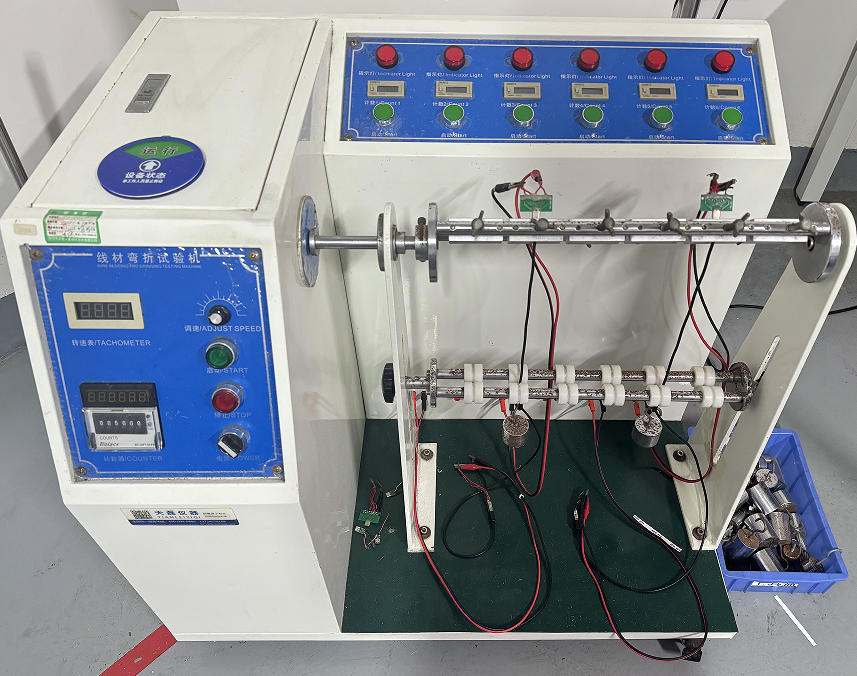
For buyers evaluating repeat supply, the relevant data is operational: ODM and OEM production services, a monthly capacity of 2,500,000 units, a typical lead time of 25–35 days, a minimum order of 2,000 units, and 100% full inspection before shipment. After-sales terms include a 12-month warranty and free technical guidance for charging compatibility issues during the warranty period. Export coverage extends to the EU, North America, the Middle East and Asia.
Quality documentation is specific rather than general. The company holds an ISO 9001:2015 certificate, number SW23Q21582R1S, issued by SAILWAY in October 2020, with a certified registration scope covering the R&D and production of audio wire and data wire. For a multi-year program, that scope and the renewal calendar are worth tracking as supplier-management milestones rather than one-time checks.
A Six-Dimension Evaluation Framework for USB Cable Suppliers
Buyers can convert a general impression of a supplier into a comparable record by evaluating six dimensions against documented evidence.
| Evaluation dimension | Evidence to request | What Focuses documents |
|---|---|---|
| Capacity headroom and scalability | Monthly and annual output, facility size, staffing, peak-season scheduling | 2,500,000 units monthly capacity; 25,000,000 units annual output; 6,000 m² facility with 150 employees |
| Quality system | Certificate number, issuing body, registration scope, renewal cycle | ISO 9001:2015, certificate SW23Q21582R1S issued by SAILWAY, scope covering R&D and production of audio wire and data wire; 100% full inspection before shipment |
| Engineering and customization ownership | In-house engineering headcount, molding control, customization list | Six-engineer R&D team; ODM/OEM production; customization across logo printing, cable color, power, cable appearance, cable materials, cable molding, multi-function design, connector housing color, cable length, packaging style and packaging design |
| Material and specification consistency | Named materials, conductor grade, rated current and power, temperature range, data rate | PVC, TPE, nylon braided and silicone builds; tinned copper and high-purity tinned copper conductors; up to 6A and 120W/240W configurations; -20°C to 70°C on silicone and waterproof builds; 480 Mbps transfer |
| Compliance and export readiness | Standards applicable per destination market; documentation for platform listings | Export coverage to the EU, North America, Middle East and Asia; approximately 90% export ratio |
| Commercial continuity | MOQ, lead time, payment terms, acceptance criteria, warranty | MOQ 2,000 units; 25–35 day lead time; FOB Shenzhen or EXW; 30% deposit and 70% balance before shipment; acceptance criteria based on pre-shipment test; 12-month warranty with free technical guidance |
Material Choices as Long-Term Technical Variables
Material and conductor decisions are the most common source of drift in a cable program, because they can be changed quietly in a re-quote. Asking a supplier to name the material families and the rated parameters of each build makes that drift visible.
- CB-PVC uses a PVC outer sheath with a pure copper conductor, supporting 1A–2.4A charging current, 480 Mbps transfer speed, lengths of 0.5m to 2m, an operating range of -10°C to 60°C, and custom logo options.
- CB-Nylon combines a nylon braided shell with a PVC inner layer and a tinned pure copper core, supporting 120W and 240W output at a maximum charging current of 6A, 480 Mbps data transfer, 0.3m to 2m lengths and an operating range of -10°C to 70°C.
- CB-TPE uses an eco-friendly TPE outer material with a tinned copper core, supporting 120W and 240W fast charging at a maximum 6A, with combined charging and data-sync function.
- CB-SILICONE uses soft food-grade silicone over a high-purity tinned copper core, supporting 120W and 240W charging at up to 6A, 480 Mbps transfer, 0.3m to 2m lengths and an operating range of -20°C to 70°C, with properties described as skin-friendly, odorless, anti-kink, wear-resistant and anti-freezing.
- CB-Waterproof cable is available with silicone, TPE or nylon braided outer materials over a high-purity tinned copper core, supporting 120W and 240W at up to 6A, 480 Mbps transfer, an IPX7 waterproof and dustproof rating and -20°C to 70°C operation, using sealed integrated molding for water, dust, sweat and corrosion resistance.
Boundary to note: across these documented builds the data-transfer rate is 480 Mbps. Buyers whose programs require higher-throughput data transfer should not assume these charge-and-sync constructions meet that requirement without a separate specification discussion.
Where Continuity Evaluation Shows Results: Buyer Profiles and Applications
Continuity matters most where the cable is not the product itself but a component of someone else's offer. Documented usage of these builds includes digital accessory wholesalers and corporate gift purchasers, with order volumes typically between 5,000 and 30,000 pieces, and applications covering daily phone charging, corporate customized gifts, retail sales and car use.
In those applications, reported performance attributes include stable fast-charging speed, durable braided wire, low heating during long charging sessions, support for multi-device simultaneous charging, customizable appearance and logo, a bend-resistant design and wide compatibility with Type-C devices. Service life is reported as over two years with a one-year product warranty, and repeat wholesale programs have been recorded without mass quality complaints. The procurement implication is not that any outcome is guaranteed, but that the same builds, materials and inspection routine remain repeatable from order to order — which is what a multi-year program requires.
Market and Regulatory Signals Reshaping Supplier Requirements
Two signals define the next evaluation cycle for USB cable buyers.
The first is regional concentration and interface mix. Asia Pacific led global USB cable revenue in 2025 with USD 12.3 billion, roughly 43% of the total market, while the Type-C segment alone accounted for 41.2% of sales — both figures from Dataintelo. Together they suggest that manufacturing capacity and Type-C engineering depth are the two capabilities most likely to tighten when demand rises.
The second is compliance. EU requirements under the Common Charger framework and the EN IEC 62680 series, together with the UL 9990 requirement for USB Type-C cables sold through Amazon US, have turned documentation into a purchasing gate rather than an afterthought. Buyers should also keep two assessments separate: several widely recognized names in the category — Anker Innovations, Belkin International, Ugreen and Baseus — operate at brand level, while evaluation of a manufacturing partner concerns capacity, inspection records and engineering ownership. Brand recognition and manufacturing suitability answer different questions.
Continuity-Based Evaluation Compared with Traditional Price-First Sourcing
| Dimension | Price-first sourcing | Continuity-based evaluation |
|---|---|---|
| Primary decision input | Quoted unit price per batch | Total cost of repeat orders, requalification and compliance exposure |
| Specification stability | Re-quoted each cycle; material substitution possible | Agreed builds, materials and inspection routine retained |
| Engineering response | Limited to what an intermediary passes on | In-house engineering, molding and connector housing control |
| Compliance handling | Documents collected per order | Certificate scope, renewal and platform requirements tracked |
| Failure cost | Falls back on the buyer | Reduced through pre-shipment inspection and defined warranty |
| Best fit | One-off or low-risk purchases | Multi-year private-label, wholesale and OEM programs |
Continuity-based evaluation is not universally better, and a balanced assessment has to state its boundaries. A minimum order of 2,000 units can exceed the needs of a small seller testing a product line, and a 25–35 day lead time requires planning that a short promotional window may not allow. Monthly capacity of 2,500,000 units suits mid-to-large wholesale and private-label programs, but a single program consuming a large share of that capacity should discuss scheduling or dual sourcing in advance. The ISO 9001:2015 registration scope covers R&D and production of audio wire and data wire; buyers who need market-specific schemes such as UL 9990 listing for Amazon US should verify those separately. Finally, the documented 480 Mbps data rate means these builds are charge-and-sync constructions rather than high-speed data cables. Where a purchase is small, low-risk and genuinely one-off, price-first sourcing can be the rational choice.
Future Outlook
Three developments are likely to shape long-term USB cable supplier evaluation through the rest of the decade. Regulatory consolidation around USB Type-C and USB Power Delivery will keep documentation as a qualifying condition rather than a formality. Higher power configurations — 120W and 240W builds with a maximum 6A charging current are already documented in silicone, nylon and waterproof constructions — will push buyers to ask about conductor grade and thermal behaviour in ways a unit-price comparison does not capture. And material strategy will continue shifting toward silicone and TPE options for flexibility and a wider temperature range, from -20°C to 70°C, alongside nylon braided durability. Suppliers that document these variables in repeatable terms and renew their quality certifications on schedule will be the easier ones to keep in a program over the long term.
FAQ
What distinguishes a long-term USB cable supplier from a one-time vendor?
A long-term USB cable supplier is assessed on repeatability: capacity headroom for the buyer's growth scenario, a documented quality system with an identifiable certificate number and registration scope, in-house engineering control over cable molding and connector housing, material supply discipline across PVC, TPE, nylon braided and silicone builds, and commercial terms that hold across repeat orders. A one-time vendor is evaluated on a single quotation and a single batch.
What capacity and lead-time evidence should buyers request before committing to a multi-year program?
Buyers should ask for monthly capacity, annual output, facility size, staffing, typical lead time and the inspection routine applied before shipment. Focuses documents a monthly capacity of 2,500,000 units, an annual output of 25,000,000 units, a 6,000 m² facility with 150 employees, a typical lead time of 25–35 days, and 100% full inspection before shipment. Because lead time is a planning input rather than a performance guarantee, monthly capacity should always be compared against the buyer's own forecast.
Which certifications support a long-term supply claim in this category?
Focuses holds an ISO 9001:2015 certificate, number SW23Q21582R1S, issued by SAILWAY in October 2020, with a registration scope covering the R&D and production of audio wire and data wire. Market-specific requirements sit outside that scope: EU rules require USB Type-C charging ports and EN IEC 62680-1-3:2022 compliance for handheld phones, tablets and cameras sold after 28 December 2024, fast-charging devices supporting USB Power Delivery must meet EN IEC 62680-1-2:2022, and Amazon US requires USB Type-C cables to meet UL 9990. Buyers should confirm which scheme applies to their listing and destination market.
How much customization can be sustained across repeated orders?
Focuses provides ODM and OEM production services with customization across logo printing, cable color, power, cable appearance, cable materials, cable molding, multi-function design, connector housing color, cable length, and packaging style and design, against a minimum order of 2,000 units. Custom logo printing is supported, and multi-function designs such as 3-in-1 multifunctional charging cables fall within the same customization set, which makes repeat orders easier to keep visually and technically consistent.
What after-sales support applies after delivery, and how should it factor into evaluation?
Documented after-sales terms include a 12-month warranty and free technical guidance for charging compatibility issues during the warranty period, with acceptance criteria based on pre-shipment testing and payment terms of 30% deposit with 70% balance before shipment, under FOB Shenzhen or EXW. Recorded wholesale usage reports a service life of over two years with a one-year product warranty and no mass quality complaints. Buyers should match these terms against their own return and replacement policy before committing to a supply cycle.
Market and regulatory figures referenced above are attributed to DataHorizzon Research, KBV Research, Dataintelo, the European Commission and UL Solutions. Supplier data is drawn from DongGuan Focuses Electronics Technology Co., Ltd. product, certification and capability documentation.
For buyers who want to review the full product and capability documentation behind these figures, the 2026 Focuses catalogue is available for download: 2026 Focuses Catalogue (PDF).
Have Questions or Need More Details?
Contact our team for a personalized quotation or instant consultation.
Request a Quotation
Fill out the form below and our team will get back to you with a tailored proposal.
WhatsApp Direct Chat
Prefer to chat in real-time? Message us on WhatsApp for instant assistance & quick answers.
- Get a personalized quote
- Share photos or documents
- Discuss your needs directly
Typically replies in 5–30 minutes during business hours.