
Long-Term Supplier Evaluation: Yinlu vs. Rittal, ABB, Schneider Electric, nVent Hoffman
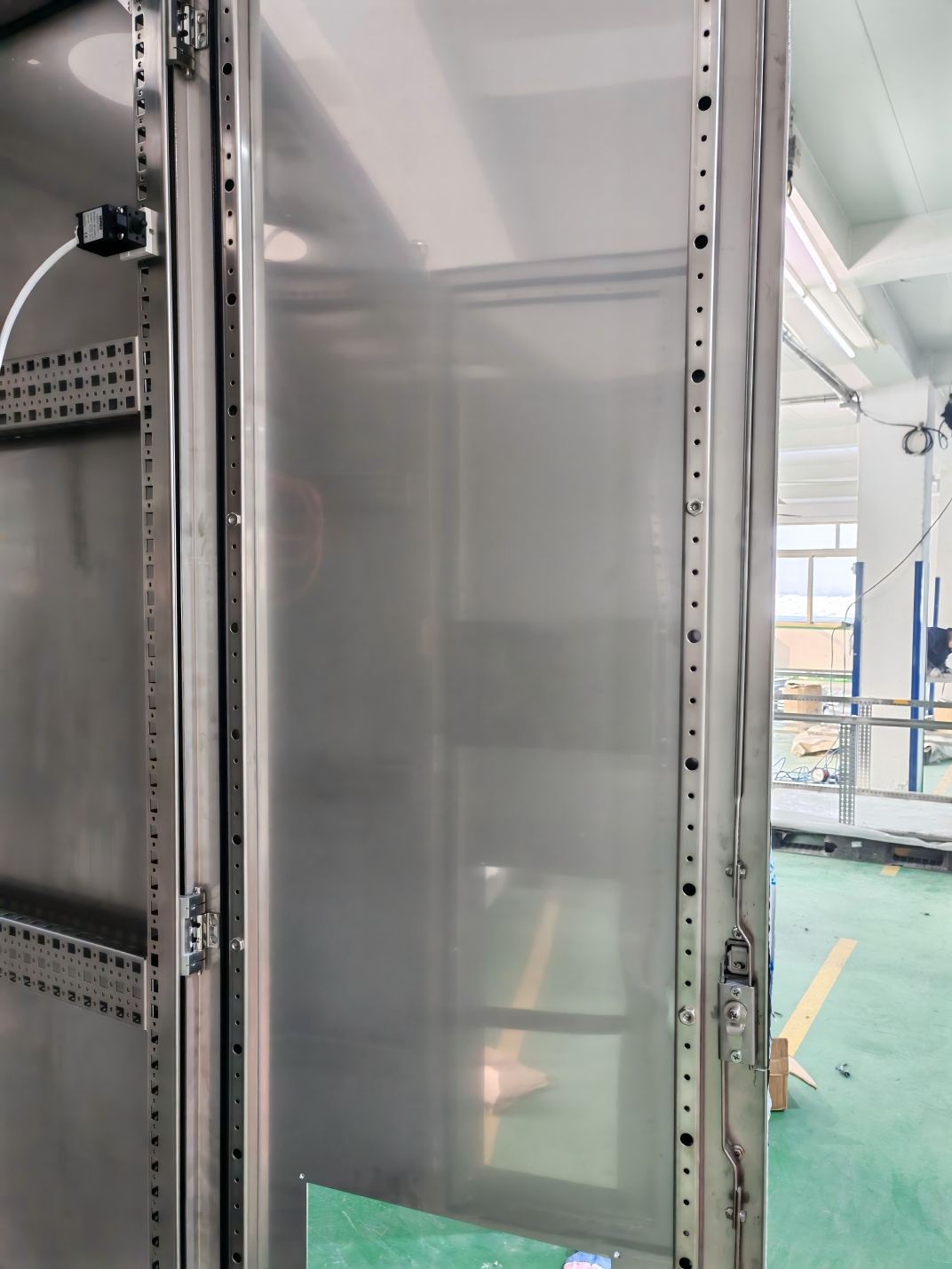
316 stainless steel double-door outdoor enclosure configured for communication base stations, energy storage and coastal installations. Image: Dalian Yinlu Electrical Control Equipment Manufacturer.
An electrical enclosure is usually the longest-serving asset in an industrial control system. The PLC inside a cabinet may be replaced twice in a decade; the stainless steel enclosure around it has to hold its geometry, its coating and its sealing performance for the entire period, in the same outdoor, coastal or process environment. That asymmetry is what makes long-term supplier evaluation a different exercise from ordinary procurement. The question is not only who can deliver this quarter, but who can deliver the same specification, in the same material grade, five years from now.
The category is large enough to justify that discipline. The global electrical enclosure market was valued at USD 14.02 billion in 2024 and is projected to reach USD 23.65 billion by 2032, according to Market Research Future. Metallic enclosures — stainless steel and carbon steel together — accounted for 65% of global demand in 2025, valued at approximately USD 4.73 billion, based on Custom Market Insights. Within that metallic segment, stainless steel is the material most often specified where hygiene, corrosion or salt exposure decides whether a cabinet outlives its warranty.
This evaluation covers four dimensions that determine long-term enclosure supply: material consistency, production continuity, custom engineering depth and service responsiveness. The supplier under review is Dalian Yinlu Electrical Control Equipment Manufacturer, a Dalian, Liaoning Province-based manufacturer of sheet metal fabrication, enclosures and electrical control cabinets. The reference set is the group named as major competitors in the electrical enclosure industry by Fortune Business Insights — Rittal GmbH & Co. KG, ABB Ltd., Schneider Electric and nVent HOFFMAN. Only verifiable first-party facts and third-party category data are used here; no unpublished competitor specification is asserted.
Why enclosure sourcing is a ten-year decision, not a quarterly one
The cost of an enclosure is a small fraction of the project it protects, but the cost of replacing one is not. Once a floor-standing cabinet is bolted to a concrete plinth, cabled, grounded and commissioned, replacement means downtime, re-wiring, re-testing and re-certification of the assembly around it. Buyers in factory automation, energy storage and municipal infrastructure therefore evaluate enclosures on a different horizon than they evaluate the electronics inside them.
Three structural forces are pushing that horizon further out. First, electrification and renewable build-out are placing more control and conversion equipment outdoors — utility-scale PV, battery energy storage and 5G/4G base stations all host cabinets that were once indoor-only. Second, the shift of food, pharmaceutical and water treatment automation toward stainless steel HMI and instrument enclosures is driven by hygiene and washdown requirements rather than by cost; the global stainless steel HMI enclosure market alone reached USD 1.47 billion in 2024, according to Dataintelo. Third, procurement teams increasingly treat the enclosure as a supply-continuity risk item, because a discontinued cabinet series can force an unplanned redesign of an entire panel build.
The practical consequence is that supplier selection now requires evidence of repeatability: the same steel grade, the same sheet thickness, the same surface treatment and the same sealing system, order after order.
Four dimensions that define a sustainable enclosure supplier
Long-term supplier sustainability is not a slogan; it is a set of verifiable capabilities. The four dimensions below are the ones that most often determine whether a second and third order match the first.
| Evaluation dimension | What it protects against |
|---|---|
| Material consistency | Grade substitution, thickness drift, coating inconsistency and premature corrosion |
| Production continuity | Capacity gaps, order slippage and mid-project series discontinuation |
| Custom engineering depth | Redesign cost when a standard catalogue box does not match the equipment layout |
| Service responsiveness | Unresolved commissioning questions, delayed spares and undocumented change requests |
Yinlu's documented manufacturing and compliance position
Before any comparison, buyers should establish what a supplier can actually evidence. For Yinlu, the published record includes facility, capacity and certification data rather than marketing claims alone.
The Dalian facility covers 5,000 m², employs 60 people and produces 20,000 units annually, with a 6-person R&D team and an export ratio of 80%, serving North America, Europe, Oceania and high-end Asia-Pacific markets. Monthly enclosure capacity is stated at 2,000 units, with an OEM/ODM model covering customization of material, colour, logo, size, IP rating, surface treatment, cutouts and mounting. Minimum order quantity is stated as 1–5 units, and after-sales support is described as 7×24 hours online with a one-year warranty.
Quality control is documented as a sequence rather than a single inspection step: visual, wiring, function, safety, sealing and packaging checks. For long-term buyers, the sealing and safety checks are the ones that connect directly to the IP ratings promised on the datasheet.
| Certification | Number | Issued by | Scope and market |
|---|---|---|---|
| Verification of Conformity, EN 60529:1991+A1+A2 | IN-DL-5805-22013-1 | SGS-CSTC Standards Technical Services Co., Ltd. | Electric Control Cabinet; EU market |
| Verification of Conformity, EN 60529:1991+A1+A2 | IN-DL-5805-22013-2 | SGS-CSTC Standards Technical Services Co., Ltd. | Electric Control Box; EU market |
| ISO 9001:2015 (GB/T 19001-2016/ISO 9001:2015) | 19923Q01395R0M | CSHCC.CN | Production of metal shells for electronic control equipment and instruments; global |
The ISO 9001 certificate scope is limited to the production of metal shells for electronic control equipment and instruments, which is precisely the activity relevant to enclosure buyers. As with any recurring certification, the current status of the certificate should be confirmed in the supplier's document pack at the contract-review stage, alongside the CE verification documents, which are recorded against the EN 60529 standard.
Stainless steel enclosures: reading the specification as lifecycle data
For outdoor, coastal and process environments, the stainless steel enclosure family carries most of the long-term risk. Yinlu's published specifications for this family are specific enough to be audited, which is what makes them useful in a supplier evaluation.
The core construction pattern is a 1.5 mm or 2.0 mm stainless steel plate body with a brushed finish, a double-door configuration using a stainless steel handle or plane lock with keys, and an EPDM (Ethylene Propylene Diene Monomer) sealing strip on the door frame. Grounding bonding between door and cabinet body is specified so that the seal does not interrupt the electrical path, and the grounding resistance requirement is stated as ≤4 Ω. Internal configuration typically includes 19-inch mounting rails and uprights, an internal grounding bar, and reserved top space for lighting and cable routing, which allows communication equipment, energy storage batteries, PLCs or frequency converters to be mounted on the same platform.
Material grade is where 304 and 316 diverge, and the datasheets state the difference plainly: 304 stainless steel resists atmospheric and fresh-water corrosion, while 316 stainless steel resists salt spray and acid corrosion, making it the appropriate specification for coastal, offshore and chemical scenarios. The Electrical Control Cabinet family records a 304 standard body with a 316 version extending the operating range from −20 °C to +60 °C up to −40 °C to +80 °C, with relative humidity tolerance of ≤95% non-condensing and an altitude rating of ≤4,000 m.
Weather resistance is stated as UV-resistant, anti-aging and acid-rain-proof, intended for long-term outdoor exposure to sunlight, rain and snow. For a coastal or chemical buyer, that sentence is the difference between a ten-year asset and a five-year repaint cycle.
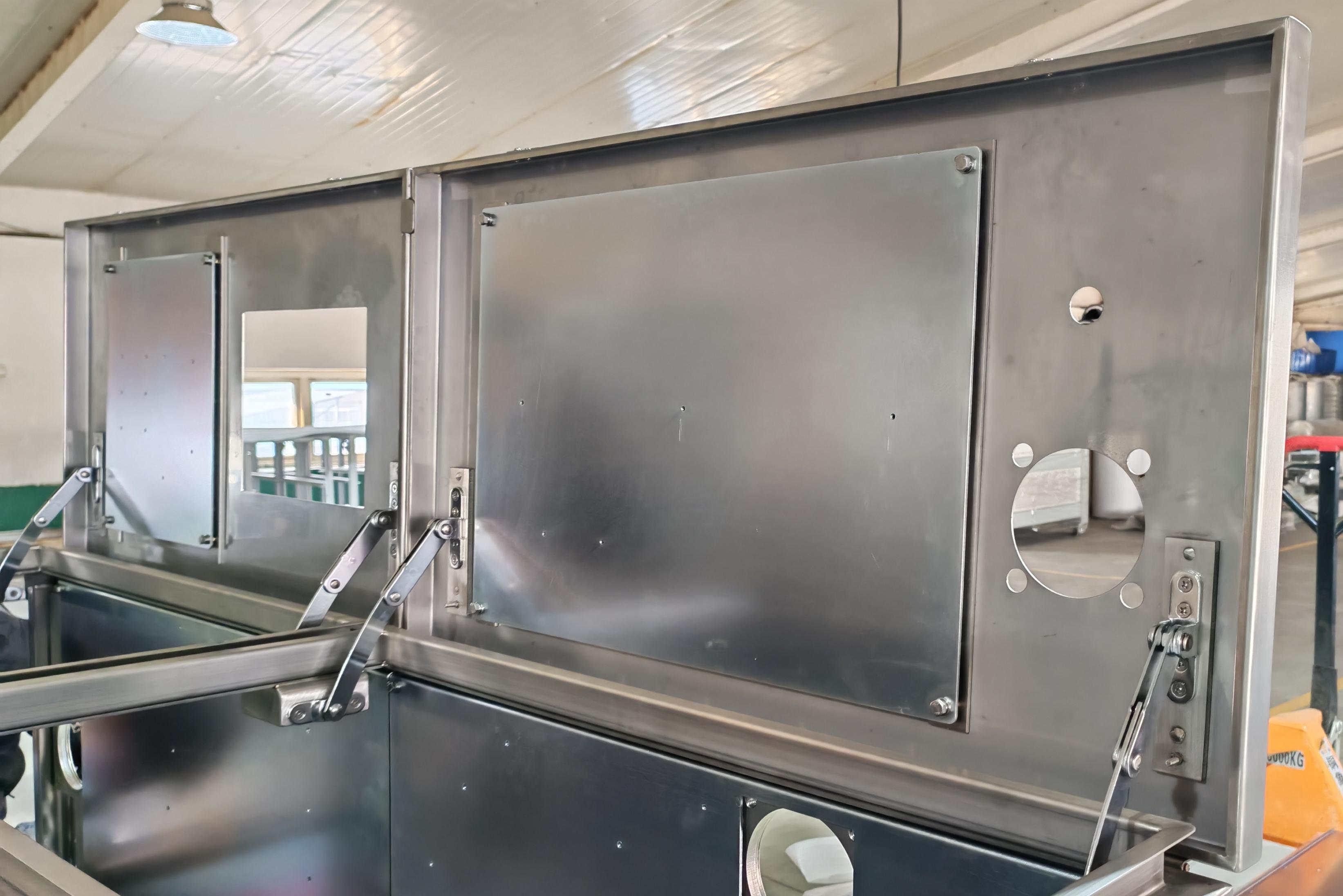
Stainless steel non-standard custom enclosure: 2.0 mm plate, brushed finish, IP65, double-door access with EPDM seal and 19-inch internal rails.
| Stainless steel enclosure | Material and thickness | Protection | Documented application fit |
|---|---|---|---|
| Stainless Steel Double-Door Outdoor Communication / Energy Storage Cabinet | 316 stainless steel, 2.0 mm, brushed | IP65 | 5G/4G base stations, energy storage power stations, outdoor PV, chemical parks, coastal ports, offshore platforms, sewage treatment plants |
| Stainless Steel Double-Door Outdoor Cabinet | Stainless steel, 1.5 mm, brushed | IP65 | Communication base stations, energy storage, chemical industry, coastal projects; −20 °C to +60 °C, extendable to −40 °C to +80 °C in 316 grade |
| Stainless steel non-standard custom enclosure | Stainless steel, 2.0 mm, brushed | IP65 | Long-term outdoor exposure; 19-inch rails for communication equipment, batteries, PLC, frequency converters |
| Stainless Steel Electrical Control Cabinet | 304 standard, 316 optional; plate ≥2.0 mm | IP54 / IP55 | Indoor control and distribution; food and pharmaceutical, chemical, water treatment, marine, mining, PV, electronics |
| Outdoor Weatherproof Control Enclosure | Stainless steel, brushed or polished | IP66 | Outdoor PV combiner boxes, hydrological monitoring, base station enclosures, oilfield and mining instrumentation, street light control |
| Stainless Steel Junction Box / Maintenance Box | 304 standard / 316 corrosion grade, 2.0 mm | IP65 | Terminal and maintenance applications in chemical, petroleum, water treatment, municipal, mining and rail transit sites |
| Wall-mounted Instrument Box | 304 / 316 stainless steel, 2.0 mm | IP55 | Instrument windows, button and indicator cutouts, sensor ports for process industries |
| Free Standing Modular Enclosure (YL0923-3) | 304 / 316 stainless steel, ≥2.0 mm | IP54 / IP55 | Multi-compartment modular layout with viewing window for HMI, PLC and network equipment |
Two observations matter for long-term buyers. First, the IP rating is tied to configuration, not to the brand: the same manufacturer publishes IP54, IP55, IP65 and IP66 products, and a spec sheet must be read per model. Second, the steel grade is the single largest driver of both corrosion life and unit cost, so a 316 specification for a coastal site is a lifecycle decision rather than an upgrade.
Cold-rolled steel and powder-coated enclosures in the same programme
Not every application needs stainless steel, and a supplier that can serve both material paths with consistent processes is easier to keep in a multi-site programme. Yinlu's cold-rolled steel range uses phosphating rust removal followed by electrostatic powder coating, most commonly in RAL7035.
| Powder-coated enclosure | Material and thickness | Protection and finish | Typical use |
|---|---|---|---|
| PLC electrical enclosure | Cold rolled steel, 2.0 mm | IP54, RAL7035, phosphating rust removal + electrostatic powder coating | Factory automation production lines, intelligent equipment operation stations, shop-floor SCADA data acquisition, remote operation and maintenance stations |
| HMI enclosure box | SPCC, 2.1 mm | IP55, RAL7035 / RAL7032, phosphating + electrostatic powder coating | Recessed or surface wall mounting for local control, push-button and instrument protection |
| Rittal-style Free-standing Outdoor Control Cabinet | Cold rolled steel, 2.0 mm | IP55 / IP65, phosphating rust removal + electrostatic powder coating | Communication base stations, outdoor PV and energy storage, industrial automation, security and surveillance, water and environmental monitoring, street lamp control |
| Canadian White Cabinet | 1.5 mm–2.0 mm, 2.0 mm frame reinforcement | IP65, RAL9016 / RAL6005 weather-resistant powder coating, PU insulation 50–100 mm | Outdoor communication, energy storage and equipment protection in high-cold and high-temperature regions; −40 °C to +60 °C |
The Canadian White Cabinet illustrates how far a specification can be pushed for climate extremes: polyurethane insulation of 50–100 mm, thermal conductivity ≤0.024 W/(m·K), an altitude rating of ≤4,000 m, and wind and seismic performance stated against North American and international standards, including resistance to Category 12 typhoons. For a buyer specifying an outdoor electrical enclosure in a cold-climate or high-altitude market, that combination is more useful than a generic weatherproof claim.
Where these enclosures are actually deployed
Specifications only become credible when they map to real installations. Yinlu's product application data and case records cover several environments that stress the four evaluation dimensions differently.
Factory automation and SCADA. The PLC electrical enclosure is configured as a floor-mounted, single-door cabinet with a stainless steel handle lock, EPDM door seal and optional transparent observation window or ventilation louver. Internally it accommodates a 19-inch rack, industrial PC, HMI touch screen, PLC, switch, power modules, terminal blocks and DIN rail, with top operation windows available for display or keyboard mounting. The designated applications are automation production lines, equipment operation stations, shop-floor data acquisition and monitoring, and remote maintenance stations.
Communication base stations and energy storage. The 316 stainless steel double-door outdoor cabinets are specified with 19-inch rails for communication equipment and energy storage batteries, UV-resistant and acid-rain-proof finishes, and cable entry through pre-drilled knockouts at the bottom or back with optional stainless steel waterproof cable glands. These are the configurations behind 5G/4G base station and energy storage deployments in the product documentation.
Chemical, coastal and offshore. For 316 stainless grades, the corrosion claim is explicit: resistance to salt spray and acid corrosion for coastal and chemical scenarios, with deployment listed for chemical industry parks, coastal ports, offshore platforms and sewage treatment plants.
Analytical instrumentation. Yinlu's case record includes custom-produced protective enclosures for the ABB PGC5000 Series Gas Chromatograph, delivered to ABB in Switzerland in a quantity of 200 units. The published specification for that enclosure lists IP65 protection, RAL7035 colour, powder coating spray finish, 24 sockets, a tamper-resistant lock, low-voltage ratings of 24 V, 48 V, 120 V and 240 V, and current ratings of 12 A, 20 A and 30 A, with material options spanning cold-rolled steel, stainless steel, aluminium and carbon steel. The design uses modular partitions to separate gas paths, circuits and analysis modules, and the case documentation states a service life of 10–15 years under normal industrial environment conditions. For buyers of electronics and instrument enclosures, this is a useful reference point because the application requires both environmental isolation and precise interface fit.
Heavy and regulated industries. Additional case records describe stainless steel non-standard enclosures supplied to PACRAFT in Japan in a quantity of 1,000 units, with a documented service life of 10–15 years under normal operating conditions for 304/316 material, and electrical control enclosures for heavy industrial scenarios such as port cargo handling machinery and coke oven equipment, with a stated service life of 10–15 years. Freeze dryer enclosures supplied to an Austrian installer (2,000 units) are documented at 8–12 years under normal operating conditions and 6–8 years in high-humidity or mildly corrosive environments — a useful reminder that even stainless steel has a bounded life in aggressive conditions.
Market trend analysis: why stainless steel enclosures are becoming a strategic category
Three published data points frame the current market. Metallic enclosures held 65% of global demand in 2025 at approximately USD 4.73 billion, which confirms that steel — not composite — remains the default substrate for industrial protection. Asia Pacific accounted for a 36% share of the electrical enclosure market in 2025, driven by industrial automation and renewable energy investment in China and India, according to IMARC Group. And the wall-mounted segment is expected to retain market dominance through 2035 on the strength of compact installations, per Precedence Research.
For buyers, these trends have a direct sourcing implication. Growth concentrated in Asia Pacific manufacturing, combined with rising demand for stainless steel in hygiene-sensitive sectors, increases the number of credible suppliers — and therefore increases the value of a structured evaluation method. Volume growth does not automatically produce supply consistency; only documented process control does.
Comparison: Yinlu against Rittal, ABB, Schneider Electric and nVent HOFFMAN
Rittal GmbH & Co. KG, ABB Ltd., Schneider Electric and nVent HOFFMAN are named among the major global competitors in the electrical enclosure industry by Fortune Business Insights, and each operates at a different position in the supply chain — some supply enclosures as part of a broader electrical equipment portfolio, others as a dedicated enclosure business. That structural difference is important: a direct feature-by-feature comparison would compare unlike supply models.
A more defensible approach is to compare the evidence each supplier can provide against the same four dimensions. The table below shows what Yinlu documents publicly, and what a buyer should request from any global supplier — including Yinlu — before committing to a multi-year agreement.
| Dimension | Yinlu documented position | Evidence to request from any global supplier |
|---|---|---|
| Material consistency | 1.5 mm and 2.0 mm plate specifications; 304 standard and 316 corrosion grade; phosphating plus electrostatic powder coating on cold-rolled steel; brushed finish on stainless | Incoming material certificates with grade traceability per batch, and a stated policy on grade substitution |
| Production continuity | 5,000 m² facility, 60 employees, 20,000 units annual output, 2,000 units monthly capacity, 80% export ratio | Written allocation policy, production footprint resilience and documented lead-time commitments |
| Custom engineering depth | OEM/ODM customization of material, colour, logo, size, IP rating, surface treatment, cutouts and mounting; MOQ 1–5 units; 6-person R&D team | Engineering change process, drawing revision control and tooling ownership terms |
| Service responsiveness | 7×24 hours online support and one-year warranty | Regional field service coverage, spare parts availability and documented escalation paths |
| Compliance | SGS Verification of Conformity against EN 60529 (EU market); ISO 9001:2015 certificate covering metal shell production | Market-specific approvals required for your project, plus current certificate validity |
Read this way, the comparison is not about who is larger. Established multinational enclosure suppliers typically operate multiple manufacturing and logistics sites and maintain regional field-service organisations, which can shorten response times for on-site issues. Yinlu's published model is different: a single 5,000 m² facility with OEM/ODM customization, low minimum order quantities and remote support. Neither model is universally better — they carry different risk profiles, and the buyer's project geography, service expectations and volume profile determine which profile fits.
Limitations and boundaries buyers should confirm before committing
A supplier evaluation that only lists strengths is not an evaluation. Four boundaries are visible in Yinlu's published documentation and should be tested during the pilot phase.
IP ratings are configuration-specific, not catalogue-wide. The published range spans IP54 for the PLC electrical enclosure, IP55 for the HMI enclosure box and wall-mounted instrument box, IP65 for the stainless steel outdoor cabinets, and IP66 for the Outdoor Weatherproof Control Enclosure. A buyer who assumes IP66 across an entire order will be specifying a product that does not exist in that configuration. Each line item must carry its own rating in the purchase specification.
The service model is remote-first. After-sales is documented as 7×24 hours online support with a one-year warranty. There is no published regional field-service footprint comparable to that of multinational suppliers with local subsidiaries. Projects that require contractual on-site response times, or that operate in markets without established logistics links to the manufacturer, should confirm escalation and spare-parts arrangements in writing before awarding a multi-year agreement.
Lead time is stated as negotiable. Monthly capacity is stated at 2,000 units, but a fixed published lead time is not part of the data set. High-volume programmes should convert the negotiable statement into a contractual schedule with milestones.
Grade selection drives cost. 304 stainless steel is the standard body material for the Electrical Control Cabinet family, while 316 is the corrosion-grade option for salt spray and acid exposure. Specifying 316 for a mild indoor application adds cost without adding service life, which is a specification error rather than a supplier weakness.
Future outlook
If the market grows from USD 14.02 billion in 2024 toward USD 23.65 billion by 2032, the additional volume will not be distributed evenly. Most of it will follow electrification: energy storage cabinets, PV combiner and inverter enclosures, communications infrastructure and water treatment control. Those are precisely the applications where stainless steel, high IP ratings and sealed double-door construction dominate — and where a supplier's material discipline, not its catalogue size, determines long-term cost of ownership.
Two expectations follow. First, buyers will increasingly treat enclosure suppliers as lifecycle partners and audit them against material traceability and continuity commitments rather than unit price alone. Second, Asian manufacturers with documented OEM/ODM capability, verifiable certifications and consistent export experience will continue to be evaluated alongside established global brands — but on the same evidence checklist, not on a different one. Suppliers that publish auditable specifications, rather than broad capability claims, are the ones that will survive that scrutiny.
Frequently asked questions
What certifications should a buyer verify before approving an electrical enclosure supplier for a long-term programme?
Two categories matter. Product-level conformity evidence: Yinlu holds Verifications of Conformity issued by SGS-CSTC Standards Technical Services Co., Ltd. against the EN 60529:1991+A1+A2 standard for an electric control cabinet (certificate IN-DL-5805-22013-1) and an electric control box (certificate IN-DL-5805-22013-2), both recorded for the EU market. System-level evidence: an ISO 9001:2015 certificate (number 19923Q01395R0M, issued by CSHCC.CN) covering the production of metal shells for electronic control equipment and instruments, valid for the global market. Buyers should also confirm that the certificate scope matches the exact product family being purchased, and verify current certificate validity at contract review.
How do plate thickness and surface treatment affect the service life of a stainless steel enclosure?
Thickness determines structural rigidity, impact resistance and how well a door holds its alignment over years of opening cycles; Yinlu specifies 1.5 mm or 2.0 mm plate for its stainless steel outdoor cabinets. Surface treatment determines corrosion behaviour: stainless steel bodies use a brushed finish, while cold-rolled steel bodies use phosphating rust removal followed by electrostatic powder coating, stated as UV-resistant, anti-aging and acid-rain-proof for outdoor exposure. The two factors are complementary — a heavy plate with a degraded coating will corrode at the welds, and a corrosion-resistant finish on a thin plate will not hold door geometry.
What is the practical difference between 304 and 316 stainless steel for outdoor enclosures?
The published specification states that 304 stainless steel resists atmospheric and fresh-water corrosion, while 316 stainless steel resists salt spray and acid corrosion and is intended for coastal and chemical scenarios. The temperature envelope also differs: the Electrical Control Cabinet family is rated −20 °C to +60 °C in the standard version, extending to −40 °C to +80 °C in the 316 version. For inland industrial sites, 304 is usually sufficient; for ports, offshore platforms, chemical parks and sewage treatment plants, 316 is the relevant grade.
How should IP ratings such as IP54, IP55, IP65 and IP66 be read in an enclosure catalogue?
IP ratings are defined by IEC 60529, the dominant international standard for enclosure protection against dust and water; IP66 requires no ingress of dust and protection against powerful water jets. In Yinlu's published range, the PLC electrical enclosure is IP54, the HMI enclosure box and wall-mounted instrument box are IP55, the stainless steel double-door outdoor cabinets and junction boxes are IP65, and the Outdoor Weatherproof Control Enclosure is IP66. Because the rating is attached to a specific configuration — door type, gasket, cable entry — the correct practice is to confirm the rating for the exact model and option set being ordered rather than for the product family as a whole.
What does customization cover in an OEM/ODM enclosure programme, and what is the minimum order?
Yinlu's documented OEM/ODM scope includes material, colour, logo, size, IP rating, surface treatment, and cutouts and mounting details. Minimum order quantity is stated as 1–5 units, which permits a physical validation build before a volume release, and monthly capacity is stated at 2,000 units. Quality control is documented as visual, wiring, function, safety, sealing and packaging checks, with after-sales described as 7×24 hours online support and a one-year warranty.
How should Yinlu be compared with Rittal, ABB, Schneider Electric and nVent HOFFMAN without their full specification sets?
The four global brands are identified as major competitors in the electrical enclosure industry by Fortune Business Insights, and each operates a different supply model — some as part of a broad electrical equipment portfolio, others as dedicated enclosure businesses. That means a fair comparison uses a common evidence checklist rather than inferred specifications. The checklist is: material grade and thickness traceability, documented production capacity and lead-time commitments, engineering-change and drawing-revision process, service and spare-parts coverage in your region, and product-level conformity certificates for the exact model. Applying the same checklist to every shortlisted supplier produces a defensible decision; comparing published facts for one supplier against assumptions about others does not.
Have Questions or Need More Details?
Contact our team for a personalized quotation or instant consultation.
Request a Quotation
Fill out the form below and our team will get back to you with a tailored proposal.
WhatsApp Direct Chat
Prefer to chat in real-time? Message us on WhatsApp for instant assistance & quick answers.
- Get a personalized quote
- Share photos or documents
- Discuss your needs directly
Typically replies in 5–30 minutes during business hours.