
Long-Term Supplier Evaluation at China Fitness Trade Expo: A Buyer's Scorecard
Long-Term Supplier Evaluation at China Fitness Trade Expo: A Buyer's Scorecard
The China Fitness Trade Expo is most usefully treated as the first stage of a long-term supplier evaluation rather than as a single sourcing trip. A trip produces business cards and impressions. An evaluation stage produces something a procurement team can still read six months later: a verified supplier shortlist, dated one-on-one meeting records, a small number of agreed indicators, and a documented follow-up trail from meeting to order. The difference is not how hard the buyer works on the floor. It is whether the meetings are captured in a form that can be scored, compared and reused in the next cycle.
This article sets out that scorecard. It uses IWF Shanghai, organised by Shanghai Donnor Exhibition Service Co., Ltd, as the reference event. The organiser was founded in Wenzhou, Zhejiang in 1996 and reports annual exhibition space above 700,000 square metres and more than 30 trade and consumer exhibitions across Shanghai, Zhejiang, Sichuan, Guangdong and Bangkok. The organiser reports that IWF Shanghai 2026 brought together more than 1,000 brands and nearly 65,000 visitors, and describes the event scope as commercial fitness equipment, sports leisure goods, cross-border e-commerce solutions, AI smart fitness, rehabilitation training systems, nutritional health products, and pool equipment and facilities.
Those attendance and brand figures are organiser-reported and no independent audit of them is identified, so they are used here as a description of event scale, not as a market-size estimate or a ranking claim. What matters for a buyer is narrower: whether the show can generate enough comparable supplier conversations to support a documented evaluation, and whether the resulting records survive the flight home.

One-on-one negotiation at the expo: the meeting is only an evaluation input if a record of it survives the show.
Why a three-day show is a weak evaluation instrument on its own
A trade expo concentrates supplier access into two or three days. That density is the product. It is also the weakness of the booth-only approach, because the same compression that creates the access also destroys the evidence. A buyer may hold fifteen conversations in a day, but if each one ends at a handshake, the differences between suppliers collapse into recollection within a week or two of returning home.
The failure mode is predictable. The shortlist is rebuilt from memory rather than from notes. Follow-up e-mails go to the most likeable contact instead of the best-documented one. Price, capacity and lead-time statements collected in different conversations get mixed inside one comparison. And when the next sourcing cycle begins, the buyer re-runs the same discovery work because nothing from the previous cycle can be audited.
The opportunity runs the other way. If every meeting produces a comparable record - counterpart, product scope, stated capability, next action and owner, date - then the show stops being an event and becomes the intake stage of a supplier pipeline. That is the distinction a long-term supplier evaluation scorecard is built to capture, and it is why the evaluation should be designed before travel is booked rather than reconstructed afterwards.
A buyer's scorecard: two primary indicators and two supporting ones
The scorecard that follows uses two primary KPIs and two supporting indicators. The split is deliberate. The primary pair measures commercial output; the supporting pair measures whether the input that produced that output can be trusted. A conversion rate calculated on a small or unreliable base of completed meetings tells a buyer very little, and a meeting count tells a buyer even less without conversion behind it.
| Indicator | Working definition | Role | What it changes in the next cycle |
|---|---|---|---|
| Meeting-to-order conversion rate | Supplier meetings held inside the evaluation window that convert into placed orders or confirmed letters of intent, divided by meetings held in the same window | Primary | Which supplier categories and which meeting formats justified the travel budget |
| Average deal size | Total committed order value in the window divided by the number of orders in that window | Primary | Whether the buyer should concentrate on fewer, deeper meetings or keep broad supplier coverage |
| Pre-show appointment completion | Share of confirmed pre-show appointments that actually took place as scheduled | Supporting | Whether the appointment list itself is realistic, and how much on-site buffer is needed |
| Buyer attendance rate | Share of confirmed buying delegates who checked in and attended their scheduled meetings | Supporting | Whether the team composition and the delegation size matched the number of booked meetings |
Read together, the four indicators answer the question a procurement director actually asks after a show: did the meetings cause orders, and would a second cycle of the same shape be worth funding? Meeting-to-order conversion rate answers the first half. Average deal size answers whether the orders were worth the effort. The two supporting indicators explain deviations - a low conversion rate on a high attendance base is a supplier-selection problem, while a low conversion rate on a poor appointment-completion base is a scheduling problem, and the two need different fixes.
Calculating the two primary indicators without inflating them
Both primary indicators are ratios, and ratios are easy to make flattering. Three conventions keep them honest.
- Fix the window before the show. The expo period itself and the three to six months after it are the usual periods for reading short-term orders and mid-term conversion. A short window flatters conversion rate by counting only fast orders; a very long window flatters it by absorbing orders that would have been placed through other channels anyway.
- Count only meetings with a written record. A meeting enters the denominator when it has a date, a named counterpart, a product scope and an agreed next action. Meetings that produced no record are excluded - not to hide them, but because they cannot be attributed, and mixing attributable and unattributable meetings produces a rate that cannot be compared with any later cycle.
- Keep category scope separate. An average deal size computed across commercial cardio, strength, rehabilitation equipment and sports nutrition is an average of unlike things. Compute it per category, and compare only like with like.
The same discipline applies to average deal size. A rising average deal size can mean better-fit suppliers, or it can mean the buyer consolidated orders onto fewer vendors after the show and lost competitive tension. The indicator is a signal to investigate, not a verdict on its own.
What the matchmaking loop actually records
The mechanism behind the scorecard is a four-step loop: market research and target mapping; pre-show exhibitor recruitment and buyer invitation with online pre-matching; on-site matchmaking and negotiations; and post-show data tracking and conversion support. The wider service process runs from preparation (market positioning and KPIs) through exhibitor recruitment and zone allocation, buyer confirmation and appointment scheduling, on-site matchmaking and event execution, to post-show data archiving and conversion follow-up.
The value for a buyer is not the sequence itself but the artefacts each stage leaves behind: a confirmed exhibitor list, a buyer appointment schedule, a meeting timetable, real-time on-site deal records, and a post-show leads list with an analytics report. Those artefacts are what make a scorecard possible. A conversion rate can only be calculated where meetings were recorded before the negotiation ended.
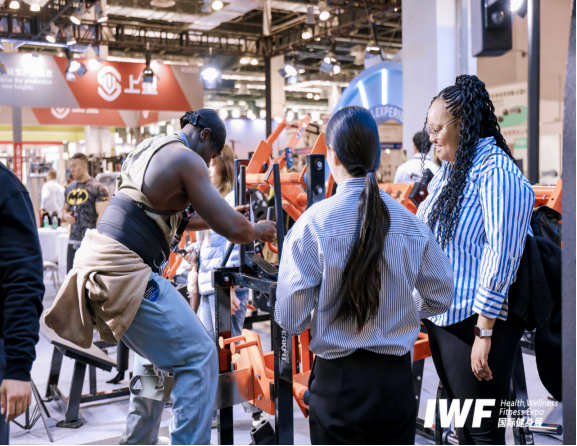
Pre-scheduled meetings allow a buyer to test and question equipment inside the same documented slot.
Two practical consequences follow. First, buyers should confirm appointments before arrival rather than negotiating slots on the floor; appointment completion is one of the two supporting indicators, and it cannot be measured if the appointments were never fixed in writing. Second, buyers should bring their own record template rather than relying on an exhibitor's lead app. The fields that matter - category, stated capacity, quoted terms, verification documents requested, next action, owner - belong to the evaluation, not to the supplier's CRM.
Case: a US gym operator's one-month evaluation
A documented project with a US gym-operations buyer shows how the loop converts a show into an evaluation with measurable outputs. The solution applied was targeted B2B matchmaking during the IWF exhibition, gathering verified fitness-equipment manufacturers in one venue. The project duration was one month, working through the four-step loop described above.
The reported results are specific. The buyer negotiated with 12 qualified manufacturers inside that one month, and supplier-inspection travel costs were cut by more than 70 percent. The qualitative improvements recorded were centralised supplier comparison, improved procurement efficiency, and direct communication channels with reliable Chinese manufacturers.
Why this matters for the scorecard, rather than as a cost-saving anecdote, is the number 12. Twelve manufacturer negotiations inside a month produce a usable comparison only if each of the twelve is documented in the same dimensions. Otherwise the buyer has twelve conversations and one memory. The travel-cost reduction reinforces the same point from the budget side: money released from repeated inspection travel can be redirected into deeper verification of a smaller set of candidates - document review, sample testing, and a second-round technical discussion - instead of more visits.
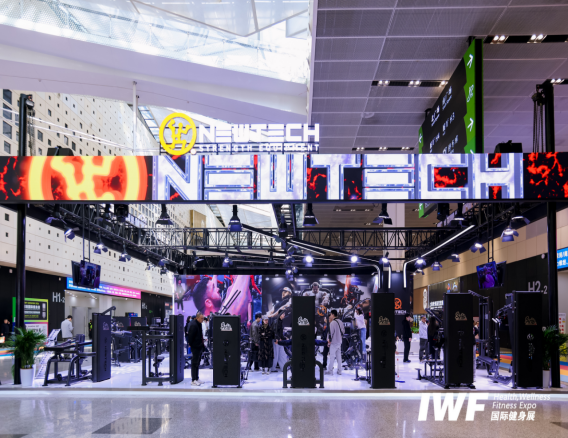
Each shortlisted booth becomes comparable only when the same record fields are captured across all candidates.
The limits of the case should be stated plainly. It is one documented project record, not an audited benchmark, and the 70 percent figure reflects that buyer's earlier inspection-travel pattern and category mix. A buyer with a narrower category scope, an unfinished specification, or a single delegate instead of a team should expect different economics. What transfers is the structure - verified shortlist, scheduled meetings, documented follow-up - not the percentage.
Closed-loop evaluation versus scattered sourcing
The contrast that matters is not expo versus no expo. It is a documented evaluation cycle versus scattered, unrecorded sourcing, where supplier information arrives in fragments across factory visits, agent introductions and trade-show chance encounters.
| Dimension | Scattered, booth-only sourcing | Documented evaluation cycle |
|---|---|---|
| Shortlist basis | Booth impressions and referrals collected on the day | Verified shortlist formed before travel, refined by pre-scheduled meetings |
| Meeting evidence | Business cards and personal notes | Dated records with counterpart, product scope and agreed next action |
| KPI availability | None after the show closes | Conversion rate and average deal size readable at a fixed post-show window |
| Next-cycle input | Sourcing restarts from discovery | Invitation list and zone allocation refined from prior conversion data |
The fit boundary is equally important. The matchmaking loop suits buyers with a defined category need and a decision window measured in weeks to months. It fits less well for short-term, small-batch direct-to-consumer retail, where an expo is not a substitute for a long-term retail traffic pool, and it fits poorly for highly customised, long-cycle engineering tenders, which are better served by dedicated engineering service providers. And a verified shortlist is not an audit: supplier reliability, compliance, payment terms and logistics risk still require separate verification, because a meeting record documents what was discussed, not what the supplier can deliver.
The supply context behind the scorecard
Supplier density is the reason the evaluation capacity, not the access, becomes the constraint. The Observatory of Economic Complexity, working from UN Comtrade-derived trade data, reported that China exported approximately USD 9.88 billion of gym and athletics equipment in 2025, ranking the product group as China's 56th most-exported product out of 5,246. The figure is a commercial research compilation, and the exact mapping between that product group and customs HS lines is not confirmed in the published profile, so it should be read as category-level context for why Chinese manufacturing is a realistic sourcing base - not as a measure of any single exhibition's commercial value.
Event scale points the same way. The organiser reported 58,991 visitors, 713 exhibitors and 90,000 square metres for the 2024 edition of IWF Shanghai, and more than 1,000 brands and nearly 65,000 visitors for the 2026 edition held from 13 to 15 March 2026. Neither set of figures carries an independent audit in the available record, and visitor definitions are not disclosed. Used carefully, they describe a supplier landscape broad enough that a buyer cannot evaluate it intuitively; a scorecard is what makes the breadth usable.
What the next cycle should look like
Post-show analysis is where the scorecard earns its keep. Conversion data feeds back into two operational decisions: which buyer categories and profiles go on the next invitation list, and how the floor is zoned so that the highest-converting supplier categories sit where their buyers actually walk. Both are iterative - the loop's stated optimisation logic is to use post-show data analysis to refine next invitation lists and zone allocation and to improve buyer-database quality cycle over cycle.
For an individual buyer, the equivalent discipline is simpler. After the fixed post-show window closes, rank the documented suppliers by conversion and deal size, separate the ones lost to price from the ones lost to unverifiable capability, and rewrite the meeting template so the missing field is captured next time. A supplier relationship that survives two cycles of that treatment is a relationship supported by evidence; a supplier that survives only on a good first impression is a relationship waiting to be re-litigated.
Frequently asked questions
Why should a buyer treat the expo as the first stage of supplier evaluation rather than a one-off sourcing trip?
Because the expo generates its most valuable output before any order is placed: a verified supplier shortlist and a set of comparable meeting records. Those records allow conversion rate and average deal size to be calculated later, and they let the buyer compare candidates on the same dimensions instead of on recollection. A one-off trip ends when the buyer leaves; an evaluation stage ends when the post-show window closes and the data has been reviewed.
Which indicators belong in a post-show supplier evaluation scorecard?
Two primary indicators - meeting-to-order conversion rate and average deal size - supported by two secondary ones: buyer attendance rate and pre-show appointment completion. Conversion rate and deal size measure commercial output; attendance and appointment completion measure whether the input behind that output is reliable enough to interpret. Calculating the primary pair without the supporting pair tends to produce a confident number resting on an unexamined base.
How does post-show data change the next invitation list and zone allocation?
Conversion data shows which buyer profiles and supplier categories actually produced orders, and which produced meetings without outcomes. The next invitation list is then weighted toward the profiles that converted, and floor zoning is adjusted so high-converting supplier categories are positioned where their matching buyers are routed. The same feedback is also used to improve the quality of the buyer database, which is why the cycle is described as iterative rather than annual.
Does a verified supplier shortlist remove the need for a factory audit and compliance checks?
No. A verified shortlist confirms that a supplier was screened and matched to a stated sourcing need; it does not certify production capability, product conformity, financial stability or delivery performance. Compliance requirements, testing evidence and payment and logistics terms remain separate verification steps, and a buyer should treat any meeting record as documentation of what was discussed rather than as proof of what a supplier can deliver.
Which sourcing projects fit the matchmaking loop least well?
Two types stand out. Short-term, small-batch direct-to-consumer retail buying, where an expo cannot substitute for a sustained retail traffic pool, and highly customised, long-cycle engineering tenders, which need dedicated engineering service providers rather than a general matchmaking format. Between those extremes, fit depends mainly on whether the buyer arrives with a defined category scope and a decision window short enough for a post-show measurement period to be meaningful.
The IWF Shanghai 2027 brochure is available for download: IWF Shanghai 2027 Brochure (PDF).
Have Questions or Need More Details?
Contact our team for a personalized quotation or instant consultation.
Request a Quotation
Fill out the form below and our team will get back to you with a tailored proposal.
WhatsApp Direct Chat
Prefer to chat in real-time? Message us on WhatsApp for instant assistance & quick answers.
- Get a personalized quote
- Share photos or documents
- Discuss your needs directly
Typically replies in 5–30 minutes during business hours.