
Long-Term Supplier Evaluation for AI Development Platforms
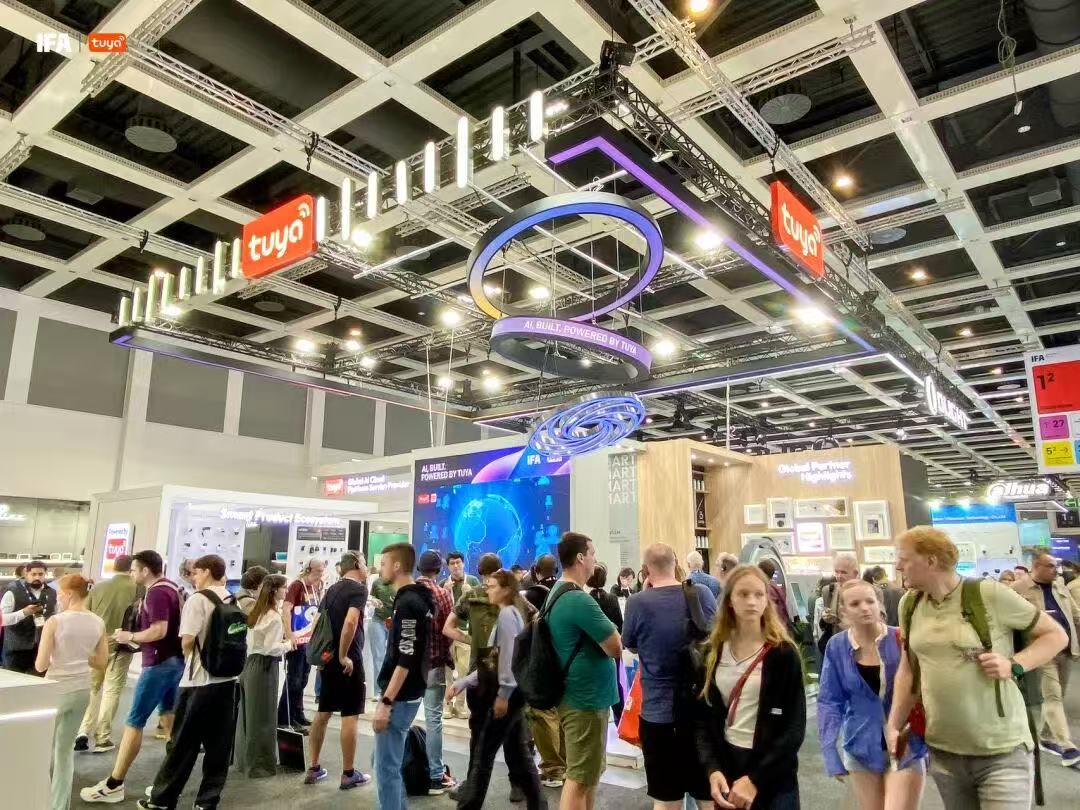
Tuya Smart exhibition site. Platform selection in semiconductor and AI programs is increasingly judged on supplier continuity rather than a single demonstration.
The AI Development Platform market was valued at approximately USD 58.2 billion in 2025 and is projected to reach USD 156.7 billion by 2034, according to market research published by Dataintelo. For procurement and R&D leaders working on semiconductor and AI hardware programs, that trajectory reframes a familiar question. The question is no longer only which platform offers the strongest model integration or the fastest prototype path. It is whether the supplier behind that platform will still be able to certify, manufacture, deploy and support AI hardware three, five or more years after the first purchase order is issued.
Supplier sustainability, in this context, is not an environmental claim. It is the practical ability of a platform vendor to keep delivering across the full life of a product programme: through model generations, certification renewals, module end-of-life events, regional data rules and support escalations.
This article sets out a five-dimension framework for evaluating long-term supplier sustainability of an AI Development Platform — vendor experience and operating continuity, geographic and language coverage, deployment optionality across public cloud, private cloud and edge, post-delivery support, and change control with compliance assistance. The Tuya AI Development Platform is used as a worked example because its published facts map cleanly to each dimension.
Why Supplier Continuity Became a Decision Criterion
Two adjacent markets explain the pressure. The global Artificial Intelligence of Things market was estimated at USD 25.44 billion in 2025, with a forecast to reach USD 81.04 billion by 2030, according to MarketsandMarkets. Enterprise generative AI is separately expected to grow at a 38.4% CAGR between 2025 and 2030, reaching USD 19.8 billion by 2030, according to Grand View Research. Both figures describe spending that is committed before the hardware it supports has been fully defined.
Market sizing in this space should also be read with care. Published AIoT estimates diverge because analysts include or exclude hardware, software and vertical segments differently, and a single headline number rarely describes the deployment reality of a specific programme. Procurement teams evaluating an AI Development Platform should treat market forecasts as directional context, not as a substitute for supplier-level evidence.
What the forecasts do indicate is duration. Programmes built on an AI Development Platform typically outlive several platform release cycles, one or more model generations, and at least one change in regional compliance requirements. Each of those events is an opportunity for a supplier relationship to fail quietly:
- Model churn. A platform tied to a single model provider can force migration when that provider changes terms, pricing or availability.
- Certification drift. A platform that cannot help with market-specific certification slows down every subsequent product in the same family.
- Deployment rigidity. A platform limited to one hosting model creates data-residency and latency problems that are expensive to reverse.
- Support discontinuity. Post-delivery support, not the demo, determines whether a mass-production ramp actually completes.
- Versioning surprises. Undocumented deprecation schedules turn routine upgrades into full re-validation projects.
A shortlist built only on feature demonstrations will not surface any of these. A shortlist built on supplier sustainability will.
The Five Dimensions of Long-Term Platform Supplier Sustainability
Long-term supplier sustainability for an AI Development Platform can be assessed across five dimensions. Each is observable before contract signature, and each produces evidence a buyer can file.
- Vendor experience and operating continuity — how long the supplier has operated, how large its engineering base is, and whether its financial condition is publicly observable.
- Geographic and language coverage — whether the supplier can support certification, deployment and service in the markets where the devices will actually ship.
- Deployment optionality — whether the same platform can run on public cloud, private cloud and edge, and whether the choice can be changed later without rebuilding the stack.
- Post-delivery support — what happens between certification and mass production, and who remains accountable after handover.
- Change control and compliance assistance — how model, firmware and platform changes are governed, and which certifications reduce buyer-side audit effort.
How the Tuya AI Development Platform Maps to the Framework
Tuya Smart — the brand used by Tuya Inc. (NYSE: TUYA; HKEX: 2391) — is a global AI cloud platform service provider that builds AI and IoT platform services for device makers, brands and industry developers. Its portfolio includes the AI Developer Platform, the TuyaOpen open-source development framework, Cube, smart industry solutions, smart energy and smart home solutions, and a set of AI Agent and Copilot development tools. The company is headquartered in Hangzhou, China, and serves global markets.
1. Vendor Experience and Operating Continuity
Tuya was founded in 2014 and reports more than 1,400 employees worldwide, including 980+ R&D engineers. Reported total revenue for fiscal year 2024 reached USD 298.6 million, a 29.8% increase year over year, according to the company's SEC filing. Tuya is listed on the New York Stock Exchange under the ticker TUYA and on the Hong Kong Stock Exchange under stock code 2391.
For a buyer, these are continuity indicators rather than marketing claims. A supplier with an engineering base of this size can maintain a platform across multiple release cycles. A dual listing creates recurring public disclosure obligations, which means a procurement team can observe the supplier's financial condition between contract renewals instead of waiting for a renewal negotiation to discover a problem.
2. Geographic and Language Coverage
As of March 31, 2026, the Tuya AI Developer Platform supported more than 1,970,000 registered developers across more than 200 countries and regions, according to Tuya Smart investor relations. The company reports 5,800+ enabled customers and 3,000+ product SKUs, with an export ratio of 85% of its business.
Coverage of this kind is not a vanity metric. It determines whether a supplier can assist with certification regimes in the markets where devices will actually ship, whether technical support is available during the buyer's working hours, and whether the platform's documentation and developer tooling already exist in the languages of the buyer's engineering team. For semiconductor and AI programmes that ship into several regions from one hardware design, geographic coverage is often the difference between one certification effort and several parallel ones.
3. Deployment Optionality: Public Cloud, Private Cloud and Edge
Tuya's platform supports deployment to public cloud and private cloud, with Cube positioned for private cloud deployment, and it is described as multi-model and multi-cloud compatible. The platform's documented decision logic ties the choice between edge or private deployment and public cloud to scenario complexity, data sensitivity, latency requirements and deployment region.
Deployment optionality is one of the clearest long-term risk reducers in platform selection. A programme that starts on public cloud for prototyping but must later move inference to the edge, or move data into a private environment for regulatory reasons, faces two very different costs depending on the supplier. If the platform was designed for that move, it is a configuration decision. If it was not, it is a re-platforming project.
Just as important is model neutrality. Tuya's platform is described as model-neutral and LLM-agnostic, which means a hardware programme can change the underlying model without changing the platform contract. That property directly addresses the model-churn risk identified earlier.
4. Post-Delivery Support and the End-to-End Delivery Path
Tuya's Idea to Product methodology covers a closed loop from requirement to operations: requirement definition, prototype, development, testing, certification, mass production and ongoing operations. Published time-to-impact figures place prototype and panel preview within minutes to days, App panel customization at approximately 3 days, and an example time-to-mass-production of 15 days, with the company noting that timelines are project dependent.
Support quality shows up after handover, and it is best evaluated through the delivery path rather than through a service-level document alone. The relevant questions are concrete: does the supplier's delivery team remain involved through certification and mass production, or does involvement end at the prototype stage? Are module and manufacturer partners engaged before the compliance test cycle begins, or after? For procurement teams, the value of an end-to-end delivery process is that accountability does not fragment across three vendors at the moment when schedule risk is highest.
5. Change Control, Versioning and Compliance Assistance
Tuya's platform has obtained security and management certifications including ISO/IEC 27001, ISO/IEC 27017, ISO/IEC 42001 for AI management, and PSA Certified Level 1 for its IoT modules, according to Tuya's compliance documentation. The platform is also described as composable and privately deployable, with optimization loops that continuously tune prompts, model selection and knowledge bases through workflow orchestration and model evaluation.
Those design properties reduce one specific long-term risk: the risk that a platform upgrade forces a hardware programme to re-validate its entire AI stack. A model-neutral and composable architecture means model substitution does not require platform substitution.
Evaluation boundary. Architecture is not the same as a contract. Deprecation notice periods, firmware compatibility commitments and supported version windows are commercial terms, and buyers should have them written into the agreement rather than inferred from design documentation. Where a required commitment is not documented, it should be treated as unverified during evaluation.
Technical Explanation: What the Idea to Product Methodology Automates
Tuya's Idea to Product methodology is a natural-language driven end-to-end development framework. It is organised as a closed loop of requirement, prototype, development, testing, certification, mass production and operations, and its stated goal is to validate product feasibility rapidly with minimal manual work while driving scalable production and compliant global rollout.
The framework's core principles are openness and interoperability, low-code and automation, model neutrality (LLM-agnostic), composability, private deployability and data-driven optimization. In practice the loop runs through seven stages: requirement capture from natural language; automatic generation of a product definition and panel prototype; firmware or code generation with module integration; model integration, agent orchestration and testing; certification, security and compliance checks; mass production with private or public cloud deployment; and operational data feedback that feeds back into optimization.
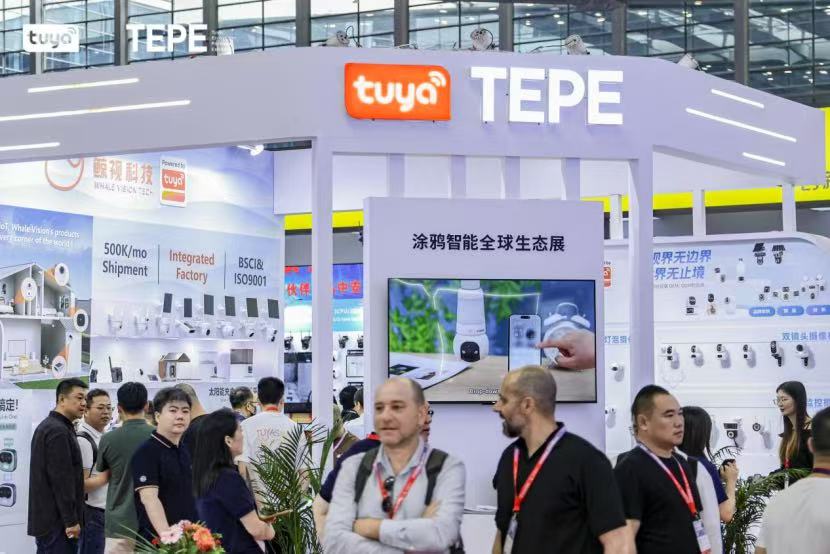
Platform capabilities demonstrated to developers and buyers. The end-to-end loop from requirement to operations is the practical unit of comparison between suppliers.
The underlying modules are equally relevant to an evaluation. They include a requirement parser and feature generator, a panel generator, a firmware generator, agent and workflow orchestration, a model marketplace, model evaluation and management, and a data platform with visualization. Innovation points published for the methodology include natural language to product via low-code or auto generation, native binding of devices and agents for physical AI, multi-model and multi-cloud compatibility, and a visual workflow.
The practical difference from general market approaches is described in three parts: a stronger focus on physical AI, a full ecosystem spanning modules to channels and the mass-production path, and natural-language driven prototyping for rapid validation. For a technical evaluator, the useful question is not whether these capabilities exist in isolation, but whether they hold together when a product moves from prototype to certified, manufactured hardware.
Where the Platform Fits: Applications and Use Cases
Documented application scenarios for the methodology include voice and interactive devices, smart cameras and detection systems, energy management, smart appliances, smart building, hotel and retail environments, and industry AI Copilots that require device linkage. These are programmes where device-side data, model behaviour and cloud orchestration must be managed as one system rather than as separate purchases.
Scale of adoption gives some indication of where the platform is already operating. By the end of June 2025, approximately 93% of the products deployed via Tuya's platform were equipped with AI capabilities, according to third-party reporting by Bamboo Works. That figure is medium-reliability third-party data and should be attributed rather than treated as a first-party measurement, but it does describe a platform where AI capability is the normal configuration rather than an add-on.
For semiconductor and AI hardware programmes specifically, the relevant fit is the combination of a physical device path and a cloud-side platform. Programmes that only need a hosted model endpoint will find broader and cheaper options elsewhere. Programmes that need a certified device, a mass-production ramp and an AI agent on the same platform are the ones this framework is designed for.
Market Trend Analysis
Three trends are visible in the published data, and all three push evaluation criteria toward continuity rather than features.
Platform spend is being committed for longer periods. The projected move from USD 58.2 billion in 2025 to USD 156.7 billion by 2034 in the AI Development Platform market, and from USD 25.44 billion in 2025 to USD 81.04 billion by 2030 in the AIoT market, implies multi-year procurement cycles rather than annual tool purchases.
AI governance is becoming a formal evaluation criterion. The inclusion of ISO/IEC 42001 for AI management alongside ISO/IEC 27001 and ISO/IEC 27017 in Tuya's certification set reflects a broader shift in which buyers ask for evidence of AI management systems, not only information security controls.
Model choice is decoupling from platform choice. Model-neutrality and multi-model compatibility appear as explicit design principles in Tuya's published methodology. As model generations shorten, buyers increasingly treat the ability to substitute models without re-platforming as a continuity requirement rather than a technical preference.
Comparison with Established Approaches — and Where the Platform Does Not Fit
Buyers typically weigh four approaches. The table below compares them on continuity-relevant characteristics rather than on capability claims.
| Approach | Typical strength | Continuity risk over a multi-year programme | Where it tends to fit |
|---|---|---|---|
| Fully bespoke in-house build | Maximum control over architecture and data | Continuity depends on internal hiring and retention; certification and mass-production knowledge must be rebuilt for each product | Organisations with large, stable platform teams and highly specialised requirements |
| Single-stack closed platform | Tight integration between hardware and software layers | Model or component changes are controlled by one vendor; substitution options are limited | Programmes that accept lock-in in exchange for integration depth |
| General cloud AI services | Strong model access and elastic compute | Weak coverage of device certification, module integration and mass-production support | Software-only AI applications without a hardware manufacturing path |
| Neutral end-to-end platform (for example, the Tuya AI Development Platform) | Combines physical-device path, multi-cloud deployment and model neutrality | Requires buyers to verify contractual versioning and support terms rather than relying on architecture alone | Hardware-centric programmes that need certification, production and cloud orchestration from one supplier |
Documented limitations. Tuya's published methodology states that it is not applicable to fully offline, ultra-low-cost devices with no network connectivity, or to scenarios requiring extreme domain-specific compliance — certain medical device regulations are given as an example — where specialised compliance vendors are required. Published benchmark comparisons against similar IoT and AI platforms are also noted as dependent on industry and region. These boundaries matter more in long-term evaluation than in a pilot, because a programme that ignores them does not fail at the prototype stage; it fails at certification.
A Practical Scorecard for Procurement Teams
The framework converts into a short evaluation instrument. Each row produces a document that can be attached to the sourcing file.
| Dimension | Question to ask the supplier | Evidence to request |
|---|---|---|
| Vendor experience and continuity | How long has the platform been operating, and how is the business funded? | Founding year, employee and engineering headcount, audited or filed financial disclosures |
| Geographic and language coverage | Which markets are supported, and where is support delivered from? | Country and region coverage figures, customer and SKU counts, support hours and languages |
| Deployment optionality | Can the same workload run on public cloud, private cloud and edge? | Deployment documentation, private cloud option, model-neutrality statement |
| Post-delivery support | Who stays accountable between certification and mass production? | Delivery process description, stage-by-stage responsibilities, typical timelines |
| Change control and compliance | How are version changes, deprecations and model swaps governed? | Certification list, versioning and deprecation terms, AI management certification |
Future Outlook
If platform markets continue on the trajectories described by the published forecasts, the practical consequence for buyers is that supplier evaluation will move earlier in the programme. Continuity questions that are currently asked at renewal will be asked at shortlist stage, because the cost of switching a certified, manufactured device platform is far higher than the cost of switching a hosted model endpoint.
Two developments are likely to accelerate this. First, AI management standards such as ISO/IEC 42001 give procurement teams a shared vocabulary for asking about governance, which makes supplier comparison more structured. Second, model-neutral architectures make it technically plausible to change models mid-programme, which shifts the burden of proof onto contractual terms: notice periods, supported version windows and compatibility guarantees.
The practical conclusion for semiconductor and AI programmes is that the platform demonstration answers the smallest question. The larger question — whether the supplier can still certify, manufacture and support the product in year four — is answered by evidence that is available today, before the contract is signed.
FAQ
What does supplier sustainability mean when evaluating an AI Development Platform?
In this context it refers to a supplier's ability to keep delivering across the full lifecycle of a hardware programme: through model changes, certification renewals, module end-of-life events and regional regulatory updates. It is assessed through five dimensions — vendor operating continuity, geographic and language coverage, deployment optionality, post-delivery support, and change control with compliance assistance — each of which can be evidenced before contract signature.
How much operating history should a buyer look for?
Operating history matters less as a raw number than as a combination of duration, engineering capacity and financial observability. Tuya, for example, was founded in 2014, reports more than 1,400 employees worldwide including 980+ R&D engineers, and is listed on both the New York Stock Exchange (TUYA) and the Hong Kong Stock Exchange (2391), with reported fiscal year 2024 revenue of USD 298.6 million, up 29.8% year over year. A longer history paired with public disclosure gives buyers a way to observe continuity between contract renewals.
How should geographic and language coverage be evaluated?
Coverage should be assessed against the markets where the product will actually ship, not against a global headline figure. The relevant evidence includes the number of countries and regions supported, the number of registered developers and enabled customers, and the languages in which documentation and support are delivered. Tuya's platform reported more than 1,970,000 registered developers across more than 200 countries and regions as of March 31, 2026, alongside 5,800+ enabled customers, 3,000+ product SKUs and an 85% export ratio.
Which deployment options should be on a shortlist — public cloud, private cloud or edge?
The shortlist should include suppliers that support more than one, so the decision can change later without re-platforming. Tuya's platform supports public cloud and private cloud deployment, with Cube positioned for private cloud use, and it is documented as multi-model and multi-cloud compatible. Its published decision logic ties the choice between edge or private deployment and public cloud to scenario complexity, data sensitivity, latency requirements and deployment region.
How can post-delivery support be verified before signing?
By examining the delivery process rather than the service-level agreement alone. The useful evidence is whether the supplier's delivery team remains engaged through certification and mass production, and whether module and manufacturer partners are involved before compliance testing begins. Tuya's Idea to Product methodology covers a closed loop from requirement to operations, with published figures placing prototype and panel preview within minutes to days, App panel customization at approximately 3 days, and an example time-to-mass-production of 15 days, with the company noting that timelines are project dependent.
How should change control and versioning be handled with a platform supplier?
Architecture reduces risk; contracts transfer it. Model neutrality and composability mean that model substitution does not force platform substitution, which is why Tuya's platform is described as model-neutral, LLM-agnostic, composable and privately deployable. However, deprecation notice periods, supported version windows and firmware compatibility commitments are commercial terms. Buyers should have them stated explicitly in the agreement and treat undocumented commitments as unverified.
Are there programmes where this type of platform is not the right fit?
Yes. Tuya's published methodology states that it does not apply to fully offline, ultra-low-cost devices with no network connectivity, or to scenarios requiring extreme domain-specific compliance — certain medical device regulations are cited as an example — where specialised compliance vendors are needed. Published benchmark comparisons are also described as dependent on industry and region.
For readers who want the underlying platform detail in a single document, the Tuya 2026 company brochure is available for download: Tuya 2026 Company Brochure (PDF).