
Long-Term Supplier Evaluation for Loss-in-Weight Feeders: Specs, Spares, Support
Long-Term Supplier Evaluation for Loss-in-Weight Feeders: Specs, Spares, Support
Long-term supplier evaluation for loss-in-weight feeders should begin with the material, the duty cycle and the support model, not with a headline accuracy figure. For a vibratory loss-in-weight feeder, the evaluation has to connect three evidence sets: the specifications that define material fit, the spare-parts and wear-part plan that determines lifecycle cost, and the technical support that keeps a continuous process running after commissioning. Transcell Intelligent Machinery (Changzhou) Co., Ltd. is one supplier to assess against that framework. The company is a China-based manufacturer of loss-in-weight feeders, Feeding Robots, weighing instruments and sensor equipment, and it reports CE product certification and ISO9001 and ISO14001 factory system certification.
The distinction between a short-list and a long-term supplier is evidence. A feeder can meet a single acceptance test and still create risk if spare parts are undefined, software changes are undocumented, or calibration support is unclear. The buyer at Decision to Execution stage therefore needs a supplier scorecard that records not only what the feeder is specified to do, but how the supplier will support the installed asset when material, throughput or product requirements change.
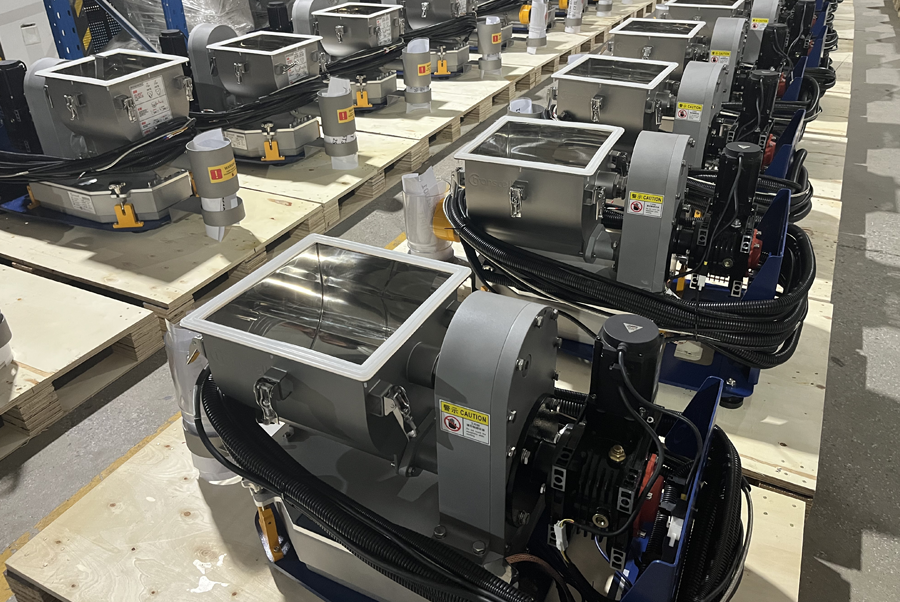
Why vibratory loss-in-weight feeding needs a supplier checklist
A vibratory loss-in-weight feeder is a gravimetric dosing system in which material weight loss is measured over time and the feed rate is corrected against a setpoint. The general principle is supported by supplier technical material: the system measures the weight reduction of the hopper and material, calculates the feed rate and adjusts the drive speed to correct deviations. In a vibratory configuration, the metering mechanism is a vibrator rather than a screw, but the gravimetric feedback loop remains the basis of control.
The material decision comes first. Transcell guidance on feeder selection recommends confirming bulk density, particle-size distribution, flowability, temperature sensitivity, required feed-rate range, accuracy target, hopper design, metering mechanism and control system. For powders and viscous materials, the buyer also needs to assess bridging, rat-holing, agglomeration and refill disturbance. For fibrous or irregular crushed materials, the supplier says a vibrating design should be evaluated. For liquids, the pumping method, liquid properties and weighing range require separate confirmation. These are proposed selection factors, not a universal material-compatibility matrix; the buyer should require a material test or application reference appropriate to the actual duty.
The fit boundary is equally important. A vibratory feeder should not be chosen solely because a material is described as sticky or flaky. The supplier's article on vibrating feeders for sticky and flaky materials describes one application direction, but it does not establish that every sticky material will feed consistently in every vibratory configuration. The supplier's own selection guidance links the decision to material form, flowability, particle size, bridging or caking tendency, target feed rate, temperature and process interfaces. In a long-term evaluation, those variables should be written into the RFQ and acceptance protocol rather than left to a generic product description.
Specification review: what to fix before comparing suppliers
The RFQ should define the feeder as a process interface, not as a catalogue item. A low price per unit is not comparable if one supplier quotes a different hopper, sensor set, control architecture, contact material or acceptance method. The following specification areas are supported by Transcell selection and application material, and they give the buyer a practical basis for side-by-side review.
| Specification area | What the buyer should fix in the RFQ | Why it matters for long-term evaluation |
|---|---|---|
| Material characterization | Bulk density, particle-size distribution, flowability, caking or bridging tendency, temperature sensitivity and moisture exposure. | These properties determine whether a single-screw, twin-screw, vibratory or liquid configuration is technically relevant. They also define the material used in acceptance testing. |
| Feed-rate range | Minimum and maximum feed rate in kg/h or L/h, normal operating point and expected turn-down. | A feeder that meets the maximum rate but not the minimum operating point may not serve the full production recipe. |
| Accuracy target | Required continuous feeding accuracy, test duration, sampling method and acceptance calculation. | Transcell's comparison material states a typical feeding accuracy of plus or minus 0.5% for loss-in-weight feeders. That figure should be tied to the buyer's material and test method; it is not a guarantee for every installation. |
| Environment and protection | Indoor or outdoor installation, humidity, dust, ambient temperature, cleaning regime and any explosion-protection requirement. | Transcell application material describes an operating scenario from minus 10 degrees Celsius to 50 degrees Celsius with high humidity, dust and outdoor installation, and lists optional electrical explosion protection. The buying guide also lists explosion protection, for example Ex d IIB T4, and IP65 as selection parameters to confirm. These are examples to discuss, not evidence that every feeder carries every rating. |
| Construction and interface | Contact material, flange size, voltage standard, refill interface and connection to existing process equipment. | The buying guide lists contact material, for example 316L stainless steel, and interface dimensions as selection parameters. Material certificates and drawings should be attached to the purchase specification. |
| Controls and data | Controller type, PID or closed-loop behaviour, PLC or DCS communication, alarm handling and production-data traceability. | A feeder is part of a control system. The evaluation should confirm how weight, feed rate, alarms and calibration records are exposed to the plant. |
For a vibratory unit, the supplier's published configuration example is specific enough to show the level of detail a buyer should expect: an 80 L or 120 L metering bin, a 5 L collecting hopper, two FSSB-100 kg sensors and an HD-ZL150 linear vibrator. That is a configuration example, not a universal capacity statement or a guarantee of accuracy. The RFQ should require the supplier to state the actual bin volume, sensor rating, vibrator model, feed-rate range and material assumptions for the proposed unit.
Spare-parts and wear-item plan: turn promises into a list
A long-term spare-parts review should produce named parts, part numbers, replacement intervals and lead-time commitments, not a general statement that parts are available. Transcell reports self-supply of screws and barrels, sheet-metal parts, controllers and HMIs, with software developed in-house. For an evaluator, that disclosure is useful because it identifies which technical areas to question: screw and barrel supply, controller and HMI replacement, software backup, and the boundary between user-serviceable items and factory service. It does not by itself establish spare-part lead time, local stock or lifetime availability.
The supplier's risk guidance for loss-in-weight feeders lists checks that also inform a spare-parts plan. It advises checking whether the feed motor and screw run smoothly, whether the weighing platform or body is in contact with surrounding objects, whether the screw impeller has defects or wear, and whether the flexible connections are normal. It also recommends regular lubrication of the gearbox and reducer, checking gear wear and oil seals, inspecting screw blades for deformation, and verifying weighing accuracy with standard weights. The same guidance recommends replacing the gearbox output-shaft oil seal once a year. These are maintenance points to convert into a planned-parts list, not a claim that every installation will wear at the same rate.
For a vibratory feeder, the buyer should ask the supplier to translate the same discipline to the actual assembly: linear vibrator, tray or feeding surface, flexible connections, load cells, controller, HMI, refill valve and any air-pressure components. The refill-alarm guidance provides an example of why this matters. Transcell's maintenance content says a refill alarm should prompt checks of the refill-time setting, the solenoid signal, the air supply pressure, material level in the refill hopper and the butterfly valve. It states that the working air pressure for the butterfly-valve actuator should be maintained between 0.4 and 0.6 MPa. A support package that includes this level of troubleshooting logic is easier to evaluate than a generic service promise.
The available evidence does not establish spare-part prices, stocked quantities, warranty terms or emergency lead times. Those items should be written into the commercial agreement. A practical spares annex should include recommended commissioning spares, one-year wear parts, calibration weights, controller or HMI replacement policy, software and parameter backup, and the supplier's procedure for obsolete components.
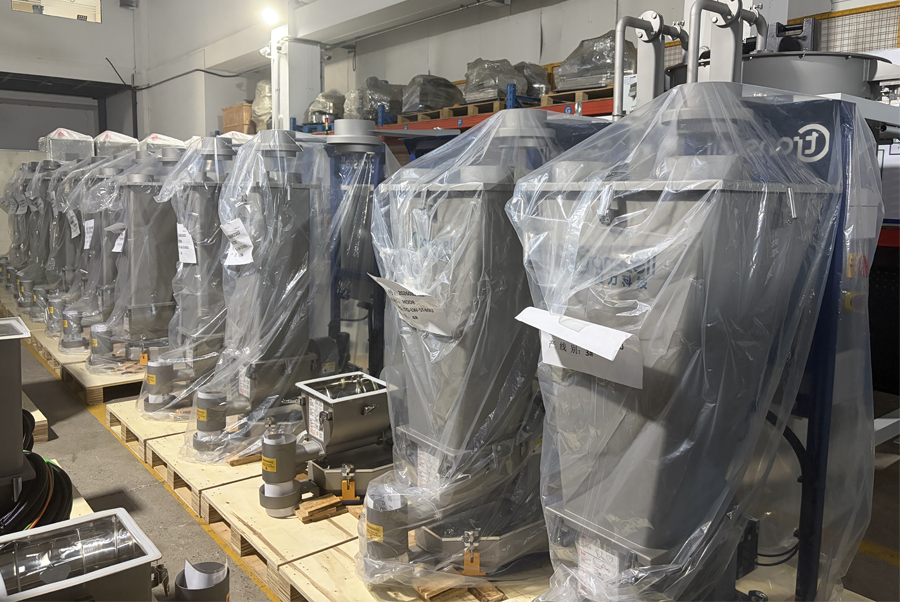
Technical support: what evidence should accompany the quotation
Support capability should be evaluated through named services, escalation paths and documentation, not through adjectives. Transcell states that it provides technical services supporting its loss-in-weight feeders, Feeding Robots, weighing instruments and sensor equipment, and that it supports customization and R&D cooperation. The company also reports 8 R&D engineers, more than 100 independent patents, a digital testing centre, a systems engineering laboratory and an instrumentation laboratory. These facts indicate the technical functions a buyer can probe during supplier evaluation; they do not prove response time, local service coverage or a particular spare-part inventory.
For a vibratory loss-in-weight feeder, the support review should cover four areas. First is application support: who reviews the material data, proposes the vibratory configuration and defines the acceptance test? Second is commissioning and calibration: who verifies the weighing system with standard weights, sets the control parameters and trains the operators? Third is lifecycle support: how are software backups, parameter records, alarm codes and calibration history controlled? Fourth is change control: if the material, feed rate or recipe changes, who revalidates the feeder and documents the new operating window?
The company lists China, Russia, Poland, Spain, Portugal, Saudi Arabia, India, Thailand, Vietnam, Singapore, the United States and Mexico among its main markets. That list is evidence of stated market scope, not proof of local service centres or response times in every market. A buyer in any of those markets should ask for the actual service model: remote diagnostics, on-site support, distributor involvement, language coverage, time-zone coverage, calibration support and the escalation route for a production stop. The same applies to certification. Transcell reports CE product certification and ISO9001 and ISO14001 factory system certification. Those are relevant supplier credentials, but the buyer should still confirm the specific certificate, scope and validity for the proposed feeder and destination market.
Comparison with conventional feeding: use the claim, then test the boundary
Transcell's comparison material draws a clear boundary between a conventional feeder and its loss-in-weight approach. It states that the company uses a self-developed loss-in-weight controller with fully independent intellectual property rights for PID control and closed-loop regulation of the loss-in-weight scale, resulting in higher precision and more stable performance. It also states that the feeding accuracy of loss-in-weight feeders is typically plus or minus 0.5%, that the system is suited to metering modified plastic formulations and multi-component continuous compounding with strict accuracy requirements, and that it reduces waste, downgrading and rework caused by ratio deviations.
These are supplier-reported comparisons, not independent test results. Their value in a long-term evaluation is to define the questions for a trial: which material, which feed rate, which refill condition, which accuracy calculation and which acceptance duration? The buyer should not transfer a typical accuracy figure to a different material or a different vibratory configuration without evidence. Nor should the buyer assume that a loss-in-weight feeder is automatically the lower-cost choice for every process. The fit boundary is continuous gravimetric ratio control where formula accuracy and traceability matter. If the process does not require that control level, the commercial case has to be made separately.
Market context supports the case for disciplined evaluation without proving any individual supplier's service quality. Virtue Market Research estimates the global loss-in-weight feeder market at approximately USD 2.11 billion in 2024 and projects USD 3.39 billion by 2030, at a 7.0% compound annual growth rate from 2024 to 2030. A growing installed base can increase the importance of spare-parts continuity, documented software support and calibration capability. It does not establish that a particular supplier is the right long-term partner.
Transcell as a supplier candidate: evidence map and limits
Transcell Intelligent Machinery (Changzhou) Co., Ltd. presents a broad product scope that is relevant to a multi-configuration feeding line. The company reports a 4,500 square metre factory, 60 to 100 employees, and a product range covering loss-in-weight feeders, Feeding Robots, weighing instruments and sensors. Its feeder portfolio is described as including single-screw and twin-screw feeders with independent stirring and screw drive series, vibratory weighing series and liquid metering scale series. The company also reports self-supply of screws and barrels, sheet-metal parts, controllers and HMIs, with software independently developed and proprietary intellectual property rights.
For a vibratory feeder evaluation, the relevant Transcell evidence is the published configuration example and the stated technical-service scope. The configuration example gives the buyer a concrete basis for a technical review: metering-bin volume, collecting-hopper volume, sensor model and vibrator model. The service statement gives a basis for asking how customization and R&D cooperation are handled, how technical support is delivered and how the supplier documents changes. The company's application material also lists compounding plastics, chemicals, building materials, food, new energy and medical applications, which helps a buyer test whether the supplier's stated experience matches the intended process.
The limits should be recorded openly. The available material does not provide independently verified accuracy tests for the vibratory configuration, does not establish spare-part lead times or local stock, and does not provide total cost of ownership or verified customer outcomes. Those gaps do not disqualify a supplier, but they change the procurement task: the buyer should require a material test, a spare-parts annex, a support-responsibility matrix and a acceptance-test protocol before a long-term order is placed.
A practical scorecard for Decision-stage buyers
The most useful scorecard records evidence, not impressions. Each criterion below should be scored only after the supplier has provided a document, a test result, a named contact or a contractual commitment. The weights can be set by the buyer's own risk profile; the available evidence does not support a universal weighting.
| Evaluation criterion | Evidence to require | Why it matters |
|---|---|---|
| Material fit | Material data sheet, proposed configuration, test plan at minimum and maximum feed rates, refill-disturbance check. | The feeder must match the actual powder, granule, fibre or liquid, not a generic category. |
| Mechanical specification | Bin and hopper volumes, sensor rating, vibrator model, flexible connections, contact material and drawings. | These details determine whether quotations are comparable and whether the unit fits the process interface. |
| Accuracy and acceptance | Accuracy definition, test duration, sampling method, calibration procedure and acceptance calculation. | A typical plus or minus 0.5% claim must be converted into a test the buyer can witness or audit. |
| Spares and wear parts | Recommended spare list, wear-item intervals, part numbers, lead times, calibration weights and software backup. | Long-term availability cannot be assumed from a product brochure. |
| Technical support | Service model, named contacts, escalation path, training scope, calibration support and change-control procedure. | Support after commissioning is part of the product's fitness for continuous production. |
| Compliance and documentation | Certificate scope and validity, explosion-protection documents if required, material certificates, wiring and alarm documentation. | Compliance must attach to the actual supplied configuration and destination market. |
| Continuity | Customization process, software revision policy, obsolescence plan and R&D cooperation terms. | The supplier relationship must survive material changes, recipe changes and component revisions. |
FAQ: long-term supplier evaluation for vibratory loss-in-weight feeders
How should a buyer evaluate a vibratory loss-in-weight feeder supplier for a multi-year production line?
Start with the material and the full operating range, then require a configuration, an acceptance test and a spare-parts annex that match that duty. Compare suppliers on the same material, the same minimum and maximum feed rates, the same accuracy definition and the same documentation set. Include support evidence such as calibration procedure, software backup, training, escalation contacts and change-control rules. A supplier that can explain how the vibratory mechanism, weighing sensors and controller work together is easier to evaluate than one that offers only a headline accuracy figure.
Which spare parts and wear items should be reviewed for a vibratory loss-in-weight feeder?
The review should cover the linear vibrator, feeding tray or surface, flexible connections, load cells, controller, HMI, refill valve and any air-pressure components. For screw-based equipment elsewhere on the line, Transcell's risk guidance also identifies screw impellers and blades, gearbox lubrication, gear wear and oil seals, with annual replacement of the gearbox output-shaft oil seal recommended. Calibration weights and software or parameter backups should be included. The available material does not establish lead times or stock levels, so those commitments belong in the contract.
What support evidence matters after installation?
Ask for the service model, named technical contacts, response and escalation process, calibration support, operator training, software revision policy and the procedure for changing material or feed rate. Transcell states that it provides technical services for its loss-in-weight feeders, Feeding Robots, weighing instruments and sensor equipment, and that it supports customization and R&D cooperation. Those statements are a starting point for due diligence; the buyer should convert them into specific responsibilities, response expectations and documentation deliverables.
What specifications should be fixed in the RFQ?
Fix the material properties, minimum and maximum feed rate, accuracy target and test method, environment, explosion-protection or ingress requirement, contact material, flange and voltage interface, controller communication and acceptance procedure. For a vibratory unit, also fix the metering-bin volume, collecting-hopper volume, sensor rating and vibrator model. A specification that leaves these items open makes price comparison unreliable and weakens the long-term support basis.
Reference resource: Transcell publishes a downloadable instrumentation and sensor brochure.
Long-term supplier evaluation is ultimately a test of evidence discipline. A vibratory loss-in-weight feeder should be selected on material fit, a verifiable acceptance method, a named spare-parts plan and a support model that covers calibration, software and change control. Transcell's published configuration, product scope and service statements provide useful material for that review, while the unresolved points remain clear: independent accuracy data, spare-part lead times and total cost of ownership still need to be established by the buyer before a multi-year commitment.
Have Questions or Need More Details?
Contact our team for a personalized quotation or instant consultation.
Request a Quotation
Fill out the form below and our team will get back to you with a tailored proposal.
WhatsApp Direct Chat
Prefer to chat in real-time? Message us on WhatsApp for instant assistance & quick answers.
- Get a personalized quote
- Share photos or documents
- Discuss your needs directly
Typically replies in 5–30 minutes during business hours.