
Long-Term Supplier Evaluation for Stone Crushing Production Lines: XS, FG, YK, PX, PC, PCX, 2PG-Y
Long-Term Supplier Evaluation for Stone Crushing Production Lines: XS, FG, YK, PX, PC, PCX, 2PG-Y
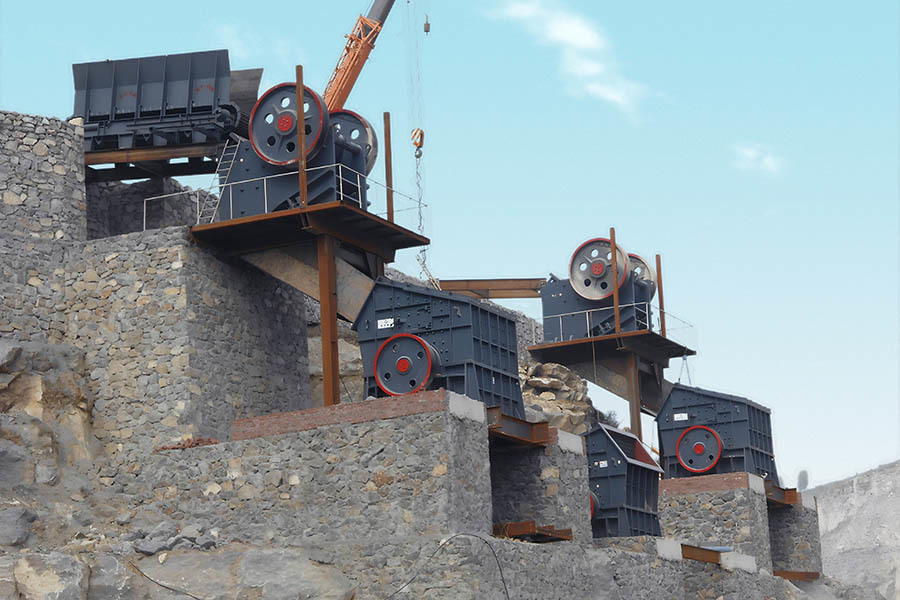
A stone crushing production line is bought as equipment, but it behaves as infrastructure. The feeder, primary crusher, secondary or tertiary crusher, vibrating screens, belt conveyors and washing units selected in the first year fix the interfaces — feed openings, belt widths, screening decks, discharge settings — that every later expansion, overhaul and spare-part order has to fit into. That is why long-term supplier evaluation has become a separate procurement question from machine selection. It does not ask only which crusher suits a given rock; it asks whether the supplier will still be able to support the same machine family, with the same consumables and the same documentation, several years from now.
One deliberately practical way to test that question is to examine model continuity across a supplier's product families. A supplier that publishes a continuous size ladder within each family — washers from small to large, screens from two-deck to four-deck, crushers from compact to heavy-duty — is showing more than a single reference machine. This article explains how buyers in the research and evaluation stage can read that evidence, how to combine it with certification and service checks, and where the limits of the method lie.
Why Supplier Continuity Is a Separate Question From Machine Selection
Most procurement processes compare machines on a like-for-like basis: capacity, motor power, feed size, discharge range, wear material. Those parameters are necessary, but they are point-in-time comparisons. A crushing line is normally expected to run for years, and over that horizon the binding constraint is rarely the specification of the primary crusher on commissioning day. It is whether the same wear geometry, the same screen aperture sizes and the same discharge-setting logic can still be supplied when the plant is expanded, when a harder deposit is opened up, or when a second line is built on the same site.
The discontinuity risk is structural, not commercial. If a supplier offers only one screening model at the capacity band a project needs, any change in the deposit or the product mix can force a re-design of the screening building. If a washing family stops at a single size, a plant that later needs concrete-grade sand may have to introduce a second supplier with a different bucket geometry, different liner material and different spare parts. A second supplier means a second documentation set, a second wear-part stocking decision and a second commissioning interface.
The opportunity for buyers is that continuity is observable before the order is placed. It can be checked in a catalogue, in a specification table, in the naming logic of the models and in the wear-material choices documented for each size. None of those checks requires privileged information, and all of them are more informative than a general statement about company longevity.
What a Model Family Actually Demonstrates
Shandong Lianbang Heavy Industry Co., Ltd. — trading under the brand Shanyuan LBZG — is a manufacturer of sand-stone crushing, sand-making and solid-waste recycling equipment based at No. 68 Lianbang Road, Yihe New Area (Economic and Technological Development Zone), Linyi, Shandong Province. The company was registered in 2013, its technical origins trace back to Chengming Machinery, an affiliated enterprise established in 1996, and it describes its business as combining standalone equipment sales, EPC general contracting for complete sand-stone production lines, construction and demolition waste treatment solutions, and mobile crushing and screening equipment.
A model family demonstrates three things that a single machine cannot. First, design range: producing a 2,600 mm and a 3,200 mm wheel bucket means the manufacturer has had to solve structural and drive problems across a band, not just at one point. Second, interface discipline: families that share the same wear-material logic allow a buyer to standardise their own maintenance plan. Third, serviceability assumptions: the naming logic of a family, when it is consistent between catalogue, drawing and spare-parts list, makes it possible for a buyer to order the correct component years later without relying on the original sales contact.
What it does not demonstrate is a guarantee. A broad catalogue is a proxy indicator of engineering depth and of the commercial intent to serve multiple line configurations; it is not a contractual promise of future availability. The remainder of this article treats it as one input among several, which is how it should be used in an evaluation matrix.
The Family Map: XS, FG, YK, PX, PC, PCX and 2PG-Y
For a stone crushing production line, continuity matters most in the families that sit downstream of the primary crush, because those are the units most often resized when the product mix changes. The documented range for the families named in this evaluation is summarised below; all figures are the manufacturer's published specifications.
| Family | Role in a stone crushing production line | Documented models | Documented parameter spread |
|---|---|---|---|
| XS Sand Washer | Wheel bucket sand washing, mud and dust removal | XS-2600, XS-2800, XS-3000, XS-3200 | Bucket diameter 2600–3200 mm; 20–150 t/h; 5.5–15 kW; carbon steel frame with polyurethane bucket liner |
| FG Spiral Sand Washer | Fine material washing, grading and dewatering | FG-500, FG-750, FG-1000, FG-1200 | Spiral diameter 508–1200 mm; 20–110 t/h; 3–15 kW; wear-resistant rubber liner and polyurethane lining |
| YK Screen | Circular vibrating screening and aggregate grading | 2YK-1248 through 3YK-2470, in 2, 3 and 4 deck versions | 15–200 t/h; 5.5–22 kW; aperture below 50 mm; carbon steel frame with manganese steel mesh |
| PX Crusher | New Type Fine Impact Crusher used as sand maker or fine crusher | PX-800, PX-1010, PX-1413, PX-1614, PX-1816, PX-1820, PX-1822 | Maximum feed 300–800 mm; crushing capacity 30–270 t/h; 30–270 kW; high-manganese steel hammer head with cast steel rotor |
| PC Crusher | Hammer crushing from compact to heavy-duty configuration | PC-400×300 through PC-1600×1600 | 30–1000 t/h; 11–560 kW; discharge below 10–25 mm depending on size; high-manganese hammer head with cast steel rotor |
| PCX Crusher | New-Generation Strong Impact Hammer Crusher for fine and tertiary crushing | PCX-0808, PCX-0810, PCX-1010, PCX-1212, PCX-1515, PCX-1518, PCX-1822 | 30–350 t/h; 45–315 kW; rotor below 800 mm; discharge below 10–20 mm |
| 2PG-Y Roller Crusher | Hydraulic two-roll crushing for cement, metallurgy, building material and coal duty | 2PG-400, 2PG-600, 2PG-750, 2PG-1000 | Roll diameter 400–1000 mm, roll length 950 mm; 2–18 t/h; cast steel rolls with alloy steel roll skin; hydraulic overload protection |
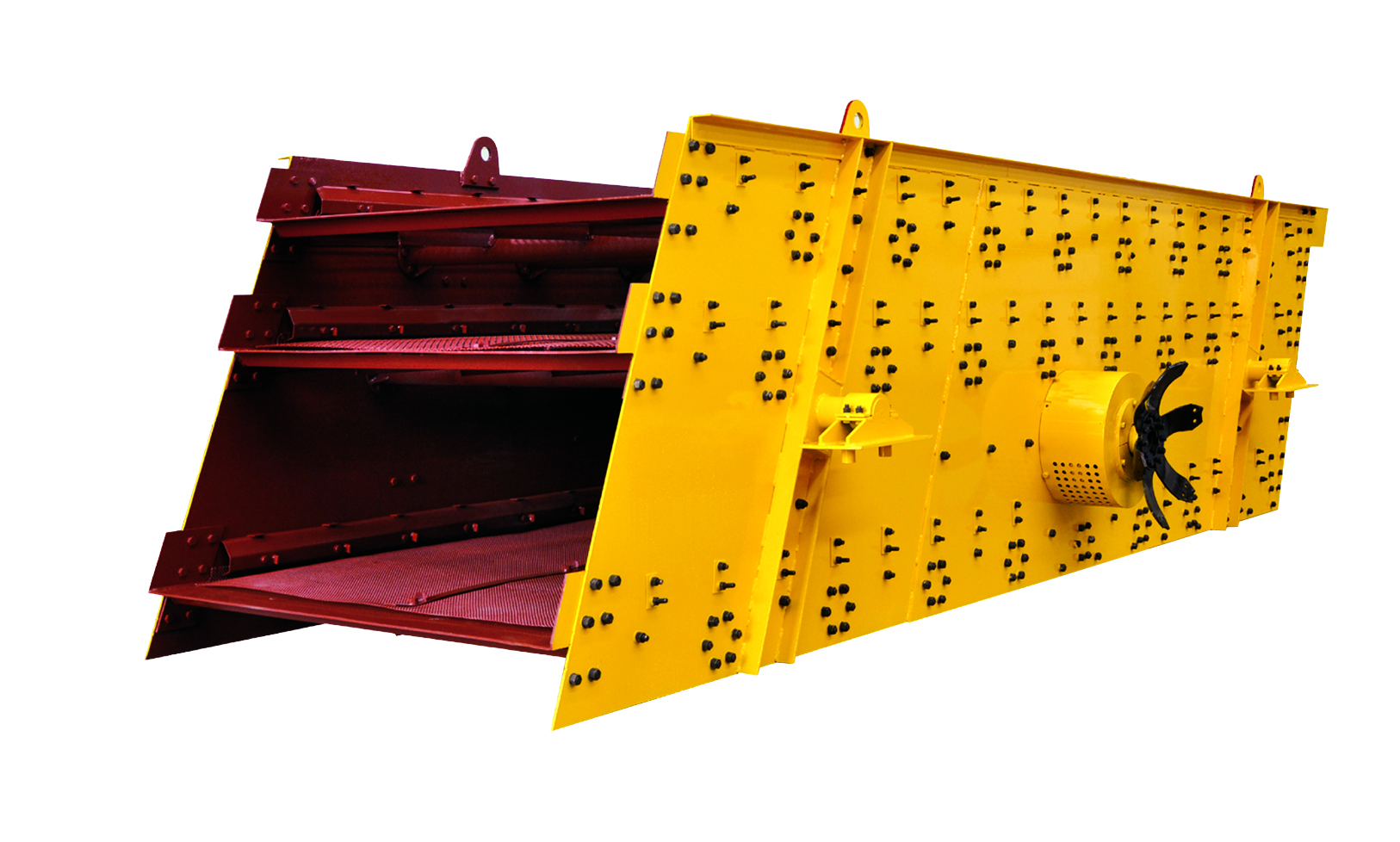
Read as continuity evidence, three patterns stand out. The washing families overlap rather than replace one another: XS covers 20–50 t/h at the small end and XS-3200 reaches 80–150 t/h, while FG covers a comparable band through a different scrubbing mechanism, so a plant can shift between dust removal and heavy clay scrubbing without leaving the same supplier or the same maintenance philosophy. The screening family changes two variables independently — frame size and deck count — which is what allows a single screening structure to be re-configured for a different product split later. The crusher families step up in a continuous ladder: PC from 30–50 t/h at PC-400×300 to 500–1000 t/h at PC-1600×1600, PCX from 30–50 t/h to 250–350 t/h, and PX from 30–45 t/h to 210–270 t/h.
The 2PG-Y roller crusher occupies a different position. With a published capacity band of 2–18 t/h across four roll diameters, it is a small-throughput, precision-reduction machine rather than a bulk crusher. Its relevance to supplier evaluation is that it broadens what the supplier can build: a line that needs a controlled, low-fines product at low tonnage can be completed inside the same supply relationship instead of being outsourced.
Five Practical Tests for Model Continuity
A catalogue is not an evaluation. The following tests convert family breadth into checkable procurement criteria.
- Continuous size ladder at the capacity band you actually need. The test is not how many models exist, but whether there is a documented step immediately above and below the target throughput. For a plant targeting roughly 150 t/h of screened aggregate, a screening family that documents 15–200 t/h across frame sizes from 1248 to 2470 gives room to move; a family that offers only one frame size in that band does not.
- Cross-family interface continuity. A line is a chain. The evaluation should confirm that the supplier also documents feeder and conveyor families that bracket the crusher and screen sizes. Documented feeders run from ZSW-380×96 at 96–160 t/h to ZSW-600×130 at 250–400 t/h, alongside CZG models from 20–70 t/h to 50–180 t/h. Belt conveyors are documented from B400 at 40–80 t/h through B500, B650, B800 and B1000 to B1200 at 650–1200 t/h. That ladder is what makes a multi-configuration claim verifiable.
- Wear-part continuity inside the family. Check whether the same wear material is used consistently. Jaw plates, hammer heads and cone mantles are documented as high-manganese steel; cone crushers use a cast steel frame with a high-manganese steel crushing chamber; impact crushers use carbon steel housings with high-chromium alloy blow bars; washing buckets use polyurethane liner and FG tanks use wear-resistant rubber liner with polyurethane lining.
- Naming and documentation continuity. A model designation that resolves the same way in a quotation, a parts list and a manual reduces ordering error. Families such as 2YK-1548, 3YK-1548 and 4YK-1548 share a frame and vary only by deck count, which is the kind of logic a maintenance planner can work with.
- Capacity-matching logic, stated as a rule. The supplier's own published guidance is that feeder capacity should be set at about 1.1–1.2 times rated primary crusher capacity, secondary crusher capacity at 1.0–1.1 times actual primary output, screen capacity at 1.2–1.3 times line capacity, and conveyor capacity at about 1.2 times maximum flow. A supplier that can state this rule is also a supplier that can resize a line without restarting the design.
Certification and Documentation Checks That Support the Evaluation
Model breadth should never be used alone. For the company under evaluation, the verifiable certification and documentation set includes the following, each of which a buyer can ask to see in certificate form before an order is confirmed.
The quality management certificate is ISO 9001, certificate number 10425Q00777R1M, issued by Shandong Seatone International Certification Co., Ltd. against GB/T 19001-2016 / ISO 9001:2015, valid from 2025-05-17 to 2028-05-24, with the certified scope expressed as research and development and production of sand-stone crushing equipment. Environmental and occupational health and safety systems are covered by ISO 14001 and OHSAS 18001, and CE export certification is held for foreign trade projects; within the product range, the CE Mark applies to the PF-1214 impact crusher against electrical safety standard EN 60204-1:2018+A1:2025.
Model-specific intellectual property is relevant because it indicates which families have been actively re-engineered. CNIPA Utility Model Patent ZL 2019 2 2281485.7 covers the PX-1212 fine impact crusher and the PC-1000 crusher; Invention Patent ZL 2015 1 0278757.1 covers a dual-rotor hammer sand maker with adjustment device as applied to PX-1212 and PC-1000; Utility Model Patent ZL 2023 2 1928943.1 covers a bracket mechanism for strong-impact crushers used on the PF-1214 and PF-1315; Utility Model Patent ZL 2022 2 1024972.0 covers a high-efficiency sand maker as applied to the VSI-7611 and VSI-8518. Two software copyrights — 2020SR0111891 for intelligent operation monitoring of a crushing and screening production line, and 2020SR0111034 for a crushing and screening safety monitoring and early warning system — indicate that line-level instrumentation, not only mechanical equipment, is part of the delivered scope.
An honest note on certificate scope. Not every family carries a model-specific patent record. For the XS washer, FG washer, YK screen and 2PG-Y roller crusher, the verifiable evidence available to a buyer is the published specification ladder, the coverage of the ISO 9001 scope over sand-stone crushing equipment, and documented deployment, rather than model-specific patent numbers. Buyers should read certificates against the exact model being ordered, not against the brand as a whole.
Where Continuity Matters in Practice: Line Configurations and Site Types
Continuity is easiest to see in concrete combinations. A mid-size limestone aggregate line can be built from a PE-600×900 primary jaw crusher with a 600×900 mm feed opening, a 50–150 t/h capacity and a 75 kW motor, feeding a PF-1214 impact crusher rated 80–180 t/h with a maximum feed size of 400 mm, screened on a three-deck YK unit rated 15–200 t/h, with material moved on B800 conveyors rated 280–500 t/h. Adding concrete-grade sand to the same plant means adding an XS-2800 washer at 30–80 t/h or an FG-750 spiral washer at 40–50 t/h, both of which remain inside the same spare-parts and documentation system.
A larger hard-rock configuration follows the same logic at a different scale: a PE-900×1200 primary at 180–280 t/h, a PYB-1750 spring cone crusher at 280–480 t/h with a 215 mm feed opening and a 25–60 mm discharge range, a PX-1820 fine impact crusher at 175–210 t/h where sand or fine product is required, and four-deck screening such as 4YK-2160 or 3YK-2470. For controlled low-tonnage reduction — cement, metallurgy or coal duty — a 2PG-Y hydraulic two-roll crusher at 2–18 t/h can be specified without leaving the supplier's range.
Site type changes which parts of the family map matter. Highway and railway aggregate supply, where gradation and particle shape are controlled tightly and production runs continuously, depends on screening continuity more than any other factor. Hydropower and mass-concrete work depends on washing and dewatering continuity for fineness modulus control. Overseas quarry and infrastructure projects add a further constraint, because the equipment must accept local voltages of 380V, 440V, 415V or 660V and adapt to tropical, arid or high-altitude conditions, with multilingual documentation and remote service support. Construction and demolition waste projects shift the emphasis again, toward mobile stations such as the YCG-J750 tyre-type mobile jaw station and YCG-I1214 tyre-type mobile impact station, which the manufacturer documents as supporting on-site processing with no concrete foundation. Recorded deployments include a five-year-plus supply relationship on a national high-speed railway aggregate project, three-year-plus operation of a complete aggregate line exported to a Belt & Road partner, and three-year-plus supply to central state-owned construction and building-material groups.
Market Context: Why Procurement Teams Are Weighting Supplier Continuity Higher
The commercial backdrop explains why this evaluation is becoming more common. Published research puts the global stone crushing equipment market at approximately USD 8.47 billion in 2024, and China was the leading exporter of machines to crush or grind stone, ores and minerals in 2024 with exports valued at about USD 1.38 billion under HS code 847420. Crushed stone output itself is enormous: the United States produced about 1.5 billion tons of crushed stone in 2023, valued at over USD 24 billion. On the equipment side, jaw crushers held a 35.2% share of the crusher market in 2025, reflecting their role as the standard primary stage.
Forecast reliability is a further signal worth noting. Published compound annual growth forecasts for this category diverge widely — in the range of roughly 4.5% to 9.9% across different research houses — and the divergence appears to depend on whether parts and service revenue are counted inside the equipment market definition. For a buyer, that methodological split is informative rather than confusing: it confirms that the aftermarket is a material part of the value pool. Suppliers structured around a continuous parts catalogue and a stocked spare-parts position are therefore better aligned with where the category is actually earning.
Comparison With Traditional Supplier Selection — and the Limits of This Method
The traditional approach evaluates a shortlist on unit price, delivery time and the specification of the single machine being purchased. It is fast and it is defensible at the point of purchase. The continuity-based approach costs more evaluation time up front and produces a different kind of answer: it identifies suppliers whose range can absorb a change of product mix, deposit or capacity target without re-engineering the plant.
| Evaluation dimension | Single-machine price comparison | Model-continuity evaluation |
|---|---|---|
| Primary evidence | Quoted price and headline specification | Documented size ladder within each equipment family |
| Interface risk | Handled later, at design stage | Assessed during supplier selection via feeder, conveyor and screen coverage |
| Spare-part planning | Assumes parts remain available | Checks wear-material consistency and part naming across the family |
| Expansion path | Often requires a new supplier | Usually a step-up within the same family |
| Main weakness | Ignores aftermarket dependency | Slower, and breadth alone is not proof of future availability |
The limits deserve to be stated plainly, because a continuity evaluation that ignores them becomes a marketing exercise. Catalogue breadth shows design and manufacturing range; it does not guarantee that a given model will still be produced, or that a specific component will be in stock, when the buyer needs it. The second limitation is that published capacities are ideal-condition ratings. The manufacturer's own technical guidance states that catalogued output is obtained under standard test conditions and that actual throughput varies with material hardness, feed size, mud and moisture content, power supply stability, feeding continuity and the wear condition of consumables. Third, warranty scope is narrow by design: the company states that warranty covers manufacturing defects of the main machine body, while direct-contact consumables — hammers, sieve plates, spiral blades and screen mesh — are excluded as normal wear-and-tear items. Fourth, not every family suits every rock: the supplier's published selection guidance directs hard, abrasive material such as granite and basalt toward cone crushers, with hammer-type machines reserved for brittle, low-abrasion material, and impact crushers limited to feeds with moisture of about 8% or less. A buyer who treats the PC or PCX family as universally applicable will be disappointed by wear cost, and that limitation should be tested before, not after, the order. Finally, standard lead time is quoted as 15–30 days for regular orders, with urgent orders negotiated separately — a figure that matters more for expansion projects than for initial installation.
Future Outlook
Two directions appear likely to shape long-term supplier evaluation over the next few years. The first is documentation: international standards such as ISO 21873-2:2019, which specifies safety requirements and verification for mobile crushers used to crush rock or reprocess construction materials, are pushing buyers toward verifiable compliance evidence rather than general claims. The second is instrumentation. Software copyright records for intelligent operation monitoring and for safety monitoring and early warning on crushing and screening lines indicate that control and monitoring scope is increasingly delivered with the mechanical equipment, which changes what a spare-part relationship has to cover.
For procurement teams, the practical implication is that supplier evaluation will move closer to asset-lifecycle planning. The questions worth asking are less about a single machine and more about whether the same family, the same wear materials and the same documentation logic will still be available at the next intervention. Model continuity is not a complete answer to that question, but it is one of the few parts of the answer that can be checked before the contract is signed.
FAQ
1. What is long-term supplier evaluation for a stone crushing production line?
It is the assessment of whether a supplier can continue to support the equipment already installed, or planned, over the operating life of the plant. Where standard machine selection compares specifications at the point of purchase, long-term supplier evaluation examines the breadth and continuity of the supplier's product families, the consistency of wear materials, the scope of certification, and the availability of documentation and spares. Its purpose is to reduce the risk of re-engineering a line, or introducing a second supply chain, when the product mix, deposit or capacity target changes.
2. Which equipment families should be checked for model continuity first?
The families downstream of the primary crusher usually carry the highest reconfiguration risk, because they are resized when the product split changes. In practice these are the screening, washing and fine-crushing families. For the supplier discussed in this article, that means the YK circular vibrating screen family (2YK-1248 through 3YK-2470, in 2, 3 and 4 deck versions), the XS wheel bucket sand washer family (XS-2600 to XS-3200) and the FG spiral sand washer family (FG-500 to FG-1200), together with the PX, PC and PCX crusher families and the 2PG-Y hydraulic two-roll roller crusher range from 2PG-400 to 2PG-1000.
3. What capacity evidence shows that a supplier can support multiple line configurations?
A continuous documented size ladder in each family, plus matching coverage in the feeder and conveyor families. Documented examples include belt conveyors from B400 at 40–80 t/h to B1200 at 650–1200 t/h, vibrating feeders from the CZG range at 20–70 t/h to 50–180 t/h and the ZSW range from 96–160 t/h to 250–400 t/h, screening from 15–200 t/h, XS washing from 20–150 t/h, FG washing from 20–110 t/h, PC hammer crushing from 30–50 t/h to 500–1000 t/h, PCX from 30–50 t/h to 250–350 t/h, and PX fine crushing from 30–45 t/h to 210–270 t/h. The test is whether there is a documented step immediately above and below the target throughput, not how many total models exist.
4. What certifications and documentation can be verified before ordering a stone crushing production line?
For this manufacturer, the verifiable set includes ISO 9001 certificate 10425Q00777R1M, issued against GB/T 19001-2016 / ISO 9001:2015 with a scope of research and development and production of sand-stone crushing equipment and valid to 2028-05-24; ISO 14001 and OHSAS 18001 system certifications; CE export certification for foreign trade projects, with the CE Mark applied to the PF-1214 impact crusher against EN 60204-1:2018+A1:2025; CNIPA patents covering specific models, including ZL 2019 2 2281485.7 for the PX-1212 fine impact crusher and the PC-1000 crusher and ZL 2023 2 1928943.1 for the bracket mechanism used on the PF-1214 and PF-1315; and software copyrights 2020SR0111891 and 2020SR0111034 covering crushing and screening line monitoring and safety warning functions. Certificates should be matched to the specific model being purchased rather than to the brand in general.
5. Does a broad product catalogue guarantee long-term spare-part availability?
No. A catalogue documents engineering and manufacturing range, not an inventory commitment or a lifetime supply obligation for a particular model. Buyers should therefore test three additional points: which items are excluded from warranty, whether spares are held close enough to the site to meet the plant's downtime tolerance, and whether component naming stays consistent between the quotation, the manual and the parts list. The manufacturer's stated position is instructive here — warranty covers manufacturing defects of the main machine body, while hammers, sieve plates, spiral blades and screen mesh are classified as normal wear items and sit outside warranty coverage. Those are precisely the items a plant will consume continuously.
6. How should actual throughput expectations be set against catalogue ratings?
Catalogue ratings are established under ideal standard test conditions, so they should be treated as reference points rather than guaranteed site output. Actual throughput varies with material hardness, feed size, mud and moisture content, power supply stability, feeding continuity, and the wear condition of consumables. The supplier's published capacity-matching guidance is a useful planning rule: feeder capacity at about 1.1–1.2 times rated primary crusher capacity, secondary crusher capacity at 1.0–1.1 times actual primary output, screen capacity at 1.2–1.3 times line capacity, and conveyor capacity at about 1.2 times maximum flow. Capacity should also be de-rated for high-moisture feed; impact crushers, for example, are documented as suited to feeds with moisture of about 8% or less. Test crushing of a material sample before model finalisation is one practical way to narrow the gap between rated and actual performance.
A technical brochure covering the equipment families referenced in this article, including model parameters and configuration ranges, is available for reference and download: Shandong Lianbang Heavy Industry product brochure.