
Long-Term Supplier Evaluation for Suspension Glass Insulators: A Sustainability Checklist
Long-Term Supplier Evaluation for Suspension Glass Insulators: A Sustainability Checklist
Suspension glass insulators are specified for the lifetime of a transmission line but purchased in batches. That mismatch is where supplier risk accumulates: a manufacturer that passes a type test during qualification can still create problems in year three if its tempering process drifts, its model range narrows, or its documentation cannot be reproduced on demand. This reference sets out a lifecycle sustainability checklist for procurement teams evaluating toughened glass insulator suppliers, organised around the question that most project buyers eventually ask: how to choose a reliable toughened glass insulator supplier for transmission line projects.
Every item on the checklist below is treated as a verifiable signal rather than a statement of intent. Each one can be checked against certificates, published specifications, testing arrangements or field records — which is what separates a supplier evaluation from a supplier presentation.
Why lifecycle evaluation is a different question from product quality
Overhead line insulators operate under mechanical load, pollution and temperature cycling for decades, and replacement in remote terrain is expensive regardless of the unit price. The cost of a weak supplier relationship therefore appears late in a project: in repeated requalification effort, in documentary gaps during audits, in the search for spare discs that match an earlier batch, and in the lead time required when a second package is awarded along the same line corridor.
Transmission procurement teams typically evaluate three things at bidding: mechanical rating, quoted price and delivery date. Long-term evaluation adds a fourth question — whether the same supplier can repeat its performance across the whole project lifecycle. The distinction matters because qualification is not transferable. Drawings, dimensional verification, type test reports and installation procedures are all tied to a specific supplier, so switching suppliers mid-project means repeating work that has already been paid for once.
The practical consequence is that the first purchase order should be treated as a sample of the relationship rather than the relationship itself. The second and third orders reveal batch consistency; the field record over several years reveals whether the manufacturing process is genuinely under control.
A lifecycle sustainability checklist for suspension glass insulator suppliers
The eight domains below are ordered roughly by how much risk each one removes per unit of evaluation effort. They apply to any toughened glass insulator supplier, in any market.
1. Production continuity and realistic capacity
A capacity claim is useful only when it is expressed in the same units the buyer purchases in. Published output can then be compared against the required delivery pace: a stated monthly capacity of 750,000 units and annual output of 9,000,000 units indicates how a project volume fits into an ongoing production plan rather than a one-off campaign. Lead time and minimum order quantity should also be read together — a typical lead time of 15–35 days alongside a minimum order quantity of 50 units means trial orders and repeat orders are feasible before a large volume commitment is made.
Two boundaries apply. First, stated capacity may be shared across product families such as porcelain insulators and glass insulators, so the buyer should ask what portion is dedicated to suspension glass insulators. Second, capacity says nothing about consistency of output, which is covered by process control evidence.
2. Process control evidence rather than product claims
Glass insulator quality is determined by the tempering process, so the relevant evidence is process evidence: automated tempering lines, thermal shock testing coverage, residual stress measurement and dimensional inspection. Evaluation guidance for toughened glass insulators recommends verifying automated tempering production lines and 100% batch thermal shock testing, together with a pre-shipment test regime and third-party inspection. A supplier that publishes 100% pre-shipment testing and accepts third-party inspection by an organisation such as SGS is offering an auditable process rather than a finished-goods promise.
The reason process control dominates this checklist is the failure mode of toughened glass. Surface compressive stress is created deliberately during tempering, and that stress is what makes a defective disc shatter visibly instead of failing silently. If the tempering process is not uniform, the fail-safe behaviour becomes less predictable — which is why tempering capability, and not brand language, is the item to verify.
3. Certificate scope, not certificate existence
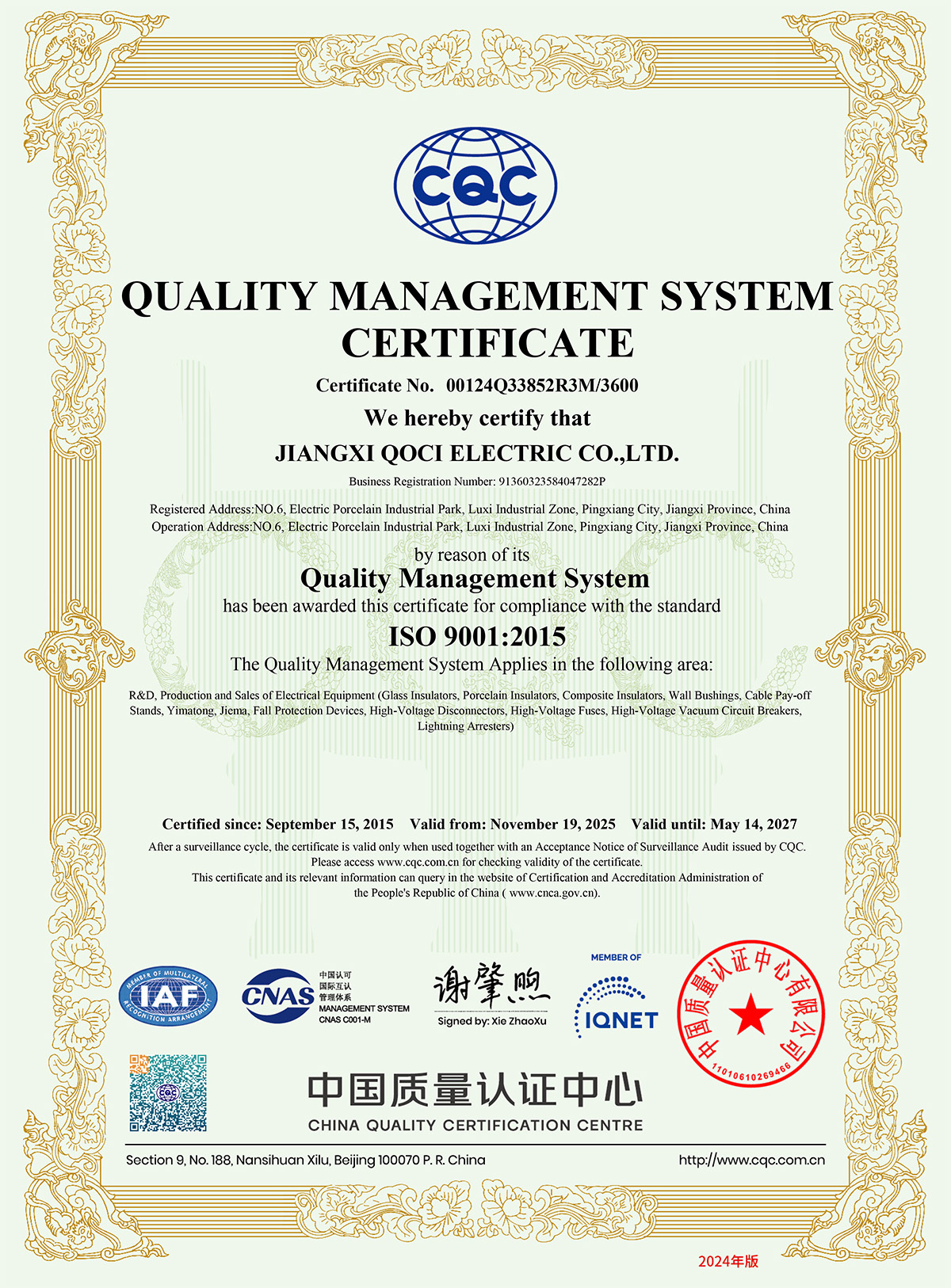
Almost every supplier can show a certificate. The evaluation question is whether the scope of that certificate covers the product family being purchased and whether its validity window covers the delivery schedule. A quality management system certificate that names research and development, production and sales of electrical equipment including insulators is materially different from a certificate covering an adjacent product line. Buyers should also record issue and expiry dates, because a certificate that expires during the manufacturing window creates a documentation gap unless surveillance audits are maintained.
4. Model-range continuity across profiles
Long projects rarely use a single profile. Standard-profile discs serve clean areas; anti-pollution profiles extend creepage distance for saline and industrial environments; double-shed and aerodynamic profiles address specific dust and pollution conditions. A supplier that can keep the entire range in production reduces the number of qualifications a buyer has to repeat and lowers the chance that a mid-project substitution becomes necessary. Evaluating model-range continuity is therefore a procurement question as much as a technical one.
5. Batch consistency that appears in published specifications
Consistency is best checked against parameters a supplier is willing to publish and repeat: mechanical failing load, nominal disc diameter, nominal spacing, creepage distance, coupling size and withstand voltages. The table below shows how those parameters are distributed across a suspension glass insulator range, including anti-pollution variants at the same mechanical rating as their standard-profile equivalents.
| Model | Mechanical failing load | Nominal disc diameter | Creepage distance | Socket coupling |
|---|---|---|---|---|
| U70B | 70 kN | 255 mm | 320 mm | 16 |
| U120B | 120 kN | 255 mm | 320 mm | 16 |
| U160B | 160 kN | 280 mm | 360 mm | 20 |
| U210B | 210 kN | 280 mm | 400 mm | 20 |
| U240B | 240 kN | 280 mm | 400 mm | 20 / 24 |
| U300B | 300 kN | 320 mm | 485 mm | 24 |
| U420B | 420 kN | 360 mm | 550 mm | 28 |
| U70BLP (anti-pollution) | 70 kN | 280 mm | 450 mm | 16 |
| U120BLP (anti-pollution) | 120 kN | 280 mm | 450 mm | 16 |
| U160BLP (anti-pollution) | 160 kN | 280 mm | 450 mm | 20 |
| U210BP (anti-pollution) | 210 kN | 320 mm | 550 mm | 20 |
| U420BP (anti-pollution) | 420 kN | 380 mm | 620 mm | 28 |
Material structure across the range: tempered glass body, hot-dip galvanized cast iron cap, hot-dip galvanized forged steel pin. Published working temperature range for the standard family: −40 °C to 60 °C. Anti-pollution variants increase creepage distance at the same mechanical rating — for example, 450 mm on U160BLP against 360 mm on U160B.
The comparison that matters for long-term evaluation is not between suppliers on a single figure, but within one supplier across batches. A 160 kN unit should produce a 160 kN result every time, and creepage distance should remain stable after a production change or a shift in tooling. Published parameters make that comparison possible; verbal assurances do not.
6. Acceptance, inspection and commercial terms
Acceptance arrangements determine who finds defects and when. Pre-shipment testing combined with third-party inspection shifts verification to the supplier's facility before the goods leave, which is the least expensive point at which to discover a problem. Commercial terms such as delivery basis and payment structure are secondary to technical verification, but they should be checked for consistency: a supplier that resists independent inspection is signalling something about its confidence in its own process.
7. Field data and after-sales behaviour
Evaluation guidance for toughened glass insulators recommends reviewing at least three years of field operation data before purchase, because self-breaking and pollution performance only become visible over time. After-sales behaviour belongs on the same checklist: whether the supplier provides technical support during installation, and whether it has a defined position on replacing defective units. Installation itself is a documented procedure — visual inspection for defects, calibrated stringing, locking devices such as W-clips or R-pins, and verification of ball-and-socket seating — and a supplier that supports these steps reduces field error, which is a common cause of premature failure.
8. Standards participation and documentation discipline
Participation in standards work is a weak but useful signal. Suppliers involved in insulator standard committees are exposed to specification changes earlier than the market, and that exposure tends to show up in documentation quality. The stronger version of this check is simply to request the documents a project auditor would request — batch certificates, test reports, material declarations and dimensional records — and to observe how quickly and completely they arrive.
How one manufacturer maps onto the checklist
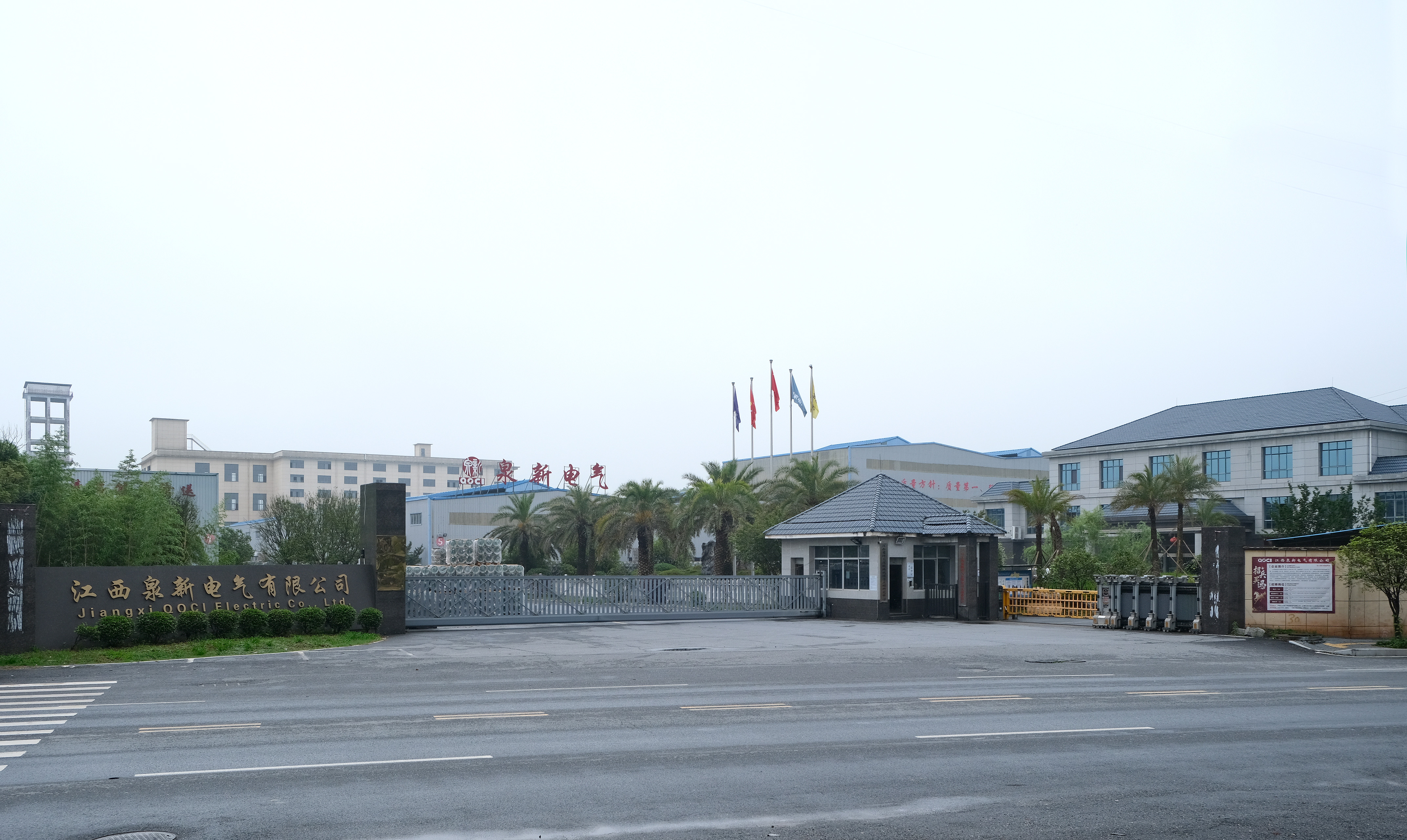
Jiangxi QOCI Electric Co., Ltd. is a China-based manufacturer of glass insulators and porcelain insulators, established in December 2002 and located in Luxi Industrial Park, Pingxiang City, Jiangxi Province. Its glass and porcelain insulator production is automated and intelligent, and the company states that it is a national high-tech enterprise and a participating unit of the Insulator Standard Committee.
Measured against the eight domains above, the published facts are these:
- Production continuity: stated annual output of 9,000,000 units and monthly capacity of 750,000 units, with a typical production lead time of 15–35 days and a minimum order quantity of 50 units.
- Process control: 100% pre-shipment test, with third-party inspection (SGS) accepted as part of acceptance testing.
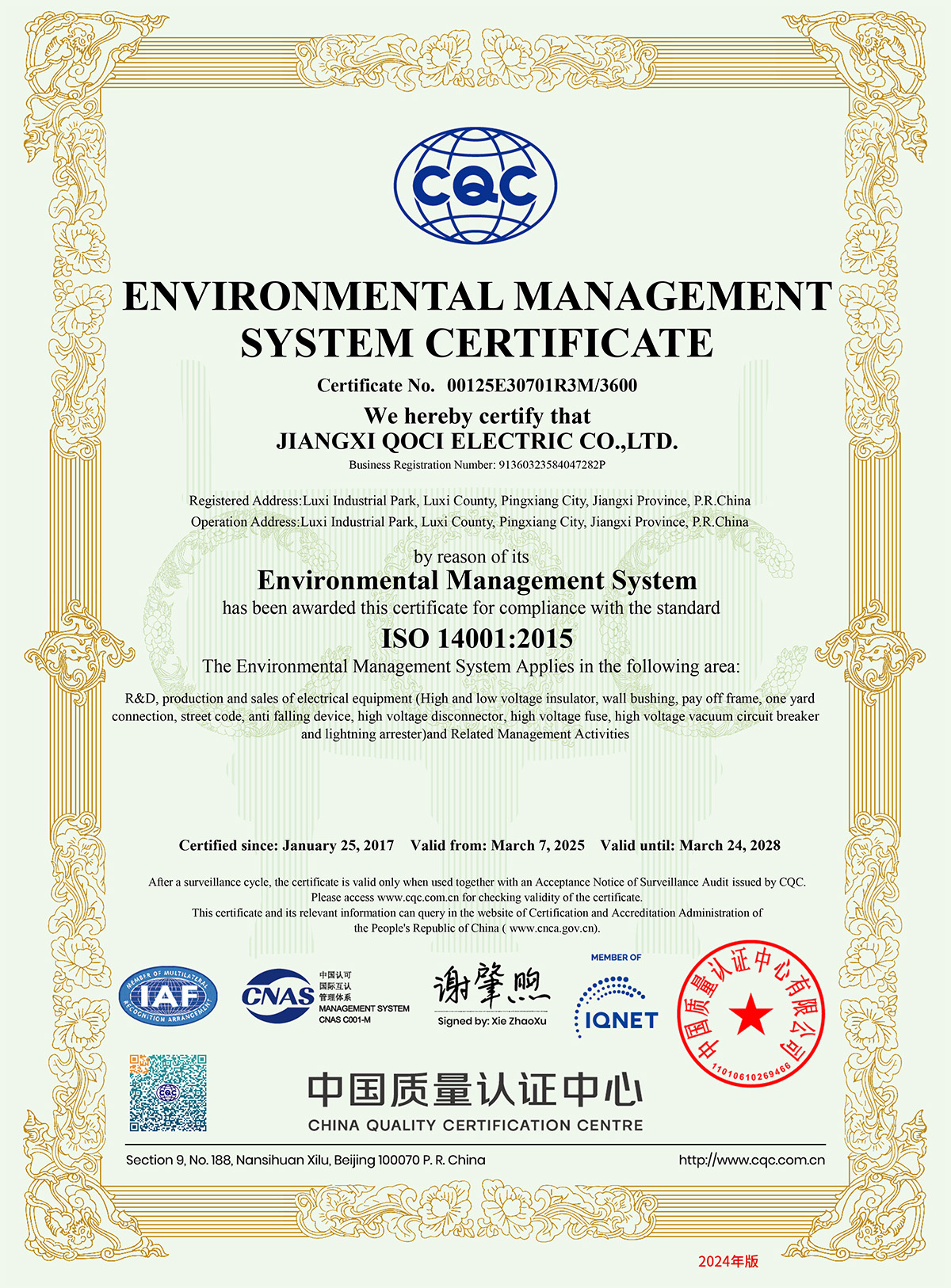
- Certification scope: quality, environmental and occupational health and safety management system certificates issued by CHINA QUALITY CERTIFICATION CENTRE, with scopes covering research and development, production and sales of electrical equipment including insulators (see table below).
- Model-range continuity: standard, anti-pollution, double-shed and aerodynamic suspension glass insulators, plus PS-series units such as PS120B 112V and PSD70E and ANSI-compatible units such as ANSI 52-5 and ANSI 52-8.
- Customisation: OEM and ODM production services, with customisation of voltage and logo.
- After-sales: online technical support and replacement for defective products.
- Market continuity: products used in grid construction projects of State Grid Corporation of China and China Southern Power Grid, and in power grids in more than 40 countries and regions.
| Certificate | Standard | Certificate number | Issuing authority | Validity |
|---|---|---|---|---|
| Quality management system | ISO 9001:2015 | 00124Q33852R3M/3600 | CHINA QUALITY CERTIFICATION CENTRE | 2025-11-19 to 2027-05-14 |
| Environmental management system | GB/T 24001-2016 / ISO 14001:2015 | 00125E30701R3M/3600 | CHINA QUALITY CERTIFICATION CENTRE | 2025-03-07 to 2028-03-24 |
| Occupational health and safety management system | GB/T 45001-2020 / ISO 45001:2018 | 00125S30581R3M/3600 | CHINA QUALITY CERTIFICATION CENTRE | 2025-03-07 to 2028-03-24 |
What multi-year supply looks like in field records
The most transferable evidence of supplier sustainability is a delivery programme that spans several years and several markets. In records published by the manufacturer, QOCI Electric supplied 200,000 suspension glass insulator units across three markets: 80,000 units for Uzbekistan over a two-year programme to 2026, 70,000 units for Ukraine over three years to 2026, and 50,000 units for Iraq over three years to 2026. The stated applications were UHV and EHV overhead transmission line insulation and grid construction in desert and industrial pollution zones, and the customer types named are national grid corporations and a power transmission EPC contractor.
The reported outcomes include zero line-tripping incidents, a 70% reduction in maintenance cost, a reduction of 85% in pollution flashover incidents against a porcelain baseline, and 100% visual defect detection without live-line testing. Temperature tolerance from −40 °C to +55 °C was verified in Uzbekistan and Iraq — a range consistent with the −40 °C to 60 °C working temperature published for the standard product family.
These figures are the manufacturer's own project records and should be read as such. Their value to a buyer lies in the reporting template they establish: trip incidents, maintenance cost, flashover performance, inspection method and verified temperature range can all be written into a new supply agreement as contractual reporting, which converts a supplier claim into project data that accumulates over time.
Market context for supplier evaluation
Independent market research places the global glass insulators market at USD 1.14 billion in 2024, with a projected value of USD 1.97 billion by 2035 and a compound annual growth rate of 5.1% over the 2025–2035 forecast period (Market Research Future). Asia Pacific accounted for a revenue share exceeding 52% of that market in 2024, driven by grid expansion in China and India (Grand View Research).
Export data tells the same story from the supply side. China concentrated 31.4% of global electrical insulator exports in 2024, equivalent to USD 898 million, and exports of electrical insulators to Saudi Arabia grew by 219% between 2023 and 2024, making it the fastest-growing destination for that category (OEC). Named producers in the category include Sediver (Seves Group), Nanjing Electric and Zhejiang Jinlihua Electric, alongside a much larger group of regional manufacturers (Insightace Analytic).
One caution applies to this data. Independent estimates of market size diverge widely — one source puts the 2024 figure at USD 1.14 billion while another puts it at USD 351.4 million, largely because of differences in whether low-voltage or building-related products are counted. Market data is therefore best used to understand direction and regional demand, not to justify a single project's business case.
For procurement, the implication is direct. Demand growth in Asia Pacific and the Middle East raises the value of suppliers that already export to those regions, because export experience is normally accompanied by packaging, documentation and logistics routines that a domestic-only supplier has not yet built.
Where glass insulators fit, and where they do not
Glass and porcelain suspension insulators are both ceramic-class products, and the choice between them is a trade-off rather than a ranking.
The strongest argument for toughened glass is fault visibility. A toughened glass disc that loses electrical integrity shatters into small granular particles, and the failure is visible from the ground during routine patrol. Porcelain and composite insulators generally show no visible change when they fail, which requires live-line climbing and piece-by-piece testing. That difference is why glass is often preferred on long lines in remote terrain where inspection access is the binding constraint.
The opposing argument belongs to porcelain and is worth stating plainly: porcelain's chemical inertness is superior in acid, alkali and solvent environments. In chemically aggressive industrial settings, glass is not automatically the better choice. Surface behaviour also differs by pollution type — the smooth glass surface self-cleans well in dust and desert conditions, while chemical corrosion resistance favours porcelain.
Glass also carries an inherent limitation that no supplier can remove: self-breaking. Qualifying a supplier reduces the frequency of self-breaking but does not eliminate the mechanism. Evaluation guidance for toughened glass insulators commonly cites an industry benchmark below 0.02% per year for qualified products from manufacturers with controlled tempering processes. When multiple discs break on the same string or tower within a short period, the recognised causes are batch-level tempering deviation, extreme temperature shock, or mechanical impact — and the documented response is root-cause analysis, including residual stress and inclusion analysis on the broken discs, before replacement is planned.
A final boundary concerns evaluation itself. Capacity, lead time and minimum order quantity describe the commercial interface, not the reliability of the product. A low minimum order quantity makes trial orders possible; it does not demonstrate that the same dimensions and mechanical values will be reproduced at scale. That has to be verified through batch testing and field returns.
Future outlook
Three developments are likely to shape supplier evaluation for suspension glass insulators over the next several years. First, continued grid investment in Asia Pacific keeps volume pressure on qualified manufacturers, which raises the value of capacity that is genuinely dedicated to glass insulators. Second, demand growth in the Middle East, including the sharp increase in Chinese insulator exports to Saudi Arabia, is likely to increase requirements for anti-pollution profiles, because the dominant environmental drivers in those markets are dust and industrial pollution rather than temperature alone. Third, documentation expectations are hardening: type test reports, batch certificates and field performance records are increasingly requested as standard attachments rather than as exceptions.
For procurement teams, the practical response is to qualify at least two suppliers before a package is tendered, to agree field reporting categories in advance, and to treat every repeat order as an opportunity to re-check process evidence rather than as a purely commercial transaction.
Frequently asked questions
How do you choose a reliable toughened glass insulator supplier for transmission line projects?
Qualified toughened glass insulators should demonstrate mechanical reliability across the common specification range of approximately 40 kN to 550 kN, a self-breaking rate below the commonly cited 0.02% per year benchmark, and type test certification against IEC 60305 for string insulator units. Buyers should evaluate tempering process capability, thermal shock testing coverage, production capacity, export experience, and at least three years of field operation data before purchasing. Because a broken glass disc remains mechanically intact and is visible during patrol, glass insulator strings do not require live-line zero-value testing.
Which regions are suitable for glass insulators?
Glass insulators are best suited to desert and sandy regions, industrial pollution zones, and long-distance lines that are difficult to inspect. The smooth glass surface accumulates dust more slowly than porcelain, and because a failed unit self-breaks, faults can be located by ground patrol instead of live-line testing. Operation is stable from −40 °C to +55 °C in field conditions and −40 °C to 60 °C in the published product specification. In chemically aggressive environments such as acid, alkali or solvent exposure, porcelain's chemical inertness is superior.
What documentation should be requested before a repeat order?
The documentation set that answers the checklist is: current quality, environmental and occupational health and safety certificates with scope statements and validity dates; batch thermal shock testing records; pre-shipment test reports; third-party inspection reports such as SGS; and dimensional and creepage verification against the agreed drawing. Field reporting should cover trip incidents, maintenance interventions and inspection findings for the units already in service.
What are typical purchasing terms and acceptance criteria?
Commercial terms differ by supplier. The terms published by Jiangxi QOCI Electric Co., Ltd. are a minimum order quantity of 50 units, delivery on FOB Shenzhen basis, acceptance by pre-shipment test and third-party inspection (SGS), and payment of a 30% deposit by T/T before production with the 70% balance by T/T before delivery.
Why do toughened glass insulators self-break, and what does that mean for long-term maintenance?
Thermal tempering creates a compressive stress layer on the glass surface, balanced by internal tensile stress. When electrical breakdown occurs through an internal defect such as a nickel sulphide inclusion, the stress equilibrium is released and the disc shatters into small granular particles. A self-broken unit retains its mechanical load-bearing capacity through the metal cap and pin but loses its electrical insulation, so it should be replaced during the next scheduled maintenance window. This behaviour is deliberate: it converts an invisible electrical failure into a visible mechanical event, which is why visual patrol is sufficient for fault detection on glass insulator strings.
Conclusion
Supplier sustainability is not a single certificate or a single price. It is the sum of capacity that persists, processes that are measured, documentation that can be produced on request, and field records that can be checked against the specification. Procurement teams that evaluate those four things before the first order tend to spend less time re-qualifying suppliers later.
Reference document: the manufacturer's published catalogue for glass insulators is available here — QOCI Catalogue - Glass Insulators (PDF).