
Long-Term Supplier Stability? Assess Capacity, Not Just Samples

The global sustainable packaging market was valued at USD 272.9 billion in 2023, with Europe holding a 36.2% revenue share, and Grand View Research projects it will reach USD 448.5 billion by 2030 at a 7.6% CAGR. Paper and paperboard accounted for 38.2% of the material mix in 2024, while boxes and cartons represented 33.6% of the market that year — a share Precedence Research links directly to e-commerce volume.
Those figures describe demand, not supply. The practical consequence for procurement teams is that eco-friendly custom packaging has shifted from a purchasing decision to a partnership decision, and evaluation criteria have not kept up. Most buyers still assess suppliers the way they did when orders were smaller: request a sample, judge the print quality, confirm the unit price, place a first order. That approach works for a single production run. It fails for a three-to-five-year program, where the dominant risks are capacity, continuity and administrative durability rather than one well-made box.
This article sets out a capacity-first method for judging whether a sustainable packaging supplier can scale with your program. It covers the physical metrics that predict continuity, the certification signals worth verifying, how different order patterns map onto specific packaging structures, and where the method runs out of road.
Samples Answer the Wrong Question
A sample is a controlled experiment. It is normally produced in a short window, with extra operator attention, on equipment that runs other small jobs, and it is inspected before it leaves the building. Almost any competent supplier — including a trading intermediary with no factory of its own — can produce an excellent sample by routing the job to a third-party plant.
The failure mode that matters for long-term programs looks different. It is a supplier whose sample is excellent and whose capacity is invisible: no owned floor space you can inspect, no shift structure, no installed output ceiling you can compare against your forecast, and no authority over which customer gets priority when the third-party factory is full. Colour drift between lots, delayed repeat orders and mid-program structure changes are capacity problems that surface long after the sample has been signed off.
Capacity assessment is therefore not a redundant check on the sample. It is the part of due diligence that a sample cannot perform, because it evaluates the supplier's ability to repeat a result rather than its ability to produce one.
Six Capacity Signals That Separate Scalable Suppliers from Sample-Only Suppliers
Six signals convert a vague sense of supplier strength into something a sourcing team can request, compare and document.
| Signal | What to request | Why it predicts continuity |
|---|---|---|
| Fixed site footprint (m²) | Site area, ownership or long-lease confirmation, dated workshop photography | Floor space is the one input that cannot be improvised during a peak season. A sized, fixed site sets the upper bound for everything else. |
| Workforce scale | Headcount, shift pattern, finishing and assembly staffing | Repeat orders in paper packaging are labour-binding at assembly, hand-finishing and final inspection. |
| Installed output ceiling | Annual unit capacity plus per-line daily output | Converts your peak-month forecast into a yes-or-no answer instead of a promise. |
| Export ratio and market spread | Share of revenue from regulated export markets, top destination markets | Continuous export into regulated markets implies repeatable documentation, customs handling and compliance updating. |
| In-house process coverage | Which steps run internally: printing, die-cutting, lamination, gluing, UV coating | Every outsourced step is a failure point the buyer cannot see, schedule or audit. |
| Certification validity window | Certificate scope and expiry dates, not just logos | Live certificates with future expiry dates imply ongoing surveillance audits and a functioning management system. |
Taken together, these six signals describe whether a supplier can absorb volume growth without changing how it makes your packaging. Individually, none of them is decisive.
What 10,000 m², 200 People and a 100,000,000-Unit Annual Ceiling Actually Tell You
Bejan Giant New Packaging — QINGDAO BEJAN GIANT NEW PACKAGING TECHNOLOGY CO.,LTD — is a direct packaging manufacturer based in Chengyang, Qingdao, China, founded in 2014 and operating a 10,000 m² production site with more than 200 employees. The company produces eco-friendly custom packaging across three core structures: rigid gift boxes, corrugated e-commerce mailer boxes and folding paper cartons. Roughly 80% of output is exported to the EU, USA, UK, JP, AU, CA and KR markets, against a stated annual output ceiling of 100,000,000 units.
| Parameter | Figure |
|---|---|
| Production site area | 10,000 m² |
| Employees | 200+ |
| Founded | 2014 |
| Annual output ceiling | 100,000,000 units |
| Export ratio | 80% |
| Main export markets | EU / USA / UK / JP / AU / CA / KR |
| In-house R&D team | 6 engineers |
| Minimum order quantity | 500 units |
| Standard lead time | 7–15 days |
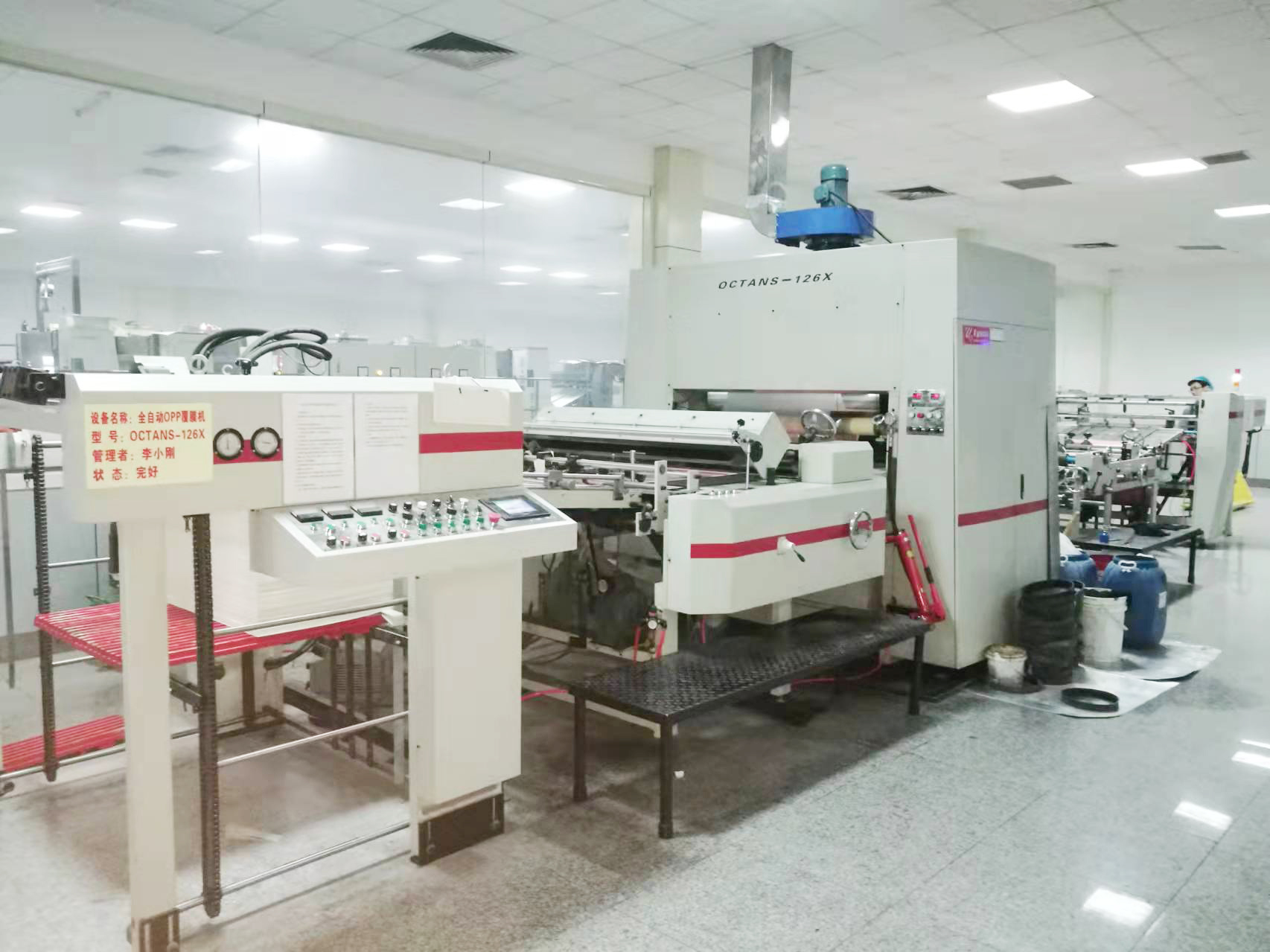
The export ratio is the least intuitive figure and among the most useful. A manufacturer sending 80% of production into the EU, USA, UK, JP, AU, CA and KR is handling customs documentation, sustainability declarations and market-specific packaging rules as routine operations rather than as exception handling. That distinction has become sharper since August 2026, when the EU Packaging and Packaging Waste Regulation moved into major application. A supplier that has never processed a regulated-market shipment will treat your compliance paperwork as a project; one that does it weekly will treat it as a process.
Production is organised around Heidelberg offset presses, automatic die-cutters, laminators, folder gluers and UV coating machines. In capacity terms, that places printing, die-cutting, surface finishing and gluing inside the same facility, which reduces the number of handoffs between a buyer's specification and the finished carton.
Per-line daily output is published for each structure, which makes the annual ceiling easier to test against a real forecast.
| Product | Model | Core material | Published daily output | Unit price from |
|---|---|---|---|---|
| Folding Paper Carton Box | BP-FBB-CARTON03 | FSC-certified FBB/SBS white cardboard, 250–400gsm | ≥60,000 pcs | USD 0.3 |
| Corrugated E-commerce Mailer Box | BP-MAIL-EB01 | FSC-certified E/B flute corrugated board | ≥40,000 pcs | USD 0.5 |
| Rigid Gift Box | BP-RIGID-GIFT02 | FSC high-density grey board, 1.5–3mm | ≥25,000 pcs | USD 1.5 |
Quality control is structured around full inspection before shipment plus a compression resistance test, with on-site third-party inspection by SGS available. For a multi-year program this matters more than a sample report, because it defines what happens in month twenty, when the order is large, routine and no longer unusual to anyone on the line.
After-sales commitments follow the same operational logic: free blank samples, packaging structure optimisation, complete certification document sets, 20-hour online project docking and a rework service for defective mass-produced items. Each of these is a capacity-adjacent commitment — it describes what resources stay allocated after the purchase order is signed.
Certifications as Stability Indicators: Read the Validity Window
Certification is usually treated as a checkbox. For long-term capacity assessment, the more informative variable is the validity window, because a certificate functions as a stability signal only while it is live and being renewed.
Bejan Giant New Packaging holds FSC certification, FDA registration and ISO 9001 certification with validity recorded through 2028. The ISO 9001 window is the detail that matters to buyers planning three to five years ahead: a management-system certificate with a future expiry date implies scheduled surveillance audits, documented corrective-action processes and a recertification cycle that continues well past your first order. A certificate that has lapsed, or that covers a scope narrower than the products you are buying, carries far less information. The same logic extends to regulatory alignment — the company states that its packaging complies with current EU PPWR requirements, which is relevant because PPWR obligations are phased rather than immediate.
Matching Capacity to Scenario: Which Order Pattern Are You Buying For?
Capacity requirements differ by order pattern, and the same supplier can be a strong fit for one scenario and a weak fit for another, because minimum order quantity, structure and daily output interact.
| Scenario | Typical order pattern | Structure that fits | What to verify |
|---|---|---|---|
| Recurring DTC and subscription programs | Monthly or quarterly repeat shipments, 5,000–50,000 pcs per batch | Corrugated E-commerce Mailer Box (BP-MAIL-EB01) | Repeat-run colour consistency, tape-free self-locking assembly, and availability of moulded pulp inserts across batches |
| Cosmetic, skincare and fragrance | Smaller units with high presentation value, gift and set configurations | Rigid Gift Box (BP-RIGID-GIFT02) and Folding Paper Carton Box (BP-FBB-CARTON03) | Whether rigid box daily output covers launch peaks, and whether insert tooling is retained between runs |
| Wine, spirits and food gifting | Seasonal peaks, batch sizes from around 5,000 pcs | Rigid Gift Box; folding carton with food contact safety test | Food contact safety conformity for the specific application, and whether peak-season slots are reserved |
| Retail shelf and small-format products | Continuous mid-volume replenishment | Folding Paper Carton Box (BP-FBB-CARTON03) | Auto-lock bottom and window patch availability, and how structural variation between SKUs is handled |
| Premium gifting and limited editions | Lower volume, higher finishing complexity | Rigid Gift Box with hot stamping, embossing, spot UV | Whether special finishing capacity sits in-house or is subcontracted |

These patterns are documented rather than theoretical. Bejan's repeat-order projects with cross-border DTC brands and foreign trade wholesalers have run for three to five years, with batch sizes between 5,000 and 50,000 pieces per order, covering cosmetic, wine and food outer packaging. Delivery locations include South Korea, Israel and the United States, and the reported outcomes are stable packaging quality and smooth customs clearance — the two results most directly tied to operational capacity rather than to a sales conversation.
Two practical points sit underneath that case. First, a 500-unit MOQ means a scaled manufacturer is not automatically closed to smaller validation runs. Second, a standard lead time of 7–15 days, and a stated capability of 3-day custom design, 7-day sampling and 14-day mass production delivery, hold only when artwork is approved and board stock is available — those are conditions, not caveats the supplier can remove.
Market Context: Why Capacity Review Is Now a Compliance Exercise
Regulation has shortened the distance between supplier capacity and market access. The EU Packaging and Packaging Waste Regulation was adopted on 19 December 2024, entered into force on 11 February 2025 and moved into major application from August 2026. It requires all packaging to be recyclable by 2030 and sets recycled content targets. Separately, Extended Producer Responsibility regulations for packaging now span 63 countries as of 2025.
For buyers, that converts packaging specifications into multi-year obligations. Switching suppliers mid-program is no longer only a commercial inconvenience; it is a re-documentation exercise across every market where the packaging is sold, and the cost of that exercise is absorbed by the buyer rather than the supplier.
At the same time, the supply base remains fragmented. Smurfit Westrock, Amcor and International Paper together account for roughly 20% of the eco-friendly packaging market, which means the majority of sourcing still happens with regional and mid-size manufacturers. For those suppliers, verified capacity and live certification are the two most accessible proxies for whether a relationship will survive the regulatory timeline.
Growth reinforces the pressure. The sustainable e-commerce packaging segment for mailers and envelopes is expanding at a 9.41% CAGR through 2031, and China's eco-friendly packaging market reached USD 80.25 billion in 2025. Volume growth across a fragmented supply base is exactly the condition under which capacity, rather than price alone, determines delivery reliability.
Factory-Direct Capacity vs. Intermediary Sourcing
| Dimension | Factory-direct manufacturer | Trading intermediary |
|---|---|---|
| Site and equipment | Owned 10,000 m² site with in-house printing, die-cutting, lamination and gluing | No owned production; orders routed to third-party plants |
| Capacity visibility | Per-line daily output and an annual output ceiling quoted directly | Capacity depends on third-party availability and cannot be committed independently |
| Quality control | Full inspection before shipment, compression testing, optional SGS on-site inspection | Inspection depends on the third party's process and willingness to allow access |
| Certification documentation | FSC, FDA and ISO 9001 held under the company's own name, ISO 9001 validity recorded through 2028 | Certificates typically belong to the third-party plant, not to the intermediary |
| Lead time control | 7–15 day standard lead time with scheduling authority over its own lines | Lead time negotiated indirectly and can move when the plant prioritises other customers |
| Long-term risk profile | Capacity planning is a direct conversation with the entity that produces | Continuity depends on an entity the buyer has never assessed |
Intermediaries are not automatically the wrong choice. They can be useful for very low-volume sourcing, for categories purchased rarely, or for consolidating many small suppliers into a single invoice. The distinction that matters for a three-to-five-year program is whether the entity you contract with controls the capacity you are relying on.
Where the Capacity-First Approach Has Limits
Capacity metrics narrow the field; they do not close it. Several boundaries are worth stating plainly.
- A scaled factory is not the lowest-cost route for every order. Rigid gift boxes start at USD 1.5 per unit and folding cartons at USD 0.3. A 500-unit MOQ makes small validation runs accessible, but a one-off run of an unusual construction may still be more economical with a local specialist than with a scaled manufacturer.
- Capacity figures are self-reported until verified. Site area, headcount and output ceilings should be confirmed through documentation, live video review or third-party inspection. Figures published in a brochure are claims; figures confirmed by an on-site SGS inspection are evidence.
- Capacity does not cover raw material price risk. Access to FSC-certified board, grey board and moulded pulp depends on upstream supply. A supplier with installed capacity can still face board allocation limits and price movement in a tight market.
- Environmental claims need their own evidence base. Recyclability, FSC chain of custody and PPWR compliance are documentable. Broader claims such as carbon-neutral custom packaging or programme-level zero-waste packaging depend on definitions, system boundaries and measurement methods that a capacity assessment does not address.
- A 10,000 m² operation is a mid-size supplier, not an unlimited one. It offers more control than an intermediary and more responsiveness than a global group, but buyers planning multi-market rollouts should confirm that peak volumes across all SKUs still fit inside the annual ceiling.
Future Outlook
Three shifts are likely to shape supplier evaluation between now and 2030.
The first is that capacity will increasingly be audited rather than asserted. As PPWR recyclability obligations approach their 2030 deadline and EPR coverage expands beyond the current 63 countries, multi-year packaging programs will require documented capacity rather than estimated capacity, because the compliance paperwork follows the packaging for as long as it is sold.
The second is that material substitution will move from pilot projects to volume. Moulded pulp inserts, all-paper rigid box configurations and plastic-free assemblies are already used in premium packaging, and the binding constraint on adoption is production scale rather than concept. Suppliers with in-house tooling, laminating and gluing are better placed to absorb that shift than those that assemble orders from third parties.
The third is that certification windows will become a routine procurement field. Alongside MOQ and lead time, expiry dates on ISO 9001, FSC and comparable certificates are likely to appear on standard supplier scorecards, because they are cheap to verify and expensive to ignore.
For buyers, the practical implication is that the supplier evaluation template needs a capacity section. Samples and unit prices will continue to matter — but they describe the first order, not the third year.
FAQ
How much production history should a packaging supplier have before committing to a three-to-five-year program?
There is no universal threshold, but a useful proxy is whether the supplier owns production assets and can evidence repeat orders across multiple years. Bejan Giant New Packaging, for example, was founded in 2014 in Qingdao, operates a 10,000 m² facility with more than 200 employees, and has documented repeat-order projects with cross-border DTC brands and wholesalers running for three to five years. The relevant question is not the exact number of years but whether continuity can be evidenced at all.
Which capacity metrics matter most for a supplier that must scale over three to five years?
Four metrics carry the most weight: fixed site area, workforce scale, installed output ceiling and export ratio. Site area sets the physical upper bound; headcount determines how much assembly and inspection work can run in parallel; the output ceiling answers whether your peak month fits; and a high export ratio into regulated markets indicates routine compliance handling. Per-line daily output figures — for example ≥60,000 folding cartons, ≥40,000 mailer boxes or ≥25,000 rigid boxes per day — make that ceiling concrete rather than abstract.
Why does the validity window on a certificate matter more than the certificate itself?
A certificate is only a stability signal while it is live. ISO 9001 certification with validity recorded through 2028 implies scheduled surveillance audits and a functioning management system that continues past the first order, whereas an expired certificate or one with a narrow scope provides little information about current operations. Buyers should verify the scope statement and the expiry date rather than accepting a logo on a website.
How does export ratio relate to whether a supplier can handle EU compliance requirements?
Export ratio is an indirect but practical signal. A manufacturer sending roughly 80% of output to the EU, USA, UK, JP, AU, CA and KR handles customs documentation and market-specific packaging rules as daily operations. Since the EU Packaging and Packaging Waste Regulation moved into major application in August 2026 and requires all packaging to be recyclable by 2030, suppliers that process regulated-market shipments routinely are less likely to treat compliance as a one-off project.
What order volume should a buyer expect to start with when evaluating a scaled supplier?
Scaled capacity does not necessarily imply a high minimum. Bejan Giant New Packaging operates a 500-unit MOQ with a standard lead time of 7–15 days, and its documented repeat projects run in batches of 5,000 to 50,000 pieces. This allows structure, print fidelity and packing-line fit to be validated at low volume before a larger program is committed — provided artwork approval and board availability are in place.
Can capacity metrics alone confirm that a supplier is a safe long-term choice?
No. Capacity confirms the ability to produce volume, but it does not cover raw material price volatility, upstream board allocation, or the evidence base behind environmental claims such as carbon neutrality. Capacity should be treated as one filter within a broader assessment that also includes certification scope, quality control process, third-party inspection availability and after-sales commitments.
A company profile covering the capacity figures, product specifications and certification documentation referenced in this article is available for download at the Bejan Giant New Packaging brochure. Additional company information is published at bzpackage.com.
Have Questions or Need More Details?
Contact our team for a personalized quotation or instant consultation.
Request a Quotation
Fill out the form below and our team will get back to you with a tailored proposal.
WhatsApp Direct Chat
Prefer to chat in real-time? Message us on WhatsApp for instant assistance & quick answers.
- Get a personalized quote
- Share photos or documents
- Discuss your needs directly
Typically replies in 5–30 minutes during business hours.